
News
Parliamentary Probe Reveals Tampering with Key Tax Reform Legislation
By Yusuf Danjuma Yunusa
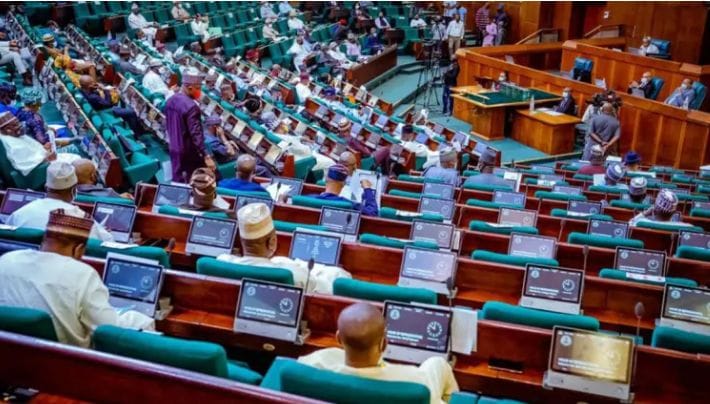
The House of Representatives has confirmed that there is an illegal alteration of Nigeria’s newly gazetted tax reform laws.
The House Minority Caucus Ad-hoc Committee probing alleged alteration of the tax reform laws reported evidence of unauthorized changes to some of the tax reform laws recently passed by the National Assembly and signed into law by President Bola Tinubu.
In an interim report released on Friday, the committee said its findings showed clear discrepancies between the versions of the tax laws approved by lawmakers and those later published in the official gazette.
According to the panel, the Nigeria Tax Administration Act, 2025, contained the most significant alterations.
The probe followed public concern triggered by a motion raised on the floor of the House by Abdulsamad Dasuki, who warned that versions of the tax laws in circulation differed from what legislators had approved.
In response, the Minority Caucus, in a statement issued on December 28, 2025, pledged to safeguard the autonomy of the legislature and cautioned that the circulation of “fake laws” posed a direct threat to constitutional democracy.
Acting on that commitment, the caucus, under the leadership of Kingsley Chinda, set up a seven-member fact-finding committee on January 2, 2026.
The panel is chaired by Victor Ogene, with members Aliyu Garu (Bauchi), Stanley Adedeji (Oyo), Ibe Osonwa (Abia), Marie Ebikake (Bayelsa), Shehu Fagge (Kano), and Gaza Gbefwi Jonathan (Nasarawa).
A day later, the House, through its spokesman Akin Rotimi, announced that Speaker Tajudeen Abbas had ordered the release of certified copies of the four tax reform Acts signed by the President to enable public scrutiny.
The laws are the Nigeria Tax Act, 2025; Nigeria Tax Administration Act, 2025; National Revenue Service (Establishment) Act, 2025; and the Joint Revenue Board (Establishment) Act, 2025.
The committee, in its preliminary assessment, said that a side-by-side review of the certified copies and the gazetted documents confirmed Dasuki’s claims.
“There were some alterations as alleged, especially in the Nigeria Tax Administration Act, 2025.
“There were three different versions of the documents in circulation, particularly the Nigeria Tax Administration Act, 2025,” the committee stated.
The report, signed by Ogene, noted that multiple versions of the Nigeria Tax Administration Act, 2025, were in circulation, raising questions about the integrity of the legislative process.
The panel argued that instructions to “align” the Acts with the Federal Government Printing Press suggested serious procedural lapses.
The committee added that the published version of the laws unlawfully intruded into the constitutional authority of the National Assembly.
According to the committee, there was “a clear indication that there were procedural anomalies in the previously gazetted version that illegally encroached on the core mandate of the National Assembly.”
Highlighting specific concerns, the committee said Section 29(1) on reporting thresholds had been altered.
While the version passed by lawmakers set thresholds at N50 million for individuals and N100 million for companies, the gazetted text reportedly reduced the individual threshold to N25 million, a move the committee described as an attempt to widen the tax net through executive interference.
The committee also criticised the insertion of new subsections 41(8) and 41(9), which mandate a 20 per cent deposit of disputed tax liabilities before appeals can be taken from the Tax Appeal Tribunal to the High Court.
The committee noted that these provisions were absent from the version approved by the legislature.
According to the report, Section 64 of the gazetted Act further expanded the enforcement powers of tax authorities, allowing arrests through law enforcement agencies and the sale of seized assets without court authorisation, powers not contained in the original Act.
The committee also flagged changes to Section 3(1)(b), where petroleum income tax and VAT were reportedly removed from the definition of federal taxes, and to Section 39(3), which now mandates tax computation for petroleum operations in U.S. dollars rather than “the currency of the transaction,” as originally passed.
Beyond the Tax Administration Act, the panel raised alarms over the Nigerian Revenue Service (Establishment) Act, saying provisions on National Assembly oversight, particularly Sections 30(1)(d) and 30(3), were deleted in the gazetted version.
The committee said these omissions stripped the legislature of mechanisms for summons, reporting, and accountability, undermining the principle of checks and balances.
The House is expected to deliberate on the interim findings and consider further actions to rectify the published laws and prevent future alterations.







News
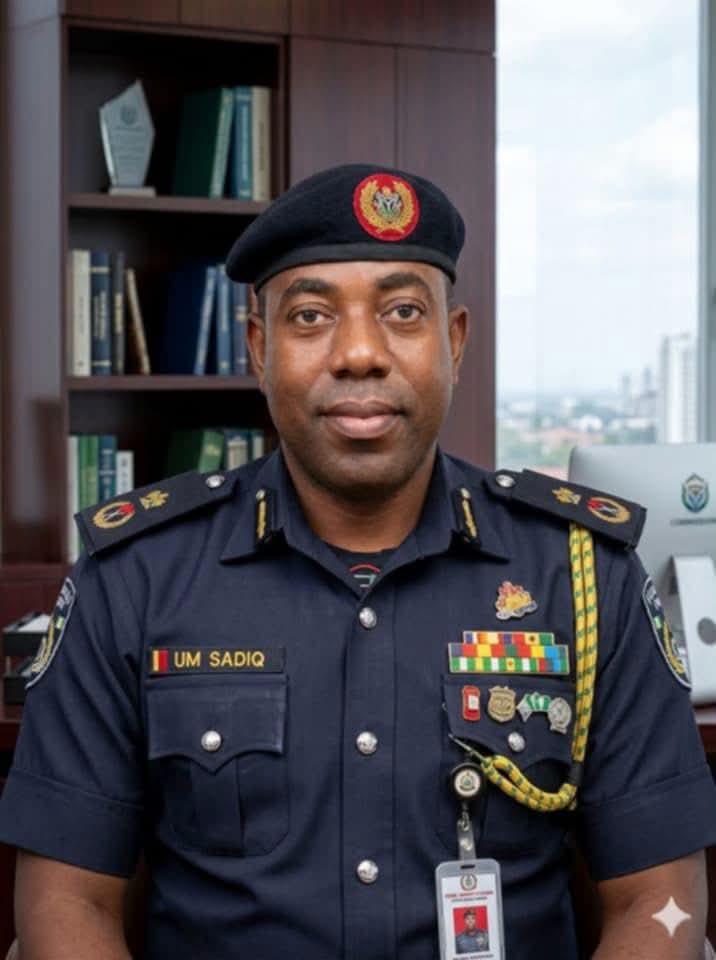
UM Sadiq Appointed As the New Kano State Fire Service Controller
By Yusuf Danjuma Yunusa
The Controller-General of the Federal Fire Service, FFS, Olumode Adeyemi Samuel, has approved the immediate deployment of Deputy Controller of Fire, DCF, UM Sadiq as the new State Controller for the Kano State Command.
The appointment, which takes immediate effect, is part of the Service’s ongoing efforts to strengthen operational leadership and enhance public safety across the country.
Mr Sadiq takes over from Controller of Fire, CSF, Kazeem Sholadoye, who has been redeployed to the Jigawa State Command in an acting capacity.
The Federal Fire Service commended Sholadoye for his dedication and contributions during his tenure in Kano.
The newly appointed State Controller is familiar with the Kano Command, having previously served as its Acting Commanding Officer between 2015 and 2017.
An indigene of Nasarawa Local Government Area of Kano State, his return is expected to leverage his experience and knowledge of the state to improve emergency response and fire safety operations.
A statement by the Service described Mr Sadiq as a seasoned firefighter, administrator and policy strategist with extensive experience in fire prevention, emergency management and institutional reforms.
During his career, he has held several strategic positions within the Federal Fire Service, including Team Lead of Package B at the National Stadium, Abuja, in 2015; Commanding Officer of the Kano State Command between 2015 and 2017; Head of Appointment, Promotion and Discipline at the National Headquarters from 2017 to 2020; and Third-in-Command in charge of Policy, Planning, Research and Statistics between 2020 and 2021.
He also served as Head of Registry at the National Headquarters from 2021 to 2022, Second-in-Command of the Jigawa State Command between 2022 and 2023, State Controller of the Kaduna State Command from 2023 to 2024, and most recently, State Controller of the Kogi State Command from 2024 until his latest deployment.
According to the statement, Sadiq has played a significant role in the development of policies aimed at modernising the Service’s operational framework and improving emergency response mechanisms across the country.
The Service expressed optimism that his deployment to Kano would strengthen firefighting operations, improve public safety strategies, deepen community engagement and reinforce the state’s firefighting infrastructure.
The Controller-General expressed confidence in Sadiq’s ability to provide effective leadership for the Kano State Command and urged officers and personnel of the command to give him their full cooperation and support in the discharge of his duties.
News
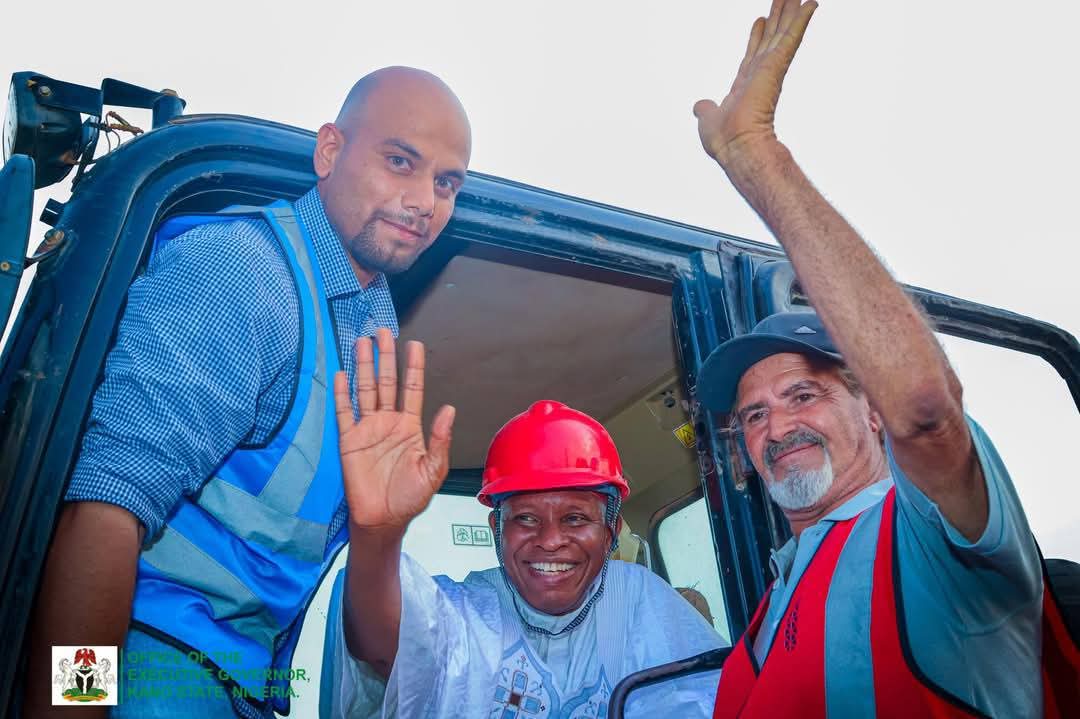
Projects, Monitoring, Payment, Performance: The Kano Formula Outpacing 35 States
By Abba Anwar
As Lagos state can boast of, within a period of three years, 377 completed projects with completed Red Line Rail Phase 1 and other ongoing projects, as Abia state boasts of 76 completed projects with 36 ongoing, with major projects of 600km roads, Port Harcourt road, 277 Primary Healthcare Centres (PHCs) refurbished, 135 functional, and 17 Local Government Headquarters, Kano state beats chest with 799 completed projects, while 709 are at various stages of completion.
When Katsina state has 89 completed projects out of a total 114 earmarked projects, with 23 township roads, 15 PHCs with solar, 28 classroom blocks, as Gombe state hits with 74 completed projects out of 111 projects, with key projects of 19 roads, 11 PHCs, 25 schools renovation, and Niger state with 25 completed projects of 5km road in each of 25 LGAs completed plus 100 Level 2 PHCs and Capital city projects with 30% completion, Kano state apart from the 799 completed projects mentioned above, Governor Abba Kabir Yusuf smiles with over 1,508 developmental projects across the 44 LGs.
States like Bauchi with 61 completed projects out of 108 intended projects with key 12 township roads, 9 General Hospitals and 22 boreholes, Delta state developmental projects stand at a completed 32.5km Emu-Obodeti-Abbi-Abraka road and local governments roads repairs that were also completed, with the ongoing two flyovers, while Oyo state completed Iseyin-Okeho road and Phase 1 of 200 PHCs with the major ongoing project of N144bn Shaki-Okerete road, with the projects execution of these states, Kano is still ahead of them.
The publicly available information and record, as shown for other states above, Benue state has completed 50 projects of intra-city roads, renovation of State Secretariat, State House of Assembly Complex, with 100 ongoing projects, when Akwa-Ibom state completed 1,300km roads across the state, other key projects of Akpan Andem Market Amphitheatre, Atiku Tunnel, Model Schools and 15.13km Ikot Esu-Otomo-Azumini road, while Anambra state has 15.62km completed roads projects in Okpoko and Beltway linking 4 cities with the key ongoing projects of Amawbia-Ekwulobia dual carriageway and 80% completion of 19.1km Awkuzu-Igbariam road.
Available record as disclosed recently by the Kano state Commissioner for Public Procurement, Projects Monitoring and Evaluation, Comrade Nura Ma’aji Sumaila, in a press conference, shows that, the Urban Renewal Projects have contract sum of One Hundred and Sixty Nine Billion Naira (N169Billion) and construction of 5Km Roads across 38 LGAs with a contract value of over One Hundred and Eighteen Billion Naira (₦118Billion).
Disclosing further that, “Security Improvement Projects through the award of projects for the construction of Kano State Neighborhood Security Watch divisions in 36 LGAs,
with a contract value of over Six Billion Eight Hundred and Sixty Three Million Naira (₦6.863Billion).This reflects the government’s continued investment in community safety and security infrastructure.
Rural Infrastructure Projects across all 44 LGAs, covering infrastructure, education, healthcare, and other social interventions, with a contract value of over Three Hundred and Ninety Seven Billion Naira (₦397billion). These projects support balanced development and improved rural service delivery.”
While other projects, according to him, have cumulative contract sum of Two Hundred and Fifty Five Billion Naira (N255Billion).
Reading my sample states above, one could understand that, I touch all the six geo-political zones of our federation. Not only selecting two states per zone, I select the most performing states in their respective zones. Reason why I said, Projects, Monitoring, Payment, Performance: The Kano Formula Outpacing 35 States.
Where Kano excels compared to all other 35 states of the federation, is not only in the completion of the human-centred projects, but in clear and transparent monitoring and evaluation which eventually resulted into the payments to contractors. It is extremely amazing to note that, out of the Nine Hundred and Twenty Eight Billion Naira (N928Billion) the state was able to clear over Six Hundred Billion Naira (600Billion). A payment of 64.7 percent being paid. That is to say the payment of two out three is effected and cleared. As the remaining are currently in the process of being cleared. This is superb, not only in Nigeria, but across our sub-region. No two ways about it.
For serious minded elements, the process of projects administration and treatment, from the conception stage, during execution and after execution, up to the payment boundary, are enough a reason to urge Governor Yusuf to come back come 2027. Politics aside, his (governor’s) era as a Commissioner for Works many years back among other public engagements, gave him more advantage in understanding the nooks and crannies of projects conception, execution, monitoring, evaluation and payments.
I do concur with Commissioner Sumaila when he commended the Governor and the government in, “… the administration’s resolve to ensure distribution of projects across urban and rural communities, with emphasis on value for money, quality delivery, and measurable impact on the lives of the people.The broad scale of intervention consistent with the
State Government’s reported infrastructure priorities, including roads, urban renewal, utilities, transportation, security and social services.”
The very day Governor Yusuf established this Ministry for Public Procurement, Projects Monitoring and Evaluation and appointed Nura Ma’aji as the pioneer Commissioner, someone I knew for over 25 years, as a committed human rights activist and a promoter of transparency and openness, even before the advent of Open Government Partnership (OGP) as an institution, I knew the Governor was serious about good governance.
With Sumaila, I am confident that, the Ministry’s resolve in playing a pivotal role “… is critical in safeguarding public
to strengthen the state’s economic base, improve mobility, support community safety, and
through strategic investment, project monitoring, and transparent procurement.”
During that press conference I took Sumaila’s emphatic commitment seriously when he said, “Ministry for Public Procurement, Projects Monitoring and Evaluation remains committed to ensuring value for money, quality project delivery through effective monitoring of all
aspirations of the people.”
It is important to note that, Kano’s key completed projects are, but not limited to, 40 metropolitan roads, 44 PHCs, 120 schools and 5 water plants. Not to talk of un-dusting Kano’s original town planning for today’s relevance and beautification process.
Among the 709 projects that are at various stages of completion are our major flyovers of Dan Agundi and Tal’udu. That are at over 80 percent completion stage. The strategic positioning of these flyovers, in decongesting, remodeling, re-beautifying and the remaking of Kano as a 21st century city speaks volumes about Governor Yusuf’s critical thinking in governance and deliverables.
Looking closely at the people-oriented Governor, one could understand that, this gentleman has political will, clear understanding of the needs of Kano people and has all the required commitment to genuinely serve. This among many other reasons, give me more courage not to think of any bottlenecks on the path of His Excellency Engineer Abba Kabir Yusuf, in the fast approaching election, come 2027.
Anwar writes from Kano
Saturday, 18th July, 2026
News
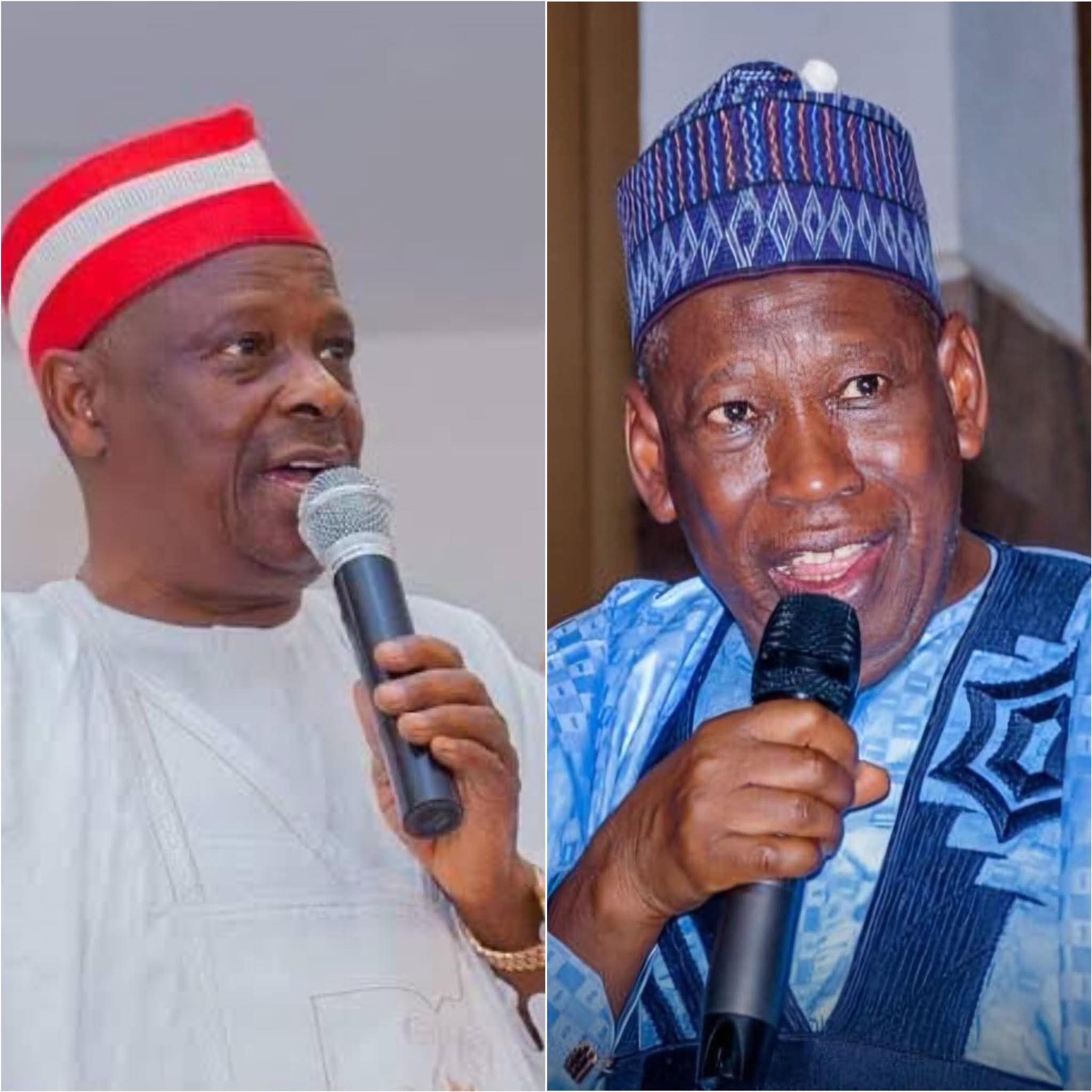
I Swear I Won the 1999 PDP Gubernatorial Primary Election but Was Rigged in Favour of Kwankwaso – Ganduje
Abbas Yushau Yusuf
Former Governor of Kano State and former APC National Chairman, Dr. Abdullahi Umar Ganduje, says the 1999 PDP primary election that produced the joint ticket of Kwankwaso and Ganduje was rigged in favour of Rabiu Musa Kwankwaso.
Dr. Ganduje stated this in a viral video circulated online while addressing some people.
Ganduje, who was former Governor Rabiu Musa Kwankwaso’s deputy between 1999 and 2003 and between 2011 and 2015, said, “I swear by Almighty Allah that Kwankwaso did not win that primary election. I was the one who won, and the person who rigged the result in Gabasawa Local Government is still alive. He is even closer to me despite rigging the primary election in favour of Kwankwaso.”
Ganduje added that the PDP representatives who were sent from the party’s national headquarters appeased him when he objected and insisted that the primary election should be cancelled.
Ganduje said they begged him not to disrupt the process in order not to repeat the scenario of the 1991 gubernatorial election between the Santsi and Tabo factions during the SDP and NRC days, where a relatively unknown NRC gubernatorial candidate, Architect Kabiru Ibrahim Gaya, won against the popular SDP candidate, Engineer Magaji Abdullahi.
NIGERIAN TRACKER reports that Dr. Abdullahi Ganduje also served as Commissioner of Works and Housing during the military administrations of the late Colonel Muhammad Abdullahi Wase, the late Colonel Dominic Oneya, and the late Colonel Aminu Isa Kontagora before he resigned in late 1998 and contested the PDP primaries won by former Governor Rabiu Musa Kwankwaso.
NIGERIAN TRACKER reports that Dr. Abdullahi Umar Ganduje and Rabiu Musa Kwankwaso parted ways in March 2016 during the first tenure of former Governor Ganduje, when former Governor Kwankwaso was accused of politicising the condolence visit following the death of Governor Ganduje’s mother, who passed away in March 2016 in Ganduje town, Dawakin Tofa Local Government Area.
Since then, the political conflict between the two Kano political giants has continued to rage to this day, with both men bashing each other on any political podium where they find themselves.
Kano elders, during the lifetime of the late NRC presidential candidate, Alhaji Bashir Othman Tofa, made efforts to reconcile them, but to no avail.

UM Sadiq Appointed As the New Kano State Fire Service Controller

Projects, Monitoring, Payment, Performance: The Kano Formula Outpacing 35 States

I Swear I Won the 1999 PDP Gubernatorial Primary Election but Was Rigged in Favour of Kwankwaso – Ganduje

League Of Kano Veteran Journalists Established to Promote Professionalism, Members’ Welfare — Mahmud

Kashim Shettima and the Question of Continuity in 2027

Alhaji Tijjani Rabiu Spikin: A Neighbour, Philanthropist, and Friend of Children

FGCKOSA Sues Federal Government, Developer Over Alleged Conversion of FGC Kano Land to Private Estate

When Military Ethos Is Married Into Royalty: As Emir Muhammad Sanusi II Turbans Former Chief of Air Staff as “Sarkin Fulanin Jaidanawa”

Breaking:ADC Reaffirms Ibrahim Khalil as 2027 Kano Governorship Candidate, Rejects Alleged Imposition

Gwarzo Challenges Kano Government to Provide Evidence of Alleged Local Government Funds Diversion Through Son
UM Sadiq Appointed As the New Kano State Fire Service Controller
Projects, Monitoring, Payment, Performance: The Kano Formula Outpacing 35 States
I Swear I Won the 1999 PDP Gubernatorial Primary Election but Was Rigged in Favour of Kwankwaso – Ganduje
League Of Kano Veteran Journalists Established to Promote Professionalism, Members’ Welfare — Mahmud
Kashim Shettima and the Question of Continuity in 2027
Alhaji Tijjani Rabiu Spikin: A Neighbour, Philanthropist, and Friend of Children
FGCKOSA Sues Federal Government, Developer Over Alleged Conversion of FGC Kano Land to Private Estate
When Military Ethos Is Married Into Royalty: As Emir Muhammad Sanusi II Turbans Former Chief of Air Staff as “Sarkin Fulanin Jaidanawa”
Breaking:ADC Reaffirms Ibrahim Khalil as 2027 Kano Governorship Candidate, Rejects Alleged Imposition
Gwarzo Challenges Kano Government to Provide Evidence of Alleged Local Government Funds Diversion Through Son
-

 Opinion4 years ago
On The Kano Flyovers And Public Perception
-

 Features5 years ago
How I Became A Multimillionaire In Nigeria – Hadiza Gabon
-

 Opinion5 years ago
Kano As future Headquarters Of Poverty In Nigeria
-

 History5 years ago
Sheikh Adam Abdullahi Al-Ilory (1917-1992):Nigeria’s Islamic Scholar Who Wrote Over 100 Books And Journals
-

 Opinion5 years ago
My First Encounter with Nasiru Gawuna, the Humble Deputy Governor
-

 History5 years ago
The History Of Borno State Governor Professor Babagana Umara Zulum
-

 History5 years ago
The Origin Of “Mammy Market” In Army Barracks (Mammy Ochefu)
-

 News4 years ago
Federal University Of Technology Babura To Commence Academic Activities September