
News
Nigeria’s First Lady Faces Backlash Over Alleged Religious Bias in Humanitarian Aid”

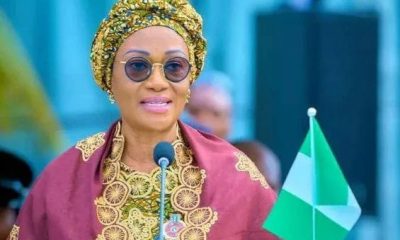
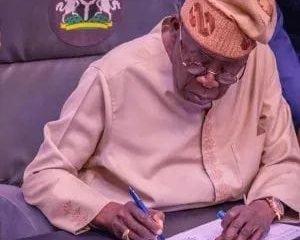
A storm of controversy is brewing around Nigeria’s First Lady, Senator Oluremi Tinubu, as the Supreme Council for Shari’ah in Nigeria (SCSN) has issued a statement accusing her of religious bias in the distribution of humanitarian aid across the country.
The SCSN, a prominent Islamic body representing the interests of the Muslim Ummah, claims that the First Lady’s widely publicized Renewed Hope Initiative has disproportionately favored Christian communities, leaving Muslim-majority areas in the shadows during times of crisis.
The SCSN in a statement sigend by its president Sheikh Dr. Bashir Aliyu Umar, and Nafiu Baba-Ahmad, mni
Secretary General while acknowledging her recent visit and donation to flood victims in Mokwa, Niger State, the Council criticized the timing and scale of the intervention, describing it as “too little, too late.” More troubling, they argue, is a pattern of selective outreach that has seen billions of naira and truckloads of relief materials channeled almost exclusively to Christian-dominated regions such as Plateau and Benue States.
Sheikh Dr Bashir Aliyu Umar said the key allegations Include:
– ₦500 million donation to Christian families in Plateau (Sept 2023)
– ₦5 million and 1,200 bags of rice distributed via Christian political forums in 19 northern states (Dec 2024)
– ₦1 billion relief package to Christian-majority areas in July 2025
– No comparable aid to Muslim victims of boat disasters, killings, or displacement in Zamfara, Katsina, Niger, and Kwara
The Council also reminded the presidency of the pivotal role the Muslim Ummah played in securing the Tinubu/Shettima victory, especially during the contentious Muslim-Muslim ticket debate. They expressed disappointment that the First Lady’s denomination, the Redeemed Christian Church of God (RCCG), allegedly opposed the ticket, yet now appears to be the primary beneficiary of her humanitarian outreach.
The SCSN urged Senator Tinubu to “rise above partisan and sectarian instincts” and embrace a more inclusive approach that reflects Nigeria’s religious diversity. “Compassion loses its moral power when it appears to follow political loyalties or religious lines,” the statement read.
As tensions simmer, political analysts warn that the First Lady may be treading a path reminiscent of past administrations where perceived sectional favoritism became a liability. Whether she will recalibrate her outreach to heal growing divisions remains to be seen.










News
UN Assembly: Nigeria Affirms Nuclear-Free Status, Seeks Overhaul of UN Domestic Jurisdiction Rule
By Yusuf Danjuma Yunusa
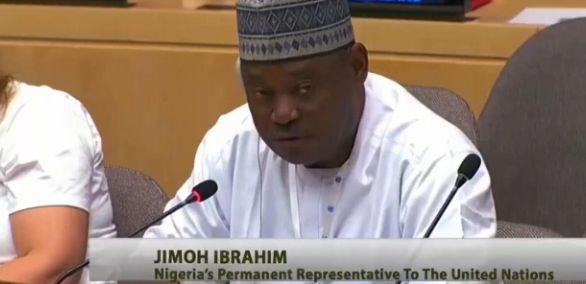
Nigeria has categorically declared that it does not possess, nor has it ever pursued, nuclear weapons or any other weapons of mass destruction (WMDs). The country’s Permanent Representative to the United Nations, Ambassador Jimoh Ibrahim, delivered this affirmation during the 108th Plenary Meeting of the 80th Session of the UN General Assembly.
Ambassador Ibrahim, who also serves as Chairman of the UN Committee on Budget and Administration, used the global platform to reiterate Nigeria’s steadfast commitment to international disarmament efforts, specifically the cessation of nuclear testing and the complete elimination of WMD threats.
In a significant diplomatic intervention, the Nigerian envoy called for a re-evaluation of Article 2(7) of the United Nations Charter, which enshrines the principle of non-intervention in the domestic affairs of sovereign states. While acknowledging the importance of state sovereignty, Ibrahim argued that this provision should not serve as a shield to protect nations that engage in nuclear testing or possess WMDs. He stressed that the international community must retain the capacity to act against such threats, regardless of domestic jurisdiction claims.
Conveying the official position of President Bola Tinubu, Ambassador Ibrahim detailed Nigeria’s robust domestic infrastructure for monitoring nuclear activities. He highlighted the Nigeria Atomic Energy Commission (NAEC) as the primary institution overseeing the country’s nuclear regulatory framework and ensuring compliance with international safety and non-proliferation standards.
Reinforcing its commitment to global security, Nigeria maintains active cooperation with several nuclear-capable states, including Russia, China, France, South Korea, and the United States. Ambassador Ibrahim noted that President Tinubu has directed him to intensify these partnerships, with a specific focus on collaborative efforts to permanently end nuclear weapons testing worldwide.
African Solidarity and the CTBT Anniversary
Aligning with the broader continental position, Ambassador Ibrahim endorsed the statement delivered by the African Group. He further congratulated member states on the 30th anniversary of the Comprehensive Nuclear-Test-Ban Treaty (CTBT), reaffirming that Africa remains a designated nuclear-weapon-free zone—a status that has seen the continent categorically reject nuclear explosive testing.
“Nigeria neither possesses nuclear weapons nor has ever pursued a nuclear weapons programme,” Ibrahim stated emphatically, underscoring the nation’s dedication to a safer, nuclear-free world.
He urged all UN member states to sustain their momentum in the global campaign against nuclear testing, emphasizing that collective vigilance is essential to eliminating the existential threats posed by such arsenals.
News
Education Stakeholders, SBMC Train Students on Skills for Self-Reliance
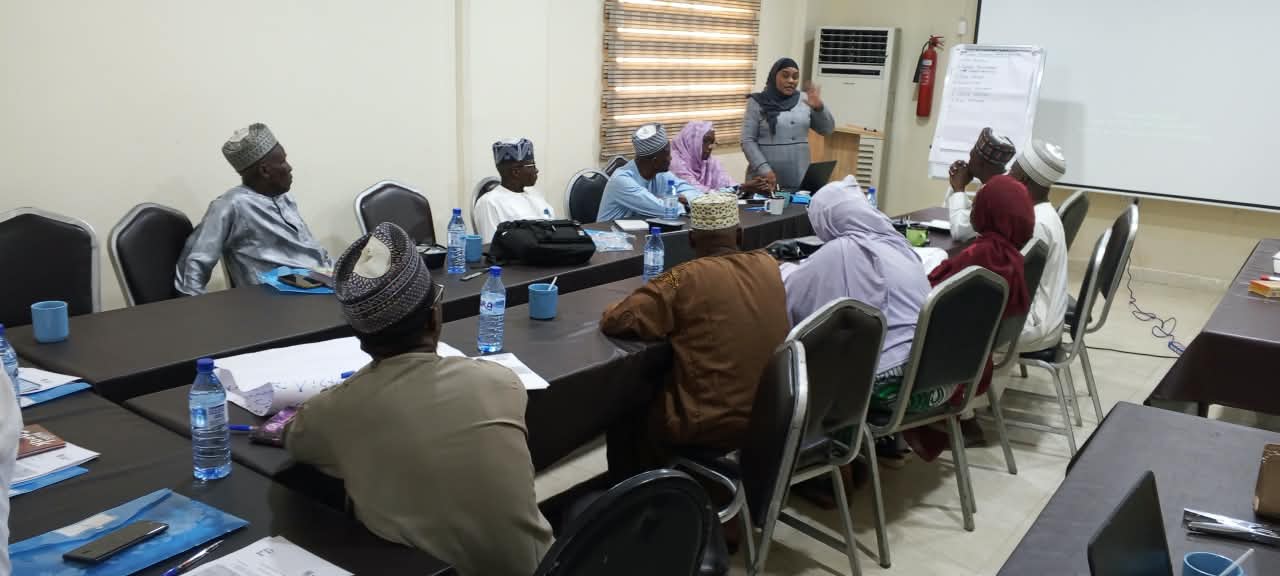
Education stakeholders and School-Based Management Committees (SBMC) in Kano State have stressed the need to equip students with practical skills alongside formal education to prepare them for self-reliance and reduce dependence on government employment.
Chairman of the School-Based Management Committees (SBMC) in Kano State, Tijjani Haladu Baraya, said the skills training programme was important because education should not only prepare students to obtain certificates but should also equip them with practical knowledge that can enable them to earn a living after graduation.
Baraya explained that the initiative was designed to teach students various skills while they are still in school, stressing that having formal education does not necessarily guarantee automatic access to government employment.
According to him, the reality of the current employment market makes it necessary for students to acquire additional skills that would enable them to create opportunities for themselves rather than waiting for government jobs.
He said, “If you study, you will not necessarily get a government job,” adding that the programme was specifically introduced to teach children in schools practical skills that would enable them to rely on themselves after completing their education.
Baraya further emphasised the importance of encouraging female students to acquire vocational and entrepreneurial skills, noting that such knowledge could help women become economically independent and contribute meaningfully to their families and communities.
The SBMC chairman said the committees were fully supporting the initiative because students could graduate with both academic certificates and practical skills, which, according to him, would give them a better chance of becoming self-reliant.
He added that equipping students with skills would also enable them to support their parents and reduce the financial pressure on families, particularly at a time when employment opportunities were becoming increasingly competitive.
Similarly, the Chairman of the Parent-Teachers Association (PTA) in Kano State, Dalhatu Salhu Maijumuri, described the training of students in practical skills as a highly important initiative capable of producing significant benefits for students, families and society.
Maijumuri said the programme would have a far-reaching impact because students who acquired practical skills could use them to establish businesses or provide services for themselves instead of waiting indefinitely for formal employment.
According to him, the era when students completed their education and immediately secured government jobs had largely passed, making it necessary for the education system to respond to the changing realities of the labour market.
“Gone are the days when students finish school and they will immediately get a government job,” Maijumuri said, pointing to the intense competition for the limited employment opportunities available.
He explained that where an organisation had only a few vacancies, thousands of qualified applicants could compete for the same positions, making reliance solely on formal employment an increasingly difficult option for young people.
“For example, now if there is a vacancy for like ten personalities, you will see hundred thousand people jostling for it,” the PTA chairman said, stressing the need for students to develop alternative means of livelihood.
Maijumuri therefore urged stakeholders in the education sector to continue supporting skills acquisition programmes in schools, saying that practical training would give students the ability to become self-reliant and productive members of society.
He further said that empowering students with vocational and entrepreneurial skills would not only benefit the individuals involved but would also reduce pressure on government to provide jobs for every graduate.
The PTA chairman also maintained that investment in skills acquisition would benefit future generations because children who received both formal education and practical training would be better positioned to contribute to economic development and build sustainable livelihoods.
He said the combination of academic education and practical skills would therefore strengthen the education system and ensure that students were prepared not only to seek employment but also to create employment opportunities for themselves and others.
The initiative, being implemented by the Society for Child Support and Economic Empowerment (SOCSEE) in partnership with Room to Read, will run from August to December 2026 across six Local Government Areas of Nasarawa, Fagge, Dala, Gwale, Kano Municipal and Kumbotso.
Speaking during a strategic one-day stakeholders’ meeting organised by SOCSEE in Kano, the organisation’s Executive Director, Sunusi Hashim, said the meeting was convened to review the project documentation and curriculum ahead of implementation.
News
Economists Project 12–20 Years Before Nigerians Reap Gains from Tinubu Reforms
By Yusuf Danjuma Yunusa
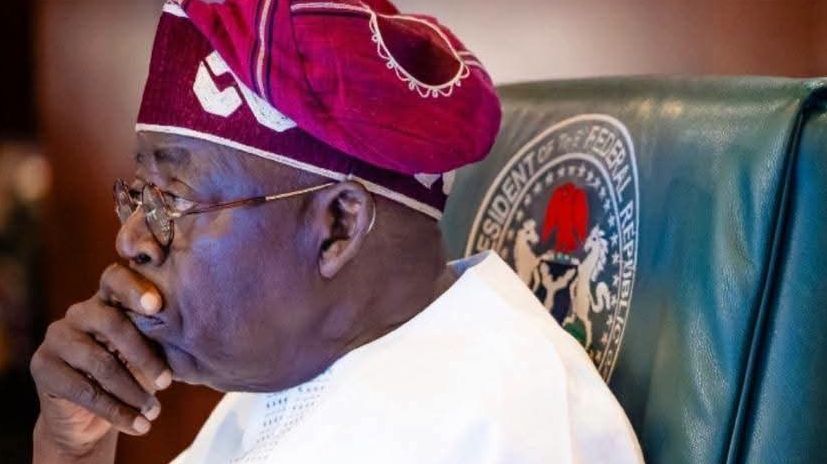
Economists say Nigerians may have to wait between 12 and 20 years to fully feel the benefits of President Bola Tinubu’s economic reforms.
According to them, the measures are likely to deliver gradual improvements in productivity and real incomes rather than immediate relief from high prices and declining purchasing power.
The economists told Nairametrics that major structural reforms typically involve a painful adjustment period before their benefits become evident, adding that the pace of improvement would depend largely on policy stability, infrastructure development, the rule of law and investments in productive sectors of the economy.
Chief Economist and Partner at SPM Professionals, Dr. Paul Alaje, said structural reforms generally take 12 to 20 years before their impact becomes significantly visible, although some countries have recorded meaningful results within six to 10 years.
“On the average, it takes 12 to 20 years before nations start feeling the impact of reforms. That does not necessarily mean such countries will see overnight reduction in their exchange rate. But what they will see is growth in real income as productivity expands,” Alaje told Nairametrics.
Financial economist at Nnamdi Azikiwe University, Dr. Felix Echekoba, also said major economic restructuring usually imposes short-term sacrifices before delivering long-term benefits.
“Most successful economic restructurings around the world imposed short-term sacrifices on the masses before long-term benefits.
“The challenge is working hard enough to ensure that the adjustment period does not become unnecessarily prolonged and that vulnerable citizens are protected,” he said.
According to Professor Tayo Bello, a development economist at Adeleke University, Nigeria’s experience is consistent with the pattern observed in other countries that have undertaken major subsidy and exchange rate reforms.
“There is no case of any country implementing major subsidy removal and exchange rate reforms without experiencing temporary economic distress. What matters are policy stability and whether the reforms ultimately fuel productivity and investment,” Bello said.
Why Nigerians are yet to feel the benefits
Tinubu introduced a series of far-reaching economic reforms after assuming office in May 2023, including the removal of petrol subsidies, liberalisation of the foreign exchange market, electricity tariff increases and tax reforms aimed at improving government revenue and fiscal sustainability.
The reforms have received support from international financial institutions, but their immediate impact has been overshadowed by elevated food and service prices, high interest rates and declining household purchasing power.
Alaje said the absence of key conditions needed to support structural reforms is limiting the speed at which Nigerians can benefit from the government’s policies.
According to him, countries that have achieved faster results from reforms typically had functional institutions, respect for the rule of law, adequate infrastructure and a high level of citizen awareness.
“A functional system where the rule of law is respected and obeyed, abundant infrastructure evident in the availability of roads, electricity and rail system, as well as high level of citizen awareness” are among the factors that can accelerate the benefits of reforms,” he said.
Alaje said Nigeria still faces significant gaps in these areas, particularly infrastructure and institutional effectiveness.
“Businesses are now approaching the banks, but interest rates are not coming down. It ranges between 30 and 40%. Households are now struggling with a minimum wage of N70,000, with the country’s poverty rate at over 140 million, more than 60% of the population,” he said.
He added that the poorest Nigerians would bear much of the burden during the adjustment period, warning that reforms alone would not be enough to lift millions of people out of poverty within a few years.
“It will take more than a decade for the masses to feel any positive impact of Tinubu’s reforms,” Alaje said.
Infrastructure, investment key to reform gains
Bello said macroeconomic stability achieved through reforms would only provide the foundation for broader economic transformation.
“Macroeconomic stability is only the first step. The real benefits come when reforms are buttressed by investments in infrastructure, manufacturing, agriculture, education and technology,” he said.
He added that countries that successfully transformed their economies combined fiscal and monetary reforms with aggressive industrialisation strategies.
Echekoba similarly said the government must ensure that the adjustment period does not become unnecessarily long while putting measures in place to protect vulnerable households.
The economists’ assessment is consistent with experiences from countries that undertook major economic reforms before recording broader improvements in living standards.
India’s economic liberalisation programme, introduced in 1991 following a balance of payments crisis, helped restore macroeconomic stability within about two years. However, broader gains in foreign investment, industrial growth and poverty reduction became more evident over the following decade.
Ghana’s Economic Recovery Programme, introduced in the 1980s, also took several years before inflation declined significantly and economic growth became more sustainable.
Indonesia’s reforms following the 1997 Asian financial crisis similarly took several years to restore investor confidence and return the economy to a stronger growth path.
Egypt’s 2016 currency flotation and subsidy reforms initially triggered a sharp rise in inflation, which exceeded 30%. The economy subsequently recorded stronger growth, increased foreign investment and improved macroeconomic stability after several years of implementation.
These experiences suggest that the economic benefits of major structural reforms can take several years to become widely visible, particularly where reforms are accompanied by significant increases in the cost of living during the initial adjustment period.
Before the removal of petrol subsidies in 2023, the Federal Government was budgeting about N3.36 trillion annually for fuel subsidy payments.
The Tinubu administration had argued that ending the subsidy would free up resources for infrastructure development and social programmes designed to cushion the impact of the policy on households.
However, the economists said the extent to which Nigerians ultimately benefit from the reforms will depend on how effectively the government deploys the savings and creates conditions for higher productivity, investment and real income growth.
Source: Nairametric

UN Assembly: Nigeria Affirms Nuclear-Free Status, Seeks Overhaul of UN Domestic Jurisdiction Rule

IT IS OVER: Gov Yusuf Ends 50-Year BUK Land Crisis Ushering Progress for 6,000 Families

Bello Sharada: A Great Writer, A Bookish Soul, Gone Too Soon

Education Stakeholders, SBMC Train Students on Skills for Self-Reliance

Economists Project 12–20 Years Before Nigerians Reap Gains from Tinubu Reforms

How Kano Digitized Land Turns N50m to N750m Monthly

Borders, Visas and the Beautiful Game: How U.S. Immigration Policies Shaped Global Perceptions During the 2026 FIFA World Cup

From World’s 9th Most Populous City to Perfect: As Gov Yusuf Revisits Kano Master Plan

Kano Islamic Scholar Declares Kano Widow Marriage Programme ‘Haram’, Urges Government to Stop It

95% of Governor Abba Kabir Yusuf’s Promises Have Been Fulfilled — CPS Interview By Musa Diso, In Kano
UN Assembly: Nigeria Affirms Nuclear-Free Status, Seeks Overhaul of UN Domestic Jurisdiction Rule
IT IS OVER: Gov Yusuf Ends 50-Year BUK Land Crisis Ushering Progress for 6,000 Families
Bello Sharada: A Great Writer, A Bookish Soul, Gone Too Soon
Education Stakeholders, SBMC Train Students on Skills for Self-Reliance
Economists Project 12–20 Years Before Nigerians Reap Gains from Tinubu Reforms
How Kano Digitized Land Turns N50m to N750m Monthly
Borders, Visas and the Beautiful Game: How U.S. Immigration Policies Shaped Global Perceptions During the 2026 FIFA World Cup
From World’s 9th Most Populous City to Perfect: As Gov Yusuf Revisits Kano Master Plan
Kano Islamic Scholar Declares Kano Widow Marriage Programme ‘Haram’, Urges Government to Stop It
95% of Governor Abba Kabir Yusuf’s Promises Have Been Fulfilled — CPS Interview By Musa Diso, In Kano
-

 Opinion5 years ago
On The Kano Flyovers And Public Perception
-

 Features5 years ago
How I Became A Multimillionaire In Nigeria – Hadiza Gabon
-

 Opinion6 years ago
Kano As future Headquarters Of Poverty In Nigeria
-

 History5 years ago
Sheikh Adam Abdullahi Al-Ilory (1917-1992):Nigeria’s Islamic Scholar Who Wrote Over 100 Books And Journals
-

 Opinion5 years ago
My First Encounter with Nasiru Gawuna, the Humble Deputy Governor
-

 History5 years ago
The History Of Borno State Governor Professor Babagana Umara Zulum
-

 History5 years ago
The Origin Of “Mammy Market” In Army Barracks (Mammy Ochefu)
-

 News4 years ago
Federal University Of Technology Babura To Commence Academic Activities September