
News
Kano APC Chieftain Calls For Re-election Of President Tinubu, Governor Yusuf
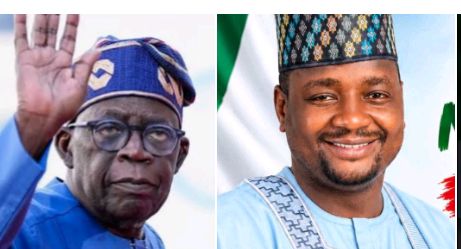
A philanthropist and prominent APC chieftain in Kano from Fagge Local Government Area, Hon. Haruna Kabiru Wakili, has called on Nigerians to re-elect President Bola Ahmed Tinubu and all APC candidates at every level in the 2027 elections.
Speaking, Hon. Wakili said as loyal members of the APC, President Bola Ahmed Tinubu is a leader with “focus” and “target” on the things he wants to achieve.
“He has not turned a blind eye like past leaders who understood the problems but refused to take proper action because they feared losing votes in an election. So they did nothing about it,” he said.
He added that history shows that anyone who tried to remove fuel subsidy did so in their second term.
“For example, former President Olusegun Obasanjo tried to remove the subsidy in his second term. At that time, Adams Oshiomhole was NLC President and organized protests, and Nigerians came out and said they did not agree.
The same thing happened to Jonathan in 2012. Even President Buhari, before he won the election, asked, ‘Who is subsidizing who?’ Is it the Nigerian Government that is giving Nigerians subsidy, or are Nigerians giving the Nigerian Government subsidy?”
Hon. Wakili said even when Buhari got into office, he realized there was a fundamental problem affecting the country’s economy, but he could not solve it because of fear of protests. “In his second term he said he would remove the subsidy, but he could not remove it completely.”
“But when President Bola Ahmed Tinubu came in, he said, ‘Let us tell ourselves the truth. There is no way we can continue walking with a broken leg. One day if we fall, we will not get up.’ On the very first day he was sworn in as President, he announced the removal of fuel subsidy. It was a painful decision. Even we did not understand it at first and we opposed it. But now we understand where he was headed.
“Today, anyone with knowledge of Nigeria’s economy knows that the problem has already been addressed. This fracture that was troubling the country, President Tinubu has fixed. What remains is for the leg to heal completely. Once we are fully healed, we will get up and run. No one will be able to catch us in Africa in terms of economic strength.”
He added that Tinubu has reformed the foreign exchange market. “Before, if you went to look for US Dollars you would be in distress. There were different rates everywhere. Some people were just sitting doing nothing and they were given dollar ‘allocations’ and were making billions without adding any ‘value’. Now the rate has been unified. Businessmen are seeing progress. Investors are coming in every day because the economy is improving.”
Hon. Wakili also commended the work of Governor Abba Kabir Yusuf. He said since Kano State was created, there has never been a Governor who turned it into a modern city comparable to major cities in the world except Abba.
“In places where you did not think a road would be built, new roads have now been constructed in the city and rural areas. Even the 5-kilometer roads abandoned by past governments are now being completed. Work is also ongoing on quality drainage systems and solar-powered streetlights.”
Wakili said that in the upcoming 2027 election, Governor Abba Kabir Yusuf has strong acceptance and stands a good chance of winning a second term under the APC.
“The party will defeat all governorship candidates of the opposition parties, especially *NDC* candidates who have no record of assisting the development of the people in all the political positions they have held.”
Hon. Wakili expressed optimism about the success of Deputy Senate President, Senator Barau I. Jibrin of Kano North in the 2027 election.
“If it were not because Governor Abba Kabir Yusuf joined the APC, Senator Barau I. Jibrin would be our governorship candidate. When the APC had no Governor in Kano, he was the one sustaining the party for almost 3 years. As a Senator and Deputy President of the Senate, he has given people jobs and appointments, and is distributing empowerment funds to thousands. That is why the people of Kano North will vote for him again.”*
He said in Kano Central they have Malam Ibrahim Shekarau, a highly respected person, a former Governor and former Senator, who is also the current APC Kano Central Senatorial candidate.
“He played a major role in developing Kano when he was Governor. When he was Senator he brought many constituency projects. Unlike Kwankwaso who, when he became Senator, did not bring even one brick in the name of constituency projects.”
In Kano South, he commended *Senator Kawu Sumaila* for working harder in his first term than the one who spent 16 years in the seat. He urged the people of Kano South to re-elect Kawu Sumaila as Senator for a second term in 2027 to continue enjoying the dividends of democracy.
Hon. Haruna Kabiru Wakili called on the people of Kano and Nigeria to vote for APC candidates in 2027.
“Because President Tinubu has the intention to improve the economy and solve the security problem. This is not about politics. It affects everyone. Let us support the Government at every level.”











News
Bauchi Govt Suspends Emir over Alleged Misconduct, Inaugurates Probe Panel
By Yusuf Danjuma Yunusa
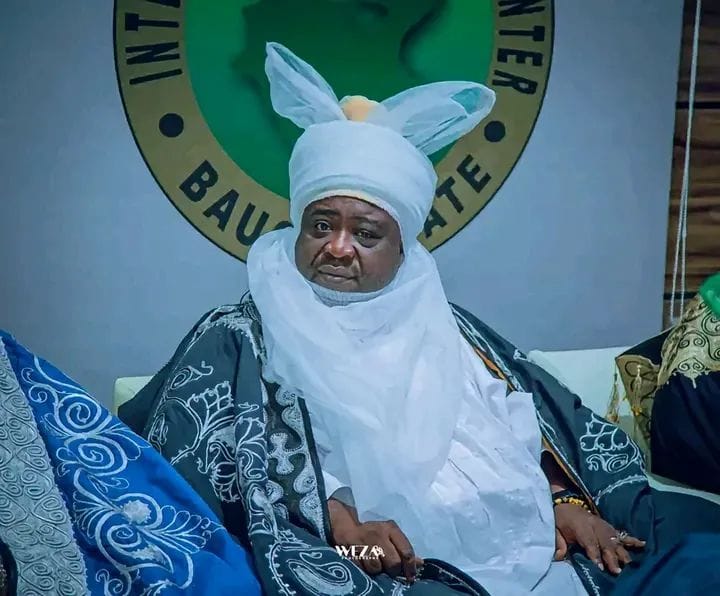
The Bauchi State Government has suspended the Emir of Lame, Aliyu Lame, in the Toro Local Government Area over allegations of misconduct.
The government also approved the constitution of a 12-member administrative panel of Inquiry to investigate the allegations against the traditional ruler.
This is contained in a statement on Saturday in Bauchi by the Special Adviser to Governor Bala Mohammed on Media and Publicity, Mukhtar Gidado.
According to him, the governor approved the decision after receiving formal petitions and intelligence reports from community leaders, stakeholders and security agencies.
Mr Gidado said the allegations included unlawful interference in land administration, unauthorised collection of levies, interference in the operations of mining companies and other alleged acts of misconduct.
He added that the alleged activities generated tension within the Lame Emirate and raised concerns about public peace and security.
“The Ministry for Local Government and Chieftaincy Affairs had earlier requested explanations from the Emir who submitted written responses.
“However, the government considered the explanations unsatisfactory and deemed it necessary to conduct an independent administrative investigation.
“The panel, chaired by retired Deputy Inspector-General of Police, Sani Mohammed, comprises representatives of security agencies, relevant ministries, Toro Local Government Area and other government institutions.”
He stated that the panel has three weeks to investigate the allegations, examine relevant documents, invite concerned parties and submit its findings and recommendations to the government.
The government spokesman further said that the suspension was a precautionary administrative measure aimed at safeguarding the integrity of the investigation and preventing possible interference with witnesses and official records.
He said that the emir was directed to remain within the Lame Emirate unless authorised otherwise and must refrain from interfering in its administrative, traditional and official affairs throughout the suspension period.
Mr Gidado also said that the government directed the Senior Councillor of the Emirate Council, Bala Gumau, to oversee its day-to-day administrative affairs in an interim capacity.
He said the government urged residents of the Lame Emirate and Toro Local Government Area, community leaders, traditional titleholders and youths to remain calm, peaceful and law-abiding while cooperating with the security agencies and the panel.
News
Kano Task Force Accuses Pharmaceutical Council of Nigeria of Shielding Drug Dealers
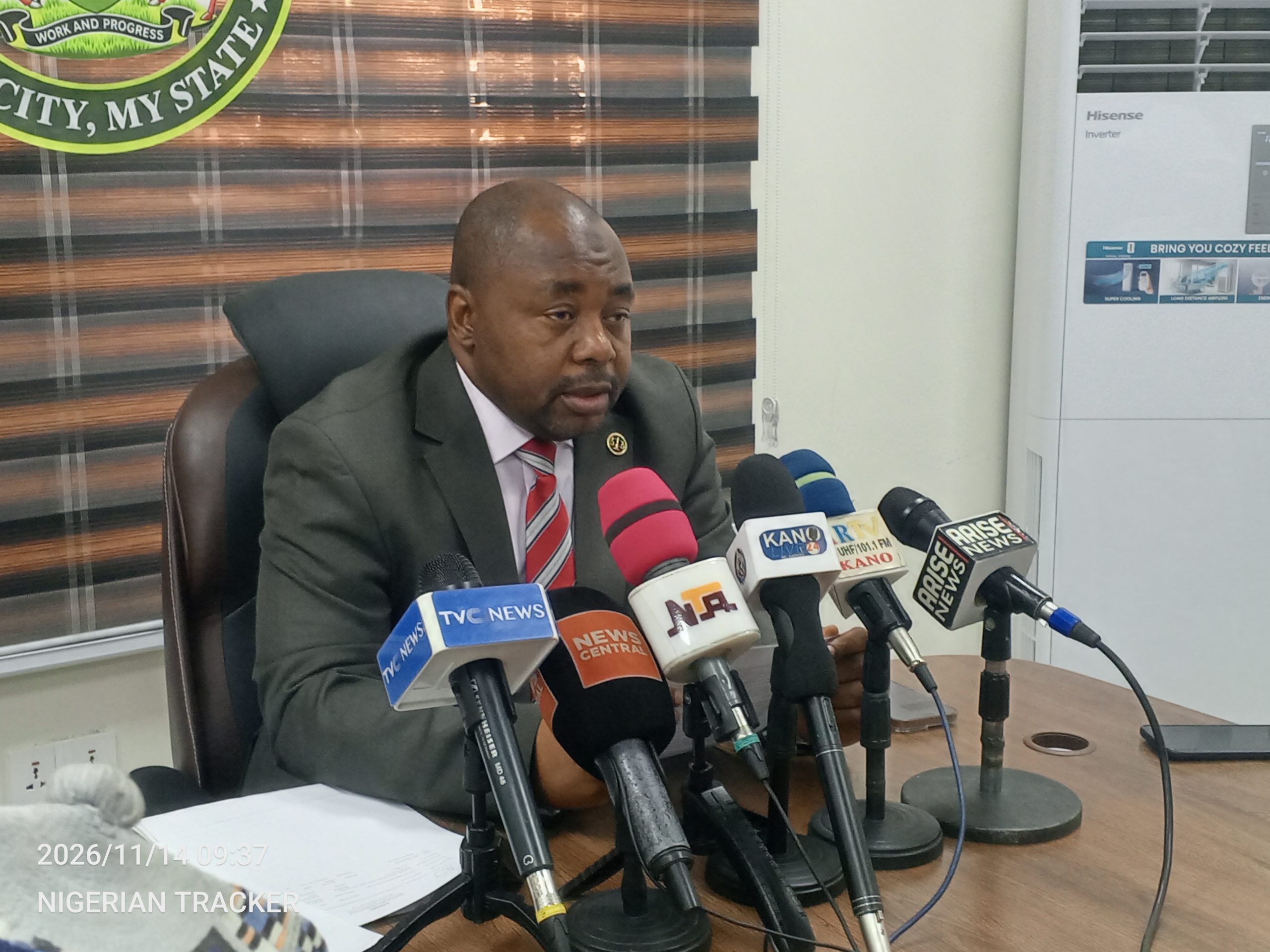
The Chairman of the Kano State Multi-Agency Taskforce on Drug Abuse and Illicit Trafficking, Muhuyi Magaji Rimingado, has accused the Pharmaceutical Council of Nigeria (PCN) of allegedly shielding drug dealers and facilitating the distribution of illicit substances in Kano State.
Rimingado made the allegations while addressing journalists in Kano, where he expressed concern over what he described as the involvement of some public officials in activities that undermine the state’s efforts to combat drug abuse and illicit drug trafficking.
The task force chairman said the fight against drug abuse in Kano had reached a critical stage requiring decisive measures against individuals and institutions allegedly using their public positions to create an enabling environment for illegal drug trafficking.
According to him, the task force would no longer concentrate exclusively on arresting drug users while individuals and organisations allegedly responsible for supplying the substances continued to enjoy protection from regulatory authorities.
Rimingado said pregabalin and other controlled substances remained among the most widely abused drugs in Kano State, adding that the situation required regulatory agencies to discharge their responsibilities with patriotism, professionalism and fear of Allah.
He argued that if regulatory institutions performed their statutory duties effectively, there would be little need for the state government to establish additional mechanisms to confront the growing problem of drug abuse.
The chairman disclosed that the task force had recorded 1,760 arrests since the commencement of its operations, with 890 suspects convicted for various drug-related offences.
He further stated that 63 suspects were awaiting trial, while approximately 690 convicted persons were being held in various correctional facilities.
Rimingado explained that other offenders had either been referred for rehabilitation, fined or sentenced to community service, describing the figures as evidence of the task force’s extensive efforts towards reducing drug demand, disrupting supply networks and confronting thuggery.
He maintained that the task force’s strategy recognised the direct relationship between drug abuse and the activities of street gangs and thugs, stressing that tackling the supply chain was essential to achieving sustainable results.
However, Rimingado said the task force could not continue arresting drug users without confronting those allegedly responsible for making the substances available to them.
He specifically accused some regulatory officials of shielding drug dealers despite having statutory responsibilities to prevent unauthorised access to controlled pharmaceutical products.
The task force chairman recalled the recent seizure of 3.18 million pregabalin capsules by the agency, describing the development as an indication of the scale of the drug distribution problem confronting Kano State.
According to Rimingado, eight out of every 10 suspected drug users arrested in Kano were either found in possession of pregabalin or confessed to abusing the substance.
He questioned the circumstances surrounding the issuance of import licences to pharmaceutical companies dealing in pregabalin, particularly following its rescheduling as a controlled drug by the National Agency for Food and Drug Administration and Control (NAFDAC) on September 14, 2026.
Rimingado wondered what regulatory data informed the issuance of import licences to several companies, alleging that some businesses had exploited the privileges granted to them to facilitate the distribution of controlled substances.
In what he described as findings from preliminary investigations, Rimingado alleged that an import licence granted to UGO Lab Production Nigeria Limited on October 23, 2026, was part of a wider network of companies allegedly involved in the unlawful distribution of pregabalin.
He claimed that investigations revealed that the owner of UGO Lab Production Nigeria Limited had also established another company known as SEEMARK Pharmaceutical Nigeria Limited, which he alleged was created as a front for clandestine drug distribution activities.
The task force chairman further accused the Pharmaceutical Council of Nigeria of facilitating the alleged activities by registering a property at No. 10 Apple Avenue, which he described as a purely residential location, for pharmaceutical operations.
According to Rimingado, the property was allegedly used as a concealed distribution outlet for pregabalin, thereby providing a channel through which the substance found its way into the streets of Kano.
He argued that registering a residential property for such activities amounted to a breach of the provisions of the Land Use Act and raised serious questions about the regulatory procedures followed by the PCN.
Rimingado said the alleged actions of the council had undermined the objectives of the Controlled Wholesale Chain (CWC), which he said the regulatory institution itself advocated.
He challenged the regulatory authorities to explain how pregabalin had become widely available on the streets of Kano despite its controlled status, insisting that the substance was rarely found in conventional pharmaceutical outlets across the state.
The chairman maintained that the widespread availability of pregabalin outside recognised pharmaceutical channels could not be dismissed as accidental, arguing that it pointed to possible weaknesses or deliberate compromises within the regulatory system.
Rimingado also alleged that some staff members of the Pharmaceutical Council of Nigeria were deeply involved in clandestine pharmaceutical businesses, claiming that such involvement explained what he described as the council’s excessive protection of its regulatory jurisdiction.
He expressed concern over what he considered the council’s insistence on exclusive authority to seal premises, even in situations where other government agencies had uncovered alleged wrongdoing.
The task force chairman noted that the PCN had fewer than 20 staff members in Kano State but continued to insist that it alone possessed the authority to seal premises suspected of violating pharmaceutical regulations.
He argued that such an approach was counterproductive, particularly when the state government’s multi-agency task force was working to address a public health and security challenge affecting thousands of residents.
Rimingado stressed that the statutory responsibilities of federal regulatory agencies should not be interpreted as immunity from legitimate oversight, collaboration or accountability by other relevant government institutions.
He maintained that public officials were expected to operate within the limits of the law and should not use their positions to obstruct efforts aimed at protecting the public from the dangers of illicit drug trafficking.
The chairman warned that any public official who acted contrary to the provisions of the law could face criminal liability, adding that the task force was prepared to deploy all necessary legal measures to address the alleged misconduct.
He reaffirmed the task force’s commitment to pursuing drug dealers, disrupting distribution networks and ensuring that individuals and institutions allegedly contributing to the drug abuse crisis were held accountable.
Rimingado said the fight against drug abuse in Kano required collective responsibility, insisting that regulatory agencies must demonstrate transparency, integrity and commitment if the state was to make meaningful progress in tackling the menace.
News
2027: INEC to Conduct Mock Presidential Poll Nov 28
By Yusuf Danjuma Yunusa
The Independent National Electoral Commission has fixed November 28, 2026, for a nationwide mock accreditation and voting exercise ahead of the 2027 general elections to test upgrades to its Bimodal Voter Accreditation System and electronic results transmission.
This comes as the commission said it has commenced the distribution of non-sensitive materials to some states ahead of the 2027 general elections.
INEC Chairman, Prof. Joash Amupitan (SAN), announced the mock election on Thursday during a dialogue at Chatham House in London, organised in partnership with the Kimpact Development Initiative, with the theme, “Nigeria’s 2027 Elections: Democratic Trajectory and Regional Stability Beyond the Ballot.”
According to a press statement issued in Abuja and signed by the Chief Press Secretary and Media Adviser to the INEC Chairman, Adedayo Oketola, Amupitan said the exercise would simulate the presidential election and enable the commission to assess the effectiveness of its accreditation and electronic transmission systems before the polls.
“On the 28th of this month, we will conduct a mock accreditation and voting exercise across all states of the federation to simulate the presidential election and verify that we have gotten both accreditation and electronic result transmission right,” he said.
The INEC chairman also disclosed that the commission had introduced technical safeguards to prevent inaccurate polling unit results and figures reflecting over-voting from being uploaded to its Result Viewing Portal.

Bauchi Govt Suspends Emir over Alleged Misconduct, Inaugurates Probe Panel

Kano Task Force Accuses Pharmaceutical Council of Nigeria of Shielding Drug Dealers

2027: INEC to Conduct Mock Presidential Poll Nov 28

Federal Character Commission Sues Customs, CG Adeniyi Over Alleged Recruitment Law Violations

2027: We Received Phone Call From Buhari’s Grave to Vote Atiku — Dalung Claims

Open The Social Sciences “A Tribute to a Heterodox Scholar: Mallam Ibrahim Muazzam

NDC Deputy Governorship Candidate Gives Kano Information Commissioner 48-Hour Ultimatum Over Alleged Defamation

Kano’s War On Drugs: How Barr. Muhyi’s Taskforce Is Changing The Game

Gov. Yusuf Appoints Inuwa Waya Director of International Corporations Engagement

Sen. Kalu Admits Selling Heavy Weapons to Any Buyer
Bauchi Govt Suspends Emir over Alleged Misconduct, Inaugurates Probe Panel
Kano Task Force Accuses Pharmaceutical Council of Nigeria of Shielding Drug Dealers
2027: INEC to Conduct Mock Presidential Poll Nov 28
Federal Character Commission Sues Customs, CG Adeniyi Over Alleged Recruitment Law Violations
2027: We Received Phone Call From Buhari’s Grave to Vote Atiku — Dalung Claims
Open The Social Sciences “A Tribute to a Heterodox Scholar: Mallam Ibrahim Muazzam
NDC Deputy Governorship Candidate Gives Kano Information Commissioner 48-Hour Ultimatum Over Alleged Defamation
Kano’s War On Drugs: How Barr. Muhyi’s Taskforce Is Changing The Game
Gov. Yusuf Appoints Inuwa Waya Director of International Corporations Engagement
Sen. Kalu Admits Selling Heavy Weapons to Any Buyer
-

 Opinion5 years ago
On The Kano Flyovers And Public Perception
-

 Features5 years ago
How I Became A Multimillionaire In Nigeria – Hadiza Gabon
-

 Opinion6 years ago
Kano As future Headquarters Of Poverty In Nigeria
-
 History6 years ago
Sheikh Adam Abdullahi Al-Ilory (1917-1992):Nigeria’s Islamic Scholar Who Wrote Over 100 Books And Journals
-
 Opinion5 years ago
My First Encounter with Nasiru Gawuna, the Humble Deputy Governor
-

 History5 years ago
The History Of Borno State Governor Professor Babagana Umara Zulum
-
 History6 years ago
The Origin Of “Mammy Market” In Army Barracks (Mammy Ochefu)
-
 News5 years ago
Federal University Of Technology Babura To Commence Academic Activities September