
News
KEDCO Revamps, Slashes Losses In 6 Months
Kano Electricity Distribution Company (KEDCO) has recorded significant performance improvement and reduction in aggregate technical, commercial, and collection (ATC&C) losses since its acquisition by the new core investor – Future Energies Africa (FEA).
KEDCO recorded 80% Billing Efficiency in June 2024 up from 75% in January 2024 and also reduced ATC&C by almost 20 percentage points to a record of 42%.
Recall that in November 2023, Future Energies Africa (FEA) acquired the highest stake in KEDCO and have since embarked on reforms geared towards business turnaround and sustainable transformation of the Company. Currently, about 52 feeders receive between 20 to 24 hours of supply (including 11 recently upgraded) through investments and improved service delivery.
These achievements are not merely coincidental but conscious efforts by KEDCO’s Board and Management, with ample support from the core investor, Future Energies Africa through investment efforts and constant adoption of effective mechanisms to expeditiously address extant challenges towards making KEDCO financially self-sufficient.
Prominent among the recent challenges overcome was the dispute with the Manufacturers Association of Nigeria (MAN), over the April 2024 supplementary tariff order which has now been resolved and KEDCO, in its customer-centric spirit urged for a round-table reconciliation approach, while reaffirming its continuous support for the prosperity of businesses and economic activities in the area.
KEDCO recently revamped top management with the addition of a new Chief Technical Officer (CTO) – Engr. Kassim Burkullu, who recently managed AEDC’s large network; a new Chief Commercial Officer (CCO) – Dr. Abubakar Jimeta, a seasoned industry professional; and two Special Directorates for Special Projects and Customer Solutions, manned by veterans – Engr. Inuwa Daneji and Engr. Shuaibu Adeiza.
During this period, the Company has invested over ₦1bn to deploy over 100 High Voltage smart Maximum Demand (MD) meters. Also, the deployment of over 3,000 prepayment meters on Band A feeders, through MAP vendor financing, all geared towards mitigating billing and commercial losses. Similarly, check meters have been installed on all major commercial feeders with high losses and bifurcation of those feeders, for improved power distribution, efficiency, and energy accountability which has led to a significant reduction in losses and improved collection efficiencies.
In the area of network reliability, the management has initiated expansion efforts in a bid to foster efficiency in service delivery and meet service-level agreement commitments. KEDCO’s projection is to achieve 25 percent ATC&C losses by year-end while meeting 100 percent market obligations as the NESI transitions to a Bilateral trading market.
KEDCO’s management has been tasked with turning the business around and are working round the clock to continue driving improvements. The Acting Managing Director, Abubakar Yusuf stated that, “ At all levels, we have prioritized collaboration, partnership, and regular stakeholders’ engagements within the government, traditional, security, political, religious, and community partners to drive progress. If KEDCO succeeds our communities succeed so it has to be a team effort.”















News
KANSIEC Chairman Advises Fruits Sellers Association to Modernize Business
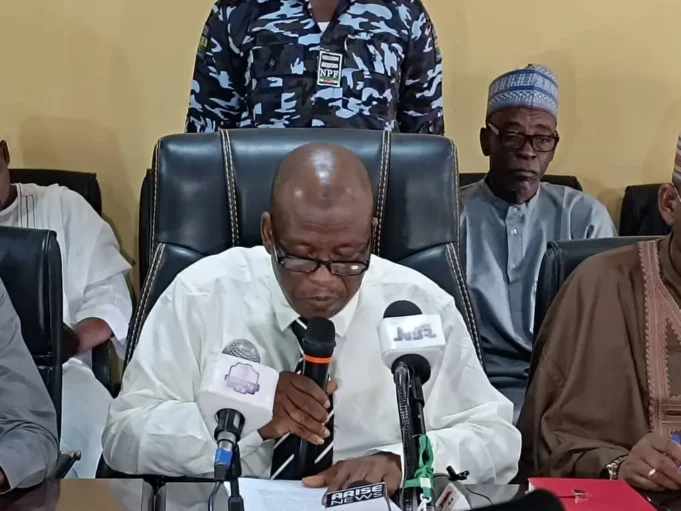
The Fruits Sellers Association, Kano State Chapter, has been advised to develop a strategic plan within a specific timeframe to modernize its business operations.
The Chairman of the Kano State Independent Electoral Commission, KANSIEC, Professor Sani Lawal Malumfashi, gave the advice during a courtesy visit by members of the association to his office.
Professor Malumfashi stated that the fruit business anywhere in the world serves customers from all backgrounds, both rich and poor, due to the importance of fruits in food consumption.
He maintained that the association should seek recognition across the three tiers of government in order to benefit from government policies and programmes.
The KANSIEC Chairman added that the present administration under the Executive Governor, Alhaji Abba Kabir Yusuf, is transforming Kano into a modern metropolitan city with many parks. He said fruit sellers should secure designated spaces around the corners of flyovers across the city.
Earlier, the Chairman of the Fruits Sellers Association of Nigeria, Kano State Chapter, Alhaji Safiyanu Abdullahi, said they visited KANSIEC to seek guidance on how to conduct free, fair, and peaceful elections within the association.
Bashir Habib Yahya
Media Aide to the KANSIEC Chairman
Date: 11/09/2026
News
Breaking :Former PDP National Chairman Alhaji Bamanga Tukur Is Dead
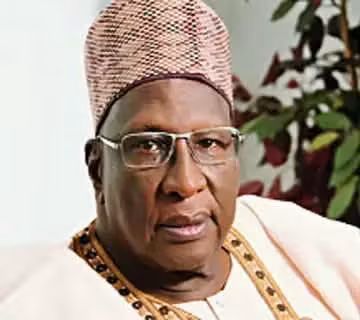
Former Chairman of the peoples Democratic party during Jonathan’s administration Alhaji Bamanga Tukur is dead .
A credible source in Yola the capital of Adamawa state informed Nigerian Tracker that Alhaji Bamanga Tukur passes on in Abuja.
The source said his body will later be conveyed to Yola the capital of Adamawa state for funeral at the palace of Lamidon Adamawa Alhaji Muhammad Barkindo .
Alhaji Dr. Bamanga Mahmud Tukur (CON) was a prominent Nigerian politician, businessman, administrator, and elder statesman who has had a towering impact on Nigeria’s socio-political and economic sectors for over six decades.
He was widely recognized for his roles as the former Governor of the old Gongola State, the former Minister of Industries, and the former National Chairman of the People’s Democratic Party (PDP).
Early Life and EducationDate of Birth: Born on 15 September 1935 in what is today Adamawa State, Nigeria.
Higher Education: He obtained a Master of Science (M.Sc.) degree from the University of Pittsburgh in the United States.
Honorary Recognition: He was awarded an honorary Doctorate Degree in Law (Honoris Causa) by Benue State University in Makurdi, Nigeria.
Traditional Titles: Reflecting his high regional and cultural status, he holds the distinguished traditional titles of Tafidan Adamawa and Wakilin Ganye in Adamawa State.
Career in Public Service & Governance
Nigerian Ports Authority (NPA):
Served as General Manager/Chief Executive from 1975 to 1982, managing port congestion and modernizing seaports.
Governor of Old Gongola State: Elected during the Second Republic in 1982, serving a brief term before the December 1983 military coup.
Minister for Industries: Served under General Sani Abacha’s military administration from 1993 to 1995.
Business and Continental Leadership Founder of BHI Holdings (Daddo Group),
Tukur expanded his economic influence across Africa:
Africa Business Roundtable (ABR): Founder, past president, and Life Patron.
NEPAD Business Group: Elected Chairman in March 2002.
International Maritime Stature: First African Vice President of the International Association of Ports and Harbours (IAPH)
PDP National Chairmanship (2012–2014)Elected PDP National Chairman in March 2012.
News
Nigeria’s Oil Output Hits 1.573m bpd as OPEC Production Rises–Report Says

By Yusuf Danjuma Yunusa
Nigeria’s crude oil production, excluding condensate, rose by 35,000 barrels per day (bpd) to 1.573 million bpd in August 2026, from 1.537 million bpd in July, according to the latest data from the Organisation of Petroleum Exporting Countries (OPEC).
The increase, representing a 2.3 per cent month-on-month (MoM) growth, places Nigeria among OPEC members that recorded higher production during the month.
OPEC, in its latest monthly data based on direct communication from member countries, said Nigeria’s August output was its highest monthly production level in the data provided for 2026.
The August figure also exceeded Nigeria’s average production of 1.552 million bpd in the second quarter of 2026, indicating a gradual improvement in upstream output.
The development comes amid renewed efforts by the Federal Government and oil producers to boost production through improved security, fresh upstream investments, new projects and the rehabilitation of existing assets.
Across OPEC, crude oil production increased by 346,000 bpd to 24.081 million bpd in August, from 23.735 million bpd in July.
Iraq recorded the largest increase among OPEC members, with output surging by 664,000 bpd to 3.378 million bpd. Kuwait followed with a 49,000-bpd increase to 1.894 million bpd, while the United Arab Emirates added 54,000 bpd to reach 3.835 million bpd.
Venezuela also increased production by 23,000 bpd to 1.145 million bpd.
However, some major producers recorded declines. Saudi Arabia’s output fell by 75,000 bpd to 7.276 million bpd, while Algeria and Libya declined by 8,000 bpd and 9,000 bpd to 999,000 bpd and 1.355 million bpd respectively.
Iran recorded the largest decline, with production dropping by 399,000 bpd to 2.086 million bpd.
Beyond OPEC, total production by the broader OPEC+ group, comprising OPEC members and participating non-OPEC producers under the Declaration of Cooperation (DoC), rose by 297,000 bpd to 38.055 million bpd in August.
Within the non-OPEC DoC group, Kazakhstan increased production by 159,000 bpd to 1.807 million bpd, while Russia cut output by 160,000 bpd to 8.718 million bpd.
For Nigeria, the latest production increase could provide some relief to government revenue and foreign exchange earnings, given the continued importance of crude oil exports to the economy.
Nigeria has set a target of raising crude oil production towards three million bpd by 2030, making sustained increases essential to achieving the ambition.
However, the country still faces significant challenges, including ageing fields, infrastructure constraints, crude theft, funding difficulties and the need to attract new investment into the upstream sector.
The August performance therefore represents progress, but maintaining the upward trend will be crucial if Nigeria is to close the gap between current production and its ambitious 2030 target.

From Desks to Degrees: How Governor Yusuf Is Bankrolling A Generation’s Future

KANSIEC Chairman Advises Fruits Sellers Association to Modernize Business

Breaking :Former PDP National Chairman Alhaji Bamanga Tukur Is Dead

Nigeria’s Oil Output Hits 1.573m bpd as OPEC Production Rises–Report Says

Subsidy Removal: Governors, Not Tinubu, Should Account for Funds — Gov Abiodun
From World’s 9th Most Populous City to Perfect: As Gov Yusuf Revisits Kano Master Plan

95% of Governor Abba Kabir Yusuf’s Promises Have Been Fulfilled — CPS Interview By Musa Diso, In Kano

Bello Sharada: A Great Writer, A Bookish Soul, Gone Too Soon

Call Me Chairman, Not Tony!’: Elumelu’s Blunt Correction of Trainee Splits Internet as Old Video Sparks Double Standard Fury

Nigerians Are Tired of Promises’ — CAN Demands Action on Insecurity, Hardship In Eid-el-Maulud Message
From Desks to Degrees: How Governor Yusuf Is Bankrolling A Generation’s Future
KANSIEC Chairman Advises Fruits Sellers Association to Modernize Business
Breaking :Former PDP National Chairman Alhaji Bamanga Tukur Is Dead
Nigeria’s Oil Output Hits 1.573m bpd as OPEC Production Rises–Report Says
Subsidy Removal: Governors, Not Tinubu, Should Account for Funds — Gov Abiodun
From World’s 9th Most Populous City to Perfect: As Gov Yusuf Revisits Kano Master Plan
95% of Governor Abba Kabir Yusuf’s Promises Have Been Fulfilled — CPS Interview By Musa Diso, In Kano
Bello Sharada: A Great Writer, A Bookish Soul, Gone Too Soon
Call Me Chairman, Not Tony!’: Elumelu’s Blunt Correction of Trainee Splits Internet as Old Video Sparks Double Standard Fury
Nigerians Are Tired of Promises’ — CAN Demands Action on Insecurity, Hardship In Eid-el-Maulud Message
-

 Opinion5 years ago
On The Kano Flyovers And Public Perception
-

 Features5 years ago
How I Became A Multimillionaire In Nigeria – Hadiza Gabon
-

 Opinion6 years ago
Kano As future Headquarters Of Poverty In Nigeria
-

 History5 years ago
Sheikh Adam Abdullahi Al-Ilory (1917-1992):Nigeria’s Islamic Scholar Who Wrote Over 100 Books And Journals
-

 Opinion5 years ago
My First Encounter with Nasiru Gawuna, the Humble Deputy Governor
-

 History5 years ago
The History Of Borno State Governor Professor Babagana Umara Zulum
-

 History5 years ago
The Origin Of “Mammy Market” In Army Barracks (Mammy Ochefu)
-

 News4 years ago
Federal University Of Technology Babura To Commence Academic Activities September