
News
The North always supports Yoruba Presidency – OPF replies OPC
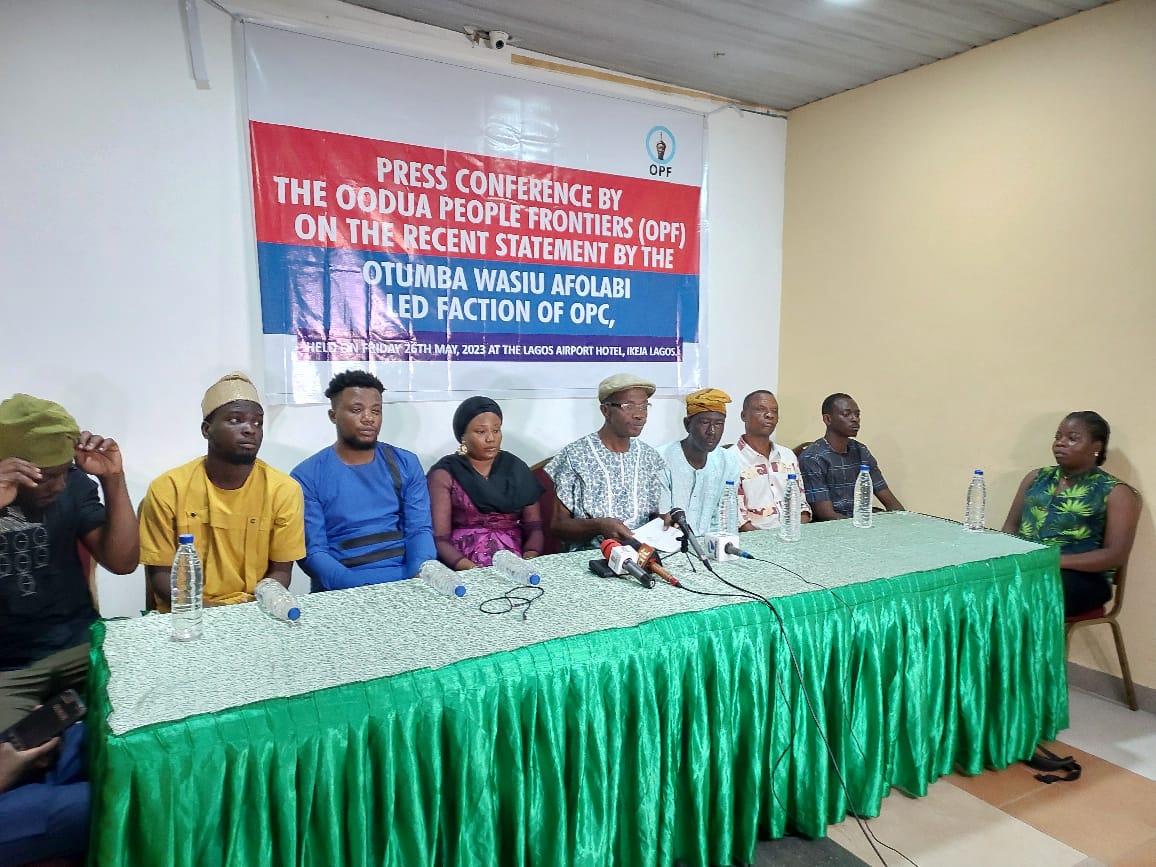
Moved by the recent threat to the North by the Oodu’a Peoples Congress (OPC) on the issue of contesting the National Assembly leadership sharing formula announced by the National Working Committee of the All Progressives Congress, the Oodu’a Peoples Frontiers (OPF) said, time immemorial, the North has always supported Yoruba Presidency.
In a statement issued to the media signed by the convener, OPF, Comrade Moses Oluwasegun Odewale said, the threat by the OPC, is in no way representative of the views of the decent Yoruba nation and should not be seen as such.
The statement said, “If anything, the threats, though empty and unsolicited, are embarrassing, shameful and only expose the inconsistencies of the OPC and other groups like the Afenifere that pose as representatives of the entire Yoruba nation.
IGP Usman Baba warns against subversive actions ahead of Nigeria’s presidential inauguration
“Whether OPC, Afenifere or any other group from any region wants to believe it or not, available facts and figures prove that the North is majorly responsible for the emergence of the Asiwaju as APC flag bearer and to his eventual victory at the polls.
“We cannot forget so quickly that eleven APC governors of Northern Nigerian states stood firmly against all odds and ensured that power moved to the South and to the Southwest in particular which paved the way for Tinubu’s emergence.
“And there is no disputing the fact that Tinubu’s final victory at the polls was secured by the northern votes which made up 60 percent of the total votes he got, far and above what he got in the Southwest.”
Odewale, reminded that, facts of history have shown how the North had been consistent with its support for a Yoruba presidency even at the expense of candidates from the North.
“During the 1993 elections, Bashorun Abiola contested on the platform of the Social Democratic Party, partly due to the influence of a northern force presented by the late General Shehu Yar’Adua.
“And at the polls, the Northern votes comprehensively went to Abiola to ensure his success over their own son, Alhaji Bashir Tofa, a prominent, respected personality.
“Record shows that of the 6.6 million votes that had been announced before the annulment, Tofa had received 2.3 million and Abiola 4.3 million of which more than half came from the North.
“Abiola won all the states of the south-west; three of the seven states in the south-east; five of the nine northern states including Kano, Tofa’s state; and four out of the seven states in the central middle belt.”
He further revealed that the gesture was replicated when Olusegun Obasanjo was released from prison by the northern establishment, made a candidate for the Peoples Democratic Party by the northern elite and voted for the presidency by the northern voters in 1999.
“On all these three occasions such self-professed Yoruba protection groups as the Afenifere and OPC were nowhere visible, in fact they only surfaced after the June 12 annulment to bask in the glory of what they did participate in.
“Also in 1999, Afenifere and the OPC led the Yoruba nation to favour Olu Falae while the North worked for Obasanjo’s victory against their son.
“And this time around, Afenifere openly declared opposition to Tinubu, OPC was missing in the field while the North did all the work.”
From its viewpoint, the OPF believes that by making it look like the OPC are protecting their son, the President-elect, Asiwaju Bola Ahmed Tinubu, it has ended up exposing him in particular and the South-west several political vulnerabilities in the future.
“It is therefore the peak of insanity, shamelessness and ingratitude for the OPC or any Southwest group to reward the North with threats in the false presence of defending their son whom they rejected earlier.”
OPF, therefore, emphatically dissociates the decent Yoruba nation from these threats to the North in particular and to any other section of the country while condemning with all might the uncivilized action of OPC that threatens the long standing political friendship that exists between the North and the Southwest.
OPF further called on the President-elect not to fall for the dirty game of the OPC and Afenifere which only aims to pitch him against his most reliable traditional political allies.
“Asiwaju should as much as possible distance himself from agents of destabilisation operating in various guises and instead concentrate on governance and the task of nation-building with justice and equity to all.”








News
Kano APC Chieftain Calls For Re-election Of President Tinubu, Governor Yusuf
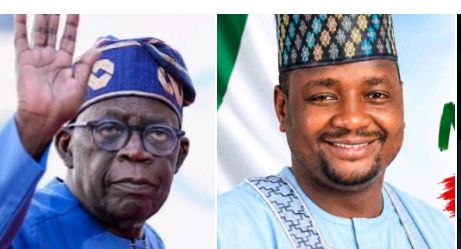
A philanthropist and prominent APC chieftain in Kano from Fagge Local Government Area, Hon. Haruna Kabiru Wakili, has called on Nigerians to re-elect President Bola Ahmed Tinubu and all APC candidates at every level in the 2027 elections.
Speaking, Hon. Wakili said as loyal members of the APC, President Bola Ahmed Tinubu is a leader with “focus” and “target” on the things he wants to achieve.
“He has not turned a blind eye like past leaders who understood the problems but refused to take proper action because they feared losing votes in an election. So they did nothing about it,” he said.
He added that history shows that anyone who tried to remove fuel subsidy did so in their second term.
“For example, former President Olusegun Obasanjo tried to remove the subsidy in his second term. At that time, Adams Oshiomhole was NLC President and organized protests, and Nigerians came out and said they did not agree.
The same thing happened to Jonathan in 2012. Even President Buhari, before he won the election, asked, ‘Who is subsidizing who?’ Is it the Nigerian Government that is giving Nigerians subsidy, or are Nigerians giving the Nigerian Government subsidy?”
Hon. Wakili said even when Buhari got into office, he realized there was a fundamental problem affecting the country’s economy, but he could not solve it because of fear of protests. “In his second term he said he would remove the subsidy, but he could not remove it completely.”
“But when President Bola Ahmed Tinubu came in, he said, ‘Let us tell ourselves the truth. There is no way we can continue walking with a broken leg. One day if we fall, we will not get up.’ On the very first day he was sworn in as President, he announced the removal of fuel subsidy. It was a painful decision. Even we did not understand it at first and we opposed it. But now we understand where he was headed.
“Today, anyone with knowledge of Nigeria’s economy knows that the problem has already been addressed. This fracture that was troubling the country, President Tinubu has fixed. What remains is for the leg to heal completely. Once we are fully healed, we will get up and run. No one will be able to catch us in Africa in terms of economic strength.”
He added that Tinubu has reformed the foreign exchange market. “Before, if you went to look for US Dollars you would be in distress. There were different rates everywhere. Some people were just sitting doing nothing and they were given dollar ‘allocations’ and were making billions without adding any ‘value’. Now the rate has been unified. Businessmen are seeing progress. Investors are coming in every day because the economy is improving.”
Hon. Wakili also commended the work of Governor Abba Kabir Yusuf. He said since Kano State was created, there has never been a Governor who turned it into a modern city comparable to major cities in the world except Abba.
“In places where you did not think a road would be built, new roads have now been constructed in the city and rural areas. Even the 5-kilometer roads abandoned by past governments are now being completed. Work is also ongoing on quality drainage systems and solar-powered streetlights.”
Wakili said that in the upcoming 2027 election, Governor Abba Kabir Yusuf has strong acceptance and stands a good chance of winning a second term under the APC.
“The party will defeat all governorship candidates of the opposition parties, especially *NDC* candidates who have no record of assisting the development of the people in all the political positions they have held.”
Hon. Wakili expressed optimism about the success of Deputy Senate President, Senator Barau I. Jibrin of Kano North in the 2027 election.
“If it were not because Governor Abba Kabir Yusuf joined the APC, Senator Barau I. Jibrin would be our governorship candidate. When the APC had no Governor in Kano, he was the one sustaining the party for almost 3 years. As a Senator and Deputy President of the Senate, he has given people jobs and appointments, and is distributing empowerment funds to thousands. That is why the people of Kano North will vote for him again.”*
He said in Kano Central they have Malam Ibrahim Shekarau, a highly respected person, a former Governor and former Senator, who is also the current APC Kano Central Senatorial candidate.
“He played a major role in developing Kano when he was Governor. When he was Senator he brought many constituency projects. Unlike Kwankwaso who, when he became Senator, did not bring even one brick in the name of constituency projects.”
In Kano South, he commended *Senator Kawu Sumaila* for working harder in his first term than the one who spent 16 years in the seat. He urged the people of Kano South to re-elect Kawu Sumaila as Senator for a second term in 2027 to continue enjoying the dividends of democracy.
Hon. Haruna Kabiru Wakili called on the people of Kano and Nigeria to vote for APC candidates in 2027.
“Because President Tinubu has the intention to improve the economy and solve the security problem. This is not about politics. It affects everyone. Let us support the Government at every level.”
News
ADC Urges INEC to Bar Partisan Lecturers from Serving as Returning Officers in 2027 Elections
By Yusuf Danjuma Yunusa
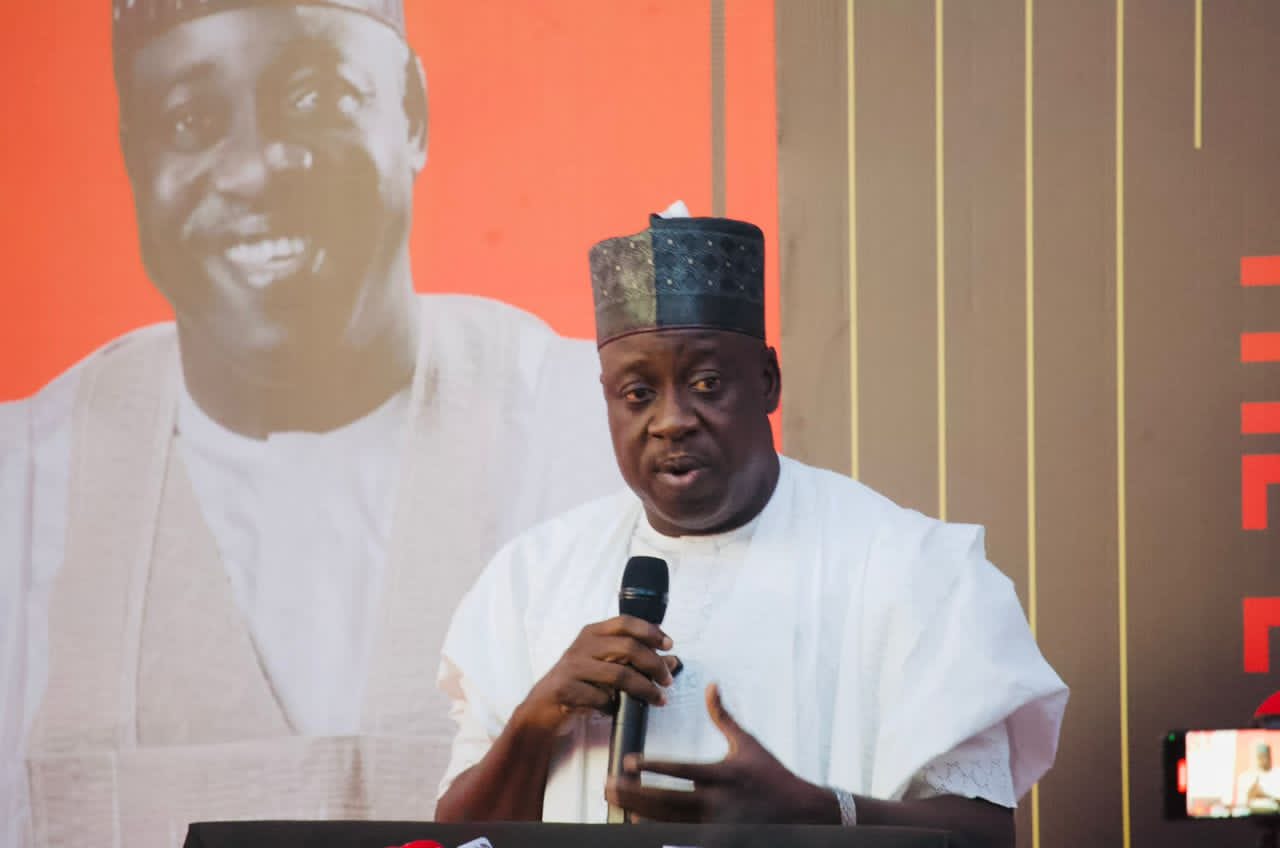
The African Democratic Congress (ADC) has called on the Independent National Electoral Commission (INEC) to review the appointment of politically exposed academics as Returning and Collation Officers for the 2027 general elections.
In a press statement issued on Monday, the party expressed concern over a newspaper report revealing that over 600 senior lecturers from public universities across Northern Nigeria have endorsed President Bola Ahmed Tinubu for the 2027 presidential election.
The ADC argued that this development raises fundamental questions regarding electoral credibility and conflict of interest, noting that university lecturers and vice chancellors are routinely entrusted with the sensitive responsibility of collating election results and declaring winners.
While acknowledging the constitutional right of every Nigerian, including academics, to support or endorse any political candidate, the party insisted that no individual who has openly taken a partisan position should be entrusted with determining the outcome of an election involving that candidate.
“The principle is straightforward,” the ADC stated. “You cannot campaign for a candidate and then be entrusted with counting the votes and declaring winners in the same election that your candidate is contesting in.”
The party, therefore, urged INEC to establish and publish clear criteria disqualifying academics and other prospective election officials who have publicly endorsed candidates, participated in partisan political activities, or otherwise demonstrated an obvious political affiliation.
Additionally, the ADC called on INEC to publish the names of proposed Returning and Collation Officers sufficiently ahead of the elections. This, the party said, would allow political parties and the public to identify and raise legitimate conflict-of-interest concerns.
“The integrity of an election does not begin when the first ballot is cast,” the statement read.
“It begins with the neutrality of the people entrusted to administer, collate, and declare its outcome. Nigerians must never be placed in a position where those who have publicly chosen a side are subsequently presented as neutral arbiters of the contest.”
The statement was signed by Mallam Bolaji Abdullahi, National Publicity Secretary of the African Democratic Congress.
News
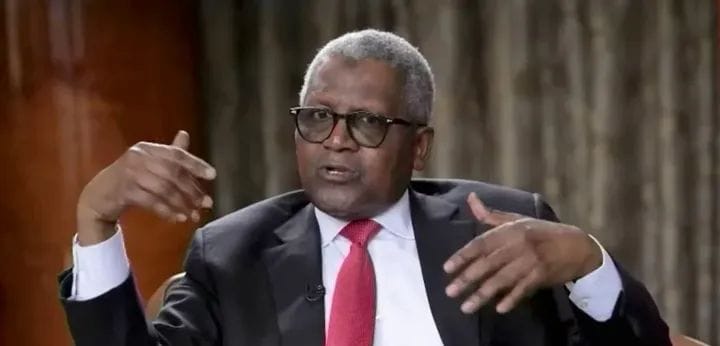
Male Heir Not My Priority ; My Daughters Are Doing Well, Says Dangote
By Yusuf Danjuma Yunusa
Aliko Dangote, President of the Dangote Group
Africa’s richest man, Aliko Dangote, says having a male child to sustain his family name and business empire is not his priority.
He noted that he has three daughters doing well.
Mr Dangote, 69, who is the president of Dangote Group and Dangote Refinery, made the statement during an interview on Arise TV, on Tuesday.
Asked if he was making efforts to have a son to sustain his legacy, Mr Dangote said, “That’s not really my priority. Let me say it blurntly. It is not really my priority. God controls everything. Sometimes you can pray to have a son but the son could be the one to drag the family name down.”
The Africa’s richest man further said he didn’t think a son would do better than the three girls he already has.
“Sometimes when God does give you a something don’t push it. I don’t think a son would have done better than the three girls I have,” he said.
Mr Dangote’s three daughters; Fatima, Halima and Mariya are holding key executive and leadership positions in the Dangote Group.

Kano APC Chieftain Calls For Re-election Of President Tinubu, Governor Yusuf

ADC Urges INEC to Bar Partisan Lecturers from Serving as Returning Officers in 2027 Elections

Male Heir Not My Priority ; My Daughters Are Doing Well, Says Dangote

BREAKING: APC Governors Hold Closed-Door Meeting Over Wike’s ‘Rainbow Coalition’

Oil Prices Rise After Saudi Pipeline Halt and Delayed Hormuz Talks

From World’s 9th Most Populous City to Perfect: As Gov Yusuf Revisits Kano Master Plan

95% of Governor Abba Kabir Yusuf’s Promises Have Been Fulfilled — CPS Interview By Musa Diso, In Kano

Bello Sharada: A Great Writer, A Bookish Soul, Gone Too Soon

Call Me Chairman, Not Tony!’: Elumelu’s Blunt Correction of Trainee Splits Internet as Old Video Sparks Double Standard Fury

Nigerians Are Tired of Promises’ — CAN Demands Action on Insecurity, Hardship In Eid-el-Maulud Message
Kano APC Chieftain Calls For Re-election Of President Tinubu, Governor Yusuf
ADC Urges INEC to Bar Partisan Lecturers from Serving as Returning Officers in 2027 Elections
Male Heir Not My Priority ; My Daughters Are Doing Well, Says Dangote
BREAKING: APC Governors Hold Closed-Door Meeting Over Wike’s ‘Rainbow Coalition’
Oil Prices Rise After Saudi Pipeline Halt and Delayed Hormuz Talks
From World’s 9th Most Populous City to Perfect: As Gov Yusuf Revisits Kano Master Plan
95% of Governor Abba Kabir Yusuf’s Promises Have Been Fulfilled — CPS Interview By Musa Diso, In Kano
Bello Sharada: A Great Writer, A Bookish Soul, Gone Too Soon
Call Me Chairman, Not Tony!’: Elumelu’s Blunt Correction of Trainee Splits Internet as Old Video Sparks Double Standard Fury
Nigerians Are Tired of Promises’ — CAN Demands Action on Insecurity, Hardship In Eid-el-Maulud Message
-

 Opinion5 years ago
On The Kano Flyovers And Public Perception
-

 Features5 years ago
How I Became A Multimillionaire In Nigeria – Hadiza Gabon
-

 Opinion6 years ago
Kano As future Headquarters Of Poverty In Nigeria
-

 History5 years ago
Sheikh Adam Abdullahi Al-Ilory (1917-1992):Nigeria’s Islamic Scholar Who Wrote Over 100 Books And Journals
-

 Opinion5 years ago
My First Encounter with Nasiru Gawuna, the Humble Deputy Governor
-

 History5 years ago
The History Of Borno State Governor Professor Babagana Umara Zulum
-

 History5 years ago
The Origin Of “Mammy Market” In Army Barracks (Mammy Ochefu)
-

 News4 years ago
Federal University Of Technology Babura To Commence Academic Activities September