
News
Despite spending millions of Naira, the residents of Birnin Kudu in Jigawa State lack access to portable water.
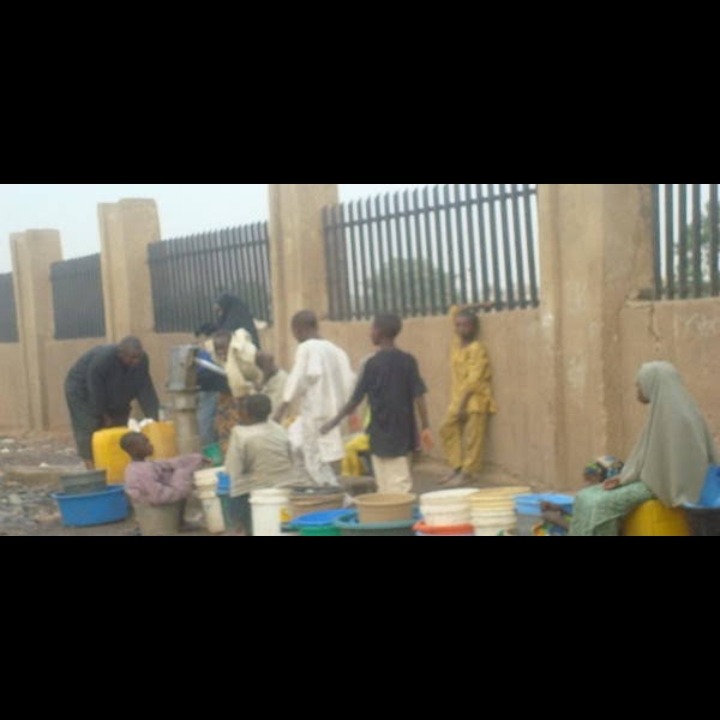
Our investigation revealed that major parts of Birnin Kudu communities have been grappling with this dire situation for over 2 years now, despite numerous complaints lodged to the relevant authorities. According to the community members, the problem of water scarcity in the area persists despite government allocating huge amount of money to address the issue, resulting to several challenges for the people in the communities.
In the past, Birnin-Kudu Local Government enjoyed uninterrupted water supply for over four decades utilizing and accessing water from the dams constructed by the former Kano State Governor, Audu Bako. However, subsequent governments pay little attention in maintaining dams forcing wealthy individuals in the community to resort to building boreholes as an alternative source for water, leaving the less privileged in dire situation.
Another concern raised by the residents during an interview with the reporter of CITAD Radio was the supply of untreated water to the community people by the Jigawa State Ministry for Water Resources. Despite spending 27 million Naira monthly by the Birnin Kudu Local Government authority, portable water remains elusive for the community. This supply of untreated water has caused significant challenges for the residents including adverse health challenges, difficulties in irrigation farming, and domestic usage.
This challenge is not unique to the residents of Birnin Kudu alone in the state, reports by Wikkitimes and Sahara Reporters in 2021 revealed that Jigawa State Government spent six billion Naira on portable water supply in the state, yet the situation remains unaddressed in many local governments in the state including Birnin-Kudu Local Government.
Speaking to Jigawa State Radio Cooperation, the chairman of Birnin Kudu Local Government, Magaji Yusuf Gigo stated the Local Government spends approximately 27 million Naira every month to provide portable water to the residents but the problem persists. Lamenting about the recent problem encountered in the Local Government, the chairman attributed it to technical fault in the engines that power the motorized water channels.
A resident of the community queried that if the previous administrations could pumped water three times a day why the current administration with all the money being spent could not supply the water at this moment when people need it the most.
In an exclusive interview with our reporter, a resident of the community, Mallam Da’u of Rijiya-Bakwai, lamented that he spends over 1000 Naira every day on water, but still it could not be enough for his daily usage. Speaking to our correspondent also, Malam Ashiru Yaro of Mahauta also shared his frustration, stating, “I cannot recalled the last time I turn on my tap and saw water.”
This water scarcity has caused local communities lose their primary source of income, which is irrigation farming. Discussing the challenges irrigation farmers are facing in the community, Malam Bala Mai Kayan Gwari who spoke with our correspondent in distress said “before this issue started we used untreated water released from dam for watering. However, since this problem arose, we resorted to using pumping machines which is very costly due to the high cost of diesel in the country”
Also, speaking to CITAD Radio correspondent, Malam Sani Zakari stated that his child was hospitalized due to drinking untreated water released from the dam.
In the 2023 budget, the Jigawa state government allocated over 200 million Naira for water supply and other related issues. However, the question remain, would this money be utilized for its intended purpose?
Reporting by Salim Sani Shehu; edited by Ali Sabo










News
Uromi Killings: Human Rights Group Demands Explanation Over N6m Given to Kano Victims’ Families
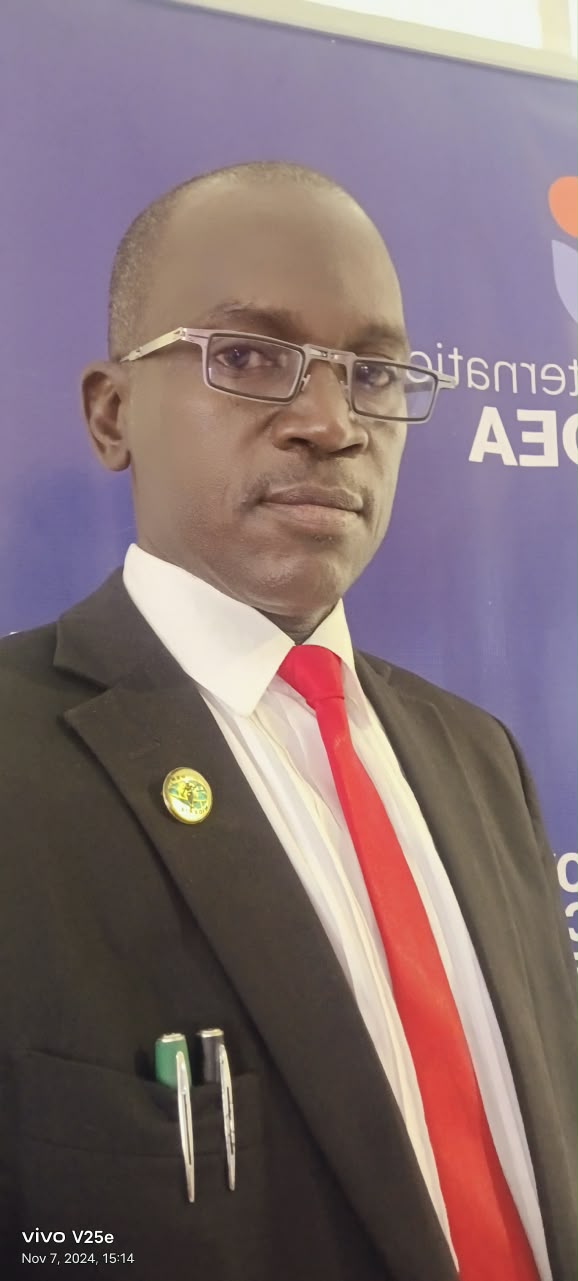
The International Human Rights Network has demanded clarification from the Kano State Government over the reported N6 million given to families of Kano hunters killed during the Uromi killings in Edo State.
The organisation wants Governor Abba Kabir Yusuf to explain whether the money was paid as compensation for the lives lost or was merely financial support to the bereaved families.
The coordinator of the International Human Rights Network, Comrade Haruna Ayagi, made the demand while addressing journalists in Kano, saying the families deserve transparency from the government on the nature and purpose of the payment.
Ayagi said the Kano Government should make the matter public and clearly communicate to the affected families whether the N6 million represents compensation, humanitarian assistance or another form of government intervention.
“We are drawing the attention of the government to be transparent. We want the government to do something and let it be open. They want an explanation of the N6 million given to them, whether it is compensation,” Ayagi said.
while those who sustained injuries were reportedly given N1.8 million each.
The human rights activist said the government should not stop at providing financial support but should also follow up with the Edo State Government and other relevant authorities regarding possible compensation for the victims.
Ayagi specifically urged Governor Yusuf to establish the status of any compensation or diya that may be due to the families of those killed, saying the victims’ relatives need clarity on what they should expect.
“It is not only the support we want. We want the Governor to follow up and track from the Edo State Government whether it is diya or support,” Ayagi said.
The coordinator also recalled that the Kano State Government had previously sent the Commissioner for Information to visit the affected families during Eid-el-Fitr, when relief materials and financial assistance were distributed.
According to Ayagi, the families were given bags of rice and cash support ranging between N250,000 and N350,000.
He said such assistance was appreciated but should not be confused with compensation for the lives lost, stressing that the government should state clearly what the N6 million represents.
Ayagi said the families of the deceased remained entitled to information about the steps being taken by the authorities to pursue justice and address the consequences of the killings.
One of the bereaved family members, Bala Dutse Ahmadu, said his son was among those killed in the Uromi incident and left behind 11 children who are now struggling to cope with life without their father.
Ahmadu said the financial assistance provided by the government had offered some relief to the family, but maintained that the support could not erase the consequences of losing a breadwinner.
“My son lost his life during the Uromi killings. He left 11 children. We are now in hardship since he left,” Ahmadu said.
He said the family appreciated the support received but insisted that compensation for the life lost had yet to be adequately addressed.
According to Ahmadu, the affected families are also seeking justice, saying the payment of financial assistance alone does not resolve the circumstances surrounding the deaths.
The International Human Rights Network therefore called on the Kano State Government to publicly clarify the N6 million payment and intensify its engagement with the Edo State Government and other relevant authorities on compensation and justice for the victims.
News
President Tinubu Adds Days to Working Vacation, Returns at Weekend

By Yusuf Danjuma Yunusa
President Bola Ahmed Tinubu will return to Nigeria this weekend after extending his working vacation in Europe by a few days, the State House announced Monday evening.
The President departed Nigeria on August 30 for London to begin the working vacation, which was initially expected to last three weeks. According to a statement issued by Bayo Onanuga, Special Adviser to the President on Information and Strategy, the President has since relocated to Paris, France, where he held meetings with French President Emmanuel Macron and businessman Mr. Vincent Bollore, whose media group includes Canal+, Multichoice, and Universal Music Group.
Despite his absence, the statement emphasized that President Tinubu has remained actively engaged with domestic affairs, particularly directing an independent panel to investigate the deaths of 37 illegal miners in Minna following their detention by the Nigeria Security and Civil Defence Corps.
The President has delegated Vice President Kashim Shettima to represent him at official functions. However, Vice President Shettima departed Abuja on September 20 for New York to attend the 81st United Nations General Assembly. In his absence, Secretary to the Government of the Federation, Senator George Akume, will continue to represent the President at official engagements.
On the political front, the statement noted that Senator Abubakar Yari, Director-General of the Presidential Campaign Council (PCC), has been leading consultations with prominent traditional rulers across the country alongside other notable party leaders.
The extension comes as the President’s initial three-week vacation timeline elapsed, with the State House confirming he will now return to the country at the weekend.
News
Court Adjourns El-Rufai’s N1 billion Suit Against ICPC, AGF, Police
By Yusuf Danjuma Yunusa
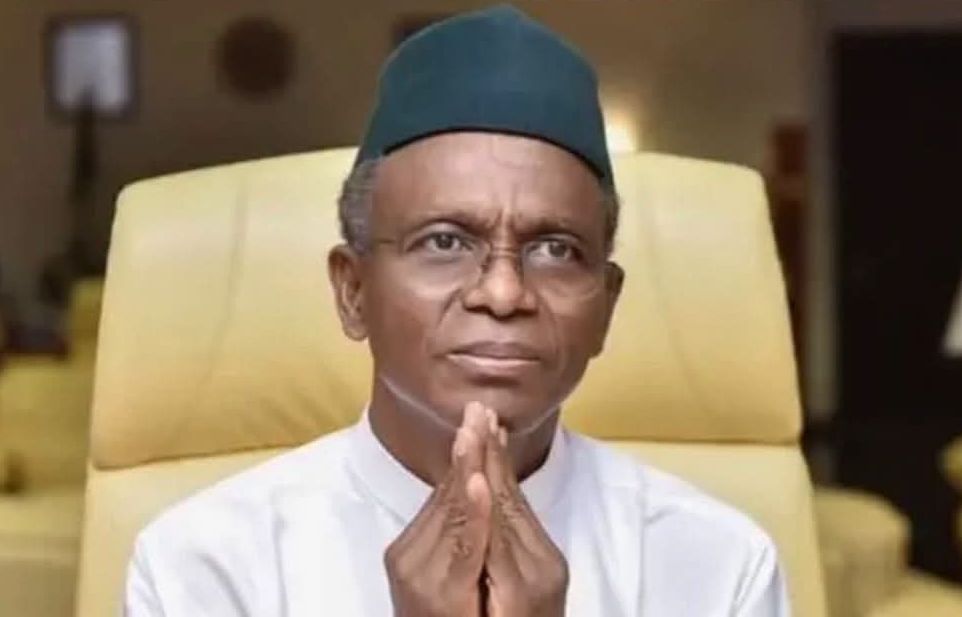
The Federal High Court, Abuja Division, on Monday adjourned a N1 billion rights suit filed by former Governor of Kaduna State, Nasir El-Rufai, against the Independent Corrupt Practices and Other Related Offences Commission (ICPC) and others until October 27 for a definite hearing.
Others named in the suit are the Inspector-General (IG) of police and the Attorney-General of the Federation (AGF) as the second and third respondents, respectively.
Justice Joyce Abdulmalik adjourned the suit to allow counsel to the former governor, Akinyemi Aremu, to respond to the counter affidavit filed by the AGF opposing the claims.
When the case was called, Mr Aremu informed the court that the matter was scheduled for hearing.
Counsel for the AGF, Maimuna Lami-Shiru, however, told the court that the AGF had filed a counter affidavit.
She prayed the court for leave to move their motion seeking an extension of time to deem their counter affidavit as being properly filed and served.
El-Rufai’s lawyer, Mr Aremu; Ezekiel Rimamsomte, who appeared for the IG, and the ICPC counsel did not oppose the application, and the judge granted it as prayed.
Mrs Abdulmalik then adjourned the case until October 27 for a definite hearing.
Earlier in the suit, the ex-governor sued the ICPC, the chief magistrate at the Magistrate’s Court of the FCT, Abuja, the IG, and the AGF as first to fourth respondents, respectively.
He, however, dropped the name of the magistrate from the case following his inability to specify the name of the magistrate who was sued as the second respondent, after the judge made the observation.
Mr El-Rufai is, therefore, demanding N1 billion in damages against ICPC, the IG and the AGF.
In an originating motion on notice marked FHC/ABJ/CS/345/2026, dated and filed February 20 by Oluwole Iyamu, SAN, the former governor sought seven reliefs.
He prayed the court to declare that the invasion and search of his residence at House 12, Mambilla Street, Aso Drive, Abuja, on February 19 at about 2:00 p.m. by the ICPC and IG amounts to a gross violation of the applicant’s fundamental rights.
He said it violated the dignity of the human person, personal liberty, fair hearing, and privacy under Sections 34, 35, 36, and 37 of the Constitution.
He urged the court to declare that “any evidence obtained pursuant to the aforesaid invalid warrant and unlawful search is inadmissible in any proceedings against the applicant, as it was procured in breach of constitutional safeguards.”
Mr El-Rufai, therefore, sought an order of injunction restraining the respondents and their agents from further relying on, using, or tendering any evidence or items seized during the unlawful search in any investigation, prosecution, or proceedings involving him.
He sought an order directing the first and third respondents (ICPC and IG) to forthwith return all items seized from the applicant’s premises during the unlawful search, together with a detailed inventory thereof.
He also sought an order awarding N1,000,000,000.00 (one billion naira) as general, exemplary, and aggravated damages, among others.
In its counter affidavit, the ICPC said it received a petition against Mr El-Rufai and, acting on it, commenced an investigation that led to the search at his residence.
It argued that its operatives acted under a valid search warrant issued on February 18 and executed on February 19 between 1:37 p.m. and 3:56 p.m. at 12 Mambilla Street, Asokoro, Abuja.
The commission said its officials were accompanied by Nigeria Police Force personnel and that the exercise was witnessed by Mr El-Rufai’s wife, Hadiza El-Rufai, and his son, Mohammed El-Rufai.
The ICPC, which urged the court to dismiss the suit, listed the items allegedly recovered from the residence.
The police, also in its counter affidavit deposed to by Ewa Anthony, argued that it had the statutory power to detect, arrest, investigate and prosecute offenders.
It argued that the search at Mr El-Rufai’s residence was carried out pursuant to a search warrant issued by a competent court of law.
The anti-graft agency disagreed with the ex-governor, insisting the search warrant was a genuine court order.
It said its officers who carried out the operation complied with all applicable legal procedures in executing the search warrant.
According to the police, the applicant is trying to use the honourable court to shield him from the security investigation and prosecution in court.
It, therefore, prayed the court to dismiss the suit in its entirety.

Uromi Killings: Human Rights Group Demands Explanation Over N6m Given to Kano Victims’ Families

President Tinubu Adds Days to Working Vacation, Returns at Weekend

Court Adjourns El-Rufai’s N1 billion Suit Against ICPC, AGF, Police

Tinubu Becomes First Post-1999 Nigerian President to Miss Three Consecutive UNGAs

FRAMAZAZ Foundation, Brigade Zumunci Train 50 Youths in Digital Entrepreneurship

95% of Governor Abba Kabir Yusuf’s Promises Have Been Fulfilled — CPS Interview By Musa Diso, In Kano

Bello Sharada: A Great Writer, A Bookish Soul, Gone Too Soon

NUT Launches ‘Go Public’ Campaign to Promote Public Education in Nigeria

Imam Jingir Sells Out, Deploys Muslim-Muslim Chants Minutes After ₦600 Million APC Windfall

Nigerians Are Tired of Promises’ — CAN Demands Action on Insecurity, Hardship In Eid-el-Maulud Message
Uromi Killings: Human Rights Group Demands Explanation Over N6m Given to Kano Victims’ Families
President Tinubu Adds Days to Working Vacation, Returns at Weekend
Court Adjourns El-Rufai’s N1 billion Suit Against ICPC, AGF, Police
Tinubu Becomes First Post-1999 Nigerian President to Miss Three Consecutive UNGAs
FRAMAZAZ Foundation, Brigade Zumunci Train 50 Youths in Digital Entrepreneurship
95% of Governor Abba Kabir Yusuf’s Promises Have Been Fulfilled — CPS Interview By Musa Diso, In Kano
Bello Sharada: A Great Writer, A Bookish Soul, Gone Too Soon
NUT Launches ‘Go Public’ Campaign to Promote Public Education in Nigeria
Imam Jingir Sells Out, Deploys Muslim-Muslim Chants Minutes After ₦600 Million APC Windfall
Nigerians Are Tired of Promises’ — CAN Demands Action on Insecurity, Hardship In Eid-el-Maulud Message
-

 Opinion5 years ago
On The Kano Flyovers And Public Perception
-

 Features5 years ago
How I Became A Multimillionaire In Nigeria – Hadiza Gabon
-

 Opinion6 years ago
Kano As future Headquarters Of Poverty In Nigeria
-

 History5 years ago
Sheikh Adam Abdullahi Al-Ilory (1917-1992):Nigeria’s Islamic Scholar Who Wrote Over 100 Books And Journals
-

 Opinion5 years ago
My First Encounter with Nasiru Gawuna, the Humble Deputy Governor
-

 History5 years ago
The History Of Borno State Governor Professor Babagana Umara Zulum
-

 History5 years ago
The Origin Of “Mammy Market” In Army Barracks (Mammy Ochefu)
-

 News4 years ago
Federal University Of Technology Babura To Commence Academic Activities September