
News
FG Begins Transmitting Data of Passports to Interpol
From Alhasan Abdullahi,Abuja
The Committee on Citizen Data Management and Harmonisation has concluded its assignment and substantially addressed the concern of the United States on citizen data that led to its imposition of a visa ban on Nigerians and Data on Passports.
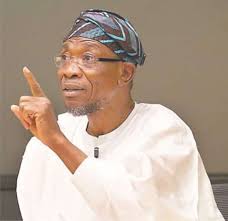
Minister of Interior and Chairman of the Presidential Committee, Ogbeni Rauf Aregbesola, disclosed this today at the State House Abuja when he presented the report of the Committee to President Muhammadu Buhari.
The Minister said out of the six areas raised by the United States, two have been fully met, two substantially met while work is ongoing on the remaining two.
According to Ogbeni Aregbesola, Nigeria “substantially provides information on Travellers Identity except for data on Emergency Travel Certificates for Nigerians being repatriated while information on 145,695 Lost and Stolen Passports had been transmitted to the INTERPOL Database as at 31st May 2020, following the intervention of the Committee.
PRAWA celebrates International day of Torture victims, urges Government to develop their database
“In addition, the Nigeria Immigration Service has now acquired the capability to directly transmit information on Lost and Stolen Passports to the INTERPOL Headquarters in Lyon which was one of the key demands of the United States”
The Committee, in its report, also urged the Federal Government to establish a National DNA data bank, testing laboratories and Data collection structures and formations across the federation to support the national security architecture with the view to finding lasting solutions to the security challenges bedevilling the country.
Ogbeni Aregbesola further said that the committee recommends the setting up of a Criminal Information Management System to include the establishment of a Data Fusion Centre fashioned after the INTERPOL model for pooling of crime data and a National Criminal DNA Laboratory with the Nigerian Police Force as the coordinating agency.
This, according to him, is to be complemented by an institutionalized standard procedure for the collection of DNA samples of all suspected criminals in government crime control and custodial facilities to aid criminal investigation and administration of criminal justice in the country. DNA is the holy grail of criminal investigation, helping law enforcement to solve the toughest crimes.
Aregbesola stated further that 14 agencies hold substantial citizens’ data which were largely disjointed and in duplicates, and as such the committee recommends that the Federal Government should issue an Executive order that would provide among others;
Exclusive collection of biometric data by NIMC and its Licensees; Exclusive storage of Biometric data in the National identity Database and the discontinuance of biometric data storage of new registration by all agencies and institutions in Nigeria, mandatory use of the NIN by all Mobile Network Operations (MNOs) for issuance of Subscriber Identification Module (SIM) with effect from 30th June 2021 subject to the issuance of NIN by NIMC to at least 80 per cent of the population and NIN as a unique identifier for all public servants and for Data
The Minister added that the Committee recommended the need for the National Population Commission to commence the digital birth, death and other vital registrations (marriage, divorce, adoption etc) at all hospitals and designated NPC offices in all the wards as well as integrate with the National Identity Database (NIDB) and that all agencies capturing identity data should be directed to commence full enforcement of NIN as a requirement for accessing their services.
He said that the Committee observed that an effective citizens data identity management system is a critical tool for planning well as national and global security, adding that deterring terrorism and related societal crimes through secure online identification, pre-screening and tracking of citizens; creating an interface for access and utilisation of identity-related data for delivery of services will help in solving security challenges in the country.
In a statement by Muhammad Manga Director of Press and Public relations to the minister of interior said the Committee noted the need to revive communication network deployed and owned by the government but has remained redundant over the years as this will help in achieving the required connectivity.
It will be recalled that following the temporary visa restrictions placed on Nigerian citizens on January 31, 2020, by the United States Government, His Excellency, President Muhammadu Buhari, GCFR, constituted an 18-member Committee on Citizen Data Management and Harmonization on 3rd February 2020 with membership comprising:
- Minister of Interior (Chairman)
- Hon. Minister of Communications and Digital Economy
iii. Hon. Minister of Finance, Budget and National Planning
- Hon. Attorney General of the Federation & Minister of Justice
- Hon. Minister of Foreign Affairs
- Hon. Minister of Police Affairs
vii. Director-General, National Population Commission (NPC)
viii. Director-General, National Identity Management Comm. (NIMC)
- Comptroller General, Nigeria Immigration Service (NIS)
- Chairman, Independent National Electoral Commission (INEC)
- Governor, Central Bank of Nigeria (CBN)
xii. Executive Chairman, Federal Inland Revenue Service (FIRS)
xiii. Executive Vice Chairman, Nigerian Communications Commission (NCC)
xiv. Inspector General, Nigeria Police Force (NPF)
- Corps Marshall, Federal Road Safety Corps (FRSC)
xvi. Director-General, Department of State Services (DSS)
xvii. Director-General, National Intelligence Agency (NIA)
xviii. Integrated Payroll and Personnel Information System (IPPIS), Office of the Accountant General of the Federation (OAGF












News
Kaduna Court Dismisses El-Rufai Trial Judge Recusal Application, Orders Accelerated Hearing

The Kaduna State High Court has dismissed an application seeking the recusal of Justice Darius Khobo from the trial of former Kaduna State Governor, Mallam Nasir Ahmed El-Rufai.
The court, in its ruling last week on the application, held that the applicant had not waived his right to complain of alleged bias by his conduct.
Justice Khobo, however, ruled that the multiple processes filed by the applicant before the Court of Appeal and the Kaduna State High Court constituted an abuse of court processes.
The court also held that the applicant failed to establish a likelihood of bias against him.
The court formulated three issues for determination in resolving the application.
On whether the applicant had waived his right to complain of bias by his conduct, the court resolved the issue in favour of the applicant, holding that the right had not been waived by mere conduct.
However, in the second issue, whether the applicant had abused the processes of the court, the court ruled in favour of the respondent, finding that the multiple processes filed before the Court of Appeal and the State High Court constituted an abuse of court process.
The third issue, which concerned whether there was a likelihood of bias against the applicant, was also resolved in favour of the respondent, with the court holding that the applicant failed to prove such likelihood.
In its final analysis, the court held that the application for recusal lacked merit and consequently refused and dismissed it.
The court directed that the trial on the substantive charge should continue on a day-to-day basis, as practicable in the circumstances.
It further ordered that the defendant remain in the custody of the Independent Corrupt Practices and Other Related Offences Commission, ICPC, pending the continuation of the trial.
The case was adjourned to October 12 and 13, 2026, for accelerated hearing.
News
Chinese, Nigerian workers celebrate Mid-Autumn Festival
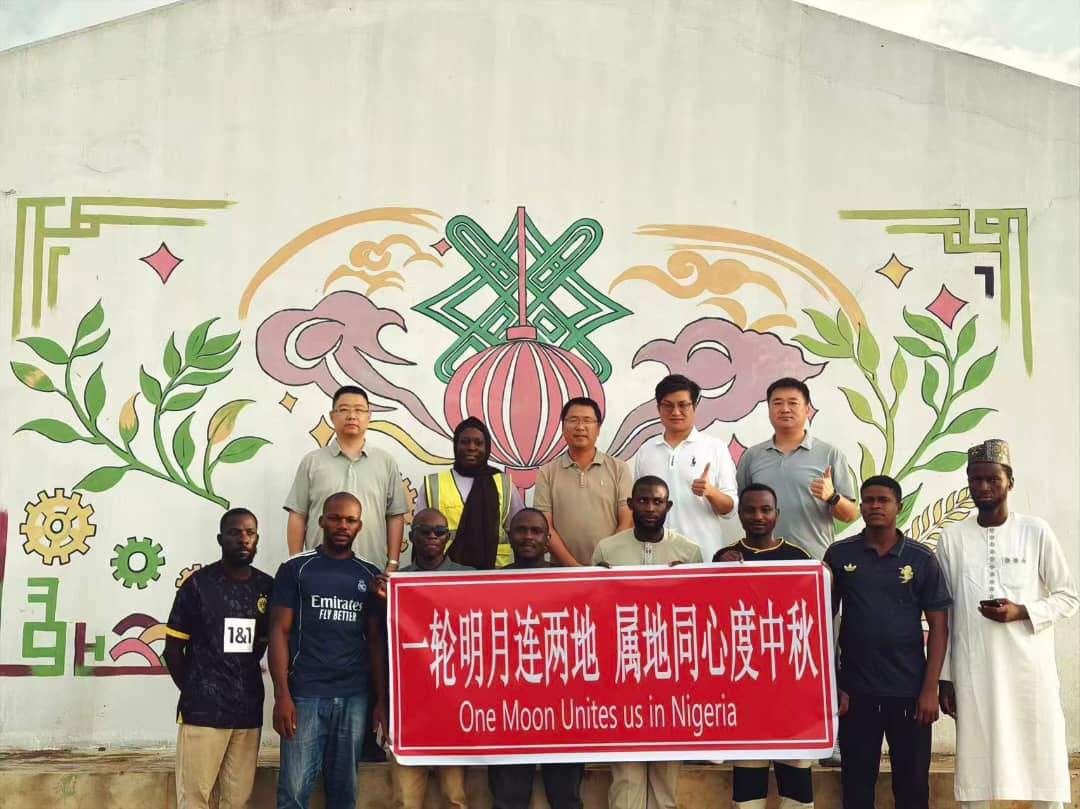
Chinese and Nigerian workers at a project site in Nigeria have celebrated the Mid-Autumn Festival with storytelling, poetry, traditional food and discussions aimed at promoting cultural understanding between the two countries.
The celebration, organised by the project team, brought Chinese and Nigerian colleagues together under the theme of cultural exchange, with participants sharing traditions and beliefs associated with the moon in their respective societies.
The event featured lantern displays, mooncakes, poetry recitals and presentations on the history and customs of the Chinese Mid-Autumn Festival.
Chinese staff introduced their Nigerian colleagues to traditional stories associated with the festival, including the legend of Chang’e flying to the moon and the story of Wu Gang and the cassia tree.
They also explained customs such as moon-gazing, eating mooncakes, displaying lanterns and solving riddles.
A major focus of the presentation was the Chinese cultural understanding of the festival as a time for family reunion.
The Chinese team explained that, even when family members are separated by distance, the full moon provides a symbolic connection as people look at the same moon and share thoughts and blessings with their loved ones.
The Nigerian participants said the emphasis on family togetherness resonated with values deeply rooted in Nigerian communities.
Sharing Nigerian moon traditions
The cultural exchange continued with a session in which Nigerian colleagues shared stories and traditions surrounding the moon in different Nigerian communities.
Participants spoke about local beliefs linking the moon with harvest, love, time and seasonal changes, while others explained how the moon has traditionally featured in communal gatherings and storytelling.
One of the Nigerian participants observed that full-moon nights in some communities are occasions for gathering, singing, dancing and storytelling, drawing parallels with the Chinese Mid-Autumn Festival.
The observation attracted laughter and applause from the participants, who noted the similarities between the two cultures despite their geographical distance.
Chinese staff also discussed the place of the moon in Chinese poetry and folk traditions, with participants agreeing that the shared appreciation of the moon provided a common cultural connection.
Poetry brings colleagues together
The celebration also featured a Chinese poetry session during which Nigerian colleagues were introduced to poems by renowned Chinese poets Su Shi and Li Bai.
The participants recited lines from Shui Diao Ge Tou and Jing Ye Si, with Chinese colleagues explaining the meanings of the verses and helping their Nigerian counterparts with pronunciation.
Particular attention was given to the famous sentiment wishing that loved ones would live long enough to share the beauty of the same moon despite being separated by distance.
The participants described the message as a universal expression of love, friendship and longing that transcends cultural boundaries.
Mooncakes symbolise friendship
The celebration ended with the presentation and sharing of mooncakes, a major traditional food associated with the festival.
Chinese staff explained that the round shape of the mooncake symbolises reunion and completeness before inviting their Nigerian colleagues to taste different varieties, including lotus seed, red bean and mixed-nut fillings.
For some of the Nigerian participants, it was their first experience of eating mooncakes.
One participant described the experience as more than tasting a new food, saying the gesture reflected the care and thoughtfulness of the project team.
The organisers said the celebration provided an opportunity for Nigerian colleagues to experience Chinese culture while enabling Chinese staff to learn more about Nigerian traditions.
They said such activities could strengthen mutual understanding, friendship and cooperation between Chinese and Nigerian workers.
The project team said it would continue to use traditional festivals and other cultural activities as platforms for people-to-people exchanges, with the aim of deepening China-Nigeria relations at the community and workplace levels.
The celebration, they added, demonstrated how cultural traditions can provide a bridge between people from different backgrounds and promote greater understanding and cooperation.
News
Independence Day: FG Declares October 1 Public Holiday

By Yusuf Danjuma Yunusa
The Federal Government has declared Thursday, October 1, 2026, as public holiday to mark Nigeria’s 66th Independence Anniversary.
The Minister of Interior, Dr. Olubunmi Tunji-Ojo, announced the declaration on behalf of the Federal Government in a statement issued on Wednesday by Dr. Magdalene Ajani, Permanent Secretary, Ministry of Interior.
Tunji-Ojo congratulated Nigerians at home and abroad, describing the anniversary as an opportunity to reflect on the country’s journey since independence and its prospects for the future.
He highlighted Nigeria’s human capital, natural resources and cultural diversity as key national assets, while stressing the importance of peace and stability to the country’s development.
The minister urged Nigerians to emulate the patriotism of the nation’s founding fathers and contribute to building a country that future generations would be proud of.
“As we celebrate 66 years of our independence, we should always remember that there is hope for our country and our diversity is our strength, and our collective determination remains the foundation upon which a stronger and more prosperous nation will be built,” he said.
Tunji-Ojo also called on citizens to use the celebration to promote unity, patriotism, peaceful coexistence and mutual respect.

Kaduna Court Dismisses El-Rufai Trial Judge Recusal Application, Orders Accelerated Hearing

Chinese, Nigerian workers celebrate Mid-Autumn Festival

Muhuyi and the Fight for Kano’s Future-Ismail Auwal

Independence Day: FG Declares October 1 Public Holiday

Dangote Sponsors Abuja Trade Fair, Features Refinery IPO

Zamfara Varsity ASUU Threatens Warning Strike Over FG-ASUU Agreement, Promotion Arrears

Bello Sharada: A Great Writer, A Bookish Soul, Gone Too Soon

Kano Chemists Threaten Warning Strike Over Alleged PCN Pressure

Per Ishaq Samaila: “Waziri” for Strategy. “Mai Jama’a” for Service. One Man. One Mission. Ibrahim Kabir Masari

UN Assembly: Nigeria Affirms Nuclear-Free Status, Seeks Overhaul of UN Domestic Jurisdiction Rule
Kaduna Court Dismisses El-Rufai Trial Judge Recusal Application, Orders Accelerated Hearing
Chinese, Nigerian workers celebrate Mid-Autumn Festival
Muhuyi and the Fight for Kano’s Future-Ismail Auwal
Independence Day: FG Declares October 1 Public Holiday
Dangote Sponsors Abuja Trade Fair, Features Refinery IPO
Zamfara Varsity ASUU Threatens Warning Strike Over FG-ASUU Agreement, Promotion Arrears
Bello Sharada: A Great Writer, A Bookish Soul, Gone Too Soon
Kano Chemists Threaten Warning Strike Over Alleged PCN Pressure
Per Ishaq Samaila: “Waziri” for Strategy. “Mai Jama’a” for Service. One Man. One Mission. Ibrahim Kabir Masari
UN Assembly: Nigeria Affirms Nuclear-Free Status, Seeks Overhaul of UN Domestic Jurisdiction Rule
-

 Opinion5 years ago
On The Kano Flyovers And Public Perception
-

 Features5 years ago
How I Became A Multimillionaire In Nigeria – Hadiza Gabon
-

 Opinion6 years ago
Kano As future Headquarters Of Poverty In Nigeria
-

 History5 years ago
Sheikh Adam Abdullahi Al-Ilory (1917-1992):Nigeria’s Islamic Scholar Who Wrote Over 100 Books And Journals
-

 Opinion5 years ago
My First Encounter with Nasiru Gawuna, the Humble Deputy Governor
-

 History5 years ago
The History Of Borno State Governor Professor Babagana Umara Zulum
-

 History6 years ago
The Origin Of “Mammy Market” In Army Barracks (Mammy Ochefu)
-

 News4 years ago
Federal University Of Technology Babura To Commence Academic Activities September