
News
Kannywood will hijack Nigerian entertainment industry – Sheshe
By Khalid Ibrahim, Kano
Kannywood film making industry has strived to survive the operational challenges for over two decades, the industry has been facing business metamorphic challenges that entail a transitional process from the traditional film production to what is presently in vogue known as TV series production.
Hausa film industry plays a great role in developing the cultural heritage of the Hausa community especially in terms of socio-economic life of the people as well as entertaining/educating audiences within and outside the community. For long, many challenges were confronting the industry.
According to one of the finest Kannywood producers Mustapha Ahmad popularly known as Alhaji Sheshe, in recent times film production requires a lot of money, though it differs from story to story adding that some stories require a larger sum, while some require less to implement.
Read also:The new trend of Hausa film making in Nigeria
He added that, before their arrival in the industry as producers, the industry is lacking producers of good stories that will make a huge investment in producing such good stories. Sheshe revealed that, though the industry lacks sponsors and government’s support, producers in the industry have tried to produce great stories.
The producer of films like Taqaddama, Rumana, Ta faru ta Kare, Matata ce sheda, Hikima among several others stated that, even though the industry has been battling against piracy for a very long time now, it is apparent that, the piracy operators are winning the battle and perhaps the reason why the industry is presently changing direction towards another different dimension. It is clear that the producers have resorted to cinema since 2017 to prevent the piracy issue as well as for them to remain in business.
Sheshe who is also the Chief executive Officer of Sheshe movies and J.S Inuwa investment was born and raised in Kano and he has made a huge investment in the Hausa movie industry.
He stresses that repositioning Kannywood means strengthening efforts that is aimed at increasing the standard of the Kannywood industry that would contribute to sustainable national development adding that with present challenges in the Hausa movie industry, he believes that there is a need for stakeholders to critically look into the proceedings as well as key-in into the various opportunities the present trend of a shift from home videos to TV series offers to the industry.
The young producer revealed that the Hausa film industry looking at the trend that necessitated its establishment has indeed shown signs that sooner or later the industry will hijack the Nigerian entertainment industry. He sighted an example of how the industry has successfully gone through a series of transitional phrases to arrive where it is today.
“Indeed things have been difficult for the industry in recent times, but that is another Phase that Kannywood will surely overcome as well as emerged out of it stronger than it went. To us in the industry, this is a positive sign that Kannywood will soon hijack the entertainment industry in Nigeria. No doubt we have come up of age and the best is indeed going to be Kannywood’s portion,” said Sheshe.
He added that the Hausa film industry is an indispensable tool for the achievement of sustainable development in any nation. Hausa film industry is the right type of industry in which the government should invest more and it would yield dividend because of the skilled manpower it would produce for the nation and also attract investors within and outside the country, it would also solve the unemployment problem among the youth












News
Dependable political ally’ — Tinubu celebrates Abdulmumin Jibrin at 50

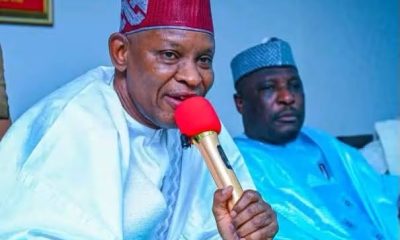
President Bola Tinubu has congratulated Abdulmumin Jibrin, the member representing the Kiru/Bebeji federal constituency in the house of representatives, on his 50th birthday.
In a statement issued on Tuesday by Bayo Onanuga, special adviser to the president on information and strategy, Tinubu described Jibrin as a dependable political ally and commended his intellectual rigour, entrepreneurial drive and commitment to public service.
The president praised Jibrin’s pursuit of knowledge, noting that his academic background at the University of Abuja, Ahmadu Bello University, Zaria, SBS Swiss Business School in Switzerland, Bayero University, Kano, and other institutions has shaped his approach to leadership and public service.
Jibrin holds two PhDs in international relations and economics, as well as an MBA from Bayero University. He also attended executive education programmes at Harvard Business School, Oxford and London Business Schools, and INSEAD in France.
Tinubu also acknowledged Jibrin’s record in public service, including his leadership of the house committees on finance, appropriations, land transport, foreign affairs, and housing and habitat.
According to the president, the lawmaker has contributed to debates and policies on public finance, fiscal policy, infrastructure and housing.
Jibrin also served as executive director at the Federal Housing Authority (FHA).
“Abdulmumin Jibrin represents a generation of Nigerians whose pursuit of knowledge, enterprise, and public service has been driven by a desire to make a difference,” the president said
His journey from scholarship and business into national politics reflects intellectual curiosity, resilience, and a deep commitment to Nigeria.
“At 50, he has much to celebrate, but I am confident that his most consequential contributions to our nation are still ahead.”
The president wished Jibrin renewed strength, good health, wisdom and fulfilment as he marked the milestone.
He also urged him to continue using his experience and knowledge to mentor younger Nigerians, strengthen democratic institutions and contribute to the development of Kano state and Nigeria.
Jibrin rejoined the All Progressive Congress (APC) in 2025 after he was expelled from the New Nigerian People’s Party (NNPP).
News
Ibrahim Little Condemns Attack on Journalists, Calls for Government Commitment to Ending Thuggery
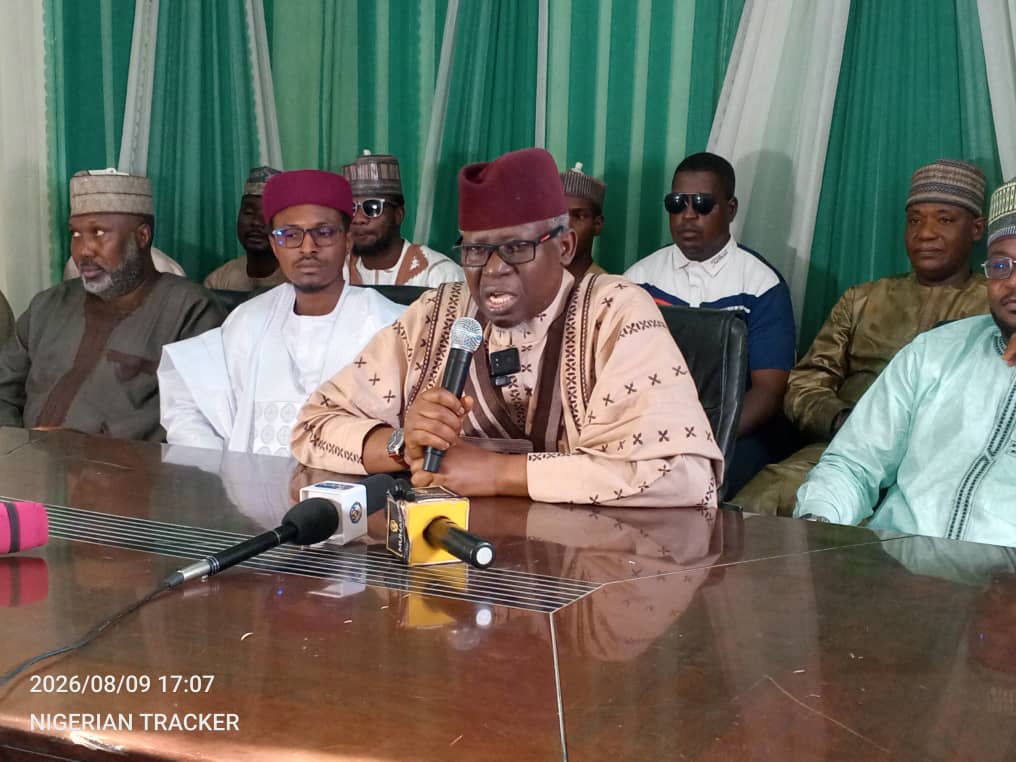
The gubernatorial candidate of the African Democratic Congress (ADC), Alhaji Ibrahim Ali Amin Little, has condemned the recent attack on journalists covering the All Progressives Congress (APC) rally at the Sani Abacha Stadium in Kano on Saturday
Little, in a statement signed by his Executive Assistant, Adnan Mukhtar, described the attack as unfortunate and unacceptable, calling on security agencies to demonstrate greater commitment to ending political thuggery in the state.
“Politicians are guilty of recruiting and using thugs during political rallies, and I believe this is absolutely wrong. Such actions contribute to the destruction of the future of our young people by exposing them to immoral and criminal activities.
“It is important that we tell ourselves the truth. A government that claims to be fighting thuggery, phone snatching and drug abuse should not be seen sponsoring or encouraging thugs to attend political rallies. This is unfortunate, unacceptable and uncalled for.
“Political rallies should be platforms for presenting ideas, engaging citizens and seeking their support, rather than breeding grounds for violence and criminality.”
Little extended his sympathy to the Nigerian Union of Journalists (NUJ), the affected journalists and all other victims of the incident.
He assured the people of Kano that, if elected, his administration would have zero tolerance for political thuggery and other forms of violence, stressing that his government would prioritise the protection of lives and property and create an environment where journalists and citizens can carry out their legitimate activities without fear.
News
Kano Allocates N27.8bn for ICT, CBT Centres Across 44 LGAs
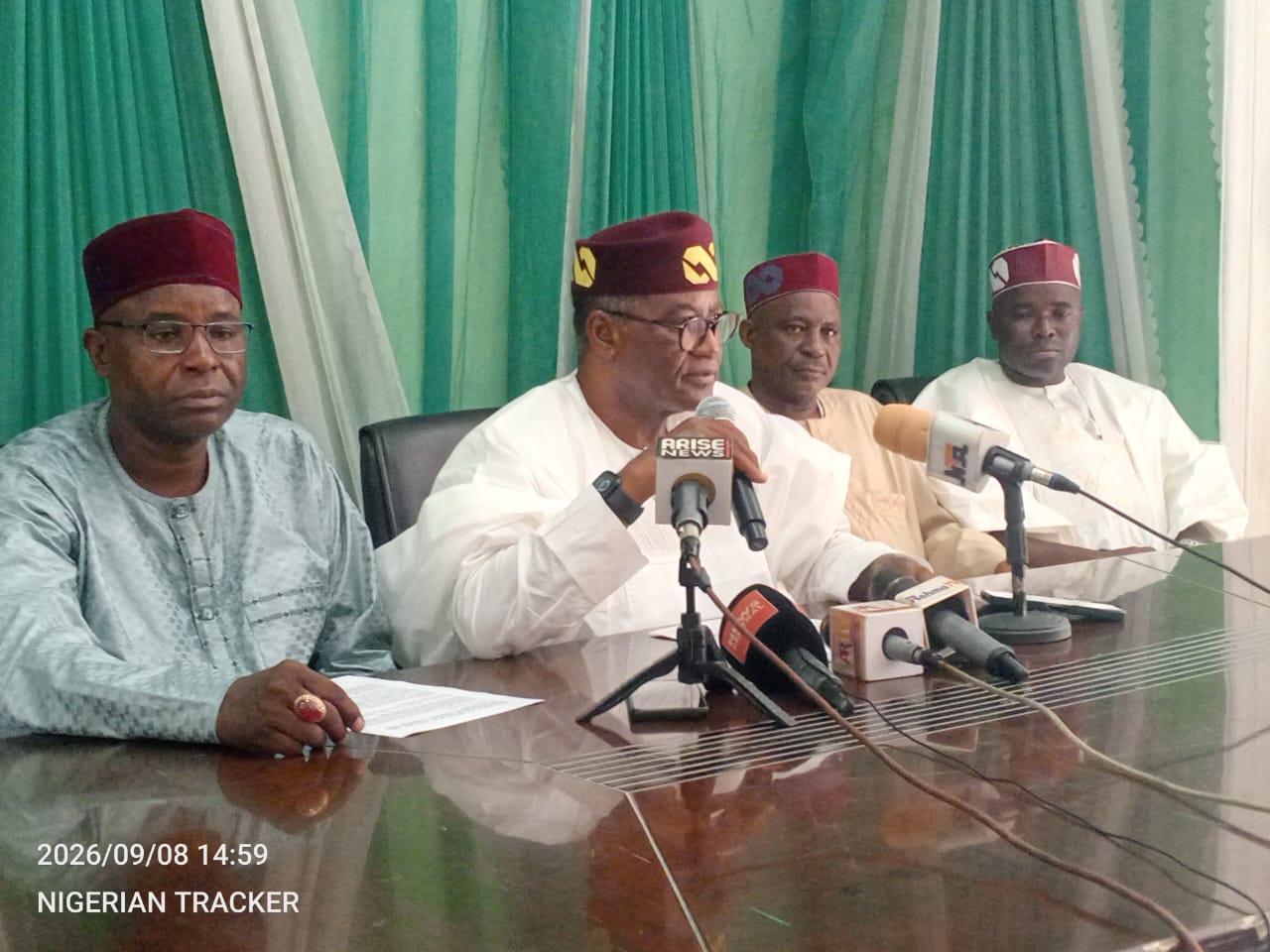
The Kano State Government has earmarked N27.806 billion for the establishment of Information and Communication Technology (ICT) and Computer-Based Test (CBT) centres across the state’s 44 Local Government Areas (LGAs).
The Commissioner for Local Government and Chieftaincy Affairs, Muhammad Tajuddin Uthman, disclosed this while addressing journalists at the Kano Press Centre, where he outlined a number of initiatives being undertaken by the government to improve security, education, healthcare and access to technology across the state.
Uthman said the proposed ICT and CBT centres would be established in each of the 44 LGAs to provide residents, particularly students, with access to computers and digital examination facilities without having to travel long distances to Kano metropolis.
The commissioner explained that the initiative was designed to address the difficulties faced by students from rural communities who are required to travel to the state capital to sit for examinations conducted electronically.
According to him, the government considers the establishment of the centres necessary because examinations and other important services are increasingly moving online, making access to computers and reliable internet-enabled facilities essential for students and other members of the public.
Uthman cited areas such as Dambatta and Gaya as examples of communities where students sometimes have to travel to Kano to access CBT facilities, stressing that the new centres would bring such services closer to the people.
He said the centres would not be restricted to examinations, as residents of the respective LGAs would also have opportunities to use the computers and other facilities for various digital activities, thereby improving their digital literacy and access to online services.
The commissioner disclosed that each of the proposed centres would have three compartments, with each compartment designed to accommodate 100 students at a time, giving each centre a total capacity of 300 students.
Uthman further stated that each centre would be equipped with 300 computers to ensure that a large number of candidates could participate in computer-based examinations and other digital activities simultaneously.
He explained that the government was also making provisions for uninterrupted power supply at the centres, with electricity expected to be supported through the Kano Electricity Distribution Company (KEDCO), generators and solar-powered systems.
According to him, the centres would operate on a 24-hour basis to maximise their usefulness and ensure that students, residents and other users could access the facilities beyond conventional working hours.
Uthman said users would be required to pay affordable charges for some of the services provided at the centres, explaining that the fees would help sustain the facilities, maintain the equipment and ensure that the centres remain functional after their establishment.
On security, the commissioner said the state government was strengthening existing security arrangements in the 44 LGAs through additional measures, including the deployment of forest guards to areas where insecurity has been identified as a challenge.
Uthman said the additional security arrangements were aimed at improving rapid response to security threats and enhancing the safety of residents, particularly in local government areas and communities considered vulnerable to attacks.
He further disclosed that military bases would be established in strategic locations across the state as part of measures to strengthen security and improve the government’s ability to respond quickly to emerging threats.
The commissioner said the government was determined to ensure that security challenges did not prevent residents in rural communities from accessing government services, education, healthcare and other opportunities.
On healthcare, Uthman announced plans to provide a rural emergency ambulance for wards across the state’s 44 LGAs as part of efforts to improve access to emergency and basic healthcare services for people living in rural communities.
He explained that the ambulances would be designed specifically for rural environments and would help transport patients requiring urgent medical attention from remote communities to appropriate healthcare facilities.
According to the commissioner, the ambulances would be in the form of tricycles adapted for emergency medical transportation, making them suitable for communities and roads where conventional ambulances may experience difficulties.
Uthman added that each ambulance would have two drivers assigned to it to ensure availability and continuity of service, while qualified drivers would be recruited by the government to operate the vehicles.
He said the rural ambulance programme was specifically intended to bring emergency healthcare closer to rural dwellers and reduce delays in transporting patients to health facilities.
The commissioner also disclosed plans to establish electric vehicle charging points in the metropolitan area as part of the government’s efforts to promote cheaper and more sustainable transportation.
Uthman said the charging infrastructure would support users of electric motorcycles and electric tricycles and would make it easier for residents to adopt electric vehicles as an alternative means of transportation.
He explained that increasing access to charging facilities would contribute to reducing the cost of transportation for residents while also supporting the state’s transition towards cleaner energy-powered mobility.
The commissioner commended Abba Bichi for his contribution towards the provision of solar-powered facilities, describing such initiatives as important to the state’s efforts to expand access to reliable and alternative sources of electricity.
Uthman also said the state government would continue its efforts to revive entrepreneurship, stressing that the development of small businesses and self-employment opportunities remained an important part of its strategy for improving livelihoods and economic opportunities for residents.
He said the various initiatives in ICT, healthcare, security, renewable energy and entrepreneurship were aimed at bringing government services and opportunities closer to residents across the 44 LGAs, particularly those living in rural communities.

Dependable political ally’ — Tinubu celebrates Abdulmumin Jibrin at 50

A FRIEND’S LETTER TO ABDULMUMIN AT FIFTY

Ibrahim Little Condemns Attack on Journalists, Calls for Government Commitment to Ending Thuggery

Kano Allocates N27.8bn for ICT, CBT Centres Across 44 LGAs

Governor Yusuf celebrates Abdulmumin Jibrin Kofa at 50

From World’s 9th Most Populous City to Perfect: As Gov Yusuf Revisits Kano Master Plan

95% of Governor Abba Kabir Yusuf’s Promises Have Been Fulfilled — CPS Interview By Musa Diso, In Kano

Kano Islamic Scholar Declares Kano Widow Marriage Programme ‘Haram’, Urges Government to Stop It

We’re aware of your clandestine meetings with Lulu-Briggs, 𝐏𝐢𝐝𝐨𝐦𝐬𝐨𝐧, CRP uncovers ex-MD of NDDC, Nunieh

Between Sabotage and Scepticism: Why Nigeria’s Oil Dream Keeps Stalling
Dependable political ally’ — Tinubu celebrates Abdulmumin Jibrin at 50
A FRIEND’S LETTER TO ABDULMUMIN AT FIFTY
Ibrahim Little Condemns Attack on Journalists, Calls for Government Commitment to Ending Thuggery
Kano Allocates N27.8bn for ICT, CBT Centres Across 44 LGAs
Governor Yusuf celebrates Abdulmumin Jibrin Kofa at 50
From World’s 9th Most Populous City to Perfect: As Gov Yusuf Revisits Kano Master Plan
95% of Governor Abba Kabir Yusuf’s Promises Have Been Fulfilled — CPS Interview By Musa Diso, In Kano
Kano Islamic Scholar Declares Kano Widow Marriage Programme ‘Haram’, Urges Government to Stop It
We’re aware of your clandestine meetings with Lulu-Briggs, 𝐏𝐢𝐝𝐨𝐦𝐬𝐨𝐧, CRP uncovers ex-MD of NDDC, Nunieh
Between Sabotage and Scepticism: Why Nigeria’s Oil Dream Keeps Stalling
-

 Opinion5 years ago
On The Kano Flyovers And Public Perception
-

 Features5 years ago
How I Became A Multimillionaire In Nigeria – Hadiza Gabon
-

 Opinion6 years ago
Kano As future Headquarters Of Poverty In Nigeria
-

 History5 years ago
Sheikh Adam Abdullahi Al-Ilory (1917-1992):Nigeria’s Islamic Scholar Who Wrote Over 100 Books And Journals
-

 Opinion5 years ago
My First Encounter with Nasiru Gawuna, the Humble Deputy Governor
-

 History5 years ago
The History Of Borno State Governor Professor Babagana Umara Zulum
-

 History5 years ago
The Origin Of “Mammy Market” In Army Barracks (Mammy Ochefu)
-

 News4 years ago
Federal University Of Technology Babura To Commence Academic Activities September