
News
HFN Threatens Kano Govt with Fine, Over Pillars’ Absence from Handball Premier League
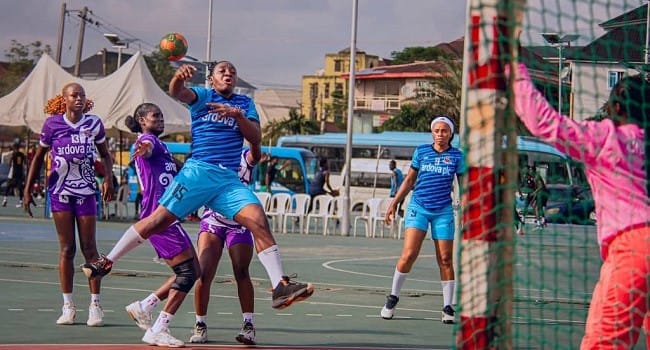
The management of the Handball Federation of Nigeria (HFN) is set to fine the Kano State Government following the absence of the state’s contingent from the 2026 Ardova Handball Premier League.
The 2026 Ardova Handball Premier League, organised by the Handball Federation of Nigeria, is scheduled to run from November 7 to 21, 2026, in Lagos State. The competition features 12 teams in the men’s category and 10 teams in the women’s category.
Reports indicate that former champions Kano Pillars Handball Club failed to participate in the tournament, which commenced on November 7, due to a lack of funding from the Kano State Government to sponsor the team’s participation.
Credible sources disclosed that the state government had yet to release the funds required for the team’s participation, raising concerns over its commitment to the development of sports in the state.
The Kano State Sports Commission operates under the state government, with its administrative affairs overseen through the Office of the Secretary to the State Government. However, reports suggest that the commission has repeatedly faced difficulties in securing the necessary approvals to carry out its responsibilities.
Kano Pillars Handball Club is one of Nigeria’s most successful handball teams, having previously won the Nigerian Men’s Handball Premier League in 2019 at the Rowe Park Sports Centre in Lagos.
The club also emerged champions in 2021 after winning nine of its 11 matches. In 2022, it successfully defended its title, finishing the campaign unbeaten with 65 points from 22 matches.
These achievements underline Kano Pillars’ status as one of the country’s leading handball clubs.
However, the alleged failure of the Kano State Government to release the necessary funds has prevented the team from participating in the ongoing competition in Lagos.
In a related development, an exclusive report published this week indicated that Kano Pillars could be heading for another major setback, as Technical Adviser Daniel Ogunmodede is reportedly considering leaving the club over financial challenges and poor welfare conditions.
Sources also disclosed that the Kano State Government had not released any funds to the team.
Efforts to obtain comments from relevant government officials, including the Secretary to the State Government, the Sports Commission and the Governor’s spokesperson, were unsuccessful, as they could not be reached at the time of filing this report.
The situation raises serious questions among sports stakeholders and Kano sports enthusiasts about the government’s commitment to supporting and sustaining sporting activities in the state.
Meanwhile, the 36 states of the federation and the Federal Capital Territory are preparing for the 23rd National Sports Festival, officially tagged the Coal City Games, scheduled to take place in Enugu State from November 27 to December 11, 2026.
With the National Sports Festival approaching, concerns remain over whether the Kano State Government will address the funding challenges facing its sports sector to avoid another disappointing absence from an important national sporting event.
The big question remains: How long will Kano’s sporting activities continue to suffer from inadequate government support? Time will tell.



News
NDC Deputy Governorship Candidate Gives Kano Information Commissioner 48-Hour Ultimatum Over Alleged Defamation
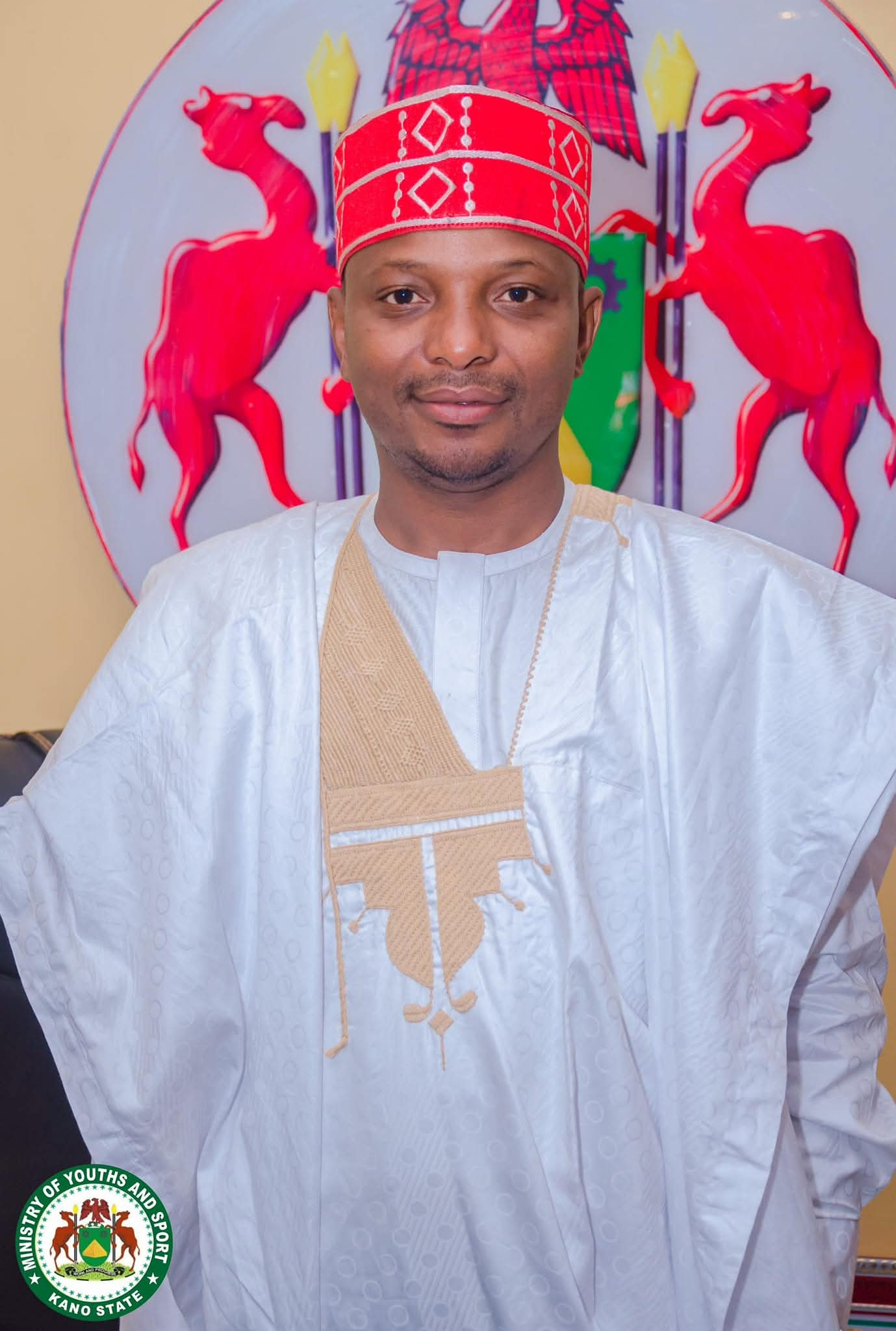
Mustapha Rabiu Kwankwaso, the Nigeria Democratic Congress (NDC) Deputy Governorship Candidate in Kano State, has threatened legal action against the newly appointed Commissioner for Information, accusing him of making false, malicious and damaging allegations against his person and family.
Kwankwaso, a former Kano State Commissioner for Youth and Sports, gave the Information Commissioner a 48-hour ultimatum to withdraw the alleged defamatory statements and tender an unreserved public apology to him, his family and the people of Kano State.
The former commissioner made the demand in a statement issued in response to comments allegedly made by the Information Commissioner during a programme, in which he accused Kwankwaso of having visited several rehabilitation centres across the world and suggested that his personal circumstances influenced his father, former Governor Rabiu Musa Kwankwaso, to establish the Kiru Reformatory Institute.
Kwankwaso described the allegations as false, malicious and an attempt to assassinate his character, insisting that they were intended to distract the people of Kano State from pressing issues of governance.
On the establishment of the Kiru Reformatory Institute, the NDC deputy governorship candidate maintained that the claim that the institution was established because of him was historically inaccurate.
He explained that during his father’s second tenure as governor of Kano State, when the institute was established, he was residing in Dubai and was not even in the country.
According to him, the Kiru Reformatory Institute was established as a deliberate government policy aimed at reforming, rehabilitating and reintegrating young people into society by providing them with opportunities for a better future.
Kwankwaso argued that reducing the establishment of the institution to a personal family matter was an insult to the people of Kano State and thousands of young people whose lives had reportedly been transformed through the initiative.
Reacting to allegations that his father did not trust him with the management of Skyline University, Mewar University or his farm, Kwankwaso dismissed the claims as lies.
He said his father had mentored and trained him to become an independent person rather than someone who depended on family connections or financial handouts.
The former commissioner further disclosed that he had established several businesses through personal effort, including a rice mill which, according to him, provides employment opportunities for people and contributes to Kano State’s economy.
He maintained that his business achievements were products of hard work, discipline and the values instilled in him by his father, insisting that the suggestion that his father did not trust him was unfounded.
On his previous appointment as Commissioner for Youth and Sports under the Kano State Government, Kwankwaso expressed appreciation to Governor Abba Kabir Yusuf for giving him the opportunity to serve in the State Executive Council.
He said he discharged his responsibilities with sincerity, commitment and loyalty to the people of Kano State, particularly the youth population.
Kwankwaso, however, condemned the Information Commissioner’s alleged description of his appointment as “executive rehabilitation,” arguing that the remark was an insult to the office he occupied and the responsibilities he discharged.
He insisted that his appointment was based on the responsibility to serve the state and not an attempt to rehabilitate him, adding that such comments also undermined the dignity of the State Executive Council and the youths he represented.
The NDC chieftain also questioned the responsibility of the newly appointed Information Commissioner, asking whether he was appointed to communicate government policies, programmes and achievements to the public or to engage in personal attacks against political opponents.
He further challenged the commissioner to clarify whether the allegations were his personal invention or whether he was acting on behalf of his principal.
Kwankwaso maintained that the office of the Commissioner for Information was an important public institution that should be used to inform citizens about government activities rather than serve as a platform for character assassination, personal insults and political attacks.
He warned that failure to withdraw the alleged statements and issue the demanded apology within 48 hours would leave him with no option but to seek legal redress.
The former commissioner said he was prepared to pursue every available legal remedy to protect his reputation, his family’s name and his record of public service.
He added that he would not allow himself to be drawn into personal insults, stressing that his attention remained focused on his political aspiration and efforts to contribute to a better future for Kano State.
Kwankwaso concluded by urging political actors to focus on issues, policies, programmes and performance rather than resorting to allegations bordering on the personal character of political opponents.
The Information Commissioner was accused of making the allegations, but his response to Kwankwaso’s 48-hour ultimatum was not contained in the statement.
News
Court Battles May Dismantle Opposition Ahead of 2027, Lawyer Warns
By Yusuf Danjuma Yunusa
An Awka-based legal practitioner, Chibunna Okoli-Akirika, has feared that the ongoing court battles and internal party squabbles may dismantle opposition political parties ahead of the upcoming General Elections.
He expressed his feeling in an interview with the News men in Owerri, describing recent judicial judgments as early warning signs of a looming wider political storm.
Okoli-Akirika, a former Anambra Commissioner for Lands and Secretary of the Labour Party, was reacting to Thursday’s court judgment that sacked the David Mark-led African Democratic Congress (ADC).
“The court judgment, though of first instance, has in the interim expectedly devastated ADC in structure and decimated it in spirit,” he said.
He said the court decision signalled looming political hurdles for the opposition parties ahead of the 2027 polls.Follow Politics
The lawyer advised that major political actors must not view the judicial outcome as an isolated ADC setback, but an urgent call to forge a broad opposition coalition.
He further warned against the fragmentation of the opposition political parties.
He highlighted previous disruptions targeting opposition interests in Delta, Akwa Ibom, and Sokoto States, alongside emerging controversies surrounding party registers in Kano and Kaduna.
Join Daily Nigerian WhatsApp Channel
“Furthermore, INEC’s public admission of the existence of officially invented ghost voters in the voters register is a pointer that all will be fair,” Okoli-Akirika said.
He argued that while key opposition figures face legal and administrative pressure, no platform remained completely immune from the political friction currently afflicting the ADC.Follow Politics
“Today, it is ADC, tomorrow it could be any other party or individual,” Okoli-Akirika said.
He said that sections 6 and 287 of the 1999 Constitution made court decisions binding, leaving affected parties with no choice but to comply, while appeals pend.
He urged frontline opposition leaders, who placed second, third, and fourth in the 2023 Presidential Election to “quickly fuse their structures into a single political bloc.
“What is stopping the fusion of the then second runner-up with the then third and fourth runners-up?” he asked.
Okoli-Akirika urged opposition leaders to put national interest above personal political ambitions to guarantee Nigerians a viable democratic choice during the 2027 polls. Nigeria travel guide
News
Nigeria’s GDP Growth, Drop in Inflation Not Translating into Poverty Reduction – BUK Deputy VC
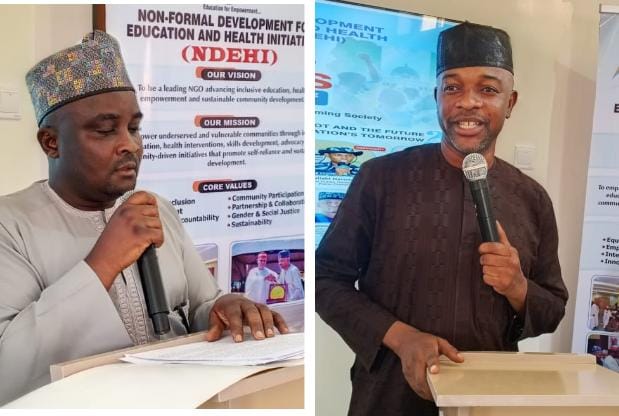
The Deputy Vice-Chancellor (Academics) of Bayero University Kano (BUK), Professor Ahmad Muhammad Tsauni, has said that Nigeria’s recent economic growth and decline in inflation have yet to translate into a meaningful reduction in poverty among citizens.
Professor Tsauni, an economist, made this observation during a gathering organised by the Non-Formal Development for Education and Health Initiative, with the theme, “Nigeria at a Crossroad: Who Is to Fix It?”
He said that although Nigeria had recorded some level of growth in its Gross Domestic Product (GDP) and improvements in certain economic indicators, the development had not significantly improved the living conditions of ordinary Nigerians.
According to him, the country continues to grapple with complex economic and social challenges that require collective efforts and practical solutions to overcome.
“We want to show that Nigeria is a country that, in spite of its challenges, has complex problems that will not really allow it to address them easily. Recently, we have been experiencing some level of growth in GDP, but those indices are not translating into a reduction in poverty, and so we are at a crossroads,” he said.
The BUK Deputy Vice-Chancellor explained that addressing the country’s challenges required more than government interventions, stressing that every Nigerian had a responsibility to contribute to rebuilding the country.
He maintained that the responsibility of finding solutions to Nigeria’s problems should not be left to individuals, political leaders or organisations alone, but should involve citizens from all sectors of society.
Professor Tsauni also called on the government to formulate and implement pragmatic policies capable of addressing the country’s challenges, while emphasising the importance of building public trust.
He, however, identified negative societal attitudes and a lack of commitment to national development as some of the major obstacles preventing Nigeria from achieving the desired results from its policies.
According to him, Nigeria has developed several sound policies over the years, but poor attitudes and the failure of citizens to demonstrate the necessary commitment have continued to undermine their implementation.
“We have beautiful policies in Nigeria, but they cannot work because of our attitude. We should not apportion blame to anybody because we created the problem together, so everybody should contribute,” he said.
The university don urged Nigerians across different professions and institutions to examine their conduct and take responsibility for improving the country.
He specifically noted that classroom teachers, judges, public servants and other professionals must reflect on their individual responsibilities, adding that positive changes in societal attitudes were essential to national development.
Professor Tsauni further stressed that Nigeria’s current situation required collective reflection and a change in citizens’ approach to public responsibilities rather than continuous blame-shifting.
Earlier, the Technical Lead of the Non-Formal Development for Education and Health Initiative, Dr Auwal Halilu, called on Nigerians to demonstrate patriotism and contribute towards revitalising the country.
Dr Halilu said Nigeria was facing numerous challenges as the country approached the 2027 general elections, stressing the need for citizens to reflect on how to secure the country’s future through responsible participation in the electoral process.
He urged Nigerians to embrace positive values, transparency and accountability, noting that national development could only be achieved when citizens and leaders demonstrated genuine commitment to the country’s progress.
“We should take into consideration that we are going to revitalise this country. Every Nigerian should be patriotic. There are a lot of challenges in Nigeria as we approach the 2027 elections. How can we help to get the best in Nigeria? We should change our values for good and be transparent,” he said.
Dr Halilu also challenged Nigerians to consider how they could support leaders in addressing the country’s challenges, rather than leaving the responsibility of national development entirely to those in government.
He emphasised that rebuilding Nigeria required a collective commitment to good values, transparency and patriotism, particularly as the country prepares for another general election in 2027.
The gathering provided an opportunity for discussions on Nigeria’s economic and social challenges, the responsibilities of citizens and the need for collective action towards national development.

NDC Deputy Governorship Candidate Gives Kano Information Commissioner 48-Hour Ultimatum Over Alleged Defamation

HFN Threatens Kano Govt with Fine, Over Pillars’ Absence from Handball Premier League

Court Battles May Dismantle Opposition Ahead of 2027, Lawyer Warns

Begging in Northern Nigeria: What Future Are We Preparing for Our Society?

Nigeria’s GDP Growth, Drop in Inflation Not Translating into Poverty Reduction – BUK Deputy VC

Kano Monitors ₦48.9bn Projects Across Six LGAs

Open The Social Sciences “A Tribute to a Heterodox Scholar: Mallam Ibrahim Muazzam

Senate Passes Barau’s Bill to Provide Legal Framework for Yusuf Maitama Sule Federal University of Education, Kano

Gov. Yusuf Appoints Inuwa Waya Director of International Corporations Engagement

APC Presidential Campaign Council: Nigerians Devoid Of Party Affiliations Endorses Tinubu’s 2nd Term-Kwankwaso
NDC Deputy Governorship Candidate Gives Kano Information Commissioner 48-Hour Ultimatum Over Alleged Defamation
HFN Threatens Kano Govt with Fine, Over Pillars’ Absence from Handball Premier League
Court Battles May Dismantle Opposition Ahead of 2027, Lawyer Warns
Begging in Northern Nigeria: What Future Are We Preparing for Our Society?
Nigeria’s GDP Growth, Drop in Inflation Not Translating into Poverty Reduction – BUK Deputy VC
Kano Monitors ₦48.9bn Projects Across Six LGAs
Open The Social Sciences “A Tribute to a Heterodox Scholar: Mallam Ibrahim Muazzam
Senate Passes Barau’s Bill to Provide Legal Framework for Yusuf Maitama Sule Federal University of Education, Kano
Gov. Yusuf Appoints Inuwa Waya Director of International Corporations Engagement
APC Presidential Campaign Council: Nigerians Devoid Of Party Affiliations Endorses Tinubu’s 2nd Term-Kwankwaso
-

 Opinion5 years ago
On The Kano Flyovers And Public Perception
-

 Features5 years ago
How I Became A Multimillionaire In Nigeria – Hadiza Gabon
-

 Opinion6 years ago
Kano As future Headquarters Of Poverty In Nigeria
-
 History6 years ago
Sheikh Adam Abdullahi Al-Ilory (1917-1992):Nigeria’s Islamic Scholar Who Wrote Over 100 Books And Journals
-
 Opinion5 years ago
My First Encounter with Nasiru Gawuna, the Humble Deputy Governor
-
 History5 years ago
The History Of Borno State Governor Professor Babagana Umara Zulum
-
 History6 years ago
The Origin Of “Mammy Market” In Army Barracks (Mammy Ochefu)
-
 News5 years ago
Federal University Of Technology Babura To Commence Academic Activities September