
News
Why Pantami Should Not Be Trusted With The Governance Of Gombe

An Excerpt From the Piece of Abu-Ubaida Ibrahim Kùnà: By Danjuma Kala Gombe.
Institutional Authority and Governance Standards
In the course of democratic governance, voters entrust their future to leaders whose credentials and character have been rigorously tested and validated. This responsibility becomes even more critical when candidates seek to lead states like Gombe, which faces complex developmental challenges requiring leaders of proven competence and unquestionable integrity. It is therefore imperative that the electorate scrutinize not merely the promises candidates make, but the foundation upon which those promises rest. When institutional examination reveals serious concerns about a candidate’s qualifications and professional standing, voters deserve to understand those concerns clearly and comprehensively. Such is the case with Prof. Isa Ali Pantami, whose bid for the gubernatorial seat in Gombe State must be evaluated against documented institutional concerns regarding his academic advancement and the procedural irregularities surrounding his appointment.
The question is not whether technical authority was exercised, but whether institutional processes were followed with appropriate rigor, transparency, and adherence to established standards. A leader who demonstrates willingness to advance through processes marked by serious procedural irregularities sends a clear message about how that leader would approach governance itself. Will such a leader respect established institutional standards? Will he ensure transparency in important decisions? Will he accept rigorous scrutiny of his actions? These are not abstract questions posed by academic purists, they are concrete governance concerns that directly affect how a state functions and the standards it represents.
Distinguishing Institutional Roles: ASUU’s Investigative Findings
It is important to clarify institutional roles and authorities in this matter. The Academic Staff Union of Universities, representing professors and scholars across Nigerian universities, does not appoint professors. That authority rests with individual university governing councils, which are the bodies with formal administrative power to make such appointments. The Federal University of Technology, Owerri’s Governing Council is the authority that appointed Pantami to the rank of professor, and as a formal administrative act, that appointment remains in effect because the Governing Council has not formally revoked it.
However, ASUU, as the most authoritative voice of Nigeria’s academic community, conducted a detailed investigative examination of Pantami’s appointment and documented serious concerns about the process and qualifications involved. In 2021, ASUU released findings that were unambiguous and consequential: the appointment process had violated established academic standards and procedures. While ASUU does not have formal authority to revoke the appointment, its investigative findings carry significant institutional weight. They represent the professional judgment of Nigeria’s premier academic body regarding whether established standards were observed. These findings matter not because ASUU appointed Pantami, but because they document whether the appointment process itself met the standards the academic community expects.
Procedural Concerns and Substantive Deficiencies
The substance of ASUU’s documented concerns was both detailed and serious. At the time of Pantami’s appointment to the rank of professor, he possessed only approximately one year of post-doctoral teaching experience. This is extraordinarily limited compared to the established standards within Nigerian universities, where professorial appointments typically require a minimum of several years of demonstrable teaching excellence, research productivity, and scholarly contribution. Traditional academic progression through Senior Lecturer and Reader ranks represents years of scholarly work, successful teaching, and administrative contribution. Pantami had not progressed through these established ranks, a deviation from standard academic practice that raises fundamental questions about whether established advancement criteria were applied.
Beyond insufficient experience, the appointment process itself exhibited serious procedural irregularities. What constitutes normal academic practice in university systems worldwide is a rigorous, multi-staged evaluation process that typically extends over years, involving departmental assessment, external peer review by leading scholars, examination of publication records, plagiarism verification, and multiple institutional scrutiny layers. Pantami’s appointment process was reportedly concluded in approximately three months. This extraordinary compression raises questions about whether appropriate diligence was observed. Critical evaluation stages were reportedly bypassed or inadequately conducted. Departmental assessments appear not to have been thorough. External reviews do not appear to have been properly executed. Plagiarism checks were reportedly insufficient. Most troublingly, key documents including detailed assessors’ reports and comprehensive publication records were not made available for proper scrutiny. This lack of transparency raises serious questions about institutional process.
Standards, Character, and Governance Judgment
What makes the documented procedural concerns particularly relevant to governance is what they suggest about standards and judgment. Even if the Governing Council had full authority to appoint Pantami through any process it chose, the question for voters is whether the process that was followed reflects the standards Gombe State deserves in its leadership. Did the appointment follow established academic practice? Were decisions made transparently and with appropriate scrutiny? Were qualifications evaluated fairly against established criteria?
ASUU’s investigation documented that the answer to these questions is troubling. The appointment process deviated from established standards. Evaluation stages were bypassed. Transparency was absent. A serious academic body concluded that established procedures were not observed. This is not a matter of whether the Governing Council had the authority to make the appointment, it is a matter of whether the appointment was made through a process that reflects institutional integrity and adherence to established standards. For governance purposes, this distinction is critical. A leader who demonstrated willingness to advance through compromised procedures raises legitimate questions about whether that leader, when in executive position, would similarly circumvent established processes when convenient.
Institutional Standards and State Development
The broader implications for governance are substantial. A governor is not merely an executive responsible for implementing policies and managing resources. A governor is the symbolic and institutional head of state government, representing the values and standards the state expects from leadership. When that governor is someone who advanced through a process that serious academic institutions documented as deviating from established standards, and who continues to hold a rank that such institutions questioned, the message sent to state institutions is concerning.
Governance in Gombe State requires a leader committed to institutional integrity and established processes. The state faces serious developmental challenges in education, healthcare, infrastructure, and economic development. These challenges require leaders who work effectively within institutional frameworks, maintain transparency in decision-making, and earn trust through demonstrated commitment to proper process and institutional standards. A leader whose rise involved procedural irregularities documented by credible institutional authorities raises questions about whether that leader will similarly prioritize convenience over proper process when governing.
The Voter’s Consideration
For Gombe voters, the relevant question is not whether the Governing Council had authority to appoint Pantami. The question is whether the appointment was made through a process reflecting the institutional standards and transparency Gombe deserves. Documented evidence shows the appointment process deviated from established academic practice and involved serious procedural irregularities. This is not trivial. It reflects on institutional values and standards.
Gombe State requires leadership built on demonstrated respect for institutional processes, transparent decision-making, and adherence to established standards. A governor’s past behavior is the most reliable indicator of future conduct. A leader who advanced through a process marked by procedural irregularities, lack of transparency, and deviation from established standards raises legitimate concerns about how that leader would approach governance. Gombe voters deserve a governor whose advancement was achieved through legitimate institutional processes, whose qualifications were fairly evaluated against established criteria, and whose respect for institutional standards is unambiguous. The documented procedural concerns regarding Pantami’s appointment suggest these standards may not characterize his pattern.
Danjuma Kala,
Former Secretary General NUJ, Gombe State, Sept 5, 2026 Gombe State, Nigeria














News
Hamma Urges Political Candidates to Prioritise Unity, Ideology Over Personal Interests
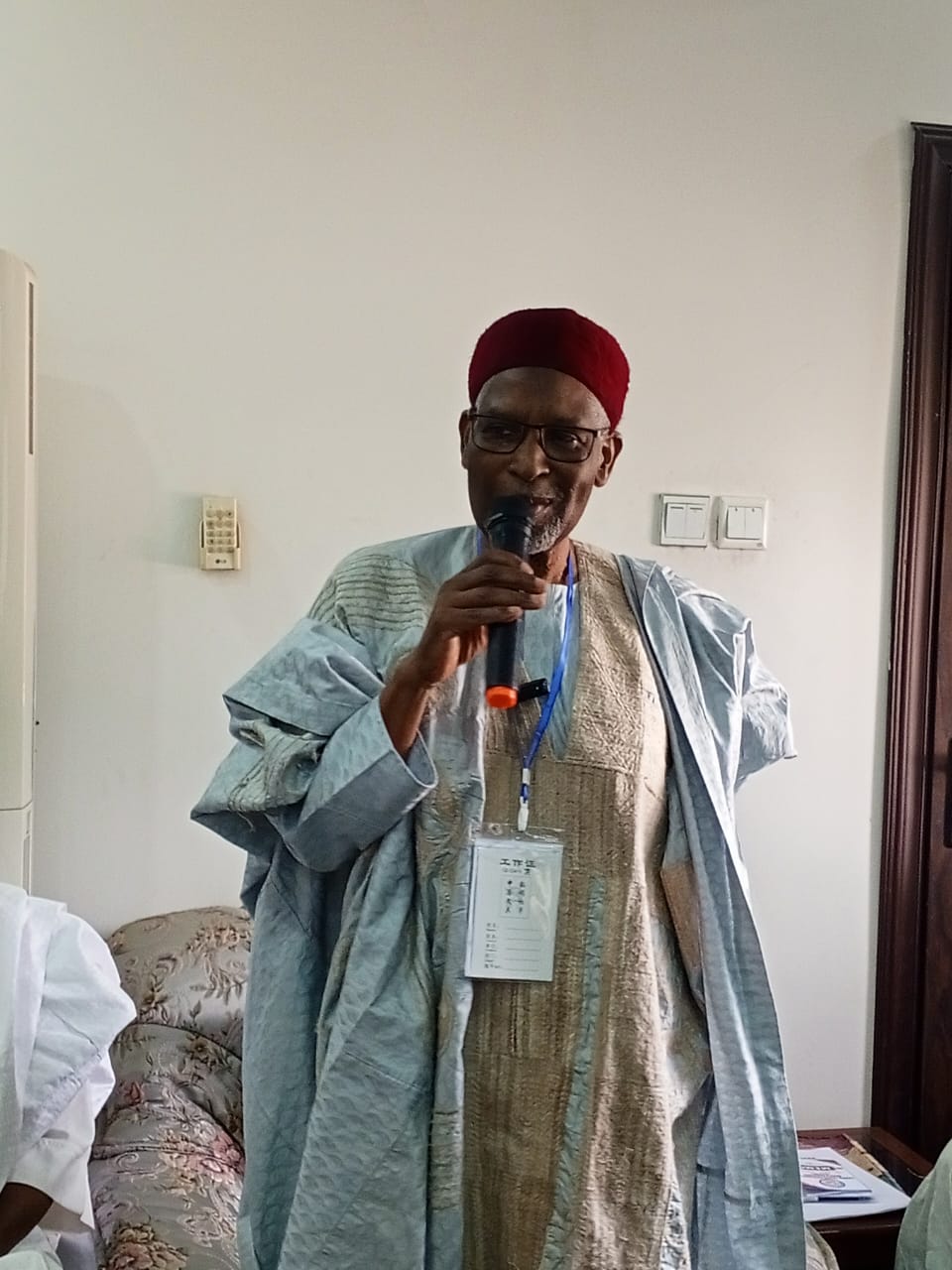
Former Pro-Chancellor of Northwest University and former Secretary to the Kano State Government, Alhaji Sule Yahaya Hamma, has urged political candidates in the Wudil/Garko Federal Constituency to prioritise unity, ideological commitment and peaceful political engagement ahead of the 2027 general elections.
Hamma made the appeal during a town hall meeting organised by the Garko Youth Movement for candidates seeking election to the House of Representatives to represent Wudil/Garko Federal Constituency in 2027.
He commended the youths for initiating the gathering, describing it as an opportunity for candidates to present their programmes and engage with the electorate on their plans for the constituency.
The former secretary to the state government stressed that unity and a clear political ideology were essential ingredients for development, urging the candidates and their supporters to avoid envy, division and personal interests that could undermine collective progress.
“I want to draw the attention of the people to the fact that there can be no progress without unity and ideology. Do away with envy and remain committed to your ideology,” Hamma said.
He explained that commitment to principles had historically played an important role in shaping the reputation of prominent individuals, including traditional rulers and descendants of Prophet Muhammad, noting that their influence was not necessarily determined by their birth but by their adherence to their beliefs and principles.
Hamma urged the candidates to place their political ideologies and the interests of the people above personal ambitions, adding that collective commitment to shared principles could help communities achieve meaningful development.
He also emphasised that contesting an election against another candidate should not be regarded as a personal conflict, noting that all contestants had the right to seek public office and present themselves as potential servants of the people.
According to him, political competition should provide an opportunity for candidates to explain their plans for addressing the challenges facing their constituency rather than becoming a platform for personal attacks.
Hamma consequently advised the candidates to avoid mudslinging, verbal abuse and other forms of negative campaigning, urging them to conduct their political activities with decorum and respect for one another.
He maintained that the ultimate objective of seeking public office should be to serve the people and contribute to the development of the constituency.
Speaking at the event, the Acting Chairman of the Garko Youth Progressive, Anas Ibrahim Na Baffa, described the town hall meeting as a historic gathering, saying that such an initiative had never previously taken place in Garko.
Na Baffa expressed appreciation to the stakeholders who supported the initiative, particularly the candidates and teachers who contributed to making the meeting possible.
He said the organisers were grateful for the cooperation they received from various stakeholders, adding that their participation demonstrated a shared interest in discussing the future of the area.
According to him, the meeting was not organised to undermine or discredit any candidate but to provide a common platform for discussing ideas and identifying practical ways to develop Garko and the wider federal constituency.
He explained that the organisers wanted the candidates to engage with the people, outline their priorities and demonstrate how they intended to address the challenges confronting the constituency if elected.
The meeting attracted more than 10 candidates aspiring to represent Wudil/Garko Federal Constituency in the House of Representatives in the 2027 general elections.
The candidates used the platform to present their views and explain the programmes they intended to implement if elected.
Among the candidates who presented their programmes was the candidate of the People’s Redemption Party (PRP), Rufai Dagumawa, who promised to prioritise the rehabilitation of drainage infrastructure in Garko Local Government Area if elected.
Dagumawa said he would work towards overhauling the area’s drainage system to address drainage-related challenges and improve local infrastructure.
He also pledged to promote information and communication technology (ICT) in Garko Local Government Area, with a view to supporting digital development and expanding opportunities for residents.
In addition, the PRP candidate promised to establish a rice mill as part of his proposed economic development initiatives, saying the project would support agricultural activities and contribute to local economic growth.
The town hall meeting provided an opportunity for the candidates to present their proposed policies and development priorities as political activities gradually build towards the 2027 general elections.
The organisers said the initiative was intended to encourage constructive political engagement and place the development needs of Wudil/Garko Federal Constituency at the centre of discussions among aspiring representatives.
News
State Police: 24 State Assemblies Approve Constitutional Amendment–Presidency

By Yusuf Danjuma Yunusa
The Presidential Working Group on the National Policing Bill says 24 State Houses of Assembly have approved the Constitution (Sixth Alteration) Bill, 2026, providing for a dual policing system.
The approval meets the constitutional threshold of two-thirds of the 36 states required for the amendment to proceed.
The Working Group commended the State Houses of Assembly for their action and acknowledged the National Assembly for passing the amendment in both chambers.
This is contained in a statement issued by Femi Gbajabiamila, Chief of Staff to the president and chairman of the Working Group, on Friday in Abuja.
“In line with Section 9 of the Constitution, the amendment can now be returned to the National Assembly for transmission to Mr President for assent.”
Mr Gbajabiamila said the approval provided constitutional backing for the policing framework outlined in the Working Group’s draft National Policing Bill, 2026.
He added that the draft bills were undergoing legislative drafting, review and validation at the Federal Ministry of Justice.
The bills are expected to be returned on or before October 30, after which the Working Group will give them final consideration before presenting them to President Bola Tinubu.
The Working Group urged stakeholders to support a smooth transition to a dual policing system aimed at improving public safety.
News
ECOWAS Court Faults Process Backed by Council of Ministers in Darma Removal Case

The ECOWAS Community Court of Justice has ruled that the removal and replacement of former ECOWAS Commissioner for Internal Services, Prof. Nazifi Abdullahi Darma, were unlawful, overturning a process that culminated in his replacement being formalised by the Council of Ministers.
Darma disclosed the outcome while briefing journalists in Abuja on the Court’s recent judgment.
He said the dispute arose after a memorandum dated 30 October 2025 by the then President of the ECOWAS Commission, Dr. Omar Alieu Touray withdrew responsibilities previously exercised by Darma and initiated steps that eventually led to his replacement.
While Darma challenged the actions before the ECOWAS Court on 3 November 2025, the Federal Republic of Nigeria subsequently recalled him and nominated a successor.
The Council of Ministers later formalised the replacement.
However, the Court found that the legal requirements for ending his mandate had not been satisfied.
According to Darma, the Court held that the memorandum triggering the process was based on adverse allegations that affected his responsibilities and was issued without giving him an effective opportunity to respond.
“The Court found that these actions were taken without prior notice or an effective opportunity for me to respond,” he said.
The Court further ruled that managerial powers vested in the President of the Commission could not be used to extinguish or transfer responsibilities assigned by Community law to another statutory office.
Darma said the Court also rejected the argument that Nigeria’s recall automatically ended his tenure as Commissioner.
“Once appointed, a Commissioner derives his mandate from Community law and not from the nominating Member State,” he quoted the Court as holding.
The Court consequently declared that his removal and replacement were unlawful, notwithstanding the subsequent actions taken to formalise the change in office.
The judgment ordered the payment of outstanding salaries, allowances and accrued entitlements up to the expiration of his tenure and awarded him US$50,000 in general damages.
Because his tenure expired on 31 August 2026, the Court did not order reinstatement.
Describing the ruling as significant for regional governance, Darma said it reaffirmed that ECOWAS statutory office holders can only be removed through procedures recognised by Community law.

Hamma Urges Political Candidates to Prioritise Unity, Ideology Over Personal Interests

Open The Social Sciences “A Tribute to a Heterodox Scholar: Mallam Ibrahim Muazzam

State Police: 24 State Assemblies Approve Constitutional Amendment–Presidency

ECOWAS Court Faults Process Backed by Council of Ministers in Darma Removal Case

Dangote Cement Gboko Commits Millions in Scholarship Scheme

PCACC Arrests Man Over Alleged ₦4.5m Sale, Illegal Leasing of Kano Government Horse Stable

Kano Monitors ₦48.9bn Projects Across Six LGAs

Goje’s Electoral War:The Confrontation With Tinubu,Governor Inuwa,Usman Kumo And APC candidates Ahead Of 2027

Kano Spends ₦10.36bn on Hospitality, Sitting Allowances, Others in Six Months

Senate Passes Barau’s Bill to Provide Legal Framework for Yusuf Maitama Sule Federal University of Education, Kano
Hamma Urges Political Candidates to Prioritise Unity, Ideology Over Personal Interests
Open The Social Sciences “A Tribute to a Heterodox Scholar: Mallam Ibrahim Muazzam
State Police: 24 State Assemblies Approve Constitutional Amendment–Presidency
ECOWAS Court Faults Process Backed by Council of Ministers in Darma Removal Case
Dangote Cement Gboko Commits Millions in Scholarship Scheme
PCACC Arrests Man Over Alleged ₦4.5m Sale, Illegal Leasing of Kano Government Horse Stable
Kano Monitors ₦48.9bn Projects Across Six LGAs
Goje’s Electoral War:The Confrontation With Tinubu,Governor Inuwa,Usman Kumo And APC candidates Ahead Of 2027
Kano Spends ₦10.36bn on Hospitality, Sitting Allowances, Others in Six Months
Senate Passes Barau’s Bill to Provide Legal Framework for Yusuf Maitama Sule Federal University of Education, Kano
-

 Opinion5 years ago
On The Kano Flyovers And Public Perception
-

 Features5 years ago
How I Became A Multimillionaire In Nigeria – Hadiza Gabon
-

 Opinion6 years ago
Kano As future Headquarters Of Poverty In Nigeria
-
 History6 years ago
Sheikh Adam Abdullahi Al-Ilory (1917-1992):Nigeria’s Islamic Scholar Who Wrote Over 100 Books And Journals
-

 Opinion5 years ago
My First Encounter with Nasiru Gawuna, the Humble Deputy Governor
-

 History5 years ago
The History Of Borno State Governor Professor Babagana Umara Zulum
-
 History6 years ago
The Origin Of “Mammy Market” In Army Barracks (Mammy Ochefu)
-
 News5 years ago
Federal University Of Technology Babura To Commence Academic Activities September