
News
Rule of Law on Trial in Apo Resettlement Market Dispute as Investors Face Growing Risk

What began as a commercial disagreement over the Apo Resettlement Scheme Market in Abuja is fast becoming a defining moment for the enforcement of judicial authority and the protection of property investors in Nigeria.
At the center of the controversy is the alleged refusal by Manillah Integrated Partners Ltd and AMAC Investment Development Company to comply with a subsisting court order halting construction on the disputed project – an action that raises urgent questions about respect for the rule of law and the safety of public investment.
The dispute traces back to a suit before the FCT High Court, where Justice Yusuf Halilu granted an interlocutory injunction on April 15, 2025, directing all parties involved in the project to cease further work pending the determination of the substantive matter.
The order was not only issued but duly served and visibly enforced at the site, with court bailiffs pasting the directive and marking the premises with a “Stop Work” notice on 28th April 2025. For many observers, that should have marked a pause in all activities and a deference to the judicial process.
Yet, developments on the ground appear to tell a different story. Reports indicate that construction activities have continued despite the court’s directive, with claims that the posted injunction notices were removed and the “Stop Work” inscription erased.
When a team of journalists, in the company of some security personnel, visited the site on 12th May, 2025, it was noticed that not only the construction works on the multi-million naira market project is still ongoing, the documents of the Interlocutory Injunction which were pasted on the administrative wall of the project by the court bailiff have been removed and the “stop work” order written on the walls cleansed.
On 3rd May 2025, a party in the matter, Dr Shuaibu Musari, visited the site to see the level of compliance to the Court Order, but was attacked by the site workers with shovels and other dangerous materials.
If accurate, such actions go beyond mere oversight; they point to a deliberate defiance of judicial authority.
In a country where the courts are constitutionally empowered to interpret and enforce the law, such conduct is not only provocative but also potentially punishable.
Under Nigerian law, disobedience of a court order constitutes contempt of court, an offence that strikes at the heart of the justice system.
The implications for a party found guilty can be severe, ranging from fines to imprisonment, and in some cases, legal setbacks that could influence the outcome of the substantive case itself.
The courts have consistently maintained that their authority must not be undermined, and any proven act of defiance is often met with firm sanctions intended to preserve institutional integrity.
Beyond the courtroom, however, lies a more immediate and human concern – the risk faced by unsuspecting Nigerians who may be investing in the project.
Despite the ongoing litigation and the court’s directive, there are claims that shops within the Apo market are being marketed and sold. This places potential buyers in a precarious position, as any transaction conducted while the property is under judicial dispute may ultimately prove invalid or unenforceable.
Should the court rule against the party undertaking the sales, those who have paid for shops could find themselves entangled in protracted legal battles or, worse, stripped of their investments entirely.
This uncertainty is compounded by the legal doctrine that discourages transactions on properties under litigation, effectively placing a cloud over any such deals. In practical terms, it means that buyers are not just purchasing physical spaces but also inheriting the legal risks attached to them. In a volatile property market, that is a gamble few can afford.
The situation has also taken a troubling turn with reports of violence at the construction site. An alleged attack on representatives of the opposing developer underscores the tension surrounding the project and raises concerns about public safety.
When disputes of this nature escalate beyond legal arguments into physical confrontations, it signals a breakdown in orderly conflict resolution and heightens the urgency for intervention.
For regulators and enforcement agencies, the unfolding events present a critical test. The apparent continuation of work in defiance of a court order suggests gaps not only in compliance but also in enforcement.
It raises the question of whether existing mechanisms are sufficient to ensure that judicial decisions are respected on the ground. The responsibility extends beyond the courts to include administrative authorities and law enforcement bodies tasked with maintaining order and protecting citizens.
Ultimately, the Apo market dispute is shaping up to be more than a disagreement between two developers. It is a reflection of broader systemic issues – how effectively court orders are enforced, how well investors are protected from high-risk ventures, and how seriously the rule of law is taken in practice.
The outcome of this case, and the actions taken in response to the alleged defiance by Manillah Integrated Partners Ltd and AMAC Investment Development Company will likely send a strong signal to both the real estate sector and the wider public.
For now, caution remains the most prudent course for prospective buyers. Until the court reaches a final determination, the project remains legally uncertain, and any financial commitment carries inherent risk. As the judiciary weighs its next steps, the expectation is clear: that the authority of the court will be upheld and that no individual or entity will be allowed to operate above the law.
However, at the resumed hearing, on Thursday April 23, 2026, at the Maitama High Court, Justice Yusuf Halilu, adjourned further hearing of the matter to May 7, 2026, to enable the second claimant AMAC Investment Development Company, serve the defendant, Dr Shuaibu Musari a subpoena.
Counsel to the second claimant Idris Abubakar SAN, has earlier presented a witness, Hassan Ahmed Omale, a legal practitioner, who allegedly prepared a Joint Venture Agreement between Dr Shuaibu Musari and Manillah Integrated Partners Ltd, who is also a third claimant in the case.
Also, Counsel to the first claimant, Dr Shuaibu Musari, Realwan Okpanachi, who was represented by Barr. Godwin, sought the approval of the court to serve an order of contempt – Form 48 and 49, to the second and third claimants (Manillah Integrated Partners Ltd and AMAC Investment Development Company), through substituted means (WhatsApp etc), adding that he has been unable to serve them.
While the presiding Judge, Justice Yusuf Halilu, approved that they be served through substituted service, the Counsel to the second claimant, Idris Abubakar, SAN, however received the form 48 and 49 on behalf of the second and third claimants.
What this implies is that Dr Shuaibu Musari has initiated a contempt of court proceedings against Manillah Integrated Partners Ltd and AMAC Investment Development Company for disobeying court order.
Forms 48 and 49 are legal documents used in Nigerian civil procedure to initiate contempt of court proceedings, specifically when a party disobeys a court order. The penalty for disobeying court orders can lead to imprisonment of the contemnor.
Manillah Integrated Partners Ltd was noticeably absent at the resumed hearing.
The first claimant, Dr Shuaibu Musari is seeking a service of an order mandating the second and third claimants to pay N850 million fine for allegedly disregarding the April 2025, interlocutory injunction issued by the court, pending the final determination of the substantive matter.
Will Manillah Integrated Partners Ltd and AMAC Investment Development Company gets away with this contemptuous disregard for the court order? This is up to Justice Yusuf Halilu and the Nigeria Judiciary to determine.












News
EFCC Reopens Atiku’s Alleged Financial Crimes Probe
By Yusuf Danjuma Yunusa
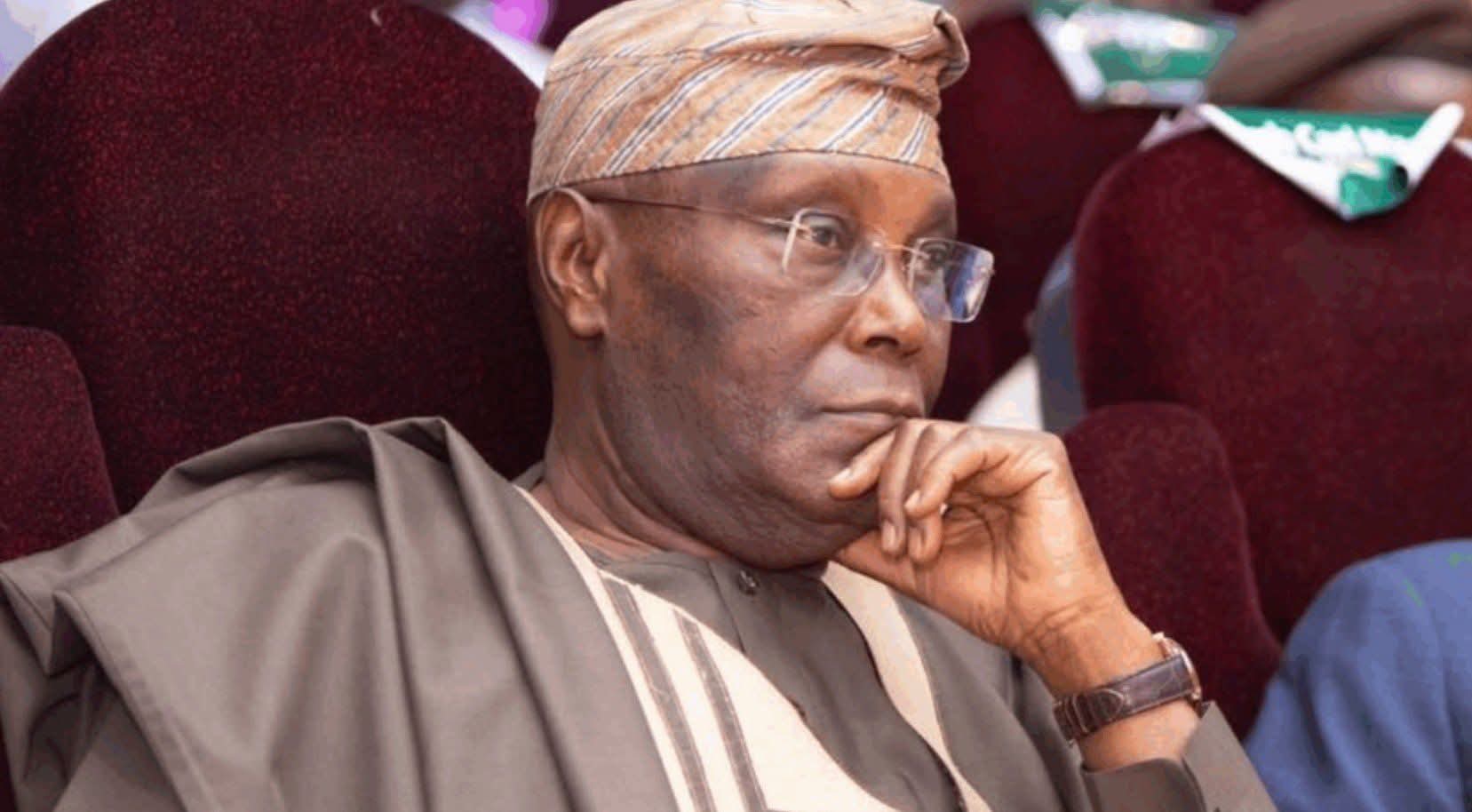
The Economic and Financial Crimes Commission (EFCC) has reopened its investigation into allegations against former Vice President Atiku Abubakar following a petition by former House of Representatives member, Hon. Ehiozuwa Johnson Agbonayinma, seeking his prosecution over alleged financial crimes.
The petition seeks to revive a case dating back to 2006, asking the anti-graft agency to revisit its investigation under former chairman, Mallam Nuhu Ribadu, and consider a subsequent report by a United States Senate subcommittee.
Speaking on the development, Agbonayinma said the EFCC had acknowledged his petition, dated August 27, 2026, and received on September 1. Filed through his lawyer, Chief Hannibal Egbe Uwaifo, SAN, the petition asks the commission to reactivate its earlier report and act on the allegations.
The former lawmaker appeared at the EFCC headquarters in Jabi, Abuja, where he adopted the petition and answered questions from investigators.
Agbonayinma said the matter should not be allowed to remain unresolved.
“I want to thank Nigerians, the EFCC, and those praying for me in this struggle. The laws are meant for both the rich and the poor. After the EFCC has done a fantastic job, it should not be kept under the table,” he said.
In the petition, Agbonayinma urged the EFCC to revisit its September 2006 report on Atiku and a February 4, 2010, report by the US Senate Permanent Subcommittee on Investigations, arguing that both documents should form the basis for renewed action.
The petition alleged that the EFCC had previously indicated that Atiku could face prosecution after leaving office as vice-president, when his constitutional immunity ceased to apply, but that no prosecution followed.
Agbonayinma described the alleged failure to act as a dereliction of duty and argued that pursuing the matter would demonstrate the commission’s resolve to hold politically influential figures accountable.
He also disclosed that he had petitioned US President Donald Trump over the allegations.
The EFCC spokesman, Dele Oyewale, had yet to respond to messages seeking an update on the investigation as of the time of filing this report.
News
APC Presidential Campaign Council: Nigerians Devoid Of Party Affiliations Endorses Tinubu’s 2nd Term-Kwankwaso
From Muhammad Kabir Kano
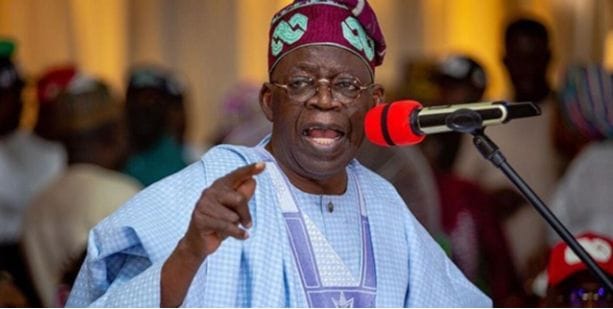
The Collection of Nigerians of different Political Parties that openly not only attended the inauguration of the APC Presidential Campaign Council, Wednesday, clearly shows that President Tinubu today is been accepted by all and sundry, regardless of Party Affiliations.
Making this submission, a member of the Presidential Campaign Council, and who is the Director Finance Hadejia Jammaare River Basin, Musa Illiyasu Kwankwaso, said that, from APGA, to Labour Party and others who were introduced, all firmly stands with Tinubu continuity in office.
Kwankwaso, said that remarks of Men of proven integrity likes Chukuma Charles Soludo the Governor of Anambara State and others, they said it all that President Tinubu Economic blueprint is a masterpiece that only Economic gurus and those who are awake to global economic realities will appreciate.
“It has never happened in the political Nigerian history that one Man attract collection of nearly all opposition Parties not only Opposition Politicians but those who have never agreed to sit together, but because Tinubu they accepted to come onboard and pursued his common goal”.
Dr Musa Illiyasu Kwankwaso, notes that, today the issues at stake is not about Tinubu’s reelection alone but the prosperity of Nigeria, which despite the difficulties, President Tinubu accepted to uphold and ensure it’s total achievement.
He said, “to me the inauguration of the Campaign Council is just like a congregation of celebration of the reelection of President Tinubu back to office, because what else remains, the same Nigerians that we will campaign for, have collectively came forward themselves in unison for one Person(Tinubu).
Musa Illiyasu Kwankwaso, who assured that just like what it is obtained at the National levels, the same things will be done in Kano and other states, adding that the open recognition of Governor Abba Kabir Yusuf by the President and his symbolic Cap shows a clear victory for the Governor Yusuf/Murtala Sule Garo his Deputy.
“One will agree with me that Governor Yusuf, Senator Barau Jibrin, House of Representatives Committee Chairman on Appropriation Abubakar Kabir Abubakar Bichi, Alhassan Ado Doguwa, Abdulmumini Jibrin Kofa, Senator Kawu Sumaila, Senator Mallam Ibrahim Shekarau, Honorable Alhassan Rirum, and all other contestants including our Father former National Chairman of APC, Dr Umar Abdullahi Ganduje are working in tandem for the President Tinubu/ Governor Yusuf/Garo 2 term bids”.
Kwankwaso, assured that before noon, they will bring forward the entire Northern Nigeria votes for Tinubu.
News
IMF to Nigeria: Don’t Bring Back Petrol Subsidy for Everyone, Help the Poor Instead
By Yusuf Danjuma Yunusa
The International Monetary Fund (IMF) has advised Nigeria against restoring broad petrol subsidy, recommending targeted support for vulnerable households to cushion the impact of rising energy costs.
IMF said blanket petrol subsidies were expensive, often benefited higher-income consumers disproportionately and could worsen fiscal pressures amid rising borrowing costs.
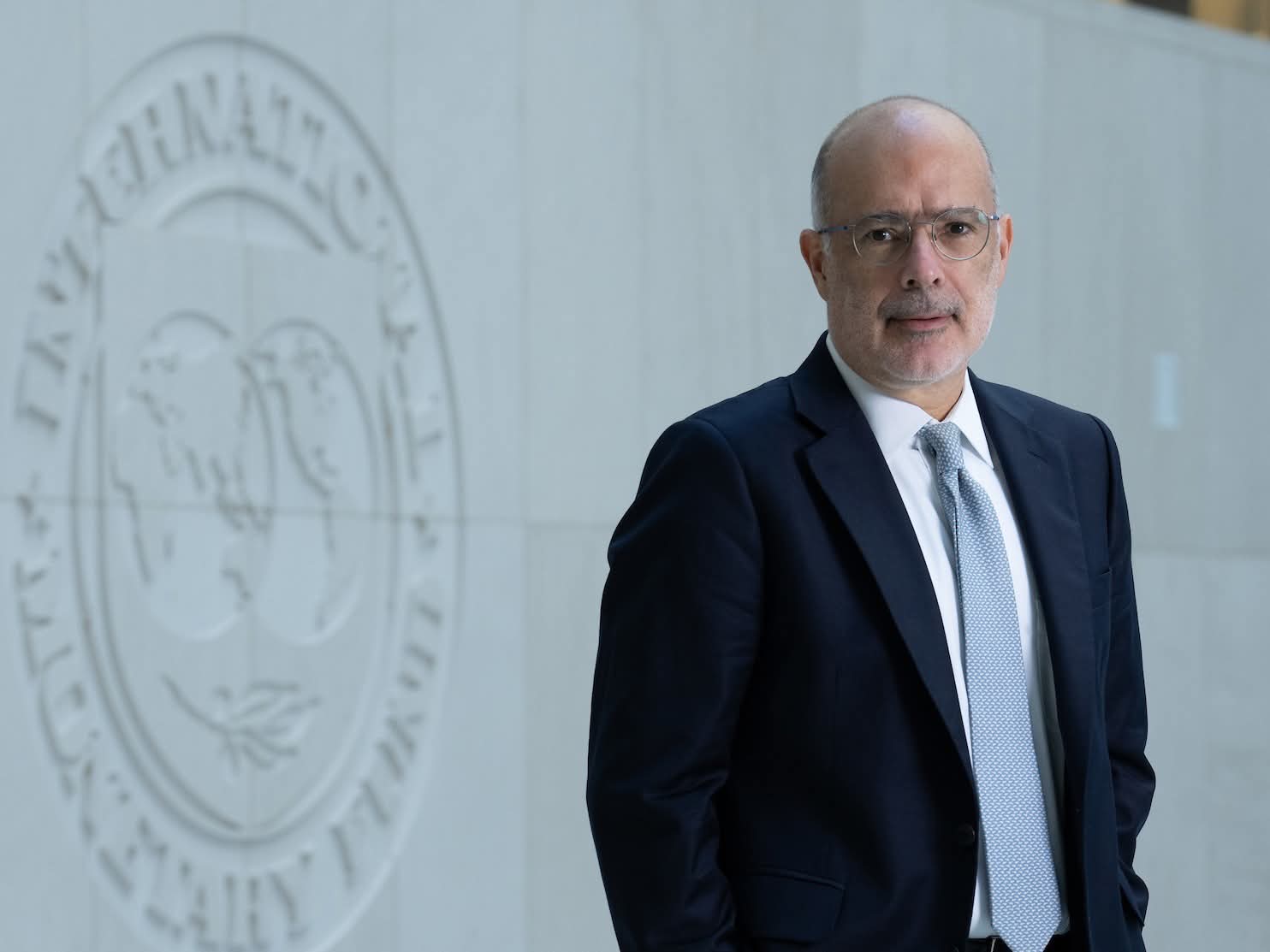
Rodrigo Valdés, director of the IMF’s fiscal affairs department, spoke during a press briefing on the fund’s fiscal monitor at the 2026 annual meetings of the IMF and World Bank in Bangkok, Thailand, on Wednesday.
His comments followed a question on how the fund could recommend allowing energy prices to reflect scarcity when higher fuel prices in Nigeria could raise transport costs, worsen inflation and deepen poverty, particularly when the government was facing calls to restore petrol subsidy ahead of an election year.
“Protecting people is not the same as protecting the price of fuels,” Valdés said.
He said fuel subsidies or measures preventing prices from adjusting fully to an energy shock had cost countries between 1 percent and 1.5 percent of gross domestic product (GDP) in 2026.
“It’s first fiscally very costly, and second, if you look at the pattern of consumption, it’s easy to see that that subsidy is readily regressive in many places,” he said.
Valdés said governments should instead use social safety nets and household data to identify people who need assistance.
“There are better tools to deal with this,” he said.
The federal government recently announced a 30-day petrol discount at Nigerian National Petroleum Company (NNPC) Limited retail stations, with priority for public transport operators, to cushion the impact of rising fuel prices.
Taiwo Oyedele, minister of finance, said NNPC retail would sell petrol at cost by foregoing its retail profit margin, describing the measure as temporary relief rather than a return to petrol subsidy.
The government also proposed negotiating a ceiling of N1,350 per litre on petrol’s ex-gantry or landing cost, subject to monthly reviews.
The IMF also recommended targeted interventions to cushion the effect of higher fuel prices on transportation costs.
Davide Furceri, a division chief in the fund’s fiscal affairs department, said governments could redirect some of the resources spent on blanket subsidies towards vulnerable consumers.
“For example, you mentioned transportation costs. Yeah, gasoline could go up, and perhaps bus fees may be subsidised in a way that is a much better policy at the end of the day than just a blanket subsidy for everybody,” Furceri said.
He also suggested alternatives such as school feeding programmes, geographical targeting and assistance for vulnerable farmers.
Furceri acknowledged that some countries lacked household registries and digital payment systems needed to deliver targeted support effectively.
However, he said governments could adopt alternative approaches in the short term while developing stronger systems.
He recommended that assistance should be limited, targeted and temporary.
Valdés explained that fuel subsidies could worsen global energy pressures by preventing demand from adjusting when supplies were constrained.
“When you subsidise, you don’t allow, at the end of the day, demand to adjust,” he said.
“And reality is that we have less fuels in the world economy. That means that someone else has to adjust more, and the market produces a higher price for that.”
The IMF official said subsidies were not only costly and regressive but could also have spillover effects on the global economy.

EFCC Reopens Atiku’s Alleged Financial Crimes Probe

APC Presidential Campaign Council: Nigerians Devoid Of Party Affiliations Endorses Tinubu’s 2nd Term-Kwankwaso

IMF to Nigeria: Don’t Bring Back Petrol Subsidy for Everyone, Help the Poor Instead

Alhaji Abba Yusuf At 81: A Life Of Service, Leadership And Traditional Responsibility

Ahmad Hamisu Gwale Wins NBMA National Award for Best Male Newscaster 2026

Zamfara Varsity ASUU Threatens Warning Strike Over FG-ASUU Agreement, Promotion Arrears

PCACC Arrests Man Over Alleged ₦4.5m Sale, Illegal Leasing of Kano Government Horse Stable

Goje’s Electoral War:The Confrontation With Tinubu,Governor Inuwa,Usman Kumo And APC candidates Ahead Of 2027

Prof Yusuf Adamu Delivers BUK’s 63rd Professorial Inaugural Lecture, Reflects on Medical Geography and Academic Legacy

RE:WE ARE UNDER SIEGE: TARABA MONARCH BREAKS SILENCE AS FULANI BANDITS OVERRUN THE ANCIENT KWARARAFA KINGDOM:
EFCC Reopens Atiku’s Alleged Financial Crimes Probe
APC Presidential Campaign Council: Nigerians Devoid Of Party Affiliations Endorses Tinubu’s 2nd Term-Kwankwaso
IMF to Nigeria: Don’t Bring Back Petrol Subsidy for Everyone, Help the Poor Instead
Alhaji Abba Yusuf At 81: A Life Of Service, Leadership And Traditional Responsibility
Ahmad Hamisu Gwale Wins NBMA National Award for Best Male Newscaster 2026
Zamfara Varsity ASUU Threatens Warning Strike Over FG-ASUU Agreement, Promotion Arrears
PCACC Arrests Man Over Alleged ₦4.5m Sale, Illegal Leasing of Kano Government Horse Stable
Goje’s Electoral War:The Confrontation With Tinubu,Governor Inuwa,Usman Kumo And APC candidates Ahead Of 2027
Prof Yusuf Adamu Delivers BUK’s 63rd Professorial Inaugural Lecture, Reflects on Medical Geography and Academic Legacy
RE:WE ARE UNDER SIEGE: TARABA MONARCH BREAKS SILENCE AS FULANI BANDITS OVERRUN THE ANCIENT KWARARAFA KINGDOM:
-

 Opinion5 years ago
On The Kano Flyovers And Public Perception
-

 Features5 years ago
How I Became A Multimillionaire In Nigeria – Hadiza Gabon
-

 Opinion6 years ago
Kano As future Headquarters Of Poverty In Nigeria
-

 History6 years ago
Sheikh Adam Abdullahi Al-Ilory (1917-1992):Nigeria’s Islamic Scholar Who Wrote Over 100 Books And Journals
-

 Opinion5 years ago
My First Encounter with Nasiru Gawuna, the Humble Deputy Governor
-

 History5 years ago
The History Of Borno State Governor Professor Babagana Umara Zulum
-

 History6 years ago
The Origin Of “Mammy Market” In Army Barracks (Mammy Ochefu)
-

 News5 years ago
Federal University Of Technology Babura To Commence Academic Activities September