
News
APC Sets the Stage for Historic Convention, Launches ‘Cleaner Abuja’ Initiative
Ibrahim Ahmad
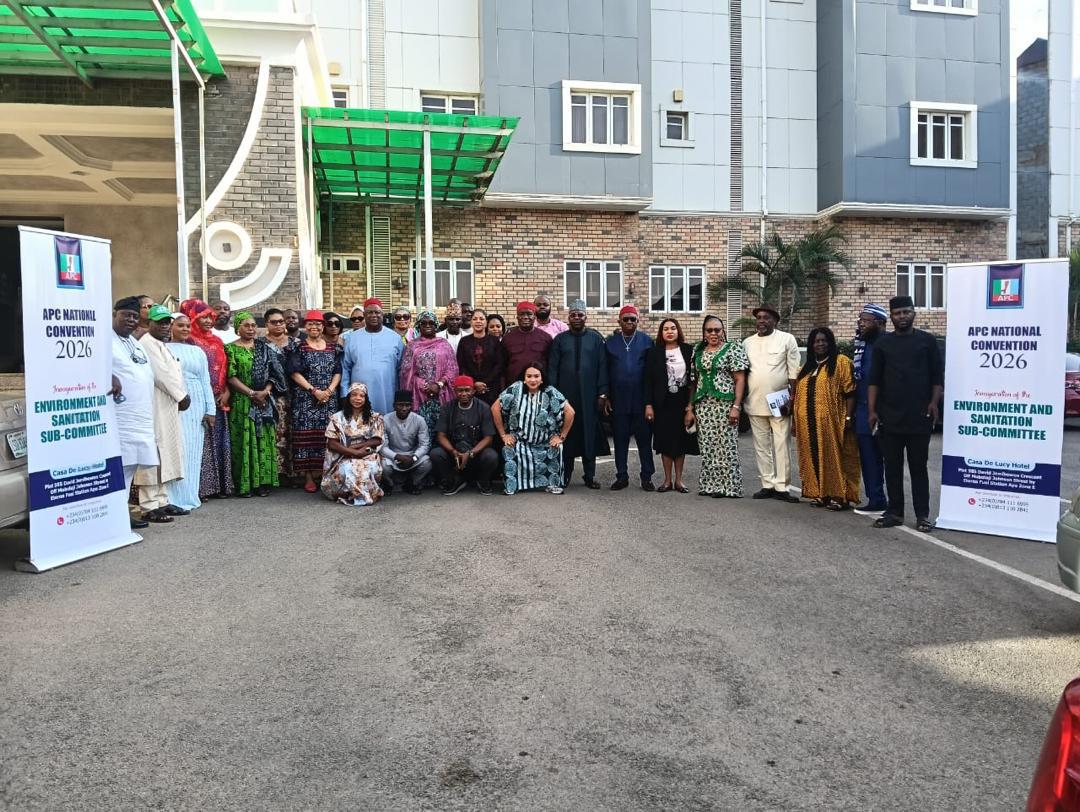
The Environment and Sanitation Sub-Committee for the 2026 National Convention of the All Progressives Congress (APC) has been officially inaugurated, with a firm commitment to ensuring a clean, safe and environmentally sustainable convention.
The inauguration ceremony, held on Wednesday, March 18, 2026, marks a significant milestone as the first sub-committee to be constituted by the Convention Central Working Committee.
Performing the inauguration, former Senate President and Deputy Chairman of the Convention Central Committee, Senator Anyim Pius Anyim, described the development as a strategic step toward delivering a well-organized and successful national convention.
The sub-committee is chaired by the Governor of Kogi State, Ahmed Usman Ododo, who was unavoidably absent but represented by the Kogi State Commissioner for Environment.
In his remarks, Anyim commended the Secretary of the sub-committee, Senator Uche Ekwunife, for her proven leadership capacity, organizational competence and dedication to duty. He expressed confidence that the committee, given the calibre of its members, would play a critical role in the success of the convention.
He stressed that maintaining a clean and orderly environment is essential, not only for the comfort of participants but also as a reflection of the discipline and image of the party.
Responding, Senator Ekwunife expressed appreciation to the party leadership for the confidence reposed in the committee, assuring that members are fully prepared to deliver on their mandate.
She disclosed that the sub-committee has already commenced strategic planning aimed at ensuring a hygienic and well-managed environment before, during and after the convention.
Ekwunife also invited the Deputy Chairman to the committee’s flagship awareness programme, tagged “Walk for Safe Environment and Safety,” which is designed to sensitize stakeholders and participants on the importance of environmental responsibility ahead of the convention.
The APC National Convention is scheduled to hold on March 28 and 29, 2026.
Reaffirming the committee’s vision, she emphasized that maintaining a clean and safe environment throughout the convention remains non-negotiable.
She further highlighted the sub-committee’s theme, “Cleaner Abuja, Great Convention,” under the broader “Keep APC Convention Clean Initiative,” as a guiding principle for its activities.
The committee also pledged to collaborate with relevant stakeholders to ensure environmental compliance throughout the convention period, with the aim of setting a standard for future political gatherings in Nigeria.
The inauguration signals the APC’s early and strategic preparations for its 2026 National Convention, with stakeholders expressing optimism that the sub-committee will deliver a model framework for environmental management at large-scale political events.








News
INEC Chairman Faces Allegations Over Alleged Pro-Tinubu Communications
By Yusuf Danjuma Yunusa
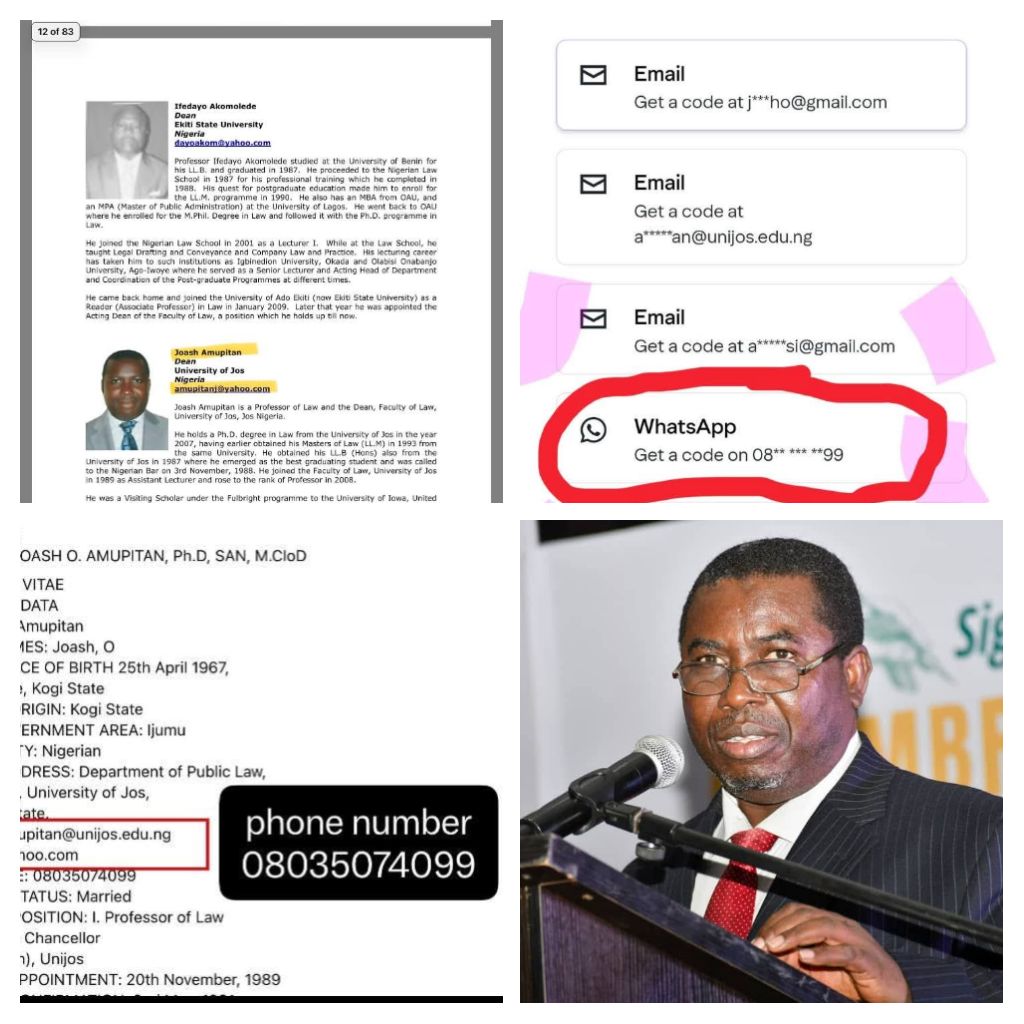
The Chairman of the Independent National Electoral Commission (INEC), Joash Amupitan, has denied any prior affiliation with President Bola Tinubu or the All Progressives Congress (APC). However, newly uncovered online evidence appears to contradict his office’s official statement.
On Friday, Amupitan, through his spokesperson Adedayo Oketola, rejected claims that he had been a supporter of the president. Oketola insisted that Amupitan is a neutral appointee, as required by the constitution to safeguard the integrity of Nigeria’s electoral process.
“He does not own or operate any personal account on X (formerly Twitter),” Oketola said in the statement. “He has at no time engaged in partisan commentary, nor has he ever associated himself with any political leaning or activity in his private or public capacity.”
But open-source intelligence (OSINT) findings suggest otherwise.
The X account @joashamupitan posted “victory is sure” in March 2023 in response to a message from APC chieftain Dayo Israel, who had announced that the party had won seven out of ten polling units in an opposition stronghold predominantly populated by Igbo voters.
Further investigation revealed that the account was created using the email address amu***anj@yahoo.com—the same email found on a curriculum vitae attributed to Amupitan. That CV also listed his former institutional email, amu***anj@unijos.edu.ng, from his time as a professor at the University of Jos.
To verify the Yahoo email address, the platform sent a notification to the linked phone number: 0803***4099. That same number is tied to an Opay customer account under the username “Joash Ojo Amupitan.” Opay accounts typically use a customer’s phone number without the leading zero—in this case, 8035074099.
When reached by the Peoples Gazette on Saturday for comment on the new findings, Oketola said: “We stand by our statement. A statement was issued yesterday and that is our official position on the matter.”
The connection between the X account, the Yahoo email, and a phone number bearing Amupitan’s full name raises questions about the INEC chairman’s denial of any political allegiance to the APC or President Tinubu, who is widely expected to seek re-election in 2027.
News
Defections and Realignments Shape Kano’s Political Landscape Ahead of Elections-Inuwa Waya
Abbas Yushau Yusuf
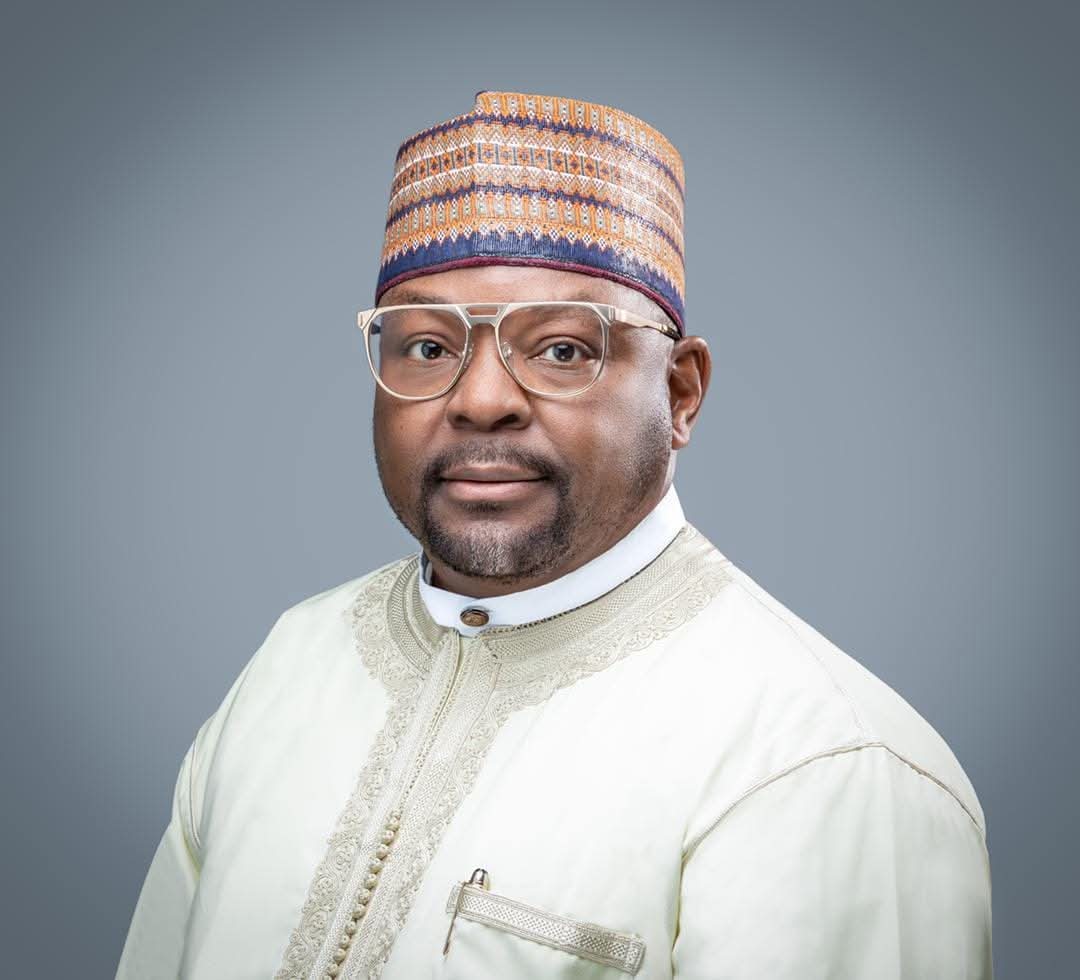
An APC chieftain, Inuwa Waya, has said the wave of political defections and realignments currently unfolding in Kano State reflects the evolving dynamics of Nigeria’s political environment as the country approaches another election cycle.
Waya made the remarks during an interactive session with the Kano Online Media Chapel of the Nigeria Union of Journalists, where he addressed recent developments in party politics and governance in the state.
He explained that periods leading up to elections are often characterized by strategic political movements, as individuals and groups reassess their positions in line with their ambitions and ideological goals. According to him, such transitions are not unusual but rather a defining feature of Nigeria’s democratic process.
“It is a time of changing parties by individuals and also a time for alignment and realignment,” Waya said, noting that the approach of elections tends to expose political bottlenecks due to the fluid nature of the system.
He emphasized that political parties, by definition, are associations of individuals and groups with shared objectives. As a result, politicians naturally gravitate toward platforms that best align with their goals and offer opportunities for achieving them.
Speaking specifically on Kano politics, Waya pointed to the decision of Governor Abba Kabir Yusuf to join the All Progressives Congress, attributing the move to internal crises within the New Nigeria Peoples Party.
He said the challenges within the NNPP, including ongoing legal disputes, created obstacles that hindered effective governance. According to him, the governor’s defection has provided the stability needed to focus on developmental projects and deliver on the expectations of the people.
Waya further argued that political desperation among key actors often disrupts societal stability, but maintained that the governor’s move to the APC has helped restore order in Kano’s political space.
He also commended the administration of Governor Yusuf, stating that it has continued to make meaningful impacts on the lives of residents across the state.
Drawing from political theory, Waya referenced British scholar Alan Ball, noting that politics involves everyone in society, from elites to grassroots actors such as traders and artisans. He reiterated the idea that humans are inherently political beings.
Waya future stressed that politics should serve as a unifying force aimed at advancing society and ensuring good governance. He called on political actors to prioritize collaboration and the collective interest of the people over personal ambitions.
News
BREAKING: INEC Postpones Nationwide Voter Revalidation Till After 2027 Elections
By Yusuf Danjuma Yunusa
The Independent National Electoral Commission (INEC) has postponed its planned nationwide voter revalidation exercise till after the 2027 general election.
In a statement on Friday, Mohammed Haruna, INEC’s national commissioner and chairman of the information and voter education committee, said the decision was made at a meeting between the commission and resident electoral commissioners (RECs).
“Following deliberations, the commission resolved to postpone the exercise until after the 2027 General Election,” the statement reads.
Since the Commission’s resolve to embark on the revalidation exercise, reactions have trailed, especially from the opposition coalition camp, the ADC.
It cited an allegation of wanting to sabotage eligible electorates in favour of the ruling party.

INEC Chairman Faces Allegations Over Alleged Pro-Tinubu Communications

Defections and Realignments Shape Kano’s Political Landscape Ahead of Elections-Inuwa Waya

BREAKING: INEC Postpones Nationwide Voter Revalidation Till After 2027 Elections

World Bank Urges Nigeria to Break Petrol Monopoly, Reopen Market to Imports

Online Media Now Shapes Public Opinion Faster Than Traditional Platforms — Inuwa Waya

ADC Leadership Crisis: State Chairmen to Elect Caretaker Committee on Tuesday
Governor Abba Kabir Yusuf Holds Exclusive Prerogative to Choose Deputy – Malam Inuwa Waya

DSP Barau As A Global Citizen, His Recent Global Engagements

NUJ Kano Online Chapel Tightens Membership Standards, Approves 31 Applicants After Rigorous Screening

APC National Convention : How DSP Barau Displays Political Sagacity, Deep Knowledge of Democracy Before President Tinubu, Others
INEC Chairman Faces Allegations Over Alleged Pro-Tinubu Communications
Defections and Realignments Shape Kano’s Political Landscape Ahead of Elections-Inuwa Waya
BREAKING: INEC Postpones Nationwide Voter Revalidation Till After 2027 Elections
World Bank Urges Nigeria to Break Petrol Monopoly, Reopen Market to Imports
Online Media Now Shapes Public Opinion Faster Than Traditional Platforms — Inuwa Waya
ADC Leadership Crisis: State Chairmen to Elect Caretaker Committee on Tuesday
Governor Abba Kabir Yusuf Holds Exclusive Prerogative to Choose Deputy – Malam Inuwa Waya
DSP Barau As A Global Citizen, His Recent Global Engagements
NUJ Kano Online Chapel Tightens Membership Standards, Approves 31 Applicants After Rigorous Screening
APC National Convention : How DSP Barau Displays Political Sagacity, Deep Knowledge of Democracy Before President Tinubu, Others
-

 Opinion4 years ago
On The Kano Flyovers And Public Perception
-

 Features5 years ago
How I Became A Multimillionaire In Nigeria – Hadiza Gabon
-

 Opinion5 years ago
Kano As future Headquarters Of Poverty In Nigeria
-

 History5 years ago
Sheikh Adam Abdullahi Al-Ilory (1917-1992):Nigeria’s Islamic Scholar Who Wrote Over 100 Books And Journals
-

 Opinion4 years ago
My First Encounter with Nasiru Gawuna, the Humble Deputy Governor
-

 History5 years ago
The Origin Of “Mammy Market” In Army Barracks (Mammy Ochefu)
-

 History4 years ago
The History Of Borno State Governor Professor Babagana Umara Zulum
-

 News4 years ago
Federal University Of Technology Babura To Commence Academic Activities September