
News
IGP Disu Commits to Fallen Officers’ Legacies with N2.4 Billion Payout to Next-of-Kin
By Yusuf Danjuma Yunusa
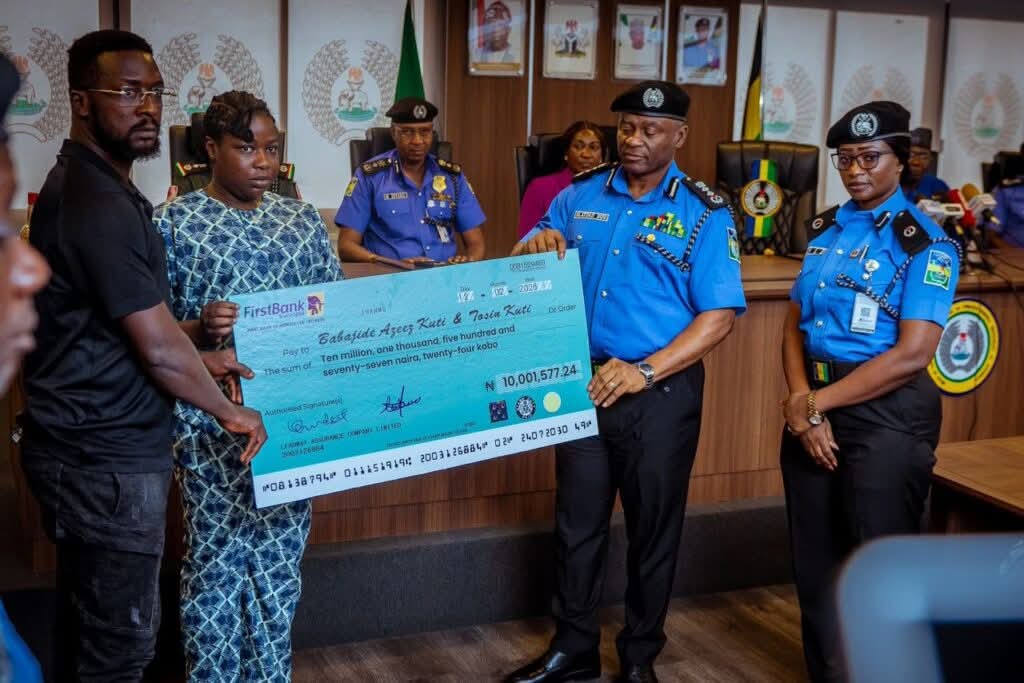
The Inspector-General of Police, Olatunji Disu, has presented cheques totalling N2.4 billion to 1,075 beneficiaries and next-of-kin of deceased police officers under the Group Life Assurance and IGP Family Welfare Schemes.
According to a statement on Wednesday signed by the Force Public Relations Officer, Anthony Placid, the presentation took place at the Force Headquarters, Abuja.
The cheques, “amounting to ₦2,435,421,584.11, cover policy years 2018/2019, 2020/2021, 2021/2022, 2022/2023, as well as 2024/2025 and 2025/2026, including outstanding insurance claims recovered from previous years.”
In her remarks, the Force Insurance Officer, Lydia Ameh, said the disbursement reflects “the determination of the IGP Olatunji Disu to prioritise the welfare of officers and their families.”
She noted that “the payments represent recoveries from long-standing insurance obligations” and added that “decisive steps have been taken to ensure compliance by insurance providers and prevent delays in claims settlement.”
Ameh further reaffirmed “the commitment of the Force Insurance Unit to efficient, transparent, and accountable service delivery.”
In his response, the IGP described the ceremony as “a solemn recognition of the sacrifices made by officers who lost their lives in the line of duty,” noting that the welfare of personnel remains a central pillar of his administration.
He stated that the presentation “goes beyond financial support,” adding that it represents “the Force’s enduring obligation to honour the courage, service, and commitment of its fallen heroes while standing firmly by their families.”
Disu assured all that “efforts would be intensified to strengthen welfare frameworks, improve administrative efficiency, and eliminate delays in the processing and disbursement of benefits.”
He also noted that “the Force will leverage modern technology to enhance transparency, streamline claims processing, and ensure accountability in welfare administration.”
The Nigeria Police Force reiterated its commitment, stating that the sacrifices of fallen officers “remain invaluable to the peace, security, and stability of the nation.”








News
President Tinubu Adds Days to Working Vacation, Returns at Weekend

By Yusuf Danjuma Yunusa
President Bola Ahmed Tinubu will return to Nigeria this weekend after extending his working vacation in Europe by a few days, the State House announced Monday evening.
The President departed Nigeria on August 30 for London to begin the working vacation, which was initially expected to last three weeks. According to a statement issued by Bayo Onanuga, Special Adviser to the President on Information and Strategy, the President has since relocated to Paris, France, where he held meetings with French President Emmanuel Macron and businessman Mr. Vincent Bollore, whose media group includes Canal+, Multichoice, and Universal Music Group.
Despite his absence, the statement emphasized that President Tinubu has remained actively engaged with domestic affairs, particularly directing an independent panel to investigate the deaths of 37 illegal miners in Minna following their detention by the Nigeria Security and Civil Defence Corps.
The President has delegated Vice President Kashim Shettima to represent him at official functions. However, Vice President Shettima departed Abuja on September 20 for New York to attend the 81st United Nations General Assembly. In his absence, Secretary to the Government of the Federation, Senator George Akume, will continue to represent the President at official engagements.
On the political front, the statement noted that Senator Abubakar Yari, Director-General of the Presidential Campaign Council (PCC), has been leading consultations with prominent traditional rulers across the country alongside other notable party leaders.
The extension comes as the President’s initial three-week vacation timeline elapsed, with the State House confirming he will now return to the country at the weekend.
News
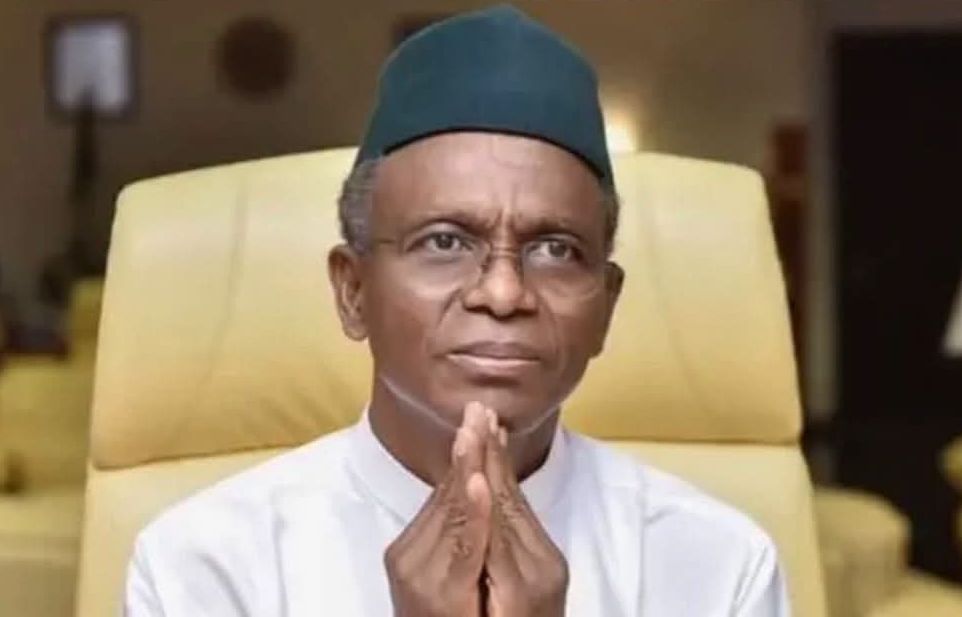
Court Adjourns El-Rufai’s N1 billion Suit Against ICPC, AGF, Police
By Yusuf Danjuma Yunusa
The Federal High Court, Abuja Division, on Monday adjourned a N1 billion rights suit filed by former Governor of Kaduna State, Nasir El-Rufai, against the Independent Corrupt Practices and Other Related Offences Commission (ICPC) and others until October 27 for a definite hearing.
Others named in the suit are the Inspector-General (IG) of police and the Attorney-General of the Federation (AGF) as the second and third respondents, respectively.
Justice Joyce Abdulmalik adjourned the suit to allow counsel to the former governor, Akinyemi Aremu, to respond to the counter affidavit filed by the AGF opposing the claims.
When the case was called, Mr Aremu informed the court that the matter was scheduled for hearing.
Counsel for the AGF, Maimuna Lami-Shiru, however, told the court that the AGF had filed a counter affidavit.
She prayed the court for leave to move their motion seeking an extension of time to deem their counter affidavit as being properly filed and served.
El-Rufai’s lawyer, Mr Aremu; Ezekiel Rimamsomte, who appeared for the IG, and the ICPC counsel did not oppose the application, and the judge granted it as prayed.
Mrs Abdulmalik then adjourned the case until October 27 for a definite hearing.
Earlier in the suit, the ex-governor sued the ICPC, the chief magistrate at the Magistrate’s Court of the FCT, Abuja, the IG, and the AGF as first to fourth respondents, respectively.
He, however, dropped the name of the magistrate from the case following his inability to specify the name of the magistrate who was sued as the second respondent, after the judge made the observation.
Mr El-Rufai is, therefore, demanding N1 billion in damages against ICPC, the IG and the AGF.
In an originating motion on notice marked FHC/ABJ/CS/345/2026, dated and filed February 20 by Oluwole Iyamu, SAN, the former governor sought seven reliefs.
He prayed the court to declare that the invasion and search of his residence at House 12, Mambilla Street, Aso Drive, Abuja, on February 19 at about 2:00 p.m. by the ICPC and IG amounts to a gross violation of the applicant’s fundamental rights.
He said it violated the dignity of the human person, personal liberty, fair hearing, and privacy under Sections 34, 35, 36, and 37 of the Constitution.
He urged the court to declare that “any evidence obtained pursuant to the aforesaid invalid warrant and unlawful search is inadmissible in any proceedings against the applicant, as it was procured in breach of constitutional safeguards.”
Mr El-Rufai, therefore, sought an order of injunction restraining the respondents and their agents from further relying on, using, or tendering any evidence or items seized during the unlawful search in any investigation, prosecution, or proceedings involving him.
He sought an order directing the first and third respondents (ICPC and IG) to forthwith return all items seized from the applicant’s premises during the unlawful search, together with a detailed inventory thereof.
He also sought an order awarding N1,000,000,000.00 (one billion naira) as general, exemplary, and aggravated damages, among others.
In its counter affidavit, the ICPC said it received a petition against Mr El-Rufai and, acting on it, commenced an investigation that led to the search at his residence.
It argued that its operatives acted under a valid search warrant issued on February 18 and executed on February 19 between 1:37 p.m. and 3:56 p.m. at 12 Mambilla Street, Asokoro, Abuja.
The commission said its officials were accompanied by Nigeria Police Force personnel and that the exercise was witnessed by Mr El-Rufai’s wife, Hadiza El-Rufai, and his son, Mohammed El-Rufai.
The ICPC, which urged the court to dismiss the suit, listed the items allegedly recovered from the residence.
The police, also in its counter affidavit deposed to by Ewa Anthony, argued that it had the statutory power to detect, arrest, investigate and prosecute offenders.
It argued that the search at Mr El-Rufai’s residence was carried out pursuant to a search warrant issued by a competent court of law.
The anti-graft agency disagreed with the ex-governor, insisting the search warrant was a genuine court order.
It said its officers who carried out the operation complied with all applicable legal procedures in executing the search warrant.
According to the police, the applicant is trying to use the honourable court to shield him from the security investigation and prosecution in court.
It, therefore, prayed the court to dismiss the suit in its entirety.
News
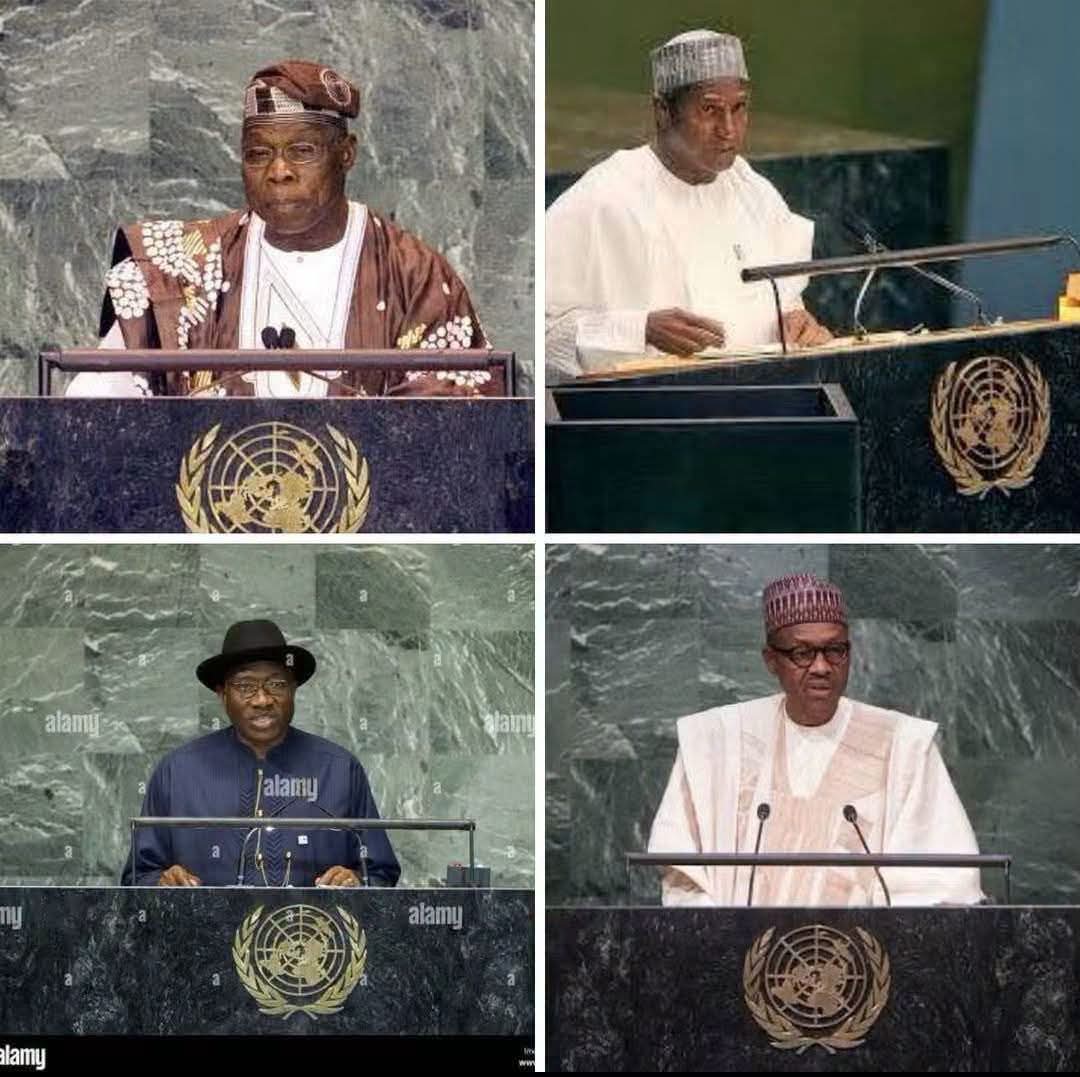
Tinubu Becomes First Post-1999 Nigerian President to Miss Three Consecutive UNGAs
By Yusuf Danjuma Yunusa
President Bola Tinubu has again delegated Vice President Kashim Shettima to lead Nigeria’s delegation to the 81st United Nations General Assembly (UNGA) in New York, marking the third consecutive year he has personally skipped the global summit since taking office in 2023.
The Minister of Information and National Orientation, Mohammed Idris, said on Monday that Tinubu is “currently on annual leave,” describing the delegation to Shettima as “neither unusual nor a diminution of the country’s diplomatic standing”. Idris insisted Shettima “carries the full mandate of the President and the Federal Republic of Nigeria” and will deliver the national statement.
However, the explanation has done little to quell public scrutiny. Tinubu last personally attended UNGA in September 2023 for the 78th session, shortly after his inauguration. He has since been absent from the 79th session in 2024, the 80th in 2025, and now the 81st in 2026—a pattern unmatched by any Nigerian president since the return of democracy in 1999.
Former Vice President Atiku Abubakar, through his media aide Phrank Shaibu, demanded a “full explanation,” arguing that three consecutive absences “could no longer be dismissed as coincidence or routine delegation” but constituted “a pattern of presidential evasion”. Atiku questioned whether Tinubu’s “documented history with United States law-enforcement agencies has become a burden on Nigeria’s foreign relations”.
At the centre of the opposition’s claim is a long-standing U.S. forfeiture case in which $460,000 was held in an account linked to Tinubu, after American authorities alleged the funds represented proceeds of narcotics trafficking or were involved in prohibited financial transactions. Atiku also questioned why the administration spent up to $9 million on American lobbyists to improve Nigeria’s standing in Washington while the President repeatedly stays away from New York.
The Presidency has not directly addressed the drug-case allegation. A ruling party chieftain, Olatunbosun Oyintiloye, dismissed the claims as “political propaganda,” noting that no U.S. court has reopened a criminal case or pronounced Tinubu guilty of drug trafficking.
Nigeria’s Permanent Representative to the UN, Jimoh Ibrahim, had earlier announced that Tinubu would attend and that a seat had been secured for him near U.S. President Donald Trump. That seat remained empty.

President Tinubu Adds Days to Working Vacation, Returns at Weekend

Court Adjourns El-Rufai’s N1 billion Suit Against ICPC, AGF, Police

Tinubu Becomes First Post-1999 Nigerian President to Miss Three Consecutive UNGAs

FRAMAZAZ Foundation, Brigade Zumunci Train 50 Youths in Digital Entrepreneurship

UNGA81: Shettima Leads Nigeria’s Delegation to New York

95% of Governor Abba Kabir Yusuf’s Promises Have Been Fulfilled — CPS Interview By Musa Diso, In Kano

Bello Sharada: A Great Writer, A Bookish Soul, Gone Too Soon

NUT Launches ‘Go Public’ Campaign to Promote Public Education in Nigeria

Imam Jingir Sells Out, Deploys Muslim-Muslim Chants Minutes After ₦600 Million APC Windfall

Nigerians Are Tired of Promises’ — CAN Demands Action on Insecurity, Hardship In Eid-el-Maulud Message
President Tinubu Adds Days to Working Vacation, Returns at Weekend
Court Adjourns El-Rufai’s N1 billion Suit Against ICPC, AGF, Police
Tinubu Becomes First Post-1999 Nigerian President to Miss Three Consecutive UNGAs
FRAMAZAZ Foundation, Brigade Zumunci Train 50 Youths in Digital Entrepreneurship
UNGA81: Shettima Leads Nigeria’s Delegation to New York
95% of Governor Abba Kabir Yusuf’s Promises Have Been Fulfilled — CPS Interview By Musa Diso, In Kano
Bello Sharada: A Great Writer, A Bookish Soul, Gone Too Soon
NUT Launches ‘Go Public’ Campaign to Promote Public Education in Nigeria
Imam Jingir Sells Out, Deploys Muslim-Muslim Chants Minutes After ₦600 Million APC Windfall
Nigerians Are Tired of Promises’ — CAN Demands Action on Insecurity, Hardship In Eid-el-Maulud Message
-

 Opinion5 years ago
On The Kano Flyovers And Public Perception
-

 Features5 years ago
How I Became A Multimillionaire In Nigeria – Hadiza Gabon
-

 Opinion6 years ago
Kano As future Headquarters Of Poverty In Nigeria
-

 History5 years ago
Sheikh Adam Abdullahi Al-Ilory (1917-1992):Nigeria’s Islamic Scholar Who Wrote Over 100 Books And Journals
-

 Opinion5 years ago
My First Encounter with Nasiru Gawuna, the Humble Deputy Governor
-

 History5 years ago
The History Of Borno State Governor Professor Babagana Umara Zulum
-

 History5 years ago
The Origin Of “Mammy Market” In Army Barracks (Mammy Ochefu)
-

 News4 years ago
Federal University Of Technology Babura To Commence Academic Activities September