
Opinion
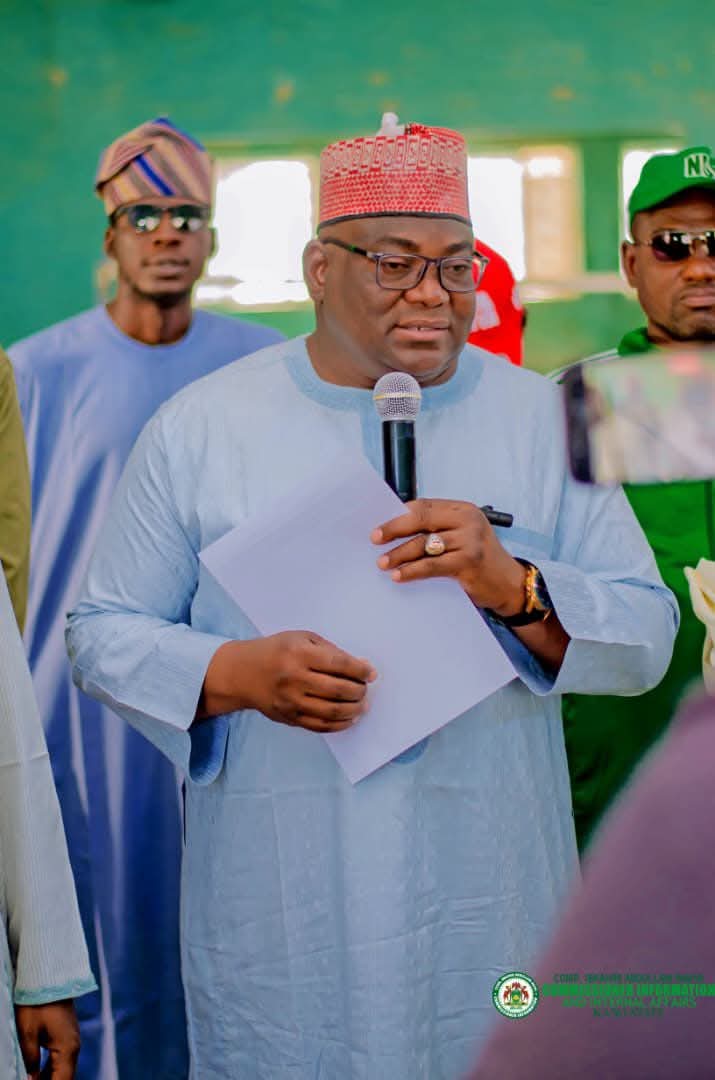
Comrade Ibrahim Waiya, Limamin Kano First: The Man Who Turned a Governor’s Vision Into a Governing Philosophy
By Sufyan Lawal Kano
The true measure of leadership has never been the grandeur of its proclamations. It has always been the discipline of its follow-through, the unglamorous, daily, often invisible work of converting a compelling vision into institutional reality, of ensuring that the ideas articulated in policy documents and public speeches actually reach the citizens whose lives they are intended to transform. In Kano State today, that work is being done with a consistency and seriousness that deserves far wider recognition than it has so far received. And at the center of that effort, serving as both the strategic intelligence and the public conscience of the Kano First Agenda, stands the Honourable Commissioner for Information and Internal Affairs, Comrade Ibrahim Abdullahi Waiya, whose unofficial but deeply earned title, Limamin Kano First, speaks volumes about the nature and significance of his contribution.
The Kano First Initiative, conceived under the leadership of Governor Abba Kabir Yusuf as a governing philosophy that places the welfare, dignity, and progress of Kano’s citizens at the irreducible center of every policy decision, represents something genuinely distinctive in the landscape of Nigerian state governance. It is not merely a development agenda in the conventional sense, a list of projects to be completed and targets to be met. It is, at its most ambitious, an attempt to redefine the relationship between government and citizens, to move from a model of governance as service delivery toward a model of governance as shared civic enterprise, one in which citizens are not passive beneficiaries of government attention but active co-owners of the state’s development trajectory. That is a profound ambition, and it requires, to become real, something that infrastructure projects and budget allocations alone cannot provide: a coherent, credible, and consistently communicated philosophy that citizens can understand, trust, and embrace as their own.
It is precisely here that Comrade Waiya’s contribution becomes indispensable. From the moment he assumed office, he brought to the Ministry of Information a clarity of purpose that distinguished his approach from the reactive, image-management orientation that has historically characterized government communication in this country. His mission, as he has articulated it through his public engagements, his institutional reforms, and his personal conduct, has been to build a communication architecture that serves not the government’s convenience but the citizens’ understanding. That is a subtle but enormously consequential distinction, and it is one that has shaped every significant decision he has made since taking office.
Among his earliest and most consequential institutional actions was a systematic engagement with the state’s major government media organizations, including ARTV, Radio Kano, Triumph Publishing Company, and the Kano State Printing Press. These engagements were not ceremonial visits. They were strategic assessments, aimed at understanding the capacity, the constraints, and the potential of the institutions through which government communicates with its citizens, and at beginning the process of revitalizing that machinery so that it could serve its proper democratic function: to inform, to educate, and to create the conditions for genuine public understanding of government policy. A government whose communication infrastructure is weak or dysfunctional cannot build the public trust that effective governance requires, regardless of the quality of its policies. Waiya understood this, and he acted on it.
Equally significant was his investment in human capacity at the grassroots level. The decision to organize training programs for information officers from all forty-four local government areas of Kano State reflected an understanding that strategic communication cannot be confined to the state capital or to the national media. It must penetrate to the ward level, to the market and the mosque and the community meeting, to the spaces where the overwhelming majority of Kano’s citizens actually encounter government and form their judgments about its intentions and its performance. By building a stronger grassroots communication network, Waiya created the infrastructure for the kind of citizen-level engagement that the Kano First philosophy demands but that no amount of press releases or social media content can substitute for.
His engagement with the media profession itself has been another dimension of his work that deserves particular recognition. Recognizing that the quality of public discourse in Kano is inseparable from the quality of its journalism, Waiya has invested consistently in building relationships with journalists, broadcasters, and communication professionals, not to manage their coverage or to cultivate favorable reporting, but to foster the kind of professional standards and development-oriented journalism that a society serious about its own progress requires. His consistent message to media practitioners, that responsible, accurate, and constructive reporting is not merely a professional obligation but a civic contribution, reflects a sophisticated understanding of the media’s role in either deepening or undermining public trust in institutions.
Perhaps the most important philosophical contribution Waiya has made to the Kano First discourse, however, is his insistence that popularizing the agenda is not a political act but a civic duty. This reframing is, in the context of Nigerian political culture, genuinely radical. In a political environment where almost every public initiative is immediately read through a partisan lens, where support for a government programme is routinely interpreted as political allegiance and skepticism as opposition, the assertion that the Kano First Agenda belongs not to the political party or to the Yusuf administration but to the people of Kano is a claim that cuts across the grain of established political behavior. It is also, if it can be made to stick, extraordinarily powerful, because a civic philosophy that transcends partisan boundaries is one that can survive electoral cycles and accumulate the kind of broad, durable public support that transforms individual administrations’ programmes into lasting institutional culture.
The evidence that this reframing is beginning to take hold is visible, if not yet definitive. Citizens across the state are demonstrably more informed about the administration’s policies and the philosophy that underpins them. Public conversations about development are increasingly framed in the language of collective responsibility and civic ownership rather than purely in terms of government performance and political judgment. Community leaders, professional associations, civil society organizations, and youth groups are engaging with the Kano First framework in ways that suggest a growing recognition that the initiative speaks to something real in the shared aspirations of Kano’s people, something that predates the current administration and will, if properly nurtured, outlast it.
None of this diminishes the central role of Governor Abba Kabir Yusuf, whose personal commitment to the Kano First philosophy provides the political authority and executive backing without which no communication strategy, however brilliant, can translate vision into action. The governor’s record of progress across infrastructure development, education, healthcare, youth empowerment, and social welfare initiatives is the material foundation on which the Kano First narrative is built. Without that foundation, the most skillful communication would eventually ring hollow. With it, skillful communication becomes the bridge between government achievement and public understanding, between what is being done and what citizens know and believe about what is being done. That bridge is what Waiya has been building, patiently, consistently, and with considerable skill, since the first day he took office.
What observers of his ministry most frequently note is not any single achievement but a quality of presence and commitment that is, in Nigerian public life, genuinely unusual. Waiya engages, consistently and seriously, with the full range of stakeholders whose participation the Kano First philosophy requires: journalists and community leaders, professional bodies and civil society organizations, youth groups and traditional institutions, media practitioners and policy analysts. He does not manage these relationships from a distance or through intermediaries. He shows up, he listens, he explains, and he follows through. That combination of intellectual seriousness and personal accessibility is, in the world of governance communication, a rare and valuable combination, and it is one that has earned him a reputation that no amount of political positioning could manufacture.
As Kano State continues to navigate the complex terrain of development, democratic consolidation, and social renewal, the work of the Limamin Kano First remains as urgent as it has ever been. The Kano First Initiative is still in its formative stages. Its ultimate success will depend on the quality of its implementation, the consistency of its leadership, and above all, the willingness of Kano’s citizens to claim it as their own rather than leaving it to government alone. Comrade Ibrahim Abdullahi Waiya has done the foundational work of making that claim possible. He has given the governor’s vision an intellectual architecture, a communication infrastructure, and a civic philosophy robust enough to withstand the pressures of a complex political environment. The rest, as it must always be in a genuine democracy, belongs to the people.
Sufyan Lawal Kano is a public affairs writer and civic commentator based in Kano State.
Contact: sefjamil3@gmail.com










Opinion
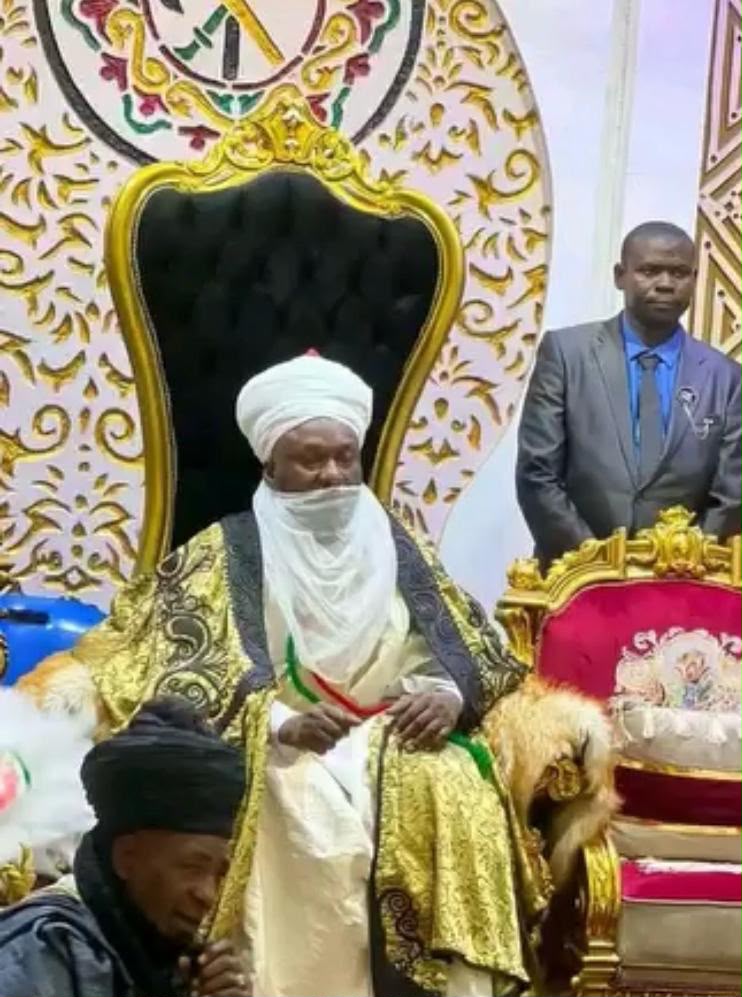
All Hail The 17th Emir Of Gumel, His Royal Highness, Dr. Lawan Ahmed Mohammed-DIG
By DIG Mohammed Usaini Gumel (Rtd)
With profound submission to the will of Almighty Allah, I extend my heartfelt condolences on the passing of our revered Emir, His Royal Highness Dr Ahmad Muhammad Sani II, (CON).
His distinguished reign was marked by wisdom, humility, justice, peace and devoted service to his people. May Almighty Allah forgive his shortcomings, illuminate his grave, admit him into Aljannatul Firdaus and grant him eternal rest. Ameen.
As we mourn his passing, we thank Almighty Allah for the peaceful succession to the revered throne of Gumel. It is therefore with great joy and respect that I congratulate His Royal Highness, Lawan Ahmed Mohammed, PhD, on his ascension as the 17th Emir of Gumel.
Your Royal Highness’s ascension to the throne of Gumel, continues the sacred trust entrusted to the custodians of this ancient throne.
There is no doubt that enduring traditions of unity, dignity, courage and service, has been established and preserved by the forbears, as your late father has strengthened them, through compassionate and principled leadership.
We are confident that your knowledge, experience and understanding of both our traditions and the modern world will guide the Gumel Emirate towards greater progress. We look forward to your leadership to consolidate peace and unity, preserve our cultural heritage, uphold justice and consultation, and promote development in education, agriculture, commerce, healthcare, technology, youth empowerment and community security.
This is a time for every son and daughter of the Gumel Emirate to unite in common purpose. The strength and stability of the throne depend on the cooperation of the Royal Family, traditional titleholders, District and Village Heads, religious leaders, elders, elected representatives, professionals, farmers, traders, women, youth and all our communities, should rally round the new Emir for the common purpose of peace, unity, progress and socio-economic development of the Gumel Emirate.
At this time, our loyalty must be expressed through respect for the traditional institution, responsible conduct, sincere counsel and a shared commitment to the Emirate’s peace and development.
In a period like this we must accept to preserve the legacy of our ancestors and predecessors while building a Gumel Emirate that is peaceful, united, secure, educated, economically vibrant and responsive to every community.
Indeed, a leader serves as the heartbeat of a community. You are the heartbeat of the Gumel Emirate. The Gumel Emirate is lucky to have you as our 17th Emir, because you are such a figure, embodying wisdom, unity, and deep compassion for all residents. This tribute reflects on a legacy defined by tireless service, demonstrating how true leadership transcends mere titles to become a guiding light for generations to come.
Kindness often acts as the strongest bridge between a ruler and the people. We can only expect that this your distinguished reign as the 17th Emir of Gumel shall prioritize the well-being of the vulnerable, ensuring that voices which were often unheard find support within the palace walls.
Your Royal Highness, historical records frequently highlight leaders like the late Emir, who gained fame for generosity of spirit. I am happy to embrace the fact that you shall exhibit actions that prove authority is most effective when it is paired with genuine care for the common person.
The Gumel Emirate is lucky for the fact that beyond local boundaries, you are a master of diplomacy and peace. It’s a fact that conflicts are natural parts of human society, yet you are among the wise leaders who know how to navigate these challenges without bloodshed.
May Almighty Allah grant Your Royal Highness wisdom in judgment, patience in adversity, courage in leadership and sound health throughout your reign. May He protect you, guide your decisions and bless you with sincere, loyal and trustworthy advisers and reign, strengthen our unity, preserve our honour and bring enduring peace, progress and shared prosperity to the entire Gumel Emirate. Amin.
DIG Mohammed Usaini Gumel (Rtd) writes from his Gumel home, Jigawa State.
Opinion
IT IS OVER: Gov Yusuf Ends 50-Year BUK Land Crisis Ushering Progress for 6,000 Families
By Abba Anwar
Fifty years of litigation, mistrust, protests and painful loss came to an end yesterday as the Kano State Government formally resolved the protracted land dispute between Bayero University Kano and the people of Rimin Zakara, Rijiyar Zaki and adjoining communities.
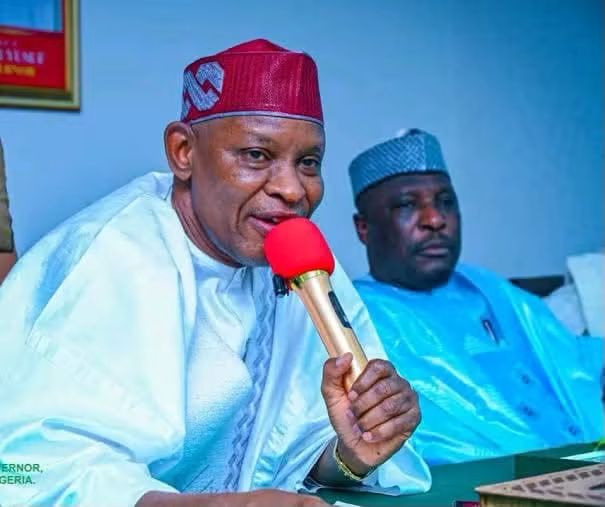
At a historic meeting attended by government officials, university authorities, traditional rulers and community representatives, Governor Alhaji Abba Kabir Yusuf declared the crisis over and unveiled a settlement built on “… justice with compassion” that protects both institutional development and innocent families.”
Commissioner for Public Procurement, Projects Monitoring and Evaluation, Nura Iro Ma’aji, represented the Governor, Commissioner for Land and Physical Planning, Abdujjabbar Muhammad Umar was there, Prof Ahmad Muhammad Tsauri, represented the Vice Chancellor of BUK and the people of Rimin Zakara, were led to the venue by Alhaji Baba Habu.
The exceptional effort is a clear testimony that Governor Yusuf’s administration is a peace-loving one which chooses resolution over confrontation.
Just as he said the settlement reflects the core philosophy of his administration, in an effort to confront inherited problems, restore institutions, protect ordinary citizens and deliver practical solutions to a lingering crisis. Which sometime in the past claimed innocent lives.
“We are not here to recount the history of Rimin Zakara. We are here to close it. For almost half a century, this crisis survived successive administrations. When we assumed office, we made a simple commitment, that we would not run away from difficult problems simply because they were inherited,” he emphasized.
The Commissioner for Land and Physical Planning, Umar, explained that a High-Level Committee was constituted after violent confrontations in early 2025 made it clear the dispute had become “… a serious issue of justice, public security, institutional development and community stability.”
He hinted that, after verifying more than 6,000 claims, examining historical records and conducting surveys, the Executive Council approved a settlement guided by one principle, that is to protect BUK, compensate genuine victims, restore peace and bring the dispute permanently to an end.
Under the informed terms of peace, it was positioned that, it would be land for BUK, plots and compensation for the People. An excellent crisis resolution strategy, commended by all and sundry.
The agreement made sure that BUK is protected. Where more than 85 per cent of Bayero University Kano’s landholding is preserved for future academic, research, residential and infrastructural development. The University made a significant sacrifice by accepting the excision of portions of land originally reserved for expansion.
Agreement further paved way for community resettlement. Where residential plots have been reserved and allocated to verified beneficiaries in the approved Rimin Zakara/Rijiyar Zaki and Jajira/Garun-Iya schemes.
Part of the agreement maintains that compensation should be ongoing. As monetary compensation for eligible claims and structures is being processed by the Ministry of Land and Physical Planning. Government has committed Billions of Naira for compensation, resettlement, planning, surveying and infrastructure.
Governor Yusuf warned henceforth that the decision to compensate was humanitarian, not a validation of illegal sales. “Thousands of people bought land in good faith from persons who had no lawful authority to sell it. Many invested their life savings. The strict application of the law without regard to these circumstances could throw thousands of families into a catastrophic situation.”
Only a government with human face can think this way. Or similarly. This good work on compassionate ground means a lot for electoral victory, come 2027. In fact some of the people who made speeches from the part of the community leaders, made it very clear that, their votes and those they control, would be in favour of Governor Yusuf. This was said without any hesitation, whatsoever.
What is worth celebrating in the resolution of Governor Yusuf’s 50-year BUK-Rimin Zakara land dispute is while Kano State has resolved its land dispute, several other states continue to grapple with age-long land conflicts that have lasted five decades and more without final resolution. This speaks volumes about Governor’s capacity, clean mind and strong political will in serving his people.
For example in Cross River/Ebonyi there is Adadama vs Amaegwu dispute. It is a story of a farmland dispute dating back to 1960. In April 2025, the crisis claimed 11 lives and displaced over 2,000 people. Despite a 2024 communique by both state governments, violence has continued. Which shows how strong is Kano’s strategy.
In Ebonyi–Ezza vs Ezillo/Iyionu, it is a land dispute of over 50 years old, with a major serious clash in 2008 that displaced communities for 18 years. In March 2026, displaced persons petitioned Gov. Nwifuru for resettlement. Clashes and abductions were still reported in 2024. These are the kind of scenarios Kano’s current administration averted. Kudos Mr Governor!
The Ogun/Oyo–Odeda boundary dispute that was rooted in colonial 1926 boundaries. In May 2025, the Ogun State House of Assembly again urged the National Boundary Commission to urgently delineate the border after allegations of forceful land acquisition and tampering with boundary pillars. Serious clashes were witnessed which caused some loses. In Kano, under Governor Yusuf, similar ugly situation has been averted.
While Imo–Mgbirichi/Abakuru vs 34 Artillery Brigade caused serious misunderstanding, where land acquired in 1977/78 is the causative agent. Communities protested in 2024 over alleged encroachment “up to backyards of houses.” A Defence Headquarters delegation visited in 2024 for dialogue, but the dispute remains unresolved. Kano’s Model is therefore one of the best in the country.
Kano’s settlement therefore stands out as one of the few instances where a decades-old land crisis has been decisively closed through compensation, resettlement and legal backing. A vote of confidence and thank is naturally directed at Commissioner Umar.
His genuine commitment and political will as copied from the Governor, gave him all the necessary guts and straightforwardness in mending the tore parts of Rimin Zakara and its surroundings, as related to BUK, as an institution.
To unveil some of the commendable strategic points to the gathering, the Commissioner added that government would reissue compensation cards directly to verified beneficiaries and that anyone who exploited the process badly would face legal action. Campassion not weakness indeed.
The resolution followed lawful process that was backed by Law and enforced for development. The settlement is reinforced by the judgment of High Court No. 11 in Suit No. K/M1638/2026 delivered on 18th August 2026, which declared the acquisition lawful and directed government to compensate verified claims. What the state is currently doing is just that.
Part of the resolution process suggests that with effect from 31st August 2026, all land within BUK’s demarcated boundaries would be protected exclusively for the university. Government infrastructure corridors will also be secured. The Governor warned that “Our compassion must never be mistaken for weakness.” And that obstruction or fresh encroachment would be met with firm enforcement.
In what I termed as from crisis to progress: the bigger vision, it is noteworthy to know that the Governor linked the resolution to his administration’s wider development agenda, emphasizing that peace is the foundation for progress.
Touching other areas he acknowledged that “… In Education, we declared a State of Emergency. In Health, we introduced free caesarean-section services. In Water, we approved ₦21.89 billion for Challawa and Tamburawa plants. In Agriculture, we gave ₦1 billion in free fertiliser to 52,800 farmers. In Roads, we are rehabilitating 17 metropolitan roads.”
While he further elaborated that “This is the same spirit in which we approached BUK–Rimin Zakara. We are rebuilding confidence in government’s capacity to solve difficult problems,” he then commended BUK’s Vice-Chancellor, Governing Council and management for their “… patience, maturity and genuine commitment to peace… ” and urged Rimin Zakara, Rijiyar Zaki communities, traditional and religious leaders to safeguard the agreement.
The Governor who was represented by the Commissioner for Public Procurement, Projects Monitoring and Evaluation, Ma’aji,, got a standing ovation when he said, “Today, by the grace of Almighty Allah, a crisis of five decades has an end. Now is the time to move from crisis to development, and from dispute to progress.”
With this all-encompassing peace deal of 50 years long, there are attendant benefits attached to it.
The resolution will definitely yield security and stability. While ending the decades of confrontation, litigation and community tension, peace will now reign in the community and other surrounding communities. This is peace at work.
As a cool way for institutional growth, BUK can now proceed with lecture theatres, laboratories, hospitals and hostels without encumbrances. Resolution gives peace a chance. Corridor for shelter and livelihood now comes to the fore. Thousands of families who bought land in good faith now have legal plots and a path to compensation.
Through the Commissioner for Land, Umar, the thrust of urban planning strategy can now proceed without any hindrance from these communities. The era of proper layouts, roads and infrastructure without illegal sub-division, that remained elusive for decades, is now in place. And indeed investor confidence is restored. Where a clear legal boundary restores confidence in land administration and public institutions in Kano. Weldone the people’s Governor.
Both BUK and Rimin Zakara representatives, Prof Tsauni and Habu, commended the effort of the the Commissioner for Land, Umar, in his unrelenting efforts during the crisis and during the resolution exercises. Assuring that the Commissioner got the courage as a result of the goodwill spirit he got from the Governor. Letters of Grant were distributed to the members of the communities affected. As compensation and other verifications are on top gear.
Anwar writes from Kano
Tuesday, 1st September, 2026
Opinion
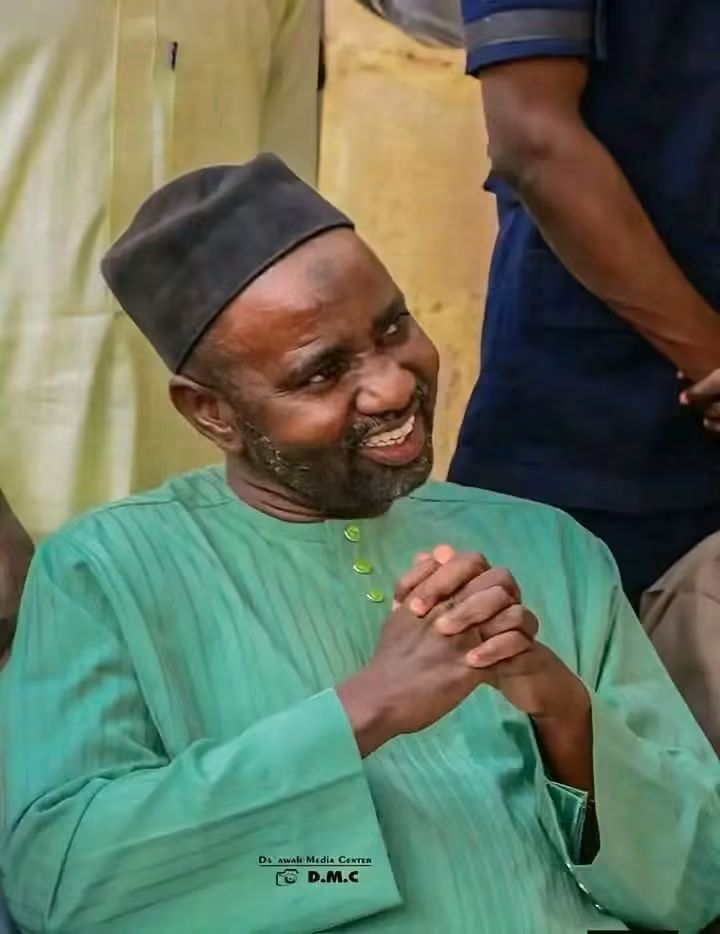
Bello Sharada: A Great Writer, A Bookish Soul, Gone Too Soon
By Abba Anwar
I received the information about the sad and peaceful passing of a great writer and one of the bookish minds amongst his peers, whose writings, as a commentator, cut across our culture, governance, politics, geography and religious thought, as very shocking and unbearable!
Before the few paragraphs coming below, let me express my condolences to his immediate family first, then the former Governor of Kano State, Malam Ibrahim Shekarau, Malam Aminu Gusau, Malam Abubakar Mujahid, Malam Aminu Inuwa Muhammad, Malam Nura Adam Galadanchi, Malam Nafi’u Zangon Barebari, Malam Ibrahim Ado-Kurawa, Malam Ahmad Shu’aibu, Malam Muhammad Bakari Mika’il, all workers and volunteers of Al-Tajdid Hausa newspaper and all workers of Al-Tajdid Pharmacy, Sabon Titi.
A great loss of this magnitude is heartbreaking and very difficult to cope with. I first came to know Bello Sharada for close to three decades now. When struggle was the order of the day. Our youthful exuberance was glaringly visible and energizing.
From day one I understood that Malam Bello had a flair for writing. Especially on Islamic revivalism and struggle. Since then I knew he loved reading, reading and more reading. At later days, apart from comments on Islamic development, he also resorted to further engage in social and political commentary. Especially after the return of democracy in the country, in 1999.
As calmed and reserved as he was, he still liked discussions on politics, economy and governance. He didn’t hide his feelings about our nation, at the level of leadership and followers. Not minding whose ox was gored. So long as he believed with an opinion, after thorough research and discussions, he wrote his inner feeling for the public. Go and check some of his writings.
He did not hold back in amplifying what his conscience was clear on. As typical writers behave, they highlight certain traits that go down well with you today. And tomorrow they articulate what may not be palatable for your table. You know why? They don’t look at personalities, but other abstract realities. They observe attitudes, behaviors and realities.
Malam Bello was an embodiment of simplicity, good human relations, upright, and open discussions around many issues. The way he talked to other people gave insight of the kind of person he was. Very polite and selectively reserved. He related with people with respect and embracing engagement.
The way he handled Al-Tajdid newspaper was amazing and appealing. The editorial contents were catchy and convincing. As a religious source for information around us, then, amongst Hausa readers, there was semblance, to a higher degree, of objectivity and fairness in its reportage and other analyses.
He was glued to Al-Tajdid newspaper, that came to newsstand to offer an alternative to Sheikh Ibrahim Zakzaky’s Al-Mizan, that was managed by a good friend of mine Malam Danjuma Katsina. Whether Al-Tajdid was able to counter Al-Mizan to size, was a different story for another day. But today we are mourning the demise of our good friend of great substance.
As quintessential as he was, Malam Bello, was always in the social media and in the air via radio stations, creating awareness on many issues affecting our society. Be it from the lens of our religion or our culture, governance and leaders, followers and other societal settings. His major and particular interest was to see that our people are informed and wise enough to understand realities of life.
There was a scenario between the two of us when he once met me in my office, when I was the Features Editor of Triumph Newspaper, around 2005 and 2006, that time Al-Tajdid Islamic movement was, I think 10 years of 15 years at the time, I can’t remember the years vividly, he brought literature on how the movement started up to the time he met me in the office.
For younger readers, Al-Tajdid was a splinter group, exited from Sheikh Zakzaky’s movement many decades ago. The group then was led by people like Malam Abubakar Mujahid Zaria, Malam Aminu Gusau, Malam Ahmad Shu’aibu, Malam Aminu Inuwa Muhammad, Malam Nura Adam, Malam Nafi’u Zangon Barebari, amongst others.
Back to my office. When Malam Bello met me he put all the papers about Al-Tajdid history and said “Malam Abba we are celebrating the birth of Al-Tajdid. We need an article to be written by you, the Editor, and published in tomorrow’s or next tomorrow’s Triumph Newspaper please. I know you can do it. So I will tell my people that I gave you. So that they can expect it probably tomorrow.”
We laughed and he left. To Allah be the glory I worked hard and made sure it was published the following day. The very time he came calling I was busy editing four pages of articles for the following day publication. Because I always edited four pages daily. For the Daily paper and sometimes, but in rare cases, one or two pages for the Sunday Triumph.
But Allah Helped, I went through the literature brought by Malam Bello, I was able to finish the write – up and went back to three out of the four articles. Because Malam Bello’s work replaced the fourth page.
May Allah forgive all his shortcomings and accept all his good deeds. May Allah reward him with Jannatul-Fiddaus. May Allah guide his family as he exited from this world.
To the family specifically, please don’t let his library, his study room die a natural death.
Allah Ya jikan Malam Bello Sharada.
Anwar writes from Kano
Sunday, 30th August, 2026

JUST IN: El-rufai’s Family Issues 7-day Ultimatum for Defence Minister to Retract Comment on Violence

Kano Chemists Threaten Warning Strike Over Alleged PCN Pressure

Why Pantami Should Not Be Trusted With The Governance Of Gombe

All Hail The 17th Emir Of Gumel, His Royal Highness, Dr. Lawan Ahmed Mohammed-DIG

Prof Gwarzo Nominated for Lifetime Achievement Award in Education, University Development and Philanthropic Impact by The iDevPro-African Institute

From World’s 9th Most Populous City to Perfect: As Gov Yusuf Revisits Kano Master Plan

95% of Governor Abba Kabir Yusuf’s Promises Have Been Fulfilled — CPS Interview By Musa Diso, In Kano

Kano Islamic Scholar Declares Kano Widow Marriage Programme ‘Haram’, Urges Government to Stop It

We’re aware of your clandestine meetings with Lulu-Briggs, 𝐏𝐢𝐝𝐨𝐦𝐬𝐨𝐧, CRP uncovers ex-MD of NDDC, Nunieh

Between Sabotage and Scepticism: Why Nigeria’s Oil Dream Keeps Stalling
JUST IN: El-rufai’s Family Issues 7-day Ultimatum for Defence Minister to Retract Comment on Violence
Kano Chemists Threaten Warning Strike Over Alleged PCN Pressure
Why Pantami Should Not Be Trusted With The Governance Of Gombe
All Hail The 17th Emir Of Gumel, His Royal Highness, Dr. Lawan Ahmed Mohammed-DIG
Prof Gwarzo Nominated for Lifetime Achievement Award in Education, University Development and Philanthropic Impact by The iDevPro-African Institute
From World’s 9th Most Populous City to Perfect: As Gov Yusuf Revisits Kano Master Plan
95% of Governor Abba Kabir Yusuf’s Promises Have Been Fulfilled — CPS Interview By Musa Diso, In Kano
Kano Islamic Scholar Declares Kano Widow Marriage Programme ‘Haram’, Urges Government to Stop It
We’re aware of your clandestine meetings with Lulu-Briggs, 𝐏𝐢𝐝𝐨𝐦𝐬𝐨𝐧, CRP uncovers ex-MD of NDDC, Nunieh
Between Sabotage and Scepticism: Why Nigeria’s Oil Dream Keeps Stalling
-

 Opinion5 years ago
On The Kano Flyovers And Public Perception
-

 Features5 years ago
How I Became A Multimillionaire In Nigeria – Hadiza Gabon
-

 Opinion6 years ago
Kano As future Headquarters Of Poverty In Nigeria
-

 History5 years ago
Sheikh Adam Abdullahi Al-Ilory (1917-1992):Nigeria’s Islamic Scholar Who Wrote Over 100 Books And Journals
-

 Opinion5 years ago
My First Encounter with Nasiru Gawuna, the Humble Deputy Governor
-

 History5 years ago
The History Of Borno State Governor Professor Babagana Umara Zulum
-

 History5 years ago
The Origin Of “Mammy Market” In Army Barracks (Mammy Ochefu)
-

 News4 years ago
Federal University Of Technology Babura To Commence Academic Activities September