
News
50 Years After Murtala Muhammed: Between the Ghost of Coups and the Crisis of Democracy
By Yusuf Danjuma Yunusa & Abbas Yushau Yusuf
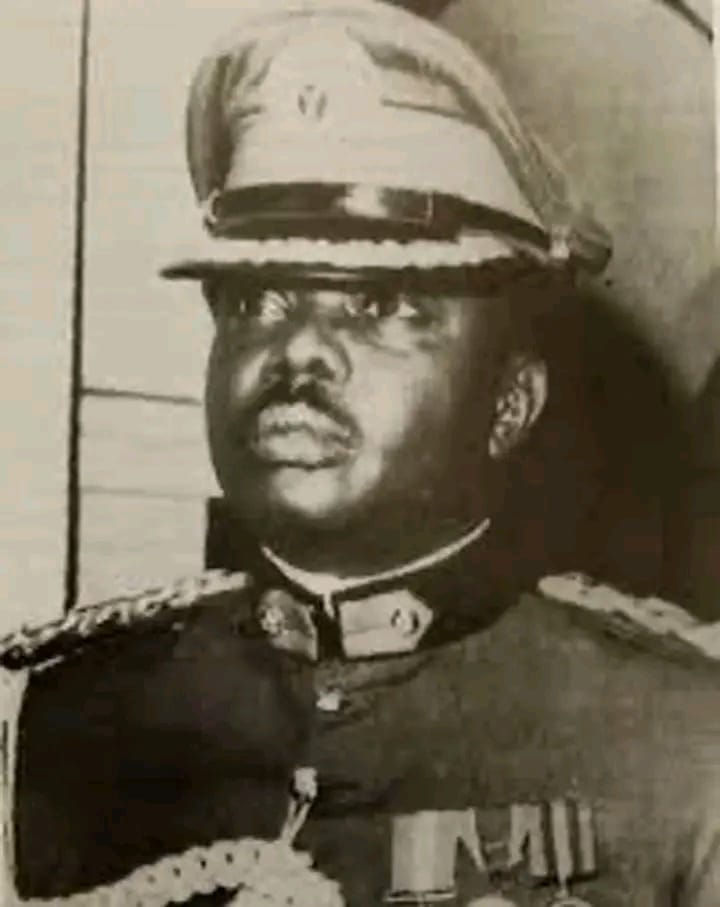
February 13 marks exactly 50 years since General Murtala Ramat Muhammed was assassinated in a failed coup attempt that shook Nigeria to its core. His death on that Friday morning in 1976 was not merely the killing of a Head of State; it was a brutal reminder of how fragile political power can be when the barrel of a gun becomes the pathway to leadership.
Half a century later, Nigeria stands under democratic rule, yet the memory of coups still lingers like a warning siren in the nation’s political subconscious.
Muhammed himself came to power through a military coup in 1975, toppling General Yakubu Gowon. His own assassination less than seven months later, during an abortive coup led by dissident officers, reinforced the inherent instability of governance born out of force. Coups promise swift correction, but they often deliver cycles of uncertainty, repression and further violence.
The danger of military coups to democracy is not theoretical; it is historical fact. Military regimes centralise authority, suspend constitutional order and weaken civilian institutions. Even when they promise reform, they operate outside the consent of the governed. The culture they breed — command-and-control politics — can outlive their uniforms, seeping into civilian administrations long after soldiers return to the barracks.
Nigeria’s post-independence history reads like a ledger of interrupted transitions: 1966, 1975, 1983, 1985, 1993. Each intervention reset the political clock but deepened structural fragilities. Civil institutions were stunted. Political parties became vehicles of patronage rather than ideology. Trust between citizens and the state eroded.
Today, the guns are silent, and ballots have replaced bullets as instruments of power. Yet the shadow of military interruption remains instructive, especially at a time when frustration with democratic governance is rising across the country.
The uncomfortable truth is that democracy, while intact procedurally, is struggling substantively. Elections are held regularly, but economic hardship persists. Institutions exist, but public confidence in them is thin. The Constitution guarantees rights, yet citizens often feel unheard in matters of security, employment and welfare.
This disconnect between democratic form and democratic outcome creates a dangerous vacuum. When people begin to question whether democracy delivers tangible improvement to their lives, nostalgia for “strongman efficiency” can quietly resurface. It is a perilous sentiment. History shows that military rule may appear decisive, but it rarely produces sustainable prosperity or inclusive governance.
The lesson from Murtala Muhammed’s assassination is not simply about the vulnerability of leaders; it is about the vulnerability of systems built without deep institutional roots. Democracies collapse when institutions are hollowed out, when the judiciary is weakened, when legislatures lose independence and when accountability becomes selective.
Equally, democracy fails when it becomes distant from the daily struggles of the masses. Nigeria today grapples with inflation, unemployment, insecurity and widening inequality. For many citizens, the promise of 1999 — that civilian rule would bring stability and opportunity — feels deferred. This perception does not justify military intervention, but it does expose the urgent need for democratic renewal.
A coup does not cure governance failure; it compounds it. It replaces flawed accountability with none at all. It silences dissent rather than addressing its root causes. The real antidote to democratic disappointment is not regression to authoritarian shortcuts but reform within constitutional boundaries.
Fifty years after Murtala Muhammed’s assassination, Nigeria’s greatest safeguard against instability is not the strength of its armed forces but the credibility of its democratic institutions. The military must remain firmly subordinate to civilian authority, while civilian leaders must govern in ways that justify that authority.
Democracy cannot survive on ritual alone. It must deliver justice, equity and measurable improvement in citizens’ lives. When it does not, cynicism grows. And when cynicism grows unchecked, history’s darker chapters begin to look deceptively attractive.
The anniversary of 1976 should therefore serve as both memorial and mirror — a memorial to a turbulent past and a mirror reflecting present responsibilities. Nigeria has paid dearly for power seized by force. The challenge now is ensuring that democracy does not lose legitimacy through neglect, inequity or arrogance.
The gun once interrupted Nigeria’s future. The ballot must not be allowed to lose its meaning.
General Murtala Muhammad’s legacy will continue to remain fresh in the memory of patriotic Nigerians.
The constitutional democracy Nigeria is enjoying today is the brainchild of the late General Murtala Muhammad, who addressed the nation with vigour and instilled confidence.
His phrase “Immediate effect” remains the phrase successive Nigerian leaders have used to command respect and to show Nigerians they are very serious about formulating and implementing policies for the progress of all.
Despite military rule being an aberration, General Murtala Muhammad’s assassination was backward and retrogressive to the development of Nigeria, which many will continue to mourn for decades to come.
As General Murtala Muhammad clocks five decades after passing to the great beyond, the Nigerian Government should mandate a topic for Nigerian children in the country’s civic education curriculum so that those yet unborn will feel the impact of Nigeria’s great leader lost to the hands of retrogressive assassins on that fateful Friday, February 13th, 1976, which is exactly five decades today.
Adieu, great son of Nigeria and great son of Kano.










News
Governor Yusuf Sacks Sagagi as Kano Commissioner Of Commerce
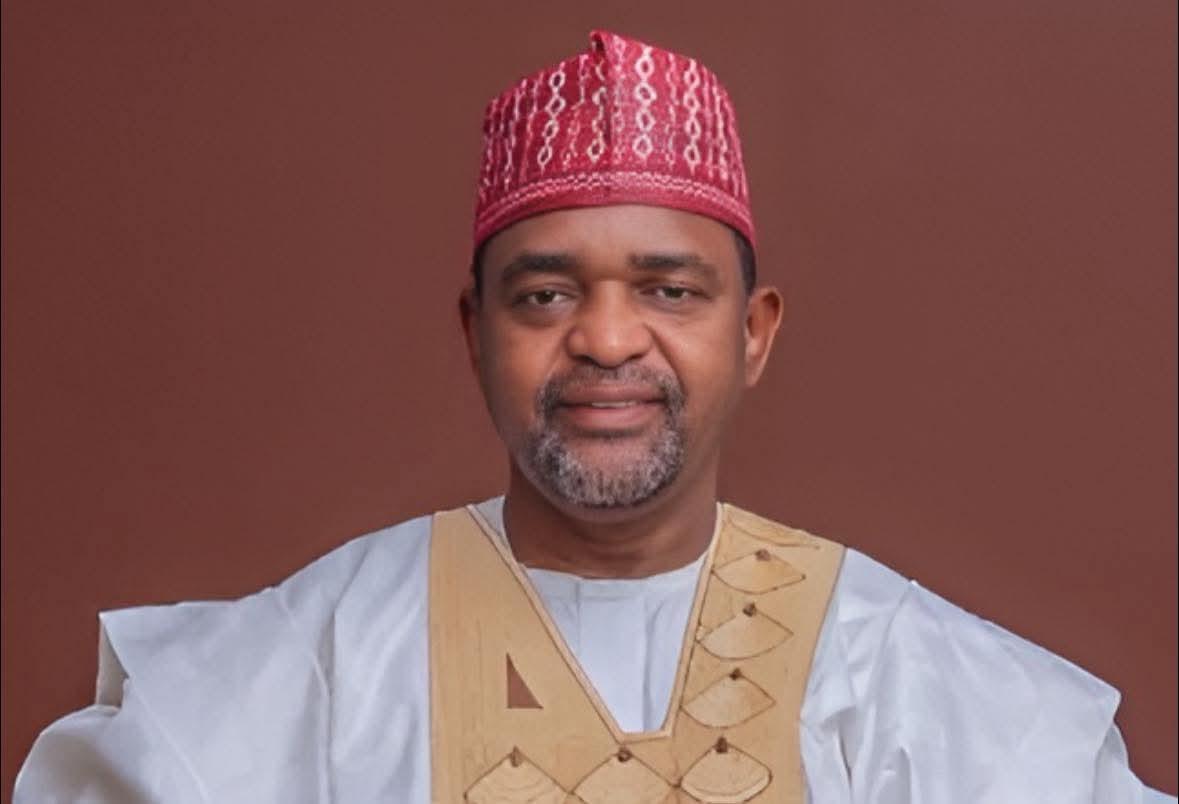
Kano State Governor, Alhaji Abba Kabir Yusuf, has relieved Alhaji Shehu Wada Sagagi of his appointment as Commissioner for Investment, Commerce and Industry with immediate effect.
This was contained in a statement signed by the governor’s spokesperson, Sunusi Bature Dawakin Tofa, on Thursday.
According to the statement, the former Commissioner is directed to hand over the affairs of the ministry to the Director Commerce with immediate effect.
Governor Yusuf expressed appreciation for the services rendered by the former commissioner during his tenure.
He acknowledged Sagagi’s contributions to the development of the state, particularly in the areas of politics, religion, small and medium enterprises.
The Governor wished him success in his future endeavours as he reassured the public of his administration’s continued commitment to efficient service delivery and good governance in the state.
This decision is part of the ongoing strategic realighment of government structures for systematic growth and sustainable development.
News
Terrorist Logistics Suppliers Apprehended in Borno
By Yusuf Danjuma Yunusa
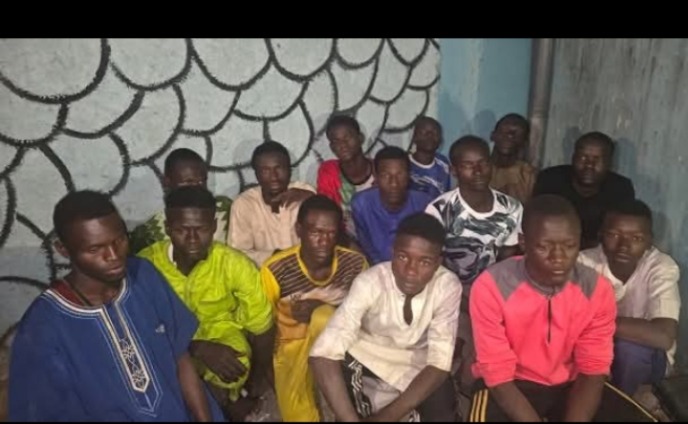
Troops of Operation Hadin Kai, OPHK, have apprehended 18 suspected logistics suppliers allegedly enroute Gubio, with plans to proceed to the Gudumbali axis, a known Boko Haram terrorists, BHTs, enclave.
Troops of Operation Hadin Kai, OPHK, have apprehended 18 suspected logistics suppliers allegedly enroute Gubio, with plans to proceed to the Gudumbali axis, a known Boko Haram terrorists, BHTs, enclave.
This is contained in a daily operational report made available to the News Agency of Nigeria on Wednesday.
The military said the suspects were intercepted while travelling towards the location to deliver the goods to the terrorists.
According to the report, preliminary investigation revealed that all 18 suspects confessed to engaging in the supply of goods to the terrorist group.
“They admitted that they routinely purchase and convey items to the terrorists.
“Their justification was lack of employment, which points to a deeper socio-economic challenge in Maiduguri and its environs,” the army said.
The development, according to the reportt, validates recent remarks by the Chief of Defence Staff on the link between economic hardship and the sustenance of insurgency logistics networks.
“The arrest highlights the critical role of civilian collaborators in sustaining terrorist operations, particularly in remote areas such as Gubio and Gudumbali,” it added.
The army called for a comprehensive approach combining military operations with economic empowerment and job creation to address the root causes of insurgency in the region.
News
Kano Gov’t Offers Study Scholarship to SWAN Members
By Abdulgafar Oladimeji
Kano state government has facilitated and supported members of the Sports Writers Association of Nigeria, SWAN Kano chapter to proceed to pursue professional certification courses in sports journalism, our correspondent reports .
The Special Adviser , youths and sports to Kano state governor, Sani Musa Danja, disclosed that the offer covers their tuition fees.
He said , the beneficiaries have been identified and their enrolment process have been completed.
According to him, through interactions with stakeholders , the decision was reached for some sports writers, who are faced with the challenge of acquiring the required professional qualification to practice their trade should be given support to fill the gap.
said, findings have revealed that , for Kano sports writers to compete favorably there exists the urgent need to empower members of the association to acquire certain requisite qualification to enable them feature amongst the best in Nigeria and beyond.
Danja speaking, when he hosted SWAN members in his office , located within the premises of Kano state Library Complex, along Ahmadu Bello Way said that the state government, under Abba Kabir Yusuf , on discovering this major challenge , acted swiftly to address the lapses, by offering to sponsor 10 SWAN members to pursue professional diploma in Sports Journalism at El Roi London University.
In his word “ we give thanks to almighty Allah for his mercies, I want to thank our mentor and leader, his excellency governor, Abba Kabiru Yusuf , who made this possible.
“his excellency takes the issue of empowering our people very seriously, the challenge facing our sports journalists is principally the issue of professional certification, some of our sports journalists have their degrees in other fields, but we are aware that, they also require to obtain certain minimum qualification in journalism or other related fields to help them to excel .
“in line with the policy of the government of his excellency, we have moved in to make sure , these sons and daughter of Kano overcome this hinderance that may hinder their professional progress.
“the sports media is the back bone of sports development and sports promotion, our government is focused and committed to support and reshape the sports media to achieve the set out goal to empower Kano youths through sports.
“the mission of his excellency through this gesture is to empower our professional sports journalists and give them the required qualification to continue with their pursuit to upward steadily representation of Kano state in that sector.
Danja hinted that, Kano state government remains unrepentant in its upward investment drive to create a generation of professionals that would keep the state afloat on the terrain of quality and abundance human resources.
Reacting, chairman SWAN Kano chapter, comrade Zahradeen Saleh thanked the state government for the support.
He said, the scholarship offer is an major step towards uplifting the practice of sports journalism in the state.
He said the dividends of sports could only accrue with the effective operations of the sporting press through the training and re-training of sports writers.
He admitted that, acquiring the requisite qualification to practice sports journalism has been one of the major challenges confronting members of the association.
“ our members who are the beneficiaries of this offer are youths, on completion of the professional course, they will have stable professional growth and would be better equipped to contribute their quota to the development of the state.” Zahradeen said .

Governor Yusuf Sacks Sagagi as Kano Commissioner Of Commerce

Terrorist Logistics Suppliers Apprehended in Borno

Kano Gov’t Offers Study Scholarship to SWAN Members

OPINION: Examining the Sanity of Saner Climes

Obi Raises Alarm Over Arrest of Cleric Who Hosted Him in Kaduna

The Governor Who Chose His People Over His Politics: Abba Yusuf and the Moral Courage Behind Kano First

FREEDOM OF SPEECH, NOT FREEDOM FROM CONSEQUENCE: A CITIZEN’S CALL FOR RESPONSIBLE PUBLIC COMMENTARY

How Kano Government Official Allegedly Intimidate And Insult Two Journalists On Lawful Duty

DSP Barau and APC Unity in Kano

BREAKING: President Tinubu Removes IGP Egbetokun
Governor Yusuf Sacks Sagagi as Kano Commissioner Of Commerce
Terrorist Logistics Suppliers Apprehended in Borno
Kano Gov’t Offers Study Scholarship to SWAN Members
OPINION: Examining the Sanity of Saner Climes
Obi Raises Alarm Over Arrest of Cleric Who Hosted Him in Kaduna
The Governor Who Chose His People Over His Politics: Abba Yusuf and the Moral Courage Behind Kano First
FREEDOM OF SPEECH, NOT FREEDOM FROM CONSEQUENCE: A CITIZEN’S CALL FOR RESPONSIBLE PUBLIC COMMENTARY
How Kano Government Official Allegedly Intimidate And Insult Two Journalists On Lawful Duty
DSP Barau and APC Unity in Kano
BREAKING: President Tinubu Removes IGP Egbetokun
-

 Opinion4 years ago
On The Kano Flyovers And Public Perception
-

 Features5 years ago
How I Became A Multimillionaire In Nigeria – Hadiza Gabon
-

 Opinion5 years ago
Kano As future Headquarters Of Poverty In Nigeria
-

 History5 years ago
Sheikh Adam Abdullahi Al-Ilory (1917-1992):Nigeria’s Islamic Scholar Who Wrote Over 100 Books And Journals
-

 Opinion4 years ago
My First Encounter with Nasiru Gawuna, the Humble Deputy Governor
-

 History5 years ago
The Origin Of “Mammy Market” In Army Barracks (Mammy Ochefu)
-

 History4 years ago
The History Of Borno State Governor Professor Babagana Umara Zulum
-

 News4 years ago
Federal University Of Technology Babura To Commence Academic Activities September