
News
Waiya Tackles Buba Galadima on Governor Yusuf’s Defection, Says Voting Decisions Rest With the Electorate
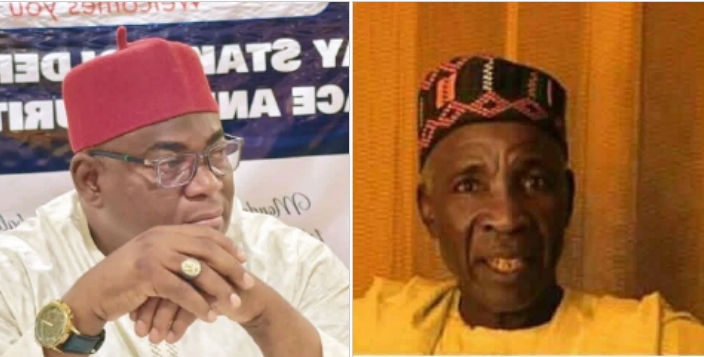
The Kano State Commissioner of Information and Internal Affairs, Comrade Ibrahim Abdullahi Waiya, has issued a press statement challenging recent remarks by elder statesman Engr. Buba Galadima, who suggested that Governor Abba Kabir Yusuf cannot secure a second term without the political support of Senator Rabiu Musa Kwankwaso.
In the statement dated January 25, 2026, Waiya described Galadima’s assertion as “analytically weak, misleading and dismissive of Kano State’s deeply rooted political culture.” He emphasized that while Kwankwaso remains a respected political heavyweight, Kano’s democratic tradition is not permanently contingent on the influence of a single individual.
According to Waiya, “There is no dispute that Senator Dr. Rabiu Musa Kwankwaso is a strategic mobiliser and one of the most consequential figures in Kano’s modern political history. His influence is real and well earned. However, to suggest that Kano’s political future is permanently contingent on the shadow of a single individual is to misread both history and democratic behaviour of the people in the State.”
Waiya further expressed surprise that such a claim came from Galadima, noting that the elder statesman had previously benefited from Governor Yusuf’s inclusive leadership. “In the hope of institutional improvement, the Governor appointed him Chairman of the Governing Council of Kano State Polytechnic, notwithstanding the fact that he is not an indigene of Kano State. Regrettably, the tenure yielded little or no measurable impact,” Waiya stated.
The Commissioner stressed that leadership is validated by tangible outcomes rather than commentary. “As the timeless proverb reminds us, the tree is known by its fruit,” he remarked, underscoring the need for performance-based legitimacy in Kano politics.
Highlighting Kano’s unique political culture, Waiya argued that power in the state ultimately rests with the electorate. “Kano operates on its own historical rhythm, civic memory, and political consciousness. Here, power does not permanently reside with godfathers; it rests with the electorates, whose loyalty has always been conditional on performance, character, trust and reliability,” he explained.
Waiya cited historical precedents to support his position, pointing to the emergence of Mallam Ibrahim Shekarau as governor in 2003 without godfather backing. “His re-election validated a simple Kano principle: legitimacy is always derived from the people,” Waiya said.
He also referenced Kwankwaso’s own political return in 2011, noting that it was based on his record rather than anointment. “His past performance functioned as political capital. That experience alone should caution against overstating the durability of godfather politics in Kano,” Waiya asserted.
On Governor Yusuf’s mandate, Waiya emphasized that it was earned through popular legitimacy. “He was elected by the people of Kano, across party lines and political interests, defended his mandate through institutional processes, and assumed power with popular legitimacy,” Waiya explained. He added that Yusuf has since transitioned from protégé to principled leader, prioritizing education, institutional reforms, and social equity.
Responding to claims that Yusuf is “standing on borrowed feet,” Waiya countered that governance in Kano is consolidated through delivery. “Political authority in Kano is consolidated over time through delivery, not inherited indefinitely through association,” he said.
While acknowledging Kwankwaso’s enduring influence, Waiya stressed that mentorship does not equate to permanent dependence. “Influence is not ownership, and mentorship is not permanent dependence. Kano’s political tradition has always allowed for maturation and continuity beyond individuals,” he noted.
Expressing confidence in Yusuf’s future, Waiya declared: “I firmly believe that not only will Governor Abba Kabir Yusuf secure a second term, he will govern more effectively in a subsequent tenure, because governance, like leadership itself, matures with experience.”
He warned that those predicting Yusuf’s collapse without a godfather underestimate Kano’s political memory. “As history has repeatedly shown from Governor Kabiru Ibrahim Gaya to Governor Ibrahim Shekarau, to Governor Rabiu Musa Kwankwaso himself, Kano ultimately rewards performance, not proximity to power,” Waiya said.
The Commissioner also addressed internal challenges within the New Nigeria People’s Party (NNPP), noting that persistent conflicts and legal disputes have created divisions. “The growing disenfranchisement among party members has created deep divisions within the party structure, resulting in cracks that appear increasingly irreconcilable,” Waiya explained.
He concluded by stressing that Yusuf’s decisions are taken in good faith, with a commitment to peace and progress. Quoting the Qur’an, Waiya reminded citizens: “Nothing shall ever happen to us except what Allah has ordained for us. He is our Mawla (Protector). And in Allah let the believers put their trust.” He also cited a Hadith emphasizing reliance on divine decree, stating that “the pens have been lifted and the pages have dried.”
“This,” Waiya concluded, “remains the enduring grammar of Kano politics.”








News
Breaking:Kano Deputy Governor Resigns
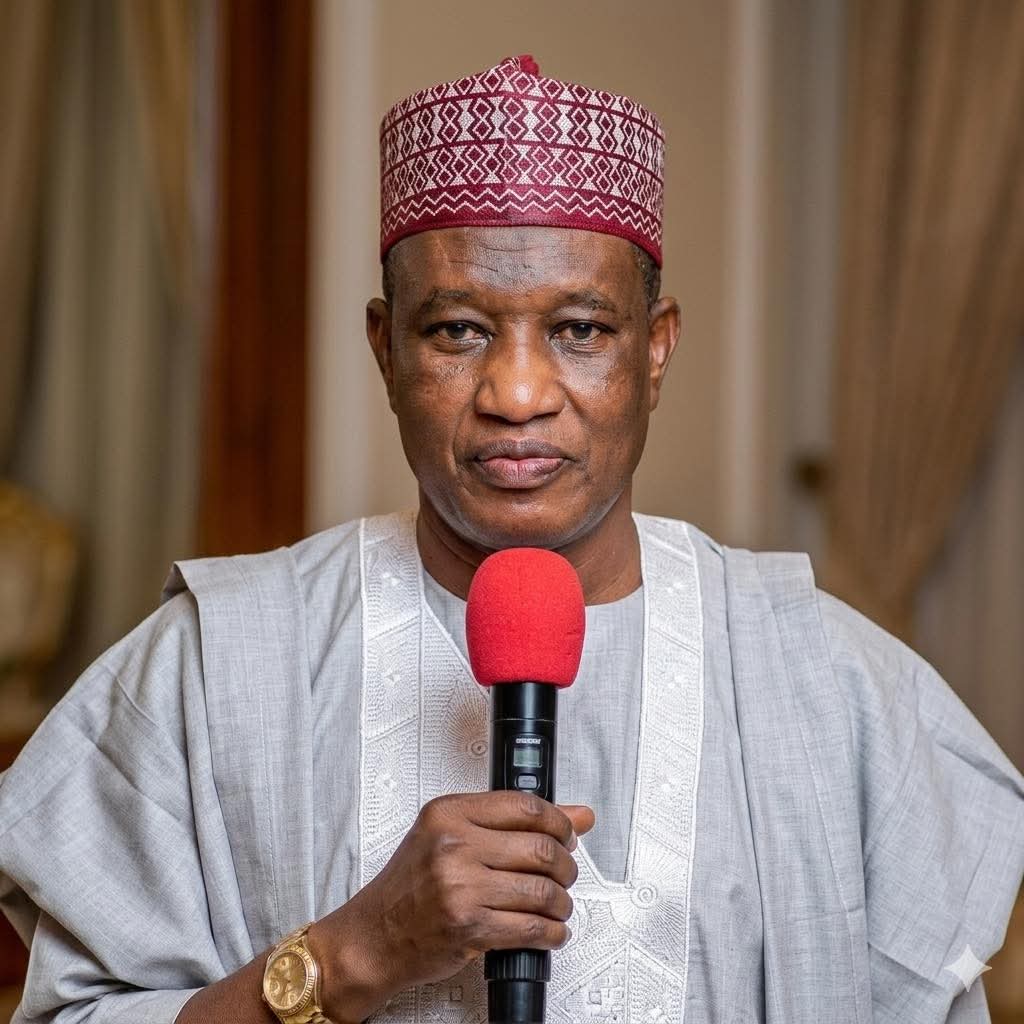
The Kwankwasiyya Movement has announced the resignation of the Deputy Governor of Kano State Comrade Aminu Abdulsalam Gwarzo, stating that the decision was formally communicated to the public in a press release issued on Friday and signed by its spokesperson, Dr. Habibu Sale Mohammed.
According to the statement, the resignation was taken “in the overall interest of the people and the stability of governance” in the state, with the movement noting that recent developments had significantly limited the Deputy Governor’s ability to fully discharge the responsibilities of the office.
The movement also addressed the ongoing issues involving the Kano State House of Assembly, emphasizing that the Deputy Governor’s decision to step down should not be interpreted as an admission of any allegations raised against him, and insisting that he continues to maintain his innocence.
Describing the move as one of “statesmanship,” the statement said the resignation was intended to reduce political tension and prevent further disruptions to governance and development efforts in Kano State, while demonstrating a commitment to peace and political maturity.
The Kwankwasiyya Movement further disclosed that the former Deputy Governor plans to redirect his focus toward strengthening the movement’s internal structures and strategies, particularly as political actors begin positioning ahead of Nigeria’s 2027 general elections.
The statement added that this renewed engagement would involve rebuilding party frameworks and pursuing strategic realignments aimed at promoting what it described as people-oriented leadership, social justice, and sustainable development.
The movement called on its supporters and residents of Kano State to remain calm, law-abiding, and committed to democratic principles, assuring the public that additional details regarding the resignation would be communicated in due course, according to the spokesperson.
Comrade Aminu Abdulsalam Gwarzo the Deputy Governor has been enmeshed in a political battle with his boss Governor Abba Kabir Yusuf since the Governor defected to the All Progressives Congress without the blessing of the NNPP National leader Senator Rabiu Musa Kwankwaso.
Recently the Kano state House of Assembly has issued Impeachment notice on Comrade Aminu Abdulsalam Gwarzo over allegation of corruption.
News
Hajiya Umma El-Rufai, Mother of Former Kaduna Governor, Passes Away
By Yusuf Danjuma Yunusa
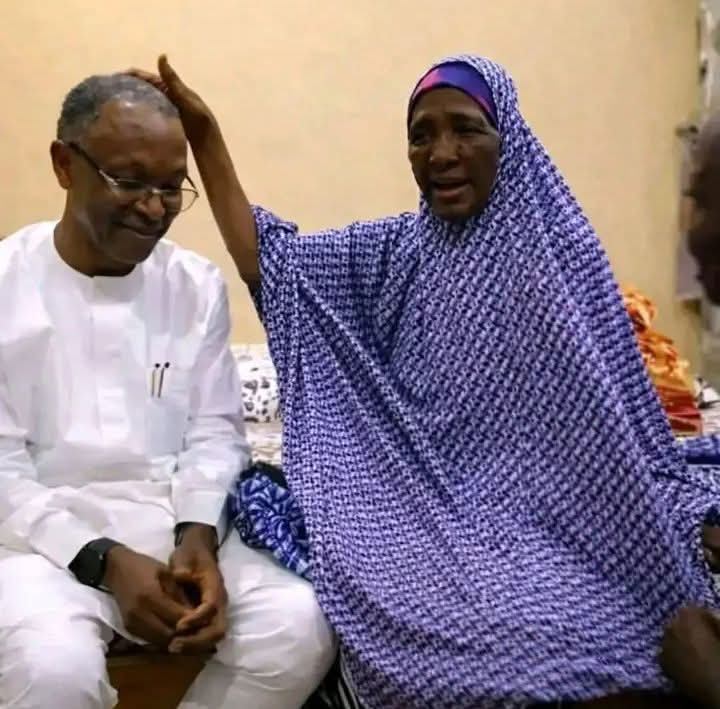
Hajiya Umma El-Rufai, the mother of former Kaduna State governor, Mallam Nasir El-Rufai, has died.
According to family sources, she passed away on Friday afternoon. While details surrounding her death remain unclear at this time, the family has since confirmed the sad event.
The announcement was made public by her grandson, Bello El-Rufai, in a statement shared on Facebook. The statement read:
“Inna lillahi wa inna ilayhi raji’un. From Allah SWT we came and to Him we shall all return.
I would like to inform the public of the demise of my grandmother, Hajiya Umma El-Rufai, who passed away a few hours ago.
She is the biological mother of our father, Mallam Nasir El-Rufai. We are grateful for the life she lived and pray that Allah SWT bless her gentle soul.
May He bless the souls of the parents we have lost. On behalf of our family, we seek your prayers. Thank you.”
The family is expected to release further details regarding funeral arrangements in due course.
News
ASUU Threatens Nationwide Shutdown
By Yusuf Danjuma Yunusa
The Academic Staff Union of Universities has warned the Federal Government of Nigeria to immediately implement the newly approved salary structure for university lecturers or face a possible nationwide shutdown of public universities.
The union issued a four-day ultimatum on Thursday, with its president, Christopher Piwuna, saying failure to act within the deadline would trigger a strong response.
Speaking at Sa’adu Zungur University in Bauchi State, Piwuna said the government must begin payment under the new salary arrangement without further delay.
“We have issued a four-day ultimatum from today to the federal government to commence payment of the newly approved salary structure. Failure to comply will attract a strong response from the union,” he said.
The warning comes months after ASUU and the federal government signed a renegotiated agreement in January, aimed at resolving long-standing disputes and preventing the recurring strikes that have plagued Nigeria’s university system.
At the heart of the agreement is a revised salary structure designed to improve lecturers’ welfare and finally address issues stemming from the controversial 2009 FG-ASUU pact, which remained largely unimplemented for years.

Breaking:Kano Deputy Governor Resigns

Hajiya Umma El-Rufai, Mother of Former Kaduna Governor, Passes Away

ASUU Threatens Nationwide Shutdown

APC Convention:FG Orders Remote Work for Offices Near Eagles Square

Nigeria’s Power Supply to Improve in Two Weeks as Gas Pipeline Work Nears Completion

The Governor Who Chose His People Over His Politics: Abba Yusuf and the Moral Courage Behind Kano First

FREEDOM OF SPEECH, NOT FREEDOM FROM CONSEQUENCE: A CITIZEN’S CALL FOR RESPONSIBLE PUBLIC COMMENTARY

Press Freedom: IPI Nigeria Calls on New Acting IGP to End Police Harassment of Journalists
Tinubu to Swear in Olatunji Disu as Inspector-General of Police on Wednesday
Restoring the Glory That Was Always There: Governor Abba Kabir Yusuf and the Historical Vision Behind Kano First
Breaking:Kano Deputy Governor Resigns
Hajiya Umma El-Rufai, Mother of Former Kaduna Governor, Passes Away
ASUU Threatens Nationwide Shutdown
APC Convention:FG Orders Remote Work for Offices Near Eagles Square
Nigeria’s Power Supply to Improve in Two Weeks as Gas Pipeline Work Nears Completion
The Governor Who Chose His People Over His Politics: Abba Yusuf and the Moral Courage Behind Kano First
FREEDOM OF SPEECH, NOT FREEDOM FROM CONSEQUENCE: A CITIZEN’S CALL FOR RESPONSIBLE PUBLIC COMMENTARY
Press Freedom: IPI Nigeria Calls on New Acting IGP to End Police Harassment of Journalists
Tinubu to Swear in Olatunji Disu as Inspector-General of Police on Wednesday
Restoring the Glory That Was Always There: Governor Abba Kabir Yusuf and the Historical Vision Behind Kano First
-

 Opinion4 years ago
On The Kano Flyovers And Public Perception
-

 Features5 years ago
How I Became A Multimillionaire In Nigeria – Hadiza Gabon
-

 Opinion5 years ago
Kano As future Headquarters Of Poverty In Nigeria
-

 History5 years ago
Sheikh Adam Abdullahi Al-Ilory (1917-1992):Nigeria’s Islamic Scholar Who Wrote Over 100 Books And Journals
-

 Opinion4 years ago
My First Encounter with Nasiru Gawuna, the Humble Deputy Governor
-

 History5 years ago
The Origin Of “Mammy Market” In Army Barracks (Mammy Ochefu)
-

 History4 years ago
The History Of Borno State Governor Professor Babagana Umara Zulum
-

 News4 years ago
Federal University Of Technology Babura To Commence Academic Activities September