
News
End-of-Year Special: Major Events That Shaped 2025 in Politics, Power Shifts and High-Profile Deaths
By Yusuf Danjuma Yunusa
Year 2025 birthed numerous events that sparked controversies, debates, and anxieties in Nigeria. It also marked initiations and implementations of strategic decisions by various institutions.
Among these events, as compiled by the Nigerian Tracker News, are some notable ones enlisted below:
The month of January for the year 2025, on the 18th, recorded the fuel tanker explosion near Suleja, Niger State. The gruesomely tragic moment claimed the lives of 86 people killed and 70 others injured.
The month also marked the beginning of the Telecom Tarrif Hike journey in Nigeria. The Nigerian Communication Commission(NCC) approved 50% tarrif increase for telecom operators which sparked public rejection.
In February, the country witnessed series of backlashes between the camps of the former Head of State, Ibrahim Badamasi Babangida, and the household of the Late General Sani Abacha.
The tumultuous period was as a result of the book written by General Babangida entitled: “A Journey in Service.”
In the book, the retired General acknowledged the shortcomings of his regime in their orchestration against the late Abiola not to be installed as the next civilian president for the nation after a successful election which had him as the winner. General Babangida annulled the election and arrested the late Abiola.
However, in that book he launched in February 20, 2025, after expressing remorse for his action, Babangida claimed Abacha, his then-chief of defence staff, led the forces behind the annulment decision.
But in a statement issued by Mohammed Abacha, the late general’s son, the family described Babangida’s claims as a “deliberate distortion of historical facts”.
The family accused Babangida of attempting to rewrite history, urging Nigerians to be wary of “revisionist narratives” that shift responsibility away from those truly accountable.
In Nigeria, the month of February for the year 2025 was filled with stories surrounding the trio: Babangida, MKO Abiola, and Abacha.
Moving forward in the month of March, the country further witnessed another round of drama in its political sphere.
On the 6th of March, 2025, the Senator representing Kogi Central, Natasha Akpoti Uduaghan was suspended for six months following accusations of sexual harassment and abuse of office against the Senate President.
While rigorous exercises of law suits from both parties is still ongoing, the embattled Senator resumed seating in the house in September after expiration of her suspension.
Also, the month of March for 2025 bore the suspension of the Rivers State Governor, Siminalayi Fubara, by President Bola Ahmed Tinubu on the 18th.
President Tinubu imposed a six-month suspension on the Rivers State government and appointed a caretaker governor, Vice Admiral Ibok-Ete- Ibas(rtd).
Although the President cited unaddressed attacks on oil pipelines which had led to unrest in the state as reason behind the suspension, the real issue was the leadership tussle between Wike and the governor, Fubara.
On 10th March, the country witnessed the resignation of the former Kaduna State Governor, Nasir Ahmad El-rufai, from the APC.
The development came as a shock to the Nigerian populace owing to the fact that he was a staunch supporter and advocate of the party. Following his resignation, he vowed to contribute to sending President Tinubu packing from the Villa in the coming 2027 president election.
Moreover, in April 2, 2025, the NNPC Board was dismissed by President Tinubu, marking the end of the then Chief Executive Officer, Mele Kolo Kyari, and the beginning of an era for the incumbent CEO, Bayo Ojulari.
The month of May, however, was ridden by killings and attacks that recorded about 20 persons being killed in Benue and 57 persons in Borno. There was also a record of devastating flood in Niger State, Mokwa, and Okrika in Rivers State.
On June 5 2025 the nation woke up to the announcement of the passing away of Former Minister of education,former NUC executive Secretary ,former minister of petroleum Professor Jibril Aminu.
Another high profile death was the passing away of the former chief justice of Nigeria Justice Muhammad Lawal Uwais on June 6th 2025.
Furthermore, in June 28, 2025, the nation received a shocking news of the passing of a renowned industrialist and philanthropist, Alhaji Aminu Dantata. He died at the age of 94, and he was buried in Madinah as per his wish.
Also, the Tax Reform Acts was signed into law in June 26, 2025. It introduced major changes in the Nigerian tax policy. The Tax Reform Acts will be effective January 1, 2026, including raising the VAT recovery for businesses and exempting small companies (turnover under ₦50m) from several taxes.
In July 2, 2025, the official unveiling of the African Democratic Congress(ADC) as the third force in the political landscape of the nation took place.
Opposition leaders namely: Atiku Abubakar, Peter Obi, Nasir Ahmad El-rufai, Rauf Aregbesola, David Mark, Aminu Waziri Tambuwal, and others, came together for the coalition.
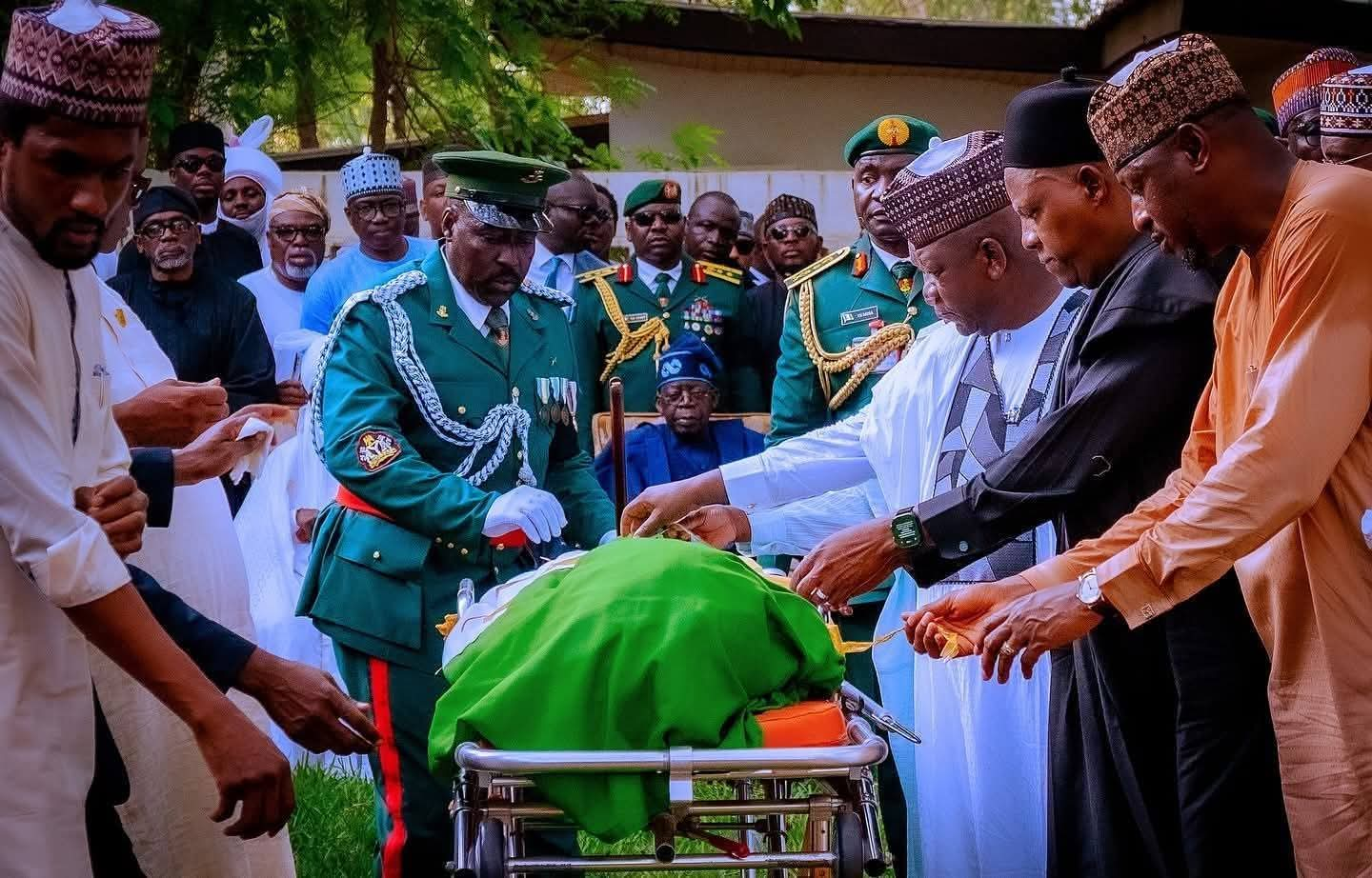
Similarly in the very month of July, the sudden news of the death of the former President Muhammadu Buhari shook the nation. The late General, at the age of 82, died in London on 13th of July, 2025, after a brief illness.
He was flown back to the country and buried at his modest abode in Daura according to the Islamic rites.
In the month of August, 23 to be precise, about 76 persons were rescued from gunmen following airstrike by the Nigerian AirForce in Kankara, Kastina State.
The month of September marked the resumptions of the suspended Senator Natasha Akpoti from the Kogi Central on the 23, and the Governor of Rivers State, Siminalayi Fubara, on the 19.
History, again, would have been written in the October month of 2025. The month was filled with issues spanning security breach and alleged coup plot against the administration of President Bola Ahmed Tinubu.
It resulted into the arrest of 16 army officers linked to the coup plot in October 4, 2025, the raiding of houses of former Minister of State for Petroleum, Timipre Sylva, who was accused of funding the operation that would have led to the successful coup plot, and the dismissal of the service chiefs on 24th of the same month.
In the same month of October, on 9, the President, through his Special adviser on Information and Strategy, Bayo Onanuga, announced the nomination of Prof. Joash Amupitan as the new INEC Boss after the expiration of tenure of Prof. Mahmoud Yakubu. He was later sworn in by the President in the State House on the 23, after facing a rigorous screening session at the Senate.
November month began with the U.S President Donald Trump’s pronouncement of Nigeria as “Country of Particular Concern.” In his tweet on X, on 1 November, Trump stated that Nigerian Christians are facing existential threat in the country as they are being killed discriminately by some Islamic radicalists. He further remarked that Nigeria is a disgraced nation, threatening to invade it with military action if the situation persisted.
The month of November was also marked by several cases of abductions of school children and attacks by bandits and terrorists.
The news of the abduction of 20 girls from Maga School broke the internet on the 17th of November, 2025.
Barely a week after the incident, another case of abduction was recorded in Niger State. Over 300 persons–teachers and school children–were abducted from the school in Papiri, Agwara local government area.
Attacks were recorded in most states in the North Central region of the country.
Similarly, the shocking news of a slain General of the Nigerian Army, General Uba Musa, Commander of the 25 Brigade, reeled the internet. HumAngle, an online news platform that focuses on insecurity, conflicts, and human reporting, narrated how the late General was ambushed by the ISWAP terrorists while on an operation with his troops along Wajiroko Village in Borno State. He was later executed on the 17th of November, 2025.
In the wave of all this, the then Minister of Defense, Abubakar Badaru, tendered his resignation letter. Although, reports have it that he was asked to step aside, but the presidency covered it up with resignation from him on health grounds which was announced on 1 December.
However, political activities took turns during the month as well as defections of politicians and divisions of parties into factions were also recorded.
Alhaji Atiku Abubakar formally joined the African Democratic Congress(ADC) on the 24th of November, 2025.
The month also recorded the sentencing of the separatist leader of Biafra, Nnamdi Kanu. He was sentenced to life imprisonment on the 20th of November, 2025, and sent to a correctional facility in Sokoto State.
Lastly, the Nigerian government under the administration of President Bola Ahmed Tinubu thwarted the coup plot in Benin Republic on 7 December following a distress call by the democratically elected government to its fellow member countries in the ECOWAS.
President Tinubu sent military personnels to the country to restore normalcy in the midst of sudden junta action by some group of officers who are not pleased with the administration of the Benin’s incumbent President.
In other news, on 9th of December, some Nigerian military personnels on a mission to Portugal made an emergency landing in Burkina Faso. The government of Burkina Faso arrested the officers, citing trespasses on their airspace which they termed as “threat” to the sovereignty of their nation. Although, after series of diplomatic engagement by both countries, the officers were released and they continued their journey onward to Portugal.
The December month also recorded the most dramatic moment in the oil industry of Nigeria.
The President of the Dangote Group, Alhaji Aliko Dangote, on the 15th of December, 2025, accused the former NMDPRA Boss, Engr. Ahmed Farouk, of financial misconduct, including misappropriation of public funds and spending approximately $7 million—without a clear lawful income source—on the education of his four children at exclusive schools in Switzerland.
Dangote further alleged that Farouk undermined Nigeria’s domestic refining sector by colluding with international traders through the continued issuance of import licences. He submitted a petition before the ICPC on the allegations and the commission has summoned him to come for public presentation of documents that can prove him right.
In the midst of this pandemonium, the accused, Engr. Ahmed Farouk, resigned his position as the Chief Executive Officer of the Nigerian Midstream and Downstream Petroleum Regulatory Authority(NMDPRA).
The month also bore the outrage sparked by the denting narrative that accompanied the book launched by the family of the late President Buhari on the 17th.
The book entitled “From Soldier to Stateman: The Legacy of Muhammadu Buhari” was authored by Dr. Charles Omole. It had contributions from the late President’s family–wife and children.
Loyalists of the late President Buhari didn’t take it likely with the information divulged by the wife, saying it shows hypocrisy as it doesn’t give the deceased any chance of responses to the claims made by the wife in the book.
On the other hand, the Critics of the late Buhari opined that the revelations by the wife is a vindication of their view about him. Stating that the deceased was a fraud sold to the myopic citizens of the country.
Above all, the information provided by the book is a confirmation to the claim made by Nigeria’s sensational writer, Prof. Farooq Kperogi, who once mentioned that late President Buhari and his Wife, Aisha, were not in good terms before his demise.
To round the recap up, a bomb explosion occurred at Gomboru Market, Maiduguri, on Wednesday evening of 24th. The tragic incident happened in a Mosque during a Magrib prayer session. It recorded five lives lost and 35 others injured.










News
EFCC Reopens Atiku’s Alleged Financial Crimes Probe
By Yusuf Danjuma Yunusa
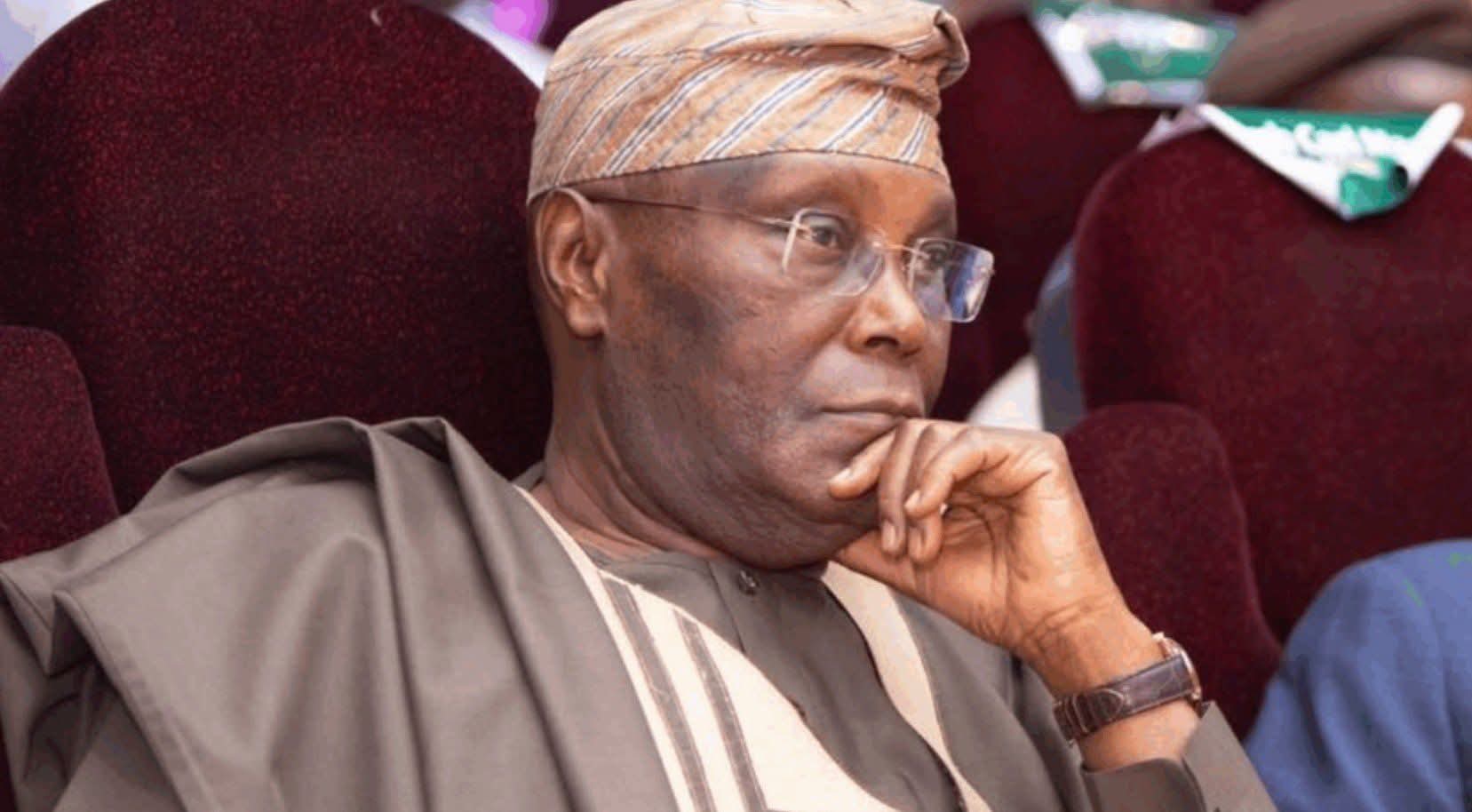
The Economic and Financial Crimes Commission (EFCC) has reopened its investigation into allegations against former Vice President Atiku Abubakar following a petition by former House of Representatives member, Hon. Ehiozuwa Johnson Agbonayinma, seeking his prosecution over alleged financial crimes.
The petition seeks to revive a case dating back to 2006, asking the anti-graft agency to revisit its investigation under former chairman, Mallam Nuhu Ribadu, and consider a subsequent report by a United States Senate subcommittee.
Speaking on the development, Agbonayinma said the EFCC had acknowledged his petition, dated August 27, 2026, and received on September 1. Filed through his lawyer, Chief Hannibal Egbe Uwaifo, SAN, the petition asks the commission to reactivate its earlier report and act on the allegations.
The former lawmaker appeared at the EFCC headquarters in Jabi, Abuja, where he adopted the petition and answered questions from investigators.
Agbonayinma said the matter should not be allowed to remain unresolved.
“I want to thank Nigerians, the EFCC, and those praying for me in this struggle. The laws are meant for both the rich and the poor. After the EFCC has done a fantastic job, it should not be kept under the table,” he said.
In the petition, Agbonayinma urged the EFCC to revisit its September 2006 report on Atiku and a February 4, 2010, report by the US Senate Permanent Subcommittee on Investigations, arguing that both documents should form the basis for renewed action.
The petition alleged that the EFCC had previously indicated that Atiku could face prosecution after leaving office as vice-president, when his constitutional immunity ceased to apply, but that no prosecution followed.
Agbonayinma described the alleged failure to act as a dereliction of duty and argued that pursuing the matter would demonstrate the commission’s resolve to hold politically influential figures accountable.
He also disclosed that he had petitioned US President Donald Trump over the allegations.
The EFCC spokesman, Dele Oyewale, had yet to respond to messages seeking an update on the investigation as of the time of filing this report.
News
APC Presidential Campaign Council: Nigerians Devoid Of Party Affiliations Endorses Tinubu’s 2nd Term-Kwankwaso
From Muhammad Kabir Kano
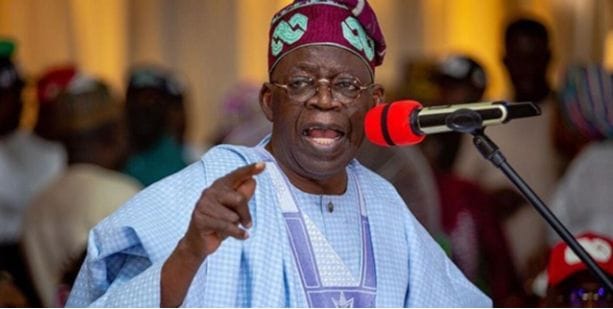
The Collection of Nigerians of different Political Parties that openly not only attended the inauguration of the APC Presidential Campaign Council, Wednesday, clearly shows that President Tinubu today is been accepted by all and sundry, regardless of Party Affiliations.
Making this submission, a member of the Presidential Campaign Council, and who is the Director Finance Hadejia Jammaare River Basin, Musa Illiyasu Kwankwaso, said that, from APGA, to Labour Party and others who were introduced, all firmly stands with Tinubu continuity in office.
Kwankwaso, said that remarks of Men of proven integrity likes Chukuma Charles Soludo the Governor of Anambara State and others, they said it all that President Tinubu Economic blueprint is a masterpiece that only Economic gurus and those who are awake to global economic realities will appreciate.
“It has never happened in the political Nigerian history that one Man attract collection of nearly all opposition Parties not only Opposition Politicians but those who have never agreed to sit together, but because Tinubu they accepted to come onboard and pursued his common goal”.
Dr Musa Illiyasu Kwankwaso, notes that, today the issues at stake is not about Tinubu’s reelection alone but the prosperity of Nigeria, which despite the difficulties, President Tinubu accepted to uphold and ensure it’s total achievement.
He said, “to me the inauguration of the Campaign Council is just like a congregation of celebration of the reelection of President Tinubu back to office, because what else remains, the same Nigerians that we will campaign for, have collectively came forward themselves in unison for one Person(Tinubu).
Musa Illiyasu Kwankwaso, who assured that just like what it is obtained at the National levels, the same things will be done in Kano and other states, adding that the open recognition of Governor Abba Kabir Yusuf by the President and his symbolic Cap shows a clear victory for the Governor Yusuf/Murtala Sule Garo his Deputy.
“One will agree with me that Governor Yusuf, Senator Barau Jibrin, House of Representatives Committee Chairman on Appropriation Abubakar Kabir Abubakar Bichi, Alhassan Ado Doguwa, Abdulmumini Jibrin Kofa, Senator Kawu Sumaila, Senator Mallam Ibrahim Shekarau, Honorable Alhassan Rirum, and all other contestants including our Father former National Chairman of APC, Dr Umar Abdullahi Ganduje are working in tandem for the President Tinubu/ Governor Yusuf/Garo 2 term bids”.
Kwankwaso, assured that before noon, they will bring forward the entire Northern Nigeria votes for Tinubu.
News
IMF to Nigeria: Don’t Bring Back Petrol Subsidy for Everyone, Help the Poor Instead
By Yusuf Danjuma Yunusa
The International Monetary Fund (IMF) has advised Nigeria against restoring broad petrol subsidy, recommending targeted support for vulnerable households to cushion the impact of rising energy costs.
IMF said blanket petrol subsidies were expensive, often benefited higher-income consumers disproportionately and could worsen fiscal pressures amid rising borrowing costs.
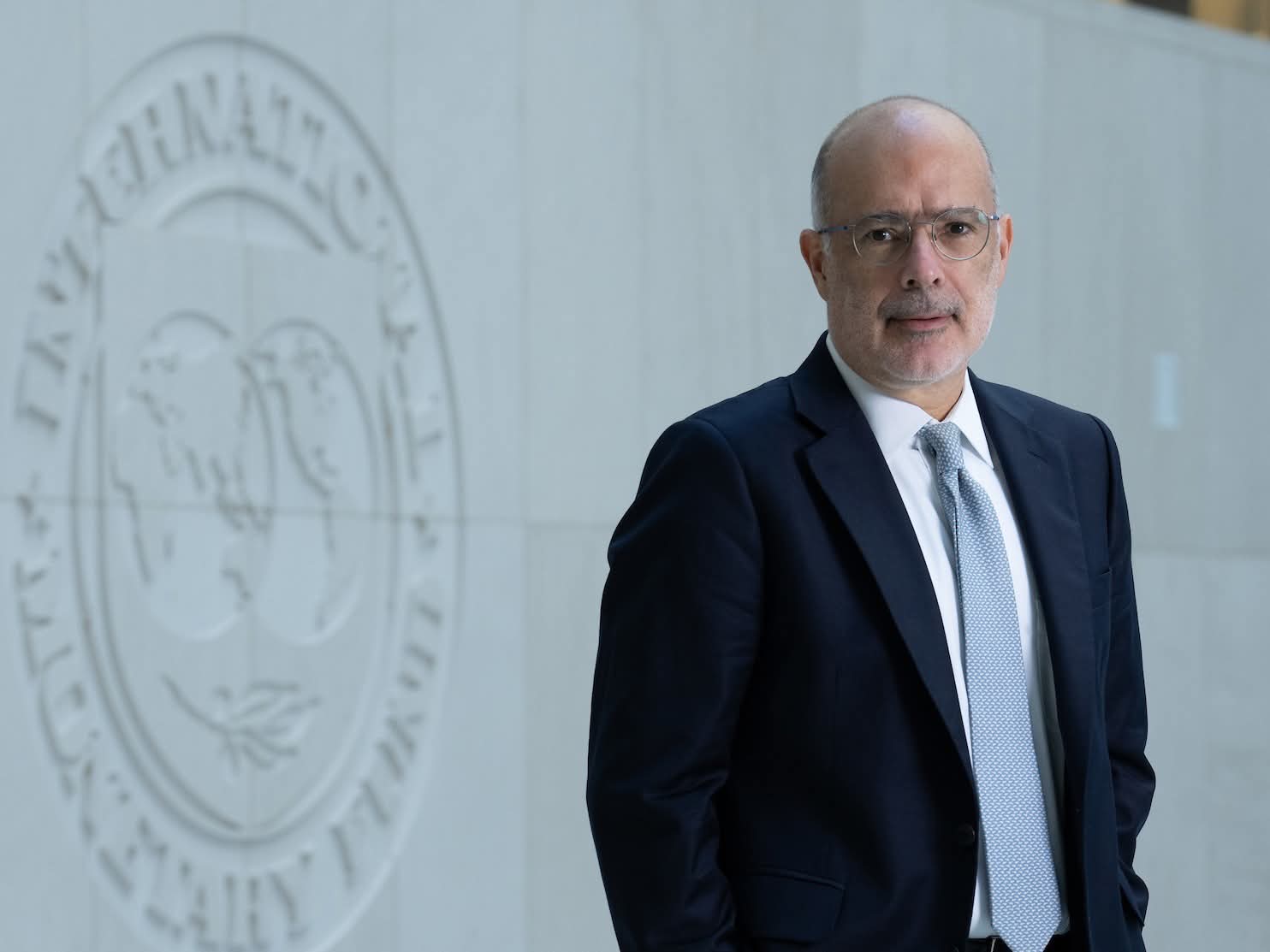
Rodrigo Valdés, director of the IMF’s fiscal affairs department, spoke during a press briefing on the fund’s fiscal monitor at the 2026 annual meetings of the IMF and World Bank in Bangkok, Thailand, on Wednesday.
His comments followed a question on how the fund could recommend allowing energy prices to reflect scarcity when higher fuel prices in Nigeria could raise transport costs, worsen inflation and deepen poverty, particularly when the government was facing calls to restore petrol subsidy ahead of an election year.
“Protecting people is not the same as protecting the price of fuels,” Valdés said.
He said fuel subsidies or measures preventing prices from adjusting fully to an energy shock had cost countries between 1 percent and 1.5 percent of gross domestic product (GDP) in 2026.
“It’s first fiscally very costly, and second, if you look at the pattern of consumption, it’s easy to see that that subsidy is readily regressive in many places,” he said.
Valdés said governments should instead use social safety nets and household data to identify people who need assistance.
“There are better tools to deal with this,” he said.
The federal government recently announced a 30-day petrol discount at Nigerian National Petroleum Company (NNPC) Limited retail stations, with priority for public transport operators, to cushion the impact of rising fuel prices.
Taiwo Oyedele, minister of finance, said NNPC retail would sell petrol at cost by foregoing its retail profit margin, describing the measure as temporary relief rather than a return to petrol subsidy.
The government also proposed negotiating a ceiling of N1,350 per litre on petrol’s ex-gantry or landing cost, subject to monthly reviews.
The IMF also recommended targeted interventions to cushion the effect of higher fuel prices on transportation costs.
Davide Furceri, a division chief in the fund’s fiscal affairs department, said governments could redirect some of the resources spent on blanket subsidies towards vulnerable consumers.
“For example, you mentioned transportation costs. Yeah, gasoline could go up, and perhaps bus fees may be subsidised in a way that is a much better policy at the end of the day than just a blanket subsidy for everybody,” Furceri said.
He also suggested alternatives such as school feeding programmes, geographical targeting and assistance for vulnerable farmers.
Furceri acknowledged that some countries lacked household registries and digital payment systems needed to deliver targeted support effectively.
However, he said governments could adopt alternative approaches in the short term while developing stronger systems.
He recommended that assistance should be limited, targeted and temporary.
Valdés explained that fuel subsidies could worsen global energy pressures by preventing demand from adjusting when supplies were constrained.
“When you subsidise, you don’t allow, at the end of the day, demand to adjust,” he said.
“And reality is that we have less fuels in the world economy. That means that someone else has to adjust more, and the market produces a higher price for that.”
The IMF official said subsidies were not only costly and regressive but could also have spillover effects on the global economy.

EFCC Reopens Atiku’s Alleged Financial Crimes Probe

APC Presidential Campaign Council: Nigerians Devoid Of Party Affiliations Endorses Tinubu’s 2nd Term-Kwankwaso

IMF to Nigeria: Don’t Bring Back Petrol Subsidy for Everyone, Help the Poor Instead

Alhaji Abba Yusuf At 81: A Life Of Service, Leadership And Traditional Responsibility

Ahmad Hamisu Gwale Wins NBMA National Award for Best Male Newscaster 2026

Zamfara Varsity ASUU Threatens Warning Strike Over FG-ASUU Agreement, Promotion Arrears

PCACC Arrests Man Over Alleged ₦4.5m Sale, Illegal Leasing of Kano Government Horse Stable

Goje’s Electoral War:The Confrontation With Tinubu,Governor Inuwa,Usman Kumo And APC candidates Ahead Of 2027

Prof Yusuf Adamu Delivers BUK’s 63rd Professorial Inaugural Lecture, Reflects on Medical Geography and Academic Legacy

RE:WE ARE UNDER SIEGE: TARABA MONARCH BREAKS SILENCE AS FULANI BANDITS OVERRUN THE ANCIENT KWARARAFA KINGDOM:
EFCC Reopens Atiku’s Alleged Financial Crimes Probe
APC Presidential Campaign Council: Nigerians Devoid Of Party Affiliations Endorses Tinubu’s 2nd Term-Kwankwaso
IMF to Nigeria: Don’t Bring Back Petrol Subsidy for Everyone, Help the Poor Instead
Alhaji Abba Yusuf At 81: A Life Of Service, Leadership And Traditional Responsibility
Ahmad Hamisu Gwale Wins NBMA National Award for Best Male Newscaster 2026
Zamfara Varsity ASUU Threatens Warning Strike Over FG-ASUU Agreement, Promotion Arrears
PCACC Arrests Man Over Alleged ₦4.5m Sale, Illegal Leasing of Kano Government Horse Stable
Goje’s Electoral War:The Confrontation With Tinubu,Governor Inuwa,Usman Kumo And APC candidates Ahead Of 2027
Prof Yusuf Adamu Delivers BUK’s 63rd Professorial Inaugural Lecture, Reflects on Medical Geography and Academic Legacy
RE:WE ARE UNDER SIEGE: TARABA MONARCH BREAKS SILENCE AS FULANI BANDITS OVERRUN THE ANCIENT KWARARAFA KINGDOM:
-

 Opinion5 years ago
On The Kano Flyovers And Public Perception
-

 Features5 years ago
How I Became A Multimillionaire In Nigeria – Hadiza Gabon
-

 Opinion6 years ago
Kano As future Headquarters Of Poverty In Nigeria
-

 History6 years ago
Sheikh Adam Abdullahi Al-Ilory (1917-1992):Nigeria’s Islamic Scholar Who Wrote Over 100 Books And Journals
-

 Opinion5 years ago
My First Encounter with Nasiru Gawuna, the Humble Deputy Governor
-

 History5 years ago
The History Of Borno State Governor Professor Babagana Umara Zulum
-

 History6 years ago
The Origin Of “Mammy Market” In Army Barracks (Mammy Ochefu)
-

 News5 years ago
Federal University Of Technology Babura To Commence Academic Activities September