
News
News Analysis:Coup Plots Among African Countries, Causes, and Ways to Mitigate them
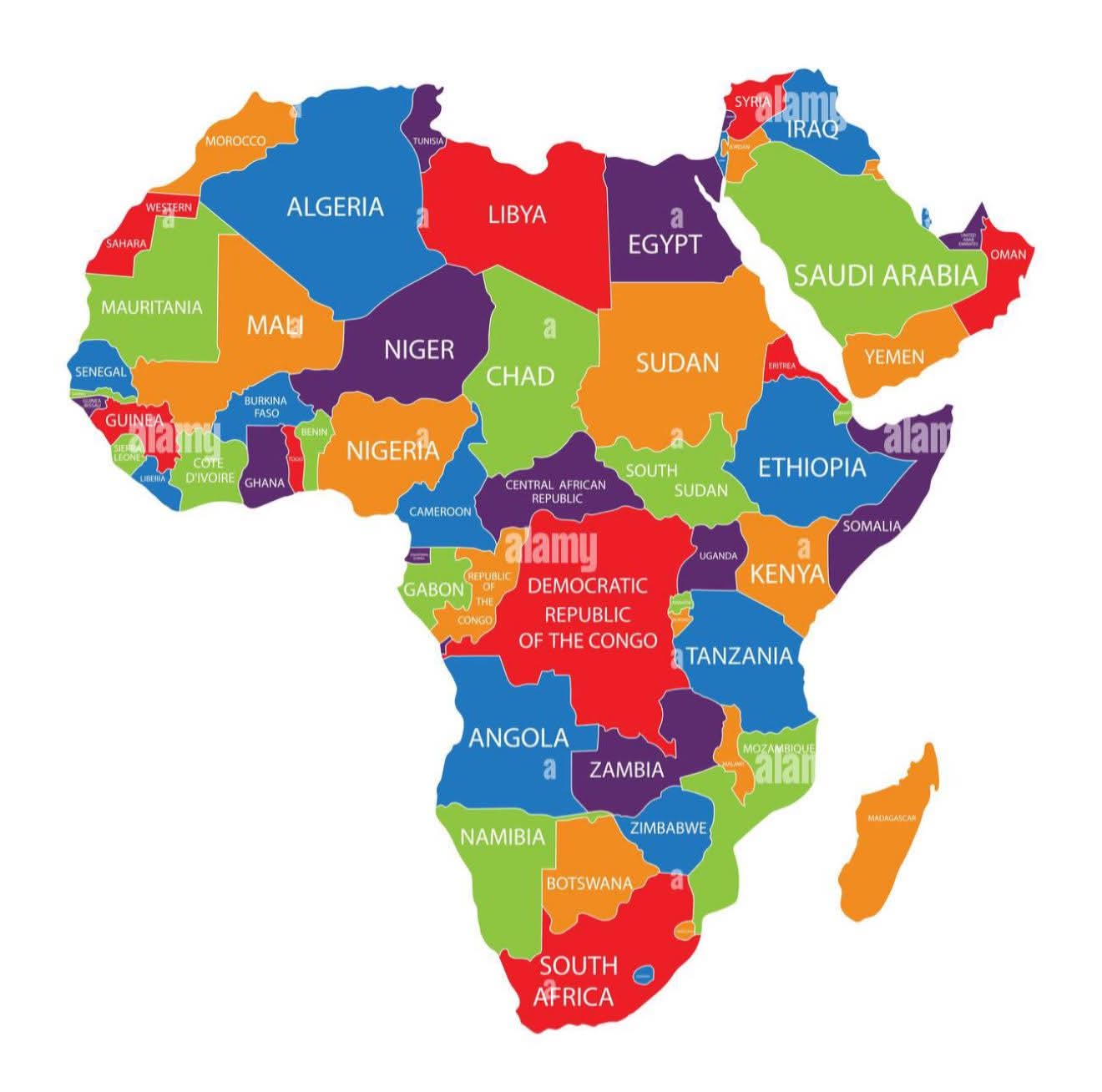
With Surge of military coups in the first quarter of the 21st century Nigerian Tracker’s Yusuf Danjuma Yunusa take a look at military coups in Africa and the causes.
Yusuf Danjuma Yunusa
Early morning on Sunday, December 7, 2025, news broke that a group of soldiers appeared on Benin’s state TV announcing the dissolution of the government in an apparent coup in the West Africa nation.
They announced the overthrow of President Patrice Talon, who has been in power since 2016, as well as all state institutions.
The troops referred to themselves as part of the “Military Committee for Refoundation” (CMR), and said on state television that they had met and decided that “Mr Patrice Talon is removed from office as president of the republic”.
Talon’s whereabouts were unknown.
The French Embassy said on X that “gunfire was reported at Camp Guezo” near the president’s official residence. It urged French citizens to remain indoors for security.
Talon was due to step down next year in April after 10 years in power.
However, the latest report from Cotonou said the National Guard has taken control of the situation and surrounded the television station. According to 24 Hours In Benin, discussions are underway with the mutineers, now holed up inside the station.
“The regular army is regaining control. The city and the country are completely secure,” the report says.

Precious Chukwuemeka Chidiebere
Nigerian Tracker News gathered that Benin Republic has been having records of coup plots since time immemorial.
The Republic of Benin (formerly known as Dahomey until 1975) has experienced a significant number of coup plots, both successful and attempted, particularly during its turbulent early decades of independence. It holds the notable distinction of having the highest number of successful coups in Africa during the 20th century for a single nation.
The first coup plot in that country occurred when President Hubert Maga (from the north) was overthrown in a bloodless coup led by Colonel Christophe Soglo. This was triggered by political deadlock, economic crisis, and widespread strikes and protests. Soglo cited the “incapacity of the political class” as the reason. This was in October, 1963.
The second coup happened after a brief return to civilian rule, the army, again led by General Christophe Soglo, seized power directly. He dissolved the contentious three-member Presidential Council (a triumvirate of Maga, Sourou-Migan Apithy, and Justin Ahomadégbé) and installed himself as head of state.
History has it that the Republic of Benin experienced a total of six coup plots.
However, since its democratic transition in 1990-1991, Benin has broken this cycle and has not experienced a traditional military coup for over three decades, despite facing modern political challenges, until the recent one that happened earlier December 7, 2025.
A View into Africa’s Record of Coup Plots
Since 1953, Africa has been the continent most affected by coup plots and military interventions. While the frequency and drivers have evolved, the fundamental issue of the military’s role in politics remains unresolved in many nations. The current surge in the Sahel represents a critical new phase, characterized by anti-colonial rhetoric, security-focused justifications, and shifting geopolitical alliances. This pattern suggests that, despite decades of democratic development efforts, the coup d’état remains a persistent feature of the African political landscape.
The continent has experienced significant political instability, with coups being a recurrent phenomenon.
Detailed Report of Coup Plots Among African Countries
While many African nations gained independence around 1960, this report draws its details from 1953, allowing the inclusion of pivotal early events in countries like Egypt and Sudan.
North African Countries
In Egypt, the Zehniyet plot in 1953 was an alleged conspiracy by the Muslim Brotherhood to assassinate President Gamal Abdel Nasser, leading to a massive crackdown. While not a classic military coup plot, it was a major internal power struggle.
In 1958, Sudan First Military Coup was led by General Ibrahim Abboud and some army officers. The coup was a bloodless takeover, beginning a cycle of military rule.
Likewise in Libya in 1969, the “Free Officers” movement, led by Captain Muammar Gaddafi, successfully overthrew King Idris I.
Again in Sudan in 1971, a failed Communist Coup which was brief, marked a bloody takeover by communist officers, but it was reversed by loyalist forces under Gaafar Nimeiry.
Also, in Egypt around 1981, President Anwar Sadat was assassinated by Islamist officers within the military during a parade, a plot that aimed at regime change.
And in Algeria in 1991-1992, When the Islamist Islamic Salvation Front (FIS) won elections, the military intervened, canceling the results and precipitating a civil war. This is considered a “coup from above.”
There was also a record of coup plot in Sudan in 2019 in which the military overthrew long-time dictator, Omar al-Bashir, following mass protests, followed by a power-sharing agreement and later another coup in 2021.
West African Countries
The first post-independence coup in Africa, where soldiers assassinated President Sylvanus Olympio, happened in Togo in 1963.
In 1966, the first overthrow of a major Pan-African leader, Kwame Nkrumah of Ghana, happened while he was abroad.
In Nigeria, two successive coups in 1966 destabilized the nation, leading directly to the Biafran Civil War. Aside those mentioned, the country has had a couple of coup plots also.
Liberia’s 1980 Master Sergeant Samuel Doe’s violent coup marked the end of Americo-Liberian rule and began decades of turmoil.
Similarly in 1987, Burkina Faso Captain Blaise Compaoré seized power in a coup that killed his former comrade, the iconic Thomas Sankara.
In 2012, Mali recorded a coup plot by Captain Amadou Sanogo which created a power vacuum that allowed jihadist groups to seize the northern half of the country.
Furthermore, Guinea, in 2021 exprienced coup plot when special forces commander Colonel Mamady Doumbouya ousted President Alpha Condé.
Burkina Faso in 2022 had two coups (January & September), with Captain Ibrahim Traoré installed while citing failure to contain jihadist violence.
Niger also recorded coup in 2023 when the presidential guard deposed President Mohamed Bazoum, triggering a major regional crisis and the formation of the “Alliance of Sahel States” (AES) with Mali and Burkina Faso.
Central African Countries
Coup plots in these central african countries were reoccurring. The major countries below had these records:
Chad (1975, 1990, 2021): A pattern of violent takeovers: Hissène Habré (1982), Idriss Déby (1990), and the military takeover by Mahamat Déby after his father’s death in 2021 (a “dynastic coup”).
Burundi (1965, 1976, 1987, 1996, 2015): Recurring coups and attempted coups, often along ethnic lines (Hutu-Tutsi), culminating in a contested political coup attempt in 2015 during a presidential term-limit crisis.
East African Countries
Ethiopia had an attempted coup against Emperor Haile Selassie by the imperial
guard in 1960.
Also, Somalia experienced theirs in 1969 with the assassination of President Abdirashid Ali Sharmarke which led to a military takeover by Siad Barre.
In Uganda, the famous Idi Amin coup ousted Milton Obote in 1975.
Again in 1974, the Derg committee in Ethiopia deposed Emperor Haile Selassie, ushering in a communist military junta.
Southern African Countries
Lesotho had several military interventions and coups (1991, 1994, 1998, 2014, 2022) within the constitutional monarchy of the nation.
Madagascar also had a handful of coup plots in 1975 and 2009 ushering in Didier Ratsiraka to power militarily; while in 2009, a popular uprising backed by the military installed Andry Rajoelina, considered a “soft coup.”
In Zimbabwe, the 2017 “military-assisted transition” referred to as a “soft coup”, forced long-time ruler Robert Mugabe to resign.
History shows that Benin holds the continental record for the most successful military takeovers in the post-colonial era between 1963-1972. While Sudan tops the chart for frequency of all kinds of coup activities–succesful or not.
What are the Key Drivers of Coup Plots in Africa?
Speaking with a political scientist, Precious Chukwuemeka Chidiebere, he highlighted that there are a lot of causes for the emergence of military coup among African countries, which includes poor governance, corruption, weak democratic institutions and lots more.
“Coup causes ranges from bad governance, leadership failure, weak democratic institutions, insecurity, external influence, and among many other factors,” he said.
“Talking about the corruption aspect, it was quite illustrative in the case of the former president of Mali, Ibrahim Keita, when he was accused of electoral fraud and poor governance. The military took over the government,” Mr. Chidiebere added.
He also emphasized on the fact that having democratic institutions that guide the government of our day is never enough, that the pertinent question should be “how strong are the democratic institutions?”
“Mostly in Africa, our democratic institutions are weak, even here in Nigeria. Rule of Law is not adhered to in Nigeria,” he asserted.
The political scientist categorically stated that the independence of each arms of government that should serve as a tool to embolden good governance is not realistic in Nigeria, and by extension, Africa.
“If you observe closely, there’s no active opposition in Nigeria, and so do many countries in Africa,” he stated.
Mr Chidiebere also discussed the importance of economic integration and planning aimed at leveraging the skills within citizens to liberate them from poverty. He said that economic hardship is also part of those factors that contribute or birth coup plot in most African countries.
Asking about ways to put an end to coup plots in Africa, the scientist recommended that governments in various African countries should strengthen democratic institutions.
“The opposition must not be suppressed. There should be room for criticism without crucification.”
He also added that corruption should be dealt with mercilessly without compromise or favour. And also, opportunities should be created for citizens to survive with. Mr. Chidiebere stressed that economic decisions should address the plights of the masses












News
Terrorist Logistics Suppliers Apprehended in Borno
By Yusuf Danjuma Yunusa
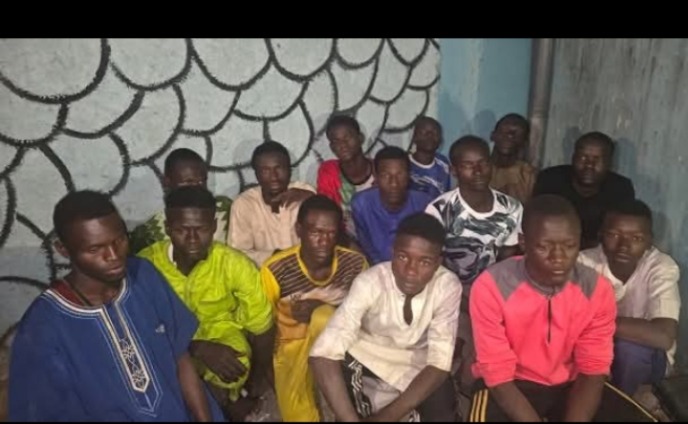
Troops of Operation Hadin Kai, OPHK, have apprehended 18 suspected logistics suppliers allegedly enroute Gubio, with plans to proceed to the Gudumbali axis, a known Boko Haram terrorists, BHTs, enclave.
Troops of Operation Hadin Kai, OPHK, have apprehended 18 suspected logistics suppliers allegedly enroute Gubio, with plans to proceed to the Gudumbali axis, a known Boko Haram terrorists, BHTs, enclave.
This is contained in a daily operational report made available to the News Agency of Nigeria on Wednesday.
The military said the suspects were intercepted while travelling towards the location to deliver the goods to the terrorists.
According to the report, preliminary investigation revealed that all 18 suspects confessed to engaging in the supply of goods to the terrorist group.
“They admitted that they routinely purchase and convey items to the terrorists.
“Their justification was lack of employment, which points to a deeper socio-economic challenge in Maiduguri and its environs,” the army said.
The development, according to the reportt, validates recent remarks by the Chief of Defence Staff on the link between economic hardship and the sustenance of insurgency logistics networks.
“The arrest highlights the critical role of civilian collaborators in sustaining terrorist operations, particularly in remote areas such as Gubio and Gudumbali,” it added.
The army called for a comprehensive approach combining military operations with economic empowerment and job creation to address the root causes of insurgency in the region.
News
Kano Gov’t Offers Study Scholarship to SWAN Members
By Abdulgafar Oladimeji
Kano state government has facilitated and supported members of the Sports Writers Association of Nigeria, SWAN Kano chapter to proceed to pursue professional certification courses in sports journalism, our correspondent reports .
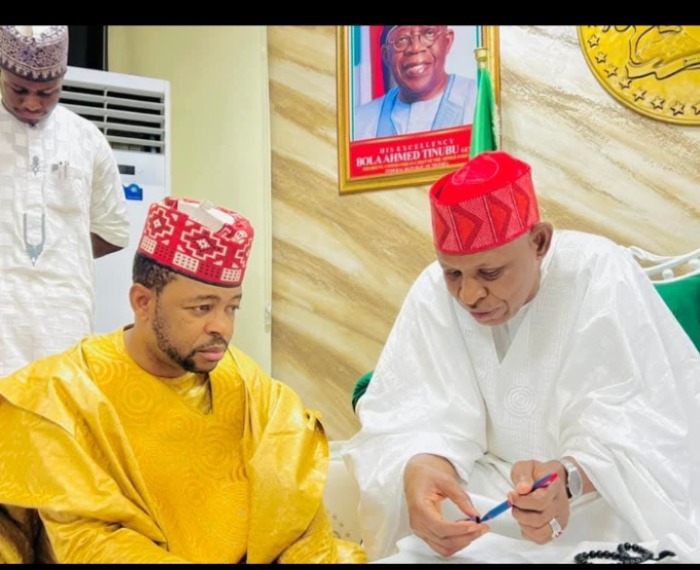
The Special Adviser , youths and sports to Kano state governor, Sani Musa Danja, disclosed that the offer covers their tuition fees.
He said , the beneficiaries have been identified and their enrolment process have been completed.
According to him, through interactions with stakeholders , the decision was reached for some sports writers, who are faced with the challenge of acquiring the required professional qualification to practice their trade should be given support to fill the gap.
said, findings have revealed that , for Kano sports writers to compete favorably there exists the urgent need to empower members of the association to acquire certain requisite qualification to enable them feature amongst the best in Nigeria and beyond.
Danja speaking, when he hosted SWAN members in his office , located within the premises of Kano state Library Complex, along Ahmadu Bello Way said that the state government, under Abba Kabir Yusuf , on discovering this major challenge , acted swiftly to address the lapses, by offering to sponsor 10 SWAN members to pursue professional diploma in Sports Journalism at El Roi London University.
In his word “ we give thanks to almighty Allah for his mercies, I want to thank our mentor and leader, his excellency governor, Abba Kabiru Yusuf , who made this possible.
“his excellency takes the issue of empowering our people very seriously, the challenge facing our sports journalists is principally the issue of professional certification, some of our sports journalists have their degrees in other fields, but we are aware that, they also require to obtain certain minimum qualification in journalism or other related fields to help them to excel .
“in line with the policy of the government of his excellency, we have moved in to make sure , these sons and daughter of Kano overcome this hinderance that may hinder their professional progress.
“the sports media is the back bone of sports development and sports promotion, our government is focused and committed to support and reshape the sports media to achieve the set out goal to empower Kano youths through sports.
“the mission of his excellency through this gesture is to empower our professional sports journalists and give them the required qualification to continue with their pursuit to upward steadily representation of Kano state in that sector.
Danja hinted that, Kano state government remains unrepentant in its upward investment drive to create a generation of professionals that would keep the state afloat on the terrain of quality and abundance human resources.
Reacting, chairman SWAN Kano chapter, comrade Zahradeen Saleh thanked the state government for the support.
He said, the scholarship offer is an major step towards uplifting the practice of sports journalism in the state.
He said the dividends of sports could only accrue with the effective operations of the sporting press through the training and re-training of sports writers.
He admitted that, acquiring the requisite qualification to practice sports journalism has been one of the major challenges confronting members of the association.
“ our members who are the beneficiaries of this offer are youths, on completion of the professional course, they will have stable professional growth and would be better equipped to contribute their quota to the development of the state.” Zahradeen said .
News
Obi Raises Alarm Over Arrest of Cleric Who Hosted Him in Kaduna
By Yusuf Danjuma Yunusa
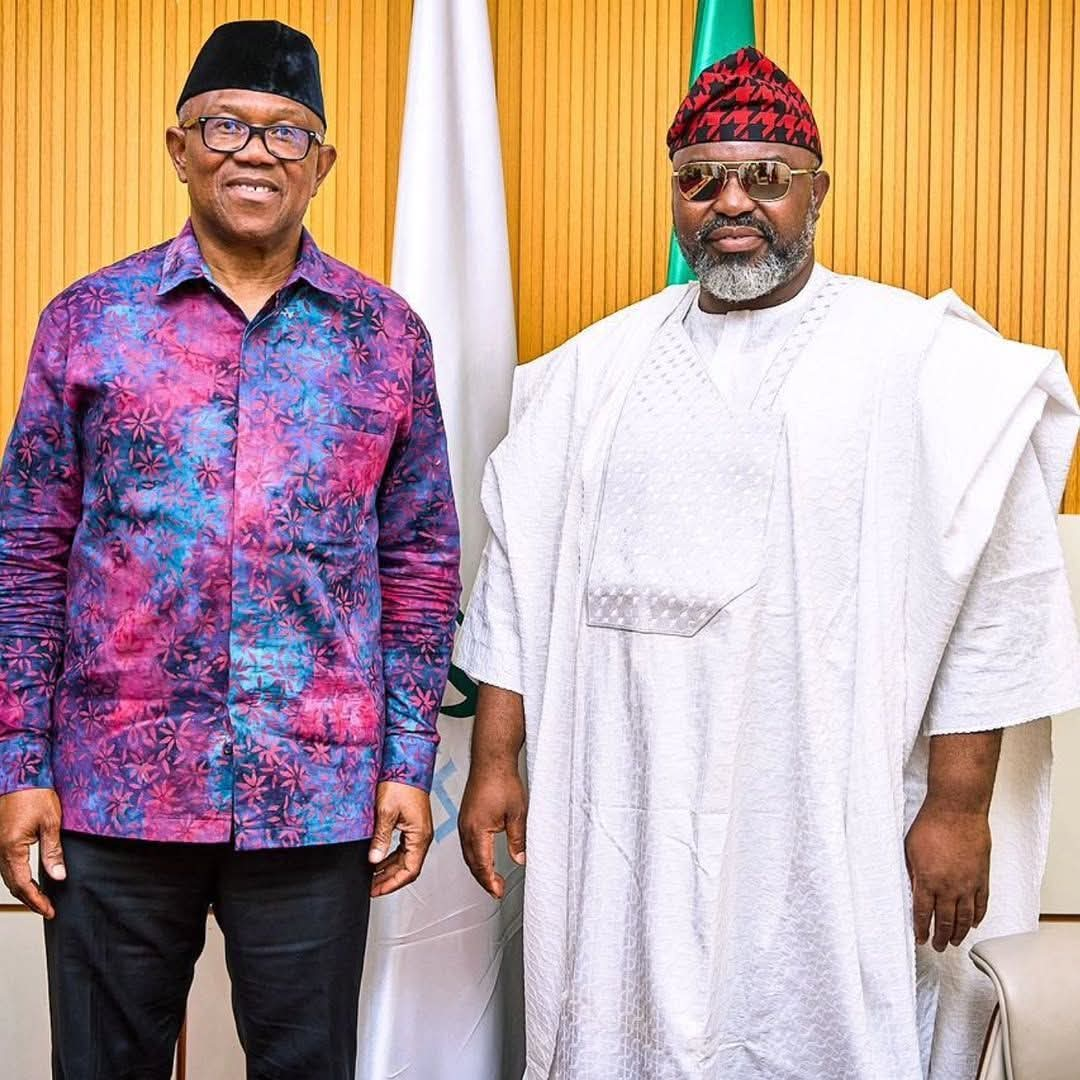
Peter Obi, the Labour Party’s 2023 presidential candidate, has condemned the arrest of a Muslim cleric who hosted him over the weekend, describing the incident as a sign of deepening threats to civil liberties in Nigeria.
In a statement shared on his X (formerly Twitter) account on Tuesday, Obi said he was notified that Sheikh Ahmad Tijjani Umar was taken into custody by security operatives shortly after their meeting in Kaduna on Sunday.
“This development underscores the deeply troubling state of our nation and our democracy, where freedom of speech and movement is increasingly threatened, and where citizens and perceived political opponents face harassment and unnecessary persecution,” Obi wrote.
The former Anambra governor warned that such actions risk eroding Nigeria’s democratic foundations if left unchecked. He urged authorities to uphold the rule of law and refrain from tactics that intimidate dissent.
“This country must defend freedom and free speech, which are the hallmarks of every democratic society. Suppression and intimidation of dissent can never stand in a democratic society, and this Nigerian government must understand this fact,” he added.
Obi called on those “bent on undermining our already fragile democracy” to desist and adhere to democratic principles in dealing with citizens.
As of Tuesday morning, security agencies had not issued an official statement regarding the cleric’s arrest or the circumstances leading to it. Sheikh Umar, a respected religious figure in Kaduna, has not been publicly charged.

Terrorist Logistics Suppliers Apprehended in Borno

Kano Gov’t Offers Study Scholarship to SWAN Members

OPINION: Examining the Sanity of Saner Climes

Obi Raises Alarm Over Arrest of Cleric Who Hosted Him in Kaduna

ICPC Arraigns Ex-Governor El-Rufai in Kaduna Amid Tight Security

BREAKING: El-Rufai Suffers Nose Bleeding in EFCC Custody, Family Denied Access

The Governor Who Chose His People Over His Politics: Abba Yusuf and the Moral Courage Behind Kano First

FREEDOM OF SPEECH, NOT FREEDOM FROM CONSEQUENCE: A CITIZEN’S CALL FOR RESPONSIBLE PUBLIC COMMENTARY

How Kano Government Official Allegedly Intimidate And Insult Two Journalists On Lawful Duty

DSP Barau and APC Unity in Kano
Terrorist Logistics Suppliers Apprehended in Borno
Kano Gov’t Offers Study Scholarship to SWAN Members
OPINION: Examining the Sanity of Saner Climes
Obi Raises Alarm Over Arrest of Cleric Who Hosted Him in Kaduna
ICPC Arraigns Ex-Governor El-Rufai in Kaduna Amid Tight Security
BREAKING: El-Rufai Suffers Nose Bleeding in EFCC Custody, Family Denied Access
The Governor Who Chose His People Over His Politics: Abba Yusuf and the Moral Courage Behind Kano First
FREEDOM OF SPEECH, NOT FREEDOM FROM CONSEQUENCE: A CITIZEN’S CALL FOR RESPONSIBLE PUBLIC COMMENTARY
How Kano Government Official Allegedly Intimidate And Insult Two Journalists On Lawful Duty
DSP Barau and APC Unity in Kano
-

 Opinion4 years ago
On The Kano Flyovers And Public Perception
-

 Features5 years ago
How I Became A Multimillionaire In Nigeria – Hadiza Gabon
-

 Opinion5 years ago
Kano As future Headquarters Of Poverty In Nigeria
-

 History5 years ago
Sheikh Adam Abdullahi Al-Ilory (1917-1992):Nigeria’s Islamic Scholar Who Wrote Over 100 Books And Journals
-

 Opinion4 years ago
My First Encounter with Nasiru Gawuna, the Humble Deputy Governor
-

 History5 years ago
The Origin Of “Mammy Market” In Army Barracks (Mammy Ochefu)
-

 History4 years ago
The History Of Borno State Governor Professor Babagana Umara Zulum
-

 News4 years ago
Federal University Of Technology Babura To Commence Academic Activities September