
News
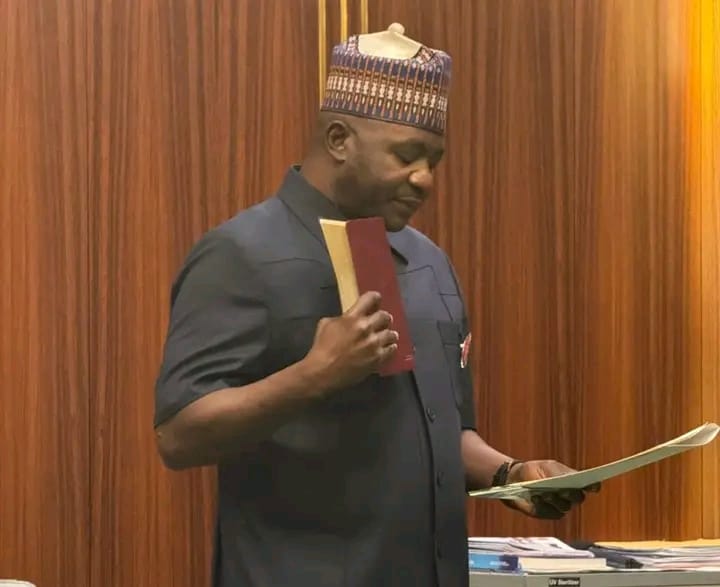
SPECIAL REPORT: The Return of GC Musa and the Challenges Ahead
By Yusuf Danjuma Yunusa
On Friday, 24th October, 2025, the President announced sweeping changes in the military hierarchy.
A statement by the Special Adviser to the President on Media and Public Communication, Sunday Dare, named General Olufemi Oluyede as the new Chief of Defence Staff, replacing General Christopher Musa.
It added, “The new Chief of Army Staff is Major-General W. Shaibu; Air Vice Marshal S.K. Aneke is Chief of Air Staff; while Rear Admiral I. Abbas is the new Chief of Naval Staff. Chief of Defence Intelligence, Major-General E.A.P. Undiendeye, retains his position.”
The development came barely a week after an online media platform, Sahara Reporters, published a story alleging that some military officers plotted to remove President Tinubu.
Hence, the citizens summarily adjudged that General Christopher Musa was sacked on that note.
While on the other hand, Nigerians differ on his leadership role as the Chief of Defence Staff:
a. Some Nigerians are of the opinion that GC Musa did extremely well in the fight against insurgencies while serving as the CDS, stating that he intensified kinetic operations across multiple fronts, leading to the death of several high-value terrorist/bandit leaders.
b. Others opined that he performed poorly, citing the unending cases of terrorism and the reinforcement of its leaders who had been sent into exile previously.
In an extremely shocking wave, a month and some days after the relinquishment of GC Musa as the Chief of Defence Staff, news broke that he had been picked as Abubakar Badaru’s replacement, who had resigned as the Minister of Defence on health grounds.
Again, the public was thrown into another round of debate:
a. Who was sacked from office as CDS cannot be appointed as Minister for that same ministry.
b. GC Musa’s appointment is timely and meritorious.
The new Defence Minister was celebrated across all social media platforms by the latter group of Nigerians, while the other group expressed disbelief.
Well, the new Minister has assumed office and has started hitting the ground running from Friday, December 5, 2025.
However, a security analyst reached out to by this newspaper believed there is more to the going and coming of General Christopher, but which cannot be explained at the moment:
“Well, at this point, no one can really say much about the reason why he was sacked. If it was based on incompetence, then why is he back?” Mr. Yakubu said.
“Or could it be that he was sacked in order to prepare him for this current position?” our correspondent asked, and he replied, “No one can say.”
—
The Challenges Ahead For GC Musa
Speaking further with the security expert, Yakubu Mohammed, he noted that although the new Defence Minister had stated that he cannot afford to fail Nigerians as they are expecting much, it is a no-brainer that Nigeria’s security issue is complex and dynamic—rooted in a deep interplay of historical grievances, economic marginalization, ethno-religious tensions, poor governance, and environmental pressures.
He mentioned that each of the factors listed above has its challenges, and as such, Nigerians are beginning to ponder how GC Musa will handle them.
Ultimately, Mr. Yakubu asserted that:
“The chief architect of those factors that birthed insecurity is CORRUPTION. If GC Musa can conquer the corruption that awaits him in the Defence Ministry, he might get it right.”
He continued, “Some of the key layers of corruption and systemic issues that can cripple effectiveness are obviously poor equipment, leaked intelligence, and poor leadership (from bought promotions) leading to battlefield losses and inability to secure territory. Emphasis on the leaked intelligence.”
When asked to shed more light on the emphasis about leaked intelligence, Mr. Yakubu categorically stated that selling operational intelligence to insurgents or criminal gangs for personal gain severely compromises missions and endangers lives, and that boils down to “operational failure.”
The security analyst also mentioned that GC Musa needs serious reforms in the ministry in order to prevail, but which will not be feasible if senior military and civilian officials within the establishment who are vested in the existing corrupt system, sabotaging reform efforts to protect their interests, are not stopped.
Most importantly, Mr. Yakubu recommended that for the success of GC Musa, the Minister of State for Defence, Bello Matawalle, must be sacked.
“That former governor of Zamfara State serving alongside GC Musa must go.”
“People like Bulama Bukarti and Aliyu Ibrahim Gebi should serve alongside General Christopher,” he added.
When asked what his reasons are for recommending the sacking of Bello Matawalle, the analyst, without mincing words, said that Matawalle is an associate of some of the bandit leaders.
“Right from the time he served as Zamfara State governor to now, he has repeatedly had connections with bandit leaders—questionable connections.”
“Such a personality in that ministry is capable of sabotaging efforts to combat those terrorists,” he added.
Mr. Yakubu conclusively ended the interview by asking our correspondent an intriguing question:
“Why haven’t the security operatives captured Turji—the bandit lord, yet?”
A question in which an answer truly aligns with his take on the minister.
The security expert also suggested that:
“The military’s inherent culture of secrecy can be used as a shield to block necessary civilian oversight and transparency initiatives.”
But added that it will be difficult if Matawalle continues to be in the structure.
Ultimately, as explained by the security expert, the new Defence Minister’s biggest battle may not be against external adversaries, but against the entrenched “institutional corruption” within the defence establishment itself. Success will depend less on military strategy and more on courageous governance, systemic reform, and ruthless integrity.










News
Governor Yusuf Sacks Sagagi as Kano Commissioner Of Commerce
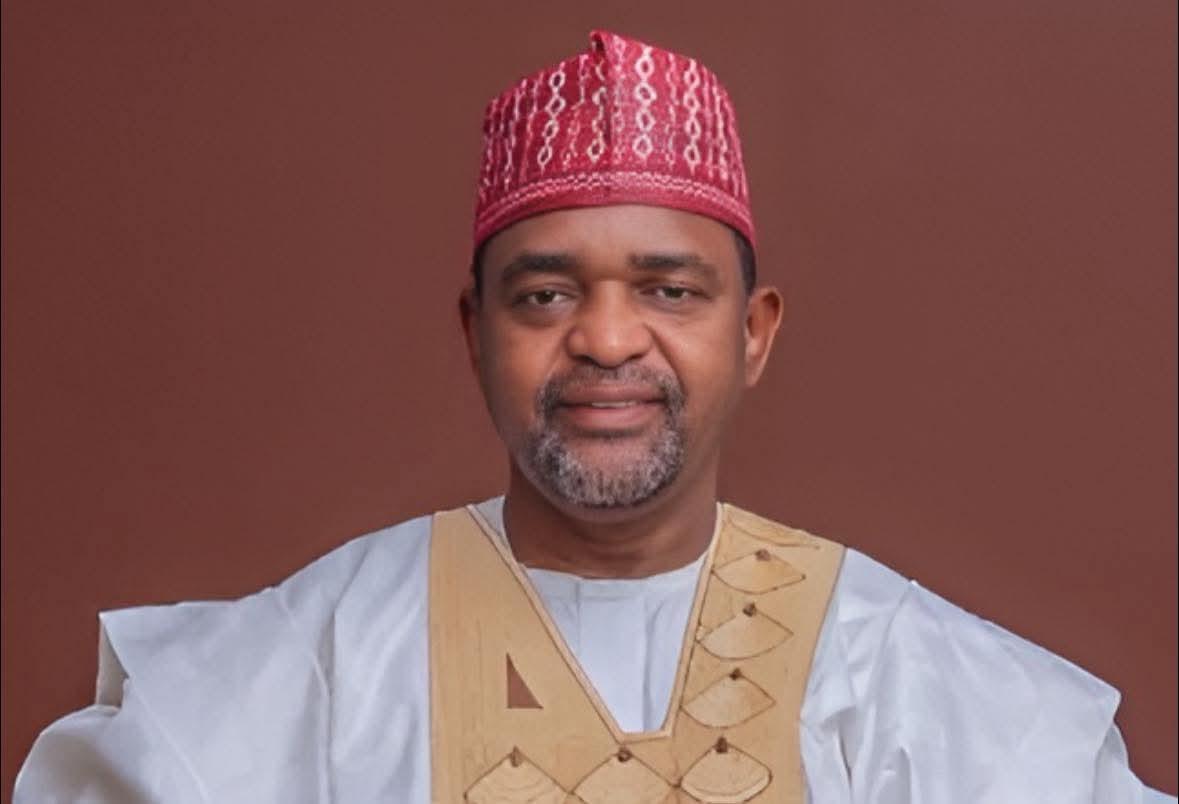
Kano State Governor, Alhaji Abba Kabir Yusuf, has relieved Alhaji Shehu Wada Sagagi of his appointment as Commissioner for Investment, Commerce and Industry with immediate effect.
This was contained in a statement signed by the governor’s spokesperson, Sunusi Bature Dawakin Tofa, on Thursday.
According to the statement, the former Commissioner is directed to hand over the affairs of the ministry to the Director Commerce with immediate effect.
Governor Yusuf expressed appreciation for the services rendered by the former commissioner during his tenure.
He acknowledged Sagagi’s contributions to the development of the state, particularly in the areas of politics, religion, small and medium enterprises.
The Governor wished him success in his future endeavours as he reassured the public of his administration’s continued commitment to efficient service delivery and good governance in the state.
This decision is part of the ongoing strategic realighment of government structures for systematic growth and sustainable development.
News
Terrorist Logistics Suppliers Apprehended in Borno
By Yusuf Danjuma Yunusa
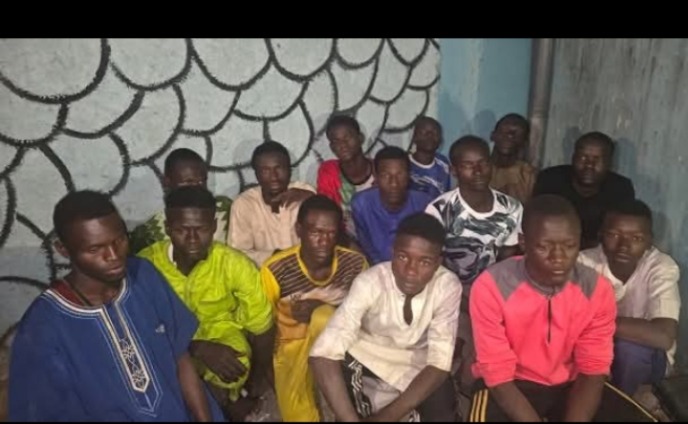
Troops of Operation Hadin Kai, OPHK, have apprehended 18 suspected logistics suppliers allegedly enroute Gubio, with plans to proceed to the Gudumbali axis, a known Boko Haram terrorists, BHTs, enclave.
Troops of Operation Hadin Kai, OPHK, have apprehended 18 suspected logistics suppliers allegedly enroute Gubio, with plans to proceed to the Gudumbali axis, a known Boko Haram terrorists, BHTs, enclave.
This is contained in a daily operational report made available to the News Agency of Nigeria on Wednesday.
The military said the suspects were intercepted while travelling towards the location to deliver the goods to the terrorists.
According to the report, preliminary investigation revealed that all 18 suspects confessed to engaging in the supply of goods to the terrorist group.
“They admitted that they routinely purchase and convey items to the terrorists.
“Their justification was lack of employment, which points to a deeper socio-economic challenge in Maiduguri and its environs,” the army said.
The development, according to the reportt, validates recent remarks by the Chief of Defence Staff on the link between economic hardship and the sustenance of insurgency logistics networks.
“The arrest highlights the critical role of civilian collaborators in sustaining terrorist operations, particularly in remote areas such as Gubio and Gudumbali,” it added.
The army called for a comprehensive approach combining military operations with economic empowerment and job creation to address the root causes of insurgency in the region.
News
Kano Gov’t Offers Study Scholarship to SWAN Members
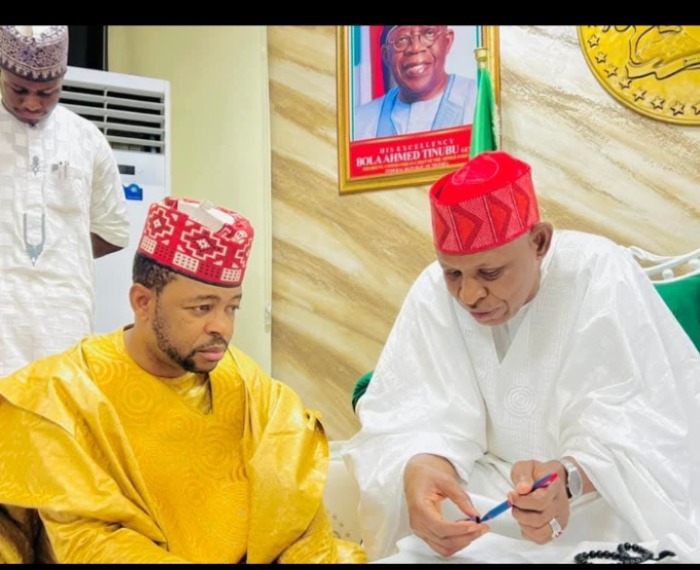
By Abdulgafar Oladimeji
Kano state government has facilitated and supported members of the Sports Writers Association of Nigeria, SWAN Kano chapter to proceed to pursue professional certification courses in sports journalism, our correspondent reports .
The Special Adviser , youths and sports to Kano state governor, Sani Musa Danja, disclosed that the offer covers their tuition fees.
He said , the beneficiaries have been identified and their enrolment process have been completed.
According to him, through interactions with stakeholders , the decision was reached for some sports writers, who are faced with the challenge of acquiring the required professional qualification to practice their trade should be given support to fill the gap.
said, findings have revealed that , for Kano sports writers to compete favorably there exists the urgent need to empower members of the association to acquire certain requisite qualification to enable them feature amongst the best in Nigeria and beyond.
Danja speaking, when he hosted SWAN members in his office , located within the premises of Kano state Library Complex, along Ahmadu Bello Way said that the state government, under Abba Kabir Yusuf , on discovering this major challenge , acted swiftly to address the lapses, by offering to sponsor 10 SWAN members to pursue professional diploma in Sports Journalism at El Roi London University.
In his word “ we give thanks to almighty Allah for his mercies, I want to thank our mentor and leader, his excellency governor, Abba Kabiru Yusuf , who made this possible.
“his excellency takes the issue of empowering our people very seriously, the challenge facing our sports journalists is principally the issue of professional certification, some of our sports journalists have their degrees in other fields, but we are aware that, they also require to obtain certain minimum qualification in journalism or other related fields to help them to excel .
“in line with the policy of the government of his excellency, we have moved in to make sure , these sons and daughter of Kano overcome this hinderance that may hinder their professional progress.
“the sports media is the back bone of sports development and sports promotion, our government is focused and committed to support and reshape the sports media to achieve the set out goal to empower Kano youths through sports.
“the mission of his excellency through this gesture is to empower our professional sports journalists and give them the required qualification to continue with their pursuit to upward steadily representation of Kano state in that sector.
Danja hinted that, Kano state government remains unrepentant in its upward investment drive to create a generation of professionals that would keep the state afloat on the terrain of quality and abundance human resources.
Reacting, chairman SWAN Kano chapter, comrade Zahradeen Saleh thanked the state government for the support.
He said, the scholarship offer is an major step towards uplifting the practice of sports journalism in the state.
He said the dividends of sports could only accrue with the effective operations of the sporting press through the training and re-training of sports writers.
He admitted that, acquiring the requisite qualification to practice sports journalism has been one of the major challenges confronting members of the association.
“ our members who are the beneficiaries of this offer are youths, on completion of the professional course, they will have stable professional growth and would be better equipped to contribute their quota to the development of the state.” Zahradeen said .

Governor Yusuf Sacks Sagagi as Kano Commissioner Of Commerce

Terrorist Logistics Suppliers Apprehended in Borno

Kano Gov’t Offers Study Scholarship to SWAN Members

OPINION: Examining the Sanity of Saner Climes

Obi Raises Alarm Over Arrest of Cleric Who Hosted Him in Kaduna

BREAKING: El-Rufai Suffers Nose Bleeding in EFCC Custody, Family Denied Access

The Governor Who Chose His People Over His Politics: Abba Yusuf and the Moral Courage Behind Kano First

FREEDOM OF SPEECH, NOT FREEDOM FROM CONSEQUENCE: A CITIZEN’S CALL FOR RESPONSIBLE PUBLIC COMMENTARY

How Kano Government Official Allegedly Intimidate And Insult Two Journalists On Lawful Duty

DSP Barau and APC Unity in Kano
Governor Yusuf Sacks Sagagi as Kano Commissioner Of Commerce
Terrorist Logistics Suppliers Apprehended in Borno
Kano Gov’t Offers Study Scholarship to SWAN Members
OPINION: Examining the Sanity of Saner Climes
Obi Raises Alarm Over Arrest of Cleric Who Hosted Him in Kaduna
BREAKING: El-Rufai Suffers Nose Bleeding in EFCC Custody, Family Denied Access
The Governor Who Chose His People Over His Politics: Abba Yusuf and the Moral Courage Behind Kano First
FREEDOM OF SPEECH, NOT FREEDOM FROM CONSEQUENCE: A CITIZEN’S CALL FOR RESPONSIBLE PUBLIC COMMENTARY
How Kano Government Official Allegedly Intimidate And Insult Two Journalists On Lawful Duty
DSP Barau and APC Unity in Kano
-

 Opinion4 years ago
On The Kano Flyovers And Public Perception
-

 Features5 years ago
How I Became A Multimillionaire In Nigeria – Hadiza Gabon
-

 Opinion5 years ago
Kano As future Headquarters Of Poverty In Nigeria
-

 History5 years ago
Sheikh Adam Abdullahi Al-Ilory (1917-1992):Nigeria’s Islamic Scholar Who Wrote Over 100 Books And Journals
-

 Opinion4 years ago
My First Encounter with Nasiru Gawuna, the Humble Deputy Governor
-

 History5 years ago
The Origin Of “Mammy Market” In Army Barracks (Mammy Ochefu)
-

 History4 years ago
The History Of Borno State Governor Professor Babagana Umara Zulum
-

 News4 years ago
Federal University Of Technology Babura To Commence Academic Activities September