
News
Governor Yusuf Congratulated Rear Admiral Chindo Yahya Usman, 4 Other Kano Indigenes
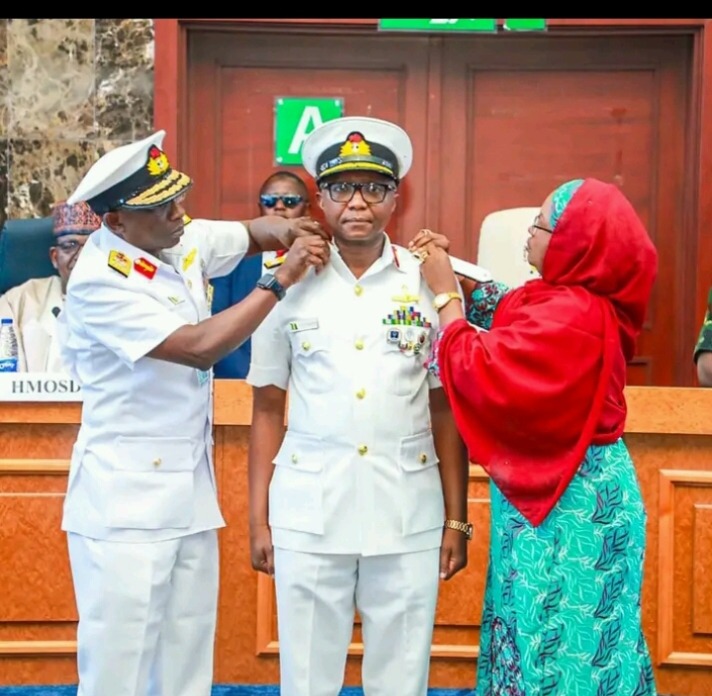
Kano State Government Congratulates Senior Military Officers of Kano Origin on their Promotion.
This was contained in a statement signed by Comrade Ibrahim Abdullahi Waiya, the State Commissioner of Information and Internal Affairs, on behalf of Governor Abba Kabir Yusuf. Waiya explained that the governor was delighted to celebrate the achievements of Kano indigenes who have risen to senior ranks in the Nigerian Armed Forces.
Among them is Rear Admiral Chindo Usman Yahaya, who was elevated to the rank of Rear Admiral. According to Waiya, Governor Yusuf described Yahaya’s promotion as a reflection of his professionalism and commitment to national service.
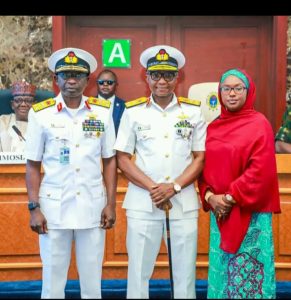
Rear Admiral Chindo Yahya Usman middle after his decoration
REAR ADMIRAL CHINDO USMAN YAHAYA DSS psc+ nwc+ usnwc MNIM IIPS FCPM BSc MSc
Commodore Chindo Usman Yahaya hails from Nassarawa Local Government Area of Kano State. He attended ‘Yansanda Primary School Tudun Wada, Government Secondary School Kawaji and Science Secondary School Dawakin Kudu, Kano State. He joined the Nigerian Defence Academy Kaduna in 1992 as a member of 44 Regular Course and was commissioned into the Nigerian Navy as Sub-Lieutenant in 1997.
The senior officer has attended several academic and military courses. Some of the military courses attended by the senior officer include Royal Navy Young Officers Course at the Britannia Royal Naval College Dartmouth United Kingdom (UK) and Sea time on board Her Majesty Ships CAMPBELTOWN and SANDOWN in the UK, Specialization Course in Communications and Information Technology (CIT) at Nigerian Navy Ship (NNS) QUORRA Apapa Lagos as well as Basic and Advance Military Police Courses at the Nigerian Army School of Military Police Basawa Zaria. Other courses were Junior and Senior Staff Courses at the Armed Forces Command and Staff College (AFCSC) Nigeria, Anti-Piracy/Anti-Terrorism Course in Pensacola Florida USA as well as Naval Command Course at the United States Naval War College, Newport Rhode Island USA.
Rear Admiral Yahaya has held several appointments both ashore and afloat. Some of the appointments are Ships Communication and Information Technology Officer NNS LANA, Instructor NNS QUORRA, and Military Coordinator/Camp Commandant in charge of Delta State in the Disarmament Phase of the Presidential Amnesty Programme for Niger Delta militants. He served as a Directing Staff at the AFCSC Jaji, Commanding Officer (CO) NNS YOLA and MV AMARYA in addition, Maritime Component Commander Operation AWATSE Lagos/Ogun States, CO Communication and Information Technology (CIT) School NNS QUORRA, CO Forward Operating Base IGBOKODA, Chief Instructor C Division Department of Maritime Warfare AFCSC Jaji Nigeria, CO NNS THUNDER and Directing Staff/Member of Faculty at the Naval War College Nigeria (NWCN), Calabar. Rear Admiral CU Yahaya was the Commandant Nigerian Navy Provost and Regulating School, Makurdi, Commander NNS DELTA, the Director Personnel Release, Navy Secretary Branch Naval Headquarters Abuja and Deputy Commandant/Director of Studies at the NWCN Calabar. Rear Admiral CU Yahaya is presently the Commander, Command Naval Drafting Lokoja.
Rear Admiral CU Yahayas academic qualifications are Masters of Science in Innovation and Strategic Management from Salve Regina University Newport Rhode Island USA, Bachelor of Science Degree in Physics from the Nigerian Defence Academy and Post Graduate Diploma in Electronics and Telecommunications Engineering from Obafemi Awolowo University Ile-Ife. The senior officer has attended several seminars, workshops and conferences both locally and internationally within the military, academia and others.
Rear Admiral CU Yahaya is a recipient of the Command at Sea Badge and his decorations are Distinguish Service Star (DSS), passed staff course Dagger (psc+), Distinguished fellow of the naval war college (nwc+), fellow of the US Naval War College and Eminent fellow of the Naval War College Nigeria. Also, he is a member of the International Institute of Professional Security, Member Nigerian Institute of Management and Fellow Chartered Public Manager. He is married and blessed with children. His hobbies are reading, jogging and watching documentaries.
The Kano State Government, under the leadership of Governor Abba Kabir Yusuf, joyfully congratulates the distinguished sons of Kano State who have been recently elevated to the prestigious ranks of Major General, Rear Admiral, and Air Vice Marshal in the Nigerian Armed Forces. Waiya emphasized that the governor sees these promotions as a source of pride for the state.
The State Government welcomes the promotions as well-deserved recognitions of the officers’ professionalism, dedication, and patriotic service to Nigeria. Waiya noted that Governor Yusuf expressed profound happiness that Kano continues to produce individuals who excel at the highest levels of national security leadership.
The newly promoted officers include:
Nigerian Army:
– Major General Sadisu Yahaya Yakasai
– Major General Sani Sulaiman
– Major General Samaila Musa Uba
Nigerian Navy:
– Rear Admiral Chindo Usman Yahaya
Nigerian Air Force:
– Air Vice Marshal Mukhtar Umar
As we celebrate and commend the officers for bringing honour to Kano State, we encourage them to continue to uphold the values of ethical standards, integrity, courage, and loyalty as they assume greater responsibilities. Waiya quoted Governor Yusuf as urging the officers to serve as role models and inspiration for younger generations aspiring to pursue a career in the military service.
His Excellency, Governor Abba Kabir Yusuf, prays for their continuous success and guidance from the Almighty as they carry out their duties in safeguarding the nation. Waiya concluded that the governor remains confident in their ability to strengthen Nigeria’s security architecture.










News
Four States Adopt Play-Based ECCD Model to Tackle Out-of-School Children Crisis
In a major boost for early childhood education in conflict-affected regions, four states Borno, Niger, Benue and Sokoto have endorsed the community-based Early Childhood Care and Development (ECCD) school model as a cost-effective strategy to enroll under-five children who are out of school.
The commitment was made at a National ECCD Roundtable convened by the Development Research and Projects Centre (dRPC) in collaboration with the National Institute for Policy and Strategic Studies (NIPSS). The high-level dialogue was held at the Shehu Musa Yar’Adua Centre, Abuja.
The one-day roundtable drew participation from national curriculum planners at the Nigerian Educational Research and Development Council (NERDC), the Special Adviser to the Minister of State for Education, the Director of Research at NIPSS, Prof. Musa Umar, and top education managers from Kano State.
Setting the tone for adoption, the Technical Adviser on Education Reform to the Kano State Governor, Mallam Haladu Mohammed, announced that Kano State has adopted the dRPC community-based ECCD model for play-based learning.
Speaking on the sidelines of activities marking the International Day of the Girl Child, Mohammed described the model as cost-effective and scalable for expanding access.
Corroborating him, the Director of Planning, Research and Statistics at the Kano State Ministry of Education confirmed his participation in the evaluation of dRPC’s eight-year community-based ECCD project being implemented by Prof. Bala Ado Kofar Mata of Bayero University, Kano.
According to him, the evaluation will provide empirical evidence on how play-based learning enhances child development and school readiness.
Speaking separately, the Commissioners of Education from Niger and Borno States, the Benue State Commissioner for Humanitarian Affairs, and the Chairman of the Sokoto State Universal Basic Education Board (SUBEB) said the model was timely for states grappling with insecurity and displacement.
They pledged to initiate immediate steps to replicate the Kano experiment in their respective states.
Participants at the roundtable stressed that community-based approaches offer a viable alternative in underserved and displacement-affected communities where insecurity has disrupted conventional schooling.
In a major outcome, the Commissioners from Niger and Benue States invited the dRPC team to meet with their executive governors next week to present the model for formal adoption.
The development signals growing sub-national interest in community-driven, play-based learning as a sustainable solution for Nigeria’s youngest and most vulnerable learners.
News
FCT Residents Say Extreme Heat Strains Health, Finances and Businesses as NiMet Warns of Hotter Days
By Yusuf Danjuma Yunusa
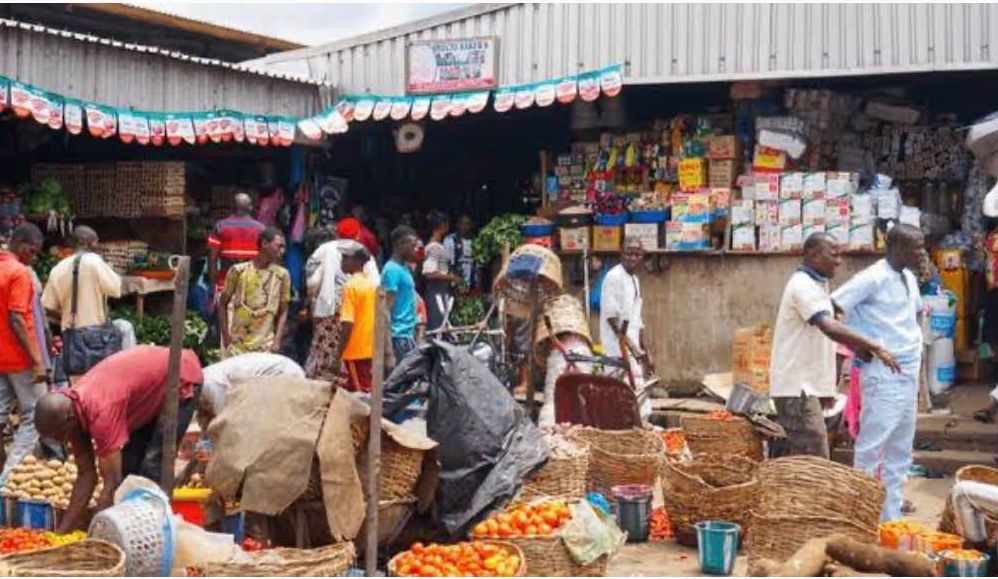
Residents and business owners in the Federal Capital Territory (FCT) say extreme heat is harming their health, raising household expenses and disrupting businesses and livelihoods.
Residents who spoke to journalists said the intense heat had increased their dependence on electricity, water and other cooling measures, while inconsistent power supply made coping more difficult. They reported food spoilage, higher operating costs, changes to working hours and heat-related discomfort, particularly among households and people whose jobs expose them to direct sunlight.
The Nigerian Meteorological Agency (NiMet), in an advisory issued on October 23, warned Nigerians to prepare for hotter days, increased heat discomfort, dust and possible water scarcity as the country transitions from the rainy to the dry season. The agency identified dehydration, heat exhaustion and heatstroke as health risks associated with excessive heat, warning that prolonged exposure could affect people’s health and productivity.
To reduce heat-related risks, NiMet advised Nigerians to drink water regularly, wear lightweight and breathable clothing, limit prolonged exposure to direct sunlight, especially during the hottest hours of the day, and schedule strenuous outdoor activities for cooler periods.
In Sokale community, Bwari Area Council, Patient Ndidi said coping with the heat had become an additional financial burden, particularly as a mother trying to keep her children comfortable while managing household expenses.
“The sun was so intense that it felt as though it was draining my blood. Even when the children returned from school, I had to tell them to go and take their baths because the heat was so much,” she said.
Mrs Ndidi said the situation had increased her household’s electricity consumption because the family needed to run fans for longer periods whenever power was available.
“We use more units now because whenever there is electricity, we tend to leave the fan on throughout the day. As a result, we are constantly recharging our prepaid meter,” she said.
She explained that inconsistent electricity supply had also made food preservation difficult, as cooked meals could easily spoil during prolonged power outages. According to her, foods such as egusi and groundnut soup, beans and other cooked meals were particularly difficult to preserve, forcing her to prepare smaller quantities that could be consumed at once. She said the adjustment had increased the frequency of cooking and sometimes resulted in food wastage, additional expenses and stress.
Mrs Ndidi added that when electricity was unavailable, members of her household sometimes poured water on their bodies for temporary relief.
“Actually, it has not helped us at all because once there is no electricity, you return to square one,” she said.
She called on the government to improve electricity supply and consider reducing tariffs to ease the financial burden on households.
Similarly, John Anthony, a resident of Kubwa, said coping with the heat was more challenging at home than at his workplace, where air-conditioning provided a comfortable environment.
“Office is not a problem at all; there is AC, so everywhere is always cool until we go home,” he said.
Mr Anthony said his family sometimes opened their windows and doors to improve ventilation while drinking sufficient water to cope with the heat. He urged the government to ensure a stable electricity supply so residents could use cooling appliances.
“Government should please help us to ensure there is stable light so that we will be able to cope and it will reduce it,” he said.
Another Kubwa resident, Ignatius Ikechukwu, a Point of Sale (POS) operator who works under the sun, described coping with the heat as challenging. He said drinking sufficient water was his main strategy for managing the situation while carrying out his daily activities.
“I do not joke with water at all,” he said.
The effects of the extreme heat have also extended to traders and other business owners, particularly those dealing in perishable goods and products requiring refrigeration.
In Jikwoyi, Lovina Obiyi, a trader dealing in provisions, foodstuffs and poultry, said the excessive heat had caused the loss of considerable quantities of poultry.
“We specialise in provisions, foodstuffs and poultry. Due to the heat, we have lost quite a good amount of chickens and turkeys to the point that we need to open the place for ventilation,” she said.
News
Breaking:Governor Yusuf Removes Waiya as Information Commissioner, Reassigns Him to Youth Ministry

Kano State Governor, Abba Kabir Yusuf, has relieved Comrade Ibrahim Abdullahi Waiya of his position as Commissioner for Information and reassigned him to the Ministry of Youth following the swearing-in of newly appointed commissioners.
The development is part of a ministerial reshuffle announced by the state government, which also involves the deployment of newly appointed commissioners to various ministries and the reassignment of some existing members of the State Executive Council.
Under the new arrangement, Waiya, who previously headed the Ministry of Information, has been moved to the Ministry of Youth, while Hon. Hamza Safyanu Kachako, who formerly served as Commissioner for Mineral Resources, has been reassigned to the Ministry of Environment.
The new portfolio allocations also saw Hon. Yushau Soja appointed Commissioner for Security, while Hon. Idris Garba Mustapha was assigned to the Ministry of Special Duties.
Similarly, Hon. Muntari Ishaq Yakasai has been posted to the Ministry of Humanitarian Affairs, while Hon. Ibrahim Namadi Dala will oversee the Ministry of Commerce.
Hon. Ibrahim Tsanyawa has been assigned to the Ministry of Science and Technology as part of the new ministerial arrangement.
The reshuffle brings changes to the composition of the Kano State Executive Council as Governor Yusuf moves to accommodate the newly sworn-in commissioners and redistribute responsibilities among members of his cabinet.
The latest development also marks Waiya’s departure from the Information Ministry, which he had headed before his reassignment to the Youth Ministry.
The newly announced portfolios are as follows:
1. Ministry of Security: Hon. Yushau Soja.
2. Ministry of Special Duties:** Hon. Idris Garba Mustapha.
3. Ministry of Humanitarian Affairs: Hon. Muntari Ishaq Yakasai.
4. Ministry of Commerce: Hon. Ibrahim Namadi Dala.
5. Ministry of Science and Technology: Hon. Ibrahim Tsanyawa.
6. Ministry of Environment: Hon. Hamza Safyanu Kachako, moved from Mineral Resources.
7. Ministry of Youth:Comrade Ibrahim Abdullahi Waiya, moved from Information.

Four States Adopt Play-Based ECCD Model to Tackle Out-of-School Children Crisis

FCT Residents Say Extreme Heat Strains Health, Finances and Businesses as NiMet Warns of Hotter Days

My Achievements At Kano State Ministry of Environment — By Dr. Dahir M. Hashim

Breaking:Governor Yusuf Removes Waiya as Information Commissioner, Reassigns Him to Youth Ministry

My Response: Rejoinder To: Reassessment of DSP Barau’s Projects in Kano North: One Building, Three Names

Kano Monitors ₦48.9bn Projects Across Six LGAs

Kano Spends ₦10.36bn on Hospitality, Sitting Allowances, Others in Six Months

Open The Social Sciences “A Tribute to a Heterodox Scholar: Mallam Ibrahim Muazzam

Senate Passes Barau’s Bill to Provide Legal Framework for Yusuf Maitama Sule Federal University of Education, Kano

Kano First Forum Petitions Police Over Alleged Inciting Statements by Aminu Babba Dan Agundi
Four States Adopt Play-Based ECCD Model to Tackle Out-of-School Children Crisis
FCT Residents Say Extreme Heat Strains Health, Finances and Businesses as NiMet Warns of Hotter Days
My Achievements At Kano State Ministry of Environment — By Dr. Dahir M. Hashim
Breaking:Governor Yusuf Removes Waiya as Information Commissioner, Reassigns Him to Youth Ministry
My Response: Rejoinder To: Reassessment of DSP Barau’s Projects in Kano North: One Building, Three Names
Kano Monitors ₦48.9bn Projects Across Six LGAs
Kano Spends ₦10.36bn on Hospitality, Sitting Allowances, Others in Six Months
Open The Social Sciences “A Tribute to a Heterodox Scholar: Mallam Ibrahim Muazzam
Senate Passes Barau’s Bill to Provide Legal Framework for Yusuf Maitama Sule Federal University of Education, Kano
Kano First Forum Petitions Police Over Alleged Inciting Statements by Aminu Babba Dan Agundi
-
 Opinion5 years ago
On The Kano Flyovers And Public Perception
-

 Features5 years ago
How I Became A Multimillionaire In Nigeria – Hadiza Gabon
-

 Opinion6 years ago
Kano As future Headquarters Of Poverty In Nigeria
-
 History6 years ago
Sheikh Adam Abdullahi Al-Ilory (1917-1992):Nigeria’s Islamic Scholar Who Wrote Over 100 Books And Journals
-

 Opinion5 years ago
My First Encounter with Nasiru Gawuna, the Humble Deputy Governor
-

 History5 years ago
The History Of Borno State Governor Professor Babagana Umara Zulum
-
 History6 years ago
The Origin Of “Mammy Market” In Army Barracks (Mammy Ochefu)
-
 News5 years ago
Federal University Of Technology Babura To Commence Academic Activities September