
News
Northern Youth Assembly Faults Daily Trust Report on Kano, Labels It Misleading and Distortive

The Northern Youth Assembly (NYA) has strongly criticised a recent publication by Daily Trust titled “Kano New Bandits Frontier”, describing it as misleading, distortive, and lacking empirical evidence. The article, authored by Clement A. Oloyede and published on December 2, 2025, was said to have created unnecessary panic rather than providing factual enlightenment on security issues.
In a statement signed by NYA President, Dr. Aliyu Mohammed, and Secretary General, Dr. Hafiz Garba, the group argued that portraying Kano as a “new bandits frontier” was false and amounted to a deliberate attempt to smear the image of a state that has historically resisted insecurity. The Assembly insisted that the report ignored verifiable facts and failed to present balanced perspectives.
According to Dr. Mohammed, the criminal elements troubling border communities in Kano were seeded and emboldened under the previous administration. He alleged that the past government failed to address youth unemployment, which pushed thousands into drugs, thuggery, and criminality, while also allowing gangs to flourish due to lack of political will.
The statement further accused the former administration of withdrawing police personnel from known flashpoints and redeploying them to guard the Nassarawa royal graveyard, which was allegedly converted into a refuge camp by a deposed Emir. Dr. Garba noted that this left vulnerable communities exposed and neglected border intelligence operations, thereby enabling bandits to move freely between Katsina and Kano.
Highlighting current efforts, the NYA commended Governor Abba Kabir Yusuf for adopting stronger and more coordinated approaches to security. Dr. Mohammed explained that the administration’s Safe Corridor Project had absorbed over 5,000 repentant youths in its first phase, fully profiled them in partnership with security agencies, and engaged them in community security and intelligence gathering. He stressed that this marked the first time in Kano’s recent history that insecurity was being tackled through both non-kinetic and enforcement measures.
The Assembly also pointed to Governor Yusuf’s unwavering support for security agencies. Dr. Garba stated that the governor had consistently provided operational support, strengthened collaboration with the Army’s Brigade Command, funded logistics and surveillance units, and rehabilitated abandoned security infrastructure. He argued that these actions contradicted claims that the government was weak on security.
The NYA accused certain political actors of sabotaging peace efforts by exploiting the emirate crisis for political mileage and influencing selective withdrawal of security personnel. Dr. Mohammed said no serious security analysis could ignore these realities, yet the Daily Trust article deliberately omitted them.
The group further noted that even within the article, the author admitted Katsina’s controversial “peace deal” with bandits had created safe havens for criminals, turning border villages into transit routes. Dr. Garba emphasised that bandits operate from Katsina, not Kano, and that the state government had responded to attacks in Tsanyawa, Shanono, and Ghari by deploying joint military and intelligence structures, providing humanitarian support, and reinforcing surveillance across border local governments.
The NYA urged the public to disregard the Daily Trust publication, describing it as politically coloured and intellectually dishonest. “Constructive criticism is welcome, but falsehood, political sensationalism, and deliberate misrepresentation are reprehensible and condemnable,” Dr. Mohammed stated. He reaffirmed the Assembly’s support for the Kano State Government’s efforts to keep the state peaceful, secure, and stable.













News
Four States Adopt Play-Based ECCD Model to Tackle Out-of-School Children Crisis
In a major boost for early childhood education in conflict-affected regions, four states Borno, Niger, Benue and Sokoto have endorsed the community-based Early Childhood Care and Development (ECCD) school model as a cost-effective strategy to enroll under-five children who are out of school.
The commitment was made at a National ECCD Roundtable convened by the Development Research and Projects Centre (dRPC) in collaboration with the National Institute for Policy and Strategic Studies (NIPSS). The high-level dialogue was held at the Shehu Musa Yar’Adua Centre, Abuja.
The one-day roundtable drew participation from national curriculum planners at the Nigerian Educational Research and Development Council (NERDC), the Special Adviser to the Minister of State for Education, the Director of Research at NIPSS, Prof. Musa Umar, and top education managers from Kano State.
Setting the tone for adoption, the Technical Adviser on Education Reform to the Kano State Governor, Mallam Haladu Mohammed, announced that Kano State has adopted the dRPC community-based ECCD model for play-based learning.
Speaking on the sidelines of activities marking the International Day of the Girl Child, Mohammed described the model as cost-effective and scalable for expanding access.
Corroborating him, the Director of Planning, Research and Statistics at the Kano State Ministry of Education confirmed his participation in the evaluation of dRPC’s eight-year community-based ECCD project being implemented by Prof. Bala Ado Kofar Mata of Bayero University, Kano.
According to him, the evaluation will provide empirical evidence on how play-based learning enhances child development and school readiness.
Speaking separately, the Commissioners of Education from Niger and Borno States, the Benue State Commissioner for Humanitarian Affairs, and the Chairman of the Sokoto State Universal Basic Education Board (SUBEB) said the model was timely for states grappling with insecurity and displacement.
They pledged to initiate immediate steps to replicate the Kano experiment in their respective states.
Participants at the roundtable stressed that community-based approaches offer a viable alternative in underserved and displacement-affected communities where insecurity has disrupted conventional schooling.
In a major outcome, the Commissioners from Niger and Benue States invited the dRPC team to meet with their executive governors next week to present the model for formal adoption.
The development signals growing sub-national interest in community-driven, play-based learning as a sustainable solution for Nigeria’s youngest and most vulnerable learners.
News
FCT Residents Say Extreme Heat Strains Health, Finances and Businesses as NiMet Warns of Hotter Days
By Yusuf Danjuma Yunusa
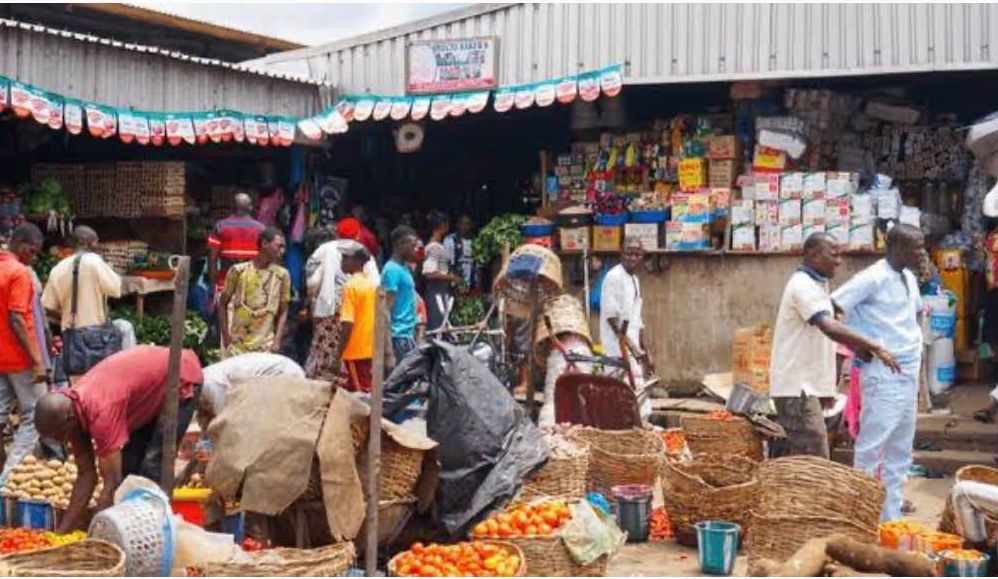
Residents and business owners in the Federal Capital Territory (FCT) say extreme heat is harming their health, raising household expenses and disrupting businesses and livelihoods.
Residents who spoke to journalists said the intense heat had increased their dependence on electricity, water and other cooling measures, while inconsistent power supply made coping more difficult. They reported food spoilage, higher operating costs, changes to working hours and heat-related discomfort, particularly among households and people whose jobs expose them to direct sunlight.
The Nigerian Meteorological Agency (NiMet), in an advisory issued on October 23, warned Nigerians to prepare for hotter days, increased heat discomfort, dust and possible water scarcity as the country transitions from the rainy to the dry season. The agency identified dehydration, heat exhaustion and heatstroke as health risks associated with excessive heat, warning that prolonged exposure could affect people’s health and productivity.
To reduce heat-related risks, NiMet advised Nigerians to drink water regularly, wear lightweight and breathable clothing, limit prolonged exposure to direct sunlight, especially during the hottest hours of the day, and schedule strenuous outdoor activities for cooler periods.
In Sokale community, Bwari Area Council, Patient Ndidi said coping with the heat had become an additional financial burden, particularly as a mother trying to keep her children comfortable while managing household expenses.
“The sun was so intense that it felt as though it was draining my blood. Even when the children returned from school, I had to tell them to go and take their baths because the heat was so much,” she said.
Mrs Ndidi said the situation had increased her household’s electricity consumption because the family needed to run fans for longer periods whenever power was available.
“We use more units now because whenever there is electricity, we tend to leave the fan on throughout the day. As a result, we are constantly recharging our prepaid meter,” she said.
She explained that inconsistent electricity supply had also made food preservation difficult, as cooked meals could easily spoil during prolonged power outages. According to her, foods such as egusi and groundnut soup, beans and other cooked meals were particularly difficult to preserve, forcing her to prepare smaller quantities that could be consumed at once. She said the adjustment had increased the frequency of cooking and sometimes resulted in food wastage, additional expenses and stress.
Mrs Ndidi added that when electricity was unavailable, members of her household sometimes poured water on their bodies for temporary relief.
“Actually, it has not helped us at all because once there is no electricity, you return to square one,” she said.
She called on the government to improve electricity supply and consider reducing tariffs to ease the financial burden on households.
Similarly, John Anthony, a resident of Kubwa, said coping with the heat was more challenging at home than at his workplace, where air-conditioning provided a comfortable environment.
“Office is not a problem at all; there is AC, so everywhere is always cool until we go home,” he said.
Mr Anthony said his family sometimes opened their windows and doors to improve ventilation while drinking sufficient water to cope with the heat. He urged the government to ensure a stable electricity supply so residents could use cooling appliances.
“Government should please help us to ensure there is stable light so that we will be able to cope and it will reduce it,” he said.
Another Kubwa resident, Ignatius Ikechukwu, a Point of Sale (POS) operator who works under the sun, described coping with the heat as challenging. He said drinking sufficient water was his main strategy for managing the situation while carrying out his daily activities.
“I do not joke with water at all,” he said.
The effects of the extreme heat have also extended to traders and other business owners, particularly those dealing in perishable goods and products requiring refrigeration.
In Jikwoyi, Lovina Obiyi, a trader dealing in provisions, foodstuffs and poultry, said the excessive heat had caused the loss of considerable quantities of poultry.
“We specialise in provisions, foodstuffs and poultry. Due to the heat, we have lost quite a good amount of chickens and turkeys to the point that we need to open the place for ventilation,” she said.
News
Breaking:Governor Yusuf Removes Waiya as Information Commissioner, Reassigns Him to Youth Ministry

Kano State Governor, Abba Kabir Yusuf, has relieved Comrade Ibrahim Abdullahi Waiya of his position as Commissioner for Information and reassigned him to the Ministry of Youth following the swearing-in of newly appointed commissioners.
The development is part of a ministerial reshuffle announced by the state government, which also involves the deployment of newly appointed commissioners to various ministries and the reassignment of some existing members of the State Executive Council.
Under the new arrangement, Waiya, who previously headed the Ministry of Information, has been moved to the Ministry of Youth, while Hon. Hamza Safyanu Kachako, who formerly served as Commissioner for Mineral Resources, has been reassigned to the Ministry of Environment.
The new portfolio allocations also saw Hon. Yushau Soja appointed Commissioner for Security, while Hon. Idris Garba Mustapha was assigned to the Ministry of Special Duties.
Similarly, Hon. Muntari Ishaq Yakasai has been posted to the Ministry of Humanitarian Affairs, while Hon. Ibrahim Namadi Dala will oversee the Ministry of Commerce.
Hon. Ibrahim Tsanyawa has been assigned to the Ministry of Science and Technology as part of the new ministerial arrangement.
The reshuffle brings changes to the composition of the Kano State Executive Council as Governor Yusuf moves to accommodate the newly sworn-in commissioners and redistribute responsibilities among members of his cabinet.
The latest development also marks Waiya’s departure from the Information Ministry, which he had headed before his reassignment to the Youth Ministry.
The newly announced portfolios are as follows:
1. Ministry of Security: Hon. Yushau Soja.
2. Ministry of Special Duties:** Hon. Idris Garba Mustapha.
3. Ministry of Humanitarian Affairs: Hon. Muntari Ishaq Yakasai.
4. Ministry of Commerce: Hon. Ibrahim Namadi Dala.
5. Ministry of Science and Technology: Hon. Ibrahim Tsanyawa.
6. Ministry of Environment: Hon. Hamza Safyanu Kachako, moved from Mineral Resources.
7. Ministry of Youth:Comrade Ibrahim Abdullahi Waiya, moved from Information.

Four States Adopt Play-Based ECCD Model to Tackle Out-of-School Children Crisis

FCT Residents Say Extreme Heat Strains Health, Finances and Businesses as NiMet Warns of Hotter Days

My Achievements At Kano State Ministry of Environment — By Dr. Dahir M. Hashim

Breaking:Governor Yusuf Removes Waiya as Information Commissioner, Reassigns Him to Youth Ministry

My Response: Rejoinder To: Reassessment of DSP Barau’s Projects in Kano North: One Building, Three Names

Kano Monitors ₦48.9bn Projects Across Six LGAs

Kano Spends ₦10.36bn on Hospitality, Sitting Allowances, Others in Six Months

Open The Social Sciences “A Tribute to a Heterodox Scholar: Mallam Ibrahim Muazzam

Senate Passes Barau’s Bill to Provide Legal Framework for Yusuf Maitama Sule Federal University of Education, Kano

Kano First Forum Petitions Police Over Alleged Inciting Statements by Aminu Babba Dan Agundi
Four States Adopt Play-Based ECCD Model to Tackle Out-of-School Children Crisis
FCT Residents Say Extreme Heat Strains Health, Finances and Businesses as NiMet Warns of Hotter Days
My Achievements At Kano State Ministry of Environment — By Dr. Dahir M. Hashim
Breaking:Governor Yusuf Removes Waiya as Information Commissioner, Reassigns Him to Youth Ministry
My Response: Rejoinder To: Reassessment of DSP Barau’s Projects in Kano North: One Building, Three Names
Kano Monitors ₦48.9bn Projects Across Six LGAs
Kano Spends ₦10.36bn on Hospitality, Sitting Allowances, Others in Six Months
Open The Social Sciences “A Tribute to a Heterodox Scholar: Mallam Ibrahim Muazzam
Senate Passes Barau’s Bill to Provide Legal Framework for Yusuf Maitama Sule Federal University of Education, Kano
Kano First Forum Petitions Police Over Alleged Inciting Statements by Aminu Babba Dan Agundi
-

 Opinion5 years ago
On The Kano Flyovers And Public Perception
-

 Features5 years ago
How I Became A Multimillionaire In Nigeria – Hadiza Gabon
-

 Opinion6 years ago
Kano As future Headquarters Of Poverty In Nigeria
-
 History6 years ago
Sheikh Adam Abdullahi Al-Ilory (1917-1992):Nigeria’s Islamic Scholar Who Wrote Over 100 Books And Journals
-

 Opinion5 years ago
My First Encounter with Nasiru Gawuna, the Humble Deputy Governor
-

 History5 years ago
The History Of Borno State Governor Professor Babagana Umara Zulum
-
 History6 years ago
The Origin Of “Mammy Market” In Army Barracks (Mammy Ochefu)
-
 News5 years ago
Federal University Of Technology Babura To Commence Academic Activities September