
News
Garba Slams Kano Govt Over Poor Budget Performance, Questions ₦1 Trillion Proposal

The Chief of Staff to the immediate past APC National Chairman and former Commissioner for Information and Internal Affairs in Kano State, Comrade Muhammad Garba, has criticised the NNPP-led administration over what he described as poor budget performance in the first three quarters of 2025.
Garba was reacting to a budget review published by Solacebase, which showed that key sectors such as water resources, health, and education recorded less than 40 per cent capital budget performance between January and September 2025.
He said the findings revealed a wide gap between the administration’s public promises and its actual performance, describing the figures as evidence of what he called an administration that prioritises propaganda over governance.
According to the report, the Ministry of Water Resources recorded only 13 per cent capital performance after spending ₦2.7 billion out of its ₦21.1 billion allocation.
The review also indicated that the Kano State Water Board, which received ₦5.6 billion for capital projects, did not utilise any part of its allocation within the period.
Garba described the development as “a shocking dereliction of duty,” noting that residents continued to suffer water scarcity across several local government areas.
“It is tragic that a government which declared a state of emergency on water supply has failed to invest even one per cent of the Water Board’s allocation,” he said.
He accused the administration of abandoning several ongoing projects initiated by the previous government, including the Tiga Hydropower Project designed to support water pumping and street lighting.
The former commissioner further claimed that after discarding the more efficient IPP model, the government continued to pay millions of naira to KEDCO monthly for electricity — a situation he alleged may be benefiting certain individuals.
Garba also faulted the administration’s performance in the education sector.
He said that despite declaring a state of emergency and allocating the highest share of the budget to education, the results remained discouraging.
According to the figures, the Ministry of Education recorded 32.2 per cent capital performance, while the Ministry of Higher Education achieved only 7.7 per cent.
He said the administration’s focus on sponsoring selected students abroad appeared more like political patronage than a genuine strategy to strengthen the state’s education system.
“Local schools remain underfunded, overcrowded, and poorly equipped, while completed projects like the Mega Secondary School along Court Road have been abandoned,” he said.
Garba also expressed concern over the health sector’s performance, noting that only ₦7.9 billion of the ₦65.7 billion capital budget for health had been utilised by September 2025.
He described the underinvestment as unacceptable for a state battling recurring cholera outbreaks and high infant and maternal mortality rates.
“Failure to fund primary healthcare and water infrastructure is costing lives,” he added.
He went on to criticise the quality of ongoing road projects, saying many of the works were hurried and poorly coordinated. He said the surface-scraping and overlay approach had created traffic congestion due to inadequate planning.
Garba said the figures raised doubts about the state government’s ability to manage the proposed ₦1 trillion budget for 2025.
“When a government cannot implement even half of its approved budget, proposing a trillion-naira budget becomes nothing more than a political performance,” he said.
He urged the state government to prioritise transparency, fiscal discipline, and effective project execution in the remaining months of the fiscal year.









News
Gombe flags off the disbursement of the second batch of the AGILE Conditional Cash Transfer
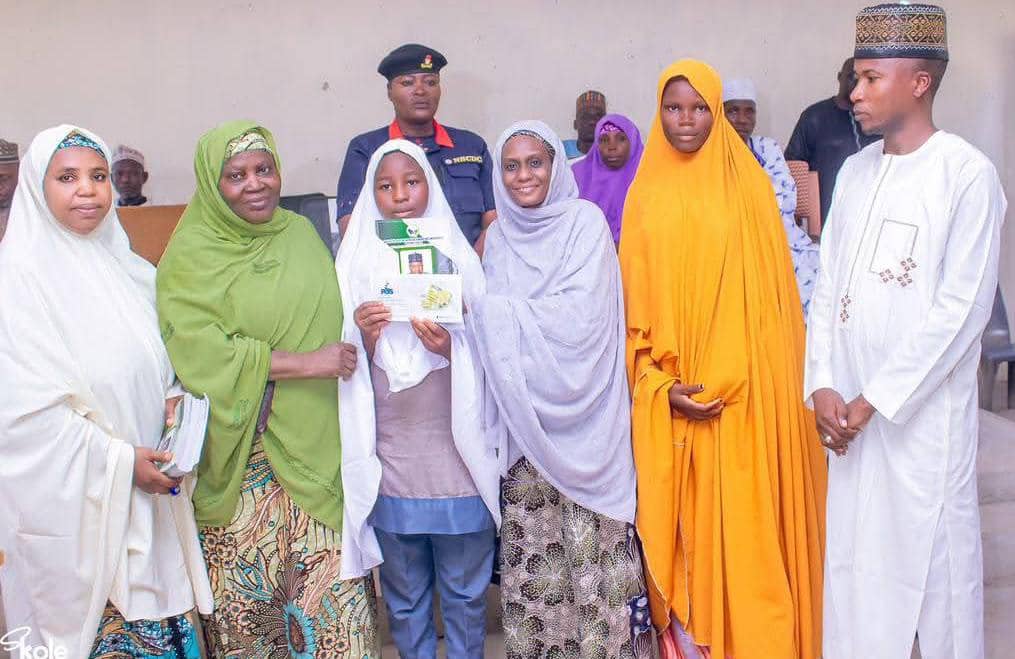
Gombe State Government has flagged-off the distribution of ATM cards to Adolescent Girls in public schools under the Conditional Cash Transfer,CCT of the Adolescent Girls Initiative for Learning and Empowerment, AGILE Project.
Speaking at the flagging off of the disbursement at Government Junior Secondary School Malamsidi central in Kwami Local Government area, the Honourable Commissioner of Education, Associate Prof Aishatu Umar Maigari said the disbursement of the CCT is part of the Governor Muhammadu Inuwa Yahaya’s zeal and passion for the girl child education in the state.
She said the concept is also geared towards supporting parents to cater for their children to remain in schools up to completion of their secondary education.
Associate Prof Aishatu Umar Maigari then assured the students that the government will continue to bring more educational policies that will further support students to pursue education with ease.
Earlier, the project coordinator of the AGILE, Dr. Amina Abdul noted that with the disbursement of the second cohort of the conditional cash transfer, the project was able to record significant improvement in enrollment and retention of students in schools across the state.
The project coordinator therefore urged parents to utilize the funds judiciously through supporting the education of their children.
News
China, Nigeria Mark Friendship with Joint Cultural Mural
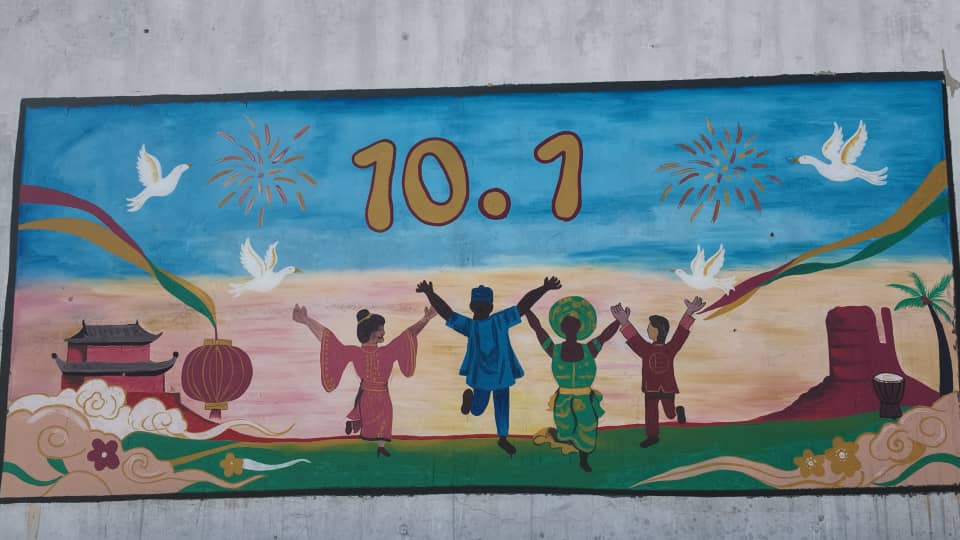
A colourful mural celebrating both China’s National Day and Nigeria’s Independence Day has been unveiled at an overseas project site, serving as a vivid symbol of the enduring friendship between the two nations.
The artwork, jointly produced by Chinese and Nigerian staff, features builders dressed in traditional Chinese costumes and Nigerian ethnic attire holding hands and dancing together.
Above them, fireworks and white doves of peace illuminate the sky, while the inscription “10.1” highlights the dual significance of October 1, the China’s National Day and Nigeria’s Independence Day.
On the left side of the mural, ancient Chinese architecture, red lanterns and auspicious cloud motifs showcase Chinese heritage.
On the right, red earth, coconut palms and African drums reflect Nigeria’s cultural identity. Flowing ribbons weave across the painting, symbolising unity and shared destiny.
Project officials described the mural as a “living testament” to cooperation at the frontline of development. They said it embodies mutual trust and support as workers from both countries overcome challenges together.
The initiative underscores cultural integration and partnership, with both sides pledging to continue working hand in hand to strengthen ties.
“Celebrating two festivals as one, we march forward with one heart,” a statement read, emphasising the commitment to write new chapters of friendship along the path of cooperation.
The mural, rooted in the overseas project site, stands as a reminder of the brotherly bond between China and Nigeria, and the shared vision of building together for a brighter future.
News
Musa Illiyasu Kwankwaso Celebrates Senator Lado @60, Says Is A Political Dogma
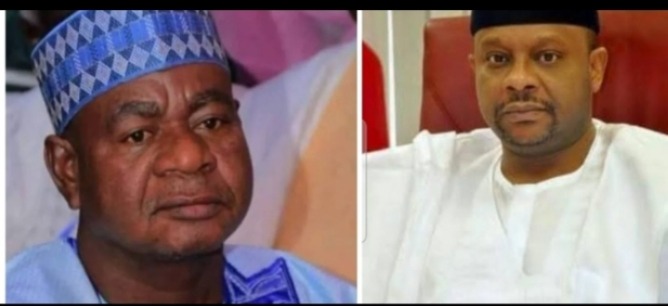
From Muhammad Kabir Kano
The spokesperson of Political Appointees Forum from Kano State, Dr. Musa Illiyasu Kwankwaso, has described Senator Basheer Lado, the Special Adviser to President Tinubu on National Assembly Matters (Senate), who also doubles as the Chairman of the Appointees, on his 60th birthday, as a Political Blog who plays the game with maturity and respect.
Kwankwaso who also describes Senator as Political Dogma, praised his contributions to democratic governance, humanitarian services and national development.
“Senator Lado is a dependable public servant and accomplished legislator whose experience had helped strengthen relations between the Executive and the Senate and also steer ship the activities of the Political Appointees with huge respect and understanding”,
He said it is on notice that Lado served in the Senate for four years before his by late President Buhari on Relief agency and subsequent appointment as Tinubu’s liaison officer in the upper chamber of the National Assembly.
Lado represented Kano Central Senatorial District in the Seventh National Assembly from 2011 to 2015, where he served as Vice Chairman of the Senate Committee on Works.
Lado facilitated several constituency projects, including the Kundila Bridge, popularly known as Gadar Lado, in Kano State. His contributions to humanitarian services through his previous roles as Federal Commissioner of the National Commission for Refugees, Migrants and Internally Displaced Persons, and Director-General of the National Agency for the Prohibition of Trafficking in Persons (NAPTIP).
He said Lado contributed to protecting vulnerable Nigerians, combating human trafficking and improving the welfare and rehabilitation of displaced persons.
Kwankwaso further commended the senator’s humanitarian initiatives through the Ladon Alheri Foundation, particularly in education, healthcare, women’s economic empowerment, rural water supply and support for disadvantaged communities.
” Lado’s contributions across public service reflected his commitment to national development and the welfare of Nigerians”, he added.

Gombe flags off the disbursement of the second batch of the AGILE Conditional Cash Transfer

Why Gov Abba Deserves Another Tenure

China, Nigeria Mark Friendship with Joint Cultural Mural

Musa Illiyasu Kwankwaso Celebrates Senator Lado @60, Says Is A Political Dogma

EFCC Reopens Atiku’s Alleged Financial Crimes Probe

Zamfara Varsity ASUU Threatens Warning Strike Over FG-ASUU Agreement, Promotion Arrears

PCACC Arrests Man Over Alleged ₦4.5m Sale, Illegal Leasing of Kano Government Horse Stable

Goje’s Electoral War:The Confrontation With Tinubu,Governor Inuwa,Usman Kumo And APC candidates Ahead Of 2027

Prof Yusuf Adamu Delivers BUK’s 63rd Professorial Inaugural Lecture, Reflects on Medical Geography and Academic Legacy

Senate Passes Barau’s Bill to Provide Legal Framework for Yusuf Maitama Sule Federal University of Education, Kano
Gombe flags off the disbursement of the second batch of the AGILE Conditional Cash Transfer
Why Gov Abba Deserves Another Tenure
China, Nigeria Mark Friendship with Joint Cultural Mural
Musa Illiyasu Kwankwaso Celebrates Senator Lado @60, Says Is A Political Dogma
EFCC Reopens Atiku’s Alleged Financial Crimes Probe
Zamfara Varsity ASUU Threatens Warning Strike Over FG-ASUU Agreement, Promotion Arrears
PCACC Arrests Man Over Alleged ₦4.5m Sale, Illegal Leasing of Kano Government Horse Stable
Goje’s Electoral War:The Confrontation With Tinubu,Governor Inuwa,Usman Kumo And APC candidates Ahead Of 2027
Prof Yusuf Adamu Delivers BUK’s 63rd Professorial Inaugural Lecture, Reflects on Medical Geography and Academic Legacy
Senate Passes Barau’s Bill to Provide Legal Framework for Yusuf Maitama Sule Federal University of Education, Kano
-

 Opinion5 years ago
On The Kano Flyovers And Public Perception
-

 Features5 years ago
How I Became A Multimillionaire In Nigeria – Hadiza Gabon
-

 Opinion6 years ago
Kano As future Headquarters Of Poverty In Nigeria
-

 History6 years ago
Sheikh Adam Abdullahi Al-Ilory (1917-1992):Nigeria’s Islamic Scholar Who Wrote Over 100 Books And Journals
-

 Opinion5 years ago
My First Encounter with Nasiru Gawuna, the Humble Deputy Governor
-

 History5 years ago
The History Of Borno State Governor Professor Babagana Umara Zulum
-

 History6 years ago
The Origin Of “Mammy Market” In Army Barracks (Mammy Ochefu)
-

 News5 years ago
Federal University Of Technology Babura To Commence Academic Activities September