
News
Federal Government Approves N100 Billion for Security Training Infrastructure
By Yusuf Danjuma Yunusa
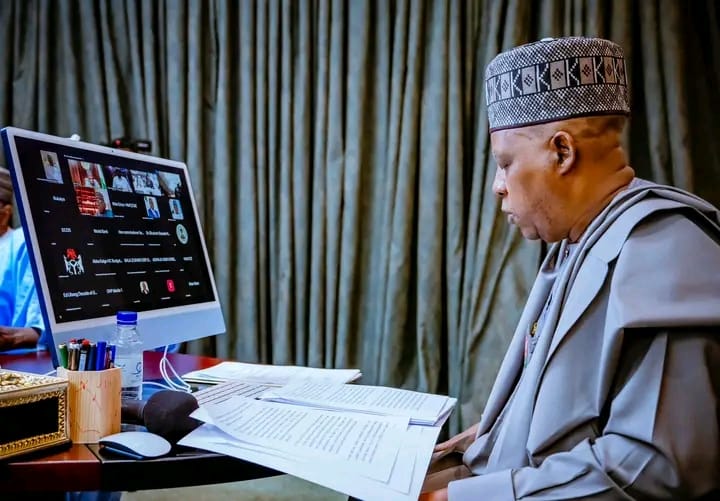
The Federal Government of Nigeria, through the National Economic Council (NEC), has provisionally approved an allocation of N100 billion for the comprehensive rehabilitation of training institutions belonging to the Nigeria Police Force and other security agencies across the country.
This significant funding approval follows the detailed recommendations of a special ad hoc committee tasked with assessing the current state of training facilities nationwide. The final disbursement is pending ratification by President Bola Tinubu.
Chaired by Vice President Kashim Shettima, the NEC comprises the Governors of all 36 states, the Minister of Finance and Coordinating Minister for the Economy, the Minister of Budget and Economic Planning, and other key federal ministers.
At its 154th meeting held virtually on Wednesday, NEC also approved the sum of and N2.6 billion for consultancy services for the project.
Reps to enforce 5% recruitment quota for persons with disabilities – Deputy Speaker
Fire guts Abuja timber market
President Tinubu had at the 152nd meeting of NEC in October, proposed the overhaul and revamp of training institutions for security agencies nationwide.
Chairman of the ad hoc committee, Governor Peter Mbah of Enugu State, had in his presentation to Council, underscored the urgency and significance of the condition of the training facilities, saying most of the training institutions are in dire condition.
Following the presentation by the Governor, the Chairman of NEC, Vice President Kashim Shettima, reaffirmed the commitment of the government to address the situation.
Shettima also charged governors of the 36 states of the federation to ensure that economic reforms by the state governments translate into clear, measurable improvements in the lives of Nigerians.
Noting that governance is meaningful only when citizens can feel its impact, the Vice President particularly urged all tiers of government to focus on execution rather than rhetoric.
He said the era of policy without results must give way to governance defined by tangible outcomes in communities across the country.
“Our task is not to admire problems, but to solve them. Not to explain challenges, but to overcome them. And not to hope for progress, but to engineer it.
“Today’s agenda speaks to our shared responsibility to build a nation where reforms translate into results, and where policies are not mere promises but convincing instruments of change felt in the markets, schools, clinics and farms across our federation,” Shettima said.






News
Internal Crisis Deepens in Jigawa APC as High-Profile Defections Threaten Party Cohesion
By Yusuf Danjuma Yunusa
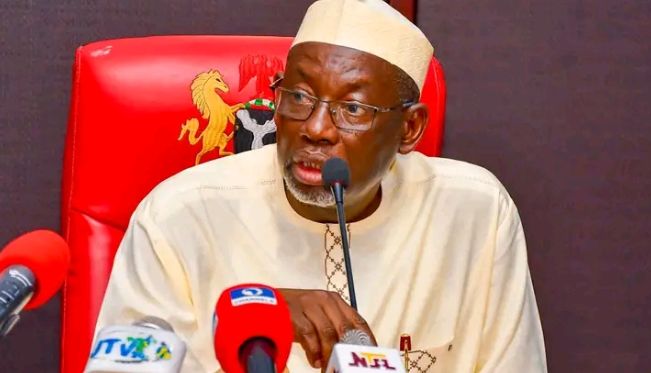
The All Progressives Congress (APC) in Jigawa State is grappling with its most significant internal crisis in years, as a wave of defections by prominent political figures threatens to erode the party’s structural integrity and electoral prospects.
The growing discontent is widely attributed to allegations of poor party management and the marginalisation of key stakeholders under Governor Umar Namadi. His leadership style has come under increasing scrutiny from within party ranks, with critics pointing to a breakdown in internal consensus-building.
Political observers trace the roots of the crisis to a strained relationship between Governor Namadi and his political benefactor, former Governor Mohammed Badaru Abubakar, as well as his financial backer, Isa Gerawa. Although both men remain in the APC, sources familiar with the situation report lingering resentment over what they perceive as a systematic exclusion from decision-making processes and party affairs.
This “cold war” at the highest levels of the party hierarchy has created factions and widened fissures across the APC’s political base in Jigawa. Analysts warn that if left unresolved, the discord could severely undermine party unity and weaken its performance in future elections.
The crisis has now manifested in a string of high-profile defections involving former lawmakers, ex-party executives, and grassroots mobilisers.
Leading the list are former Senators Sabo Nakudu, who represented Jigawa South-West from 2015 to 2023, and Muhammad Ubali Shitu, a longtime political associate of the governor who served in the Senate from 2015 to 2019. Senator Nakudu’s defection is particularly symbolic, as he previously contested the APC governorship ticket against Namadi. His relationship with former Governor Badaru reportedly soured after Badaru backed Namadi during the primaries. Notably, Nakudu and Badaru have since reconciled, united by their mutual opposition to the current governor.
The departure of former party chairmen further underscores the depth of the crisis. Ado Sani Kiri, who chaired the party from 2014 to 2019 and also served as a commissioner and member of the House of Representatives, has left the party, as has Aminu Keskes, who led the party from 2019 to 2023 and previously served as Gumel Local Government chairman and chairman of the Association of Local Governments of Nigeria (ALGON) in the state.
Also among the defectors is Bala Usman Chamo, a former Social Investment Programme coordinator and Dutse Local Government chairman, widely regarded as a key grassroots organiser. Their exit is seen as a major blow to the party’s strength, given their influence across various political blocs in the state.
The crisis has also penetrated the governor’s inner circle, with several political appointees resigning from their positions and quitting the party. Two serving special advisers have stepped down, including one reportedly preparing to contest for a seat in the House of Representatives under the opposition African Democratic Congress (ADC). Additionally, six senior special assistants and two special assistants have resigned, all citing dissatisfaction with the current direction of the party.
One of the most notable exits is that of Zakari Kafin Hausa, a former senior special assistant who played a central role in organising Governor Namadi’s campaign and mobilising the support that led to his emergence as governor. His defection is viewed by insiders as a significant indicator of deepening cracks within the governor’s inner circle.
Perhaps most damaging to the APC’s political machinery is the defection of at least 17 former local government chairmen. These figures are critical to grassroots mobilisation, electoral coordination, and voter outreach. Their exit signals a potential collapse of the party’s local structures, raising serious concerns about the APC’s ability to secure the mandatory 25 percent of votes in the state during future presidential elections.
News
Federal Government, Pluck Global Inaugurate ₦8BN Critical Infrastructure at FGC Kano
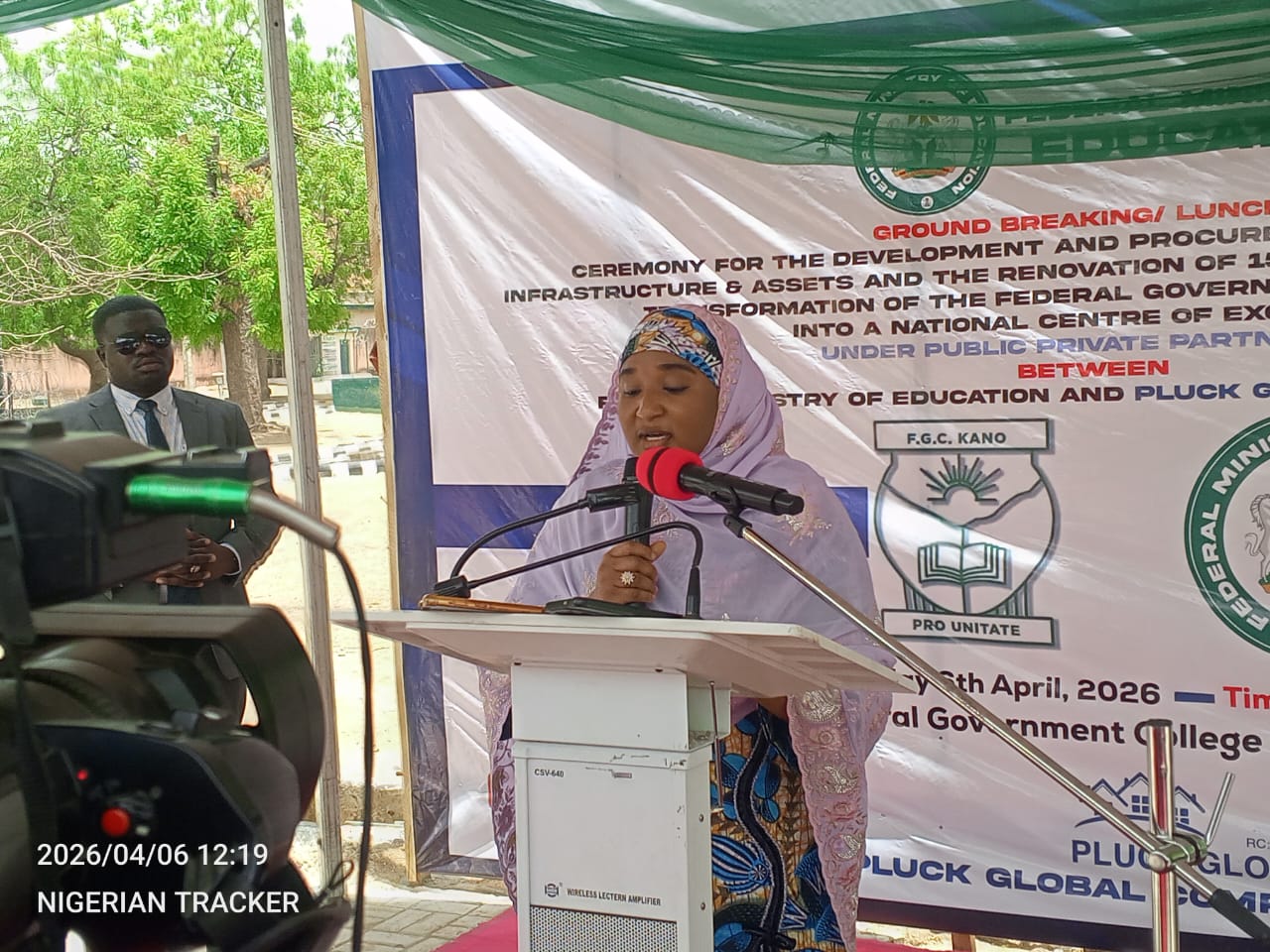
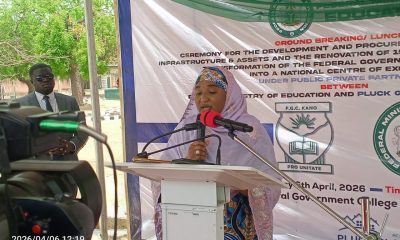
The Federal Government of Nigeria, in partnership with Pluck Global Company Limited, has inaugurated a landmark ₦8 billion project at the Federal Government College (FGC) Kano.
The initiative covers the development and procurement of 18 new critical infrastructure assets alongside the renovation of 15 existing facilities, marking a transformative step in revitalizing the education sector.
Speaking at the inauguration, the Minister of State for Education, Professor Suwaiba Sai’d Ahmad, described the project as more than just infrastructure, but a “transformation of the education sector.” She emphasized that education remains the bedrock of national development and highlighted the Federal Ministry of Education’s adoption of the Public-Private Partnership Plus (PPPP) model to bridge infrastructural gaps.
“It’s not about infrastructure, it’s about implementation. This project reflects a well-structured approach. For decades, the land of our federal unity colleges has remained undeveloped. This is a positive development for students to have modern facilities for teaching and learning,” she said.
Professor Ahmad further urged students to take ownership of the facilities, utilize them responsibly, and maximize their benefits.
Permanent Secretary of the Federal Ministry of Education, Alhaji Murtala Alhaji Tanko, reaffirmed the government’s unwavering commitment to revitalizing education. He described the intervention as bold and necessary, noting that federal unity colleges were established to symbolize excellence, national unity, and integration.
“Lack of basic infrastructure has long been a stumbling block. This PPPP project is designed to address infrastructural deficits in our institutions and ensure value for money,” Tanko stated.
Managing Director of Pluck Global, Musaddiq Talle Ado, expressed pride in the company’s involvement, calling it a defining moment.
“We are elated to flag off this project at over ₦8 billion. It is a testament to investor confidence. Our approach is holistic, including a modern academic center, renewable energy solutions, and a robust water system. We are not just delivering world-class infrastructure but sustainable infrastructure,” he said.
He also thanked the Kano State Government for fostering an environment where private partnerships can thrive.
Representing Governor Abba Kabir Yusuf, Abduljabbar M. Umar, Commissioner for Land and Physical Planning, praised the initiative for utilizing previously idle land assets.
“It is a culture globally to maximize unused land. For the first time, FGC Kano’s land assets will be properly utilized. The project managers must ensure effective stakeholder engagement,” Umar remarked.
The ₦8 billion investment is expected to significantly enhance learning conditions at FGC Kano, setting a precedent for similar interventions across Nigeria’s 120 federal unity colleges. By combining government oversight with private sector expertise, the project aims to deliver sustainable, modern infrastructure that supports academic excellence and national integration.
News
INEC Directs RECs to Suspend Plans on Voter Revalidation Exercise

By Yusuf Danjuma Yunusa
The Independent National Electoral Commission (INEC) has directed all resident electoral commissioners (RECs) to suspend publicity and arrangements for the planned voter revalidation exercise.
On Wednesday, INEC said it would commence a nationwide voter revalidation drive on April 13, 2026, as part of efforts to update the voter register ahead of the 2027 general election.
In a letter signed by Rose Oriaran-Anthony, its secretary, the commission asked all RECs to commence necessary preparations for the exercise, including sourcing of personnel and preparation of INEC voter enrolment devices (IVED).
The letter also listed the timeline for the exercise.
The timeline shows that the exercise will begin at the LGA level from April 13 to May 2, before moving to the registration area (RA) level from May 5 to May 11, and subsequently to polling units (PUs) from May 13 to May 19.
The commission said its meeting with RECs earlier scheduled to hold physically on Thursday, April 9 at 11:00am will now be conducted virtually via Zoom.
“Further to the notice of meeting dated 3rd April 2026, please be informed that the meeting of the commission with Resident Electoral Commissioners scheduled for Thursday, 9th April 2026 at 11.00am will now hold virtually via Zoom,” the notice reads.
The commission advised RECs to remain in their respective states and await login details, which will be shared once arrangements for the virtual meeting are concluded.
“Consequently, RECs are advised to remain in their states and await the login details which will be shared once the meeting is set up,” INEC said.
The commission added that all publicity and preparations for the voter revalidation exercise should be put on hold pending further directives.
“RECs are also directed to step down all publicity and arrangements for the voter revalidation exercise and await further directives from the commission,” the notice added.
INEC expressed regret over any inconvenience caused by the changes, assuring the commissioners of its consideration.

Internal Crisis Deepens in Jigawa APC as High-Profile Defections Threaten Party Cohesion

OPINION:Bauchi ,A Paradise for Immunity Seekers? How Alleged Corrupt Politicians Are Eyeing Government House

Federal Government, Pluck Global Inaugurate ₦8BN Critical Infrastructure at FGC Kano

REJOINDER: The Fallacy of the “Commander” and the Burden of Integrity

INEC Directs RECs to Suspend Plans on Voter Revalidation Exercise

ADC Leadership Crisis: State Chairmen to Elect Caretaker Committee on Tuesday

Governor Abba Kabir Yusuf Holds Exclusive Prerogative to Choose Deputy – Malam Inuwa Waya

The Governor Who Chose His People Over His Politics: Abba Yusuf and the Moral Courage Behind Kano First
Restoring the Glory That Was Always There: Governor Abba Kabir Yusuf and the Historical Vision Behind Kano First

Table Water Producers Increase New Price for Sachet Water in Kano
Internal Crisis Deepens in Jigawa APC as High-Profile Defections Threaten Party Cohesion
OPINION:Bauchi ,A Paradise for Immunity Seekers? How Alleged Corrupt Politicians Are Eyeing Government House
Federal Government, Pluck Global Inaugurate ₦8BN Critical Infrastructure at FGC Kano
REJOINDER: The Fallacy of the “Commander” and the Burden of Integrity
INEC Directs RECs to Suspend Plans on Voter Revalidation Exercise
ADC Leadership Crisis: State Chairmen to Elect Caretaker Committee on Tuesday
Governor Abba Kabir Yusuf Holds Exclusive Prerogative to Choose Deputy – Malam Inuwa Waya
The Governor Who Chose His People Over His Politics: Abba Yusuf and the Moral Courage Behind Kano First
Restoring the Glory That Was Always There: Governor Abba Kabir Yusuf and the Historical Vision Behind Kano First
Table Water Producers Increase New Price for Sachet Water in Kano
-

 Opinion4 years ago
On The Kano Flyovers And Public Perception
-

 Features5 years ago
How I Became A Multimillionaire In Nigeria – Hadiza Gabon
-

 Opinion5 years ago
Kano As future Headquarters Of Poverty In Nigeria
-

 History5 years ago
Sheikh Adam Abdullahi Al-Ilory (1917-1992):Nigeria’s Islamic Scholar Who Wrote Over 100 Books And Journals
-

 Opinion4 years ago
My First Encounter with Nasiru Gawuna, the Humble Deputy Governor
-

 History5 years ago
The Origin Of “Mammy Market” In Army Barracks (Mammy Ochefu)
-

 History4 years ago
The History Of Borno State Governor Professor Babagana Umara Zulum
-

 News4 years ago
Federal University Of Technology Babura To Commence Academic Activities September