
News
SPECIAL REPORT:Broken Frontlines: The Human and Political Costs of Nigeria’s Unfinished Insurgencies”
By Yusuf Danjuma Yunusa
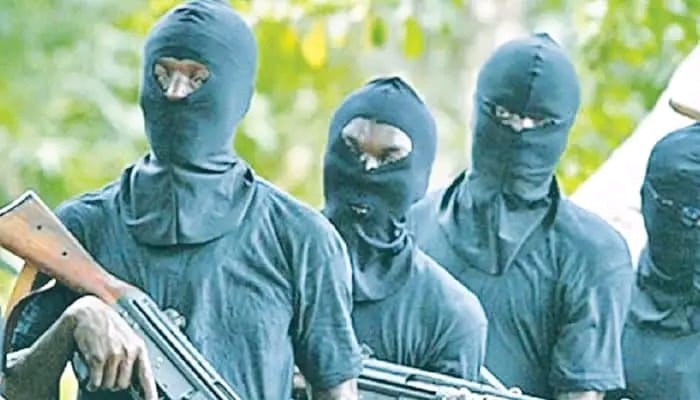
Since the transition from military to civilian rule in 1999, Nigeria has been grappling with multiple, simultaneous insurgencies and large-scale internal conflicts that have severely tested the authority of the state, resulted in massive humanitarian crises, and threatened national cohesion. The most prominent of these are the Boko Haram Insurgency in the Northeast, the Farmer-Herder Conflicts in the Middle Belt, the Militancy in the Niger Delta, and the rising Banditry in the Northwest. These conflicts are rooted in a complex interplay of historical grievances, economic marginalization, ethno-religious tensions, poor governance, and environmental pressures.
1.The Boko Haram Insurgency:
This is the most lethal and internationally recognized insurgency in Nigeria’s recent history.
Origins & Ideology:
Founded in 2002 by Mohammed Yusuf in Maiduguri, Borno State, as a radical Islamist sect advocating for the strict implementation of Sharia law and rejecting Western education (“Boko Haram” translates to “Western education is forbidden”).
It was initially fueled by widespread poverty, political corruption, and a sense of alienation among the Muslim youth in the Northeast.
However, not long enough, the group turned violently insurgent after a 2009 crackdown by security forces, which resulted in the extrajudicial killing of its founder. Under Abubakar Shekau’s leadership, it launched a full-scale guerrilla war against the Nigerian state.
Key Phases and Evolution:
Phase 1 (2009-2013): Intensification of attacks, including bombings of police stations, the UN headquarters in Abuja (2011), and churches. The declaration of a state of emergency in three northeastern states in 2013.
Phase 2 (2014-Present): Peak of territorial control. The group captured and held significant territory, including Gwoza, which Shekau declared the capital of an Islamic caliphate. The Chibok schoolgirls’ abduction in 2014 brought global attention.
Factionalization (2015-Present): In 2015, Boko Haram pledged allegiance to the Islamic State (ISIS), becoming the “Islamic State West Africa Province” (ISWAP). A rift grew between the more globally-focused ISWAP and Shekau’s more brutal faction, leading to his death in a clash with ISWAP in 2021. ISWAP now dominates, controlling rural areas and lake islands, employing sophisticated tactics, and imposing taxes on communities.
The Impact:
Human Cost: Over 35,000 deaths and millions displaced, creating a severe humanitarian crisis.
Territorial & Economic: Vast areas of Borno, Yobe, and Adamawa states were rendered ungovernable, devastating agriculture and trade.
Regional Spillover: The conflict has spread to neighboring Chad, Niger, and Cameroon.
Government Response:
Primarily military, involving large-scale operations and the establishment of a Multinational Joint Task Force (MNJTF).
Criticized for human rights abuses, a slow initial response, and failure to fully secure liberated territories, leading to a protracted conflict.
2.The Farmer-Herder Conflict in the Middle Belt
Often described as Nigeria’s “silent war,” this conflict has resulted in more annual fatalities than Boko Haram in recent years.
Root Causes:
Environmental Pressure: Desertification in the north has pushed Fulani herders southward into the fertile Middle Belt farmlands.
Resource Competition: Competition over dwindling water and pasture resources, exacerbated by climate change.
Breakdown of Traditional Protocols: The collapse of traditional conflict-resolution mechanisms and cattle routes.
Ethno-Religious Dimension: The conflict is often framed as Muslim (Fulani herders) versus Christian (predominantly Christian farming communities), adding a volatile layer to the resource struggle.
Nature of the Conflict:
Characterized by brutal attacks on villages, with reprisal killings creating a cycle of violence.
The conflict has become increasingly militarized, with farming communities and herder groups forming militias for self-defense, which often turn to aggression.
The Impact:
Death and Displacement: Thousands killed annually, with massive internal displacement
Food Security: Attacks on farming communities threaten Nigeria’s food basket, contributing to food inflation.
Communal Polarization: Deepened ethno-religious divides, threatening national integration.
Government Response:
Widely perceived as inadequate and slow. The government has been accused of bias and failing to hold perpetrators accountable.
Proposed solutions like the National Livestock Transformation Plan (NLTP) have seen limited implementation due to funding and political challenges.
3.Niger Delta Militancy
This insurgency is fundamentally an economic and environmental struggle, directly targeting the nation’s economic lifeline—oil production.
What Led to the Emergence of the Militancy?
Resource Curse & Marginalization: Despite producing the nation’s wealth, the Niger Delta region suffers from extreme poverty, environmental devastation from oil spills, and a lack of basic infrastructure.
Grievance: Communities feel cheated out of the benefits of their resources, leading to deep-seated anger against the federal government and multinational oil companies.
Evolution of the Conflict:
1990s – Early 2000s: Localized protests and activism (e.g., the Ogoni movement led by Ken Saro-Wiwa).
Mid-2000s Insurgency: Escalation into a full-blown insurgency led by groups like the Movement for the Emancipation of the Niger Delta (MEND). They conducted widespread pipeline bombings, kidnappings of oil workers, and attacks on oil installations, crippling oil production.
Government Amnesty (2009): President Yar’Adua’s administration introduced an Amnesty Program, offering monthly stipends and training to militants who disarmed. This was largely successful in reducing violence and restoring oil production for several years.
The amnesty program has been criticized as a temporary fix that did not address underlying issues of development and corruption.
A new wave of “oil bunkering” or artisanal refining has emerged, led by sophisticated criminal syndicates, causing massive pollution and revenue loss. Groups like the “Delta Avengers” have also threatened a return to militancy.
4.Banditry and Rural Violence in the Northwest
This is a rapidly escalating crisis, often described as an “insurgency” due to its scale and organization.
Nature of the Conflict:
Initially attributed to criminal gangs involved in cattle rustling, these groups have evolved into highly organized, militarized networks.
They operate from forest reserves, launching attacks on villages, mass kidnappings for ransom (especially from schools), and imposing taxes on communities.
The primary drivers are similar to the Middle Belt: climate change, poverty, and a breakdown of rural security.
The Impact:
Humanitarian Crisis: Widespread displacement, making parts of Zamfara, Katsina, Kaduna, and Sokoto states unlivable, until the recent development which has escalated to almost every part of the country. Nigerians in most parts of the northern regions of the country have been experiencing grave terrorism since the beginning of the month of November this year.
Food Security: Farmers are unable to access their fields, threatening agricultural output.
Collapse of Education: Mass school abductions have led to widespread school closures. From higher institutions down to primary schools have been closed down in the past few days due to abduction of students.
Government Response:
Military operations and aerial bombardments have had limited success.The conflict is complicated by allegations of collaboration between bandits and some security officials and local elites. The Kebbi School Girls were released but no one knows if the terrorists were the ones who willingly let them go; or if it’s the government that negotiated with them by paying ransom; or if they were captured by the security operatives. The citizens are being left in the dark.
Terrorism as illustrated in its four different kinds above, are the things fueling insurgencies in this country.
Why Are All These Happening?
A decade Analyst of Nigeria’s security, Yakubu Mohammed, shared that insurgencies are happening in Nigeria for several obvious reasons of which failure of governance, economic factors and the degenerated security capacity of the country’s military engine room are not left out.
“All these insurgencies are, at their core, symptoms of state failure—the inability to provide security, justice, economic opportunity, and basic services to all citizens,” he said.
Mr. Yakubu said that poverty, unemployment (especially among youth), and rampant corruption are key drivers of recruitment into all these violent groups. Here, the Analyst made mentioned of one Mamman Nur–a close associate of the late Boko Haram leader, Abubakar Shekau. According to Mr. Yakubu, the Mamman Nur was lured back into the Boko Haram structure after he had left with money in hard currency when his friend, Shekau, heard that he was suffering, riding Okada before he could feed his family.
On the security architecture of the Nigeria’s military, Mr. Mohammed highlighted that “the Nigerian security forces are overstretched, underfunded, and sometimes accused of corruption and human rights abuses, undermining public trust.”
Why Has Nigerian Government Successively Failed To End The Insurgencies?
Speaking with a retired Major, Abubakar Salisu, he disclosed that the inability of successive governments of Nigeria to conquer insurgencies lies in the fact that they have made “fundamental and repeated errors.”
“We did not fail to tackle insurgencies because the task was impossible. We failed because our governments have made fundamental and repeated errors,” Major Salisu said.
The retired Major also added that funds meant for the fight against the terrorism are always diverted or misappropriated for selfish gains.
“Cancer of corruption, as I always call it, has been one of the reasons we failed in the fight against insecurity.”
He continued, “funds meant for arms, ammunition, intelligent equipment, and troops welfare have been systemically looted overtime.”
Major Salisu was generous enough to mention how some of the funds are being looted by stating emphatically that payrolls are padded with non-existent soldiers, and the salaries are pocketed by commanders and politicians. This means you have a battalion on paper that is, in reality, a company-strength unit on the ground, stretched thin and overwhelmed.
In his responses, the retired Major made it clear that the government at the helm of affairs always strive to do their best, but bottleneck effect usually occurs from the corridors of the military Chiefs who are the ones culpable of the funds diversion crimes.
“Billions are allocated for new weapons, armoured vehicles, and drones. What arrives, if it arrives at all, is often outdated, overpriced, or completely unsuitable for the theatre of operation.
This puts our men at a severe tactical disadvantage against insurgents who often have better, more mobile weaponry.”
The plot twist in the interview came shocking and disappointing when he mentioned that some of the top military officers are in bed with the terrorists. He mentioned that operations are most times being sabotaged due to breach in the security arrangements which gives the terrorists upper hand during confrontation.
“There are powerful individuals in the political and business class whose financial interests are tied to the continuation of the conflict”, Major Salisu asserted.
When asked to buttress, he further mentioned that “a prolonged insurgency is a cash cow. It allows for continuous security votes, inflated contracts, and a diversion of national resources. Ending it would end their gravy train.”
The retired Major conclusively mentioned that military operations from behind the scenes are being politicised, reason why results are not coming forth with regards to the fight against insecurity.
“The operational command of the military is often influenced by political considerations. There is constant interference from Abuja. We are told to advance, then ordered to halt for “negotiations” or “ceasefires” that the enemy uses to regroup and rearm.”
On that note, Major Salisu boastfully mentioned that a certain former governor from one of the Northern states–North West–who is now serving as a Minister is a better illustration of what he insinuated about political interference in the military operations against insurgencies in the country
A word of advice from the retired Major emphasized that until a government is ready to cut out the cancer of corruption, empower the military professionally, and follow a clear, consistent, and comprehensive national strategy that combines security with development, the country will continue to fight these insurgencies in perpetuity. A situation he described as a national tragedy.
Yusuf Danjuma Yunusa is a freelance journalist and a reporter with the Nigerian Tracker News. He can be reached via: 07069180810, or theonlygrandeur@gmail.com








News
Kenyan Presidential Aspirant Warns Dangote: ‘Don’t Rush Lamu Refinery, I’ll Send You Back to Nigeria’
By Yusuf Danjuma Yunusa
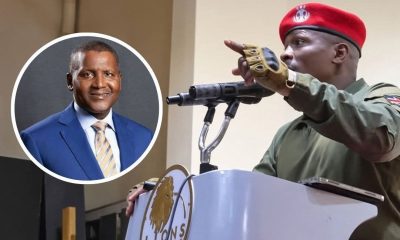
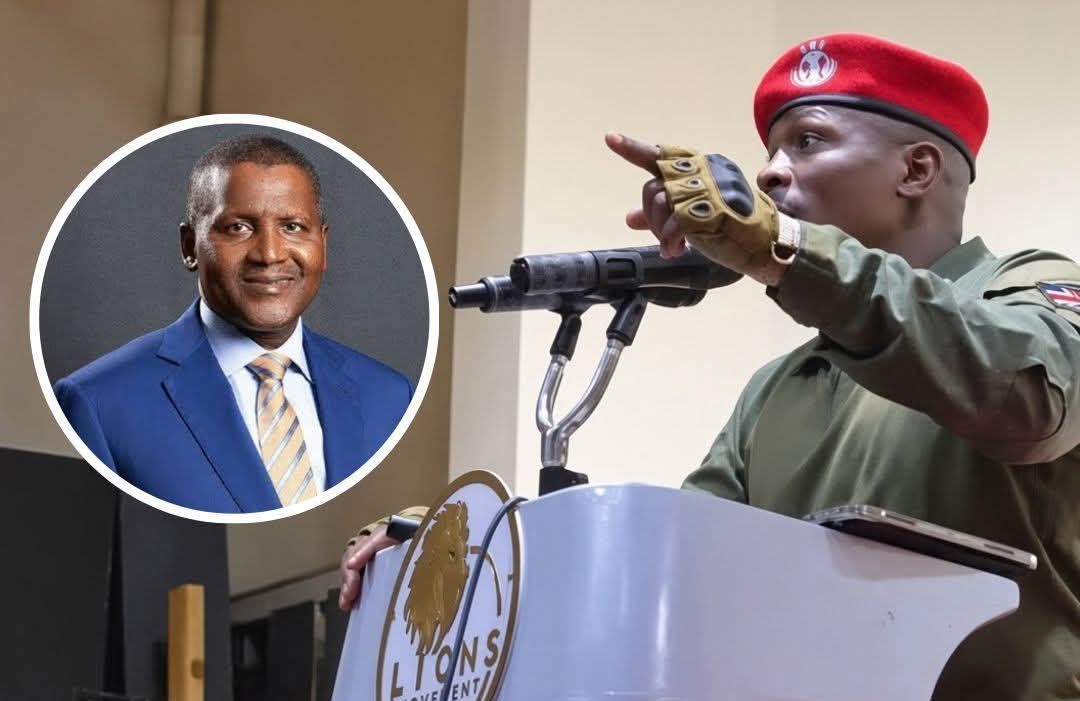
A man identified in a viral video as Kenyan presidential aspirant Patrick Osoi has sparked a heated online debate after warning Nigerian billionaire Aliko Dangote not to rush into establishing an oil refinery in Lamu, saying he would send the businessman back to Nigeria if elected president.
In the clip, said to have been recorded at a Lions Movement event, Osoi says: “I want to tell Aliko Dangote, please don’t rush to start the refinery because, when I’m sworn in as President of Kenya next year, you will be heading back to Nigeria.”
The remarks appear to reference a proposed $16 billion refinery project in Lamu, a coastal county that Kenya has promoted as a future hub for oil and gas infrastructure. Osoi argued that Kenyan investors have the capacity to build and run such a facility without foreign ownership.
“We don’t need to beg foreigners to develop our resources,” he said, according to a partial transcript of the video. “Kenyans can do it.”
The video has been shared widely on Facebook, X and WhatsApp, drawing mixed reactions. Supporters praised Osoi for what they called a bold defense of economic sovereignty. Critics warned that the comments could scare off foreign investors and strain Kenya’s diplomatic and trade ties with Nigeria.
Dangote, Africa’s richest man and chairman of Dangote Group, has not publicly responded to the clip. His conglomerate operates one of the world’s largest single-train refineries in Nigeria and has investments in cement, sugar, fertilizer and petroleum across Africa.
The Kenyan government has not commented on the video. It was not immediately clear whether the Lamu refinery project involving Dangote is still active or whether Osoi’s remarks reflect any official policy.
Political analysts say the controversy underscores growing public debate in Kenya over foreign investment, local content and control of natural resources ahead of the next general election, expected in 2027.
News
NDC’s Kano Governorship Candidate Gwarzo Missing From INEC Final List
By Yusuf Danjuma Yunusa
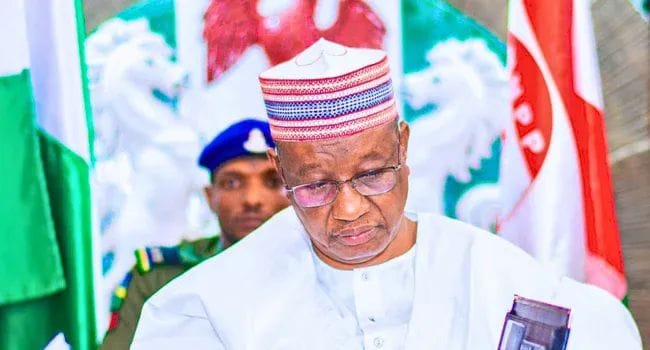
The National Democratic Congress (NDC) governorship candidate in Kano State, Aminu Abdussalam Gwarzo, is absent from the final list of governorship candidates released by the Independent National Electoral Commission (INEC).
The three-page list, signed by INEC Secretary Rose Oriaran-Anthony, contains 17 governorship candidates and their running mates for the Kano election, but neither Gwarzo nor any other NDC candidate appears on it.
Those listed include Governor Abba Kabir Yusuf of the All Progressives Congress (APC), Abacha Muhammed Sani of the Peoples Democratic Party (PDP), and candidates from the African Democratic Congress (ADC), Labour Party (LP), Social Democratic Party (SDP), Action Alliance (AA), African Action Congress (AAC), Action Democratic Party (ADP), All Progressives Grand Alliance (APGA), Allied Peoples Movement (APM), and New Democratic Party (NDP), among others.
The document provides the names, political parties, ages, genders, and educational qualifications of the candidates and their deputy governorship candidates.
INEC did not state why the NDC candidate was omitted, and the published list does not indicate whether the omission is connected to the party’s nomination process, documentation, or another issue.
The development raises questions about the NDC’s participation in the Kano governorship election, although the list alone does not establish the reason for Gwarzo’s absence.
News
Dawakin Tofa Academic Forum Holds Maiden Heroes Day, Honours Former Kano Governor
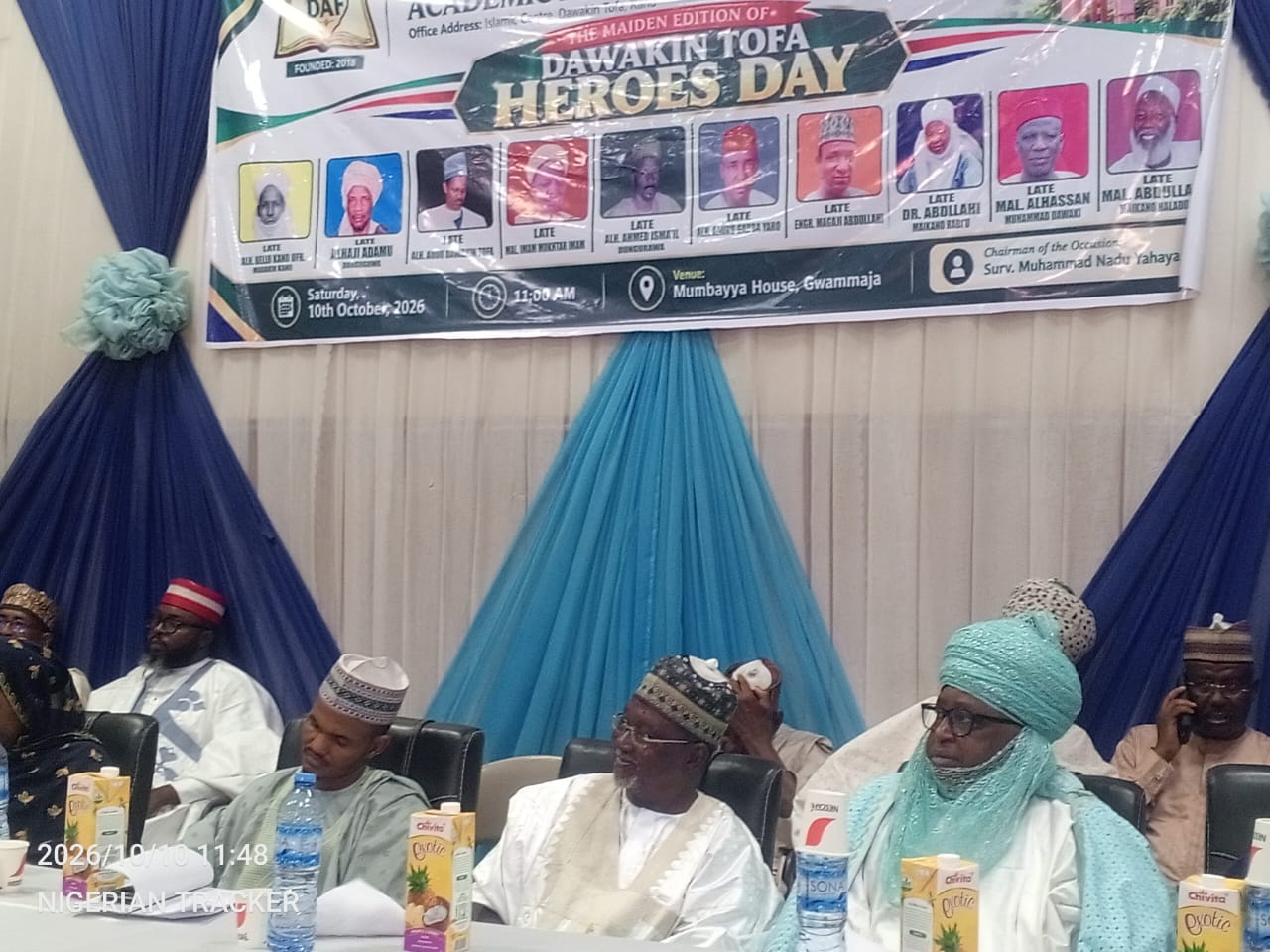
The Dawakin Tofa Academic Forum has held its maiden Heroes Day and awards ceremony, honouring 10 distinguished late indigenes of Dawakin Tofa Local Government Area of Kano State for their contributions to education, public service, politics, community development and other fields.
The event, organised by the Dawakin Tofa Academic Forum, brought together academics, community leaders, elders and other stakeholders to celebrate the legacies of prominent personalities who contributed to the development of Dawakin Tofa, Kano State and Nigeria.
Speaking at the ceremony, the chairman of the forum, Dr Junaidu Danladi, said the organisation was established in 2018 to bring together educated indigenes of Dawakin Tofa, including professors, associate professors and other professionals from tertiary institutions.
Danladi said the forum had grown significantly since its establishment, with more than 100 members committed to promoting educational development and recognising individuals whose contributions had positively shaped the community.
He said the maiden Heroes Day was organised to preserve the history of Dawakin Tofa and ensure that the achievements of its prominent sons were documented and remembered by present and future generations.
In his remarks, Surveyor Muhammad Nadu Yahaya, an elder and former commissioner for lands, budget and planning, described the initiative as a timely and commendable development, saying the recognition of distinguished personalities from Dawakin Tofa was long overdue.
Yahaya said the forum represented the intellectual elite of Dawakin Tofa, whose members had demonstrated a commitment to advancing the community through knowledge, innovation and public service.
He commended the organisers for introducing the Heroes Day initiative, describing the selected award recipients as eminent personalities whose influence extended beyond Dawakin Tofa to Kano State and Nigeria.
Yahaya also called on the people of Dawakin Tofa to make additional efforts to distinguish the local government through educational advancement, community development and other innovative initiatives.
He prayed for Allah’s blessings upon the award recipients and the organisers, urging the forum to sustain the programme as an annual event that would inspire younger generations.
Similarly, Madakin Kano, Yusuf Nabahani Cigari, commended the Dawakin Tofa Academic Forum for recognising the achievements of the community’s late prominent figures.
Cigari said Dawakin Tofa was blessed with accomplished individuals across politics, the economy and public service, adding that the local government had a rich history of producing personalities who contributed to the development of Kano State and the country.
He urged the people of Dawakin Tofa to remain united and work collectively towards the progress of their community, stressing the importance of preserving its heritage and celebrating its achievements.
The former chairman of the Dawakin Tofa Academic Forum, Dr Ameer Abdul Aziz, presented the profiles and contributions of the personalities selected for the maiden edition of the Heroes Day.
Abdul Aziz explained that hundreds of deserving indigenes could be considered for recognition, but the forum selected 10 individuals for the inaugural edition, with the intention of honouring more distinguished personalities in subsequent editions.
Among those honoured was Bello Kano, also known as Madakin Kano, who was born in 1907 and died in 1987. Abdul Aziz said Bello Kano began his career in education as an assistant teacher before rising to become a headteacher at a middle school.
According to Abdul Aziz, Bello Kano also served in different administrative and legislative capacities and contributed to the establishment of primary and post-primary schools in Dawakin Tofa, helping to expand access to education in the area.
Another recipient was Alhaji Adamu Danguguwa, who lived from 1913 to 1988. Abdul Aziz said Danguguwa acquired Qur’anic education and later attended Samaru Agricultural School, where he received agricultural training.
The forum also recognised a former governor of Kano State, “Alhaji Abdu Dawakin Tofa,” born in 1932 and died in 2003, who studied at Kansas University in the United States and served as commissioner for agriculture, deputy governor and governor of Kano State from May to October 1983.
The late Imam of Dawakin Tofa, Mukhtar Iman, who lived from 1935 to 2008, was also honoured for his contributions to reconciliation and efforts to combat illiteracy, according to Abdul Aziz.
The forum recognised Ahmad Ismail Dungurawa, who lived from 1945 to 2008, for his role in struggles for justice and his efforts to promote the interests of ordinary people.
Another award recipient, Aminu Garba Yaro, was celebrated for his generosity and support for children, including assistance to young people seeking educational opportunities. Abdul Aziz said Yaro, who worked with United Bank for Africa, made contributions to the welfare and advancement of others.
The forum also honoured Engineer Magaji Abdullahi, a water engineer who lived from 1947 to 2016, for his contributions to Dawakin Tofa, Kano State and Nigeria. Abdul Aziz said Abdullahi’s professional work and services had made a lasting impact on the community ,a prominent politician and a former Deputy Governor of Kano state from 2003 to 2007.
Abdullahi Maikano Rabiu, who lived from 1949 to 2021, was recognised for his commitment to supporting students, including those he knew personally and others who approached him for assistance, according to Abdul Aziz.
Abdul Aziz described Rabiu as a compassionate individual and a man of wisdom whose generosity helped many people pursue their educational ambitions.
The forum also honoured Alasan Dawakin, who was born in 1946 and died in 2023, for dedicating about five decades of his life to teaching and learning, according to the former chairman.
Another honouree was Malam Abdullahi Maikano, who lived from 1942 to 2023, in recognition of his contributions to the community.
The organisers said the Heroes Day was designed not only to honour the achievements of the deceased personalities but also to encourage younger generations to emulate their commitment to education, service, integrity and community development.
The maiden edition marked an effort by the Dawakin Tofa Academic Forum to document the history of prominent indigenes and establish a platform for celebrating individuals whose contributions might otherwise be forgotten.
The forum is expected to use the initiative to strengthen community ties, promote educational values and encourage the emergence of future leaders committed to the development of Dawakin Tofa and Kano State.

Kenyan Presidential Aspirant Warns Dangote: ‘Don’t Rush Lamu Refinery, I’ll Send You Back to Nigeria’

NDC’s Kano Governorship Candidate Gwarzo Missing From INEC Final List

Dawakin Tofa Academic Forum Holds Maiden Heroes Day, Honours Former Kano Governor

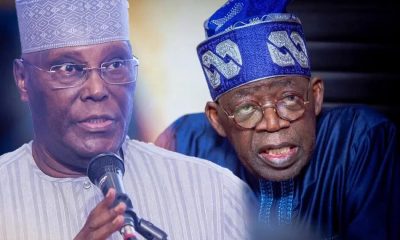
Atiku Slams Tinubu Over 30-Day Petrol Discount, Demands Answers on Day 31

Kano Local Government Finance Deputy Director, Balarabe Muhammad, Dies

Zamfara Varsity ASUU Threatens Warning Strike Over FG-ASUU Agreement, Promotion Arrears

PCACC Arrests Man Over Alleged ₦4.5m Sale, Illegal Leasing of Kano Government Horse Stable

Goje’s Electoral War:The Confrontation With Tinubu,Governor Inuwa,Usman Kumo And APC candidates Ahead Of 2027

Prof Yusuf Adamu Delivers BUK’s 63rd Professorial Inaugural Lecture, Reflects on Medical Geography and Academic Legacy

Al-Istiqama University to Hold Convocation, Honours Late Aminu Dantata, Sheikh Ibrahim Khalil
Kenyan Presidential Aspirant Warns Dangote: ‘Don’t Rush Lamu Refinery, I’ll Send You Back to Nigeria’
NDC’s Kano Governorship Candidate Gwarzo Missing From INEC Final List
Dawakin Tofa Academic Forum Holds Maiden Heroes Day, Honours Former Kano Governor
Atiku Slams Tinubu Over 30-Day Petrol Discount, Demands Answers on Day 31
Kano Local Government Finance Deputy Director, Balarabe Muhammad, Dies
Zamfara Varsity ASUU Threatens Warning Strike Over FG-ASUU Agreement, Promotion Arrears
PCACC Arrests Man Over Alleged ₦4.5m Sale, Illegal Leasing of Kano Government Horse Stable
Goje’s Electoral War:The Confrontation With Tinubu,Governor Inuwa,Usman Kumo And APC candidates Ahead Of 2027
Prof Yusuf Adamu Delivers BUK’s 63rd Professorial Inaugural Lecture, Reflects on Medical Geography and Academic Legacy
Al-Istiqama University to Hold Convocation, Honours Late Aminu Dantata, Sheikh Ibrahim Khalil
-

 Opinion5 years ago
On The Kano Flyovers And Public Perception
-

 Features5 years ago
How I Became A Multimillionaire In Nigeria – Hadiza Gabon
-

 Opinion6 years ago
Kano As future Headquarters Of Poverty In Nigeria
-

 History5 years ago
Sheikh Adam Abdullahi Al-Ilory (1917-1992):Nigeria’s Islamic Scholar Who Wrote Over 100 Books And Journals
-

 Opinion5 years ago
My First Encounter with Nasiru Gawuna, the Humble Deputy Governor
-

 History5 years ago
The History Of Borno State Governor Professor Babagana Umara Zulum
-

 History6 years ago
The Origin Of “Mammy Market” In Army Barracks (Mammy Ochefu)
-

 News5 years ago
Federal University Of Technology Babura To Commence Academic Activities September