
News
SPECIAL REPORT:Broken Frontlines: The Human and Political Costs of Nigeria’s Unfinished Insurgencies”
By Yusuf Danjuma Yunusa
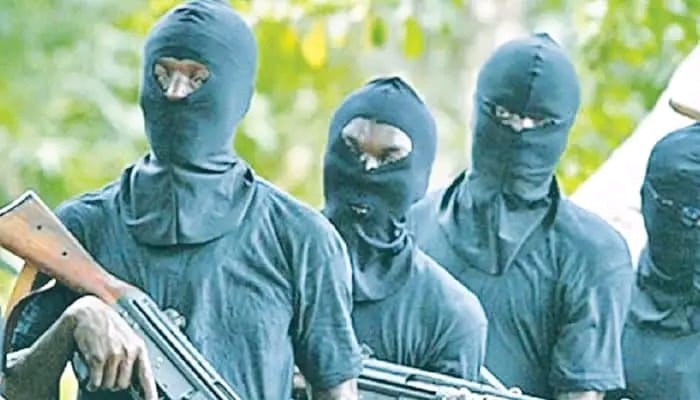
Since the transition from military to civilian rule in 1999, Nigeria has been grappling with multiple, simultaneous insurgencies and large-scale internal conflicts that have severely tested the authority of the state, resulted in massive humanitarian crises, and threatened national cohesion. The most prominent of these are the Boko Haram Insurgency in the Northeast, the Farmer-Herder Conflicts in the Middle Belt, the Militancy in the Niger Delta, and the rising Banditry in the Northwest. These conflicts are rooted in a complex interplay of historical grievances, economic marginalization, ethno-religious tensions, poor governance, and environmental pressures.
1.The Boko Haram Insurgency:
This is the most lethal and internationally recognized insurgency in Nigeria’s recent history.
Origins & Ideology:
Founded in 2002 by Mohammed Yusuf in Maiduguri, Borno State, as a radical Islamist sect advocating for the strict implementation of Sharia law and rejecting Western education (“Boko Haram” translates to “Western education is forbidden”).
It was initially fueled by widespread poverty, political corruption, and a sense of alienation among the Muslim youth in the Northeast.
However, not long enough, the group turned violently insurgent after a 2009 crackdown by security forces, which resulted in the extrajudicial killing of its founder. Under Abubakar Shekau’s leadership, it launched a full-scale guerrilla war against the Nigerian state.
Key Phases and Evolution:
Phase 1 (2009-2013): Intensification of attacks, including bombings of police stations, the UN headquarters in Abuja (2011), and churches. The declaration of a state of emergency in three northeastern states in 2013.
Phase 2 (2014-Present): Peak of territorial control. The group captured and held significant territory, including Gwoza, which Shekau declared the capital of an Islamic caliphate. The Chibok schoolgirls’ abduction in 2014 brought global attention.
Factionalization (2015-Present): In 2015, Boko Haram pledged allegiance to the Islamic State (ISIS), becoming the “Islamic State West Africa Province” (ISWAP). A rift grew between the more globally-focused ISWAP and Shekau’s more brutal faction, leading to his death in a clash with ISWAP in 2021. ISWAP now dominates, controlling rural areas and lake islands, employing sophisticated tactics, and imposing taxes on communities.
The Impact:
Human Cost: Over 35,000 deaths and millions displaced, creating a severe humanitarian crisis.
Territorial & Economic: Vast areas of Borno, Yobe, and Adamawa states were rendered ungovernable, devastating agriculture and trade.
Regional Spillover: The conflict has spread to neighboring Chad, Niger, and Cameroon.
Government Response:
Primarily military, involving large-scale operations and the establishment of a Multinational Joint Task Force (MNJTF).
Criticized for human rights abuses, a slow initial response, and failure to fully secure liberated territories, leading to a protracted conflict.
2.The Farmer-Herder Conflict in the Middle Belt
Often described as Nigeria’s “silent war,” this conflict has resulted in more annual fatalities than Boko Haram in recent years.
Root Causes:
Environmental Pressure: Desertification in the north has pushed Fulani herders southward into the fertile Middle Belt farmlands.
Resource Competition: Competition over dwindling water and pasture resources, exacerbated by climate change.
Breakdown of Traditional Protocols: The collapse of traditional conflict-resolution mechanisms and cattle routes.
Ethno-Religious Dimension: The conflict is often framed as Muslim (Fulani herders) versus Christian (predominantly Christian farming communities), adding a volatile layer to the resource struggle.
Nature of the Conflict:
Characterized by brutal attacks on villages, with reprisal killings creating a cycle of violence.
The conflict has become increasingly militarized, with farming communities and herder groups forming militias for self-defense, which often turn to aggression.
The Impact:
Death and Displacement: Thousands killed annually, with massive internal displacement
Food Security: Attacks on farming communities threaten Nigeria’s food basket, contributing to food inflation.
Communal Polarization: Deepened ethno-religious divides, threatening national integration.
Government Response:
Widely perceived as inadequate and slow. The government has been accused of bias and failing to hold perpetrators accountable.
Proposed solutions like the National Livestock Transformation Plan (NLTP) have seen limited implementation due to funding and political challenges.
3.Niger Delta Militancy
This insurgency is fundamentally an economic and environmental struggle, directly targeting the nation’s economic lifeline—oil production.
What Led to the Emergence of the Militancy?
Resource Curse & Marginalization: Despite producing the nation’s wealth, the Niger Delta region suffers from extreme poverty, environmental devastation from oil spills, and a lack of basic infrastructure.
Grievance: Communities feel cheated out of the benefits of their resources, leading to deep-seated anger against the federal government and multinational oil companies.
Evolution of the Conflict:
1990s – Early 2000s: Localized protests and activism (e.g., the Ogoni movement led by Ken Saro-Wiwa).
Mid-2000s Insurgency: Escalation into a full-blown insurgency led by groups like the Movement for the Emancipation of the Niger Delta (MEND). They conducted widespread pipeline bombings, kidnappings of oil workers, and attacks on oil installations, crippling oil production.
Government Amnesty (2009): President Yar’Adua’s administration introduced an Amnesty Program, offering monthly stipends and training to militants who disarmed. This was largely successful in reducing violence and restoring oil production for several years.
The amnesty program has been criticized as a temporary fix that did not address underlying issues of development and corruption.
A new wave of “oil bunkering” or artisanal refining has emerged, led by sophisticated criminal syndicates, causing massive pollution and revenue loss. Groups like the “Delta Avengers” have also threatened a return to militancy.
4.Banditry and Rural Violence in the Northwest
This is a rapidly escalating crisis, often described as an “insurgency” due to its scale and organization.
Nature of the Conflict:
Initially attributed to criminal gangs involved in cattle rustling, these groups have evolved into highly organized, militarized networks.
They operate from forest reserves, launching attacks on villages, mass kidnappings for ransom (especially from schools), and imposing taxes on communities.
The primary drivers are similar to the Middle Belt: climate change, poverty, and a breakdown of rural security.
The Impact:
Humanitarian Crisis: Widespread displacement, making parts of Zamfara, Katsina, Kaduna, and Sokoto states unlivable, until the recent development which has escalated to almost every part of the country. Nigerians in most parts of the northern regions of the country have been experiencing grave terrorism since the beginning of the month of November this year.
Food Security: Farmers are unable to access their fields, threatening agricultural output.
Collapse of Education: Mass school abductions have led to widespread school closures. From higher institutions down to primary schools have been closed down in the past few days due to abduction of students.
Government Response:
Military operations and aerial bombardments have had limited success.The conflict is complicated by allegations of collaboration between bandits and some security officials and local elites. The Kebbi School Girls were released but no one knows if the terrorists were the ones who willingly let them go; or if it’s the government that negotiated with them by paying ransom; or if they were captured by the security operatives. The citizens are being left in the dark.
Terrorism as illustrated in its four different kinds above, are the things fueling insurgencies in this country.
Why Are All These Happening?
A decade Analyst of Nigeria’s security, Yakubu Mohammed, shared that insurgencies are happening in Nigeria for several obvious reasons of which failure of governance, economic factors and the degenerated security capacity of the country’s military engine room are not left out.
“All these insurgencies are, at their core, symptoms of state failure—the inability to provide security, justice, economic opportunity, and basic services to all citizens,” he said.
Mr. Yakubu said that poverty, unemployment (especially among youth), and rampant corruption are key drivers of recruitment into all these violent groups. Here, the Analyst made mentioned of one Mamman Nur–a close associate of the late Boko Haram leader, Abubakar Shekau. According to Mr. Yakubu, the Mamman Nur was lured back into the Boko Haram structure after he had left with money in hard currency when his friend, Shekau, heard that he was suffering, riding Okada before he could feed his family.
On the security architecture of the Nigeria’s military, Mr. Mohammed highlighted that “the Nigerian security forces are overstretched, underfunded, and sometimes accused of corruption and human rights abuses, undermining public trust.”
Why Has Nigerian Government Successively Failed To End The Insurgencies?
Speaking with a retired Major, Abubakar Salisu, he disclosed that the inability of successive governments of Nigeria to conquer insurgencies lies in the fact that they have made “fundamental and repeated errors.”
“We did not fail to tackle insurgencies because the task was impossible. We failed because our governments have made fundamental and repeated errors,” Major Salisu said.
The retired Major also added that funds meant for the fight against the terrorism are always diverted or misappropriated for selfish gains.
“Cancer of corruption, as I always call it, has been one of the reasons we failed in the fight against insecurity.”
He continued, “funds meant for arms, ammunition, intelligent equipment, and troops welfare have been systemically looted overtime.”
Major Salisu was generous enough to mention how some of the funds are being looted by stating emphatically that payrolls are padded with non-existent soldiers, and the salaries are pocketed by commanders and politicians. This means you have a battalion on paper that is, in reality, a company-strength unit on the ground, stretched thin and overwhelmed.
In his responses, the retired Major made it clear that the government at the helm of affairs always strive to do their best, but bottleneck effect usually occurs from the corridors of the military Chiefs who are the ones culpable of the funds diversion crimes.
“Billions are allocated for new weapons, armoured vehicles, and drones. What arrives, if it arrives at all, is often outdated, overpriced, or completely unsuitable for the theatre of operation.
This puts our men at a severe tactical disadvantage against insurgents who often have better, more mobile weaponry.”
The plot twist in the interview came shocking and disappointing when he mentioned that some of the top military officers are in bed with the terrorists. He mentioned that operations are most times being sabotaged due to breach in the security arrangements which gives the terrorists upper hand during confrontation.
“There are powerful individuals in the political and business class whose financial interests are tied to the continuation of the conflict”, Major Salisu asserted.
When asked to buttress, he further mentioned that “a prolonged insurgency is a cash cow. It allows for continuous security votes, inflated contracts, and a diversion of national resources. Ending it would end their gravy train.”
The retired Major conclusively mentioned that military operations from behind the scenes are being politicised, reason why results are not coming forth with regards to the fight against insecurity.
“The operational command of the military is often influenced by political considerations. There is constant interference from Abuja. We are told to advance, then ordered to halt for “negotiations” or “ceasefires” that the enemy uses to regroup and rearm.”
On that note, Major Salisu boastfully mentioned that a certain former governor from one of the Northern states–North West–who is now serving as a Minister is a better illustration of what he insinuated about political interference in the military operations against insurgencies in the country
A word of advice from the retired Major emphasized that until a government is ready to cut out the cancer of corruption, empower the military professionally, and follow a clear, consistent, and comprehensive national strategy that combines security with development, the country will continue to fight these insurgencies in perpetuity. A situation he described as a national tragedy.
Yusuf Danjuma Yunusa is a freelance journalist and a reporter with the Nigerian Tracker News. He can be reached via: 07069180810, or theonlygrandeur@gmail.com







News
NCC to Enforce Subscriber Compensation for Poor Telecom Service

By Yusuf Danjuma Yunusa
The Nigerian Communications Commission has announced that its directive mandating telecommunications operators to compensate subscribers for poor service quality will take effect from this month.
The Commission disclosed this in a Frequently Asked Questions document released on Tuesday, offering clarity on how the compensation framework will work and which subscribers qualify.
According to the NCC, the directive applies specifically to Mobile Network Operators that fail to meet the required Key Performance Indicators for Quality of Service. These operators include major players such as MTN Nigeria, Airtel Nigeria, Globacom, and 9mobile, although the Commission did not specify which of them fell short of the standards.
The NCC noted that a separate compensation framework already exists for Internet Service Providers.
Under the new directive, compensation will cover service failures affecting voice calls, data services, and SMS. To qualify, subscribers must have experienced poor network service in an affected Local Government Area and must have carried out at least one revenue-generating activity—such as a billed call, SMS, or data session—within the period in question.
The Commission added that both individual and corporate subscribers are eligible for compensation.
Importantly, the NCC stated that subscribers will not need to apply to receive compensation. Instead, telecom operators are mandated to automatically identify affected customers and compensate them directly.
“The compensation framework will take effect from April 2026.
“No. The directive does not replace existing consumer protection mechanisms. It adds a direct compensation mechanism for affected subscribers. It aligns with measures set in existing legislation, such as the Consumer Code of Practice Regulations 2024 and the Quality of Service Regulations 2024,” NCC said
“Operators are required and mandated to identify affected subscribers and provide compensation directly. Only service failures that fall below the defined thresholds set by the Quality of Service Regulations will qualify,” NCC said.
However, the regulator clarified that minor or short-lived network disruptions that are quickly resolved may not meet the threshold for compensation.
The move is part of the NCC’s broader efforts to improve service delivery and hold telecom operators accountable for consistent network performance across the country.
News
ADC Leadership Tussle Worsens as Third Faction Emerges, Rejects Nafiu Camp, Mark’s Coalition
By Yusuf Danjuma Yunusa
A new faction within the African Democratic Congress has surfaced, rejecting the authority of the Senator David Mark-led coalition and distancing itself from Nafiu Bala’s faction.
According to Africa Independent Television, the faction led by Don Norman Obinna claims to represent the legitimate National Executive Committee of the party.
The group says it is stepping in to manage the party’s affairs ahead of the next national convention.
At a briefing in Abuja on Tuesday, the group stated that “The tenure of Ralph Nwosu, who handed the party to the David Mark group, had ended in August 2022, and afterwards, he (Nwosu) had faced a series of litigations due to his failure to step down.”
The faction also clarified the status of Nafiu Bala, noting that he “never held the position of National Vice Chairman,” and affirmed that former ADC presidential candidate “Dumebi Kachikwu is still a member of ADC”
The group further disclosed that new interim leaders have been appointed to oversee party activities, ensuring continuity until the national convention is held.
The remarks come amid an ongoing leadership crisis within the ADC, which has seen rival factions contest control of the party. The Independent National Electoral Commission recently withdrew recognition of the party’s leadership under former Senate President David Mark.
News
Internal Crisis Deepens in Jigawa APC as High-Profile Defections Threaten Party Cohesion
By Yusuf Danjuma Yunusa
The All Progressives Congress (APC) in Jigawa State is grappling with its most significant internal crisis in years, as a wave of defections by prominent political figures threatens to erode the party’s structural integrity and electoral prospects.
The growing discontent is widely attributed to allegations of poor party management and the marginalisation of key stakeholders under Governor Umar Namadi. His leadership style has come under increasing scrutiny from within party ranks, with critics pointing to a breakdown in internal consensus-building.
Political observers trace the roots of the crisis to a strained relationship between Governor Namadi and his political benefactor, former Governor Mohammed Badaru Abubakar, as well as his financial backer, Isa Gerawa. Although both men remain in the APC, sources familiar with the situation report lingering resentment over what they perceive as a systematic exclusion from decision-making processes and party affairs.
This “cold war” at the highest levels of the party hierarchy has created factions and widened fissures across the APC’s political base in Jigawa. Analysts warn that if left unresolved, the discord could severely undermine party unity and weaken its performance in future elections.
The crisis has now manifested in a string of high-profile defections involving former lawmakers, ex-party executives, and grassroots mobilisers.
Leading the list are former Senators Sabo Nakudu, who represented Jigawa South-West from 2015 to 2023, and Muhammad Ubali Shitu, a longtime political associate of the governor who served in the Senate from 2015 to 2019. Senator Nakudu’s defection is particularly symbolic, as he previously contested the APC governorship ticket against Namadi. His relationship with former Governor Badaru reportedly soured after Badaru backed Namadi during the primaries. Notably, Nakudu and Badaru have since reconciled, united by their mutual opposition to the current governor.
The departure of former party chairmen further underscores the depth of the crisis. Ado Sani Kiri, who chaired the party from 2014 to 2019 and also served as a commissioner and member of the House of Representatives, has left the party, as has Aminu Keskes, who led the party from 2019 to 2023 and previously served as Gumel Local Government chairman and chairman of the Association of Local Governments of Nigeria (ALGON) in the state.
Also among the defectors is Bala Usman Chamo, a former Social Investment Programme coordinator and Dutse Local Government chairman, widely regarded as a key grassroots organiser. Their exit is seen as a major blow to the party’s strength, given their influence across various political blocs in the state.
The crisis has also penetrated the governor’s inner circle, with several political appointees resigning from their positions and quitting the party. Two serving special advisers have stepped down, including one reportedly preparing to contest for a seat in the House of Representatives under the opposition African Democratic Congress (ADC). Additionally, six senior special assistants and two special assistants have resigned, all citing dissatisfaction with the current direction of the party.
One of the most notable exits is that of Zakari Kafin Hausa, a former senior special assistant who played a central role in organising Governor Namadi’s campaign and mobilising the support that led to his emergence as governor. His defection is viewed by insiders as a significant indicator of deepening cracks within the governor’s inner circle.
Perhaps most damaging to the APC’s political machinery is the defection of at least 17 former local government chairmen. These figures are critical to grassroots mobilisation, electoral coordination, and voter outreach. Their exit signals a potential collapse of the party’s local structures, raising serious concerns about the APC’s ability to secure the mandatory 25 percent of votes in the state during future presidential elections.

NCC to Enforce Subscriber Compensation for Poor Telecom Service

ADC Leadership Tussle Worsens as Third Faction Emerges, Rejects Nafiu Camp, Mark’s Coalition

AN OPEN LETTER TO THE PRESIDENT OF THE FEDERAL REPUBLIC OF NIGERIA

Internal Crisis Deepens in Jigawa APC as High-Profile Defections Threaten Party Cohesion

OPINION:Bauchi ,A Paradise for Immunity Seekers? How Alleged Corrupt Politicians Are Eyeing Government House

ADC Leadership Crisis: State Chairmen to Elect Caretaker Committee on Tuesday

Governor Abba Kabir Yusuf Holds Exclusive Prerogative to Choose Deputy – Malam Inuwa Waya

The Governor Who Chose His People Over His Politics: Abba Yusuf and the Moral Courage Behind Kano First
Restoring the Glory That Was Always There: Governor Abba Kabir Yusuf and the Historical Vision Behind Kano First

Table Water Producers Increase New Price for Sachet Water in Kano
NCC to Enforce Subscriber Compensation for Poor Telecom Service
ADC Leadership Tussle Worsens as Third Faction Emerges, Rejects Nafiu Camp, Mark’s Coalition
AN OPEN LETTER TO THE PRESIDENT OF THE FEDERAL REPUBLIC OF NIGERIA
Internal Crisis Deepens in Jigawa APC as High-Profile Defections Threaten Party Cohesion
OPINION:Bauchi ,A Paradise for Immunity Seekers? How Alleged Corrupt Politicians Are Eyeing Government House
ADC Leadership Crisis: State Chairmen to Elect Caretaker Committee on Tuesday
Governor Abba Kabir Yusuf Holds Exclusive Prerogative to Choose Deputy – Malam Inuwa Waya
The Governor Who Chose His People Over His Politics: Abba Yusuf and the Moral Courage Behind Kano First
Restoring the Glory That Was Always There: Governor Abba Kabir Yusuf and the Historical Vision Behind Kano First
Table Water Producers Increase New Price for Sachet Water in Kano
-

 Opinion4 years ago
On The Kano Flyovers And Public Perception
-

 Features5 years ago
How I Became A Multimillionaire In Nigeria – Hadiza Gabon
-

 Opinion5 years ago
Kano As future Headquarters Of Poverty In Nigeria
-

 History5 years ago
Sheikh Adam Abdullahi Al-Ilory (1917-1992):Nigeria’s Islamic Scholar Who Wrote Over 100 Books And Journals
-

 Opinion4 years ago
My First Encounter with Nasiru Gawuna, the Humble Deputy Governor
-

 History5 years ago
The Origin Of “Mammy Market” In Army Barracks (Mammy Ochefu)
-

 History4 years ago
The History Of Borno State Governor Professor Babagana Umara Zulum
-

 News4 years ago
Federal University Of Technology Babura To Commence Academic Activities September