
Opinion
The Nigeria US Story on Genocide- Ismail Auwal
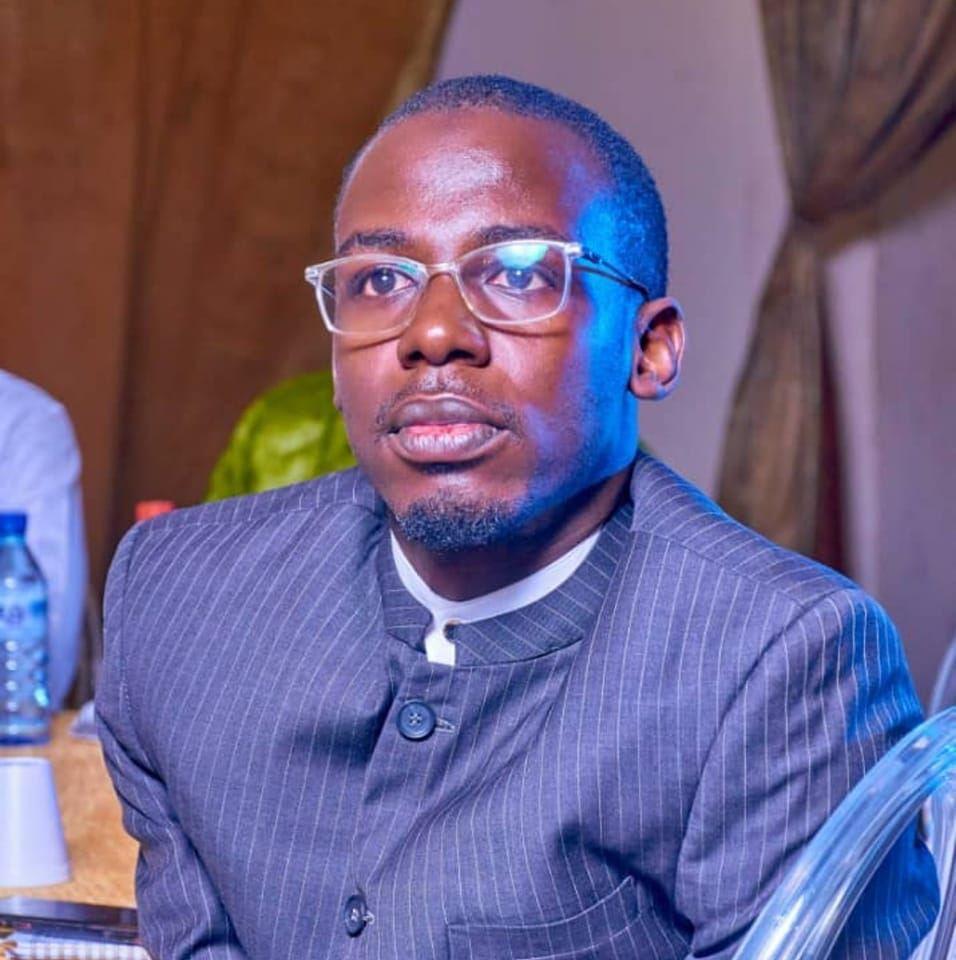
By Ismail Auwal
When a country is placed on Americas Countries of Particular Concern (CPC) list, it never remains a technical diplomatic category. It becomes a permanent shadow that trails the nation into investment discussions, military cooperation and the private rooms where powerful actors decide who to trust. Nigeria now carries that shadow, and for a country already overwhelmed by multiple security emergencies, the weight of this designation is neither abstract nor symbolic. It is political, economic and potentially destabilising.
The most worrying aspect is that the designation rests on a narrative that fractures upon contact with reality: the claim that Nigeria is enabling a Christian genocide. It is a narrative that sounds coherent in Washingtons hearing rooms, where testimonies are polished and emotions are guided. Yet once you step away from those rooms and into the communities where violence shapes the rhythm of daily life, the story changes completely.
A Narrative Travelling Faster Than Truth
The genocide narrative spreads quickly because it offers a clean explanation for a crisis that is anything but clean. It moves through congressional hearings, diaspora networks, lobbying circles and social-media echo chambers that seldom include those who bury their loved ones at dawn. In those distant spaces, the narrative feels straightforward and morally comfortable, but on Nigerian soil, it dissolves into a far more complex and painful reality.
In Zamfara, over four hundred villages, mostly Muslim, have been emptied by bandits who kill for profit and control, not in the name of faith. In Katsina and Sokoto, entire communities have disappeared from maps, destroyed by criminal groups with no ideological agenda.
In Plateau, twenty-five Muslim travellers were dragged from their vehicles and murdered in broad daylight by mobs from nearby Christian communities. In Anambra, Harira Jibril, pregnant and exhausted, was killed alongside her four children simply because gunmen identified them as Muslims.
These stories do not erase the suffering of Christian families who face similar horrors. Instead, they reveal what the genocide narrative refuses to confront: the violence in Nigeria does not travel in one direction. It shifts according to geography, vulnerability, and an almost two-decade-long crack in the state’s security architecture. Just as Muslims do not assign collective guilt to Christians, Christians cannot assign collective blame to all Muslims for the crimes of extremists who misuse faith.
Where the Evidence Falls Apart
Genocide is not a rhetorical weapon; it is a legal term defined by intent. It requires a deliberate plan to exterminate a group of people because of who they are. Nigerias conflict landscape does not support that claim. In the North East, Boko Haram targets Christians and Muslims alike, killing clerics who oppose extremism, villagers who refuse allegiance and children caught in crossfire. More than two million peopleof mixed faithslive in displacement camps, united not by creed but by vulnerability.
In the North West, the violence is driven by banditry, ransom economies and territorial capture. Armed groups raid for money, power and fear, not ideology, and their victims are overwhelmingly Muslim. In the Middle Belt, a different logic governs the conflict: old land disputes, generational grievances and cycles of retaliation. More than ten thousand people have been killed across Plateau, Benue, Katsina and Kebbi in just two years, yet none of these killings reflect a coordinated national extermination plan.
Across the country, the devastation is staggering: thousands of villages razed, millions displaced and livelihoods erased. Still, no pattern points to state-sponsored religious cleansing. Nigerias crisis is a knot of collapsing borders, unregulated weapons, drug-fuelled gangs, under-resourced security forces and abandoned communities struggling to survive without the protection of their own government.
When Foreign Narratives Replace Local Truth
The danger begins when a single narrative becomes the only lens through which a country is understood. Sympathy for Christian victims is legitimate, but when that sympathy becomes exclusive, Muslim victims vanish entirely from the story. Their widows do not appear in Washington. Their mass graves do not trend. Their displacement does not register in global reports. A national tragedy becomes a one-directional script, and in that script, the failures of governance disappear behind the simplified idea of religious persecution.
Once this misdiagnosed story takes root in Washington, policies begin to bend around it. Sanctions are proposed as moral pressure. Restrictions on arms sales are framed as accountability. Intervention is whispered as a last resort. These policies do not ask whether the next life at risk belongs to a Christian grandmother in Zangon Kataf or a Muslim farmer in Zurmi. They strike everyone equally, often worsening insecurity for those already living at the edge of danger.
The Grief That Defines the Crisis
In Kaduna, three years ago, I sat with a widow who lost her husband in a night attack. She did not know the attackers or their motives. All she knew was that when gunshots shattered the silence, no one came to helpnot the nearby police post, not the patrol team she had been assured would protect them, not the state she believed would stand between her family and danger. Her grief was neither Christian nor Muslim. It was the grief of a Nigerian who discovered, in one devastating moment, that she was on her own.
Her story echoes across northern Nigeria. In Katsina, a man from Dansadau recounted how bandits demanded a “tax” of ₦200,000 in exchange for peace. When villagers failed to pay, the killings began, farms were abandoned, and hunger forced families across the border. Over eighty thousand Nigerians now live as refugees in Niger’s Maradi region, while nearly four hundred thousand are displaced across Kaduna, Kano, Katsina, Sokoto and Zamfara. Many do not appear in the data of Washington because they are Muslims?
They sleep in classrooms, abandoned buildings, unfinished shops and borrowed compounds. Their lives are held together by resilience and charity, not by state protection. From Plateau to Benue to Zamfara, the scenes repeat themselves: midnight escapes, separated families, villages negotiating with bandits and people surviving despite the government, not because of it.
A Crisis Rooted in State Fragility
Nigerias emergency is not a religious war; it is a terrifying manifestation of state fragility. Borders allow weapons to flow freely. Security forces operate with broken vehicles and empty fuel tanks. Criminal groups evolve faster than government responses. In many villages, the most powerful authority is the local bandit leader, not the state. Communities negotiate peace at gunpoint, surrender parts of their harvest as taxes and accept rules imposed by criminals because the state is too weak to govern.
This is not the blueprint of genocide. It is the anatomy of state failure. And it is state failurenot a government-backed religious missionthat is killing Nigerians of all identities.
Reclaiming Nigerias Story
Nigeria cannot allow outsiders to dictate the meaning of its suffering. Foreign partners may care, but they must care responsibly. A misdiagnosed story in Washington becomes a policy, a policy becomes a precedent, and a precedent becomes a long-term obstacle to Nigerias security and development. Sanctions, arms restrictions and diplomatic isolation hit the vulnerable hardest, not the architects of state weakness.
This is why Nigeria must insist on telling its whole truth. A truth that honours Christian and Muslim victims equally. A truth that identifies governance collapsenot religious persecutionas the central driver of violence. A truth that demands stronger institutions, better security responses and international partnerships rooted in accuracy, not ideology. If Nigeria does not reclaim its story, others will continue telling it badly, and when the wrong story becomes the worlds truth, the decisions that follow may be ones Nigeria, in its fragile state, cannot survive.




Opinion
Why All Hues, Cries Against Garo?
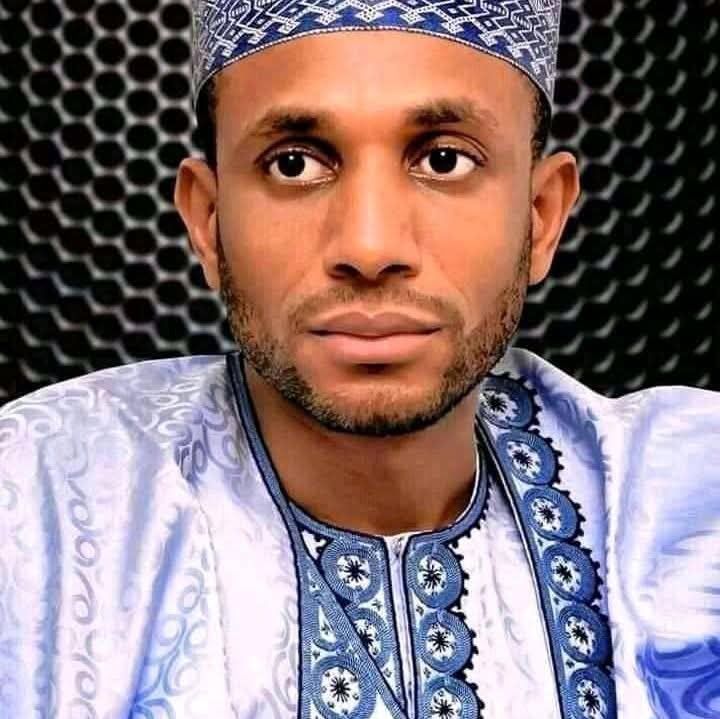
By Abba Anwar
First and foremost, it is against the very philosophy and principle behind the formation of All Progressives Congress (APC), from day one, an amalgamation of different political interests coming together with a common goal and purpose. To uproot the then party in power, People’s Democratic Party (PDP).
That philosophy, that principle, should be maintained across board, as the party, APC, has been on the throne for over a decade now. It was the breakaway from the original philosophy, that played an important role in pushing the party to where it is now, in Kano state.
It was made public that there were controversial allegations of diverting public funds between 2020 and 2023, totalling N57,433,981,816.00, which subsequently led to the prosecution of the former Commissioner for Local Governments and Chieftaincy Affairs, and Deputy Gubernatorial candidate for 2023 election in Kano, His Excellency Murtala Sule Garo, by the Kano State Public Complaints and Anti-corruption Commission before a Kano State High Court.
It was in the charge sheet, dated 29th July, 2024. The act, according to established laws is contrary to the provisions of Sections 97, 309 and 315 of the Penal Code (as amended), Cap. 105, Vol. 2, Laws of Kano State, 1991. And as cited by the complainant, it was a breach of Section 26 of the Kano State Public Complaints and Anti-corruption Commission Law 2008 (as amended).
Let me go to the technicalities of the matter at hand, before advancing my argument, not on the issue in court, by on the political circumstances massaging the process of our political realities here in Kano.
But before delving into that, show me a prominent politician in Nigeria, yes across all the six geopolitical zones, who has no corruption allegations hovering around his or her neck, I will show you a liar. It has been a common principle, known to all that, an accused is innocent until proven otherwise by competent court of justice.
In the Kano State High Court, before Hon Justice Sanusi Ado Magaji of High Court No. I5 Miller Road, Complex, Kano, in a ruling dated 30th June, 2025 and as issued as a True Certified Copy, also dated 4th February, 2026, on an issue before the High Court between Kano State Government as the Complainant and Murtala Sule Garo and others as Defendants, after stating the historical content of the issue at hand and after depending on several authorities, judgements /rulings in previous circumstances and references, the Hon Justice ruled that,
“I must humbly adopt the profound statement of the law as mine in respect of this instant case. I hold that the Complainant, herein cannot investigate any issue that borders on corruption or corrupt practices. Predicated of the above statement the charge herein filed by the Complainant is HEREBY STRUCK OUT (emphasis mine). The Defendants are accordingly DISCHARGED (emphasis mine).”
Though there is an appeal of the ruling by the state, but as some observers argue or assess, it could be possible and easy to say the case, as it stands before the state government, is not seriously handled. May be another way of saying, it looks as if the state is contemplating of withdrawing the case, because of reasons best known to the state. This is the legal aspect of Garo’s issue at hand.
Coming down to other aspects or areas, it still sounds odd and strange to see that, APC people or at best heavyweights in Kano, are still in the stone age of political practice. Before His Excellency the Governor of Kano State, Abba Kabir Yusuf joins APC, there were serious crises amongst leadership and followership. Within the leadership circle and within the followership circle, there were internal face-offs, fracas, which necessitated a well positioning of the party into another round of political waterloo.
I wonder the kind of hateful and destructive political practices, old APC members are engaged in. If and only if, old APC people will continue this way, what can stop Governor Yusuf from treating them as political toys. Fortunately for APC, Governor Yusuf isn’t an autocratic leader. Neither is he a dictator. If I were the governor, I will still help the party, especially the old circle, to be one and indivisible. Your Excellency Sir if you do that, history will not forget you forever.
After all the necessary assessments and closer observation of the APC juggernauts, Presidency believes that, at this era of political alignment and realignment, especially when the vacancy of a Deputy Governor, emerges in Kano, there are potential suitors, but the best of them all, is Murtala Sule Garo.
Hence, I heard it from a very reliable source that President Bola Ahmed Tinubu, GCFR, pleaded with the Governor Yusuf to accept Garo as his Deputy. If I were the Governor, henceforth I would not spend more than 24 hours without Garo’s nomination to the State House of Assembly. Presidential request na whose mate? Laughter. My able governor is aware that, he has many requests to be forwarded to Presidency from now to election period and beyond. Dabara ta rage ga mai shiga rijiya.
It sounds odd and sometimes unbelievable to say His Excellency, Deputy Senate President, Distinguished Senator Barau I Jibrin, CFR, is principally a force behind the delay. It doesn’t sound musical to ears. I said this because I knew what the relationship between Garo and the Senator was at the early days of the current political dispensation. Very cordial and healthy. From the beginning of this fourth republic, which started from 1999.
Before his Senatorial seat, Jibrin was a member House of Representatives, from Tarauni federal constituency. After that, he followed his ancestors from paternal side and traced back to Kabo local government, from where he got the right and the advantage to contest for Kano North Senatorial zone and later became a Senator of the Federal Republic of Nigeria.
When Garo was the Chairman of Kabo local government, he facilitated and issued the Senator with an indigene Certificate of Kabo local government. Since then, there was a gentleman arrangement between the two, that Jibrin would contest for gubernatorial position and Garo would contest for Senatorial seat. But as Allah planned hitherto, Jibrin contested for the Senatorial seat and won. I can still remember vividly clear that, then I was with the Hotline Magazine and Pan African News Agency.
Garo was Jibrin’s Director General of Campaign in two different elections, 2015 and 2019. So I am utterly confused when I heard that Senator Jibrin is presently against Garo’s nomination as a Deputy Governor. Looking at the antecedents, it could be much proper to see DSP in the forefront lobbying for the seat for Garo. Without even the involvement of Mr President. This should be the practice, in a normal and healthy political practice. Anything short of this, to me, is a negation of many good things. I am still in a state of mental confusion. Still asking myself, can the DSP be that low?
For the Governor, yes he has all the right to chose from many interested individuals, yet he should take it at the back of his mind that, whatever choice he makes, the result, output and repercussions, will definitely bounce back at him. He either gets apple or bitter lemon after cultivation. This is the fact and this is the comfortable or uncomfortable reality.
And the way I see it, Garo is not desperate about it. He isn’t so desperate to become a Deputy Governor. My view, I stand to be corrected. As it is now, former Governors and former Deputy Governors, are still benefiting from him, from many standpoints.
Garo, unlike former Deputy Governor and Gubernatorial candidate under the platform of APC in 2023 election, His Excellency Nasiru Yusuf Gawuna, who after he lost 2023 election was appointed, Chairman Governing Board, Bayero University, Kano and Chairman Board of Directors of Mortgage Bank, exited from APC recently to African Democratic Congress (ADC), in search of more political breathing space, Garo remains in the party without any appointment, whatsoever.
All along, nowhere was it reported that Garo was castigating the party at either state or national level. Now a vacancy arises, and the space is naturally available without any effort from anybody. Who then is in the best position to be compensated? If not Garo, who?
What I suggest our leaders should bear in mind is the fact that, so long they will continue to be in disarray, deconstructing each other, forgetting the marriage of convenience as the philosophy behind the formation of the party APC, ab initio, their political objectives and interest will remain in danger. Whatever that means.
Fruition of the relationship between and among old APC leadership and followership and that of the Governor with his new party, APC, is just like the two sides of a coin, that face different directions, but must stay together.
Anwar writes from Kano
Sunday 5th April, 2026
Opinion
The Kid with a Dream-Muhammad Abbas

By Muhammad Abbas
Once, in a land as far as you could imagine, there lived a boy called Usman. He was a thirteen-year-old boy with a strikingly handsome face and glowing eyes. Usman wasn’t just a normal kid; he was different.
At a very young age, Usman could already solve complex equations, and that made him stand out among his mates.
Usman’s father, Alhaji Sani, and his mother, Hajiya Zainab, were very rich, but Usman didn’t really care about his parents’ wealth.
Even when his parents offered to take him to school in their Rolls-Royce, he would tell them he would rather go on the bus like other students.
Usman went to one of the best schools in town called Arewa Fields Academy. It was a world-class school with some of the best facilities, such as an advanced robotics lab, digital views of space and the ocean, modern classrooms, and world-class sports facilities.
However, Usman never really liked the school very much. He preferred to go to a normal school with normal classes and live a normal life like other children.
One day, Usman’s father suddenly became very sick. It was a serious and chronic illness that needed urgent medical attention. The family rushed to find help, but there was a big problem.
Their village, called Garin Dutsi, had only one medical doctor, and unfortunately the doctor was not in town that day.
People tried their best to help Alhaji Sani, but the illness became worse. Sadly, Usman’s father did not survive.
After the funeral, Usman cried until he had no tears left. He loved his father deeply and missed him every day. But that painful moment also made him think about something very important.
He realized that if there had been more doctors in the village, maybe his father and many other people could have been saved.
That night, Usman made a promise to himself. He decided that one day he would become a doctor so that he could help people in places where medical care was difficult to find.
Years passed, and Usman worked very hard in his studies. Eventually, he finished university with a first-class degree in medicine. People admired his intelligence and his determination.
When he finally became a doctor, Usman chose to return to villages like Garin Dutsi, where many people still struggled to find medical care.
He treated the sick, helped families, and trained young health workers so that communities would never again suffer because there were not enough doctors.
Usman never forgot his father, and the memory of that difficult day always reminded him why he chose to become a doctor.
And that is the story of a kid with a dream who grew up to help others.
Muhammad Abbas is an aspiring writer, a secondary school student, and lives in Kano.
Opinion
INEC, David Mark, And Coming Abachaian Coronation
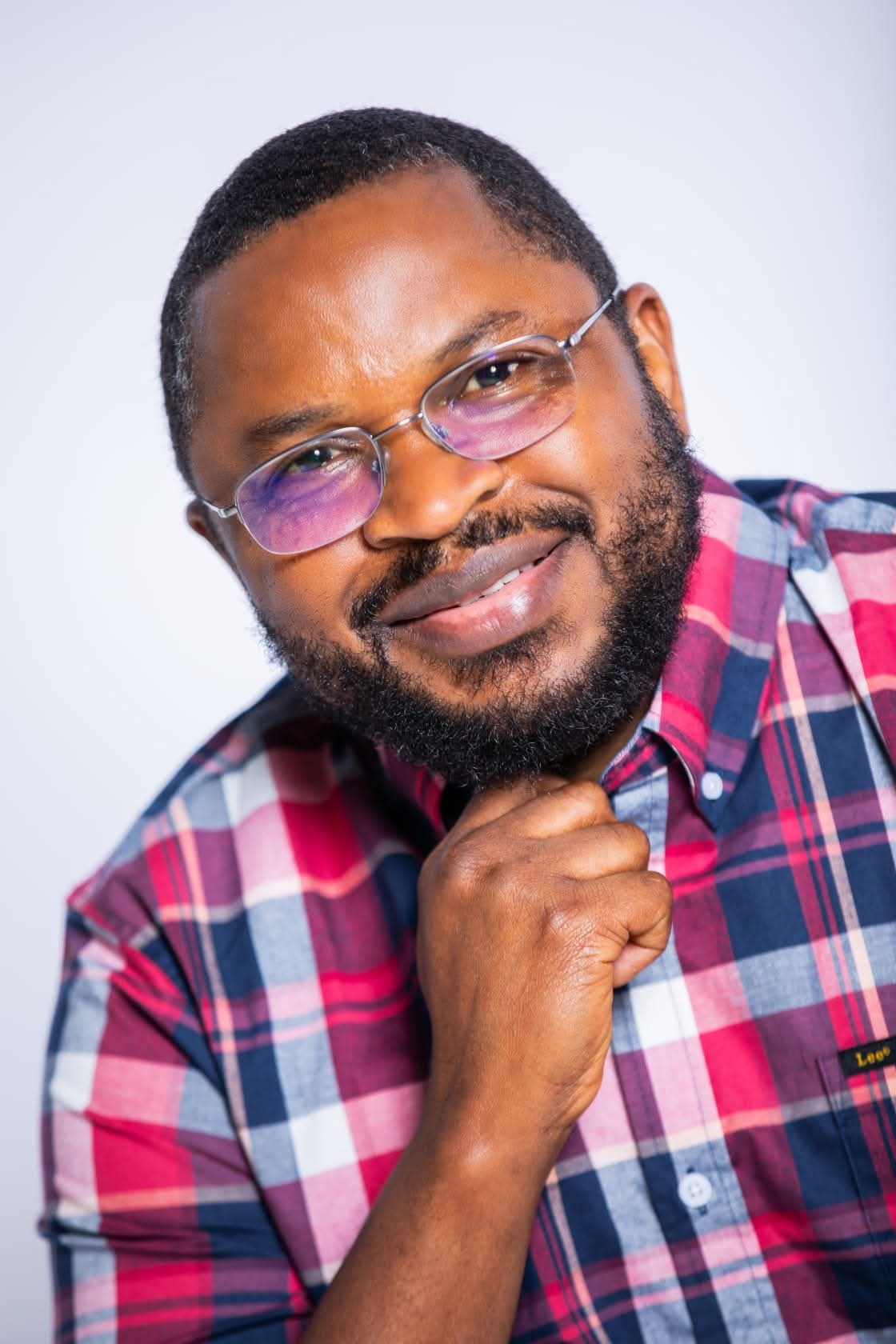
By Farooq Kperogi
With INEC’s overtly partisan, intentionally illegal, and possibly remote-controlled withdrawal of recognition for the David Mark-led ADC, Nigeria has officially reverted to full-on Abacha-era suffocation of even the wispiest pretence to competitive electoral politics.
Lawyers have said that the judgment of the appeal court, which INEC invoked as a convenient crutch to carry out a predetermined action, said the status quo should be maintained. In other words, the judgment says David Mark should remain the chairman of the ADC until the merit of the appeal has been determined.
However, it appears that INEC is in the know of what the final judgment will be and decided to jump the gun. Yet the INEC chairman is a professor of law and a SAN! He can’t even pretend to be neutral.
It seems obvious that the ADC faction INEC will ultimately recognize, as I predicted in my column of two weeks ago, will be the faction that will merely be an extension of the APC, much like the PDP now is. They will either present dummy candidates or adopt Tinubu as their candidate, which is a distinction without a difference.
It is obvious that Tinubu wants a coronation, not a competitive election, in 2027. He is scared to death about a real electoral contest. We all know why.
Well, according to public records, it cost around ₦300–₦355 billion to conduct the 2023 presidential election. It is projected that it will cost almost ₦870 billion to conduct the 2027 election.
Why should Nigeria spend close to a trillion naira on a preset, make-believe, Abachaian coronation exercise? Let’s kuku cancel democracy and make Tinubu the supreme leader. At least we would save a trillion naira.

Federal Government, Pluck Global Inaugurate ₦8BN Critical Infrastructure at FGC Kano

REJOINDER: The Fallacy of the “Commander” and the Burden of Integrity

INEC Directs RECs to Suspend Plans on Voter Revalidation Exercise

Kano’s Quest for an Alternative with Ibrahim Ali Amin Little, By Adnan Mukhtar

Easter: CAN Urges Nigerians to Unite, Rise Above Challenges

ADC Leadership Crisis: State Chairmen to Elect Caretaker Committee on Tuesday

Governor Abba Kabir Yusuf Holds Exclusive Prerogative to Choose Deputy – Malam Inuwa Waya

The Governor Who Chose His People Over His Politics: Abba Yusuf and the Moral Courage Behind Kano First
Restoring the Glory That Was Always There: Governor Abba Kabir Yusuf and the Historical Vision Behind Kano First

Table Water Producers Increase New Price for Sachet Water in Kano
Federal Government, Pluck Global Inaugurate ₦8BN Critical Infrastructure at FGC Kano
REJOINDER: The Fallacy of the “Commander” and the Burden of Integrity
INEC Directs RECs to Suspend Plans on Voter Revalidation Exercise
Kano’s Quest for an Alternative with Ibrahim Ali Amin Little, By Adnan Mukhtar
Easter: CAN Urges Nigerians to Unite, Rise Above Challenges
ADC Leadership Crisis: State Chairmen to Elect Caretaker Committee on Tuesday
Governor Abba Kabir Yusuf Holds Exclusive Prerogative to Choose Deputy – Malam Inuwa Waya
The Governor Who Chose His People Over His Politics: Abba Yusuf and the Moral Courage Behind Kano First
Restoring the Glory That Was Always There: Governor Abba Kabir Yusuf and the Historical Vision Behind Kano First
Table Water Producers Increase New Price for Sachet Water in Kano
-

 Opinion4 years ago
On The Kano Flyovers And Public Perception
-

 Features5 years ago
How I Became A Multimillionaire In Nigeria – Hadiza Gabon
-

 Opinion5 years ago
Kano As future Headquarters Of Poverty In Nigeria
-

 History5 years ago
Sheikh Adam Abdullahi Al-Ilory (1917-1992):Nigeria’s Islamic Scholar Who Wrote Over 100 Books And Journals
-

 Opinion4 years ago
My First Encounter with Nasiru Gawuna, the Humble Deputy Governor
-

 History5 years ago
The Origin Of “Mammy Market” In Army Barracks (Mammy Ochefu)
-

 History4 years ago
The History Of Borno State Governor Professor Babagana Umara Zulum
-

 News4 years ago
Federal University Of Technology Babura To Commence Academic Activities September