
News
SPECIAL REPORT:A Nation Afraid to Count Itself: The Lingering Shadows of Nigeria’s Unfinished Censuses”
By Yusuf Danjuma Yunusa
Nigeria’s population censuses have always been more than a mere headcount; they are a high-stakes political and ethnic exercise where numbers translate directly into power and resources. Nigerian Tracker News has gathered. A deep analysis of census records from the past to the present will help us grasp the nature of the Nigeria’s Population Census with leadership structure but which has, over the time, proven inactive.
Revisiting The Past
Pre-Independence Context
1866, 1871, 1896: Early censuses conducted by British colonial authorities were primarily in the Lagos area and the Southern protectorates. They were rudimentary and unreliable.
1952/53: This was said to be the first modern, nationwide census. It recorded a total population of 30.4 million, with the North (16.8 million) having a larger population than the South (13.6 million). This result already sowed the seeds of regional competition, establishing a demographic and political dominance for the North that would define future contests.
Post Independence Censuses
1. 1963 Census: The counting exercise for this particular year was conducted just three years after independence by the Prime Minister Abubakar Tafawa Balewa’s government. The country was a fragile federation of three regions: Northern, Eastern, and Western.
The Exercise & Controversy:
The preliminary results showed a massive population increase, which was statistically improbable.
The Eastern Region government, led by Dr. Michael Okpara, vehemently rejected the figures, alleging monumental inflation of numbers in the Northern Region.
The census board itself was divided along regional lines and failed to agree on a final figure.
Ultimately, the federal government unilaterally ratified the results.
Official Result: 55.6 million.
Northern Region: 29.8 million
Eastern Region: 12.4 million
Western Region: 10.3 million
Mid-Western Region: 2.5 million (newly created as at then)
Legacy & Impact: The 1963 census was never fully accepted. Its credibility was shattered, and it set a dangerous precedent where census figures were seen as a tool for political supremacy rather than a factual demographic exercise. This controversy was one of the many factors that eroded inter-ethnic trust and contributed to the tensions leading to the 1966 coup and the Civil War (1967-1970).
2. 1973 Census: The Cancelled Count
It was conducted under the military government of General Yakubu Gowon, after the Civil War. The country was now divided into 12 states, partly to dilute regional power blocs.
The Exercise & Controversy:
The exercise was meticulously planned and widely considered to be better executed than the 1963 census.
However, when the results were compiled, they showed a pattern similar to 1963: a huge population growth in the North that maintained its numerical superiority.
The results were so politically explosive and hotly contested by states in the former Southern regions that the government faced a major crisis.
The Outcome: CANCELLED. In 1975, the new military government under General Murtala Mohammed announced that the results were “incredible” and politically unacceptable. They decided to retain the 1963 figures for official purposes, a stunning admission of failure.
Legacy & Impact: The cancellation of the 1973 census was a clear signal that no government, military or civilian, could withstand the political firestorm of a disputed census. It entrenched the idea that an accurate count was perhaps impossible and that the 1963 figures, however flawed, had become a frozen “political truth.”
3. 1991 Census: The “Settlement” Under the Military
This was conducted 18 years after the failed 1973 exercise, under the military regime of General Ibrahim Babangida. The country now had 30 states and a Federal Capital Territory (Abuja).
The Exercise & Controversy:
Determined to avoid past mistakes, the Babangida government invested heavily in technology and logistics. It was the first census to use machine-readable forms and advanced data processing.
The exercise was conducted under a tense atmosphere, but the military’s tight control limited open contestation.
While still controversial, the level of dispute was significantly lower than in 1963 and 1973. Many analysts saw it as a political “settlement” enforced by the military.
Official Result: 88.9 million.
Legacy & Impact: The 1991 census was the first and only post-independence census to be officially accepted and used for planning for a significant period. Its relative acceptance was largely attributed to the coercive power of the military government which suppressed dissent. It provided a 15-year baseline that was considered the most credible Nigeria had managed, until it was superseded.
4. 2006 Census: The Last Attempt in a Young Democracy
This exercise was carried out under the civilian administration of President Olusegun Obasanjo. It was the first census in the Fourth Republic, with a more open and democratic atmosphere, which also allowed for louder contestations.
The Exercise & Controversy:
A major controversy erupted even before the count began over the inclusion of “Ethnicity” and “Religion” in the questionnaire. Northern groups argued for their inclusion, while Southern and Christian groups feared the data would be used for political and religious discrimination.
The federal government, in a compromise, removed these two sensitive questions.
The actual count was marred by logistical issues, allegations of double-counting, and inflation in various states.
Despite the controversies, the National Population Commission (NPC) proceeded to release the results.
Official Result: 140.0 million.
The results showed the North maintaining a higher population than the South.
Legacy & Impact: The 2006 census was accepted by the federal government for official use, but its credibility has been consistently questioned by politicians, academics, and civil society groups. It remains the most recent census, meaning Nigeria is currently using 18-year-old data for critical governance, revenue allocation and planning. Its flaws are a primary reason for the hesitation to conduct a new one.
2016: The National Population Commission (NPC) announced plans for a new census in 2018. The plan was later shelved, citing a lack of funding and political will.
2022-2023: Under President Muhammadu Buhari, the NPC conducted a pilot census and vigorously advocated for a national census in 2023, immediately after the general elections. The exercise was fully planned and budgeted for.
Postponement (2023): In May 2023, the incoming administration of President Bola Tinubu postponed the census indefinitely. The reasons cited included the need for the new government to settle in and the pressing issue of national security, which would prevent a credible count in many conflict-ridden parts of the country.
This narration reveals a clear pattern that every census in Nigeria’s history has been engulfed in controversy, driven by the inescapable link between population numbers and the distribution of political power and economic resources. The failure to hold a credible census since 2006 is not an anomaly but a continuation of this deeply entrenched political dilemma.
Expert Sheds More Light; Brands The Failure Since 2006 As A Systematic One
A public affairs analyst, Dr. Ibikunle Taofeek, categorically stated that successive governments have failed to conduct a census not because of a single reason, but because of a perfect storm of interconnected factors:
The political and ethnic stakes are so high that any outcome will be violently contested.
There is a fundamental lack of trust in the state’s ability to be an honest broker.
The logistical and financial costs are enormous.
The security environment in many parts of the country makes a credible count practically impossible.
“Until there is a broad national consensus that de-emphasizes the use of census data for resource allocation and political representation and rebuilds trust in the process—perhaps through heavy reliance on transparent digital technology and international oversight—the incentive for any sitting government to risk the political explosion of a new census will remain exceedingly low. The path of least resistance, and indeed, political survival, has been to simply kick the can down the road,” he said.
Speaking on outdated data and their inadequacies, Dr. Taofeek said that the NPC has always been faced with the challenges of starting from the scratch whenever the exercise is scheduled to hold, thereby making it time consuming and expensive.
“The foundational data needed for a census—detailed maps, satellite imagery, and a reliable digital identity system—are either incomplete or outdated. The NPC often has to start from scratch with mapping, which is time-consuming and costly.”
Responding to questions on the funding constraints of the exercise, the expert disclosed that the daunting task of some competing national priorities like security, fuel subsidy and infrastructure has made it inconvenient to fund the census exercise which most times amount to billions of Naira to execute.
“Honestly, a credible census is exorbitantly expensive, costing billions of Naira. In a context of competing national priorities like security, fuel subsidies, and infrastructure, governments often find it easier to postpone this costly exercise, especially when the political fallout is guaranteed.”
Consequences of The Failure
Having known the reasons behind the failure, it is worth recommending to have the consequences outlined as well, so that the appropriate authorities will take heed and act accordingly.
An Economist, AbdulWahab Lukman, emphasized that there’s no how a country will efficiently allocate resources in a country as wide and diverse as Nigeria without having the accurate population data of people in a particular demography.
“When you don’t know how many people live in a country or even where they are, it becomes difficult to allocate resources efficiently.”
He continued, “absence of accurate population data seriously weakens the foundation of economic planning because almost every key indicator relies on it.
For instance, government budgets for health, education, and infrastructure end up being either overstretched or underutilized. Inflation data also, can become misleading because consumption patterns vary widely across different population groups, and without reliable population data, policymakers can’t tell where price pressures are truly coming from in order to design effective policies to address that.”
Mr. AbdulWahab, while speaking on the consequences of inaccurate population data on GDP per capita, maintained that it loses its essence when population estimates are mistaken.
“If the population is undercounted, GDP per capita will appear higher than it actually is, giving a false impression of prosperity. Conversely, an overcount makes the economy look weaker than it is. In both cases, poor data distorts reality and leads to policies that miss the mark.”
AbdulWahab concluded by stating that without reliable population figures, economic planning becomes “a guessing game rather than a strategy.”
Meanwhile, the Chairman of the National Population Commission, Nasir Kwarra, on 28 of October, 2025, officially concluded his five-year tenure and handed over leadership of the Commission to the Federal Commissioner representing Niger State, Muhammad Dattijo.
Dattijo will serve as acting Chairman pending the swearing-in of Aminu Yusuf by President Bola Tinubu.
The brief but symbolic handover ceremony took place at the NPC Headquarters in Abuja and was attended by Federal Commissioners, the Director-General, Directors, and staff of the Commission.
The incoming substantive Chairman, whose swearing-in is awaited, is expected to steer the commission toward completing the country’s long-delayed census, which is crucial for evidence-based planning and equitable national development.
Yusuf Danjuma Yunusa is a freelance journalist and a reporter with the Nigerian Tracker News. He can be reached via: 07069180810 or theonlygrandeur@gmail.com










News
Beyond Connectivity: How a Community Network Is Changing Life in Dakwa
By Ali Sabo
Dakwa is the kind of community that can easily be overlooked in Nigeria’s digital story.
Located along the Zuba–Dei-Dei–Zuma corridor of the Federal Capital Territory, the agrarian community is only about 29 kilometres from Abuja, yet proximity to the nation’s capital has not always translated into access to reliable and affordable internet. For many residents, particularly young people, accessing the opportunities of the digital world meant looking beyond their immediate environment.
That is beginning to change.
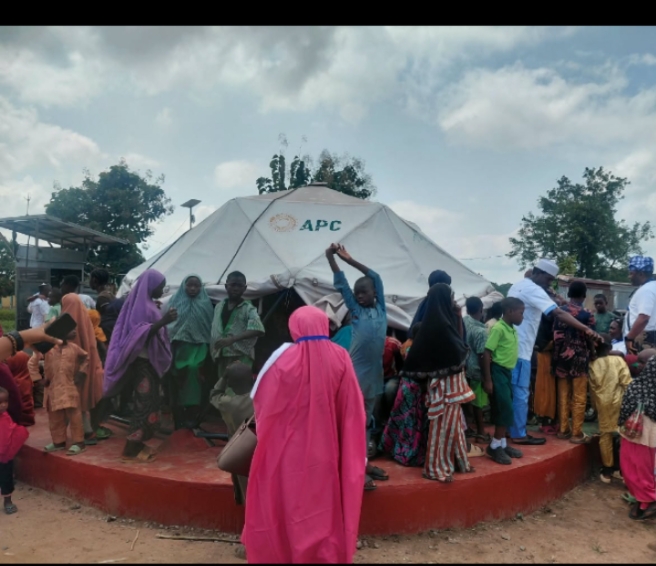
Through the efforts of the Centre for Information Technology and Development (CITAD), the Association for Progressive Communications (APC), Hello World and 48 Percent, a community network and internet hub was established in Dakwa, bringing affordable connectivity closer to residents and creating a space where people can use the internet for learning, communication and accessing opportunities.
But the real story of the Dakwa Community Network is not the infrastructure. It is what the people of Dakwa are beginning to do with it.
During a recent visit to the community, the District Head of Dakwa, Alhaji Shuaibu Samu, described the intervention as a “life-changing opportunity” for residents.
His description is rooted in what the community experienced before the hub came into existence.
“Before the establishment of this facility, access to reliable and affordable internet was a major challenge for our people.”
For a community increasingly connected to a world where education, employment, communication and access to information are moving online, that challenge carries consequences. Being offline or poorly connected does not simply mean having no internet. It can mean missing opportunities that others take for granted.
Today, Samu says the situation is changing.
“Now, our youths can access information, learn new skills and explore opportunities online without having to travel far from the community.”
That statement captures perhaps the most important change taking place in Dakwa: the world of opportunities is becoming physically closer to the people who live there.
A window beyond Dakwa
For Ismail Shuaibu, a Community Champion at the hub, the facility has already become part of the community’s daily life.
He explained that young people now use the hub to study, search for jobs, access online opportunities and communicate with others.
“Many young people now come here to study, search for jobs, access online opportunities and communicate with others.”
These may sound like simple activities. But in a community where reliable and affordable internet was previously a major challenge, they represent something much bigger.
A young person who comes to the hub to search for a job is no longer limited to opportunities advertised within the community. A student who comes to study can access information and learning resources that may not be available locally. Someone looking for information can reach beyond the boundaries of Dakwa and engage with a much wider world.
In that sense, the community network is not merely connecting devices. It is expanding people’s horizons.
From a project to a community asset
Perhaps equally important is the way residents are beginning to see the facility.
Ismail explained that the hub operates through a community-driven model, with users paying a small fee that contributes to maintaining the equipment and keeping the service running.
“The idea is for the community to see this as its own facility. The small amount paid by users helps us maintain the equipment and provide the service continuously.”
This is significant.
Many development interventions struggle after external support ends because the communities that benefit from them were not sufficiently involved in their ownership or management. Dakwa is attempting a different path: making the community part of the solution.
The District Head has also called on residents to take ownership of the facility and support efforts to keep it operational.
That sense of ownership could ultimately determine whether the digital opportunity created in Dakwa becomes a temporary intervention or a lasting community institution.
The real measure of digital inclusion
Dakwa’s experience offers a broader lesson about digital inclusion in Nigeria.
For years, discussions about the digital divide have often focused on infrastructure, broadband coverage and the number of people connected to the internet. These are important measures, but they do not tell the whole story.
The more important question is: What changes when people get connected?
In Dakwa, the early answers are emerging from the residents themselves: young people are studying, searching for jobs, accessing opportunities, communicating and becoming more familiar with digital tools and online services.
The organisations that helped bring the community network into existence deserve recognition for creating that opportunity. But the most important voices in determining its impact are those of the people who now use it.
And their testimonies suggest that something deeper than internet access is taking place.
Dakwa is beginning to discover that distance does not necessarily have to determine opportunity.
A young person can live in a community outside the centre of Abuja and still search for employment online. A student can access learning resources without travelling to the city. A resident can communicate, find information and explore opportunities that were previously difficult to reach.
That is what meaningful connectivity should ultimately achieve.
The success of Dakwa’s community network will not be measured simply by how many people connect to it. It will be measured by how many possibilities people discover because they can.
And perhaps that is the most important transformation happening in Dakwa: the internet is not only bringing the wider world into the community. It is giving the people of Dakwa a stronger opportunity to reach out and participate in that world.
Ali Sabo is the Campaign and Communication Officer of the Centre for Information Technology and Development and can be reached at asabo@citad.org
News
Kenyan Presidential Aspirant Warns Dangote: ‘Don’t Rush Lamu Refinery, I’ll Send You Back to Nigeria’
By Yusuf Danjuma Yunusa
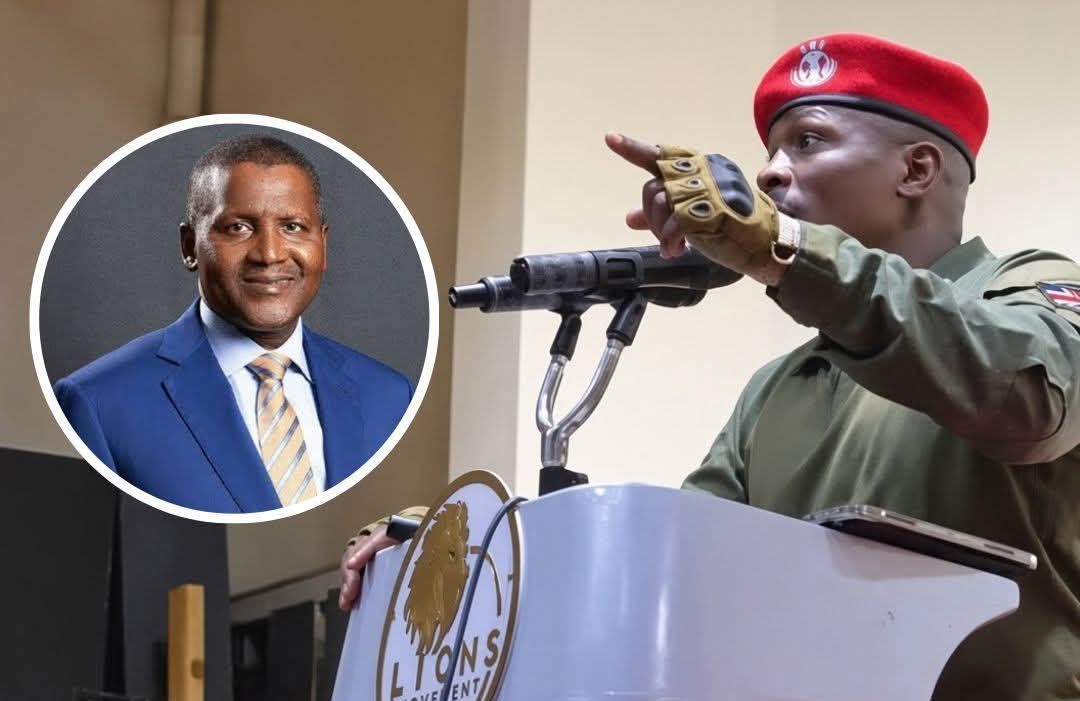
A man identified in a viral video as Kenyan presidential aspirant Patrick Osoi has sparked a heated online debate after warning Nigerian billionaire Aliko Dangote not to rush into establishing an oil refinery in Lamu, saying he would send the businessman back to Nigeria if elected president.
In the clip, said to have been recorded at a Lions Movement event, Osoi says: “I want to tell Aliko Dangote, please don’t rush to start the refinery because, when I’m sworn in as President of Kenya next year, you will be heading back to Nigeria.”
The remarks appear to reference a proposed $16 billion refinery project in Lamu, a coastal county that Kenya has promoted as a future hub for oil and gas infrastructure. Osoi argued that Kenyan investors have the capacity to build and run such a facility without foreign ownership.
“We don’t need to beg foreigners to develop our resources,” he said, according to a partial transcript of the video. “Kenyans can do it.”
The video has been shared widely on Facebook, X and WhatsApp, drawing mixed reactions. Supporters praised Osoi for what they called a bold defense of economic sovereignty. Critics warned that the comments could scare off foreign investors and strain Kenya’s diplomatic and trade ties with Nigeria.
Dangote, Africa’s richest man and chairman of Dangote Group, has not publicly responded to the clip. His conglomerate operates one of the world’s largest single-train refineries in Nigeria and has investments in cement, sugar, fertilizer and petroleum across Africa.
The Kenyan government has not commented on the video. It was not immediately clear whether the Lamu refinery project involving Dangote is still active or whether Osoi’s remarks reflect any official policy.
Political analysts say the controversy underscores growing public debate in Kenya over foreign investment, local content and control of natural resources ahead of the next general election, expected in 2027.
News
NDC’s Kano Governorship Candidate Gwarzo Missing From INEC Final List
By Yusuf Danjuma Yunusa
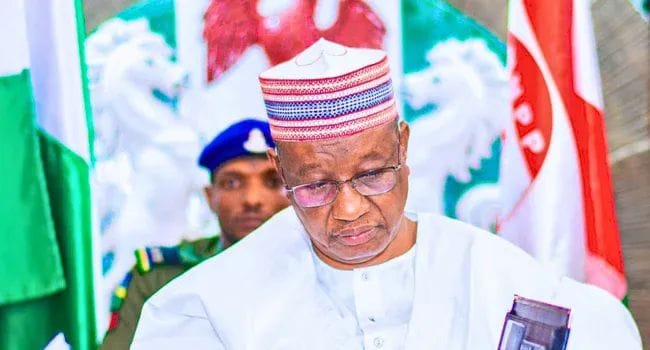
The National Democratic Congress (NDC) governorship candidate in Kano State, Aminu Abdussalam Gwarzo, is absent from the final list of governorship candidates released by the Independent National Electoral Commission (INEC).
The three-page list, signed by INEC Secretary Rose Oriaran-Anthony, contains 17 governorship candidates and their running mates for the Kano election, but neither Gwarzo nor any other NDC candidate appears on it.
Those listed include Governor Abba Kabir Yusuf of the All Progressives Congress (APC), Abacha Muhammed Sani of the Peoples Democratic Party (PDP), and candidates from the African Democratic Congress (ADC), Labour Party (LP), Social Democratic Party (SDP), Action Alliance (AA), African Action Congress (AAC), Action Democratic Party (ADP), All Progressives Grand Alliance (APGA), Allied Peoples Movement (APM), and New Democratic Party (NDP), among others.
The document provides the names, political parties, ages, genders, and educational qualifications of the candidates and their deputy governorship candidates.
INEC did not state why the NDC candidate was omitted, and the published list does not indicate whether the omission is connected to the party’s nomination process, documentation, or another issue.
The development raises questions about the NDC’s participation in the Kano governorship election, although the list alone does not establish the reason for Gwarzo’s absence.

Beyond Connectivity: How a Community Network Is Changing Life in Dakwa

Kenyan Presidential Aspirant Warns Dangote: ‘Don’t Rush Lamu Refinery, I’ll Send You Back to Nigeria’

NDC’s Kano Governorship Candidate Gwarzo Missing From INEC Final List

Dawakin Tofa Academic Forum Holds Maiden Heroes Day, Honours Former Kano Governor

Atiku Slams Tinubu Over 30-Day Petrol Discount, Demands Answers on Day 31

Zamfara Varsity ASUU Threatens Warning Strike Over FG-ASUU Agreement, Promotion Arrears

PCACC Arrests Man Over Alleged ₦4.5m Sale, Illegal Leasing of Kano Government Horse Stable

Goje’s Electoral War:The Confrontation With Tinubu,Governor Inuwa,Usman Kumo And APC candidates Ahead Of 2027

Prof Yusuf Adamu Delivers BUK’s 63rd Professorial Inaugural Lecture, Reflects on Medical Geography and Academic Legacy

Al-Istiqama University to Hold Convocation, Honours Late Aminu Dantata, Sheikh Ibrahim Khalil
Beyond Connectivity: How a Community Network Is Changing Life in Dakwa
Kenyan Presidential Aspirant Warns Dangote: ‘Don’t Rush Lamu Refinery, I’ll Send You Back to Nigeria’
NDC’s Kano Governorship Candidate Gwarzo Missing From INEC Final List
Dawakin Tofa Academic Forum Holds Maiden Heroes Day, Honours Former Kano Governor
Atiku Slams Tinubu Over 30-Day Petrol Discount, Demands Answers on Day 31
Zamfara Varsity ASUU Threatens Warning Strike Over FG-ASUU Agreement, Promotion Arrears
PCACC Arrests Man Over Alleged ₦4.5m Sale, Illegal Leasing of Kano Government Horse Stable
Goje’s Electoral War:The Confrontation With Tinubu,Governor Inuwa,Usman Kumo And APC candidates Ahead Of 2027
Prof Yusuf Adamu Delivers BUK’s 63rd Professorial Inaugural Lecture, Reflects on Medical Geography and Academic Legacy
Al-Istiqama University to Hold Convocation, Honours Late Aminu Dantata, Sheikh Ibrahim Khalil
-

 Opinion5 years ago
On The Kano Flyovers And Public Perception
-

 Features5 years ago
How I Became A Multimillionaire In Nigeria – Hadiza Gabon
-

 Opinion6 years ago
Kano As future Headquarters Of Poverty In Nigeria
-

 History5 years ago
Sheikh Adam Abdullahi Al-Ilory (1917-1992):Nigeria’s Islamic Scholar Who Wrote Over 100 Books And Journals
-

 Opinion5 years ago
My First Encounter with Nasiru Gawuna, the Humble Deputy Governor
-

 History5 years ago
The History Of Borno State Governor Professor Babagana Umara Zulum
-

 History6 years ago
The Origin Of “Mammy Market” In Army Barracks (Mammy Ochefu)
-

 News5 years ago
Federal University Of Technology Babura To Commence Academic Activities September