
Politics
DSP Barau, Alwan’s Allegations and Ramat’s Cul-de-sac
By Abba Anwar
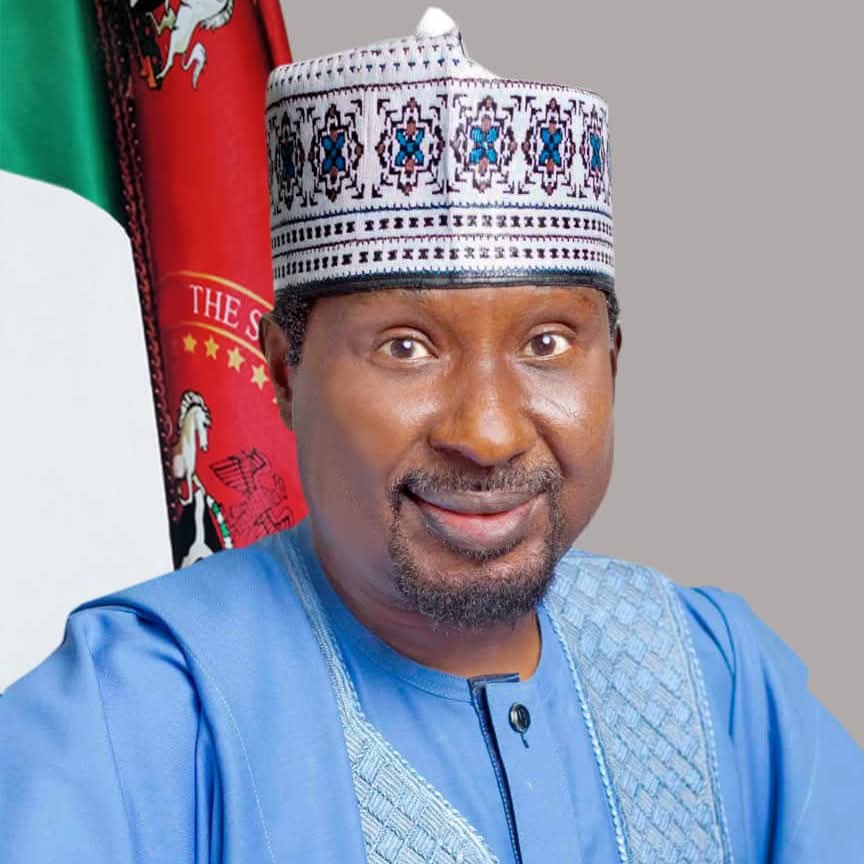
Deputy Senate President, Distinguished Senator Barau I Jibrin, CFR, is no stranger to political persecution, orchestrated machinations and creation of bamboozled lies against him even before he became DSP of the 10th Assembly.
Few months before the 2023 general election, he met stiff resistance and ploys against his political life and development. Let me cite an example here, there was a time, he brought Hummer Buses alongside smaller vehicles, for distribution to Students’ Union bodies, alongside other associations.
All the vehicles were inscripted with his name, as the person who donated them. They were all parked at Coronation Hall premises, at Kano Government House. To the chagrin of all, he was forced to effect the deletion of his name as the contributor of the vehicles. His name was replaced with another name.
To the surprise of all, during the presentation day of the vehicles, all those who spoke at the occasion didn’t recognize, even his presence, as Senator representing Kano North. Though he didn’t cry profusely then, to display his disappointment, but many of us spotted drops of tears in his both eyes. Naked humiliation and political persecution at play.
Before 2023 election, Barau had to press some buttons from Abuja, before he got the ticket. Not even the ticket, before he got the form for the contest. As Allah made it possible, after he emerged victorious from internal persecution, humiliation and frustration, as the only Senator under the platform of All Progressives Congress (APC) from Kano, as the remaining Senators came from NNPP. He eventually became the Deputy Senate President. As Allah Wishes. That is how Allah Works.
Above are just few out of many persecutions and humiliations Barau got from the same party he belongs to, the APC. There are also lessons to learn from those experiences. Lessons of how Allah Works.
So the recent lies, hues and cries against him over the controversial screening by the Senate, of Engineer Abdullahi Garba Ramat, who was nominated by President Bola Tinubu, to become CEO/Chairman of the Nigerian Electricity Regulatory Commission (NERC) are not strange to him. Neither could they derail him from focusing on his political ambition and genuine love for Kano, North and Nigeria as a whole.
Before touching some of the concocted lies against him, let me begin with what Baffa Babba Dan Agundi, the Director General of National Productivity Centre, said over the incident. He reveals how some individuals met him and invited him to join hands with them in discrediting Senator Barau over this screening palaver.
In a 2:54 minutes short video, Dan Agundi said, “I am doing this brief explanation for the people of Kano state. Especially those who feel bad because of the story going round that Senator Barau was responsible for not clearing the nomination of Eng Garba Ramat for the chairmanship of a federal government agency (National Electricity Regulatory Commission).
He continues, “What worries me the most is when some people who know that I am not a supporter of Senator Barau (in his political ambition), came to me and requested me to spearhead rumors, confusion and crisis over the issue….They wanted me to be part of the team aimed at tarnishing his image via allegations and lies.”
Dan Agundi further challenged them that, “I told them clearly that, it is absolutely not in my character to delve into such ploy for character assassination… I know he (Barau) has no hand at all, whatsoever, in stopping Eng Ramat’s screening and clearance.”
As he advised, “People should start asking questions, as to why Ramat was not cleared. Though Senator Barau as DSP is there… Senator Barau is absolutely innocent in the entire matter. I also came to know this later.”
Dan Agundi then warned, “Let me say this categorically clear that, if they dare to go to any other place and present what they came to me with, and I saw an execution of same, I will not hesitate to reveal their names.”
Even if I don’t always share similar political views with Dan Agundi, but I sincerely respect him when he further explained that, “Even if I don’t support Barau, but we still respect one another as human beings. People should understand that, all those things are orchestrated to give Barau a bad name.”
“Similar things were done against him in the past. All I know is, Allah Will not Hold him responsible for what he did not do,” he concluded.
Part of the wild allegations against DSP was that, they said the sum of $10 million exchanged hands. Few hours after the allegations, the Senate had spoken. In the Daily Trust of Friday, 7th November, 2025, it was reported that, “The Senate has denied allegations that its leadership received a $10 million bribe to block the screening and confirmation of Abdullahi Garba Ramat as Chairman of the Nigerian Electricity Regulatory Commission (NERC).”
Adding that, “… the Chairman Senate Committee on Media and Public Affairs, Senator Yemi Adaramodu (APC, Ekiti South), described the allegation as baseless and mischievous. And that, President Bola Ahmed Tinubu had on October 7, 2025, requested the Senate to confirm Ramat as NERC’s chairman. Tinubu’s request was contained in a letter read during plenary by Senate President Godswill Akpabio.”
When Senator Adaramodu said the following, I now sensed and felt, the end of the road for the nominee. He said, in that Daily Trust report, ” The Senate is statutorily bound to pause consideration of any nominee facing serious public petitions or controversies. Many nominees in the past have been stepped down for similar reasons. Mr. Ramat’s case is no exception.”
I also felt sorry for Eng Ramat and understood that, those spreading rumors against Sen Barau in the name of protecting the appointee, are doing more harm to him (Ramat), as Senate position goes this way that, “No one can drag the National Assembly into disrepute with unfounded claims in an attempt to arm-twist the legislature. We will engage Mr. Alwan in court to provide Nigerians with evidence to support his assertions.”
Another aspect that looks scary is the Senate’s stand that, “Nigerians deserve appointees who pass through rigorous and transparent screening processes, not those who attempt to bully their way into office through falsehood and blackmail,” as said by Senator Adaramodu.
At the hey hours of concocted lies against the Senator, the nominee Eng Ramat distanced himself from all the allegations. When he posted a disclaimer on his Facebook page.
In it he said, “My attention has been drawn to a post circulating online alleging that His Excellency, Distinguished Senator Barau Jibrin, is blocking my confirmation as Chairman NERC. This claim is completely NOT true.”
He dismissed that, “I sincerely appeal to the good people of Kano State and the general public to refrain from sharing or believing such false information. The Deputy Senate President, Senator Barau Jibrin (DSP), has actually been supportive and has continued to make commendable efforts to ensure that my report, which has already been cleared by the Senate screening committee chaired by Distinguished Senator Enyinnaya Abaribe, is presented to the 10th Senate for confirmation.”
As if those chanting political war songs against DSP on Ramat’s screening and clearance, were deaf, dump and blind, with all the disclaimer put forth by the nominee, rejecting all allegations against the Senator, they proceeded deeply in their machinations.
Engineer Ramat did not relent, he issued another statement for the second time within two days, which he tagged as public statement and posted on his Facebook page again.
In it, he clarified that, “My attention has been drawn to some online publications and public discussions that have attempted to link my name to statements or actions said to be against the Deputy Senate President, His Excellency Senator Barau I. Jibrin, and the President of the Senate, His Excellency Senator Godswill Akpabio, CON (sic).”
He disclosed that, “From the very start of my nomination as Chairman/Chief Executive Officer of the Nigerian Electricity Regulatory Commission (NERC), Senator Barau Jibrin has been a strong pillar of encouragement and support. In fact, he was the first person to call me immediately after my announcement, and has since shown me nothing but goodwill and mentorship.”
To his chagrin Ramat reiterated that, “Let it be known that the very first day I noticed these stories, I posted a clear disclaimer disowning them and personally reached out to several people appealing for calm and restraint. Sadly, instead of easing the tension, those efforts seemed to encourage more of such activities, which I find unnecessary and unfair to everyone involved.”
To officially distance himself from the noise makers he highlighted that, ” I want to make it absolutely clear that I did not authorize any press conference, protest, or public statement by anyone in my name. The only time I spoke officially was during my screening before the Senate Committee, where I defended myself and was successfully cleared.
Those who continue to use my name in this manner are doing so without my knowledge or approval. Their actions do not reflect my views or intentions.”
He was also forced to warn his detractors. He said, “However, if these activities continue, I may be compelled to take appropriate steps through lawful channels to protect my name and integrity.”
In his noise making business, one Alwan Hassan, from Nassarawa local government, one of the remnants of Congress for Progressives Change (CPC), one of the political platforms that, along other political groupings, formed All Progressives Congress (APC), at a press conference he called during the heyhours of the debate, he condemned Senator Barau for being solely responsible for Eng Ramat’s ‘travail.’
To remind my readers, CPC faction of the APC, was the political group that fought Tinubu’s nomination before he got the presidential ticket for the party. It was CPC elements at almost all levels, that fought hard to see the fall of Tinubu during 2023 elections. The same experience was visible in Kano’s gubernatorial election, when His Excellency Nasiru Yusuf Gawuna and His Excellency Murtala Sule Garo, were the flagbearers of the party, in Kano, then.
So in his attack of Senate President, Godswill Akpabio and Deputy Senate President, Barau, this diehard CPC man, Alwan, challenged that, “Ramat’s confirmation has been stalled reportedly due to the actions of the Senate President, Senator Godswill Akpabio Godswill Obot Akpabio and his Deputy, Senator Barau Jibrin. Unfortunately these two men are APC members who in public claim to support the President, but in private work against his decisions.”
Though I don’t even take him serious, neither his self-defeatist approach, in his utterances, his day dreaming goes this way, “It is deeply troubling that, according to credible accounts, this delay is not because Engr Ramat does not merit the job, or is it in the national interest, but rather it is rooted in Senator Barau’s political machinations and personal selfish interests.”
This CPC guy thought he could intimidate Akpabio and Barau, when he ‘warned’ that, “Today, we are calling for Senator Godswill Akpabio and Senator Barau Jibrin to allow due process to prevail. They must refrain from interference, respect the President’s mandate, and stop working against both the party and the interest of Kano citizens.”
I wonder between him and these gentlemen, who is working against Kano and its citizens. This is somebody who was Special Assistant to the then Vice President, Prof Yemi Osinbajo, but from the start of his appointment to the end, he has nothing to show for it. As his contributions to his people or community.
In trying to call attention for recognition, not in trying to become relevant, BECAUSE ALWAN CAN NEVER BE RELEVANT IN KANO POLITICS, he goofed and disappointed Eng Ramat. I made reference to what Ramat said above. Also in trying to call attention for recognition again, he made a wild allegation against the Senate and DSP. Which the Senate notified him of their decision to take him to court of law, for him to substantiate his ill-informed and ill-advise utterances against the institution of the Senate.
On an online Dokin Karfe TV short interview, Alwan asked rhetorically, “What has Ramat done to him (Barau)? What Kano people did to him to deserve this? We will not leave this man to become a Governor of Kano.”
I laughed profusely when he said so. This is someone who cannot even win his chapter during elections, not Ward or local government. Hear him boasting they would not allow Senator Barau becomes a Governor in Kano. Laughable, disappointing and dramatic.
Readers should understand that, CPC, is no longer relevant in Tinubu’s administration. He knows how they fought his presidential ambition. And how they frustrated the entire process for him. So, who among CPC elements could now come forward and say he or she is supporting Tinubu’s administration. Too late to cry. I mean at all levels. They don’t actually have any bearing under the current dispensation.
What is so worrying during the press conference he convened was the presence of the former Chairman of Ungogo local government, Hon Muhammad Badaru Umar. One of the strongest pillars in Gawuna circle. The worrying part of it was, I know Badaru for over 20 years back, I have been relating with him since then. I knew him and I still know him as a gentleman, reserved, religious and organized.
Though I believe, had Badaru known what Alwan would spit at the conference, he wouldn’t have been there at all. Because Badaru has never been that low. The way I knew him. Which I’m sure he still maintains that. I also tell people that, Badaru was former Ungogo local chairman as Ramat was. His presence, could also be seen as solidarity to another former chairman of his local government.
But all my excuses and expression of benefit of doubt, cannot exclude other people from seeing Badaru, from the other side of the coin. That some may see and understand him as a representative of Gawuna at the event. I think all people are entitled to their respective opinions.
When Alwan said DSP Barau doesn’t like Kano and its people, I then asked myself, what this guy is saying? All the scholarships for thousands of our people from Kano under Barau Foundation, sponsoring students abroad for their postgraduate studies, the establishment of North West Development Commission, establishment of Federal University of Science and Technology, Kabo, upgrading Federal College of Education, to University (the position removed by Muhammadu Buhari administration) and later reversed by Tinubu administration for the FCE, Kano to become Federal University of Education Kano, as being facilitated by Senator Barau. And the renaming of the University after Yusuf Maitama Sule, Dan Masanin Kano, among others are all not show of love to Kano and her people?
What of DSP’s immense contribution to Security agencies, especially Nigeria Police Force, Kano Command, with operational vehicles and other interventions? Are these all not show of love for Kano? So I don’t comprehend what Alwan means by saying Senator Barau doesn’t like Kano.
I will advise the Distinguished Senator Barau to send emissaries to Alwan, to come and kneel before him, to please and kindly allow Barau to become Kano State governor. Very funny indeed!
For Ramat, he is one of the former local governments APC chairmen, that I respect very much. His credentials are there for him as fine and refined documents. Ramat was the most digitally compliant local government chairman amongst all chairmen from all the 44 local governments in Kano. During their reign. Is someone I salute comfortably for his intellectual capacity and prowess.
For my readers, let us all know that, abuse and castigation of leaders, are not the monopoly of any fellow among us all. These are characters or habits that are not skilful. One needs no skill to master such behaviors. In fact even mad people in the street can engage in these, perfectly well. So it is not something to boast about and raise shoulders for.
Anwar writes from Kano,
Sunday, 9th November, 2025









Politics
A Remarkable Homecoming: Kano Unites in Support of Abba Kabiru Yusuf, Signaling a Strong Endorsement for Bola Ahmed Tinubu in 2027

By: Nasiru Yusuf Gwadabe
Saturday, 4th April 2026 will not fade easily from the living memory of Kano. It is a date that has already secured its place in the history of the ancient city, not through official proclamation, but through the overwhelming expression of its people. From the very moment the aircraft conveying Abba Kabir Yusuf touched down at about noon, Kano transformed into a living theatre of emotion, loyalty, and political meaning. What began as a homecoming soon evolved into something far deeper, a dual expression of confidence in state leadership and a rising chorus of national political alignment.
What followed defied imagination. The governor could barely step forward without being surrounded by a surging crowd, eager not just to see him, but to connect with him. From approximately 12 noon until about 9 o’clock, movement itself became an extraordinary challenge. It was not resistance that slowed the governor’s convoy, but an outpouring of affection so powerful that it turned a simple journey into a historic procession.
The journey from the airport to the Government House, which ordinarily takes not more than fifteen minutes, stretched into nearly ten hours. What should have been a routine drive became a prolonged passage through a sea of humanity. The motorcade moved slowly, almost ceremonially, as if guided by the collective will of the people rather than the force of engines.
At every junction, the story repeated itself. The convoy would halt, not out of necessity, but out of insistence. Citizens stepped forward to offer prayers, raising their hands and voices in supplication for the governor’s success. These were not symbolic gestures. They were deeply felt expressions of hope, trust, and shared destiny. In those pauses, the line between the leader and the people seemed to disappear, replaced by a bond rooted in mutual belief.
Kano is not a city that offers such devotion lightly. It is politically aware,
historically grounded, and known for its ability to assess leadership with clarity. Yet on this day, its verdict was unmistakable. The scale of the reception, the patience of the crowd, and the emotional intensity of the moment all pointed to one undeniable truth. Abba Kabir Yusuf is not merely occupying an office. He is occupying the hearts of his people.
To describe him as a homeboy is to capture the essence of this connection. He is seen not as a distant authority, but as one who understands the rhythm of the streets, the struggles of ordinary citizens, and the aspirations that define Kano’s future. This familiarity has translated into trust, and that trust has now found its most visible expression in the streets.
Yet beyond the celebration of a leader’s return, a second narrative steadily took shape, one that aligned Kano’s political voice with the national leadership of Bola Ahmed Tinubu. What unfolded was not only a reaffirmation of faith in the governor, but also a growing endorsement of the President, expressed through chants, symbols, and the unmistakable enthusiasm of the crowd.
What unfolded on that Saturday goes beyond spectacle. It carries deep political significance. In a system where legitimacy is often contested, moments like these serve as powerful indicators of public confidence. The crowd was not assembled. It emerged. It was not directed. It was inspired. And in its sheer magnitude, it delivered a message louder than any campaign could convey.
That message is clear. Kano believes in Abba Kabir Yusuf. Kano stands with him. At the same time, Kano is increasingly aligning with the leadership of Bola Ahmed Tinubu, projecting a unified political direction that stretches from the state to the centre.
The long hours from noon to night were not a burden to the people. They were an offering. Every minute spent waiting, every step taken alongside the convoy, every prayer raised was a contribution to a shared narrative. It was a way of saying that leadership, when it is genuine, does not stand apart from the people. It walks among them.
While addressing the mammoth gathering that thronged the streets, Governor Abba Kabir Yusuf expressed deep appreciation for the overwhelming show of love and solidarity, describing it as a clear endorsement of his administration’s direction and achievements. He noted that such a reception was not only humbling but also a powerful motivation to intensify efforts toward delivering more developmental projects across all sectors of the state.
He assured the people that their confidence would not be taken for granted, emphasizing that the administration remains committed to consolidating its gains and expanding its impact beyond 2027. In what appeared to be a pointed message to political opponents, the governor remarked that the unprecedented turnout had already sent a strong signal about the future, particularly to those suggesting that his tenure would be limited to a single term. According to him, the people of Kano have, through their actions, demonstrated where their loyalty lies.
“Today’s outing is no doubt an indication of your unalloyed support and endorsement for our administration to continue with the laudable initiatives that will make Kano greater,” he declared, while challenging any political contender to mobilize a similar organic gathering. The statement carried a clear undertone, positioning the event not just as a welcome ceremony, but as an early barometer of political strength ahead of the 2027 elections.
Importantly, the governor used the moment to reaffirm Kano State’s alignment with the Federal Government under the leadership of Bola Ahmed Tinubu. He emphasized that sustained collaboration with the centre remains vital for attracting federal interventions and accelerating development across the state.
In a more direct political appeal, he called on the people of Kano to translate their visible enthusiasm into electoral action by supporting President Bola Ahmed Tinubu in the 2027 general elections. He stressed that continuity at the federal level would not only consolidate ongoing reforms but also guarantee greater opportunities and development for Kano State.
The response from the crowd reinforced this call. From the airport through the major streets, chants in support of the President grew louder, blending seamlessly with those of the governor. Supporters waved party symbols and openly affirmed their readiness to stand with President Bola Ahmed Tinubu, turning the reception into a powerful demonstration of dual loyalty and shared political purpose.
For many observers, this was more than a moment of celebration. It was a declaration of alignment. The people of Kano, through their sheer numbers and visible enthusiasm, projected confidence not only in their governor but also in the leadership at the centre. The endorsement of President Bola Ahmed Tinubu was not staged. It emerged organically, carried on the voices of thousands who see continuity as a pathway to progress.
This groundswell of support speaks to a broader political reality. Kano remains one of the most influential political blocs in the country, and its direction often shapes national outcomes. By rallying behind both Abba Kabir Yusuf and President Bola Ahmed Tinubu, the people have signaled a convergence of interests that could prove decisive in the coming electoral cycle.
The electrifying reception, marked by chants, music, and a sea of party symbols, brought movement across key roads to a standstill as residents came out in solidarity. The massive turnout underscores the governor’s growing political influence and the deepening connection between his administration and the people. It also reflected the role of grassroots mobilization across all levels, drawing participation from party executives, political office holders, traders, youth groups, and entertainers. The crowd took nearly eight hours to escort the governor from the airport to the Government House, a journey that ordinarily lasts just fifteen minutes.
The reception stands as one of the largest in Kano’s recent political history, second only to the massive turnout recorded on 12th January 2024 following the Supreme Court judgment. In both instances, the people’s response has served as a clear signal of political direction and public sentiment.
As the governor finally made his way through the vast crowd late in the evening, the significance of the moment remained unmistakable. This was more than a return from official engagements. It was a reaffirmation of trust, a visible endorsement of leadership, and a powerful reminder of the bond between Kano and its governor.
Saturday, 4th April 2026 will be remembered not just for the crowd, but for what the crowd represented. It will be remembered as the day Kano stood still, not in silence, but in solidarity. A day when the streets spoke, when the people declared their confidence, and when a leader’s journey home became a collective experience.
And as the echoes of that historic welcome continue to ripple across the political landscape, one conclusion rises above all others. This was not merely a reception. It was a statement of strength, a public reaffirmation of mandate, and a quiet but powerful signal of what lies ahead. In the language of politics, moments like these are not accidental.
They are indicators of momentum, of acceptance, and of a growing consensus. If the future is shaped by the will of the people, then Kano has already begun to write its next chapter, one that places Abba Kabir Yusuf firmly at its center, while echoing a resounding and unmistakable endorsement of Bola Ahmed Tinubu as the path forward to 2027.
Nasiru Yusuf Gwadabe, a Veteran Journalist, retired Editor with CTV writes from Kano
Politics
REJOINDER: The Fallacy of the “Commander” and the Burden of Integrity
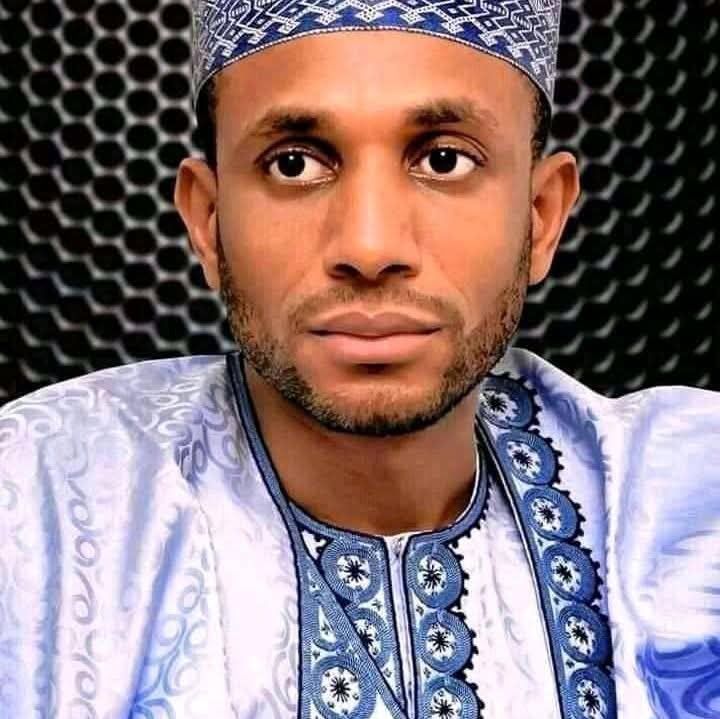
By Halima Isyaku Dantsoho
I read with a mix of amusement and concern the defense of Hon. Murtala Sule Garo by Hadi Abdullahi Muhammad, which attempts to frame the valid scrutiny of a public figure as a mere product of “internal power struggles.” While it is convenient to label every criticism a “media trial,” we must confront the reality that leadership is a sacred trust, not a reward for street mobilization. To suggest that Garo is the ideal choice for Deputy Governor—particularly in the wake of the recent political shift that saw Governor Abba Kabir Yusuf move to the APC—is to ignore the very “storm” the author claims to see. The vacancy in the Deputy Governor’s office exists because Kano is attempting to move past a season of distraction following the resignation of the former occupant; why then would the state replace a controversy with a liability? We are talking about a man who remains entangled in significant litigation regarding his past tenure as Commissioner, and to elevate such an individual to the second-highest office in the state would be like putting out a fire with petrol. It would lock the administration into a permanent state of legal defense, ensuring that the coming years are spent in courtrooms rather than on the construction of a better Kano.
The author praises Garo as a “Commander” of the grassroots, yet in a state as economically vital as ours, “mobilization” is not a substitute for administrative integrity. The “grassroots” of which he speaks—the traders, farmers, and youths—are the primary victims when public funds are allegedly mismanaged at the local government level. True loyalty to the base is shown through transparent governance and the systemic protection of public wealth, not through the strategic distribution of startup tools during an election cycle. If the APC national leadership and President Bola Ahmed Tinubu are truly committed to a “Renewed Hope” agenda, they must recognize that elevating a figure with such unresolved legal narratives contradicts the very integrity the party must represent in this new era. Perfection may not be the standard, but accountability is. Fairness does not mean ignoring a mountain of evidence in favor of political popularity; it means letting the courts decide a man’s fate before he is granted the prestige of high office. Kano has moved forward into a new political era, and it is time our leadership choices reflected a future built on stability rather than a return to the controversies of the past.
Halima Isyaku Dantsoho wrote from Kano.
Politics
Kano’s Quest for an Alternative with Ibrahim Ali Amin Little, By Adnan Mukhtar
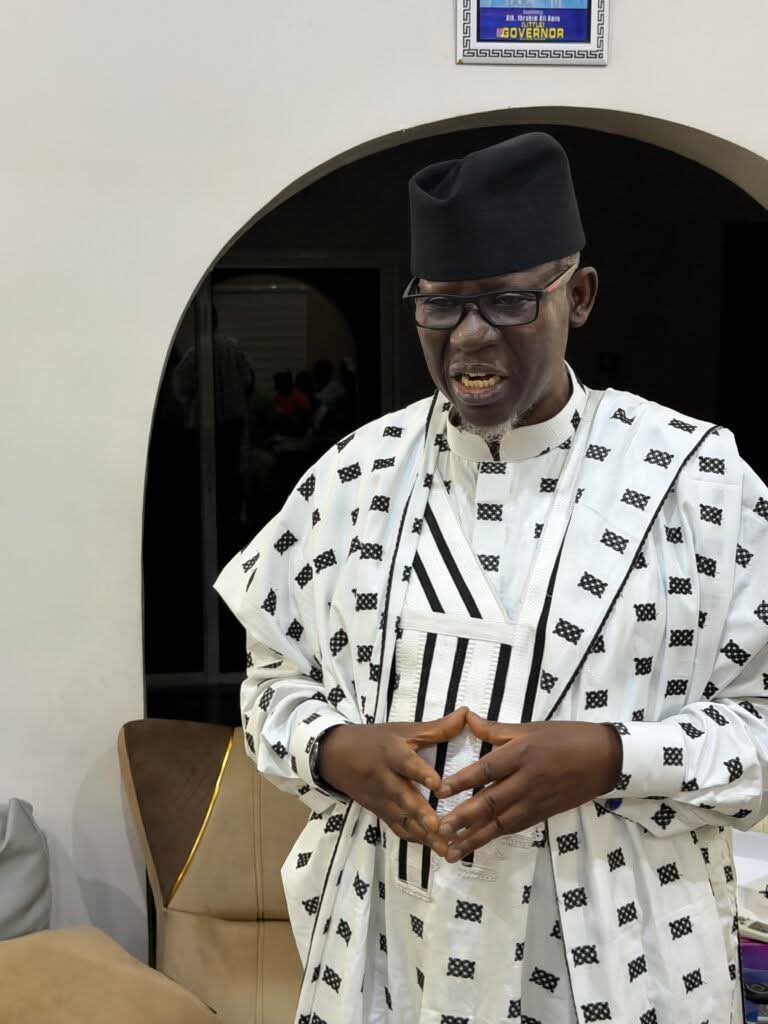
My recent article titled “Ibrahim Little: The Man Fit for the Job” has opened the eyes of many young men and women, particularly those in the Gen Z category, to the personality and potential of Alhaji Ibrahim Ali Amin. He is a man of calibre and a true embodiment of competence for the enormous responsibility of leading Kano, the commercial hub of Northern Nigeria.
The quest for a credible alternative in Kano’s political space began last year when my political mentor and principal declared his intention to contest for the governorship. The name Ibrahim Ali Amin Little has, however, been a household name in Kano politics since the year 2000.
He is involved in politics not for material gain, but out of a genuine passion for investing in the lives of the people. As a businessman with a proven track record, he brings a different perspective to governance. Since 1999, most of Kano’s governors have emerged from the civil service sphere. Despite Kano’s status as a commercial centre, the state has witnessed a form of economic stagnation, largely due to insufficient emphasis on business-driven policies and economic innovation.
When I speak of an “alternative,” I refer to an independent-minded individual who is well-versed in administration and economic management.
Kano cannot be entrusted to someone who lacks a deep understanding of its economic realities. Since 1999, governance in the state has largely revolved around a single model road construction and the awarding of contracts, often without corresponding long-term economic impact.
True governance goes beyond infrastructure. It involves prioritising education by employing competent teachers, strengthening the healthcare sector especially primary healthcare centres with adequate and qualified medical personnel, and creating sustainable systems that improve the quality of life for citizens. These are the real indicators of governance. The question, however, remains: where does Kano stand in all of this?
Unfortunately, very few aspirants are addressing these critical issues except Ibrahim Little. As one of his closest aides, I can confidently say that his priorities are clear and people-oriented. His daily engagements revolve around questions such as: How can we identify and nurture talent? How can Kano become a true industrial hub? How can we establish an independent power supply for the state? And how can we revitalise and boost agricultural productivity?
These are not just talking points for him, they are guiding principles. His interest lies in the development of Kano, not in personal gain or the accumulation of state resources.
At this critical moment, Ibrahim Ali Amin Little stands as the alternative Kano needs.
Adnan Mukhtar
Is a Doctoral Candidate at Northwest University, Kano

Isoko Traditional Rulers Divided Over 250 Million Offer To Confer Chieftaincy Title On Senatorial Aspirant

A Remarkable Homecoming: Kano Unites in Support of Abba Kabiru Yusuf, Signaling a Strong Endorsement for Bola Ahmed Tinubu in 2027

Kwankwaso, Atiku, Amaechi, Obi, Others Match-Out in Peaceful Protest at INEC’s Headquarters

ADC Crisis: Kwankwaso Seeks Intervention of Gombe Emir

Shekarau In APC, Morale Booster For Governor Abba

ADC Leadership Crisis: State Chairmen to Elect Caretaker Committee on Tuesday

Governor Abba Kabir Yusuf Holds Exclusive Prerogative to Choose Deputy – Malam Inuwa Waya

The Governor Who Chose His People Over His Politics: Abba Yusuf and the Moral Courage Behind Kano First
Restoring the Glory That Was Always There: Governor Abba Kabir Yusuf and the Historical Vision Behind Kano First

Table Water Producers Increase New Price for Sachet Water in Kano
Isoko Traditional Rulers Divided Over 250 Million Offer To Confer Chieftaincy Title On Senatorial Aspirant
A Remarkable Homecoming: Kano Unites in Support of Abba Kabiru Yusuf, Signaling a Strong Endorsement for Bola Ahmed Tinubu in 2027
Kwankwaso, Atiku, Amaechi, Obi, Others Match-Out in Peaceful Protest at INEC’s Headquarters
ADC Crisis: Kwankwaso Seeks Intervention of Gombe Emir
Shekarau In APC, Morale Booster For Governor Abba
ADC Leadership Crisis: State Chairmen to Elect Caretaker Committee on Tuesday
Governor Abba Kabir Yusuf Holds Exclusive Prerogative to Choose Deputy – Malam Inuwa Waya
The Governor Who Chose His People Over His Politics: Abba Yusuf and the Moral Courage Behind Kano First
Restoring the Glory That Was Always There: Governor Abba Kabir Yusuf and the Historical Vision Behind Kano First
Table Water Producers Increase New Price for Sachet Water in Kano
-

 Opinion4 years ago
On The Kano Flyovers And Public Perception
-

 Features5 years ago
How I Became A Multimillionaire In Nigeria – Hadiza Gabon
-

 Opinion5 years ago
Kano As future Headquarters Of Poverty In Nigeria
-

 History5 years ago
Sheikh Adam Abdullahi Al-Ilory (1917-1992):Nigeria’s Islamic Scholar Who Wrote Over 100 Books And Journals
-

 Opinion4 years ago
My First Encounter with Nasiru Gawuna, the Humble Deputy Governor
-

 History5 years ago
The Origin Of “Mammy Market” In Army Barracks (Mammy Ochefu)
-

 History4 years ago
The History Of Borno State Governor Professor Babagana Umara Zulum
-

 News4 years ago
Federal University Of Technology Babura To Commence Academic Activities September