
Politics
2027: Is Senator Barau Really Ready to Contest for Governor?
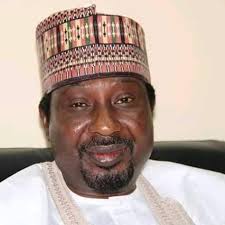
By Saleh Maidoki
As the political atmosphere in Kano gradually begins to shift toward 2027, all indications suggest that the Deputy Senate President, Senator Barau Jibrin, has his eyes set on the governorship seat. But the question remains: Is he truly ready for this monumental battle?
At face value, Barau holds a strategic national office and commands influence as number two in the senate. Yet, beneath the title lies a troubling reality: his performance both at the national and constituency levels in the last two years has left more questions than answers.
Unlike his previous tenures when he was relatively active in delivering constituency projects, Barau’s current tenure has been dominated by distractions. Since assuming office as Deputy Senate President, his focus has tilted more toward national assignments, with little to show for Kano North or Kano State at large. The gap between expectations and delivery is widening.
Two years into this tenure, Barau has not championed or executed mega projects in his constituency. Compare this to Senate President Godswill Akpabio, whose visible projects in Akwa Ibom remind everyone of his leadership. In contrast, Barau’s office looks effective only on paper, but in practice, Kano has little to point to.
When pressed about his achievements, his supporters point to the creation of the North-West Development Commission, the sponsorship of 70 students abroad, the establishment of Kabo Federal University, and other scholarship programs. While commendable, are these enough?
When the North-West Development Commission (NWDC) was signed into law, Senator Barau was widely celebrated as its chief architect. He took much of the credit for the initiative, and many in the region hailed it as a milestone that would finally address the developmental challenges of the North-West. However, more than a year later, the commission remains inactive with no program and no visible interventions. This stands in sharp contrast to other regional development commissions, especially those in the South, which are fully operational and delivering benefits to their people. For many in the North-West, the silence around the commission raises suspicions: Is this a deliberate effort to sabotage the region’s development, especially under an administration widely seen as favouring the South? If urgent steps are not taken to operationalize the NWDC, what was once celebrated as a triumph may soon be remembered as another unfulfilled promise of Senator Barau.
One of the most ambitious efforts credited to him is the N2.79 billion Barau Initiative For Agricultural Revolution in the North West (BIARN). Designed to restore the region’s reputation as Nigeria’s food basket, the program targeted 558 young farmers across 186 local government areas in seven Northwest states, each to receive N5 million interest-free loans for maize and rice cultivation. Implemented through the Barau I Jibrin Foundation in partnership with a national financial institution, BIARN promised to revolutionize food production, empower youth, and ease food costs.
On paper, it was a brilliant intervention with the potential to transform agriculture in the region.
Yet, the reality is far less inspiring, and the program has failed to take off in any meaningful way. This year’s rainy season is almost over, but farmers are yet to benefit. For a region where agriculture is not just a livelihood but the backbone of the economy, the delay is both shameful and disastrous. BIARN, which could have been Senator Barau’s strongest selling point, now stands as a glaring example of lofty promises undone by poor execution.
Barau’s political strategy is another Achilles’ heel. Surrounded by inexperienced and self-serving allies, he appears isolated from grassroots realities. Many of the federal appointments he facilitated went to individuals with little political relevance, alienating his core supporters.
The Bagwai/Shanono and Ghari/Tsanyawa by-elections were nothing short of a political embarrassment, not only for Senator Barau but also for Dr. Abdullahi Umar Ganduje, who is regarded as the face and leader of the APC in Kano and beyond. The poor outing laid bare Barau’s vulnerability while simultaneously denting Ganduje’s reputation as the rallying point of the party in the zone.
With tensions deepening among APC leaders in Kano North, the alignment of political heavyweights like former Deputy Governor and ex-Minister A.T.M. Gwarzo, Murtala Garo, and Abba Bichi against Senator Barau, he may find himself cornered and politically diminished.
Adding salt to injury, Barau’s approach to decampees from Kwankwasiyya reeks of political theatrics rather than strategy. He stages red-cap-to-APC-cap ceremonies, but most of these supposed defectors vanish back into Kwankwasiyya afterwards.
Meanwhile, his loyal supporters feel neglected, with little or no dividends of democracy reaching them.
Perhaps most surprising is Barau’s weak media presence. Despite the importance of perception in politics, he lacks a strong media team in both Kano and Abuja. Attacks against him on social media go largely unanswered, leaving his image to erode. His current handlers, by all standards, appear incapable of defending or projecting his political brand.
Interestingly, there are also a few capable individuals who are not formally part of his media team, yet they mean a lot to Barau because of the way they consistently propagate his achievements and policies. Some of them do not even have direct access to him, but they connect with some of his close allies and work tirelessly in his favor, with the hope that one day they will be granted access to him and contribute more directly to his success.
These shortcomings raise a crucial question: if Barau is struggling to consolidate his position as Deputy Senate President and Kano North’s foremost politician, is he really prepared to face the ferocious 2027 governorship race, especially against a determined Kwankwasiyya camp and an incumbent state government?
Barau still has time, but only if he rethinks his strategy. He must reconnect with his grassroots base, implement meaningful projects, restructure his political team, and build a robust media strategy. Otherwise, 2027 may prove not just difficult but disastrous.
For now, it is safe to say Senator Barau is not ready for the Kano governorship battle. The sooner he confronts this reality, the better his chances of rewriting the narrative.
Saleh Maidoki writes from Dambatta, can be reached at Salehmaidoki@gmail.com

Politics
REJOINDER: The Fallacy of the “Commander” and the Burden of Integrity
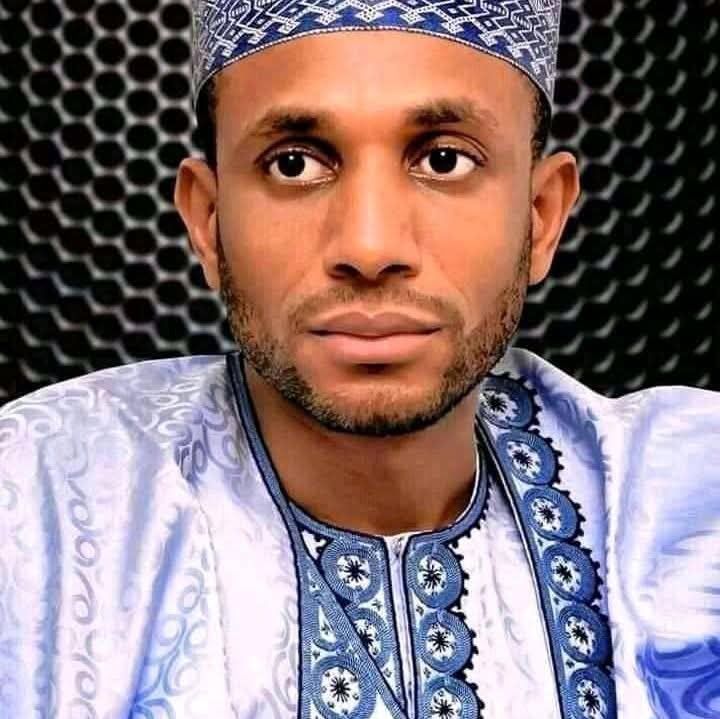
By Halima Isyaku Dantsoho
I read with a mix of amusement and concern the defense of Hon. Murtala Sule Garo by Hadi Abdullahi Muhammad, which attempts to frame the valid scrutiny of a public figure as a mere product of “internal power struggles.” While it is convenient to label every criticism a “media trial,” we must confront the reality that leadership is a sacred trust, not a reward for street mobilization. To suggest that Garo is the ideal choice for Deputy Governor—particularly in the wake of the recent political shift that saw Governor Abba Kabir Yusuf move to the APC—is to ignore the very “storm” the author claims to see. The vacancy in the Deputy Governor’s office exists because Kano is attempting to move past a season of distraction following the resignation of the former occupant; why then would the state replace a controversy with a liability? We are talking about a man who remains entangled in significant litigation regarding his past tenure as Commissioner, and to elevate such an individual to the second-highest office in the state would be like putting out a fire with petrol. It would lock the administration into a permanent state of legal defense, ensuring that the coming years are spent in courtrooms rather than on the construction of a better Kano.
The author praises Garo as a “Commander” of the grassroots, yet in a state as economically vital as ours, “mobilization” is not a substitute for administrative integrity. The “grassroots” of which he speaks—the traders, farmers, and youths—are the primary victims when public funds are allegedly mismanaged at the local government level. True loyalty to the base is shown through transparent governance and the systemic protection of public wealth, not through the strategic distribution of startup tools during an election cycle. If the APC national leadership and President Bola Ahmed Tinubu are truly committed to a “Renewed Hope” agenda, they must recognize that elevating a figure with such unresolved legal narratives contradicts the very integrity the party must represent in this new era. Perfection may not be the standard, but accountability is. Fairness does not mean ignoring a mountain of evidence in favor of political popularity; it means letting the courts decide a man’s fate before he is granted the prestige of high office. Kano has moved forward into a new political era, and it is time our leadership choices reflected a future built on stability rather than a return to the controversies of the past.
Halima Isyaku Dantsoho wrote from Kano.
Politics
Kano’s Quest for an Alternative with Ibrahim Ali Amin Little, By Adnan Mukhtar
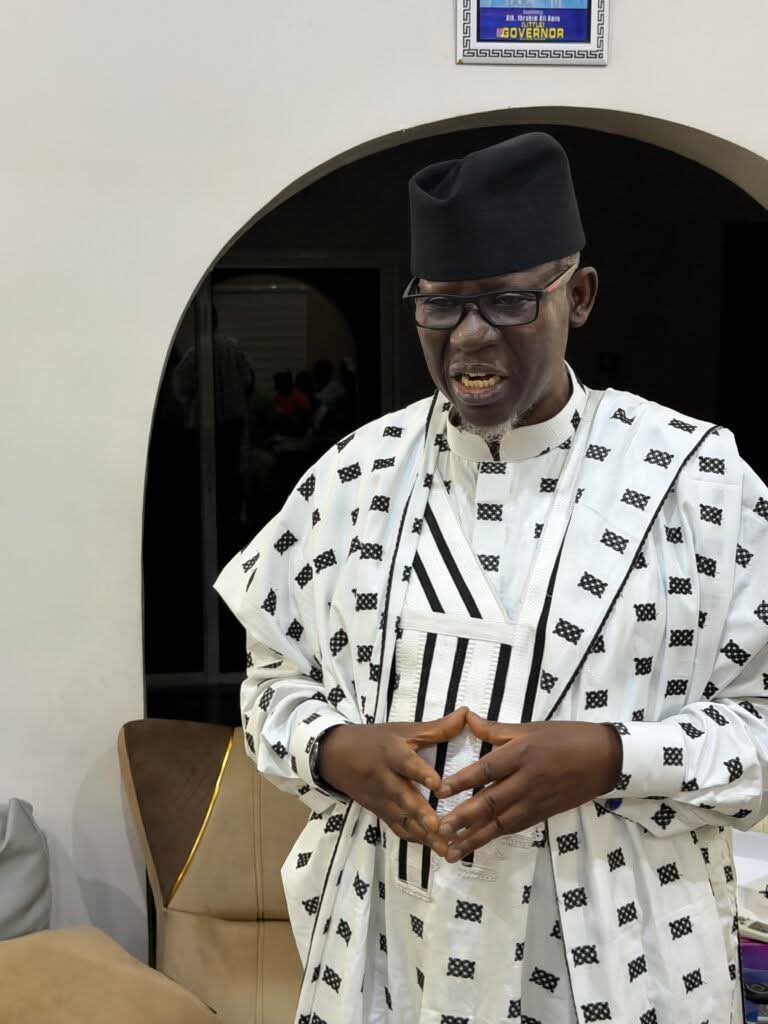
My recent article titled “Ibrahim Little: The Man Fit for the Job” has opened the eyes of many young men and women, particularly those in the Gen Z category, to the personality and potential of Alhaji Ibrahim Ali Amin. He is a man of calibre and a true embodiment of competence for the enormous responsibility of leading Kano, the commercial hub of Northern Nigeria.
The quest for a credible alternative in Kano’s political space began last year when my political mentor and principal declared his intention to contest for the governorship. The name Ibrahim Ali Amin Little has, however, been a household name in Kano politics since the year 2000.
He is involved in politics not for material gain, but out of a genuine passion for investing in the lives of the people. As a businessman with a proven track record, he brings a different perspective to governance. Since 1999, most of Kano’s governors have emerged from the civil service sphere. Despite Kano’s status as a commercial centre, the state has witnessed a form of economic stagnation, largely due to insufficient emphasis on business-driven policies and economic innovation.
When I speak of an “alternative,” I refer to an independent-minded individual who is well-versed in administration and economic management.
Kano cannot be entrusted to someone who lacks a deep understanding of its economic realities. Since 1999, governance in the state has largely revolved around a single model road construction and the awarding of contracts, often without corresponding long-term economic impact.
True governance goes beyond infrastructure. It involves prioritising education by employing competent teachers, strengthening the healthcare sector especially primary healthcare centres with adequate and qualified medical personnel, and creating sustainable systems that improve the quality of life for citizens. These are the real indicators of governance. The question, however, remains: where does Kano stand in all of this?
Unfortunately, very few aspirants are addressing these critical issues except Ibrahim Little. As one of his closest aides, I can confidently say that his priorities are clear and people-oriented. His daily engagements revolve around questions such as: How can we identify and nurture talent? How can Kano become a true industrial hub? How can we establish an independent power supply for the state? And how can we revitalise and boost agricultural productivity?
These are not just talking points for him, they are guiding principles. His interest lies in the development of Kano, not in personal gain or the accumulation of state resources.
At this critical moment, Ibrahim Ali Amin Little stands as the alternative Kano needs.
Adnan Mukhtar
Is a Doctoral Candidate at Northwest University, Kano
Politics
Pardoning accused politicians healthy political evolution in Nigeria— Garo
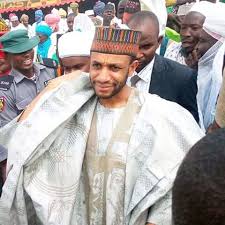
Alhaji Murtala Sule Garo, a prominent politician and grassroots mobiliser in Kano State, says it is healthy political evolution that politicians are being granted pardon in Nigeria.
Garo, who fielded questions from newsmen in Kano, also noted that repentant and forgiven politicians are allowed to actively participate in politics to add valour and strengthen democracy.
He was reacting to allegations over his involvement in financial sleaze while serving as Commissioner for Local Government and Chieftaincy Affairs in Kano during the administration of Dr. Abdullahi Umar Ganduje.
Garo acknowledged desperate attempts by his adversaries to malign him and whittle down his growing political profile.
Garo, popularly known as MSG, was a Deputy Governorship candidate during the 2023 general election and Commissioner for Local Government and Chieftaincy Affairs.
He claimed that local councils in the state witnessed phenomenal development when he served as Commissioner for Local Government Affairs.
However, Sule Garo explained that the allegations of diversion of public funds for personal use have collapsed in the eyes of the Constitution and extant laws of Nigeria.
The existing constitutional provisions and laws averred that an accused person is presumed innocent until proven otherwise by a court of competent jurisdiction.
“Therefore, my media trial ran afoul of the law. Moreso, the allegations were not preferred against him but a group of suspects.
“Besides, the Kano State Government, being the complainant, has not shown interest in prosecuting me.
Another charge brought against me was dismissed by the court even as the state government decided to forgive me,” Garo claimed.
He cited for instance that Hon. Faruk Lawan and Alhaji Aminu Dabo, former Managing Director of NPA, were pardoned by the system and are actively participating in politics.
The politician therefore appealed to the good people of Kano State and other interested parties to disregard any malicious allegation against him because of his innocence before the law court and forgiveness by the state government.

Kwankwaso, Atiku, Amaechi, Obi, Others Match-Out in Peaceful Protest at INEC’s Headquarters

ADC Crisis: Kwankwaso Seeks Intervention of Gombe Emir

Shekarau In APC, Morale Booster For Governor Abba

NCC to Enforce Subscriber Compensation for Poor Telecom Service

ADC Leadership Tussle Worsens as Third Faction Emerges, Rejects Nafiu Camp, Mark’s Coalition

ADC Leadership Crisis: State Chairmen to Elect Caretaker Committee on Tuesday

Governor Abba Kabir Yusuf Holds Exclusive Prerogative to Choose Deputy – Malam Inuwa Waya

The Governor Who Chose His People Over His Politics: Abba Yusuf and the Moral Courage Behind Kano First
Restoring the Glory That Was Always There: Governor Abba Kabir Yusuf and the Historical Vision Behind Kano First

Table Water Producers Increase New Price for Sachet Water in Kano
Kwankwaso, Atiku, Amaechi, Obi, Others Match-Out in Peaceful Protest at INEC’s Headquarters
ADC Crisis: Kwankwaso Seeks Intervention of Gombe Emir
Shekarau In APC, Morale Booster For Governor Abba
NCC to Enforce Subscriber Compensation for Poor Telecom Service
ADC Leadership Tussle Worsens as Third Faction Emerges, Rejects Nafiu Camp, Mark’s Coalition
ADC Leadership Crisis: State Chairmen to Elect Caretaker Committee on Tuesday
Governor Abba Kabir Yusuf Holds Exclusive Prerogative to Choose Deputy – Malam Inuwa Waya
The Governor Who Chose His People Over His Politics: Abba Yusuf and the Moral Courage Behind Kano First
Restoring the Glory That Was Always There: Governor Abba Kabir Yusuf and the Historical Vision Behind Kano First
Table Water Producers Increase New Price for Sachet Water in Kano
-

 Opinion4 years ago
On The Kano Flyovers And Public Perception
-

 Features5 years ago
How I Became A Multimillionaire In Nigeria – Hadiza Gabon
-

 Opinion5 years ago
Kano As future Headquarters Of Poverty In Nigeria
-

 History5 years ago
Sheikh Adam Abdullahi Al-Ilory (1917-1992):Nigeria’s Islamic Scholar Who Wrote Over 100 Books And Journals
-

 Opinion4 years ago
My First Encounter with Nasiru Gawuna, the Humble Deputy Governor
-

 History5 years ago
The Origin Of “Mammy Market” In Army Barracks (Mammy Ochefu)
-

 History4 years ago
The History Of Borno State Governor Professor Babagana Umara Zulum
-

 News4 years ago
Federal University Of Technology Babura To Commence Academic Activities September