
News
Special Report: From Ideology to Opportunism And The Erosion of Political Promises
By Yusuf Danjuma Yunusa
It’s customarily in the political sphere to, in a bid to win over supports of many eligible electorates, make a promise on things one would do as a reflection of his representation for his constituents. This act is what so many of us conventionally know as manifestos.
Politicians do make their manifestos at the wake of campaign for the support needed to pilot affairs from a certain office be it senate, house of representatives, state assemblies, governorships or presidency–in a certain community. Taking ourselves back in the past say 1950’s to 1960’s and even beyond to early 1990 one wouldn’t argue that much has changed systemically in terms of politicians keeping to the promises they make.
Revisiting The Political Ethos Of The Past
The 1950’s to 1990’s era stand in stark contrast to the later periods, where despite larger budgets, the delivery of tangible social amenities became far less efficient and impactful. The politicians of 1950-1990, for all their flaws, were fundamentally state-builders who saw the provision of social amenities as a primary duty of governance.
After the Richards Constitution of 1946, regions gained more autonomy. The fierce political competition between the three major regions North, West, and East translated into a “healthy rivalry” to provide social amenities for their people, as this was a key way to win loyalty and legitimacy.
The Western Region Under Chief Obafemi Awolowo:
Chief Obafemi Awolowo’s government was, unarguably, the most systematic and visionary in its provision of social amenities. In terms of education, this visionary leader, as at 1955, made sure the region enjoyed free primary education. It was a revolutionary policy. The Western Region became one of the first territories in Africa to introduce universal free primary education, leading to a massive explosion in literacy and creating an educated class that would dominate the civil service and professions for decades.
Similarly in the health sector of the region, the first teaching hospital in the region was established at the University College Hospital(UCH), Ibadan, which became the premier medical institution in West Africa. Also, numerous general hospitals like the famous Adeoyo State Hospital in Ibadan were built, and of course specialist hospitals as well.
Furthermore, Chief Obafemi also outstandingly Initiated the first major public housing schemes in Nigeria, such as the Bodija Estate in Ibadan, providing modern, affordable housing for the middle class.
He also built the Cocoa House in Ibadan, the tallest building in tropical Africa at the time, symbolizing progress and economic ambition. Social security was introduced for the aged. These, and among others, were how governance was in the western region in the 1950’s.
The Eastern Region Under Dr. Nnamdi Azikiwe And Later Dr. Michael Okpara:
The Eastern Region pursued a policy of “industrialization through agriculture,” using proceeds from cash crops like palm oil and cocoa to fund social development. Like the West, the East under the government of the duo mentioned above, made heavy investment in primary and secondary schools, creating one of the most literate populations in the country. The groundbreaking establishment of institutions like the University of Nigeria, Nsukka(UNN)in the year 1960, which focuses on practical knowledge, agriculture, technology, and business, was part of the reasons for such milestone.
In the same vein, prompt and focused attention was given to the health sector of the region also; with so many general hospitals established to address people’s medical complaints. The University of Nigeria’s teaching hospital was established under the regional government of this era.
Moreover, there were rural development and integration focused on building roads, providing pipe-borne water for agricultural plantation by the Okpara led government.
The Northern Region Under Sir Ahmadu Bello
The Sardauna’s government focused on a “catch-up” strategy to modernize the North while preserving its cultural heritage. The educational gap between the region and the remaining two West and East was bridged by the government of the late Sadauna with the massive and aggressive educational drive that he initiated which resulted to the establishment of hundreds of primary and secondary schools.
The famous Ahmadu Bello University, Zaria, which has now become the largest and most comprehensive university in Sub-Sahara Africa–serving the North and beyond–was founded by him in the year 1962. The Sadauna’s love for education further made him to establish the Teacher Training College aimed at producing quality teaching workforce for the region.
Additionally, major groundbreaking initiatives in the health sector was also made. From Kaduna to Kano, to Sokoto, and beyond, general hospitals were established.
To curb drought and the lack of clean water phenomenon ravaging the region, he invested heavily in water supply schemes dams and treatment plants.
Sir Ahmadu Bello developed Kaduna into a modern industrial and administrative capital, with planned residential layouts and social infrastructure.
It is evident that governance at the time of these leaders mentioned was based on ideologies centered on developmental agendas that were visionary and transformative.
The Modern Playbook: When Manifestos Become Marketing Brochures:
In a stark contrast to the analysis of the political ethos of the past, this present day politicians are more of political merchants than transformative leaders having the interest of their subjects at heart.
From presidency down to the councilorship position in the country at the moment, power brokering and political opportunism have eroded the laid down transformative ideologies foundation by the past leaders. Promises during campaigns are no longer kept.
For accountability purpose, the channels television has managed, over the years, to incorporate debates and intriguing session during political campaigns aimed at making sure that politicians keep to their promises, but all to no avail.
The basic amenities as provided by the aforementioned leaders in the past administration of this country can’t even be provided by these contemporary politicians. Worst of it all is their inability to create enabling environments for citizens willing to make these provisions available for themselves. This development has prompted the question: what has gone wrong?
The Anatomy of The Failure: Unpacking The Why
Speaking with a public policy expert and a public affairs analyst, Dr. Shamsudeen Ibrahim, he made it clear that the country can not work based on federalism which we are operating with:
“I have, for long time ago, realised that Nigeria of today cannot match up with that of the past. They are entirely two distinct ideologies being used by the leaders of the both generations.”
He continued, “while the past leaders governed based on regionalism, the present leaders are governing us based on federalism. At that time, governance was seen as a competition. Not now that it’s seen as an avenue to become wealthy overnight at the expense of the subjects.”
It was understood from Dr. Shamsudeen that the first and main problem of the mess we are into now as a country is the system of government we are operating with. After the civil war, the Federal Government, fueled by oil wealth, took a central role in providing amenities, and among other things as far as governance is concerned.
Furthermore, the analyst also disclosed that godfatherism is also contributing to the setbacks in governance which the country is suffering from:
“Most politicians don’t have a voice of their own anymore due to power brokering ravaging the political landscape of the country. So, even the ones with good intentions usually become incompetent later on in the office due to the interest of the person who handed power over to them.”
Moreover, weak institutions exhibiting indifference in the crimes of political office holders was also mentioned as one of the reasons for where we are today as a country:
“Our judges are no more the hope of a common man. That’s why you see politicians committing crime in the daytime, mocking you that challenge them by telling you to go to court. They know the judges yield to their monetary offers always, and as such pass judgements in their favor,” the analyst said.
Additionally, Dr. Shamsudeen revealed that the electorates are also part of the problem of politicians not keeping to their promises after getting into office:
“Nigerians are also part of the problem we are discussing about. Most of us don’t care about performances of politicians anymore, so far he is from your own state, community or local government, it’s fine for him to be in office and go scot-free when he commits crime.”
“Politicians are sensitive, and they don’t miss any single opportunity seen to be utilized in their favor. Hence, their nonchalant attitude to keeping to promises after getting into office because they know that their subjects don’t judge them largely on that metrics any longer,” he added.
Also, engaging with a developmental economist, Opeyemi Abdulrozak, he analysed that the political sphere of Nigeria has been maligned with a high entry cost, hence, making the recuperating process undermining the provision of basic amenities:
“Political parties now see politics as an enterprise. Check the prices of forms for each of the political offices across various political parties, then you would be perplexed by how much it actually cost to enter into politics nowadays.”
He continued, “to be very honest, would you venture into initiating any social amenities program while you are yet to recover your expenses during campaigns and electioneering processes?”
Mr. Opeyemi also asserted that another core reason behind politicians not paying attention to promises they make during campaigns is the huge part of the country’s revenue that is being budgeted for servicing of debt every year:
“From the macroeconomics standpoint, huge part of the country’s revenue that is being budgeted for debt servicing, plus the inflation as a result of the volatility of the currency, and dependency on a single source of revenue generation which is oil, are also contributing factors preventing the provision of social amenities by the government.”
The economist also disclosed that the economics of procurement in Nigeria has been corrupted and comprised; stating that contracts inflation is on the rise as a result of lack of competitive bidding which, consequently, leads to increase in the cost of projects:
“Politicians award contracts to themselves nowadays, making it almost impossible for competent experts to even have the opportunity to pitch ideas talk more of executing a project. And the most painful part is that, after budgeting huge amount from the government coffers for the execution of projects, they end up not doing it and then have the funds diverted.”
When asked what his perspective is on the failure of politicians to implement manifestos, the economist replied by saying that he sees that as a lack of political will rather than economic capacity:
“The country is endowed with numerous natural resources that can generate revenue and bring about robust economy if utilized efficiently. I see the problem as a lack of political will.”
Deducing from the submissions of the both experts, it can be said that the problem is not lack of ideas, but a systemic failure driven by perverse incentives, weak institutions, and a change of political culture.
Keeping to manifestos will not die if the subjects decide to revive it by holding political office holders to account through empowered independent institutions, a more issue-based electorates, and legal frameworks for tracking campaign promises.







News
NCC to Enforce Subscriber Compensation for Poor Telecom Service
By Yusuf Danjuma Yunusa
The Nigerian Communications Commission has announced that its directive mandating telecommunications operators to compensate subscribers for poor service quality will take effect from this month.
The Commission disclosed this in a Frequently Asked Questions document released on Tuesday, offering clarity on how the compensation framework will work and which subscribers qualify.
According to the NCC, the directive applies specifically to Mobile Network Operators that fail to meet the required Key Performance Indicators for Quality of Service. These operators include major players such as MTN Nigeria, Airtel Nigeria, Globacom, and 9mobile, although the Commission did not specify which of them fell short of the standards.
The NCC noted that a separate compensation framework already exists for Internet Service Providers.
Under the new directive, compensation will cover service failures affecting voice calls, data services, and SMS. To qualify, subscribers must have experienced poor network service in an affected Local Government Area and must have carried out at least one revenue-generating activity—such as a billed call, SMS, or data session—within the period in question.
The Commission added that both individual and corporate subscribers are eligible for compensation.
Importantly, the NCC stated that subscribers will not need to apply to receive compensation. Instead, telecom operators are mandated to automatically identify affected customers and compensate them directly.
“The compensation framework will take effect from April 2026.
“No. The directive does not replace existing consumer protection mechanisms. It adds a direct compensation mechanism for affected subscribers. It aligns with measures set in existing legislation, such as the Consumer Code of Practice Regulations 2024 and the Quality of Service Regulations 2024,” NCC said
“Operators are required and mandated to identify affected subscribers and provide compensation directly. Only service failures that fall below the defined thresholds set by the Quality of Service Regulations will qualify,” NCC said.
However, the regulator clarified that minor or short-lived network disruptions that are quickly resolved may not meet the threshold for compensation.
The move is part of the NCC’s broader efforts to improve service delivery and hold telecom operators accountable for consistent network performance across the country.
News
ADC Leadership Tussle Worsens as Third Faction Emerges, Rejects Nafiu Camp, Mark’s Coalition
By Yusuf Danjuma Yunusa
A new faction within the African Democratic Congress has surfaced, rejecting the authority of the Senator David Mark-led coalition and distancing itself from Nafiu Bala’s faction.
According to Africa Independent Television, the faction led by Don Norman Obinna claims to represent the legitimate National Executive Committee of the party.
The group says it is stepping in to manage the party’s affairs ahead of the next national convention.
At a briefing in Abuja on Tuesday, the group stated that “The tenure of Ralph Nwosu, who handed the party to the David Mark group, had ended in August 2022, and afterwards, he (Nwosu) had faced a series of litigations due to his failure to step down.”
The faction also clarified the status of Nafiu Bala, noting that he “never held the position of National Vice Chairman,” and affirmed that former ADC presidential candidate “Dumebi Kachikwu is still a member of ADC”
The group further disclosed that new interim leaders have been appointed to oversee party activities, ensuring continuity until the national convention is held.
The remarks come amid an ongoing leadership crisis within the ADC, which has seen rival factions contest control of the party. The Independent National Electoral Commission recently withdrew recognition of the party’s leadership under former Senate President David Mark.
News
Internal Crisis Deepens in Jigawa APC as High-Profile Defections Threaten Party Cohesion
By Yusuf Danjuma Yunusa
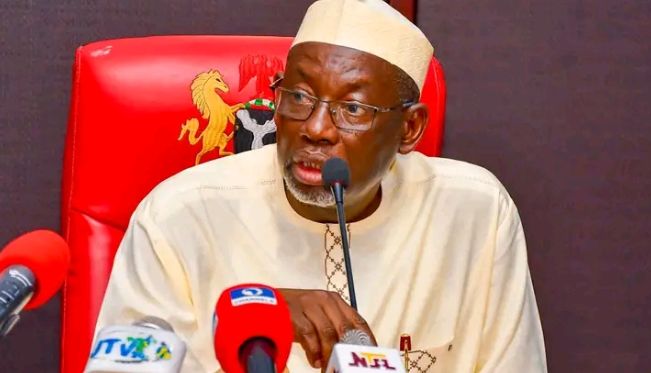
The All Progressives Congress (APC) in Jigawa State is grappling with its most significant internal crisis in years, as a wave of defections by prominent political figures threatens to erode the party’s structural integrity and electoral prospects.
The growing discontent is widely attributed to allegations of poor party management and the marginalisation of key stakeholders under Governor Umar Namadi. His leadership style has come under increasing scrutiny from within party ranks, with critics pointing to a breakdown in internal consensus-building.
Political observers trace the roots of the crisis to a strained relationship between Governor Namadi and his political benefactor, former Governor Mohammed Badaru Abubakar, as well as his financial backer, Isa Gerawa. Although both men remain in the APC, sources familiar with the situation report lingering resentment over what they perceive as a systematic exclusion from decision-making processes and party affairs.
This “cold war” at the highest levels of the party hierarchy has created factions and widened fissures across the APC’s political base in Jigawa. Analysts warn that if left unresolved, the discord could severely undermine party unity and weaken its performance in future elections.
The crisis has now manifested in a string of high-profile defections involving former lawmakers, ex-party executives, and grassroots mobilisers.
Leading the list are former Senators Sabo Nakudu, who represented Jigawa South-West from 2015 to 2023, and Muhammad Ubali Shitu, a longtime political associate of the governor who served in the Senate from 2015 to 2019. Senator Nakudu’s defection is particularly symbolic, as he previously contested the APC governorship ticket against Namadi. His relationship with former Governor Badaru reportedly soured after Badaru backed Namadi during the primaries. Notably, Nakudu and Badaru have since reconciled, united by their mutual opposition to the current governor.
The departure of former party chairmen further underscores the depth of the crisis. Ado Sani Kiri, who chaired the party from 2014 to 2019 and also served as a commissioner and member of the House of Representatives, has left the party, as has Aminu Keskes, who led the party from 2019 to 2023 and previously served as Gumel Local Government chairman and chairman of the Association of Local Governments of Nigeria (ALGON) in the state.
Also among the defectors is Bala Usman Chamo, a former Social Investment Programme coordinator and Dutse Local Government chairman, widely regarded as a key grassroots organiser. Their exit is seen as a major blow to the party’s strength, given their influence across various political blocs in the state.
The crisis has also penetrated the governor’s inner circle, with several political appointees resigning from their positions and quitting the party. Two serving special advisers have stepped down, including one reportedly preparing to contest for a seat in the House of Representatives under the opposition African Democratic Congress (ADC). Additionally, six senior special assistants and two special assistants have resigned, all citing dissatisfaction with the current direction of the party.
One of the most notable exits is that of Zakari Kafin Hausa, a former senior special assistant who played a central role in organising Governor Namadi’s campaign and mobilising the support that led to his emergence as governor. His defection is viewed by insiders as a significant indicator of deepening cracks within the governor’s inner circle.
Perhaps most damaging to the APC’s political machinery is the defection of at least 17 former local government chairmen. These figures are critical to grassroots mobilisation, electoral coordination, and voter outreach. Their exit signals a potential collapse of the party’s local structures, raising serious concerns about the APC’s ability to secure the mandatory 25 percent of votes in the state during future presidential elections.

NCC to Enforce Subscriber Compensation for Poor Telecom Service

ADC Leadership Tussle Worsens as Third Faction Emerges, Rejects Nafiu Camp, Mark’s Coalition

AN OPEN LETTER TO THE PRESIDENT OF THE FEDERAL REPUBLIC OF NIGERIA

Internal Crisis Deepens in Jigawa APC as High-Profile Defections Threaten Party Cohesion

OPINION:Bauchi ,A Paradise for Immunity Seekers? How Alleged Corrupt Politicians Are Eyeing Government House

ADC Leadership Crisis: State Chairmen to Elect Caretaker Committee on Tuesday

Governor Abba Kabir Yusuf Holds Exclusive Prerogative to Choose Deputy – Malam Inuwa Waya

The Governor Who Chose His People Over His Politics: Abba Yusuf and the Moral Courage Behind Kano First
Restoring the Glory That Was Always There: Governor Abba Kabir Yusuf and the Historical Vision Behind Kano First

Table Water Producers Increase New Price for Sachet Water in Kano
NCC to Enforce Subscriber Compensation for Poor Telecom Service
ADC Leadership Tussle Worsens as Third Faction Emerges, Rejects Nafiu Camp, Mark’s Coalition
AN OPEN LETTER TO THE PRESIDENT OF THE FEDERAL REPUBLIC OF NIGERIA
Internal Crisis Deepens in Jigawa APC as High-Profile Defections Threaten Party Cohesion
OPINION:Bauchi ,A Paradise for Immunity Seekers? How Alleged Corrupt Politicians Are Eyeing Government House
ADC Leadership Crisis: State Chairmen to Elect Caretaker Committee on Tuesday
Governor Abba Kabir Yusuf Holds Exclusive Prerogative to Choose Deputy – Malam Inuwa Waya
The Governor Who Chose His People Over His Politics: Abba Yusuf and the Moral Courage Behind Kano First
Restoring the Glory That Was Always There: Governor Abba Kabir Yusuf and the Historical Vision Behind Kano First
Table Water Producers Increase New Price for Sachet Water in Kano
-

 Opinion4 years ago
On The Kano Flyovers And Public Perception
-

 Features5 years ago
How I Became A Multimillionaire In Nigeria – Hadiza Gabon
-

 Opinion5 years ago
Kano As future Headquarters Of Poverty In Nigeria
-

 History5 years ago
Sheikh Adam Abdullahi Al-Ilory (1917-1992):Nigeria’s Islamic Scholar Who Wrote Over 100 Books And Journals
-

 Opinion4 years ago
My First Encounter with Nasiru Gawuna, the Humble Deputy Governor
-

 History5 years ago
The Origin Of “Mammy Market” In Army Barracks (Mammy Ochefu)
-

 History4 years ago
The History Of Borno State Governor Professor Babagana Umara Zulum
-

 News4 years ago
Federal University Of Technology Babura To Commence Academic Activities September