
News
Text Of The National Broadcast By President Bola Ahmad Tinubu On The Occasion Of Nigeria’s 65th Independence Anniversary
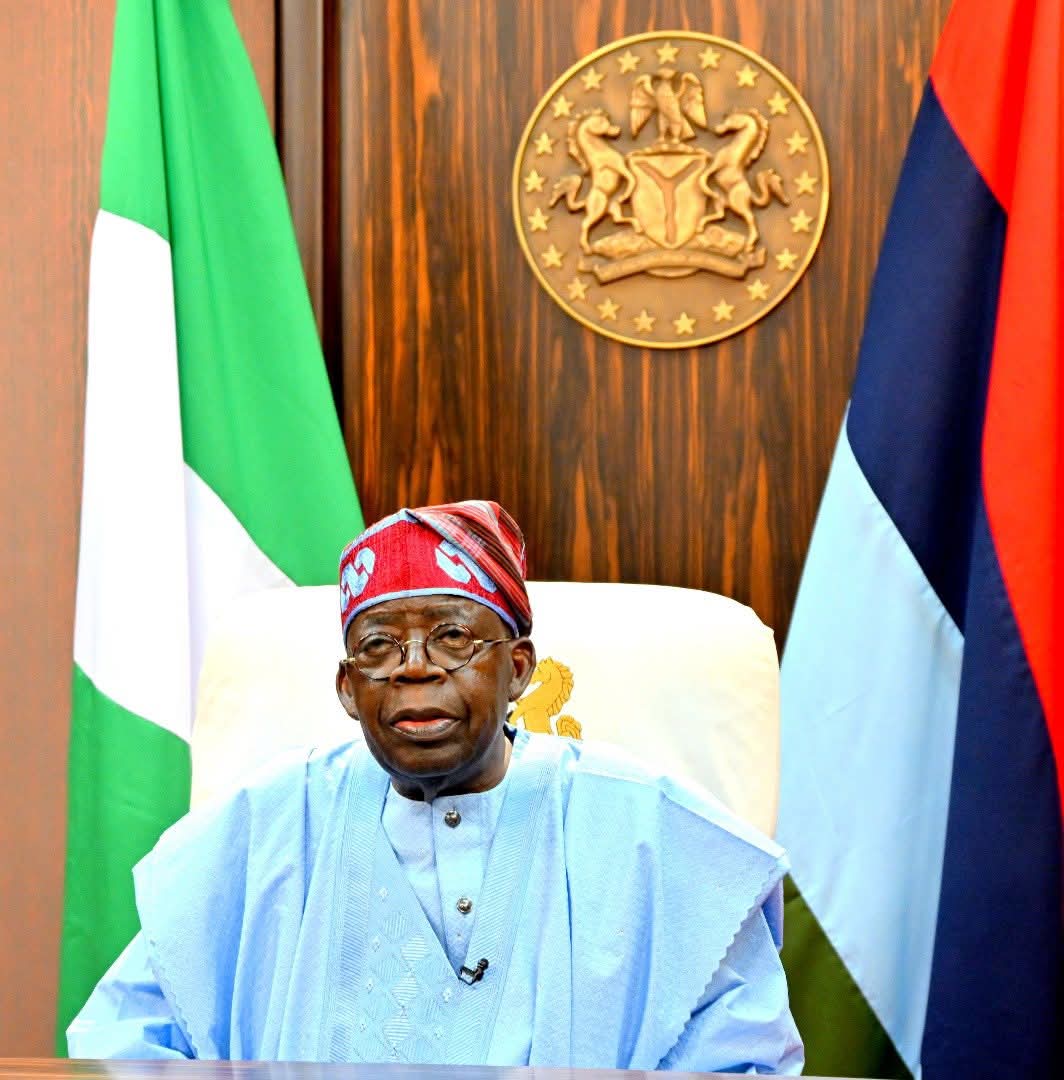
Fellow Nigerians,
Today marks the 65th anniversary of our great nation’s Independence. As we reflect on the significance of this day and our journey of nationhood since October 1, 1960, when our founding fathers accepted the instruments of self-government from colonial rule, let us remember their sacrifice, devotion, and grand dream of a strong, prosperous, and united Nigeria that will lead Africa and be the beacon of light to the rest of the world.
2. Our founding heroes and heroines—Herbert Macaulay, Dr Nnamdi Azikiwe, Sir Abubakar Tafawa Balewa, Chief Obafemi Awolowo, Sir Ahmadu Bello, Margaret Ekpo, Anthony Enahoro, Ladoke Akintola, Michael Okpara, Aminu Kano, Funmilayo Ransome-Kuti, and other nationalists—believed it was Nigeria’s manifest destiny to lead the entire black race as the largest black nation on earth.
3. For decades, the promise of our Independence has been tested by profound social, economic, and political challenges, and we have survived. While we may not have achieved all the lofty dreams of our forebearers, we have not strayed too far from them. In 65 years since our Independence, we have made tremendous progress in economic growth, social cohesion, and physical development. Our economy has experienced significant growth since 1960.
4. Although, it is much easier for those whose vocation is to focus solely on what ought to be, we must recognise and celebrate our significant progress. Nigerians today have access to better education and healthcare than in 1960. At Independence, Nigeria had 120 secondary schools with a student population of about 130,000. Available data indicate that, as of year 2024, there were more than 23,000 secondary schools in our country. At Independence, we had only the University of Ibadan and Yaba College of Technology as the two tertiary institutions in Nigeria. By the end of last year, there were 274 universities, 183 Polytechnics, and 236 Colleges of Education in Nigeria, comprising Federal, State, and private institutions. We have experienced a significant surge in growth across every sector of our national life since Independence – in healthcare, infrastructure, financial services, manufacturing, telecommunications, information technology, aviation and defence, among others.
5. Our country has experienced both the good and the bad times in its 65 years of nationhood, as is normal for every nation and its people. We fought a bitter and avoidable civil war, experienced military dictatorships, and lived through major political crises. In all these, we weathered every storm and overcame every challenge with courage, grit, and uncommon determination. While our system and ties that bind us are sometimes stretched by insidious forces opposed to our values and ways of life, we continue to strive to build a more perfect union where every Nigerian can find better accommodation and find purpose and fulfilment.
6. Fellow Compatriots, this is the third time I will address you on our independence anniversary since I assumed office as your President on May 29, 2023. In the last 28 months of my administration, like our founding fathers and leaders who came before me, I have committed myself irrevocably to the unfinished nation-building business.
7. Upon assuming office, our administration inherited a near-collapsed economy caused by decades of fiscal policy distortions and misalignment that had impaired real growth. As a new administration, we faced a simple choice: continue business as usual and watch our nation drift, or embark on a courageous, fundamental reform path. We chose the path of reform. We chose the path of tomorrow over the comfort of today. Less than three years later, the seeds of those difficult but necessary decisions are bearing fruit.
8. In resetting our country for sustainable growth, we ended the corrupt fuel subsidies and multiple foreign exchange rates that created massive incentives for a rentier economy, benefiting only a tiny minority. At the same time, the masses received little or nothing from our Commonwealth. Our administration has redirected the economy towards a more inclusive path, channelling money to fund education, healthcare, national security, agriculture, and critical economic infrastructure, such as roads, power, broadband, and social investment programmes. These initiatives will generally improve Nigerians’ quality of life. As a result of the tough decisions we made, the Federal and State governments, including Local Governments, now have more resources to take care of the people at the lower level of the ladder, to address our development challenges.
9. Fellow Nigerians, we are racing against time. We must build the roads we need, repair the ones that have become decrepit, and construct the schools our children will attend and the hospitals that will care for our people. We have to plan for the generations that will come after us. We do not have enough electricity to power our industries and homes today, or the resources to repair our deteriorating roads, build seaports, railroads, and international airports comparable to the best in the world, because we failed to make the necessary investments decades ago. Our administration is setting things right.
10. I am pleased to report that we have finally turned the corner. The worst is over, I say. Yesterday’s pains are giving way to relief. I salute your endurance, support, and understanding. I will continue to work for you and justify the confidence you reposed in me to steer the ship of our nation to a safe harbour.
11. Under our leadership, our economy is recovering fast, and the reforms we started over two years ago are delivering tangible results. The second quarter 2025 Gross Domestic Product grew by 4.23%—Nigeria’s fastest pace in four years—and outpaced the 3.4 per cent projected by the International Monetary Fund. Inflation declined to 20.12% in August 2025, the lowest level in three years. The administration is working diligently to boost agricultural production and ensure food security, reducing food costs.
12. In the last two years of our administration, we have achieved 12 remarkable economic milestones as a result of the implementation of our sound fiscal and monetary policies:
i. We have attained a record-breaking increase in non-oil revenue, achieving the 2025 target by August with over N20 trillion. In September 2025 alone, we raised N3.65 trillion, 411% higher than the amount raised in May 2023.
ii. We have restored Fiscal Health: Our debt service-to-revenue ratio has been significantly reduced from 97% to below 50%. We have paid down the infamous “Ways and Means” advances that threatened our economic stability and triggered inflation. Following the removal of the corrupt petroleum subsidy, we have freed up trillions of Naira for targeted investment in the real economy and social programmes for the most vulnerable, as well as all tiers of government.
iii. We have a stronger foreign Reserve position than three years ago. Our external reserves increased to $42.03 billion this September—the highest since 2019.
iv. Our tax-to-GDP ratio has risen to 13.5 per cent from less than 10 per cent. The ratio is expected to increase further when the new tax law takes effect in January. The tax law is not about increasing the burden on existing taxpayers but about expanding the base to build the Nigeria we deserve and providing tax relief to low-income earners.
v. We are now a Net Exporter: Nigeria has recorded a trade surplus for five consecutive quarters. We are now selling more to the world than we are buying, a fundamental shift that strengthens our currency and creates jobs at home. Nigeria’s trade surplus increased by 44.3% in Q2 2025 to ₦7.46 trillion ($4.74 billion), the largest in about three years. Goods manufactured in Nigeria and exported jumped by 173%. Non-oil exports, as a component of our export trade, now represent 48 per cent, compared to oil exports, which account for 52 per cent. This signals that we are diversifying our economy and foreign exchange sources outside oil and gas.
vi. Oil production rebounded to 1.68 million barrels per day from barely one million in May 2023. The increase occurred due to improved security, new investments, and better stakeholder management in the Niger Delta. Furthermore, the country has made notable advancements by refining PMS domestically for the first time in four decades. It has also established itself as the continent’s leading exporter of aviation fuel.
vii. The Naira has stabilised from the turbulence and volatility witnessed in 2023 and 2024. The gap between the official rate and the unofficial market has reduced substantially, following FX reforms and fresh capital and remittance inflows. The multiple exchange rates, which fostered corruption and arbitrage, are now part of history. Additionally, our currency rate against the dollar is no longer determined by fluctuations in crude oil prices.
viii. Under the social investment programme to support poor households and vulnerable Nigerians, N330 billion has been disbursed to eight million households, many of whom have received either one or two out of the three tranches of the N25,000 each.
ix. Coal mining recovered dramatically from a 22% decline in Q1 to 57.5% growth in Q2, becoming one of Nigeria’s fastest-growing sectors. The solid mineral sector is now pivotal in our economy, encouraging value-added production of minerals extracted from our soil.
x. The administration is expanding transport infrastructure across the country, covering rail, roads, airports, and seaports. Rail and water transport grew by over 40% and 27%, respectively. The 284-kilometre Kano-Kastina-Maradi Standard Gauge rail project and the Kaduna-Kano rail line are nearing completion. Work is progressing well on the legacy Lagos-Calabar Coastal Highway and Sokoto-Badagry Highway. The Federal Executive Council recently approved $3 billion to complete the Eastern Rail Project.
xi. The world is taking notice of our efforts. Sovereign credit rating agencies have upgraded their outlook for Nigeria, recognising our improved economic fundamentals. Our stock market is experiencing an unprecedented boom, rising from an all-share index of 55,000 points in May 2003 to 142,000 points as of September 26, 2025.
xii. At its last MPC meeting, the Central Bank slashed interest rates for the first time in five years, expressing confidence in our country’s macroeconomic stability.
SECURITY:
13. We are working diligently to enhance national security, ensuring our economy experiences improved growth and performance. The officers and men of our armed forces and other security agencies are working tirelessly and making significant sacrifices to keep us safe. They are winning the war against terrorism, banditry and other violent crimes. We see their victories in their blood and sweat to stamp out Boko Haram Terror in North-East, IPOB/ESN terror in South East and banditry and kidnapping. We must continue to celebrate their gallantry and salute their courage on behalf of a grateful nation. Peace has returned to hundreds of our liberated communities in North-West and North-East, and thousands of our people have returned safely to their homes.
YOUTH:
14. I have a message for our young people. You are the future and the greatest assets of this blessed country. You must continue to dream big, innovate, and conquer more territories in your various fields of science, technology, sports, and the art and creative sector. Our administration, through policies and funding, will continue to give you wings to fly sky-high. We created NELFUND to support students with loans for their educational pursuits. Approximately 510,000 students across 36 states and the FCT have benefited from this initiative, covering 228 higher institutions. As of September 10, the total loan disbursed was N99.5 billion, while the upkeep allowance stood at N44.7 billion.
15. Credicorp, another initiative of our administration, has granted 153,000 Nigerians N30 billion affordable loans for vehicles, solar energy, home upgrades, digital devices, and more.
16. YouthCred, which I promised last June, is a reality, with tens of thousands of NYSC members now active beneficiaries of consumer credit for resettlement.
17. Under our Renewed Hope Agenda, we promised to build a Nigeria where every young person, regardless of background, has an equitable opportunity to access a better future—thus, the Investment in Digital and Creative Enterprises (iDICE) programme. The Bank of Industry is driving the programme, in collaboration with the African Development Bank, the French Development Agency, and the Islamic Development Bank. This initiative is at the cusp of implementation. Over the last two years, we have collaborated with our partners to launch the programme, supporting our young builders and dreamers in the technology and creative sectors.
A MESSAGE OF HOPE
18. Fellow Nigerians, I have always candidly acknowledged that these reforms have come with some temporary pains. The biting effects of inflation and the rising cost of living remain a significant concern to our government. However, the alternative of allowing our country to descend into economic chaos or bankruptcy was not an option. Our macro-economic progress has proven that our sacrifices have not been in vain. Together, we are laying a new foundation cast in concrete, not on quicksand.
19. The accurate measure of our success will not be limited to economic statistics alone, but rather in the food on our families’ tables, the quality of education our children receive, the electricity in our homes, and the security in our communities. Let me assure you of our administration’s determination to ensure that the resources we have saved and the stability we have built are channelled into these critical areas. Today, the governors at the state level, and the local government autonomy are yielding more developments.
20. Therefore, on this 65th Anniversary of Our Independence, my message is hope and a call to action. The federal government will continue to do its part to fix the plumbing in our economy. Now, we must all turn on the taps of productivity, innovation, and enterprise, just like the Ministry of Interior has done with our travel passports, by quickening the processing. In this regard, I urge the sub-national entities to join us in nation-building. Let us be a nation of producers, not just consumers. Let us farm our land and build factories to process our produce. Let us patronise ‘Made-in-Nigeria’ goods. I say Nigeria first. Let us pay our taxes.
21. Finally, let all hands be on deck. Let us believe, once more, in the boundless potential of our great nation.
22. With Almighty God on our side, I can assure you that the dawn of a new, prosperous, self-reliant Nigeria is here.
23. Happy 65th Independence Anniversary, and may God continue to bless the Federal Republic of Nigeria.
Amen.
Bola Ahmed Tinubu, GCFR
President and Commander-In-Chief of the Armed Forces
of the Federal Republic of Nigeria,
Presidential Villa,
Abuja.








News
Ahmad Hamisu Gwale Wins NBMA National Award for Best Male Newscaster 2026
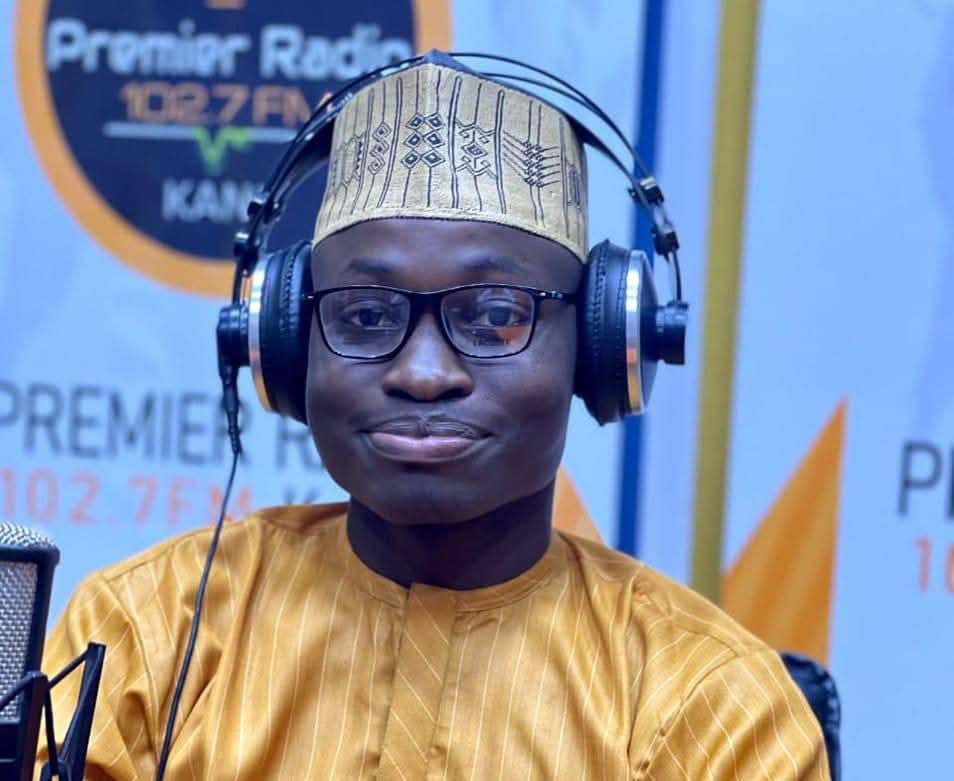
Kano-born journalist and broadcaster Ahmad Hamisu Gwale of Premier Radio 102.7 FM, Kano, has emerged as the winner of the Best Radio Newscaster (Male) National category at the seventh edition of the Nigerian Broadcasters Merit Awards (NBMA) 2026.
The awards ceremony was held on Saturday, 10 October 2026, at the Oriental Hotel, Lagos, bringing together broadcasting and media professionals to recognise excellence, professionalism and innovation across Nigeria’s media industry.
The annual awards featured more than 85 categories spanning television, radio and digital media.
Gwale emerged as the winner ahead of five other nominees: Gbenga Alli-Balogun of Eko FM; Nnah Douglas of Wazobia FM Abuja; Nyamgul Agaji of City 105.1 FM; Augustus “GUS” Aigbe of Cool FM; and Chike Osuji of Orient FM/IBC Owerri.
His achievement marks a significant milestone in his broadcasting career, further highlighting his work in radio news presentation and journalism.
From Sports Broadcasting to National Recognition.
Before winning the NBMA national award, Gwale received recognition from the Sports Writers Association of Nigeria (SWAN), Kano State chapter, as Best Radio Sports Presenter of the Year 2024.
The award was presented on 6 February 2025 during the association’s calendar launch in Kano, recognising his contributions to sports broadcasting.
His recognition at both the SWAN awards and NBMA reflects his professional experience across two important areas of radio broadcasting: sports presentation and news reading.
Early Life and Education
Ahmad Hamisu Gwale was born in Sani Mainagge, Gwale Local Government Area of Kano State, Nigeria.
He developed an interest in journalism and communication, which led him to pursue formal training in mass communication. He graduated from the School of Basic Mass Communication (BMC), Kano, in 2018.
He subsequently studied Computer Science at Kano State Polytechnic, completing his programme on 15 May 2026. He is currently advancing his studies in Computer Science through the Ahmadu Bello University, Zaria.
His educational background combines communication and journalism training with technical knowledge, supporting his interests in digital publishing, multimedia production and technology-driven media.
Journalism and Broadcasting Career
Gwale began his journalism career at Freedom Radio Kano in 2021 before joining Premier Radio 102.7 FM Kano in 2023.
At Premier Radio, he has worked in different capacities, including newsreader, reporter, sports presenter and multimedia journalist. His experience covers news preparation and presentation, editorial work, current affairs reporting, sports coverage and digital content production.
His professional responsibilities and interests include presenting news bulletins, writing and editing reports, covering football competitions, conducting interviews and producing content for broadcast and online audiences.
He has also contributed to sports programmes, including Zauren Wasanni, through which audiences receive updates and discussions about sporting developments.
Through these roles, Gwale has built experience in communicating news and sports information to diverse audiences.
Contributions to Sports Journalism and Barau FC
Beyond radio broadcasting, Gwale has been involved in football media and communications, particularly through his work with Barau Football Club, popularly known as the Maliya Boys.
His contributions have included preparing match reports, previews, player profiles, official announcements, post-match updates and digital content for supporters.
His involvement in football communications has also focused on promoting players, documenting club activities and bringing developments in Kano football to a wider audience.
His experience in sports journalism has complemented his broadcasting career and contributed to his recognition by SWAN Kano.
Publishing and Media Entrepreneurship
In addition to his broadcasting career, Gwale is the founder and chief executive officer of AHG Mirror Media Services Company.
He is also associated with Independent Mirror, an online newspaper established in September 2023, where he serves in a leadership and publishing capacity.
His media interests span online newspaper publishing, news reporting, digital content creation, multimedia production, social media management, online branding and media consultancy.
Through these initiatives, he seeks to expand access to news and information while exploring opportunities offered by digital communication and contemporary media platforms.
Combining Journalism with Technology
Gwale’s interest in Computer Science complements his work in journalism and digital publishing.
His technical education supports his broader interests in online media development, digital communication and multimedia production.
By combining journalism with technology, he is developing a professional profile that spans traditional broadcasting, online publishing, sports communications and media entrepreneurship.
A Milestone in His Broadcasting Career
Winning the Best Radio Newscaster (Male) — National award at NBMA 2026 adds to Gwale’s professional recognition and marks another milestone in his journey through Nigeria’s broadcasting industry.
From his early career at Freedom Radio Kano to his work at Premier Radio and his involvement in digital publishing and football communications, his experience reflects a career built across news presentation, sports journalism and media enterprise.
His latest recognition at the Nigerian Broadcasters Merit Awards places his name among the award recipients celebrated at the seventh edition of the national broadcasting event.
Ahmad Hamisu Gwale continues to pursue opportunities at the intersection of journalism, sports, technology and digital media.
News
Senate Passes Barau’s Bill to Provide Legal Framework for Yusuf Maitama Sule Federal University of Education, Kano
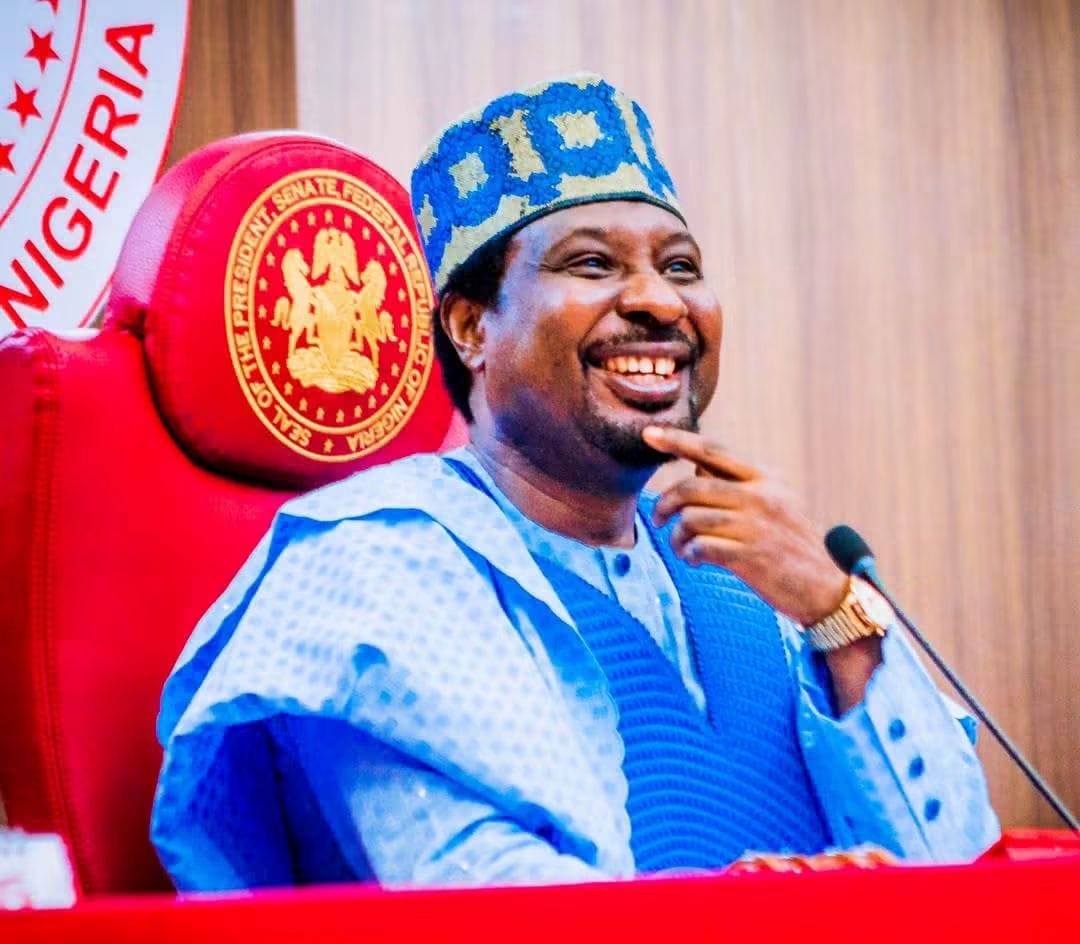
The Senate on Tuesday passed a bill sponsored by the Deputy President of the Senate, Senator Barau I. Jibrin (APC, Kano North), to provide a legal framework for the Yusuf Maitama Sule Federal University of Education, Kano, Kano State.
The bill was passed during plenary presided over by the President of the Senate, Senator Godswill Obot Akpabio, GCON. It seeks to provide the statutory foundation for the effective management and administration of the institution.
Recall that in September 2024, President Bola Ahmed Tinubu approved the conversion of the Federal Colleges of Education in Kano and Zaria into federal universities of education.
Following Senator Barau’s request on behalf of the people of Kano, President Tinubu, on May 10, 2025, also approved the renaming of the institution as the Yusuf Maitama Sule Federal University of Education, Kano.
To give the institution a legal framework, Senator Barau sponsored the bill, which passed through the legislative process and was approved by the Senate for second and third readings. The bill scaled first reading on Wednesday, March 25, 2025.
While leading the debate on the bill, Senator Barau said the legislation was necessary to give legal backing to the institution.
He commended President Tinubu for approving the institution’s upgrade and renaming, explaining that the bill would provide a legal framework for the promotion and development of teacher education and make comprehensive provisions for the university’s management and administration.
He said: “Mr Senate President, this institution has already been established by the President of the Federal Republic of Nigeria.
“You may recall, my colleagues, that in the last Senate, I made efforts to facilitate the establishment of these institutions, including the Federal College of Education, Zaria, which was to be upgraded to a full-fledged university, as well as Alvan Ikoku College of Education and Adeyemi College of Education. The bills were passed and transmitted to the late President Muhammadu Buhari, but they were not assented to.
“When President Bola Ahmed Tinubu assumed office, I approached him and conveyed the desire of my people to have the Federal College of Education, Kano, upgraded to a full-fledged university. He assured me that, since it was the request of the people, it would be done. The President subsequently approved the upgrade of the institution.
“But we were not done yet. At the request of my people, I returned to the President to seek approval for the institution to be named after the late Yusuf Maitama Sule. The President immediately approved the request. Today, the institution is a full-fledged university offering degrees in various fields of education.
” We cannot thank Mr President enough. He loves Kano and has consistently acceded to our requests. Beyond this institution, he has also approved the establishment of the Federal University of Science and Technology in Kabo and the Federal Polytechnic in Rano. We cannot thank him enough for these interventions.”
In his remarks, Senate President Godswill Akpabio commended Senator Barau for sponsoring the bill and thanked senators for supporting its swift passage.
He expressed optimism that President Tinubu would assent to the bill upon its transmission to him, thereby providing the university with the necessary statutory and regulatory framework to fulfil its mandate and continue contributing to national development.
Signed:
Ismail Mudashir
Special Adviser to the Deputy President of the Senate
(Media and Publicity)
October 13, 2026
News
APC London branch confers development award on Gov Abba Kabiru Yusuf
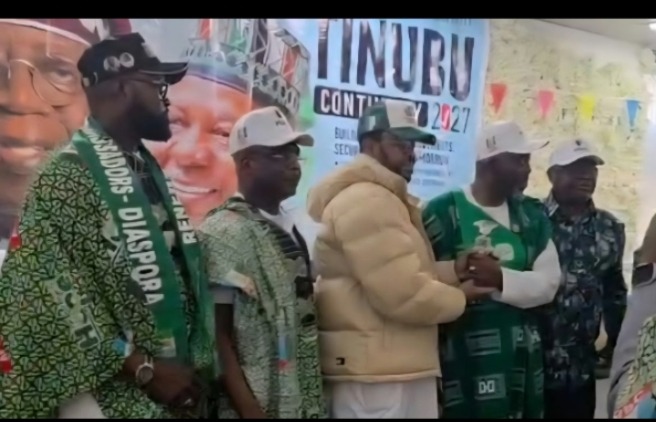
The ruling All Progressive Congress, APC London chapter has conferred an award of honour, on Kano state governor, Eng Abba Kabir Yusuf.
The chairman APC UK , London Branch, Hon Tunde Doherty , at the pageant presentation ceremony held at Double Tree By Hilton London, said the award was conferred on governor Yusuf in recognition of his contributions to the development of the party at the grass root levels.
He added that , the sterling leadership qualities of the recipient and his style of democratic governance were exemplarity saying this resulted to his been nominated by members of the UK branch of the party to be conferred with the award .
The Special Adviser on Youth and Sports Development to the Executive Governor of Kano State, Sani Musa Danja .expressed profound appreciation to the APC UK leadership for the honour, bestowed on the governor, describing it as a clear testimony to the contributions of governor Abba Kabir Yusuf to the growth of the party across board.
He stated that , the awardee has continued to champion the values of unity, service, development and progress within the All Progressives Congress (APC).
According to him, Governor Yusuf has been an evangelist of the importance of strengthening relationships between party members and supporters in Nigeria and the diaspora.
Danja said that the award was earned owing to the sacrifices of the people of Kano State, alongside those working towards a united, prosperous and progressive Nigeria.
He commended Hon. Tunde Doherty and the APC UK leadership for promoting party solidarity and strengthening political engagements within the Nigerian diaspora community.
Danja conveyed the Governor’s appreciation to the Nigerian community in the United Kingdom for remaining actively connected to Nigeria’s political and developmental aspirations.
He affirmed that Kano State Government under the leadership of Abba Kabir Yusuf has remained focus towards its commitment to youth empowerment, sports development, creating economic opportunities and pursuing the general wellbeing of the good people of Kano.
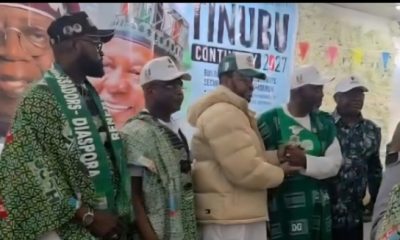
Our correspondent reports that , the occasion also featured the inauguration of the Tinubu Must Stay Organisation, UK Chapter, marking another step in organising the supporters of President Bola Ahmed Tinubu in the United Kingdom and strengthening diaspora engagement in their support of the President’s leadership and the Renewed Hope Agenda.

Ahmad Hamisu Gwale Wins NBMA National Award for Best Male Newscaster 2026

Senate Passes Barau’s Bill to Provide Legal Framework for Yusuf Maitama Sule Federal University of Education, Kano

APC London branch confers development award on Gov Abba Kabiru Yusuf

Kano Monitors ₦48.9bn Projects Across Six LGAs

Muhammad Hussari Makes INEC Final List as APM Governorship Candidate in Kano

Zamfara Varsity ASUU Threatens Warning Strike Over FG-ASUU Agreement, Promotion Arrears

PCACC Arrests Man Over Alleged ₦4.5m Sale, Illegal Leasing of Kano Government Horse Stable

Goje’s Electoral War:The Confrontation With Tinubu,Governor Inuwa,Usman Kumo And APC candidates Ahead Of 2027

Prof Yusuf Adamu Delivers BUK’s 63rd Professorial Inaugural Lecture, Reflects on Medical Geography and Academic Legacy

Al-Istiqama University to Hold Convocation, Honours Late Aminu Dantata, Sheikh Ibrahim Khalil
Ahmad Hamisu Gwale Wins NBMA National Award for Best Male Newscaster 2026
Senate Passes Barau’s Bill to Provide Legal Framework for Yusuf Maitama Sule Federal University of Education, Kano
APC London branch confers development award on Gov Abba Kabiru Yusuf
Kano Monitors ₦48.9bn Projects Across Six LGAs
Muhammad Hussari Makes INEC Final List as APM Governorship Candidate in Kano
Zamfara Varsity ASUU Threatens Warning Strike Over FG-ASUU Agreement, Promotion Arrears
PCACC Arrests Man Over Alleged ₦4.5m Sale, Illegal Leasing of Kano Government Horse Stable
Goje’s Electoral War:The Confrontation With Tinubu,Governor Inuwa,Usman Kumo And APC candidates Ahead Of 2027
Prof Yusuf Adamu Delivers BUK’s 63rd Professorial Inaugural Lecture, Reflects on Medical Geography and Academic Legacy
Al-Istiqama University to Hold Convocation, Honours Late Aminu Dantata, Sheikh Ibrahim Khalil
-

 Opinion5 years ago
On The Kano Flyovers And Public Perception
-

 Features5 years ago
How I Became A Multimillionaire In Nigeria – Hadiza Gabon
-

 Opinion6 years ago
Kano As future Headquarters Of Poverty In Nigeria
-

 History5 years ago
Sheikh Adam Abdullahi Al-Ilory (1917-1992):Nigeria’s Islamic Scholar Who Wrote Over 100 Books And Journals
-

 Opinion5 years ago
My First Encounter with Nasiru Gawuna, the Humble Deputy Governor
-

 History5 years ago
The History Of Borno State Governor Professor Babagana Umara Zulum
-

 History6 years ago
The Origin Of “Mammy Market” In Army Barracks (Mammy Ochefu)
-

 News5 years ago
Federal University Of Technology Babura To Commence Academic Activities September