
News
RE: Kano State At A Crossroads: Setting The Records Straight On Baseless Allegations
Kano patriotic coalition of 87 civil society organizations have rejected a biased and politically motivated statement by league of CSOs accusing present administration of corruption.
In a statement signed by the convener Hassan Ibrahim Gama and co- convener Mustapha Muhammed Chiroma in behalf of the eighty seven groups on late Monday, the patriotic CSOs advised civil societies operating in Kano to embrace responsible engagements guided by facts and constructive partnership with government rather than partisan-driven activism.
“CSOs, NGOs and CBOs operating in Kano State should utilise available accountability platforms and networks in the state covering various sectors (education, health, environment, budget etc.) to transparently engage state government and it’s institutions”
The statement said “the attention of 87 members of the Patriotic Coalition of Civil Society Organisations (PCCSOs) in Kano State has been drawn to a press statement issued on August 23, 2025 by a group parading itself as the League of Civil Society Organisations in Kano State, wherein it made sweeping allegations of corruption and mismanagement against the present administration of His Excellency, Engr. Abba Kabir Yusuf, the Executive Governor of Kano State”
The patriotic CSOs said, they acknowledged that every citizen and civic group has the constitutional right to demand accountability, but, they are deeply concerned that the said statement is not only premature, misleading, and politically motivated, but also a deliberate attempt to discredit the ongoing reforms of the current administration and misinform the good people of Kano State.
“The Patriotic Coalition of Civil Society Organisations therefore considers it necessary to set the record straight and defend truth against propaganda.”
OUR POSITION:
1. Allegations Are Not Convictions
The cases referenced in the League’s statement are still under investigation by the EFCC and ICPC. In a democracy governed by the rule of law, no individual can be pronounced guilty through civil society press releases. To do so amounts to media trial, character assassination, and disregard for judicial processes. As patriotic CSOs, we uphold the principle of innocent until proven guilty.
2. A Misleading Narrative
Contrary to the exaggerated picture of “systemic rot” painted by the League, facts on ground show that the present administration has introduced reforms to promote accountability, including:
a)Full compliance with external audits and fiscal reporting.
b)Adoption of the Treasury Single Account (TSA), which has reduced leakages and improved financial discipline.
3) Establishment of procurement monitoring units and anti-corruption desks across MDAs.
These are concrete actions that any fair-minded observer cannot ignore.
The group also expressed concern over Politicization of Civil Society in Kano.
“It is regrettable that the League has abandoned neutrality and chosen to align with partisan interests. True civil society does not serve as a propaganda arm of the political opposition. Reckless and alarmist statements risk scaring away investors, demoralising public servants, and undermining the developmental gains already being achieved in the state”
4. Constructive Engagement, Not Blackmail
Accountability requires sober reflection, evidence-based advocacy, and constructive dialogue with institutions—not media trials or sensational headlines.
The patriotic CSOs said it is evident that, the government of Kano State has consistently maintained an open door policy for engagement with genuine civil society actors, encouraging the League to use these platforms instead of playing to the gallery.
“OUR STAND AS PATRIOTIC CSOs
1. Due Process is Ongoing: The allegations remain under investigation, and it is reckless to hastily pass judgment before any court pronouncement.
2. Zero-Tolerance for Corruption by the Administration: The government has strengthened public procurement, treasury management, and digital payments to reduce malpractices.
3. Isolated Allegations, Not Government Policy: The acts of a few individuals under probe cannot be generalised to indict an entire administration.
4. On Development and Partnerships: Contrary to claims of lost confidence, Kano continues to attract investors and international partners in agriculture, education, and infrastructure.
The 87 groups further explained that, genuine CSOs should pursue fairness, patriotism, and fact-based advocacy rather than unverified claims that weaken democracy.
“CSOs, NGOs and CBOs operating in Kano State should utilise available accountability platforms and networks in the state covering various sectors (education, health, environment, budget etc.) to transparently engage state government and it’s institutions”
The group then called on the good people of Kano State to remain calm, discerning, and not be swayed by desperate attempts to create panic and distrust in governance.
“We urge the anti-graft agencies to continue their constitutional duties without fear or favour, but equally without yielding to media sensationalism or political manipulation”
“We advise civil society platforms in Kano to embrace responsible engagement, guided by facts and constructive partnership with government rather than partisan-driven activism”.
“We reaffirm our support for the government’s reforms and urge all citizens to join hands in preserving peace, stability, and development in Kano State”
It explained that, Kano State is not “at a crossroads” as sensationally claimed, but rather, the state is on a clear path of reform, modernization, and inclusive development under a leadership committed to transparency and accountability. No amount of blackmail or propaganda will derail the vision for a prosperous and united Kano.
“It is important to note that the so-called League of CSOs Coalition has demonstrated an inability to properly coordinate itself. This is evident as two or more individuals have openly issued disclaimers, stating that they were not part of the press release and have dissociated themselves from it.”
The Patriotic Coalition of Civil Society Organisations therefore rejects the biased and politically motivated statement of the League of CSOs and reaffirms its commitment to defending truth, justice, and the collective interest of the people of Kano State”.
Below are the groups that endorsed this position
S/N
Name
Organization
1
Farouk Umar
Citizens for Development and Education (CDE)
2
Peter Hassan Tijani
Network for Empowerment and Development Initiative (NEDIN)
3
Yahaya A. Yahaya
National association of persons with physical disabilities Kano Chapter (NAPWPD)
4
Hassan Ibrahim Gama.
Masses First International Organization -MFI
5
Wali Ado Rano
Voice of the Hopeful Enlightenment and Development Initiative (VOHEDI)
6
Nworisa Michael
Stand For Peace Initiative
7
Dr. Kabir Hamisu Kura.
Community Development Initiative
8
Rakiya Abba Tahula
Interfaith Peace Foundation
9
Dr. Ramatu Garba
Support for Women and Teenage Children (SWATCH)
10
Maimuna Umar Sheriff
Centre for Gender Base Violence Advocacy
11
Ahmad Tijjani
Alkali Ahmad Center For Development
12
Ibrahim Muhammed
Rural – Urban Slums Development Initiative (RUSDI)
13
Abubakar Shariff Jaddah
Society for Women and Child Health Initiative (SWACHI)
14
Saratu I. Maigida
Lifeline Initiative For Widows Empowerment and Economic Development (LIWEED)
15
Ali Suleiman
Friends of the Community Organization (FOCO)
16
Halima Titi Bello
Women Gender Developers (WOGEND)
17
Dr. Yahaya Danjuma
International Peace and Secure Society (IPSS)
18
Safayanu Bichi
Kano Budget Working Group
19
Mustapha Muhammed Chiroma
Community Rights Initiative of Nigeria (CORIN)
20
Abdulrahman Uba Daushe
Spinal Cord Injuries Association of Nigeria (SCIAN)
21
Rakiya Ladi Musa
Ansar Women Development
22
Sabo Bello Madaki
Kiru Community Development Association
23
Sunusi Hashimu
Society for Child Support and Economic Empowerment (SOCSEE)
24
Samaila Namadi Ahmad
Yadfulde kiru local government Association and development
25
Asaju KolawoleKola
Kola and Funke Care Foundation
26
Ruth Stephen
Touch and Care Foundation (TOCAF)
27
Bashir A Bashir
Diamond Youth For Community Development
28
Salisu Gambo Ditol
Youth mobilization by media
29
Dr. Auwalu Halilu
Non-formal Development for Education and Health Initiatives ( NDEHI)
30
Dr. Tanimu Adam Ibrahim
Gwarzo Initiative Forum
31
Ola Taiwo
Mari-Care Foundation for Widows, Single Parents, Orphans and Vulnerable Children Nigeria. (MARI-CARE)
32
Suleiman Idris
Northern Youth Assembly
33
Mohammed Hussaini
Nigerian Democracy Working Group
34
Haj. Aisha Ahmed Abdulkadir (Dangi)
Sustainable Diana mic and Human Development Initiative
35
Gharzali Ibrahim Ungogo
Ummatee Centre for the Promotion of Public Education, Accountability and Social Safety (Ummatee-C4PASS) –
36
Rabi Yusuf Gezawa MON
Center For Empowerment Of Older Persons And The Vulnerable (CEOPAV)- Formally know as GADIAC
37
Mustapha Muhammed
Social Awareness and Community Development Initiative (SACDI Nigeria)
38
Prof Muhammad Bello Shitu
Inclusive Community Education and Development Association ( ICEADA)
39
Ismail Kanye
KABO Local Government Development Forum
40
Bello Karaye
Karaye Initiative Forum
41
Sani Bello Madaki
Kiru Community Development Association
42
Hassan Musa Yaro
Cardinal and Development Support Initiative
43
Maimuna Shu’aibu
Muna Helping Hand Foundation
44
Aisha Halliru
Halliru Memorial Youth Development and Empowerment initiative (AYDI)
45
Yusuf Muhammad Anas
Dawaki Youth Network for Better Tomorrow Initiatives
46
Abdurrashid Salisu Baba
Tsakuwa Mu Farka Development Association
47
Umaima Muhammad.
Aminci Multipurpose Development Association.
48
Hassan Jibril
Gano Development Association
49
Nusaibatu Muhammad
Iyayen Giji Development Association.
50
Adamu Balarabe Sarbi
Sarbi Development Association
51
Abdurrazak Ayuba usaini
Minjbir East Community Development Association(Mecda)
52
Zubairu Bala
Kwarkiya Youth Mobilization Forum
53
Ismaila Abdullahi
Gidan Kankara City Community
54
Audu Saidu
Mu Tallafi Juna Kadawa (B) Gwale Local Government
55
Umar Iliyasu Madobi
Madobi Youth Development Forum
56
Nura Lambu
Tofa Youth Development Forum
57
Shehu Isah
Gajida Youth Development Associations
58
Abdulaziz Habibu Bello
Yanoko Youth Development Association
59
Suleiman Lawan
Gulu Community Development Association
60
Ubale Yusuf
Kofar Gabas Development Association
61
Dalhatu Jibrin Dalhatu
Karaye Initiative Forum
62
Abubakar Auwal Ahmad
Diso Self Help Group ( DISHEG) Gwale Local Government
63
Murtala Muhd Rabiu
Hannu Dayawa Youth development Association Bachirawa – Ungogo Local Govt
64
Habibu Barau Ruwantsa
Ruwantsa Youth Development Association, Dambatta
65
Sulaiman Yusuf Maitama
Dambatta Reporters
66
Kabiru Balarabe Dambatta
Dambatta Academic Forum
67
Auwal Idris Dorayi
Center for Peace and Environmental Justice CEPEJ
68
Garba Lawan
Rano Development Association
69
Adamu Umar
Rano Youth Enlightenment Forum
70
Auwal Ayuba
Toranke Educational care & support Association.
71
Aminu Sa’ad
Consolidated Ajingi Development Association.
72
Saminu Yusha’u Chula
Chula Area Development Association.
73
Abdullahi Madaki
Kunkurawa Youth Development
74
Sunusi Garba Shehu Gajale
Kafin maiyaki Community Development Association (KACODA), Kiru Local Government Area.
75
Ahmad Tahir
Doguwa Tailoring association.
76
Abdulrazaq Ado Zango
Kano Initiatives Of Persons With Special Needs (KIPSN)
77
Dr. Mustapha Mukhatar
Danbatta Development Forum (DDF)
78
Sani Shuaib Rogo
Rogo Concern Citizens
79
Amb. Abbas Abdullahi
Beyond Border Alliance (BBA)
80
Khadija Shehu Muhammed
Save the Future Initiative (SAFI)
81
Abubakar Abdulkadir
One Voice Development Initiative (OVID)
82
Lami Bako Yakasai
Enlightenment And Empowerment Of Northern Women Initiative
83
Solomon Samuel
Mercy Helpline Initiative
84
Barr. Mustapha Idris
Human Right and Community initiative. Contact person
85
Khadija A. Muhammad
Nana Aisha Development Initiative (NADI)
86
Isyaku Ahmad
Voice And Accountability Platform (VAP)
87
Bashir Adamu Jigirya
Participatory Learning and Action for Community Ownership (PLACO)










News
State Police: 24 State Assemblies Approve Constitutional Amendment–Presidency
By Yusuf Danjuma Yunusa
The Presidential Working Group on the National Policing Bill says 24 State Houses of Assembly have approved the Constitution (Sixth Alteration) Bill, 2026, providing for a dual policing system.
The approval meets the constitutional threshold of two-thirds of the 36 states required for the amendment to proceed.
The Working Group commended the State Houses of Assembly for their action and acknowledged the National Assembly for passing the amendment in both chambers.
This is contained in a statement issued by Femi Gbajabiamila, Chief of Staff to the president and chairman of the Working Group, on Friday in Abuja.
“In line with Section 9 of the Constitution, the amendment can now be returned to the National Assembly for transmission to Mr President for assent.”
Mr Gbajabiamila said the approval provided constitutional backing for the policing framework outlined in the Working Group’s draft National Policing Bill, 2026.
He added that the draft bills were undergoing legislative drafting, review and validation at the Federal Ministry of Justice.
The bills are expected to be returned on or before October 30, after which the Working Group will give them final consideration before presenting them to President Bola Tinubu.
The Working Group urged stakeholders to support a smooth transition to a dual policing system aimed at improving public safety.
News
ECOWAS Court Faults Process Backed by Council of Ministers in Darma Removal Case
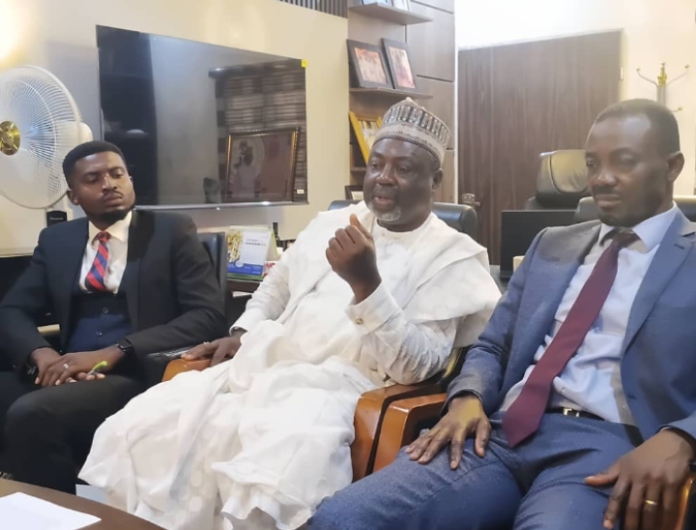
The ECOWAS Community Court of Justice has ruled that the removal and replacement of former ECOWAS Commissioner for Internal Services, Prof. Nazifi Abdullahi Darma, were unlawful, overturning a process that culminated in his replacement being formalised by the Council of Ministers.
Darma disclosed the outcome while briefing journalists in Abuja on the Court’s recent judgment.
He said the dispute arose after a memorandum dated 30 October 2025 by the then President of the ECOWAS Commission, Dr. Omar Alieu Touray withdrew responsibilities previously exercised by Darma and initiated steps that eventually led to his replacement.
While Darma challenged the actions before the ECOWAS Court on 3 November 2025, the Federal Republic of Nigeria subsequently recalled him and nominated a successor.
The Council of Ministers later formalised the replacement.
However, the Court found that the legal requirements for ending his mandate had not been satisfied.
According to Darma, the Court held that the memorandum triggering the process was based on adverse allegations that affected his responsibilities and was issued without giving him an effective opportunity to respond.
“The Court found that these actions were taken without prior notice or an effective opportunity for me to respond,” he said.
The Court further ruled that managerial powers vested in the President of the Commission could not be used to extinguish or transfer responsibilities assigned by Community law to another statutory office.
Darma said the Court also rejected the argument that Nigeria’s recall automatically ended his tenure as Commissioner.
“Once appointed, a Commissioner derives his mandate from Community law and not from the nominating Member State,” he quoted the Court as holding.
The Court consequently declared that his removal and replacement were unlawful, notwithstanding the subsequent actions taken to formalise the change in office.
The judgment ordered the payment of outstanding salaries, allowances and accrued entitlements up to the expiration of his tenure and awarded him US$50,000 in general damages.
Because his tenure expired on 31 August 2026, the Court did not order reinstatement.
Describing the ruling as significant for regional governance, Darma said it reaffirmed that ECOWAS statutory office holders can only be removed through procedures recognised by Community law.
News
Dangote Cement Gboko Commits Millions in Scholarship Scheme
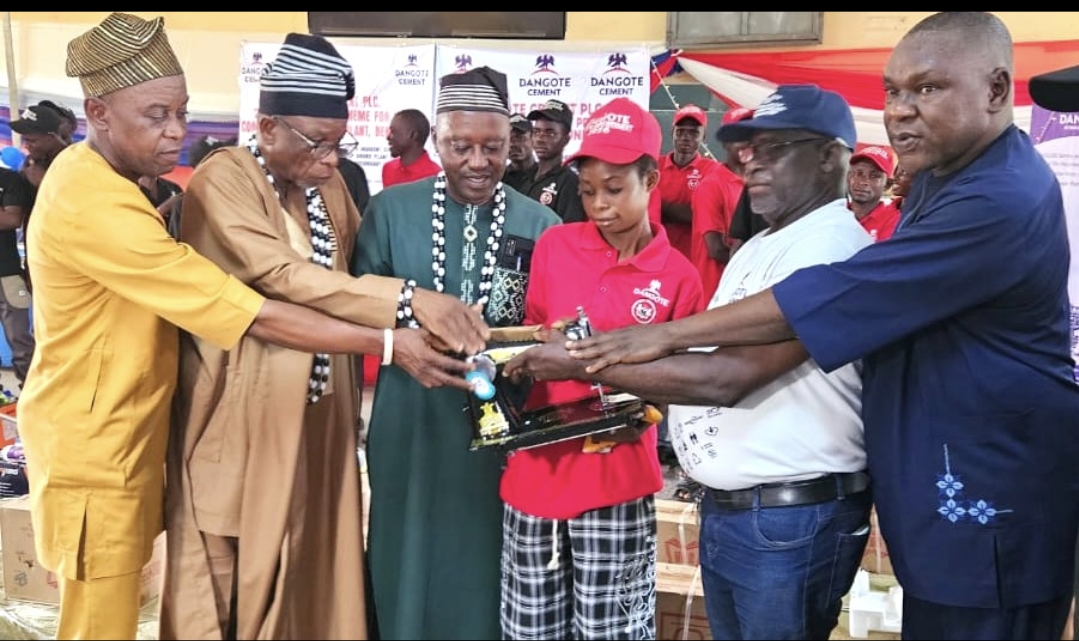
Dangote Cement Plc, Gboko Plant has awarded multi-million-naira scholarships to tertiary and secondary school students from its six host communities in Benue State.
The company also presented starter packs, working tools and certificates to graduates of its Youth Empowerment Programme to enable them to establish their own businesses, apply the skills acquired during the training and become financially reliant.
The Minister of Solid Minerals Development, Dr. Henry Dele Alake, lauded Dangote Cement Plc for its community development interventions, calling on other private sector players to adopt similar initiatives to promote socio-economic development in their host communities.
Dr. Alake, who was represented by the Federal Mines Officer of the Federal Ministry of Solid Minerals Development in Benue State, Engr. Achi Gregory, urged the company to sustain its commitment to implementing community development programmes agreed upon with its host communities.
Speaking at the official presentation ceremony, Group Head, Social Performance, Dangote Cement Plc, Mr. Wakeel Olayiwola, said the implementation of the Community Development Agreement underscores Dangote Cement’s commitment to equipping young people with practical skills and resources to promote entrepreneurship, create employment opportunities and improve livelihoods in its host communities.
Mr. Olayiwola, who was represented by the Head of Social Performance of the Dangote Cement, Gboko Plant, Dr. Johnson Kor, said the scholarship and youth empowerment programmes came against the backdrop of several other programmes recently executed by the company, which include farmers and women empowerment programmes.
The Acting Plant Director, Dangote Cement, Gboko, Engr. Arbind Singh, said: “This annual scholarship scheme for indigent students of the host communities is an indication of our company’s commitment to its Corporate Social Responsibilities (CSR).”
Engr Singh, who was represented by the company’s General Manager, Production, Engr Tabershima Soom, said: “The Gboko Plant has already launched 150 Women Empowerment Programme and 50 Farmerss Empowerment Programme where women were provided with cash to support their businesses, and farmers were supported with farm inputs.”
The beneficiary communities for these programs are: Tse-Kucha, Quarry, Amua, Mbazembe, Mbatur, and Pass Brothers.
Speaking on behalf of the Benue State Attorney-General, the Chairman of the Mineral Resources and Environmental Management Committee (MIREMCO), Barr. Dooshima Orosaga, commended Dangote Cement Plc for its compliance with the Community Development Agreement (CDA), urging the beneficiaries and host communities to maximise the benefits of the company’s interventions.
Chairman of the Gboko Local Government, Hon Yina Elias said the government will continue to provide the support needed for the company to succeed, adding that the Dangote Cement Plc is an exemplary company in Corporate Social Responsibilities programmes.
In his remarks, the District Head of Ukpekpe, Chief Tsegba Igbarumun, commended Dangote Cement Plc’s Gboko Plant for its contributions to the community, assuring the company of the community’s continued support.
He said the community valued its mutually beneficial relationship with the company and would continue to serve as its ambassadors.
A beneficiary of the Youth Empowerment Programme, Mr Ignatius Aondohemba, expressed appreciation to Dangote Cement Plc for the support, pledging to put the skills and resources provided to good use and build a business that would enable him to become an employer of labour.

State Police: 24 State Assemblies Approve Constitutional Amendment–Presidency

ECOWAS Court Faults Process Backed by Council of Ministers in Darma Removal Case

Dangote Cement Gboko Commits Millions in Scholarship Scheme

Mass Exodus Looms in Kano APC as More Chieftains Consider Exit — Mansur Ahmed

Kano Donates Equipment to NDLEA

PCACC Arrests Man Over Alleged ₦4.5m Sale, Illegal Leasing of Kano Government Horse Stable

Kano Monitors ₦48.9bn Projects Across Six LGAs

Goje’s Electoral War:The Confrontation With Tinubu,Governor Inuwa,Usman Kumo And APC candidates Ahead Of 2027

Kano Spends ₦10.36bn on Hospitality, Sitting Allowances, Others in Six Months

Prof Yusuf Adamu Delivers BUK’s 63rd Professorial Inaugural Lecture, Reflects on Medical Geography and Academic Legacy
State Police: 24 State Assemblies Approve Constitutional Amendment–Presidency
ECOWAS Court Faults Process Backed by Council of Ministers in Darma Removal Case
Dangote Cement Gboko Commits Millions in Scholarship Scheme
Mass Exodus Looms in Kano APC as More Chieftains Consider Exit — Mansur Ahmed
Kano Donates Equipment to NDLEA
PCACC Arrests Man Over Alleged ₦4.5m Sale, Illegal Leasing of Kano Government Horse Stable
Kano Monitors ₦48.9bn Projects Across Six LGAs
Goje’s Electoral War:The Confrontation With Tinubu,Governor Inuwa,Usman Kumo And APC candidates Ahead Of 2027
Kano Spends ₦10.36bn on Hospitality, Sitting Allowances, Others in Six Months
Prof Yusuf Adamu Delivers BUK’s 63rd Professorial Inaugural Lecture, Reflects on Medical Geography and Academic Legacy
-

 Opinion5 years ago
On The Kano Flyovers And Public Perception
-

 Features5 years ago
How I Became A Multimillionaire In Nigeria – Hadiza Gabon
-

 Opinion6 years ago
Kano As future Headquarters Of Poverty In Nigeria
-

 History6 years ago
Sheikh Adam Abdullahi Al-Ilory (1917-1992):Nigeria’s Islamic Scholar Who Wrote Over 100 Books And Journals
-

 Opinion5 years ago
My First Encounter with Nasiru Gawuna, the Humble Deputy Governor
-

 History5 years ago
The History Of Borno State Governor Professor Babagana Umara Zulum
-

 History6 years ago
The Origin Of “Mammy Market” In Army Barracks (Mammy Ochefu)
-

 News5 years ago
Federal University Of Technology Babura To Commence Academic Activities September