
News
Petition Filed Against Jos Electricity Distribution Company Over Transformer Neglect in Tumfure Community

A formal petition has been submitted to the Nigerian Electricity Regulatory Commission (NERC) by residents of Tumfure community in Gombe State, accusing the Jos Electricity Distribution Company (JEDC) of gross negligence and violation of regulatory obligations following a month-long blackout caused by a damaged transformer.
In the petition addressed to the Chairman of NERC, Abdulkadir Aliyu Shehu, representing over 100 affected households, stated that the Almajiri transformer serving the Tumfure community has been out of service for nearly a month. Despite repeated appeals and visits to JEDC offices in Gombe and Jos, residents claim no meaningful action has been taken to inspect or repair the transformer.
“This is not just a technical failure; it is an institutional failure that borders on negligence and abuse of regulatory frameworks,” Shehu wrote, emphasizing the severe impact on homes, businesses, schools, and essential services in the area.
The petition highlights that Tumfure residents were placed under Band A classification, which, according to NERC’s service-based tariff (SBT) structure, guarantees a minimum of 20 hours of electricity daily. However, the community has received zero hours of supply for close to a month, raising concerns about false billing and service fraud.
“Despite community-level communications and requests for assistance, JEDC has not even shown a clear intent to inspect or repair the faulty transformer,” the petition reads. It further notes that all attempts to engage JEDC have resulted in “empty promises.”
Citing the NERC Investment in Electricity Networks Regulation (2015) and the Order on Customer Responsibilities, the petition asserts that DisCos are legally obligated to repair or replace damaged infrastructure. “The practice of shifting the cost of network repairs and upgrades to consumers whether through coercion or abandonment is illegal and has been explicitly prohibited by NERC,” Shehu stated.
The petition also references Regulation 1, Section 11 of NERC’s Connection and Disconnection Procedures for Electricity Services (2017), which mandates that distribution licensees maintain and repair equipment up to the customer’s point of connection. “JEDC has violated this provision,” the residents allege.
Additionally, the petition invokes Section 63 of the Electric Power Sector Reform Act (EPSRA) 2005, which requires licensees to operate efficiently and ensure safe, reliable electricity delivery. “JEDC has fallen far short of this,” Shehu wrote, calling for regulatory scrutiny.
The residents argue that the delay in restoring power violates NERC’s Customer Service Standards of Performance, which provide specific timelines for fault resolution. “A delay of over 30 days without electricity for a critical fault like this is a blatant breach,” the petition states.
According to the petition, over 98% of affected residents use prepaid meters, meaning they have paid in advance for services they are not receiving. “This makes the continued outage not only unlawful but deeply exploitative,” Shehu emphasized.
The blackout has led to significant economic and social distress. “Many residents have lost perishable goods, and small businesses that rely on power for refrigeration, charging, tailoring, welding, and printing are on the brink of collapse,” the petition notes. Students preparing for exams have been forced to study in darkness, compounding the emotional toll.
The community has refused to contribute funds for the transformer repair, citing NERC regulations that prohibit such consumer-financed infrastructure. “Let it be on record that we refuse to be blackmailed into funding infrastructure we are not legally required to finance,” Shehu declared.
The petition warns that continued inaction may prompt legal action and appeals to consumer protection agencies and National Assembly oversight committees. “We are also placing NERC on notice that continued inaction will leave us with no option but to seek redress through public legal action,” the residents stated.
The petition was copied to key stakeholders, including the Senate President, Speaker of the House of Representatives, Chairmen of the Senate and House Committees on Power, Senator Muhammadu Danjuma Goje, the Chief Whip of the House, the Minister of Power, and the Consumer Protection Agency.
In conclusion, the residents call on NERC to urgently direct JEDC to repair or replace the Almajiri transformer and restore power in line with Band A obligations. They also request a broader investigation into JEDC’s service delivery across Gombe State and appropriate sanctions for proven violations.
“We trust in your Commission’s role as the protector of electricity consumers and believe that this formal petition will be met with swift and decisive enforcement action,” Shehu concluded on behalf of the Tumfure community.











News
Governor Yusuf celebrates Abdulmumin Jibrin Kofa at 50
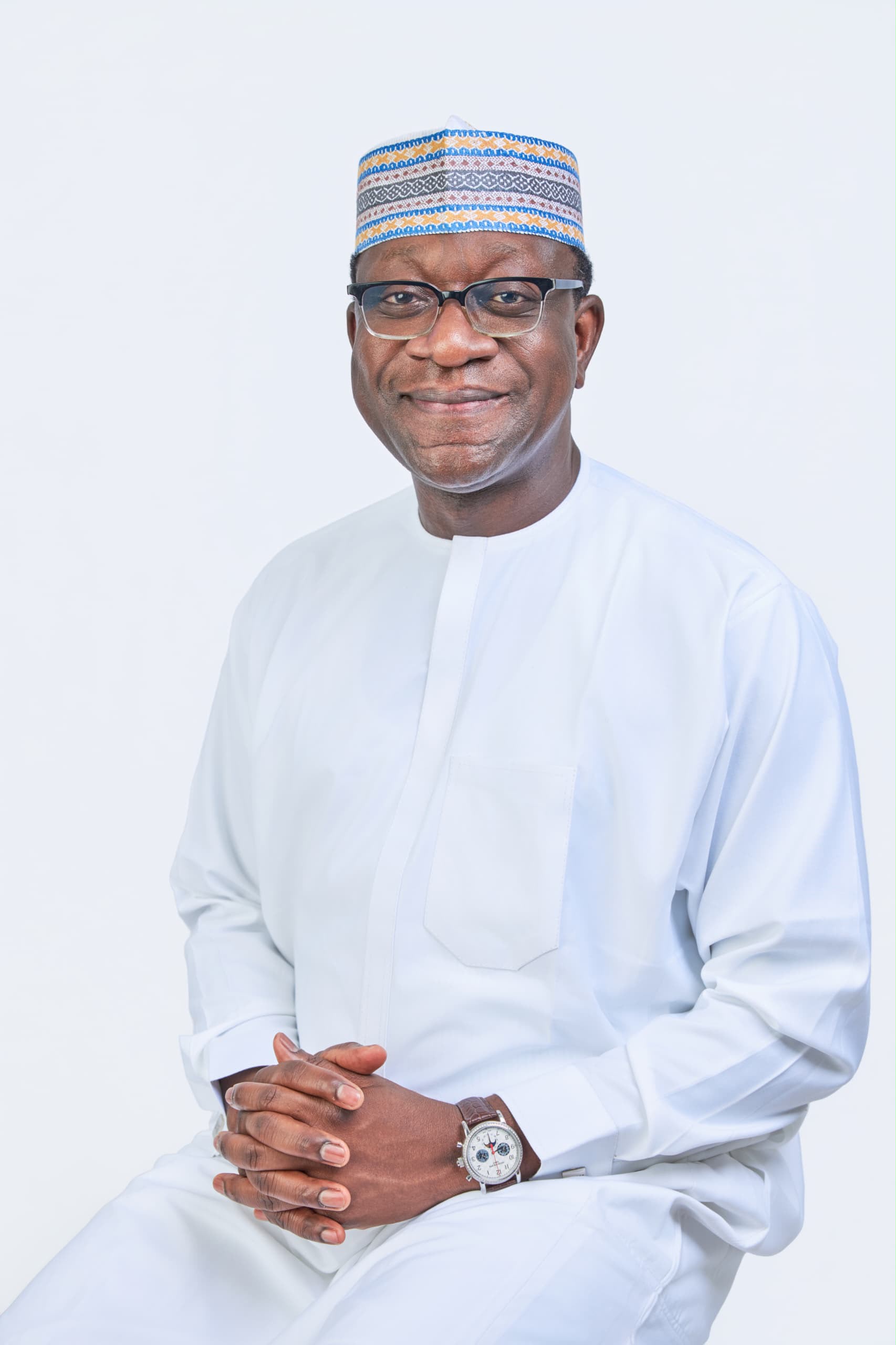
Kano State Governor, Alhaji Abba Kabir Yusuf, has congratulated the member representing Kiru/Bebeji Federal Constituency in the House of Representatives, Hon. Dr. Abdulmumin Jibrin Kofa, on his 50th birthday.
This was contained in a statement issued by the governor’s spokesman, Sunusi Bature Dawakin Tofa, on Monday.
Governor Yusuf described Kofa as a distinguished son of Kano whose contributions to his constituency, the state and Nigeria have earned him recognition and commendation.
The Governor praised Kofa for his outstanding performance in the National Assembly, where he has served in several key capacities, including Chairman of the Committees on Finance, Appropriations, Transport and Foreign Affairs, and currently Housing and Habitat.
According to Governor Yusuf, Kofa has demonstrated strong legislative capacity through effective representation, advocacy and initiatives aimed at improving the welfare of his constituents.
He also acknowledged Kofa’s contributions to the housing sector and national development during his service at the Federal Housing Authority.
Governor Yusuf commended the lawmaker for his continued focus on grassroots development, particularly through empowerment programmes targeting youths, women, farmers, entrepreneurs and vulnerable members of society.
He said Kofa’s interventions, including provision of working tools, business support, vocational training, educational assistance and agricultural initiatives, have helped create opportunities for many constituents to improve their livelihoods.
“You are a fine lawmaker who has demonstrated effective representation of your people. Your empowerment and human development initiatives for the people of Kiru/Bebeji Federal Constituency are remarkable and worthy of emulation,” the Governor said.
Governor Yusuf further described Kofa as a public servant who has combined legislative responsibilities with direct engagement with the grassroots, ensuring that the concerns and needs of his constituents receive attention.
He noted that Kofa’s experience as a businessman, lecturer, public servant and legislator has enabled him to make meaningful contributions to national discussions and issues affecting Kano State.
“Having attained so much at 50, Kano State is proud of you and appreciates your contributions to the development of our state and country,” Governor Yusuf said.
The Governor wished Dr. Abdulmumin Jibrin Kofa many more years of good health, happiness and success, while praying that Almighty Allah grants him the wisdom and strength to continue serving humanity.
He also prayed for greater opportunities for the celebrant to contribute to the growth and development of Kano State and Nigeria.
News
JUST IN: El-rufai’s Family Issues 7-day Ultimatum for Defence Minister to Retract Comment on Violence
By Yusuf Danjuma Yunusa
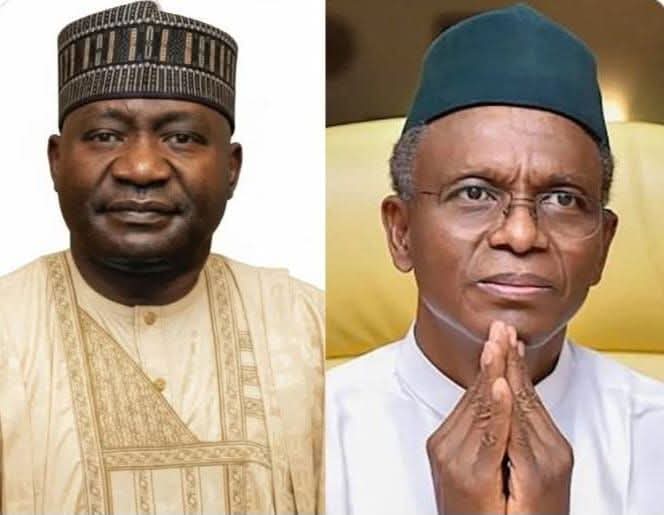
Former Minister of the Federal Capital Territory (FCT), Mallam Nasir Ahmad El-Rufai, has issued a seven-day ultimatum to the Minister of Defence, General Christopher Musa (rtd.), to provide evidence backing an allegation that El-Rufai planned killings in Southern Kaduna or publicly retract the claim.
Musa had accused the former governor of taking actions that deepened divisions and contributed to insecurity in Kaduna State during his administration between 2015 and 2023.
The minister, on Channels TV’s Politics Today, described the situation in the state during El-Rufai’s tenure as “toxic”, arguing that residents of Southern Kaduna remained unhappy with the former governor over the killings recorded in the area during his administration.
“El-Rufai did a lot of terrible things in Kaduna State. He divided the state into two. In that, if you are from the south, you cannot go to the north to live,” Musa had said during the interview.
When Musa was asked whether the people of Southern Kaduna were still unhappy with the former governor, he said, “If there is anything worse than unhappy. We can never be happy with somebody who has deliberately planned for the killing of our people.”
He also accused El-Rufai of ordering the demolition of houses belonging to people with whom he had personal disagreements.
But in a statement issued on his behalf by his family, the former governor denied the allegation and demanded retraction.
The statement signed by Hon. Mohammed Bello El-Rufai, eldest son of the former governor, said it was seriously concerned by comments made by the Defence Minister during a live edition of Politics Today on Channels Television on September 3.
The family described the allegation as grave and said it was made without the presentation of evidence to substantiate the claim.
“While General Musa (Rtd.) is entitled to hold and express his personal opinions, the El-Rufai family is equally entitled to demand that such serious allegations be substantiated with credible evidence,” the statement said.
The family therefore called on the Defence Minister to publicly retract the allegation through the same medium on which it was made.
“The family of Mallam Nasir Ahmad El-Rufai, the former Minister of the Federal Capital Territory (FCT), former Governor of Kaduna State and Opposition Leader of the African Democratic Congress (ADC), has noted with serious concern the allegations made by General Christopher Musa (Rtd.), Minister of Defence, on 3 September 2026 during a live television broadcast of Politics Today on Channels Television. During the programme, General Musa alleged that Mallam Nasir El-Rufai actively planned killings in Southern Kaduna while serving as Governor of Kaduna State.”
“This grave allegation was made without the presentation of any evidence in support of the claim. While General Musa (Rtd.) is entitled to hold and express his personal opinions, the El-Rufai family is equally entitled to demand that such serious allegations be substantiated with credible evidence.
“In the absence of such evidence, we call on him to publicly retract the allegation through the same medium on which it was made. Accordingly, General Musa (Rtd.) is hereby given seven (7) days from the date of this statement to either provide evidence in support of his allegation or issue a full public retraction and apology.
“Failure to do so will leave the family with no option but to pursue all appropriate legal remedies available under the law in response to these unsubstantiated allegations.”
El-Rufai, who previously served as FCT minister and Kaduna State governor, is currently an opposition leader of the African Democratic Congress (ADC).
News
Kano Chemists Threaten Warning Strike Over Alleged PCN Pressure
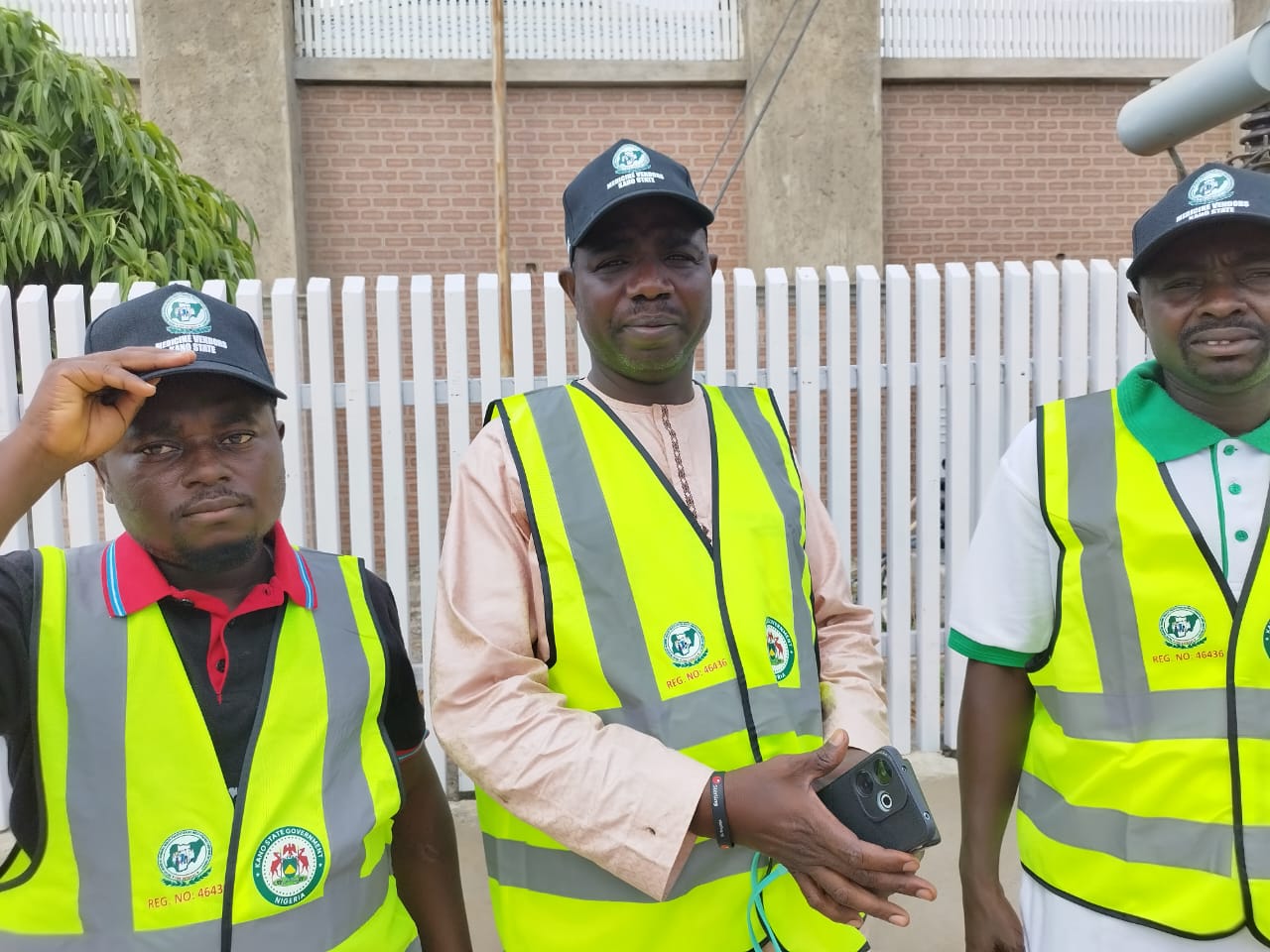
The Association of Patent and Proprietary Medicine Vendors (PPMVs) in Kano State has threatened to embark on a warning strike if the Pharmaceutical Council of Nigeria (PCN) does not stop what it described as persistent pressure on its members.
The chairman of the association in Kano State, Comrade Aminu Hikima, disclosed this in an interview with Dala FM Radio, where he expressed concern over what he described as increasing pressure being exerted on members of the association by the regulatory body.
According to Hikima, the association would be forced to take industrial action as a means of drawing attention to the concerns of its members if the situation is not addressed.
Hikima said the planned warning strike was not the association’s preferred option, stressing that its members would rather see the issues resolved through dialogue and intervention by the relevant authorities.
The Kano State chairman appealed to the PCN to reconsider its approach and stop actions that the association believes are putting unnecessary pressure on chemists operating across the state.
He said members of the association were willing to cooperate with regulatory authorities and comply with lawful requirements, but urged the PCN to ensure that its activities did not unnecessarily disrupt the operations of legitimate medicine vendors.
Hikima also called on the Kano State Government to urgently intervene in the dispute between the association and the PCN in order to prevent the situation from escalating into a warning strike.
The association’s chairman said government intervention was necessary to bring the parties together, address the grievances raised by its members and find a lasting solution to the disagreement.
Hikima further urged the state government to treat the matter as a priority because any disruption in the activities of medicine vendors could have consequences for residents who depend on them for access to medicines and other pharmaceutical products.
He maintained that the association remained committed to working with the government and regulatory authorities to ensure that medicine-related businesses operate within the law while protecting the interests of its members.
The warning by the Kano chemists comes amid calls for greater engagement between medicine vendors and regulatory authorities to resolve disagreements through dialogue rather than industrial action.

Governor Yusuf celebrates Abdulmumin Jibrin Kofa at 50

JUST IN: El-rufai’s Family Issues 7-day Ultimatum for Defence Minister to Retract Comment on Violence

Kano Chemists Threaten Warning Strike Over Alleged PCN Pressure

Why Pantami Should Not Be Trusted With The Governance Of Gombe

All Hail The 17th Emir Of Gumel, His Royal Highness, Dr. Lawan Ahmed Mohammed-DIG

From World’s 9th Most Populous City to Perfect: As Gov Yusuf Revisits Kano Master Plan

95% of Governor Abba Kabir Yusuf’s Promises Have Been Fulfilled — CPS Interview By Musa Diso, In Kano

Kano Islamic Scholar Declares Kano Widow Marriage Programme ‘Haram’, Urges Government to Stop It

We’re aware of your clandestine meetings with Lulu-Briggs, 𝐏𝐢𝐝𝐨𝐦𝐬𝐨𝐧, CRP uncovers ex-MD of NDDC, Nunieh

Between Sabotage and Scepticism: Why Nigeria’s Oil Dream Keeps Stalling
Governor Yusuf celebrates Abdulmumin Jibrin Kofa at 50
JUST IN: El-rufai’s Family Issues 7-day Ultimatum for Defence Minister to Retract Comment on Violence
Kano Chemists Threaten Warning Strike Over Alleged PCN Pressure
Why Pantami Should Not Be Trusted With The Governance Of Gombe
All Hail The 17th Emir Of Gumel, His Royal Highness, Dr. Lawan Ahmed Mohammed-DIG
From World’s 9th Most Populous City to Perfect: As Gov Yusuf Revisits Kano Master Plan
95% of Governor Abba Kabir Yusuf’s Promises Have Been Fulfilled — CPS Interview By Musa Diso, In Kano
Kano Islamic Scholar Declares Kano Widow Marriage Programme ‘Haram’, Urges Government to Stop It
We’re aware of your clandestine meetings with Lulu-Briggs, 𝐏𝐢𝐝𝐨𝐦𝐬𝐨𝐧, CRP uncovers ex-MD of NDDC, Nunieh
Between Sabotage and Scepticism: Why Nigeria’s Oil Dream Keeps Stalling
-

 Opinion5 years ago
On The Kano Flyovers And Public Perception
-

 Features5 years ago
How I Became A Multimillionaire In Nigeria – Hadiza Gabon
-

 Opinion6 years ago
Kano As future Headquarters Of Poverty In Nigeria
-

 History5 years ago
Sheikh Adam Abdullahi Al-Ilory (1917-1992):Nigeria’s Islamic Scholar Who Wrote Over 100 Books And Journals
-

 Opinion5 years ago
My First Encounter with Nasiru Gawuna, the Humble Deputy Governor
-

 History5 years ago
The History Of Borno State Governor Professor Babagana Umara Zulum
-

 History5 years ago
The Origin Of “Mammy Market” In Army Barracks (Mammy Ochefu)
-

 News4 years ago
Federal University Of Technology Babura To Commence Academic Activities September