
News
Kano Peace Committee Urges Calm and Unity Ahead of Eid El Kabir Celebrations
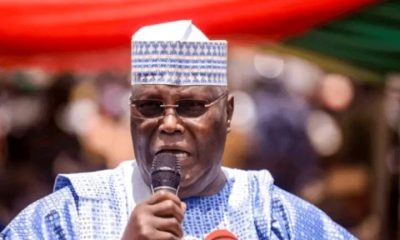
As Muslims across Kano State prepare to mark the 2025 Eid El Kabir festival on Friday, June 6, the Kano Peace Committee (KPC) has extended warm congratulations to the faithful, urging peaceful and reflective celebrations.
In a statement signed by Most Reverend Dr. John Namaza Niyiring, OSA, and Alhaji Aliyu Harazumi Umar (Dan Amar din Kano), the committee emphasized the need for unity and caution during the festivities, calling on all law-abiding residents to conduct themselves with decorum throughout the holiday period.
Recognizing the potential for tension during large gatherings, KPC made a direct appeal to the youth, urging them to reject any attempts to incite violence or unrest. The committee reminded the people of Kano that maintaining harmony is a shared responsibility, reinforcing the state’s long-standing commitment to peace and security.
The statement also encouraged worshippers to embody the values symbolized by Eid El Kabir, particularly those reflected in the teachings of Prophet Ibrahim—patience, sacrifice, and devotion to spirituality. Rather than acts of disorder, the committee urged citizens to focus on kindness and goodwill, fostering a spirit of love and solidarity.
Furthermore, KPC called on Kano residents to use the occasion to pray for the state’s continued unity and progress, noting that beyond being a time of celebration, Eid El Kabir offers an opportunity for renewal and collective support for growth and development, both at the state and national levels.
With final words of encouragement, the Kano Peace Committee wished all celebrants a joyous and peaceful Sallah festival, reaffirming their commitment to a secure and prosperous Kano State.














News
SEMA Assesses Sites of Building Collapses, Condoles Families of Nine Victims
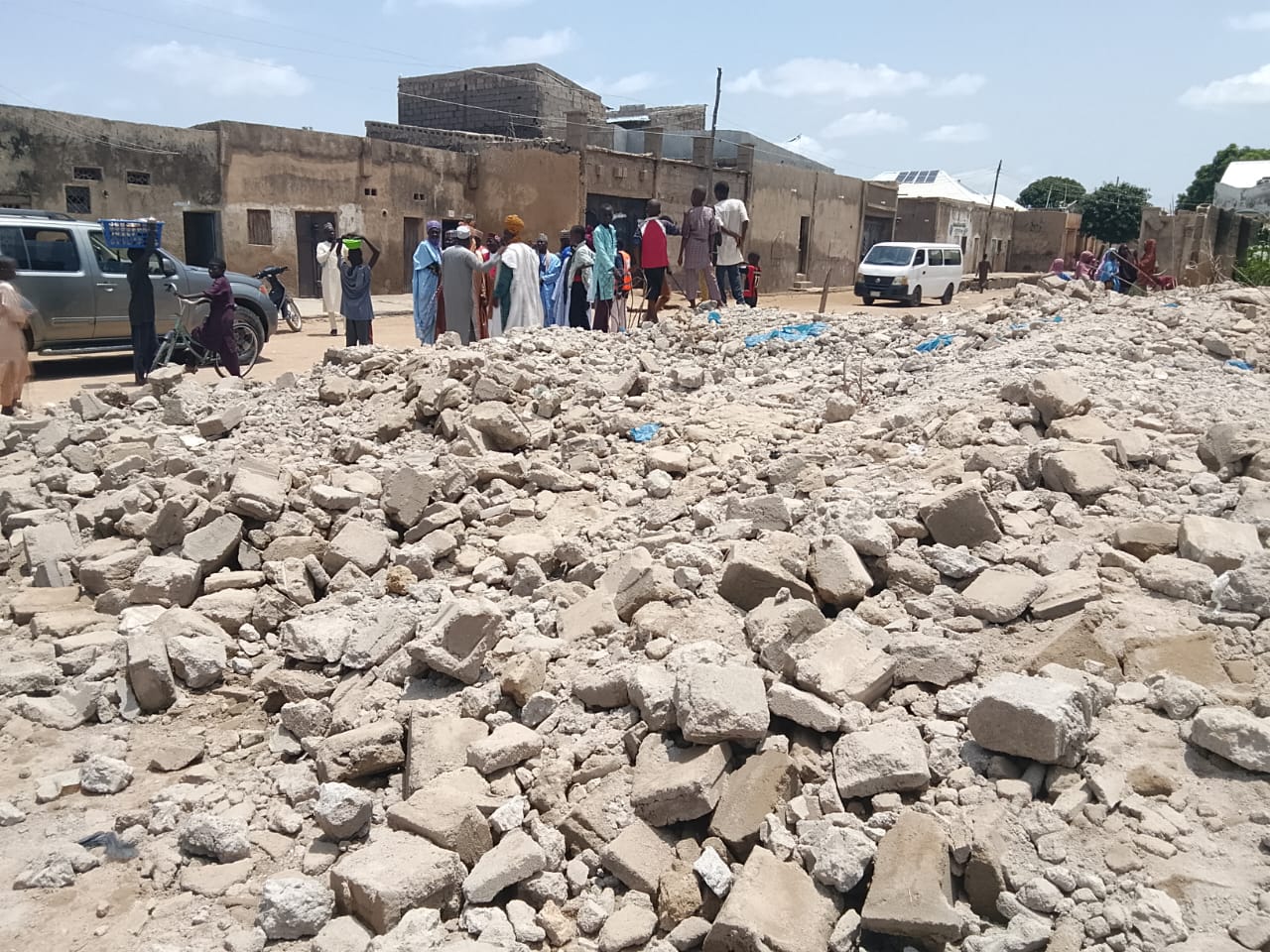
The Executive Secretary of the Kano State Emergency Management Agency (SEMA), Alhaji Isyaku Abdullahi Kubarachi, accompanied by directors of the Agency, has visited the scenes of recent building collapses within Kano metropolis and condoled with families who lost loved ones in the incidents.
During the visit, the SEMA team inspected the site of the collapsed Khadija Bala Memorisation School, located at No. 1030, Police Station Road, Fagge Local Government Area, where one female student lost her life while eight others were rescued following the collapse of the Islamic school.
The team also visited Dukawa, Gobirawa area of Dala Local Government Area, where the residence of Malam Mutari Abdulhamidu collapsed, resulting in the death of his four children.
Similarly, at Gaida, four people reportedly lost their lives following the collapse of a residential building.
The Executive Secretary, alongside a representative of the National Emergency Management Agency (NEMA), expressed deep sympathy and condolences to the bereaved families, praying for the repose of the souls of those who lost their lives and wishing the survivors a speedy recovery.
Alhaji Isyaku Abdullahi Kubarachi urged members of the public to strictly adhere to approved building regulations and safety standards, particularly during periods of heavy rainfall, when building structures may become more vulnerable to collapse.
In a statement, SEMA spokesperson Jamil Sagir Danbala said the Executive Secretary further called on property owners, developers and residents to avoid compromising building standards and to promptly report any signs of structural weakness to the relevant authorities.
News
UNICEF Hands Over Renovated Diso Ward Primary Healthcare Centre to Kano State
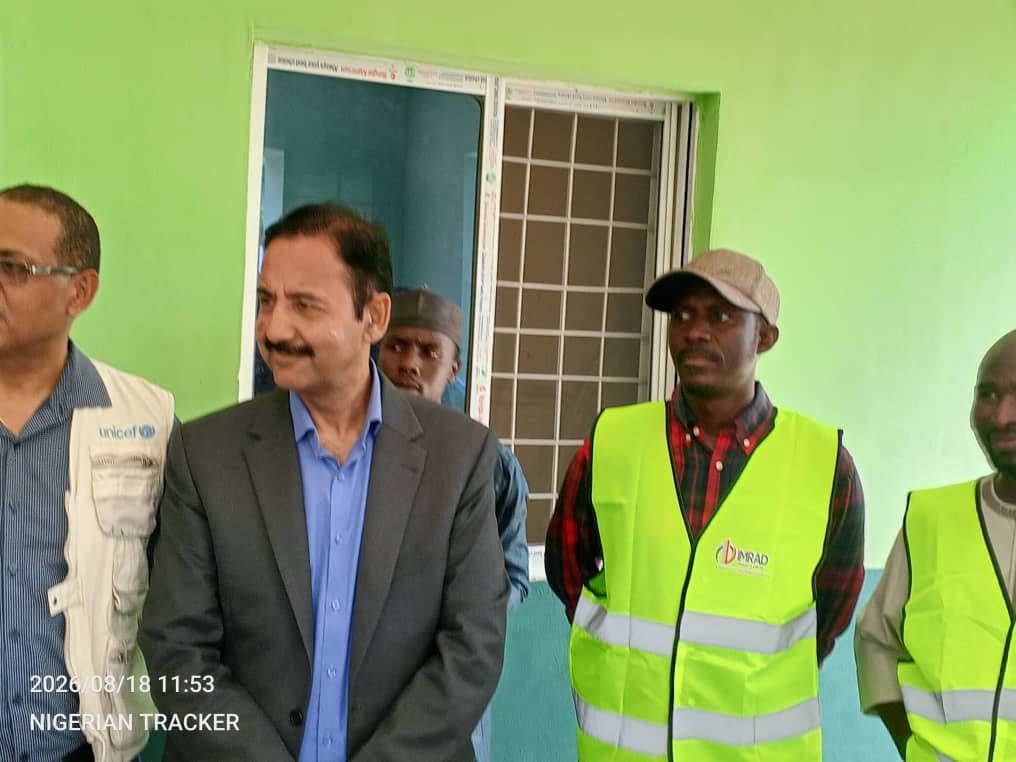
The United Nations Children’s Fund (UNICEF) has handed over the newly renovated and upgraded Diso Ward Primary Healthcare Centre (PHC) to the Kano State Government as part of efforts to strengthen primary healthcare delivery and improve access to essential health services at the grassroots.
The upgraded facility was formally handed over to the Kano State Primary Healthcare Management Agency (KSPHCMA) during a ceremony attended by health officials, community representatives and other stakeholders.
Speaking at the handover ceremony, UNICEF representative Shafiqurrahman said the organisation remained committed to supporting Kano State in ensuring that primary healthcare facilities were not only upgraded but also capable of providing sustainable and quality services to the communities they serve.
Shafiqurrahman said UNICEF was working closely with relevant stakeholders to ensure effective service delivery at the facilities it supports.
“We are here closely to ensure service delivery,” he said.
According to him, UNICEF, in collaboration with the Global Fund, is currently working with five health facilities, with the Diso Ward PHC becoming the first of the facilities under the programme to be formally handed over to the state government.
He explained that the intervention went beyond the renovation of the existing structure, noting that the facility had also benefited from the installation of a solarisation system to help provide a more reliable source of electricity for healthcare operations.
The UNICEF representative said the upgrade of the facility included the establishment of a new ward, labour room and pharmacy, as well as facilities designed to improve access for physically challenged persons.
He stressed that UNICEF placed strong emphasis on primary healthcare because PHCs are the closest healthcare facilities to most communities and often serve as the first point of contact between citizens and the health system.
“We put great emphasis on PHC because it is close to the people,” he said.
Shafiqurrahman, however, cautioned that renovating and equipping a healthcare facility was only one part of the process, stressing that maintaining the facility and ensuring continuous service delivery were equally important.
“Building is one thing and services is another thing. It is a continuous service for the people,” he said.
He called for a strong commitment to the sustainability of the facility, including regular supervision, proper maintenance and effective management of the equipment and infrastructure provided.
According to him, the objective of the intervention was to ensure that the people of Diso and surrounding communities continued to benefit from the facility for a long time.
“We want sustainability and longer services, including supervision and maintenance,” he added.
Receiving the upgraded facility on behalf of the Kano State Primary Healthcare Management Agency, the agency’s Director of Administration, Adamu Pate Jigaware, commended UNICEF for its support and intervention in strengthening healthcare delivery in the state.
Jigaware, who represented the Director of the Kano State Primary Healthcare Management Agency, expressed appreciation to UNICEF and other partners involved in the project, saying the intervention would contribute to improving healthcare services for residents of the area.
He also commended the contractor who executed the renovation and upgrade works, particularly for working in collaboration with the World Development Committee during the implementation of the project.
He said the involvement of relevant community structures was important in ensuring ownership of the facility and supporting its sustainability.
The handover marks another step in efforts by development partners and the Kano State Government to strengthen primary healthcare infrastructure and improve access to essential health services at the community level.
News
Nigerian Army’s 1 Div commences Inter-Brigade Combat Competition in Kano
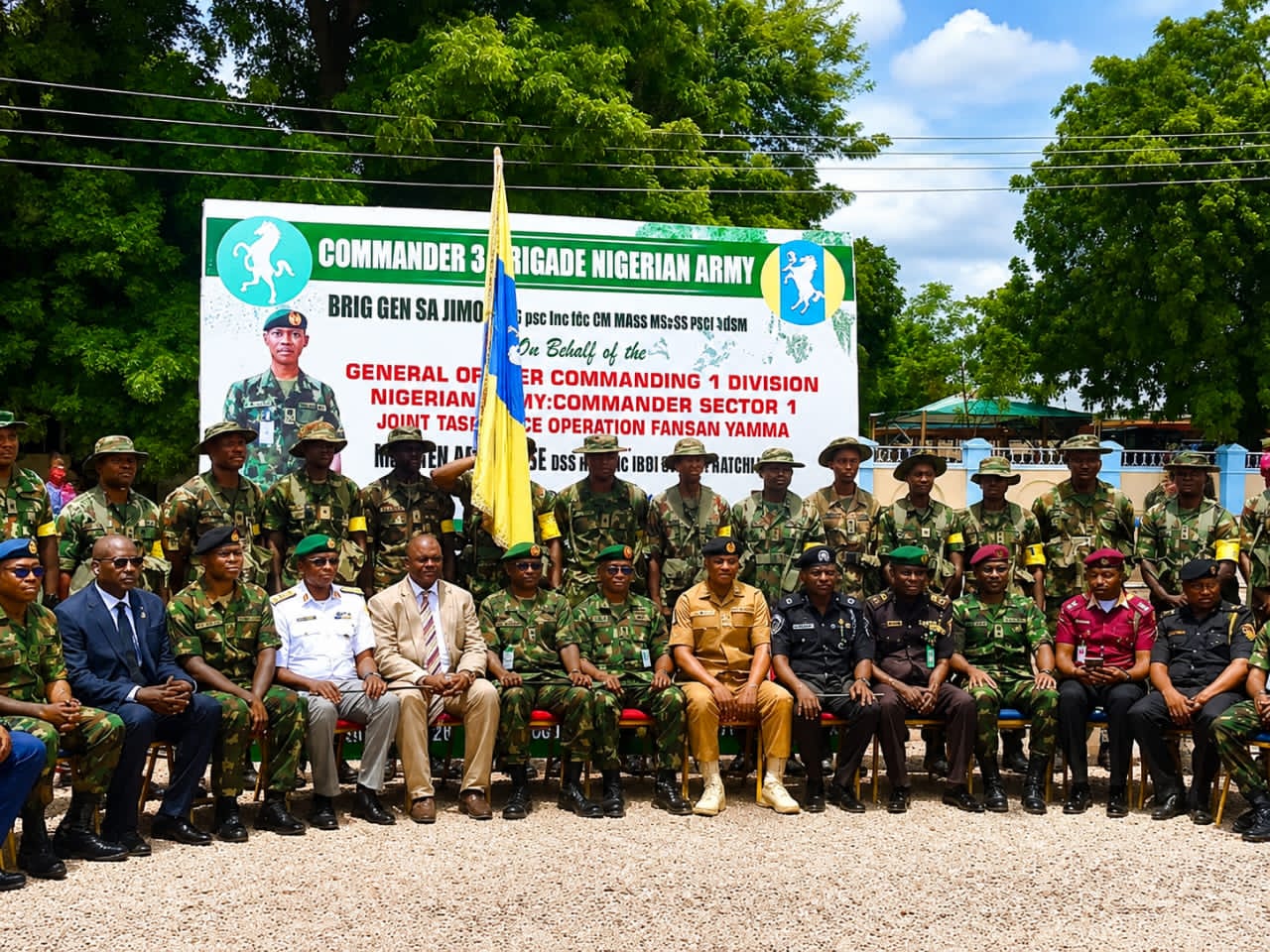
The Nigerian Army has commenced the 2026 1 Division Inter-Brigade Combat Proficiency Competition in Kano to assess and enhance the operational readiness, physical fitness and combat capabilities of its officers.
Declaring the competition open, the General Officer Commanding (GOC), 1 Division Nigerian Army, Maj.-Gen. Abubakar Mohammed-Wase, said the annual exercise was designed to sharpen troops’ skills and improve their capacity to respond to emerging security challenges.
Represented by Chief of Staff, 1 Division, Brig.-Gen. Timothy Opurum, said the competition was in line with the Chief of Army Staff’s Command Philosophy of transforming the Nigerian Army into a more professional, adaptable, combat-ready and resilient force capable of discharging its constitutional responsibilities within a joint and multi-agency environment.
The GOC added that the exercise would provide an opportunity for officers from participating formations to demonstrate their proficiency in physical fitness, leadership, tactical competence, mental alertness and ability to operate effectively under pressure.
According to him, the competition involves three formations under the division, including 1 Division Garrison, 3 Brigade and 31 Artillery Brigade, competing in four events.
The events are weapon handling and combat shooting, map reading, endurance run and obstacle crossing, as well as combat swimming.
“The competition is aimed at improving leadership skills, organisational ability and initiative, while promoting esprit de corps among troops in preparation for enhanced performance in battle,” he said.
The GOC noted that the nation’s current security environment required commanders who were not only professionally competent but also physically and mentally prepared to confront complex operational challenges.
He described the competition as a vital platform for improving the resilience and combat proficiency required by officers in carrying out their constitutional responsibilities.
Mohammed -Wase urged participating formations to uphold the values of loyalty, discipline and integrity, adding that the objective of the exercise was beyond winning but to improve individual and collective operational capabilities.
“To the participating officers, I encourage you to see this competition as an opportunity to test yourselves, learn from one another and identify areas requiring further improvement,” he said.
He commended troops operating in various theatres for their efforts in ensuring peace and stability in the country, attributing improvements in operational capacity to effective leadership, sound planning and logistics support.
The GOC also appreciated the Chief of Army Staff, Lt.-Gen. Waidi Shaibu, for providing resources and support for the competition, as well as the Commander, 3 Brigade, for providing facilities and logistics assistance.
He urged umpires and officials to ensure fairness, impartiality and professionalism throughout the competition.
Earlier, Commander, 3 Brigade, Nigerian Army, Brig.-Gen. Saka Jimoh, said the competition was designed to test the competence, confidence and ability of officers to perform effectively under challenging operational conditions.
According to him, the exercise would also strengthen leadership, teamwork, discipline and professionalism among participating personnel.
“The Inter-Brigade Combat Proficiency Competition is a significant professional activity designed to assess, strengthen and sustain the physical fitness, mental alertness, combat skills and operational effectiveness of participating officers.
“It provides an opportunity for officers to demonstrate their competence, confidence and ability to perform optimally under demanding and challenging conditions,” he said.
He said the activities were carefully selected to test individual competence and the ability of officers to operate effectively under pressure.
Jimoh appreciated the GOC for providing strategic guidance and support towards the successful hosting of the event.
He said the support demonstrated the commitment of the command to sustaining professional competence and operational readiness across the division.
“I sincerely appreciate the resources and other necessary support made available for this event. This gesture has significantly enhanced the Brigade’s ability to organise and host the competition,” he said.
He expressed optimism that the exercise would further enhance collective combat proficiency, teamwork and operational effectiveness among officers of the division.
3 Brigade, Nigerian Army, won the Stripping and Assembling Competition, while 31 Artillery Brigade, Minna, Nigerian Army, emerged second and 1 Division Garrison, Kaduna, came third.
The competition involving officers from the rank of 2nd Lieutenant to Major, will end in Aug. 20.

SEMA Assesses Sites of Building Collapses, Condoles Families of Nine Victims

From Grade Level 03 to Director: Binta Bala’s 35-Year Journey of Resilience, Service and Inclusion

UNICEF Hands Over Renovated Diso Ward Primary Healthcare Centre to Kano State

Nigerian Army’s 1 Div commences Inter-Brigade Combat Competition in Kano

Human Rights Lawyer Abba Hikima Urges EFCC to Release Blogger After 30 Days in Detention

How Kano Digitized Land Turns N50m to N750m Monthly
Kano Governor Yusuf Shortlisted for Africa’s SANKOFA Award of Excellence in Infrastructural Development

Beyond the Numbers: What the Ekiti 2026 Governorship Results Reveal About Coalition Politics and Path to 2027

From the struggle for Gombe State to life in the Senate: Senator Umar Usman Dukku reflects on politics, democracy, and his relationship with the late General Sani Abacha.

Defamation Against DSP Barau, Institutional
SEMA Assesses Sites of Building Collapses, Condoles Families of Nine Victims
From Grade Level 03 to Director: Binta Bala’s 35-Year Journey of Resilience, Service and Inclusion
UNICEF Hands Over Renovated Diso Ward Primary Healthcare Centre to Kano State
Nigerian Army’s 1 Div commences Inter-Brigade Combat Competition in Kano
Human Rights Lawyer Abba Hikima Urges EFCC to Release Blogger After 30 Days in Detention
How Kano Digitized Land Turns N50m to N750m Monthly
Kano Governor Yusuf Shortlisted for Africa’s SANKOFA Award of Excellence in Infrastructural Development
Beyond the Numbers: What the Ekiti 2026 Governorship Results Reveal About Coalition Politics and Path to 2027
From the struggle for Gombe State to life in the Senate: Senator Umar Usman Dukku reflects on politics, democracy, and his relationship with the late General Sani Abacha.
Defamation Against DSP Barau, Institutional
-

 Opinion4 years ago
On The Kano Flyovers And Public Perception
-

 Features5 years ago
How I Became A Multimillionaire In Nigeria – Hadiza Gabon
-

 Opinion6 years ago
Kano As future Headquarters Of Poverty In Nigeria
-

 History5 years ago
Sheikh Adam Abdullahi Al-Ilory (1917-1992):Nigeria’s Islamic Scholar Who Wrote Over 100 Books And Journals
-

 Opinion5 years ago
My First Encounter with Nasiru Gawuna, the Humble Deputy Governor
-

 History5 years ago
The History Of Borno State Governor Professor Babagana Umara Zulum
-

 History5 years ago
The Origin Of “Mammy Market” In Army Barracks (Mammy Ochefu)
-

 News4 years ago
Federal University Of Technology Babura To Commence Academic Activities September