
News
Serving in Tinubu’s Administration: A Disappointment in My Public Service – Dr. Hakeem
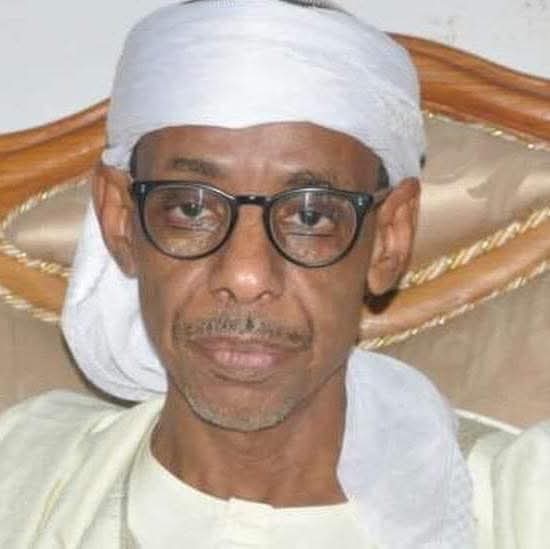
Dr. Hakeem Baba-Ahmed, a former aide in the Office of the Vice President, has opened up about his time in the Tinubu administration, describing it as a disappointing chapter in his public service journey.
Speaking during an interview on ARISE TV, Baba-Ahmed said he had entered government with high hopes and a desire to contribute meaningfully to national development. However, his expectations were not met.
“I joined with great expectations,” he shared, “but the experience turned out to be disappointing.”
When asked whether Vice President Kashim Shettima was being sidelined by President Bola Ahmed Tinubu, Baba-Ahmed dismissed such claims. “No, I didn’t see any of these,” he said, adding that his decision to step down was based on personal reflections, not political tension.
He explained that the perceived marginalisation of the vice presidency is not unique to the current administration. “If the president feels that the office of the vice president is not that important in the administration—and we have seen that many times—basically, that was what I met,” he said.
Baba-Ahmed also highlighted the lack of defined schedules for vice presidents, despite their status as the nation’s second-highest-ranking officials, noting that this has been a recurring issue across administrations.
Despite seeing and speaking with the Vice President almost daily, Baba-Ahmed emphasised that the role demands more than just conversations.
He disclosed that he barely had opportunities to interact with President Tinubu, stating, “I only saw President Tinubu three times in the mosque in the presidential villa. But I had never had a chance to sit down and talk with President Tinubu. I think part of the problem is that Tinubu never had time for people like us. I don’t think he had time for a lot of people working for him,” he added.
Baba-Ahmed described the president as “really and genuinely isolated,” whether by choice or circumstance, and stressed that this isolation poses a challenge for the country.
“The bottom line is, he ought to be available for the people he trusted and worked for him. And that’s the problem for the country, not for him,” he said.
Reflecting on the state of the nation, Baba-Ahmed expressed concern over the growing despair among citizens. “We work in the Villa and we go home and meet the people, and we know how the country is—how desperate people are, the difficult lives, the insecurity. People are losing hope, asking what is the value of this democracy. And sometimes people ask what are we doing there? Asking us, are we really advising the president about some of these things?”
He also emphasised the importance of having capable advisors addressing real issues, stating, “If the president has a quality of people talking and advising him about the real issues on the ground, I think the country would be better.”
Baba-Ahmed also expressed serious misgivings about the current coalitions of political parties, distancing himself from the movement and stating that he hopes not to be part of such coalitions in the future.
News
Astute Civil Society Raises Concern Over Exclusion of Gubernatorial Candidates
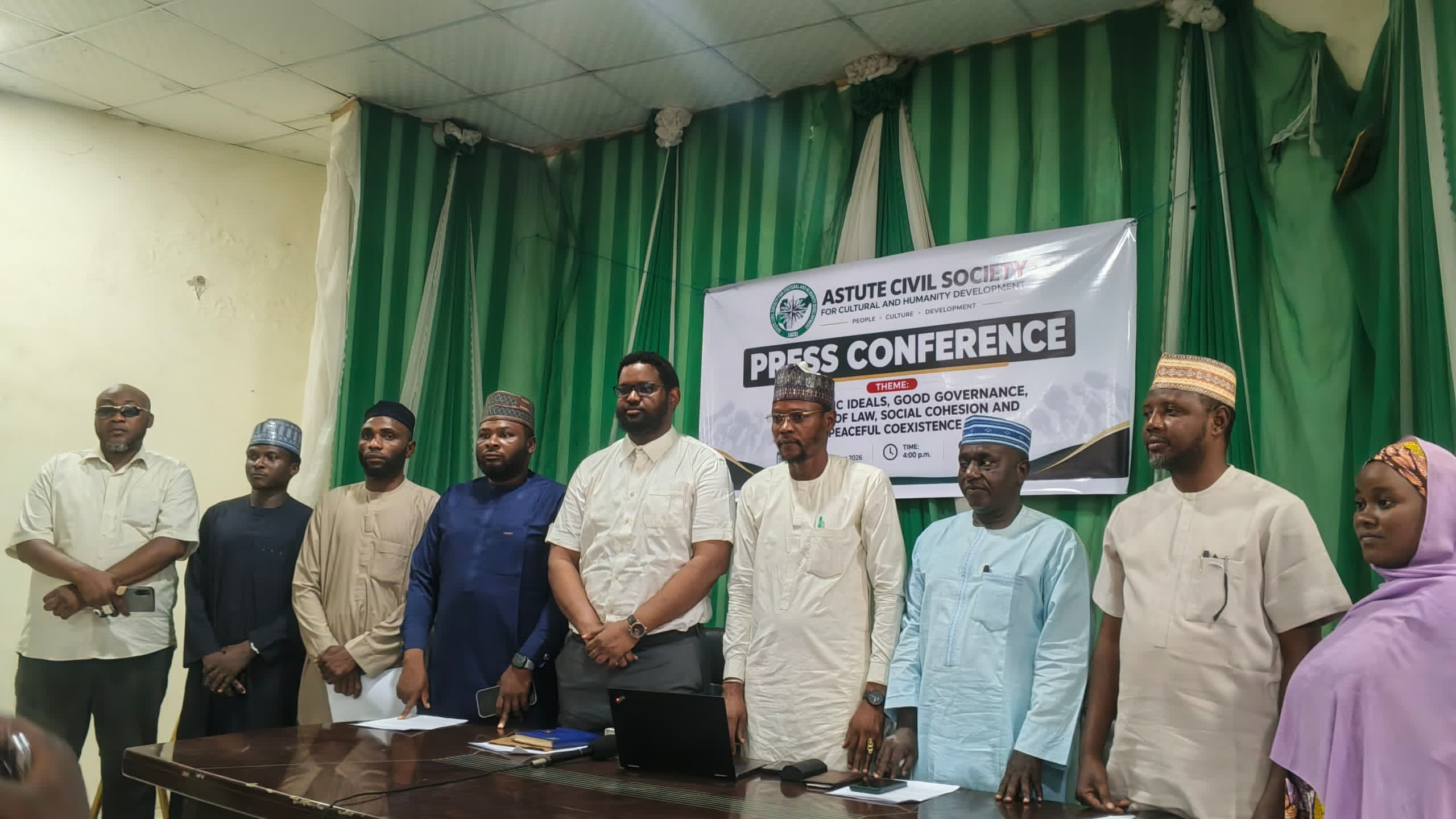
The Astute Civil Society for Cultural and Humanity Development has expressed concern over the exclusion of some governorship candidates from the Independent National Electoral Commission’s (INEC) final list of candidates for the 2027 general elections, calling for transparency, fairness and a review of disputed cases.
Comrade Ibrahim Ali, who represented the organisation, stated this on Saturday while addressing journalists at the Nigeria Union of Journalists (NUJ) Secretariat, Kano, during a press conference on democratic principles, electoral fairness, the rule of law and peaceful coexistence.
Ali said the organisation was concerned about reports that several candidates had been omitted from INEC’s final list, including Kano State Deputy Governor Aminu Abdussalam Gwarzo and his running mate, Mustapha Rabiu Kwankwaso.
He said similar concerns had emerged in other states, particularly Gombe and Ogun, where the Peoples Democratic Party’s governorship candidates, Isa Ali Pantami and Oladipupo Adebutu, popularly known as Ladi Adebutu, alongside his running mate, were reportedly affected by the omissions.
According to Ali, the developments had attracted public attention and raised questions about the circumstances surrounding the affected candidates’ nominations and their exclusion from the final list.
The civil society organisation acknowledged that INEC had attributed the exclusions to compliance with statutory requirements relating to political party membership registers, following a recent Supreme Court judgment.
However, Ali said the organisation recognised the importance of complying with electoral laws and respecting judicial decisions while insisting that disputed cases should be examined fairly and transparently.
He maintained that the organisation was not demanding special treatment for any candidate or political party but was advocating a process that would allow relevant facts, submitted evidence and applicable legal provisions to be considered before conclusions were reached.
“Our position is simple: compliance with the law must be upheld, and where an omission is disputed, the facts should be examined fairly and the outcome clearly communicated,” Ali said.
He added that no candidate should automatically be presumed eligible simply because an omission was challenged, just as no disputed exclusion should be treated as beyond review without considering the relevant facts and provisions of the law.
Ali urged INEC to establish a fair, transparent and case-specific review process for affected candidates and political parties, stressing that electoral authorities had a responsibility to administer the electoral process impartially and consistently.
He said democracy depended on institutions that applied the law fairly, political parties that fulfilled their statutory obligations and candidates who met the prescribed requirements.
The organisation further called on INEC to communicate clearly with affected political parties, examine properly submitted complaints within the applicable timelines and take corrective action wherever the facts and law justified such steps.
Ali noted that transparent handling of the disputed cases would help strengthen public confidence in the electoral commission and demonstrate that electoral administration was guided by evidence, due process and impartiality.
On the implications of the controversy for peace and stability, he warned that unresolved electoral disputes could undermine public trust, deepen mistrust among political stakeholders and create avoidable tensions within communities.
He observed that Kano State, like other parts of Nigeria, had a diverse population with competing political interests and strong expectations regarding democratic participation, making transparent communication of electoral decisions particularly important.
According to him, uncertainty surrounding the exclusion of candidates could generate public anxiety, especially where affected political parties and their supporters believed their concerns had not received adequate consideration.
Ali, however, stressed that the organisation did not intend to alarm the public, assign blame or threaten any institution, but rather to encourage the timely, lawful and peaceful resolution of electoral disputes.
He urged political parties, candidates, their supporters, civil society organisations and members of the public to remain calm, exercise restraint and pursue their grievances through established legal and administrative channels.
The organisation also cautioned political actors against allowing differences over electoral matters to degenerate into hostility, emphasising that peace, national unity and democratic progress should take precedence over partisan interests.
As part of its recommendations, the group called on INEC to undertake a thorough review of disputed exclusions involving candidates and political parties that maintained they had fulfilled the applicable statutory requirements.
It also urged the commission to provide clear, case-specific explanations whenever a candidate was excluded, including references to the relevant legal provisions and the facts informing the decision.
Ali said that where a review established that an exclusion resulted from an error, INEC should take appropriate corrective measures, provided such action was permitted under the applicable legal framework.
The organisation further urged all political parties, candidates and public institutions to respect the rule of law and comply with lawful court decisions, noting that electoral disputes should be resolved through established procedures rather than inflammatory public statements.
It also called on relevant institutions to communicate transparently and act impartially to protect public confidence in the electoral process ahead of the 2027 general elections.
Reaffirming the organisation’s position, Ali said its intervention was not an endorsement of any political party or candidate but a call for an electoral process in which the law was respected, legitimate concerns received fair consideration and public institutions remained accountable to citizens.
He also urged the media to report electoral developments accurately and responsibly, saying journalists had an important role to play in informing the public, promoting accountability and creating an atmosphere conducive to peaceful democratic participation.
Ali called on INEC to ensure that disputed exclusions were addressed promptly and transparently, while urging political stakeholders and citizens to place the interests of their communities and the country above partisan differences.
He said the organisation remained committed to promoting democratic principles, cultural and human development, peaceful coexistence and responsible civic engagement as Nigeria prepared for another electoral cycle.
News
WHC Solar Trains 300 Youths in Kano to Prevent Installation Errors, Fire Outbreaks
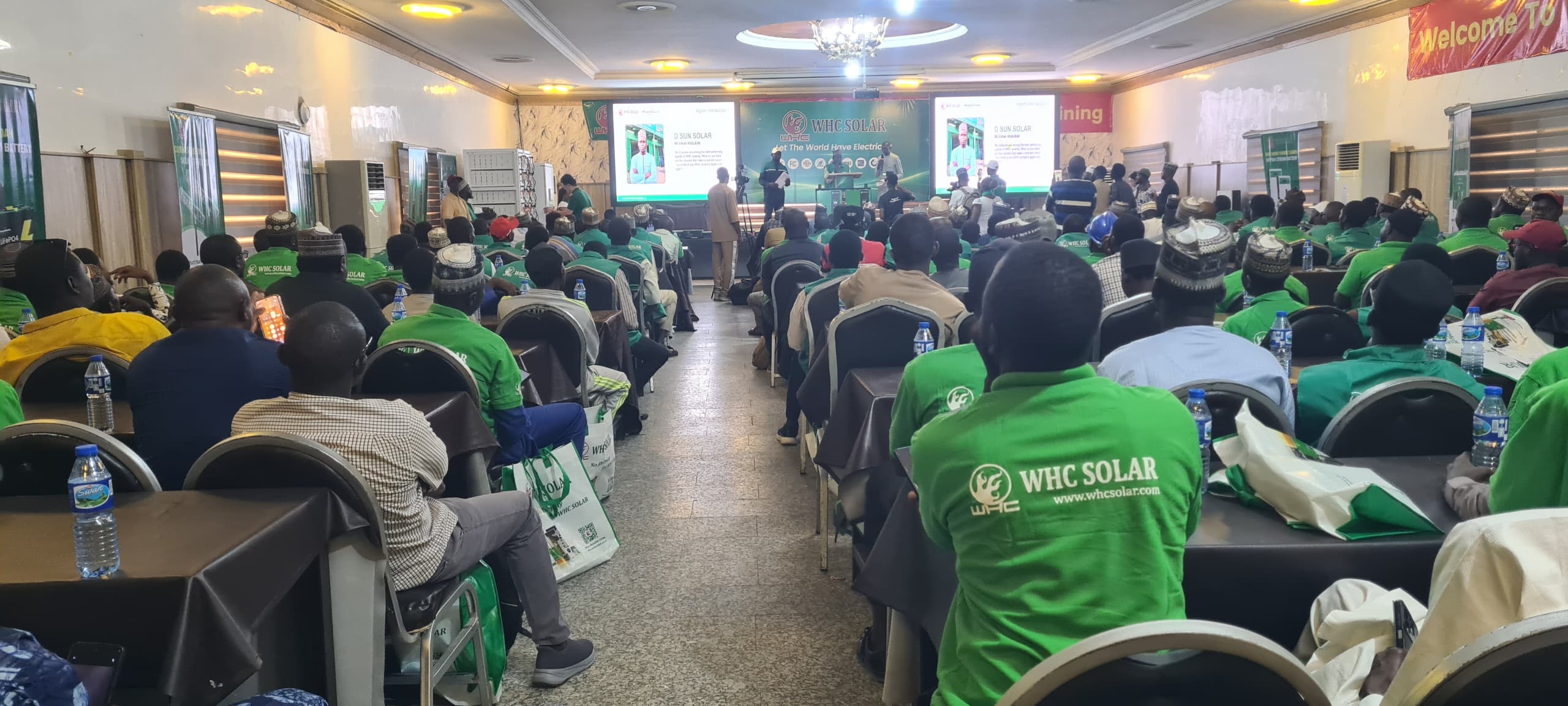
WHC Solar, a Chinese company specialising in solar energy products, has trained about 300 youths in Kano State on the technical installation and configuration of solar power systems to improve safety and expand employment opportunities in Nigeria’s renewable energy sector.
The one-day training, held at Tahir Guest Palace in Kano on Saturday, attracted participants from different parts of Nigeria and beyond, with practical sessions focused on the proper installation of inverters, lithium batteries and other solar power components.
Speaking at the opening of the programme, the company’s Chief Executive Officer, Clint Chan, said the training was organised to equip solar installers with the technical knowledge and practical experience required to deliver quality services to customers.
Chan explained that the company had observed that some solar installers lacked sufficient technical knowledge, resulting in installation errors that could damage equipment or cause fire outbreaks.
He said the initiative was aimed at addressing such challenges by improving the competence of technicians and promoting the safe and efficient use of solar energy systems.
“We noticed that some installers may not fully understand the technology, which can lead to mistakes that could damage a product or even cause fire outbreak,” Chan said.
He added that the training would help participants develop their technical capabilities and become more experienced professionals capable of contributing to society through improved service delivery.
According to Chan, the practical sessions covered the installation and configuration of inverters and lithium batteries, including how the different components communicate and function together within a solar power system.
He said proper understanding of the relationship between the components was essential to ensuring that solar installations operated efficiently, safely and in accordance with technical requirements.
Chan also reaffirmed the company’s commitment to the Nigerian market, saying WHC Solar intended to continue investing in the country’s renewable energy sector and supporting the growing demand for solar power solutions.
He disclosed that the company had a service centre in Kano, through which it provided support for customers using its solar products in residential homes, commercial establishments and industrial facilities.
The chief executive said participants who completed the programme were expected to receive certificates in recognition of their participation and the technical knowledge acquired during the training.
Chan further stated that the company, which he said had been operating for about 10 years, was committed to making solar energy solutions available to Nigerians for domestic, commercial and industrial applications.
Also speaking at the event, Sani Abdulkadir, popularly known as ABDK, said he attended the training as a distributor of the company’s products.
Abdulkadir explained that customers experiencing technical problems with WHC Solar products could take them to the company’s service centre for repairs, adding that some repairs could be completed within 24 hours.
He commended the company for organising the training and creating opportunities for young Nigerians to acquire technical skills that could improve their employment prospects and support self-reliance.
Abdulkadir noted that the growing adoption of solar energy in Nigerian households reflected increasing public interest in alternative electricity sources.
“Before, you could count the number of houses using solar energy, but the situation is changing as more people are embracing it,” he said.
He expressed optimism that the expansion of solar energy adoption would create more opportunities for trained technicians, distributors and other professionals working in the renewable energy value chain.
The training comes amid growing interest in solar power solutions among Nigerian households and businesses seeking alternative sources of electricity, with technical expertise and proper installation remaining important factors in ensuring the safety, reliability and durability of solar systems.
News
Emir Sanusi Seeks Compensation, Reallocation of Demolished Eid Ground Stalls
The Emir of Kano, Muhammadu Sanusi II, has appealed to the Kano State Government to compensate traders affected by the demolition of shops at the Filin Idi market in Kofar Mata, Kano, and reallocate stalls to enable them to resume their businesses.
Professor Ibrahim Muazzam Mai Bushira disclosed this during a special prayer session organised by traders affected by the demolition at the Eid Ground in Kofar Mata, where participants prayed for divine intervention and government assistance to alleviate their hardship.
According to Mai Bushira, the Emir has written to Governor Abba Kabir Yusuf, requesting compensation for the affected traders and appealing for measures to address the economic losses they have suffered following the demolition.
He expressed hope that Almighty Allah would reward the Emir for his intervention and urged Governor Yusuf to consider the demands of the traders to enable them to rebuild their businesses and restore their livelihoods.
Mai Bushira said the demolition had caused severe hardship among traders, many of whom depended on their shops as their primary sources of income. He added that some affected individuals had reportedly died, while others had developed high blood pressure following the destruction of their businesses and the resulting economic difficulties.
He explained that the prayer session was organised to seek Allah’s intervention in their predicament and pray for the restoration of their livelihoods, noting that the destruction of the shops had adversely affected the lives of many families who depended on the market for survival.
Speaking at the gathering, Professor Ahmad Muhammad of the Federal University, Dutse (FUD), described Kano as a major commercial centre and called on the Kano State Government to pay attention to the plight of the affected traders and the economic implications of the demolition.
Professor Muhammad also appealed to international entrepreneurs and investors to explore opportunities to support the development of the market, stressing that the destruction of the shops had resulted in substantial financial losses running into billions of naira.
He urged the government to consider establishing a modern market at the location, arguing that the Filin Idi market was not merely a trading centre for Kano but also an important commercial destination for traders from different parts of Nigeria and across Africa.
According to him, the market provides livelihoods for more than one million people, directly and indirectly, making its reconstruction and rehabilitation important to the economic well-being of Kano and its trading community.
The professor further stressed the need for a sustainable solution that would enable displaced traders to return to business, restore commercial activities and protect the economic interests of the large population that depended on the market.
In his remarks, the Chairman of the affected traders’ association, Auwal Said Umar, expressed appreciation to Almighty Allah and Emir Sanusi II for their support and intervention in the traders’ situation.
Umar said many of the affected traders were currently unable to engage in their usual commercial activities because their shops had been demolished, leaving them without the means to sustain their businesses and families.
He disclosed that the market previously had about 700 blocks of shops before the demolition, adding that many traders lacked the financial capacity to reconstruct their businesses without assistance from the government.
The association chairman said the government had allocated 75 stalls for reconstruction but appealed for an increase in the number to accommodate more affected traders and enable them to return to their businesses.
Umar called on the Kano State Government to provide additional support, stressing that the existing allocation was insufficient to address the needs of the large number of traders who lost their shops during the demolition.
The traders urged the government to work with their association and other relevant stakeholders to develop a lasting solution that would provide adequate trading spaces, restore commercial activities and ease the economic hardship caused by the demolition.

Astute Civil Society Raises Concern Over Exclusion of Gubernatorial Candidates

WHC Solar Trains 300 Youths in Kano to Prevent Installation Errors, Fire Outbreaks

Emir Sanusi Seeks Compensation, Reallocation of Demolished Eid Ground Stalls

Gombe flags off the disbursement of the second batch of the AGILE Conditional Cash Transfer

Why Gov Abba Deserves Another Tenure

Zamfara Varsity ASUU Threatens Warning Strike Over FG-ASUU Agreement, Promotion Arrears

PCACC Arrests Man Over Alleged ₦4.5m Sale, Illegal Leasing of Kano Government Horse Stable

Goje’s Electoral War:The Confrontation With Tinubu,Governor Inuwa,Usman Kumo And APC candidates Ahead Of 2027

Prof Yusuf Adamu Delivers BUK’s 63rd Professorial Inaugural Lecture, Reflects on Medical Geography and Academic Legacy

Kano Monitors ₦48.9bn Projects Across Six LGAs
Astute Civil Society Raises Concern Over Exclusion of Gubernatorial Candidates
WHC Solar Trains 300 Youths in Kano to Prevent Installation Errors, Fire Outbreaks
Emir Sanusi Seeks Compensation, Reallocation of Demolished Eid Ground Stalls
Gombe flags off the disbursement of the second batch of the AGILE Conditional Cash Transfer
Why Gov Abba Deserves Another Tenure
Zamfara Varsity ASUU Threatens Warning Strike Over FG-ASUU Agreement, Promotion Arrears
PCACC Arrests Man Over Alleged ₦4.5m Sale, Illegal Leasing of Kano Government Horse Stable
Goje’s Electoral War:The Confrontation With Tinubu,Governor Inuwa,Usman Kumo And APC candidates Ahead Of 2027
Prof Yusuf Adamu Delivers BUK’s 63rd Professorial Inaugural Lecture, Reflects on Medical Geography and Academic Legacy
Kano Monitors ₦48.9bn Projects Across Six LGAs
-

 Opinion5 years ago
On The Kano Flyovers And Public Perception
-

 Features5 years ago
How I Became A Multimillionaire In Nigeria – Hadiza Gabon
-

 Opinion6 years ago
Kano As future Headquarters Of Poverty In Nigeria
-

 History6 years ago
Sheikh Adam Abdullahi Al-Ilory (1917-1992):Nigeria’s Islamic Scholar Who Wrote Over 100 Books And Journals
-

 Opinion5 years ago
My First Encounter with Nasiru Gawuna, the Humble Deputy Governor
-

 History5 years ago
The History Of Borno State Governor Professor Babagana Umara Zulum
-

 History6 years ago
The Origin Of “Mammy Market” In Army Barracks (Mammy Ochefu)
-

 News5 years ago
Federal University Of Technology Babura To Commence Academic Activities September