
News
Ramping Up Vaccination: Emir of Dass Launched New Incentives’ Program Addition In Bauchi

To improve routine immunization and retention rates in Bauchi State, His Royal Highness, the Emir of Dass, Alhaji Usman Bilyaminu Othman, and New Incentives All Babies Are Equal (NI-ABAE) launched the All Babies Livelihood Grant program addition. This initiative offers ₦5,000 to caregivers who complete their child’s vaccination schedule.
The launch ceremony took place at the Town Primary Health Care Center (PHCC) Dass, and was organized by the Bauchi State Primary Health Care Development Board (BSPHCDB) with support from NI-ABAE. Attendees included the Executive Chairmen of Dass Local Government Area (LGA) and BSPHCDB, a WHO representative, District Heads, and other traditional and community leaders.

Another cross section of women
In his speech, Umar Faruq Abubakar, the Head of Administration of Dass LGA, representing the Chairman, described the launch as a milestone in Bauchi State’s healthcare system. “Today’s event marks the beginning of a new chapter in health service delivery in Bauchi State. The additional NI-ABAE program represents a significant effort to improve access to quality healthcare services and reduce disparities,” he said. He also commended the Bauchi State Emirs, district heads, health workers, and partners for their support in making the ABAE program successful. “Your support, commitment, and collaborative effort are pivotal in ensuring that this program reaches those most need it.”
Dan Asabe Abdullahi, State Director of Public Health, representing the Commissioner of Health, praised the initiative, especially amid economic hardship. “If sustained, this program will help reduce childhood deaths from preventable diseases,” he said. He urged caregivers to give birth in health facilities and complete their children’s immunizations.
“When caregivers bring their infants in for their routine immunizations at a government clinic, the All Babies program.
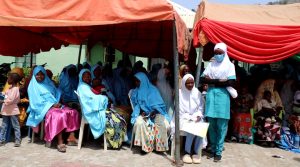
Cross section of women during the programme
Provides a small cash incentive of ₦1,000 for each of the six visits required for her child to complete the immunization schedule, totaling ₦6,000 over 15 months,” explained Nura Muhammad, NI-ABAE Stakeholder Relations Director (SRD). “Now, I am delighted to inform you all here, that upon completion of the immunization schedule, caregivers will now be given a token of ₦5,000 which will make all the cash incentive she received over her 15 months of visits to ₦11,000,” the SRD added.
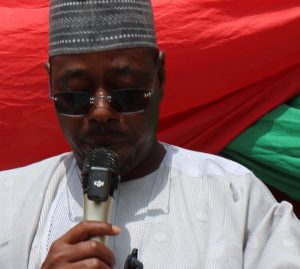
Umar Faruq Head of administration Dass LGA
The Emir of Dass who also serves as the Co-Chair of the Bauchi State Task Force on Primary Health Care welcomed the program addition. He said the livelihood grant is an intervention at the right time, urging caregivers to utilize it. “In reality, we know that what’s stopping many caregivers from going to the clinic to access care is the lack of transportation fares from their homes to the clinic,” he said. “This support will help ensure children get the protection they need.”
He urged caregivers to stay committed to completing their children’s immunization schedules. “As soon as you give birth, start vaccinations and return for every session until the 15th month. Do not miss any,” he advised. The Emir reassured the people of Bauchi State that traditional leaders fully support the program and will continue to advocate for the health and well-being of their people.
He concluded by thanking NI-ABAE and its partners for their commitment to strengthening immunization in Bauchi State















News
ABCOAD, UNESCO Partner to Boost Technical Skills in Rice Processing
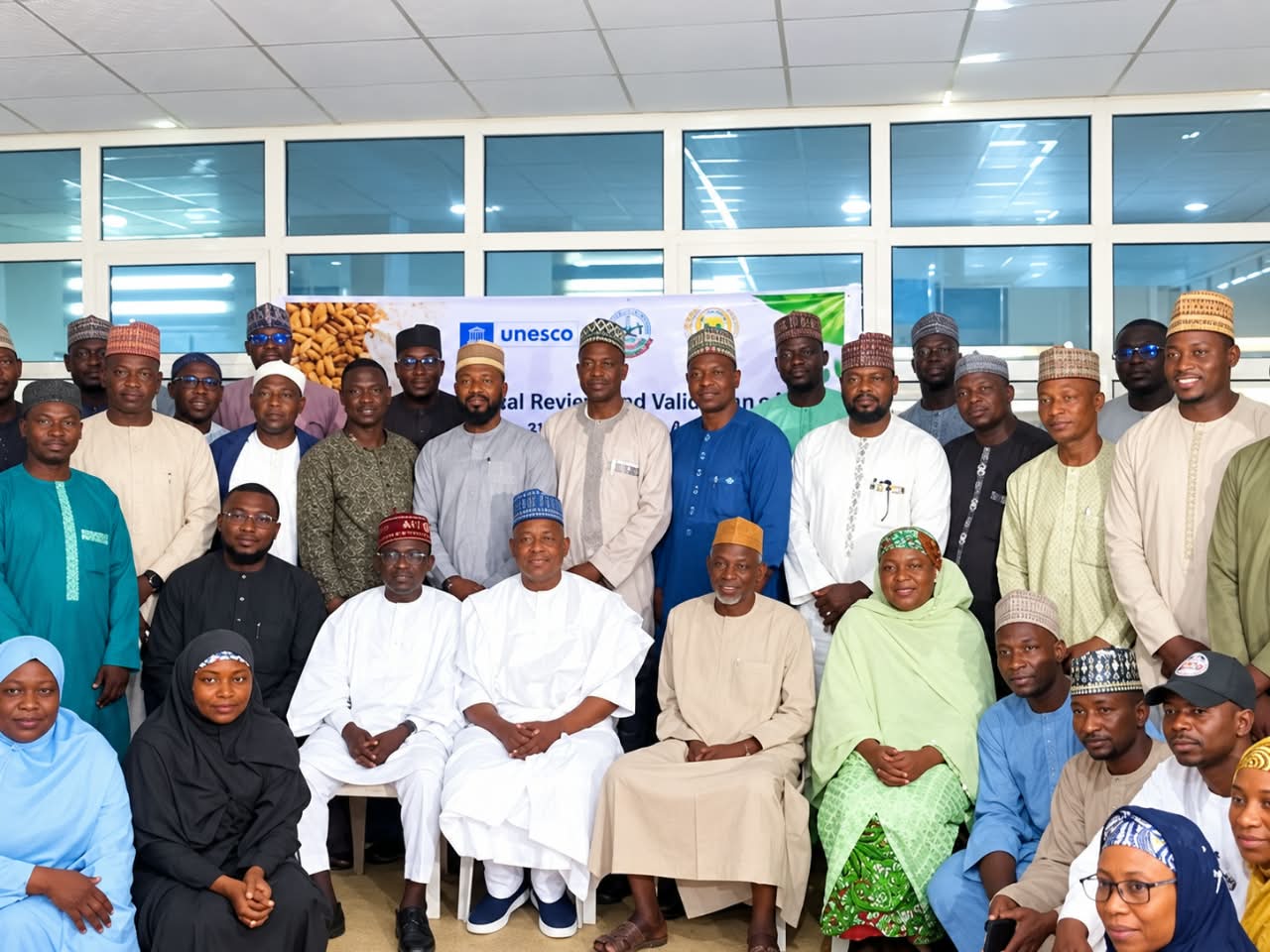
The Audu Bako College of Agriculture, Dambatta (ABCOAD), and the United Nations Educational, Scientific and Cultural Organisation (UNESCO) have partnered to strengthen competency-based training in rice processing and bridge the skills gap among Nigerian graduates.
The partnership is being implemented under the Better Education for Africa’s Rise (BEAR II) project, which seeks to strengthen Technical and Vocational Education and Training (TVET), particularly in agriculture and agro-processing.
The initiative features a three-day capacity-building workshop for master trainers on competency-based training in rice processing, scheduled for Oct. 21 to Oct. 23 at Alhamsad Rice Mill, Kano.
Speaking at the workshop, the Provost of ABCOAD, Dr Hassan Ibrahim, called for stronger collaboration between educational institutions and industry partners to equip graduates with practical skills required by employers.
Ibrahim said many graduates left educational institutions without the practical competencies needed in the workplace, stressing the need to align training programmes with industry requirements.
He said the partnership would strengthen vocational education and improve graduates’ employability by ensuring that students acquired relevant, industry-oriented skills.
The provost commended UNESCO and industry partners for supporting skills development and youth employment.
He said the college was committed to sustaining the initiative beyond the project period through stronger partnerships with industry stakeholders.
Ibrahim added that such collaboration would enable industry requirements to inform curriculum development and training delivery.
He urged participants and other stakeholders to contribute to achieving the objectives of the programme, expressing optimism that the workshop would improve the quality of vocational training in rice processing.
Declaring the workshop open, the Executive Secretary of the Kano State Science and Technical Schools Board, Prof. Dahiru Saleh, reaffirmed the state’s commitment to strengthening technical and agricultural education through modern equipment and skills development programmes.
Saleh said the initiative would promote practical skills by integrating technical education with agricultural practices and industry requirements.
He said the participation of the National Board for Technical Education (NBTE), ABCOAD, industry partners and UNESCO demonstrated a collaborative approach to improving vocational training.
According to him, stakeholders participated in developing the training manual, which would undergo scrutiny by the NBTE for certification under the National Skills Qualification (NSQ) framework.
He said the certification process would ensure that the training materials met the required standards for competency-based skills development.
Saleh commended the Kano State Government for providing modern agricultural equipment to support practical training in educational institutions.
He listed a combine harvester, tractor and planter among the equipment provided to Government Technical College to enhance hands-on learning and equip students with skills relevant to modern agriculture and agro-processing.
Earlier, the Executive Secretary of NBTE, Prof. Idris Bugaje, called on experts and stakeholders to contribute to the review and validation of the training manual developed to strengthen competency-based training in rice processing.
Bugaje, represented by Rukayya Rabiu, said the manual was designed to translate National Occupational Standards (NOS) into practical learning materials for trainers and trainees.
He said the standards covered rice processing and were intended to support certification under the NSQ framework.
According to him, the standards needed to be developed into comprehensive training manuals to facilitate effective instruction and ensure that learners acquired the required competencies.
He said the draft manual was presented for review and validation by experts and other stakeholders before its adoption for training programmes.
Bugaje urged participants to identify gaps, suggest improvements and make recommendations to enhance the quality of the document.
He expressed optimism that the exercise would produce a comprehensive manual to support effective skills development and facilitate the certification of trainees under the NSQ framework.
News
Kwankwaso May Become Nigeria’s Oldest Vice-Presidential Running Mate, Says Activist

A social media activist and Nigerian diaspora member, Usman Isiyaku, has criticised supporters of Peter Obi and Rabiu Musa Kwankwaso over what he described as double standards in their arguments about the age of presidential candidates ahead of the 2027 general elections.
Isiyaku made the remarks in a post on his verified Facebook page, where he questioned why supporters of Obi and Kwankwaso allegedly criticised former Vice-President Atiku Abubakar over his age while celebrating the possibility of Kwankwaso becoming a vice-presidential candidate at 70.
The activist argued that Kwankwaso, a former governor of Kano State and leader of the National Democratic Congress would be among the oldest politicians to contest for Nigeria’s vice-presidency if he eventually runs alongside a younger presidential candidate.
According to Isiyaku, the criticism directed at Atiku, who is 79, by supporters of Obi and Kwankwaso contrasts with their apparent willingness to support Kwankwaso, who is 70, for the same position.
He questioned the consistency of the arguments surrounding age and leadership, insisting that a 70-year-old politician should also be considered elderly by the same standards used to criticise Atiku.
“The Obidients and Kwankwasites have built a whole campaign narrative against Atiku because he’s 79 years old. But Rabiu is 70 years old today, and they are celebrating him running for a VP at this age,” Isiyaku wrote.
“By every standard, a 70-year-old man is old. I mean, really old. Why the double standard?” he added.
Isiyaku further argued that it was unusual in Nigeria’s political history for a politician aged 70 to seek the vice-presidency alongside a younger presidential candidate, noting that previous civilian presidents generally had younger deputies.
He cited former Vice-President Namadi Sambo as an exception, explaining that Sambo was younger than former President Goodluck Jonathan by three years.
According to the activist, Sambo’s emergence as Jonathan’s running mate followed the death of former President Umaru Musa Yar’Adua in office, after which Jonathan became president and selected Sambo as his vice-president.
Isiyaku also compared Kwankwaso’s age with those of other former Nigerian vice-presidents at the time they assumed office, including Atiku Abubakar, Namadi Sambo, Yemi Osinbajo and Alex Ekwueme.
He stated that Atiku became vice-president at 52, Sambo at 49, Osinbajo at 58 and Ekwueme at 49 during the Second Republic, arguing that Kwankwaso’s possible entry into the vice-presidential race at 70 would represent a significant departure from the age profile of previous occupants of the office.
The activist maintained that political supporters should avoid using age as a weapon against their opponents, particularly when politicians they support are also advancing in age.
“Everybody will either grow old or die young. They should stop this age shaming because their VP candidate is a septuagenarian too!” he wrote.
Isiyaku’s comments come amid political discussions and alignments ahead of the 2027 general elections, with the ages, experience and suitability of prospective candidates featuring in debates among supporters of different political figures.
However, Kwankwaso’s possible emergence as a vice-presidential candidate remains a political proposition in Isiyaku’s post.
The debate highlights the continuing arguments over age, experience and political leadership in Nigeria, as supporters of different political camps assess potential candidates ahead of the next general elections.
News
APC Denies Plot to Assassinate Atiku, Urges Security Agencies to Question Timi Frank

By Yusuf Danjuma Yunusa
The All Progressives Congress Presidential Campaign Council has denied allegations that the Nigerian Government is plotting to assassinate former Vice President Atiku Abubakar, the ADC presidential candidate, and called on security agencies to invite Timi Frank to substantiate the claim.
In a statement signed by its spokesperson, Dele Alake, dated October 20, 2026, the council said:
“Our attention has been drawn to the statement by Timi Frank, a member of the African Democratic Congress, alleging that the Nigerian Government is plotting to assassinate former Vice President Atiku Abubakar, the Presidential candidate of the ADC. This is a grave allegation that Mr Frank must prove. We thus urge security agencies to invite him to substantiate the allegation, given its gravity and the urgent need to preserve life.”
The council also rejected any involvement by the presidency or the APC Campaign Council, stating:
“We categorically reject the claim that the presidency of Nigeria or the APC Campaign Council is involved in any plot to assassinate former Vice President Atiku Abubakar or any opposition figure.”
It further dismissed as false claims that security personnel attached to Atiku had been withdrawn, saying the former vice president is protected by the police and the Department of State Security. According to the statement, President Bola Tinubu recently directed security agencies to reinforce and increase protection for all presidential, vice-presidential, governorship and deputy governorship candidates across the country.
The council said security around the ADC presidential candidate had never been compromised and that, as a former vice president, Atiku enjoys two levels of state-funded security protection, which the statement said Tinubu had increased ahead of the 2027 general elections.
It urged candidates, parties and supporters to be factual and responsible in public statements and to avoid utterances that could trigger avoidable tension, accusing Frank of “typical opposition rabble-rousing.”

ABCOAD, UNESCO Partner to Boost Technical Skills in Rice Processing

Kwankwaso May Become Nigeria’s Oldest Vice-Presidential Running Mate, Says Activist

APC Denies Plot to Assassinate Atiku, Urges Security Agencies to Question Timi Frank

Kano Youths Condemn Lawmaker Over Alleged Mockery of Governor Yusuf

IITA Trains Over 1,800 Farmers on Modern Farming Techniques in Kano

Zamfara Varsity ASUU Threatens Warning Strike Over FG-ASUU Agreement, Promotion Arrears

PCACC Arrests Man Over Alleged ₦4.5m Sale, Illegal Leasing of Kano Government Horse Stable

Kano Monitors ₦48.9bn Projects Across Six LGAs

Goje’s Electoral War:The Confrontation With Tinubu,Governor Inuwa,Usman Kumo And APC candidates Ahead Of 2027

Kano Spends ₦10.36bn on Hospitality, Sitting Allowances, Others in Six Months
ABCOAD, UNESCO Partner to Boost Technical Skills in Rice Processing
Kwankwaso May Become Nigeria’s Oldest Vice-Presidential Running Mate, Says Activist
APC Denies Plot to Assassinate Atiku, Urges Security Agencies to Question Timi Frank
Kano Youths Condemn Lawmaker Over Alleged Mockery of Governor Yusuf
IITA Trains Over 1,800 Farmers on Modern Farming Techniques in Kano
Zamfara Varsity ASUU Threatens Warning Strike Over FG-ASUU Agreement, Promotion Arrears
PCACC Arrests Man Over Alleged ₦4.5m Sale, Illegal Leasing of Kano Government Horse Stable
Kano Monitors ₦48.9bn Projects Across Six LGAs
Goje’s Electoral War:The Confrontation With Tinubu,Governor Inuwa,Usman Kumo And APC candidates Ahead Of 2027
Kano Spends ₦10.36bn on Hospitality, Sitting Allowances, Others in Six Months
-

 Opinion5 years ago
On The Kano Flyovers And Public Perception
-

 Features5 years ago
How I Became A Multimillionaire In Nigeria – Hadiza Gabon
-

 Opinion6 years ago
Kano As future Headquarters Of Poverty In Nigeria
-

 History6 years ago
Sheikh Adam Abdullahi Al-Ilory (1917-1992):Nigeria’s Islamic Scholar Who Wrote Over 100 Books And Journals
-

 Opinion5 years ago
My First Encounter with Nasiru Gawuna, the Humble Deputy Governor
-

 History5 years ago
The History Of Borno State Governor Professor Babagana Umara Zulum
-

 History6 years ago
The Origin Of “Mammy Market” In Army Barracks (Mammy Ochefu)
-

 News5 years ago
Federal University Of Technology Babura To Commence Academic Activities September