
News
KILAF24 Concludes Conference With African Indigenous Films Prestigious Awards
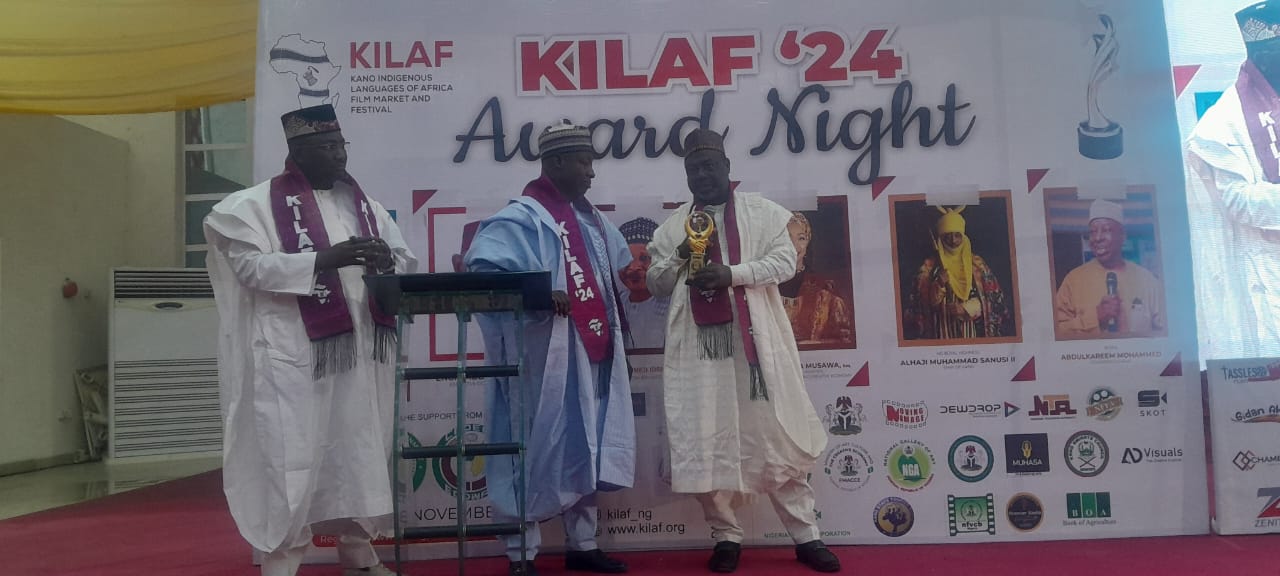
The 6-day Kano Indigenous Languages of Africa Film Market and Festival (KILAF) concluded yesterday Saturday, wrapping up an exciting week with a grand finale. The 7th edition’s closing ceremony featured the presentation of prestigious awards to exceptional films from across Africa, honoring excellence in multiple categories.
In her speech through a vedio recording from Paris, the Minister of Arts, Culture, Tourism, and Creative Economy Barr. Hannatu Musa Musawa, described KILAF as a remarkable events that unites African peoples’ culture and heritage.
The Minister further said KILAF aligns with President Bola Ahmed Tinubu’s renewed agenda for culture and economics growth.
“Let me use this medium to commend the Founder of KILAF Festival, Mr. Abdulkareem Muhammad and his team for coming up with this great opportunity to promote our culture and values.”
“Film producers uses their platforms and talent to create awareness on certain issues on Government’s policies and other issues affecting society.
Federal Government is always ready to be part this initiatives.” Barrister Musawa stated.
Similarly in their separate remarks, Ali Nuhu Managing Director, Nigerian Film Corporation and Kaltume Bulama Gana Artistic Director/CEO of the National Troupe of Nigeria said KILAF served as an avenue that promotes cultural identities in a multilingual Africa and developing world.
They further said KILAF is beyond making a celebration alone but provides Africans to showcase their talent.
Also speaking, the Commissioner Internal Services, ECOWAS, Dr. Nazifi Darma expressed gratitude to President Bola Ahmed Tinubu and Kano State Governor Abba Kabir Yusuf for supporting the Festival.
He maintained that the the theme for this encapsulate with African journey to development
He stressed that Language is a soul of the people, where knowledge is being transmitted, noting that cultural films is no doubt decolonising Africa.
He added that ECOWAS prioritizes cultural values of every member nation.
Earlier speaking, the Kano State Governor Abba Kabir Yusuf, represented by Commissioner Tourism and Culture, Hajiya Ladidi Ibrahim Garko urged film producers to focus more on issues bedeveiling the society such drug abuse, Child Abuse.
Governor Abba called youths to be self-reliant rather than depending on Government’s Job.
People coming from different parts of the world and country and are making it in Kano.
He noted that Kano State Government is making a good efforts towards reviving cultural heritage.
Kano State Government is planning to revive Annual Cultural Event title Kalankuwa that is being conducted after the harvest of farm produce.
The event involved every body in hausa society across 44 LGAs this year. And next we will do it across the 19 Northern States and the following year 2027 we will sponsor it across the country.
In a remark, Professor Emmanuel Okhai, Chairman Jurors Committee, explained that the 6 Jurors were directed to proceed with the job on the 15th July, 2024.
He further explained, “We received 511 films entries from 35 African 66 all over the Countries. We were unbiased and unitimidated by the work load.
During our job we did not consider tribes but professionalism in custume, culture, attire, cinematography and other features of film production.
Earlier in his welcome address, Alhaji Abdulkareem Muhammed the Founder of KILAF Festival and Managing Director of Moving Image expressed his appreciation to Federal Government, Ministry of Arts and Culture, ECOWAS, Kano State Governor, ACF, Bayero University Kano and other stakeholders for supporting his mission to enhance African Identity and Heritage.
There no way you see opportunity coming your way you look other way round, the stakeholders have no choice than to join the caravan.
“This is not the evening for entertainment alone but encourage our youth to produce indigenous film languages.”
Some of the Films honoured in different categories, include: Kaka from Nigeria, Mukola from
During the 6 day event some of the activities conducted, including: KILAF Master Class, African Kitchen.
Kilaf Conference ’24, Master Classes, African Kitchen and Panel Discussion
Other activities include: Arts Crafts and Products Exhibition, ACF Kano Chapter Lunch, Nominees Dinner, Kano City Tour, Films Screening and Award Night






News
Gombe flags off the disbursement of the second batch of the AGILE Conditional Cash Transfer
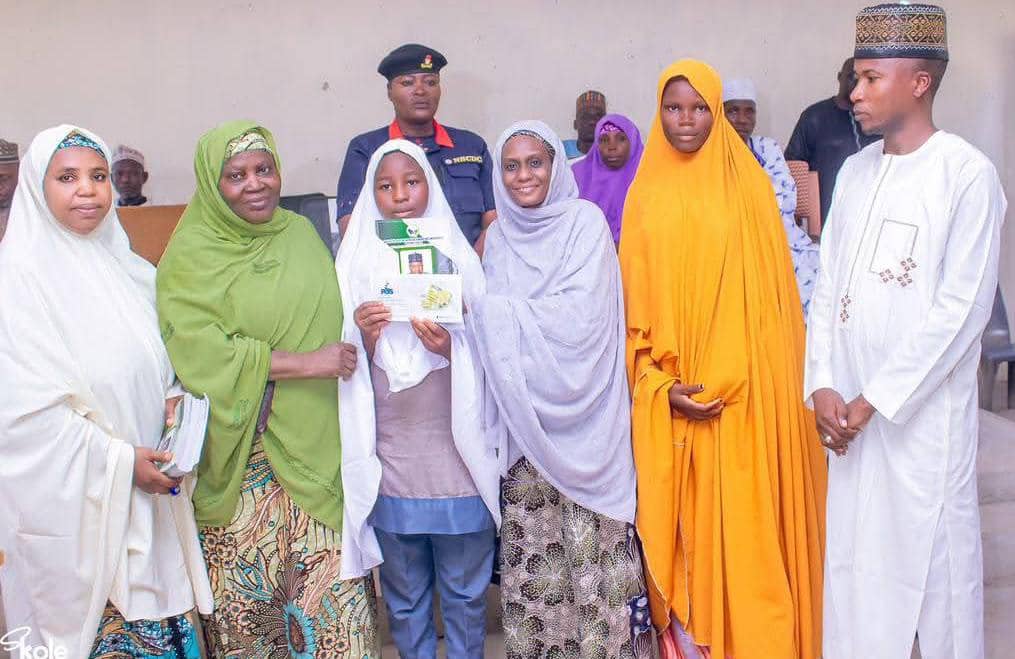
Gombe State Government has flagged-off the distribution of ATM cards to Adolescent Girls in public schools under the Conditional Cash Transfer,CCT of the Adolescent Girls Initiative for Learning and Empowerment, AGILE Project.
Speaking at the flagging off of the disbursement at Government Junior Secondary School Malamsidi central in Kwami Local Government area, the Honourable Commissioner of Education, Associate Prof Aishatu Umar Maigari said the disbursement of the CCT is part of the Governor Muhammadu Inuwa Yahaya’s zeal and passion for the girl child education in the state.
She said the concept is also geared towards supporting parents to cater for their children to remain in schools up to completion of their secondary education.
Associate Prof Aishatu Umar Maigari then assured the students that the government will continue to bring more educational policies that will further support students to pursue education with ease.
Earlier, the project coordinator of the AGILE, Dr. Amina Abdul noted that with the disbursement of the second cohort of the conditional cash transfer, the project was able to record significant improvement in enrollment and retention of students in schools across the state.
The project coordinator therefore urged parents to utilize the funds judiciously through supporting the education of their children.
News
China, Nigeria Mark Friendship with Joint Cultural Mural
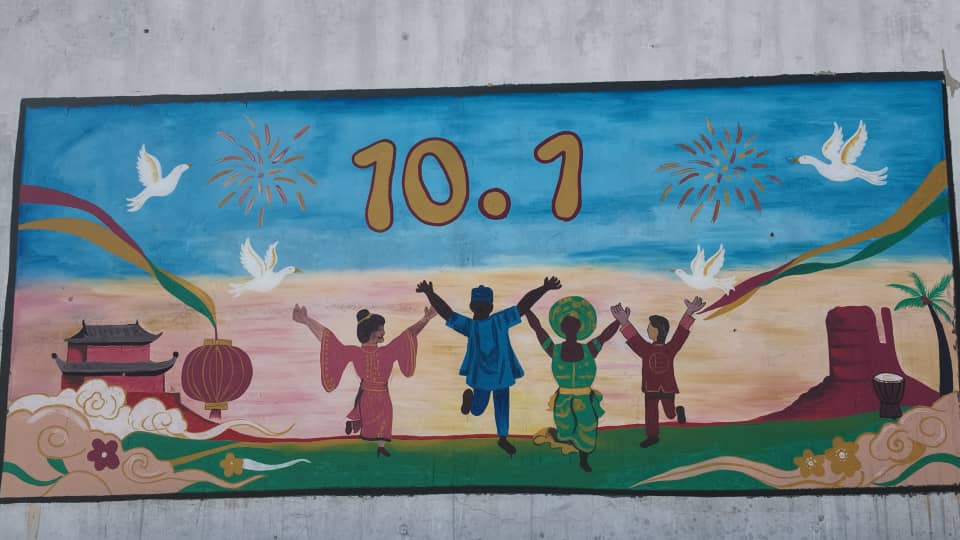
A colourful mural celebrating both China’s National Day and Nigeria’s Independence Day has been unveiled at an overseas project site, serving as a vivid symbol of the enduring friendship between the two nations.
The artwork, jointly produced by Chinese and Nigerian staff, features builders dressed in traditional Chinese costumes and Nigerian ethnic attire holding hands and dancing together.
Above them, fireworks and white doves of peace illuminate the sky, while the inscription “10.1” highlights the dual significance of October 1, the China’s National Day and Nigeria’s Independence Day.
On the left side of the mural, ancient Chinese architecture, red lanterns and auspicious cloud motifs showcase Chinese heritage.
On the right, red earth, coconut palms and African drums reflect Nigeria’s cultural identity. Flowing ribbons weave across the painting, symbolising unity and shared destiny.
Project officials described the mural as a “living testament” to cooperation at the frontline of development. They said it embodies mutual trust and support as workers from both countries overcome challenges together.
The initiative underscores cultural integration and partnership, with both sides pledging to continue working hand in hand to strengthen ties.
“Celebrating two festivals as one, we march forward with one heart,” a statement read, emphasising the commitment to write new chapters of friendship along the path of cooperation.
The mural, rooted in the overseas project site, stands as a reminder of the brotherly bond between China and Nigeria, and the shared vision of building together for a brighter future.
News
Musa Illiyasu Kwankwaso Celebrates Senator Lado @60, Says Is A Political Dogma
From Muhammad Kabir Kano
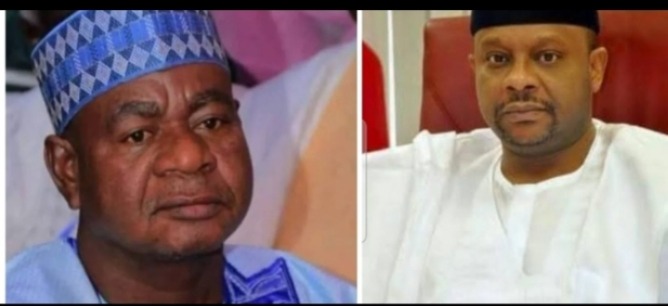
The spokesperson of Political Appointees Forum from Kano State, Dr. Musa Illiyasu Kwankwaso, has described Senator Basheer Lado, the Special Adviser to President Tinubu on National Assembly Matters (Senate), who also doubles as the Chairman of the Appointees, on his 60th birthday, as a Political Blog who plays the game with maturity and respect.
Kwankwaso who also describes Senator as Political Dogma, praised his contributions to democratic governance, humanitarian services and national development.
“Senator Lado is a dependable public servant and accomplished legislator whose experience had helped strengthen relations between the Executive and the Senate and also steer ship the activities of the Political Appointees with huge respect and understanding”,
He said it is on notice that Lado served in the Senate for four years before his by late President Buhari on Relief agency and subsequent appointment as Tinubu’s liaison officer in the upper chamber of the National Assembly.
Lado represented Kano Central Senatorial District in the Seventh National Assembly from 2011 to 2015, where he served as Vice Chairman of the Senate Committee on Works.
Lado facilitated several constituency projects, including the Kundila Bridge, popularly known as Gadar Lado, in Kano State. His contributions to humanitarian services through his previous roles as Federal Commissioner of the National Commission for Refugees, Migrants and Internally Displaced Persons, and Director-General of the National Agency for the Prohibition of Trafficking in Persons (NAPTIP).
He said Lado contributed to protecting vulnerable Nigerians, combating human trafficking and improving the welfare and rehabilitation of displaced persons.
Kwankwaso further commended the senator’s humanitarian initiatives through the Ladon Alheri Foundation, particularly in education, healthcare, women’s economic empowerment, rural water supply and support for disadvantaged communities.
” Lado’s contributions across public service reflected his commitment to national development and the welfare of Nigerians”, he added.

Gombe flags off the disbursement of the second batch of the AGILE Conditional Cash Transfer

Why Gov Abba Deserves Another Tenure

China, Nigeria Mark Friendship with Joint Cultural Mural

Musa Illiyasu Kwankwaso Celebrates Senator Lado @60, Says Is A Political Dogma

EFCC Reopens Atiku’s Alleged Financial Crimes Probe

Zamfara Varsity ASUU Threatens Warning Strike Over FG-ASUU Agreement, Promotion Arrears

PCACC Arrests Man Over Alleged ₦4.5m Sale, Illegal Leasing of Kano Government Horse Stable

Goje’s Electoral War:The Confrontation With Tinubu,Governor Inuwa,Usman Kumo And APC candidates Ahead Of 2027

Prof Yusuf Adamu Delivers BUK’s 63rd Professorial Inaugural Lecture, Reflects on Medical Geography and Academic Legacy

Senate Passes Barau’s Bill to Provide Legal Framework for Yusuf Maitama Sule Federal University of Education, Kano
Gombe flags off the disbursement of the second batch of the AGILE Conditional Cash Transfer
Why Gov Abba Deserves Another Tenure
China, Nigeria Mark Friendship with Joint Cultural Mural
Musa Illiyasu Kwankwaso Celebrates Senator Lado @60, Says Is A Political Dogma
EFCC Reopens Atiku’s Alleged Financial Crimes Probe
Zamfara Varsity ASUU Threatens Warning Strike Over FG-ASUU Agreement, Promotion Arrears
PCACC Arrests Man Over Alleged ₦4.5m Sale, Illegal Leasing of Kano Government Horse Stable
Goje’s Electoral War:The Confrontation With Tinubu,Governor Inuwa,Usman Kumo And APC candidates Ahead Of 2027
Prof Yusuf Adamu Delivers BUK’s 63rd Professorial Inaugural Lecture, Reflects on Medical Geography and Academic Legacy
Senate Passes Barau’s Bill to Provide Legal Framework for Yusuf Maitama Sule Federal University of Education, Kano
-

 Opinion5 years ago
On The Kano Flyovers And Public Perception
-

 Features5 years ago
How I Became A Multimillionaire In Nigeria – Hadiza Gabon
-

 Opinion6 years ago
Kano As future Headquarters Of Poverty In Nigeria
-

 History6 years ago
Sheikh Adam Abdullahi Al-Ilory (1917-1992):Nigeria’s Islamic Scholar Who Wrote Over 100 Books And Journals
-

 Opinion5 years ago
My First Encounter with Nasiru Gawuna, the Humble Deputy Governor
-

 History5 years ago
The History Of Borno State Governor Professor Babagana Umara Zulum
-

 History6 years ago
The Origin Of “Mammy Market” In Army Barracks (Mammy Ochefu)
-

 News5 years ago
Federal University Of Technology Babura To Commence Academic Activities September