
News
New APC Ganduje Ward Leaders Are Impersonators…Faces Legal Actions
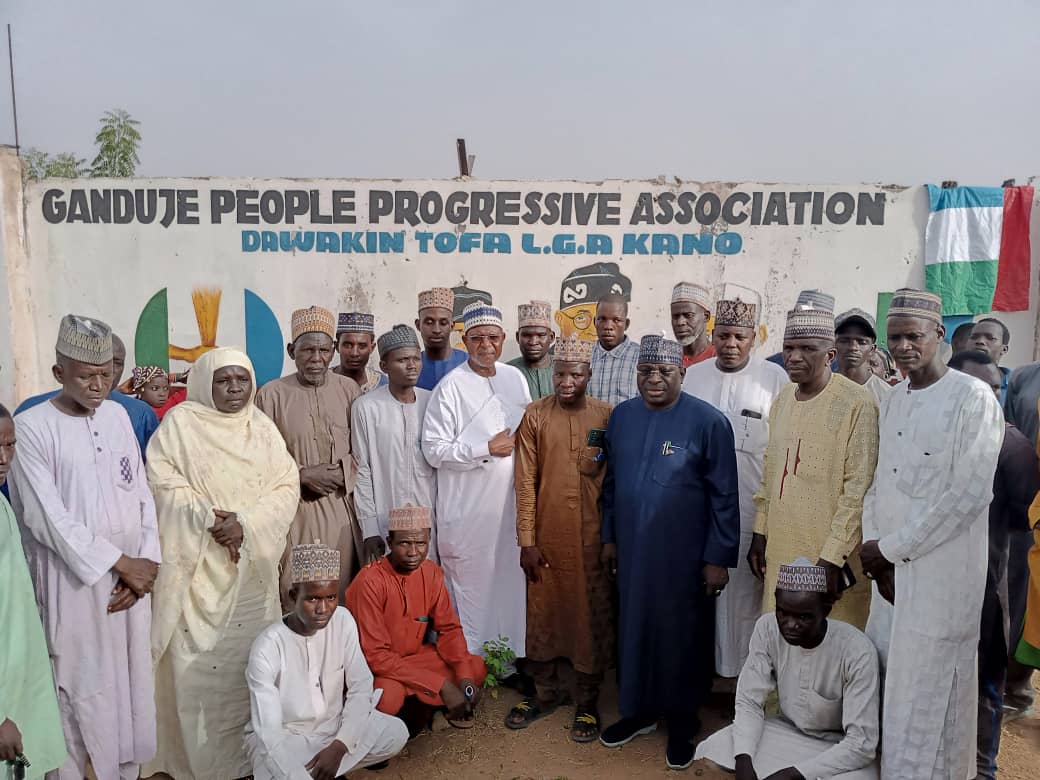
Mallam Basiru Isah Nuhu, whose names were used as the new Chairman of the APC Ganduje Ward in Dawakin Tofa, resurface alongside other Person’s whose names were impersonated threatening legal actions against the perpetrators who claims to be the new Executive officers.
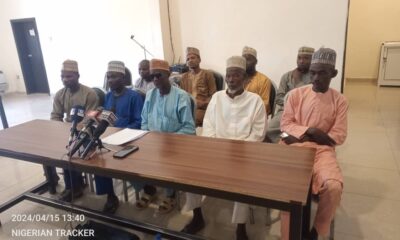
Speaking after written a Petitions at the Ganduje Ward APC office in Ganduje Dawakin Tofa Local Government area, Sunday, Basiru Isah Nuhu and 10 others, said they would not take the insults on the National Chairman of the Party lightly and they are going to Court to seek redressed.
Basiru and other APC members that said they were impersonated wrote a comprehensive Petitions and submitted them to the State Chapter of the Party, calling for the arrest of those who Impersonates their names.
“Impact to say it all, I’m not even an Executive officer of the Party that I have even converged a meeting in Kano to further suspend the National Chairman of the Party, I’m only a card carrying member and all those you see here none of Us is an Executive officer, so we are taking legal actions to make sure that those causing confusion in our Party are punished”.
Salisu Abdullahi Ganduje who was tagged as the Secretary of the Party by those that suspended the National Chairman, also described what happened as unfortunate which should not allowed to get away.
“Let me make it abundantly clear that I’m not an executive of the APC in Ganduje and I’m never the Secretary of the Party, therefore those who Impersonates me will be traced and taking to Court, I must completely clear my reputation in this saga”, he assured.
The State PRO of the Party, Ahmad Aruwa who received the Petitions written by the aggrieve Party Members who’s names were impersonated, assured that the matter would be taking up to Abuja and those who are behind it will be soon arrested.
“We have alerted the Security on what had happened and we are going to ensure that we arrest those impersonators and they are adequately punished according to the Law of the Land”, Aruwa said.
He said they understand that the very Person who made the new announcement was a card carrying member of the NNPP and he even Contested for Councillor in Ganduje Ward, and soon Security would get at him.
The last Press statement by the ward executives who suspended Ganduje the APC national chairman for the second time are as follows .
The crisis rocking the ruling All Progressives Congress, APC, in Kano has taken a fresh twist as a new ward executives emerged from Ganduje ward and issued fresh suspension to the National Chairman of the party, Abdullahi Umar Ganduje.
Recall that the leadership of APC at Ganduje ward of Dawakin Tofa Local Government, Mr Ganduje’s hometown, had suspended the former governor of the state over allegations of corruption.
However, the party, at state level, voided the suspension and vowed to sanction those behind what it described as purported suspension after it also disowned them.
But, a Kano state High Court granted an exparte order to affirm the suspension of the embattled former governor of the state on Wednesday.
However, in a dramatic twist, Mr Ganduje approached a Federal High Court in Kano, which also granted him an exparte order to stop his suspension.
In another twist, a group of APC members, who claimed to be from Ganduje ward of Dawakin Tofa Local Government area and said they were validly elected on July 31, 2021, had issued a fresh suspension to the embattled Mr Ganduje.
Addressing journalists in Kano, on Sunday, secretary of APC at Ganduje ward, Ja’afar Adamu Ganduje who spoke on behalf of 11 other executive members explained that the suspension of Mr Ganduje was necessary for alleged anti-party activities which led to division and failure of the party during the last election.
Mr Adamu, who is Mr Ganduje’s nephew also accused him of igniting conflict of interest that led to two factional leadership within the party in the ward, which according to him, brought the party to disrepute in the eyes of the public.
The secretary alleged that the embattled APC national Chairman had not been paying his statutory party dues.
According to Adamu, ” We are the authentic executives of Ganduje ward and we have pass a vote of no confidence and imposed a new suspension on Dr. Abdullahi Umar Ganduje for series of reasons.
“First we have suspended Dr. Ganduje’s membership for creating internal conflict among party members at the ward level. Another major reason why the authentic executives resolved to suspend Ganduje is the issue of anti-party activities he generated during the 2023 elections, which resulted to the party’s failure in the state”.
Adamu emphasized that those two factions claiming to be executive members from the Ganduje ward are fake and impostors, alleging that it was formed by the former governor to cause division and confusion in the party.
Mr Adamu reiterated that the real leadership of the party at Ganduje ward would not hesitate to institute legal action against the two factions earlier addressed the media claiming to be the executive members.








News
Hon. Lanre Oladebo Felicitates Hon. Abdulmumin Jibrin Kofa on His 50th Birthday
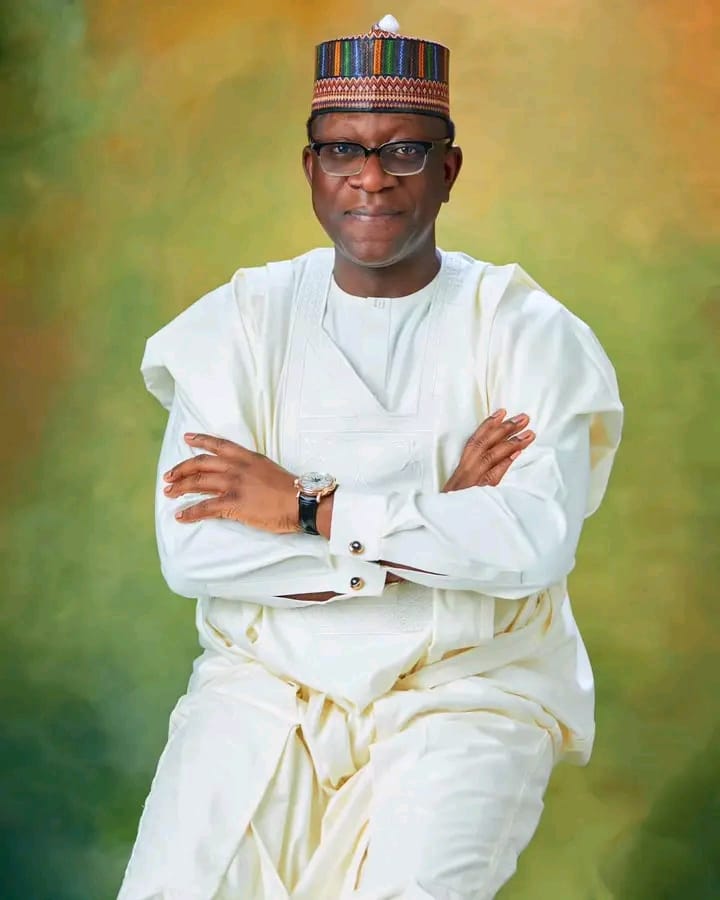
The Member of the House of Representatives representing Ayedaade/Irewole/Isokan Federal Constituency, Hon. Lanre Omoleye Oladebo, has congratulated the Chairman of the House Committee on Housing and Habitat, Hon. Abdulmumin Jibrin Kofa, on the occasion of his 50th birthday.
In a congratulatory message, Hon. Oladebo described Hon. Abdulmumin Jibrin Kofa as a distinguished parliamentarian, accomplished public servant and valued colleague whose dedication to legislative duties and commitment to national development remain worthy of commendation.
He noted that attaining the age of 50 is a remarkable milestone, providing an opportunity to reflect on a life defined by service, achievements, leadership and meaningful contributions to society.
Hon. Oladebo also expressed his personal appreciation for the celebrant’s friendship, collegiality and commitment to the business of legislation, noting that his wealth of experience, intellectual capacity and dedication continue to add significant value to the National Assembly.
The statement reads:
It is with great pleasure that I join your family, friends, colleagues and well-wishers in celebrating you as you attain this remarkable milestone of 50 years.
Your journey has been marked by dedication, resilience, intellectual capacity and an unwavering commitment to public service. Beyond being a distinguished parliamentarian, you have been a dependable colleague and a leader whose friendship I deeply value.
As you celebrate your Golden Jubilee, I pray that Almighty God grants you renewed strength, sound health, greater wisdom and abundant grace to continue your service to humanity and our dear nation.
May this new chapter of your life bring you greater accomplishments, fulfilment and lasting impact. May the years ahead be even more rewarding than those behind you.
“Happy 50th birthday, my dear Chairman and distinguished colleague. I wish you many more years of good health, happiness, peace and impactful service.”
Signed:
The Media Team
Office of Hon. Lanre Omoleye Oladebo
News
Akpabio Petitions DSS, Demands Probe Into ‘Anti-north Statement’ Attributed to Him on Social Media
By Yusuf Danjuma Yunusa
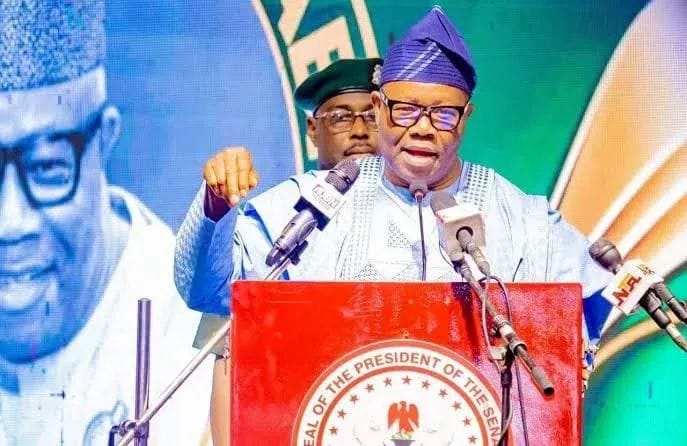
Senate President Godswill Akpabio has asked the Department of State Services (DSS) to investigate an alleged anti-north statement attributed to him and circulated on social media.
The petition to the DSS was written on behalf of the senate president by Chinedu Akubueze, his chief of staff.
According to the petition, Akubueze called for an urgent investigation into the creation and coordinated dissemination on Facebook and other digital platforms of what he described as a “manifestly false, inflammatory and dangerously divisive statement” attributed to Akpabio.
The alleged statement, circulated alongside Akpabio’s photograph and designation, reads: “Northerners, You Will Be the Ones to Suffer the Most, If You Allow Tinubu to Lose the Election”.
Akpabio’s chief of staff maintained that the senate president “did not make this statement”.
He said no date, venue, speech, interview, video, audio recording, official statement or credible news report had been produced to authenticate the alleged remark.
“The graphic carries no identifiable publisher’s mark or verifiable source,” the petition reads.
“It appears to have been deliberately manufactured and presented as an authentic quotation for the purpose of deceiving the public, provoking regional resentment against the President of the Senate and portraying him as threatening the people of Northern Nigeria.”
According to the petition, a preliminary examination of publicly accessible Facebook records identified some of the earliest traceable accounts that amplified the alleged fabricated graphic.
It listed Abdullai Musa, who reportedly posted the graphic in a Facebook group called Sheikh Muhammad bin Uthman Group 24, and Uzoma Chilaka, whose Facebook post reproduced the graphic alongside commentary credited to Boniface Uzoma Chilaka and Engineer Ibrahim Umar Ammar.
The petition said the individuals should not be presumed guilty before an investigation but described them as “material persons of interest” because of their alleged roles in circulating the material.
“Their publication records, device communications and the provenance of the image should, therefore, be investigated in accordance with the laws,” it said.
In the petition, Akubueze urged the DSS to investigate the source of the graphic and identify its designer, original uploader, sponsors, intermediaries and network through which it was distributed.
He said the investigation was necessary to establish the circumstances surrounding the creation and circulation of the alleged statement and prevent further dissemination of what he described as inflammatory content.
News
NFF Appoints Eguavoen as Interim Head Coach of Super Falcons
By Yusuf Danjuma Yunusa
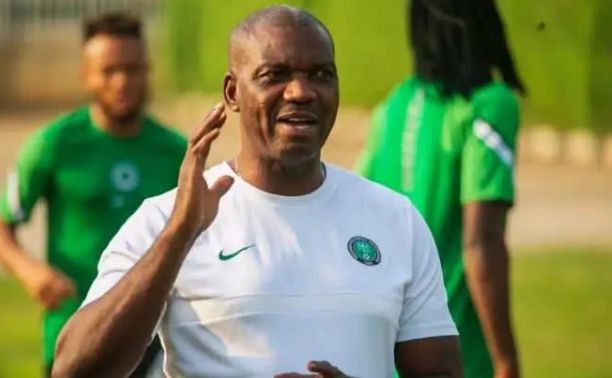
Augustine Eguavoen has been appointed the interim head coach of the Super Falcons.
The former Super Eagles head coach will lead the Falcons for their 2028 Olympic Games double-legged qualifier against Comoros in October.
Eguavoen will be assisted by Christopher Danjuma, head coach of Nasarawa Amazons, alongside a supporting cast that includes Ayisat Yusuf, a former Super Falcons defender; Olatunji Baruwa, former Super Eagles goalkeeper trainer.
The Falcons will kick off their Olympic qualifying campaign in the second round against Comoros, with both legs taking place at the Remo Stars Stadium in Ikenne-Remo on October 9 and 13.
Nigeria had received a bye into the second round as one of the top-ranked teams, while Comoros qualified after a 30-0 aggregate victory over Sudan.
Falcons must navigate four rounds of two-legged knockout ties to secure of Africa’s two slots for the women’s football event at the Olympics. A win over Comoros will advance the team to the third round in early 2027 to face either DR Congo or Morocco.
Eguavoen will be handling women’s football team for the first time in his managerial career.
His appointment comes a few weeks after Justine Madugu was sacked as Falcons’ head coach alongside his technical crew.
The dismal follows the Falcons failure to qualify for the 2027 women’s World Cup.
The first time the team will miss the World Cup since its inception in 1991.

Hon. Lanre Oladebo Felicitates Hon. Abdulmumin Jibrin Kofa on His 50th Birthday

Per Ishaq Samaila: “Waziri” for Strategy. “Mai Jama’a” for Service. One Man. One Mission. Ibrahim Kabir Masari

Akpabio Petitions DSS, Demands Probe Into ‘Anti-north Statement’ Attributed to Him on Social Media

Fifty Years, Four Terms. A Life Of Enterprise, Scholarship And Public Service-By Abbas Tajuddin

NFF Appoints Eguavoen as Interim Head Coach of Super Falcons

From World’s 9th Most Populous City to Perfect: As Gov Yusuf Revisits Kano Master Plan

95% of Governor Abba Kabir Yusuf’s Promises Have Been Fulfilled — CPS Interview By Musa Diso, In Kano

Kano Islamic Scholar Declares Kano Widow Marriage Programme ‘Haram’, Urges Government to Stop It

Between Sabotage and Scepticism: Why Nigeria’s Oil Dream Keeps Stalling

Bello Sharada: A Great Writer, A Bookish Soul, Gone Too Soon
Hon. Lanre Oladebo Felicitates Hon. Abdulmumin Jibrin Kofa on His 50th Birthday
Per Ishaq Samaila: “Waziri” for Strategy. “Mai Jama’a” for Service. One Man. One Mission. Ibrahim Kabir Masari
Akpabio Petitions DSS, Demands Probe Into ‘Anti-north Statement’ Attributed to Him on Social Media
Fifty Years, Four Terms. A Life Of Enterprise, Scholarship And Public Service-By Abbas Tajuddin
NFF Appoints Eguavoen as Interim Head Coach of Super Falcons
From World’s 9th Most Populous City to Perfect: As Gov Yusuf Revisits Kano Master Plan
95% of Governor Abba Kabir Yusuf’s Promises Have Been Fulfilled — CPS Interview By Musa Diso, In Kano
Kano Islamic Scholar Declares Kano Widow Marriage Programme ‘Haram’, Urges Government to Stop It
Between Sabotage and Scepticism: Why Nigeria’s Oil Dream Keeps Stalling
Bello Sharada: A Great Writer, A Bookish Soul, Gone Too Soon
-

 Opinion5 years ago
On The Kano Flyovers And Public Perception
-

 Features5 years ago
How I Became A Multimillionaire In Nigeria – Hadiza Gabon
-

 Opinion6 years ago
Kano As future Headquarters Of Poverty In Nigeria
-

 History5 years ago
Sheikh Adam Abdullahi Al-Ilory (1917-1992):Nigeria’s Islamic Scholar Who Wrote Over 100 Books And Journals
-

 Opinion5 years ago
My First Encounter with Nasiru Gawuna, the Humble Deputy Governor
-

 History5 years ago
The History Of Borno State Governor Professor Babagana Umara Zulum
-

 History5 years ago
The Origin Of “Mammy Market” In Army Barracks (Mammy Ochefu)
-

 News4 years ago
Federal University Of Technology Babura To Commence Academic Activities September