
News
Friday Sermon: O Politicians, Indeed There’s Goodness In Dialogue And Debating In The Best Manner!
By Imam Murtadha Gusau
In the name of Allah, the Most Beneficent, the Most Merciful
All praise is due to Allah, the Lord of all creation—may He extol the Messenger in the highest company of Angels and send His peace and blessings upon him—likewise upon his family, Companions, and true followers.
Dear brothers and sisters! Thanks be to Allah the Almighty, as two warring parties, Dauda Lawal, governor of Zamfara State, and Bello Matawalle, minister of state for defence, have expressed their readiness to work together to fight insecurity in their state.
Governor Dauda Lawal and Muhammad Bello Matawalle, also a former governor of Zamfara, spoke on Wednesday after a two-day roundtable meeting on insecurity in northern Nigeria organised by the Coalition of Northern Groups.
Bello Matawalle served as governor of Zamfara State from 2019 to 2023.
He lost his re-election bid in the last elections to Dauda Lawal, who was the candidate of the Peoples Democratic Party (PDP).
While speaking with reporters, the governor of Zamfara State said it is time to keep politics aside and come together with his predecessor for the development of the state.
On his part, Bello Matawalle said he would work with his successor to fight insecurity in Zamfara.
He said his portfolio as a defence minister would go a long way in helping to improve the security situation in the state.
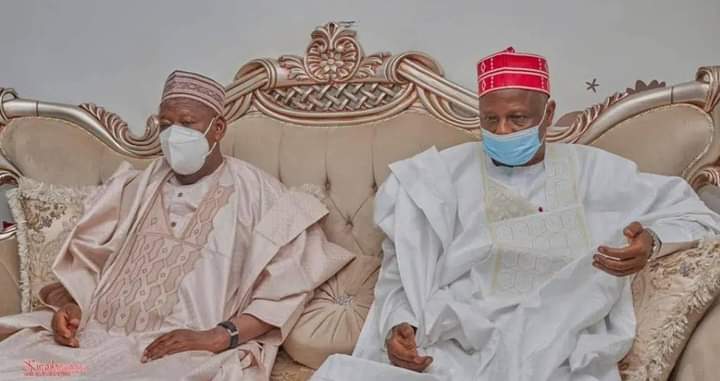
Also in Kano State politics, president Bola Ahmed Tinubu has kick-started moves to reconcile the national leader of the New Nigeria People’s Party (NNPP), Rabi’u Musa Kwankwaso and the National Chairman of the All Progressives Congress (APC), Abdullahi Umar Ganduje.
Multiple sources reported that the president has communicated his intention to both leaders separately and has given them some time to inform their stakeholders of his intention, and return at a later date to finalise the reconciliation process.
President Tinubu met with Abdullahi Umar Ganduje and some select APC stakeholders from Kano State last week Thursday, and met with Rabi’u Musa Kwankwaso on Sunday, just as he plans to personally chair a reconciliation meeting where the two former governors of Kano State are expected to come with two persons each. Sources close to Abdullahi Umar Ganduje confirmed that the president had asked the APC leader to meet with APC stakeholders in Kano on Thursday (yesterday), and commence the process of solidifying the unity of purpose amongst them.
Dear brothers and sisters! In the darkest of nights, even the full moon goes missing. And amid the turbulence of trials and disagreements that surge like waves of the ocean, along with everyone’s admiration of their own opinion, the wise person searches for a glimmer of light to illuminate the way, or for a lifeline to save them from the turbulence of a deep sea engulfed by waves upon waves, over which are cyclones and whirlwinds that leave even the wise bewildered.
Nowadays, we live in a time whereby the channels of information have increased and reached such rapid rates that people wake up to new developments, and end their days with new developments. To the point that sometimes, searching for the truth is like searching for a needle in a haystack. Herein, lies the challenge. And the consequences are dangerous.
And the approaches of yesterday may not be as effective as they once were, due to the tyranny of distractions and the weakening of moral restraint.
This makes discussion and debating in the best manner the best approach especially in the spheres of advising, guiding, upbringing, criticising, and disputing.
From this standpoint, we passionately highlight the need for prevailing in the principles of dialoguing and debating in the best manner, in all matters of life, as our true religion taught us. Our guide in this is the Book of our Lord and the Sunnah of our Prophet (Peace be upon him). Dialogue is a refined approach and an ideal means to reach goals with soundness, tranquility, politeness, and effectiveness.
Respected servants of Allah! Dialogue, is the exchange of talking between two or more people, intended to prove an argument, establish a right, refute a doubt, or dispel falsehood in speech, action, or belief. It is a significant method in the Qur’an and Sunnah. The Qur’an contains dozens of verses that include the concept of dialogue. And the pure Sunnah is full of this style, emanating from the Prophetic character aimed at guiding people, caring for them, and being merciful to them. As Allah the Almighty says:
“There has certainly come to you a Messenger from among yourselves. Grievous to him is what you suffer; [he is] concerned over you [i.e., your guidance] and to the believers is kind and merciful.” [Qur’an, 9:128]
Dialogue in our noble religion is distinguished for its applicability in all aspects of life, starting from matters of creed, leadership, to the upbringing of children. An example from the domain of creed is the dialogue that each Prophet had with his people, dialoguing with them in the best manner, hoping to guide them to the straight path of Allah. Adiy Ibn Hatim, who was initially a Christian, entered upon the Prophet Muhammad (Peace be upon him) and heard him reciting the verse of Allah:
“They have taken their scholars and monks as lords besides Allah, and [also] the Messiah, the son of Mary. [Qur’an, 9: 31] Adiy said, “We do not worship them.” The Prophet (Peace be upon him) replied: As for them, they did not worship them, but when they made something lawful for them, they considered it lawful, and when they made something unlawful for them, they considered it unlawful.” [Sahih At-Tirmithi]
Respected servants of Allah! This is an example of the Prophet’s dialogue in matters of creed, to serve as a beacon for every Muslim, eager to guide others, to follow the guidance of the Prophet (Peace be upon him). Allah the Exalted says:
“There has certainly been for you in the Messenger of Allah an excellent pattern for anyone whose hope is in Allah and the Last Day and [who] remembers Allah often.” [Qur’an, 33: 21]
Dear brothers and sisters! Indeed, engaging in wholesome and constructive dialogue is the best way to reach the truth and certainty for those who have a heart or lend an ear while being attentive.
When lust takes control of a person’s heart, and their heart longs for sin, mere reproach, rebuke and reprimand, far from the approach of constructive dialogue, are unlikely to uproot the lure of indulging in desires. This is where the true benefits of dialogue lie.
A young man once came to the Prophet Muhammad (Peace be upon him) and said:
“O Messenger of Allah, grant me permission to commit adultery. The people around him reprimanded him, saying, “Woe to you.” But the Prophet said, “Bring him closer.” So the young man came close and sat down. The Prophet asked him, “Would you like it for your mother?” He replied, “No, by Allah, may I be sacrificed for you.” The Prophet said, “Nor do people like it for their mothers.” He asked, “Would you like it for your daughter?” He replied, “No, by Allah, may I be sacrificed for you.” The Prophet asked him, “Would you like it for your sister?” He replied, “No, by Allah, may I be sacrificed for you.” The Prophet said, “Nor do people like it for their sisters.” The Prophet asked him, “Would you like it for your paternal aunts?” He replied, “No, by Allah, may I be sacrificed for you.” The Prophet said, “Nor do people like it for their paternal aunts.” The Prophet asked him, “Would you like it for your maternal aunts?” He replied, “No, by Allah, may I be sacrificed for you.” The Prophet said, “Nor do people like it for their maternal aunts.” Then the Prophet placed his hand on the young man and supplicated, “O Allah, forgive his sin, purify his heart, and guard his chastity.” After that, the young man never turned to anything sinful.” [Ahmad]
This is the essence of dialogue and its impact in clarifying matters and removing doubts, and extinguishing the blind flames of lust and desire.
Dialogue is also crucial in removing the cloud of suspicion and doubt that leads to falsely questioning motivations and honour. A Bedouin came to the Prophet (Peace be upon him) and said:
“My wife has given birth to a dark-complexioned boy, and I have disowned him. The Messenger of Allah (Peace be upon him) said to him, ‘Do you have camels?’ He replied, ‘Yes.’ The Prophet asked, ‘What colour are they?’ He said, ‘Red.’ The Prophet asked, ‘Is there any grey in them?’ He said, ‘Indeed, there is some grey.’ The Prophet said, ‘How do you think that came about?’ The man said, ‘O Messenger of Allah, perhaps it is a strain [in their lineage].’ The Prophet said, And perhaps this [boy] has a strain [like that],’ and he did not permit him to disown the child.” [Bukhari and Muslim]
This dialogue removed the man’s suspicions and ill thoughts towards his wife, thereby cutting the roots of doubt and closing the door to family discord or marital problems. How great is the impact of dialogue when someone is skilled, calm, purposeful, driven by sincerity and the pursuit of truth and far from slandering and quarreling.
In the realm of raising children, dialogue has a more profound impact than mere instruction or forced imposition. Once, the Prophet Muhammad (Peace be upon him) saw Al-Hasan Bin Ali – may Allah be pleased with them – putting a date from the charity dates in his mouth. The Prophet (Peace be upon him) said:
Kakh’ (an expression of disapproval). ‘Kakh’ (an expression of disapproval), leave it. Do you not know that we do not eat (what is given in) charity.” [Bukhari and Muslim]
Indeed upbringing coupled with explaining the rationale and wisdom is superior to upbringing devoid of it. And if mere prohibition was sufficient in upbringing, the Prophet (Peace be upon him) would have sufficed with saying ‘Kakh’ (an expression of disapproval). However, adding some dialogue with reasoning instilled the correct understanding, rather than imposing it without the slightest explanation.
Fellow servants of Allah! Any society that cultivates proficiency in conveying ideas convincingly through dialogue and transparency and debating in the best manner and not in the roughest fashion, will convey ideas with clarity and understanding and without arrogance. If the outcome is not as desired, at least the evidence was established, and one’s duty is fulfilled, echoing the believer’s sentiment in the Qur’an:
“So you will remember what I [now] say to you, and I entrust my affair to Allah. Indeed, Allah is Seeing of [His] servants.” [Qur’an, 40: 44]
We ask Allah Almighty to enlighten our hearts with Iman (faith) and bless us with wisdom to convey the truth in the best manner. Indeed Allah is All Hearing, Answering.
I conclude with this and send prayers of blessings and peace upon your Prophet as your Lord commanded:
Indeed, Allah confers blessing upon the Prophet, and His angels [ask Him to do so]. O you who have believed, ask [Allah to confer] blessing upon him and ask [Allah to grant him] peace.” [Qur’an, 33: 56]
O Allah, guide us with those whom You have guided, grant us well-being among those You have granted well-being, be an ally to us along with those whom You are an ally to, and bless what You have bestowed upon us, and save us from the evil of what You have decreed. For verily You decree and none can decree over You. He whom You support can never be humiliated. Glory is to You, our Lord, You are Blessed and Exalted.
O Allah, We ask You for all that is good, in this world and in the Hereafter, what we know and what we do not know. O Allah, we seek refuge with You from all evil, in this world and in the Hereafter, what we know and what we do not know. O Allah, we ask You for the good that Your servant and Prophet has asked You for, and we seek refuge with You from the evil from which Your servant and Prophet sought refuge. O Allah, we ask You for Paradise and for that which brings one closer to it, in word and deed, and we seek refuge in You from Hell and from that which brings one closer to it, in word and deed. And we ask You to make every decree that You decree concerning us good.
Dear servants of Allah! Indeed, Allah orders justice and good conduct and giving to relatives and forbids immorality and bad conduct and oppression. He
He admonishes you that perhaps you will be reminded.
Remember Allah, the Great – He will remember you. Thank Him for His favours – He will increase you therein. And seek forgiveness from Him – He will forgive you. And be conscious of Him – He will provide you a way out of difficult matters. And, establish the prayer.
All praise is due to Allah, Lord of the worlds. May the peace, blessings and salutations of Allah be upon our noble Messenger, Muhammad (Peace be upon him), and upon his family, his Companions and his true and sincere followers.
Murtadha Muhammad Gusau is the Chief Imam of: Nagazi-Uvete Jumu’ah Mosque; and Late Alhaji Abdur-Rahman Okene Mosque, Okene, Kogi State, Nigeria. He can be reached via: gusauimam@gmail.com; or +2348038289761.
This Friday sermon (Jumu’ah Khutbah) was prepared for delivery today Friday, 14 Rajab, 1445 AH (January 26, 2024).










News
Kwankwaso May Become Nigeria’s Oldest Vice-Presidential Running Mate, Says Activist
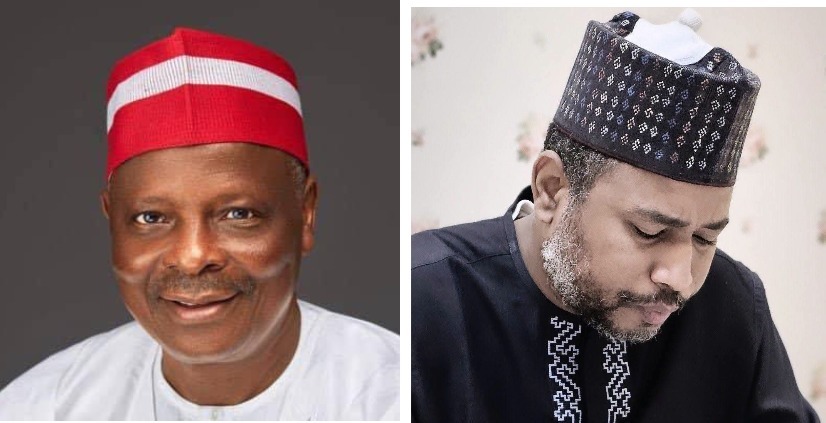
A social media activist and Nigerian diaspora member, Usman Isiyaku, has criticised supporters of Peter Obi and Rabiu Musa Kwankwaso over what he described as double standards in their arguments about the age of presidential candidates ahead of the 2027 general elections.
Isiyaku made the remarks in a post on his verified Facebook page, where he questioned why supporters of Obi and Kwankwaso allegedly criticised former Vice-President Atiku Abubakar over his age while celebrating the possibility of Kwankwaso becoming a vice-presidential candidate at 70.
The activist argued that Kwankwaso, a former governor of Kano State and leader of the National Democratic Congress would be among the oldest politicians to contest for Nigeria’s vice-presidency if he eventually runs alongside a younger presidential candidate.
According to Isiyaku, the criticism directed at Atiku, who is 79, by supporters of Obi and Kwankwaso contrasts with their apparent willingness to support Kwankwaso, who is 70, for the same position.
He questioned the consistency of the arguments surrounding age and leadership, insisting that a 70-year-old politician should also be considered elderly by the same standards used to criticise Atiku.
“The Obidients and Kwankwasites have built a whole campaign narrative against Atiku because he’s 79 years old. But Rabiu is 70 years old today, and they are celebrating him running for a VP at this age,” Isiyaku wrote.
“By every standard, a 70-year-old man is old. I mean, really old. Why the double standard?” he added.
Isiyaku further argued that it was unusual in Nigeria’s political history for a politician aged 70 to seek the vice-presidency alongside a younger presidential candidate, noting that previous civilian presidents generally had younger deputies.
He cited former Vice-President Namadi Sambo as an exception, explaining that Sambo was younger than former President Goodluck Jonathan by three years.
According to the activist, Sambo’s emergence as Jonathan’s running mate followed the death of former President Umaru Musa Yar’Adua in office, after which Jonathan became president and selected Sambo as his vice-president.
Isiyaku also compared Kwankwaso’s age with those of other former Nigerian vice-presidents at the time they assumed office, including Atiku Abubakar, Namadi Sambo, Yemi Osinbajo and Alex Ekwueme.
He stated that Atiku became vice-president at 52, Sambo at 49, Osinbajo at 58 and Ekwueme at 49 during the Second Republic, arguing that Kwankwaso’s possible entry into the vice-presidential race at 70 would represent a significant departure from the age profile of previous occupants of the office.
The activist maintained that political supporters should avoid using age as a weapon against their opponents, particularly when politicians they support are also advancing in age.
“Everybody will either grow old or die young. They should stop this age shaming because their VP candidate is a septuagenarian too!” he wrote.
Isiyaku’s comments come amid political discussions and alignments ahead of the 2027 general elections, with the ages, experience and suitability of prospective candidates featuring in debates among supporters of different political figures.
However, Kwankwaso’s possible emergence as a vice-presidential candidate remains a political proposition in Isiyaku’s post.
The debate highlights the continuing arguments over age, experience and political leadership in Nigeria, as supporters of different political camps assess potential candidates ahead of the next general elections.
News
APC Denies Plot to Assassinate Atiku, Urges Security Agencies to Question Timi Frank
By Yusuf Danjuma Yunusa
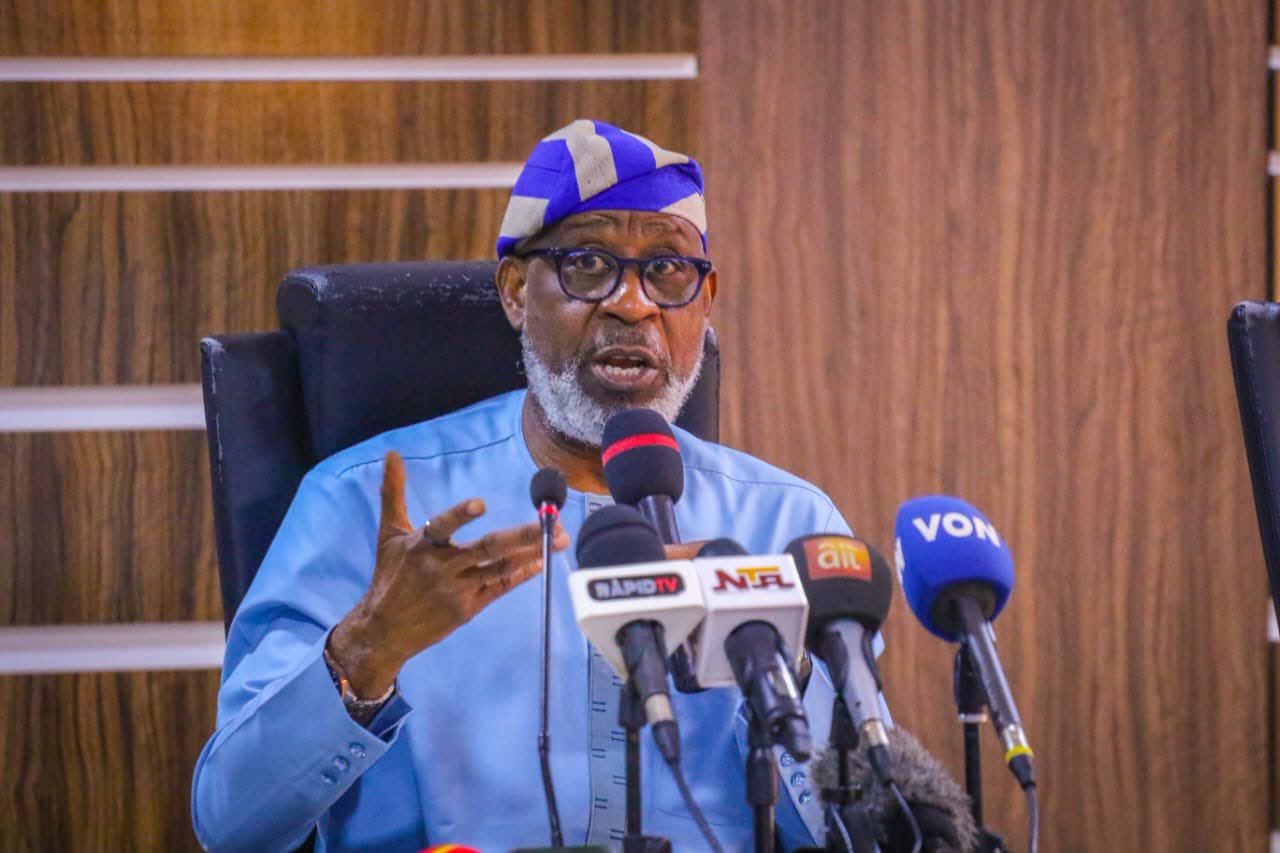
The All Progressives Congress Presidential Campaign Council has denied allegations that the Nigerian Government is plotting to assassinate former Vice President Atiku Abubakar, the ADC presidential candidate, and called on security agencies to invite Timi Frank to substantiate the claim.
In a statement signed by its spokesperson, Dele Alake, dated October 20, 2026, the council said:
“Our attention has been drawn to the statement by Timi Frank, a member of the African Democratic Congress, alleging that the Nigerian Government is plotting to assassinate former Vice President Atiku Abubakar, the Presidential candidate of the ADC. This is a grave allegation that Mr Frank must prove. We thus urge security agencies to invite him to substantiate the allegation, given its gravity and the urgent need to preserve life.”
The council also rejected any involvement by the presidency or the APC Campaign Council, stating:
“We categorically reject the claim that the presidency of Nigeria or the APC Campaign Council is involved in any plot to assassinate former Vice President Atiku Abubakar or any opposition figure.”
It further dismissed as false claims that security personnel attached to Atiku had been withdrawn, saying the former vice president is protected by the police and the Department of State Security. According to the statement, President Bola Tinubu recently directed security agencies to reinforce and increase protection for all presidential, vice-presidential, governorship and deputy governorship candidates across the country.
The council said security around the ADC presidential candidate had never been compromised and that, as a former vice president, Atiku enjoys two levels of state-funded security protection, which the statement said Tinubu had increased ahead of the 2027 general elections.
It urged candidates, parties and supporters to be factual and responsible in public statements and to avoid utterances that could trigger avoidable tension, accusing Frank of “typical opposition rabble-rousing.”
News
Kano Youths Condemn Lawmaker Over Alleged Mockery of Governor Yusuf
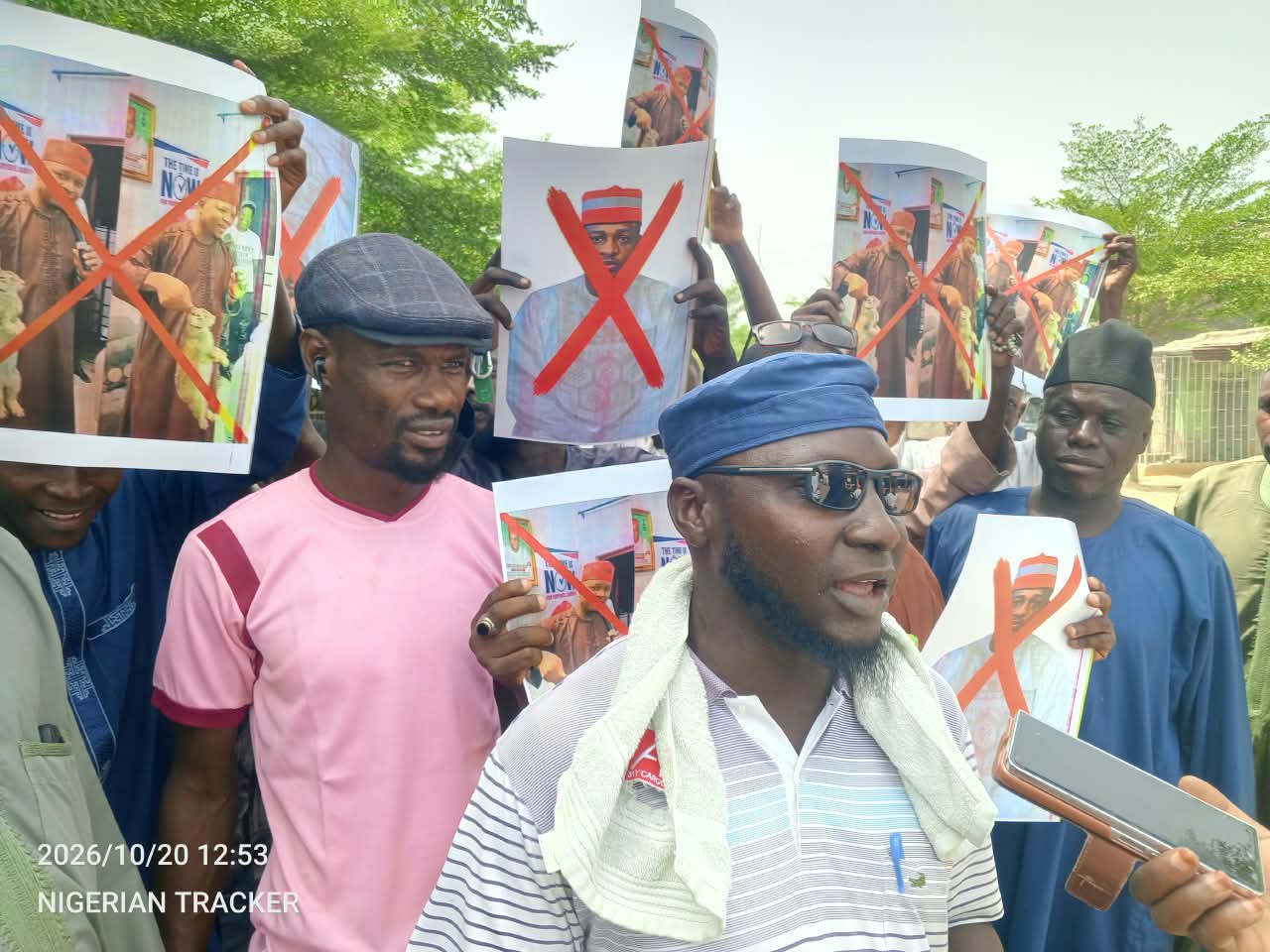
Concerned youths of Gama Ward in Nassarawa Local Government Area of Kano State have condemned the member representing Nassarawa Local Government in the Kano State House of Assembly, Hon. Bello Ali Yusuf, over an alleged act of mockery directed at Governor Abba Kabir Yusuf.
The youths, in a gathering on Tuesday, October 20, 2026, said they were displeased with the lawmaker’s reported action of holding the ear of a live rabbit in the presence of his supporters, which they alleged was intended to ridicule the governor.
Addressing journalists during a peaceful press briefing, the youths described the incident as disrespectful to the office of the governor and contrary to the cultural values and traditions of Gama Ward and the wider Kano community.
According to the group, the alleged conduct was undemocratic and unbecoming of an elected representative, adding that public officeholders should demonstrate maturity, decorum and respect for democratic institutions in their political engagements.
The Concerned Gama Youth further expressed concern that the incident could create unnecessary political tension and undermine the prevailing peace in the state.
They maintained that political disagreements should be handled through constructive engagement and democratic processes rather than actions they considered capable of ridiculing public officeholders.
NIGERIAN TRACKER reports that the group also reaffirmed its support for Governor Yusuf, commending his administration for what it described as people-oriented projects executed in Gama Ward and other parts of Nassarawa Local Government Area.
Specifically, the youths highlighted the construction of the road linking Gwagwarwa to Gama Hotel, describing the project as an important intervention that had improved transportation and eased movement within the community.
While addressing the press the group’s Secretary-General, Comrade Auwal Garba Gama, the road had also contributed to economic activities and improved access for residents.
The youths said the project demonstrated the governor’s commitment to infrastructure development and the welfare of residents of Gama Ward, adding that they appreciated the administration’s efforts to address the community’s needs.
Consequently, the group called on the leadership of the Kano State House of Assembly to investigate the incident and take what it described as immediate and decisive disciplinary action against Bello Ali Yusuf.
The youths argued that the alleged conduct had the potential to bring the legislature into disrepute, urging the Assembly’s leadership to ensure that elected representatives upheld the standards expected of public officeholders.
They also appealed to community leaders, political stakeholders and residents of Gama Ward to continue supporting the governor’s administration while maintaining peace and mutual respect despite political differences.
The group urged residents to remain law-abiding and avoid actions that could escalate political disagreements, while calling on them to pray for the success of the governor’s administration.
The secretary also reaffirmed the group’s solidarity with Gama Ward, Nassarawa Local Government Area and Kano State.

Kwankwaso May Become Nigeria’s Oldest Vice-Presidential Running Mate, Says Activist

APC Denies Plot to Assassinate Atiku, Urges Security Agencies to Question Timi Frank

Kano Youths Condemn Lawmaker Over Alleged Mockery of Governor Yusuf

IITA Trains Over 1,800 Farmers on Modern Farming Techniques in Kano

Former Delta State Governor, Emmanuel Uduaghan, Dies At 71

Zamfara Varsity ASUU Threatens Warning Strike Over FG-ASUU Agreement, Promotion Arrears

PCACC Arrests Man Over Alleged ₦4.5m Sale, Illegal Leasing of Kano Government Horse Stable

Kano Monitors ₦48.9bn Projects Across Six LGAs

Goje’s Electoral War:The Confrontation With Tinubu,Governor Inuwa,Usman Kumo And APC candidates Ahead Of 2027

Prof Yusuf Adamu Delivers BUK’s 63rd Professorial Inaugural Lecture, Reflects on Medical Geography and Academic Legacy
Kwankwaso May Become Nigeria’s Oldest Vice-Presidential Running Mate, Says Activist
APC Denies Plot to Assassinate Atiku, Urges Security Agencies to Question Timi Frank
Kano Youths Condemn Lawmaker Over Alleged Mockery of Governor Yusuf
IITA Trains Over 1,800 Farmers on Modern Farming Techniques in Kano
Former Delta State Governor, Emmanuel Uduaghan, Dies At 71
Zamfara Varsity ASUU Threatens Warning Strike Over FG-ASUU Agreement, Promotion Arrears
PCACC Arrests Man Over Alleged ₦4.5m Sale, Illegal Leasing of Kano Government Horse Stable
Kano Monitors ₦48.9bn Projects Across Six LGAs
Goje’s Electoral War:The Confrontation With Tinubu,Governor Inuwa,Usman Kumo And APC candidates Ahead Of 2027
Prof Yusuf Adamu Delivers BUK’s 63rd Professorial Inaugural Lecture, Reflects on Medical Geography and Academic Legacy
-

 Opinion5 years ago
On The Kano Flyovers And Public Perception
-

 Features5 years ago
How I Became A Multimillionaire In Nigeria – Hadiza Gabon
-

 Opinion6 years ago
Kano As future Headquarters Of Poverty In Nigeria
-

 History6 years ago
Sheikh Adam Abdullahi Al-Ilory (1917-1992):Nigeria’s Islamic Scholar Who Wrote Over 100 Books And Journals
-

 Opinion5 years ago
My First Encounter with Nasiru Gawuna, the Humble Deputy Governor
-

 History5 years ago
The History Of Borno State Governor Professor Babagana Umara Zulum
-

 History6 years ago
The Origin Of “Mammy Market” In Army Barracks (Mammy Ochefu)
-

 News5 years ago
Federal University Of Technology Babura To Commence Academic Activities September