
News
AAPU Probes Certificate Racketeering in Cotonou Varsity

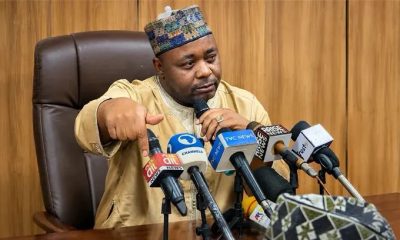
The Association of African Private Universities (AAPU) has commended the Nigerian Minister of Education, Prof. Tahir Mamman for resolving to investigate certificate racketeering in some universities.
The Deputy Secretary of the Association, (West Africa), Salissou Mamoudou, made the commendation in a statement issued in Nouakchott, Mauritania on Saturday.
He said the bold steps taken by the Nigerian Minister of Education to investigate the issue, would go a long way in facilitating and promoting International Certification standards as well as restore the confidence of students and parents.
He said AAPU as an international forum for African Private Universities is ready to support the Minister of education in his determined effort to checkmate the activities of those universities that have no regard for their integrity and that of other sister universities in the African continent.
“AAPU as a forum that encourages and empowers member institutions to become Centre of Excellence in Research and Development, will support whatever measures taken by the Minister to save the reputation of Private universities in Africa,” he said.
While urging the government of Benin Republic to take necessary measures to check the ugly trend, the Deputy Secretary of the association also called on the Nigerian Minister of Education not to use the report as a yardstick for judging other reputable universities in Africa.
“The report should not be a yardstick to brand other universities as the same because there are reputable universities in Benin Republic, ” he said.
He disclosed that AAPU would also dispatch a fact finding committee to Cotonou with a view to finding out what exactly happened after which it would come out with a comprehensive report on the committee’s findings.
He said the committee, which is expected to find out the truth about what happened, would submit its report to the association within the next 10 days to enable it brief officials of the Federal Ministry of Education in Nigeria.
The AAPU Deputy Secretary commended the Daily Nigerian online newspaper for exposing the certificate racketeering syndicate in the Cotonou university adding that the association would meet with the undercover reporter to thank him.
He called on the African Union to recognize the Newspaper by honoring the undercover report for doing “an excellent and patriotic job.













News
ADC Accuses APC of Avoiding Performance Record, Shifting Focus to Personalities Ahead of 2027
By Yusuf Danjuma Yunusa
The African Democratic Congress (ADC) has accused the ruling All Progressives Congress (APC) of attempting to divert public attention from its economic and security record by obsessively focusing on opposition candidate Atiku Abubakar and former President Olusegun Obasanjo’s personal opinions.
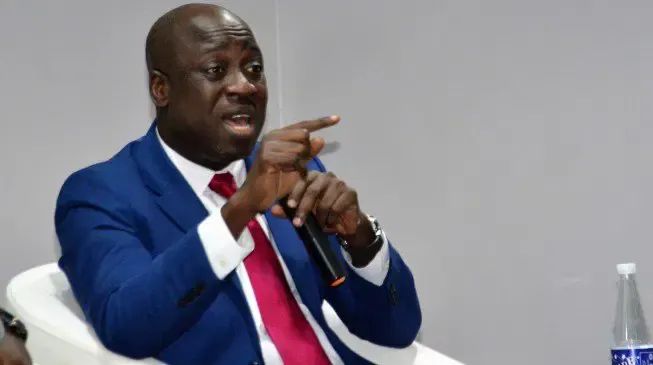
In a statement issued Monday, ADC National Publicity Secretary Mallam Bolaji Abdullahi said the APC’s response to recent criticism from Catholic Bishops reveals a party unable to defend its governance record.
“The APC wants the 2027 election to be about personalities because it cannot defend its performance,” Abdullahi said. “They want this election to be about Obasanjo’s personal opinion of Atiku based on a distant past because they cannot defend Bola Ahmed Tinubu’s record based on current performance.”
The statement comes after Catholic Bishops reportedly raised concerns about worsening poverty, insecurity, and the rising cost of living during a recent meeting with President Tinubu. The ADC accused the ruling party of attacking the Bishops rather than addressing their substantive concerns.
“Whenever respected Nigerians point to the deepening poverty, worsening insecurity, rising cost of living, or the collapse of public confidence under this administration, the APC never answers for its record,” Abdullahi said. “Instead, it looks for someone to attack. Yesterday, it was the Catholic Bishops. Today, it is Alhaji Atiku Abubakar. Tomorrow, it will be someone else.”
The ADC challenged the APC government to answer specific questions about its economic management, including why food prices continue to soar despite proclaimed economic growth, why poverty has deepened, and why the government is spending 69% of revenue on debt servicing—a figure the World Bank has described as dangerously high.
The party also defended Atiku Abubakar’s record as Vice President under Obasanjo, noting that Nigeria experienced stronger economic growth and greater macroeconomic stability during that period.
“While President Obasanjo was in office, with Alhaji Atiku Abubakar serving as Vice President and Chairman of the National Economic Council, Nigeria experienced stronger economic growth, greater macroeconomic stability, stronger investor confidence, and a far more affordable cost of living than Nigerians endure today,” the statement read.
“Whatever political differences may now exist between the two men, that record remains a matter of public history and cannot be erased.”
The APC had not issued an official response to the ADC’s allegations at the time of this report. However, party officials have previously dismissed opposition criticism as politically motivated.
Political analysts note that the exchange reflects an intensifying campaign season, with both parties already positioning themselves for the 2027 presidential election. The ADC, while a smaller opposition party, has sought to align itself with the broader critique of the APC’s economic policies under President Tinubu.
News
Atiku Fires Back at the Presidency: “767 Factories Shut, 335 Others in Distress Under Tinubu”
By Yusuf Danjuma Yunusa
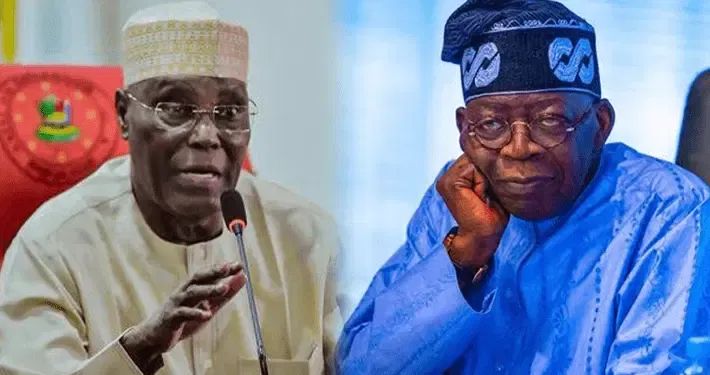
Former Vice-President Atiku Abubakar has accused the Tinubu administration of presiding over an increasingly hostile business environment, alleging that 767 factories had shut down while another 335 were operating under severe distress.
Mr Atiku said the closures and difficulties facing manufacturers contradicted the Federal Government’s claims that its economic reforms were restoring growth and improving the business environment.
The former vice-president, who is the presidential candidate of the African Democratic Congress, ADC, stated this in a response to the Presidency’s defence of President Bola Tinubu’s economic record.
In a statement issued by his Senior Special Assistant on Public Communication, Phrank Shaibu, Mr Atiku said the government’s claims of economic prosperity existed largely in official statements and had not been reflected in the experiences of businesses and ordinary Nigerians.
He said the administration was celebrating Gross Domestic Product, GDP, growth and other macroeconomic indicators while manufacturers, small businesses and households faced rising operating costs and declining purchasing power.
“The Presidency proudly announced that Nigeria’s GDP has increased significantly since the exchange-rate adjustment. We ask a simple question: Has the purchasing power of the average Nigerian increased?” Mr Atiku said.
“Are manufacturers paying less for energy? Have small businesses become more profitable? The answer, tragically, is no.”
He said the closure of hundreds of factories and the distress faced by many others reflected the pressure created by high energy costs, multiple taxes, expensive logistics, rising electricity tariffs and weak consumer demand.
Mr Atiku argued that government policies could not be described as successful if they increased public revenue while reducing the productive capacity of the economy.
“Government cannot tax its way into prosperity while simultaneously shrinking the productive capacity of the economy,” he said.
“Manufacturers are battling record energy costs. Small businesses face multiple taxes, rising electricity tariffs, escalating logistics expenses and declining consumer demand.”
The former vice-president said tax reforms should be designed to encourage production, create jobs and expand the tax base rather than place additional pressure on struggling businesses.
“A tax reform that expands government revenue while ordinary citizens become poorer cannot honestly be described as progressive,” he said.
He added that successful tax systems were built on productivity and economic growth, not by extracting more revenue from businesses and households already facing financial pressure.
Mr Atiku also questioned the government’s borrowing policy, saying the debate should not focus solely on Nigeria’s debt-to-GDP ratio but on the economic value generated by borrowed funds.
“No serious economist argues that borrowing is inherently wrong. Nations borrow. The real question is this: what has Nigeria obtained in return for the unprecedented debts accumulated under this administration?” he asked.
He said Nigerians had a right to demand evidence that borrowed funds were being used to improve infrastructure, create jobs, strengthen public services and raise living standards.
Mr Atiku noted that businesses continued to spend heavily on alternative sources of electricity, while high logistics costs and poor infrastructure remained major obstacles to production.
“After record borrowing and record budgets, businesses are still forced to spend enormous sums generating their own electricity,” he said.
“Logistics costs remain among the highest in Africa. Manufacturers continue to struggle under crushing operating costs, while many roads remain in deplorable condition.”
The former vice-president said infrastructure should be assessed by its economic impact rather than the number of projects announced or commissioned by the government.
“Every administration announces projects. Nigerians are interested in completed projects that reduce the cost of doing business, improve mobility, guarantee stable electricity and stimulate economic growth,” he said.
Mr Atiku also challenged the Presidency’s explanation concerning crude-backed financing arrangements, arguing that the government had admitted that future oil earnings had been committed in ways that limited the country’s ability to benefit from favourable crude oil prices.
He said Nigerians deserved full disclosure on the terms of such arrangements, including the volume of crude committed, repayment conditions, funds received and projects financed.
News
Presidency Sets Seven-Week Deadline for State Police Bill Draft

By Yusuf Danjuma Yunusa
The presidency has officially set a seven-week timeline for the completion of the draft executive bill on state policing, with the proposed legislation expected to reach President Bola Tinubu for review by September 3, 2026.
Femi Gbajabiamila, chairman of the presidential working group on the national policing bill, disclosed the schedule on Monday, confirming that the draft will be formally transmitted to the president exactly seven weeks from now.
Gbajabiamila’s announcement underscores the administration’s accelerated push to overhaul Nigeria’s centralized policing structure, a reform initiative that has gained significant traction amid growing calls for decentralized security architecture to address the nation’s complex law enforcement challenges.

ADC Accuses APC of Avoiding Performance Record, Shifting Focus to Personalities Ahead of 2027

Atiku Fires Back at the Presidency: “767 Factories Shut, 335 Others in Distress Under Tinubu”

WARAKA: The Story of Kano Sexual Assault Referral Centre (SARC)

Presidency Sets Seven-Week Deadline for State Police Bill Draft

How Kano Digitized Land Turns N50m to N750m Monthly

Alhaji Tijjani Rabiu Spikin: A Neighbour, Philanthropist, and Friend of Children

Is N100,000 Worth the Risk?’ Nigerians React to Soldiers’ Salary Increase

Goodwill, Visibility, and Operational Security: A Strategic Communication Reading of Senator Ahmad Lawan’s DIA Post

MAAUN Clarifies Status of Former Visiting Lecturer, Reaffirms Zero-Tolerance Policy on Sexual Harassment
Kano Governor Yusuf Shortlisted for Africa’s SANKOFA Award of Excellence in Infrastructural Development
ADC Accuses APC of Avoiding Performance Record, Shifting Focus to Personalities Ahead of 2027
Atiku Fires Back at the Presidency: “767 Factories Shut, 335 Others in Distress Under Tinubu”
WARAKA: The Story of Kano Sexual Assault Referral Centre (SARC)
Presidency Sets Seven-Week Deadline for State Police Bill Draft
How Kano Digitized Land Turns N50m to N750m Monthly
Alhaji Tijjani Rabiu Spikin: A Neighbour, Philanthropist, and Friend of Children
Is N100,000 Worth the Risk?’ Nigerians React to Soldiers’ Salary Increase
Goodwill, Visibility, and Operational Security: A Strategic Communication Reading of Senator Ahmad Lawan’s DIA Post
MAAUN Clarifies Status of Former Visiting Lecturer, Reaffirms Zero-Tolerance Policy on Sexual Harassment
Kano Governor Yusuf Shortlisted for Africa’s SANKOFA Award of Excellence in Infrastructural Development
-

 Opinion4 years ago
On The Kano Flyovers And Public Perception
-

 Features5 years ago
How I Became A Multimillionaire In Nigeria – Hadiza Gabon
-

 Opinion6 years ago
Kano As future Headquarters Of Poverty In Nigeria
-

 History5 years ago
Sheikh Adam Abdullahi Al-Ilory (1917-1992):Nigeria’s Islamic Scholar Who Wrote Over 100 Books And Journals
-

 Opinion5 years ago
My First Encounter with Nasiru Gawuna, the Humble Deputy Governor
-

 History5 years ago
The History Of Borno State Governor Professor Babagana Umara Zulum
-

 History5 years ago
The Origin Of “Mammy Market” In Army Barracks (Mammy Ochefu)
-

 News4 years ago
Federal University Of Technology Babura To Commence Academic Activities September