
News
Bloomberg rates Aliko Dangote richest man in Africa with $15.6bn
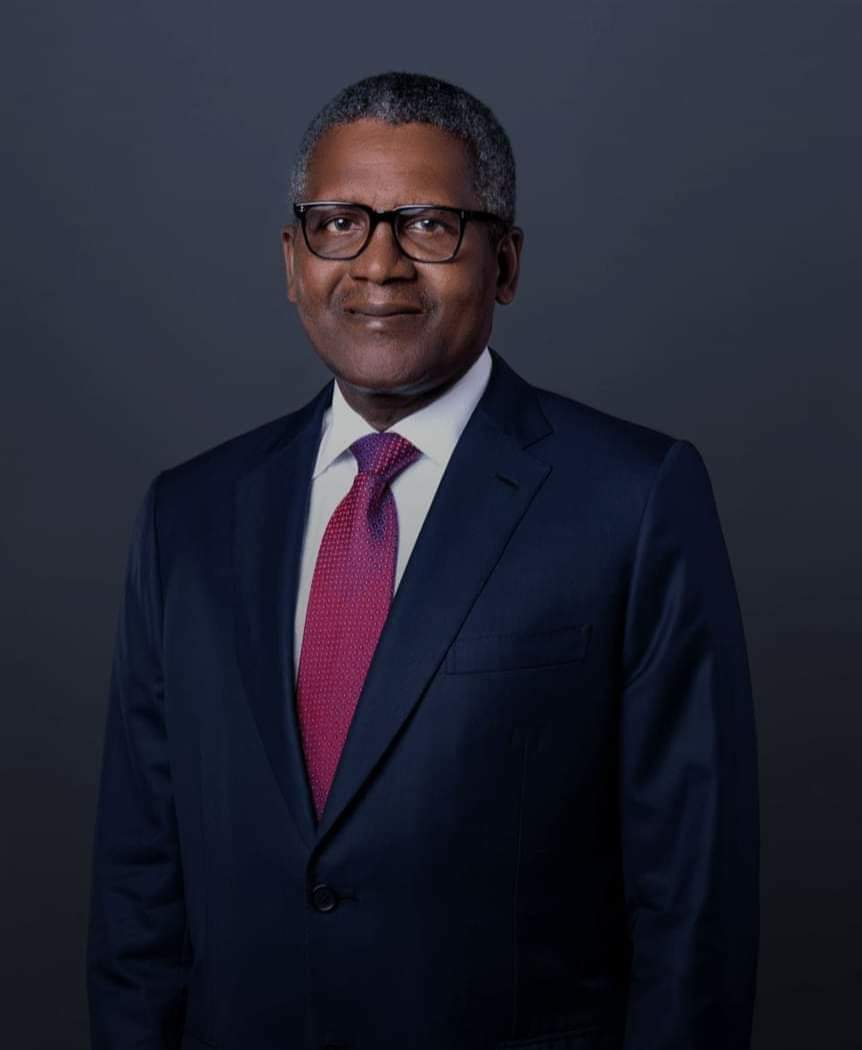
President of Dangote Group, Aliko Dangote remains the richest man in Africa, despite the volatility of Nigerian currency against the dollar. Bloomberg in its daily top billionaire lists, released on Tuesday, revealed that Dangote with a wealth of $15.6 billion topped other Africans in the Index.
Dangote, who remains the richest man in Africa for the 12th year running, was the only Nigerian on the list of the top 500 billionaires, as released by Bloomberg.
Other Africans listed in the latest top 500 world billionaires list for the year 2023 include Johann Rupert and family of South Africa, now worth $13.3 billion, while Nicky Oppenheimer of South Africa, Nassef Sawiris of Egypt, Natie Kirsh of South Africa, and Naguib Sawiris are also worth $9.0 billion, $7.47 billion, $7.37billion and $5.93 billion respectively. These are the only five other Africans that made the list.
The Bloomberg Billionaires Index is a daily ranking of the world’s richest people. In calculating net worth, Bloomberg News strives to provide the most transparent calculations available, and each individual billionaire profile contains a detailed analysis of how that person’s fortune is tallied.
The index is a dynamic measure of personal wealth based on changes in markets, the economy and Bloomberg reporting. Each net worth figure is updated every business day after the close of trading in New York. Stakes in publicly traded companies are valued using the share’s most recent closing price. Valuations are converted to U.S. dollars at current exchange rates.
Ellon Musk and Bernard Arnault are the richest in the world with $219billion and $194 billion respectively in their kitties while Jeff Bezos and Bill Gates followed respectively with $151 billion and $130 billion. Larry Ellison was the fifth richest with $130 billion on the world’s billionaires’ chart.
Bloomberg is a global information and technology company, that connect decision makers to a dynamic network of data, people and ideas – “accurately delivering business and financial information, news and insights to customers around the world” Bloomberg L.P. provides financial software tools such as an analytics and equity trading platform, data services, and news to financial companies and organisations through the Bloomberg Terminal.’
Africa’s richest man, with his new worth of $15.6 billion, controls Dangote Industries, a closely-held conglomerate. The Lagos, Nigeria-based company owns sub-Saharan Africa’s biggest cement producer, Dangote Cement. It also has interests in sugar, salt, fertiliser and packaged foods. Dangote also recently commissioned the $19bn petroleum refinery plant, which is now the Africa’s largest refinery.
It would be recalled that Aliko Dangote, was also recently named as among the topmost charitable man in the World by Richtopia, a digital periodical that covers business, economics, and financial news, based in the United Kingdom. This recognition came after he endowed his foundation, the Aliko Dangote Foundation (ADF) to the tune of $1.25 billion.
Aliko Dangote started his Foundation in 1981, with a mission to enhance opportunities for social change through strategic investments that improve health and wellbeing, promote quality education, and broaden economic empowerment opportunities.
Aliko Dangote Foundation was however incorporated in 1994 as a charity in Lagos, Nigeria. 20 years later, the Foundation has become the largest private Foundation in sub–Saharan Africa, with the largest endowment by a single African donor. The primary focus of Aliko Dangote Foundation is health and nutrition, supported by wrap-around interventions in education, empowerment, and humanitarian relief.














News
WHC Solar Trains 300 Youths in Kano to Prevent Installation Errors, Fire Outbreaks
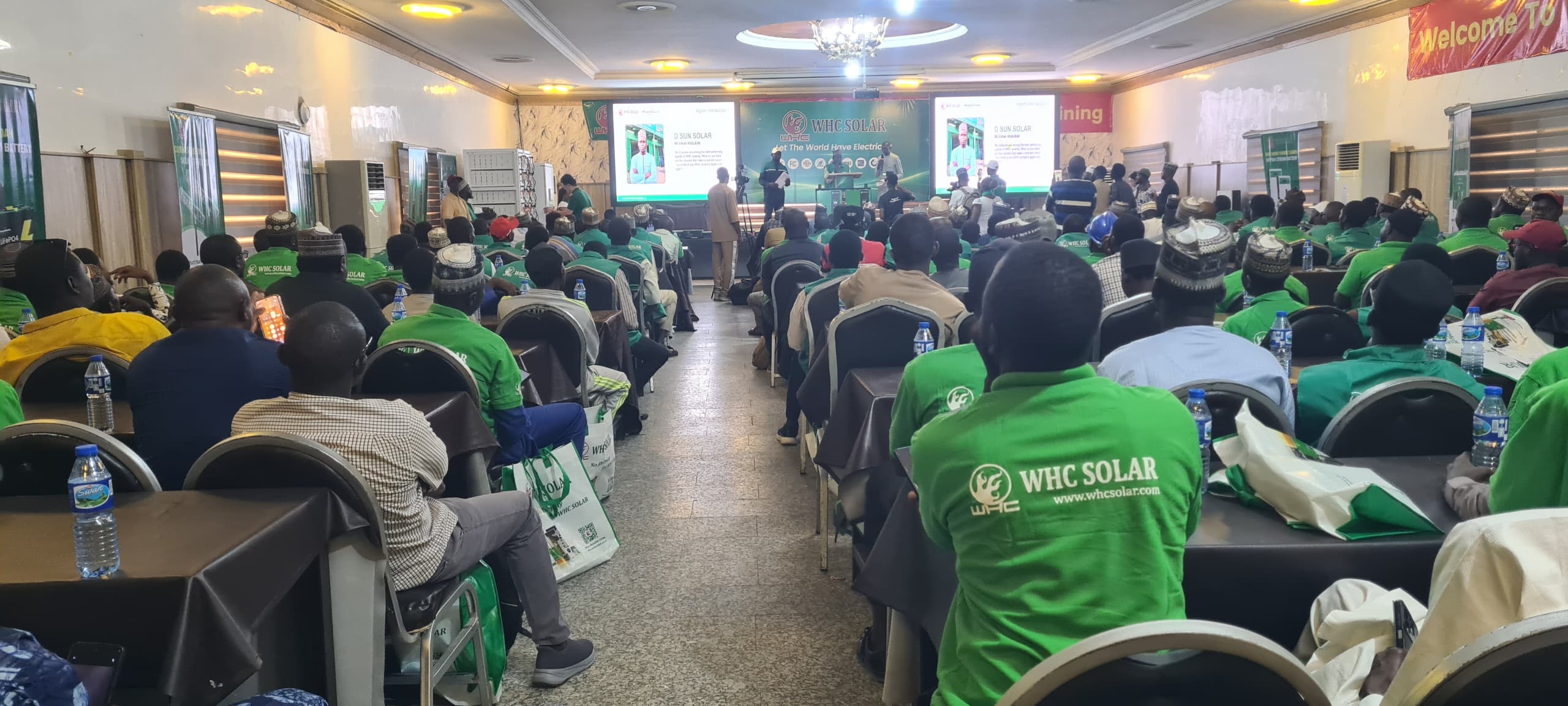
WHC Solar, a Chinese company specialising in solar energy products, has trained about 300 youths in Kano State on the technical installation and configuration of solar power systems to improve safety and expand employment opportunities in Nigeria’s renewable energy sector.
The one-day training, held at Tahir Guest Palace in Kano on Saturday, attracted participants from different parts of Nigeria and beyond, with practical sessions focused on the proper installation of inverters, lithium batteries and other solar power components.
Speaking at the opening of the programme, the company’s Chief Executive Officer, Clint Chan, said the training was organised to equip solar installers with the technical knowledge and practical experience required to deliver quality services to customers.
Chan explained that the company had observed that some solar installers lacked sufficient technical knowledge, resulting in installation errors that could damage equipment or cause fire outbreaks.
He said the initiative was aimed at addressing such challenges by improving the competence of technicians and promoting the safe and efficient use of solar energy systems.
“We noticed that some installers may not fully understand the technology, which can lead to mistakes that could damage a product or even cause fire outbreak,” Chan said.
He added that the training would help participants develop their technical capabilities and become more experienced professionals capable of contributing to society through improved service delivery.
According to Chan, the practical sessions covered the installation and configuration of inverters and lithium batteries, including how the different components communicate and function together within a solar power system.
He said proper understanding of the relationship between the components was essential to ensuring that solar installations operated efficiently, safely and in accordance with technical requirements.
Chan also reaffirmed the company’s commitment to the Nigerian market, saying WHC Solar intended to continue investing in the country’s renewable energy sector and supporting the growing demand for solar power solutions.
He disclosed that the company had a service centre in Kano, through which it provided support for customers using its solar products in residential homes, commercial establishments and industrial facilities.
The chief executive said participants who completed the programme were expected to receive certificates in recognition of their participation and the technical knowledge acquired during the training.
Chan further stated that the company, which he said had been operating for about 10 years, was committed to making solar energy solutions available to Nigerians for domestic, commercial and industrial applications.
Also speaking at the event, Sani Abdulkadir, popularly known as ABDK, said he attended the training as a distributor of the company’s products.
Abdulkadir explained that customers experiencing technical problems with WHC Solar products could take them to the company’s service centre for repairs, adding that some repairs could be completed within 24 hours.
He commended the company for organising the training and creating opportunities for young Nigerians to acquire technical skills that could improve their employment prospects and support self-reliance.
Abdulkadir noted that the growing adoption of solar energy in Nigerian households reflected increasing public interest in alternative electricity sources.
“Before, you could count the number of houses using solar energy, but the situation is changing as more people are embracing it,” he said.
He expressed optimism that the expansion of solar energy adoption would create more opportunities for trained technicians, distributors and other professionals working in the renewable energy value chain.
The training comes amid growing interest in solar power solutions among Nigerian households and businesses seeking alternative sources of electricity, with technical expertise and proper installation remaining important factors in ensuring the safety, reliability and durability of solar systems.
News
Emir Sanusi Seeks Compensation, Reallocation of Demolished Eid Ground Stalls
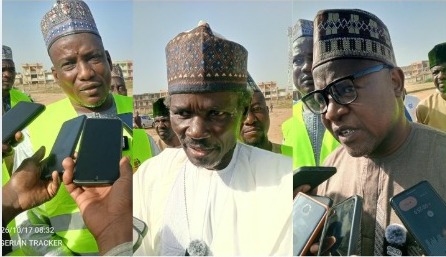
The Emir of Kano, Muhammadu Sanusi II, has appealed to the Kano State Government to compensate traders affected by the demolition of shops at the Filin Idi market in Kofar Mata, Kano, and reallocate stalls to enable them to resume their businesses.
Professor Ibrahim Muazzam Mai Bushira disclosed this during a special prayer session organised by traders affected by the demolition at the Eid Ground in Kofar Mata, where participants prayed for divine intervention and government assistance to alleviate their hardship.
According to Mai Bushira, the Emir has written to Governor Abba Kabir Yusuf, requesting compensation for the affected traders and appealing for measures to address the economic losses they have suffered following the demolition.
He expressed hope that Almighty Allah would reward the Emir for his intervention and urged Governor Yusuf to consider the demands of the traders to enable them to rebuild their businesses and restore their livelihoods.
Mai Bushira said the demolition had caused severe hardship among traders, many of whom depended on their shops as their primary sources of income. He added that some affected individuals had reportedly died, while others had developed high blood pressure following the destruction of their businesses and the resulting economic difficulties.
He explained that the prayer session was organised to seek Allah’s intervention in their predicament and pray for the restoration of their livelihoods, noting that the destruction of the shops had adversely affected the lives of many families who depended on the market for survival.
Speaking at the gathering, Professor Ahmad Muhammad of the Federal University, Dutse (FUD), described Kano as a major commercial centre and called on the Kano State Government to pay attention to the plight of the affected traders and the economic implications of the demolition.
Professor Muhammad also appealed to international entrepreneurs and investors to explore opportunities to support the development of the market, stressing that the destruction of the shops had resulted in substantial financial losses running into billions of naira.
He urged the government to consider establishing a modern market at the location, arguing that the Filin Idi market was not merely a trading centre for Kano but also an important commercial destination for traders from different parts of Nigeria and across Africa.
According to him, the market provides livelihoods for more than one million people, directly and indirectly, making its reconstruction and rehabilitation important to the economic well-being of Kano and its trading community.
The professor further stressed the need for a sustainable solution that would enable displaced traders to return to business, restore commercial activities and protect the economic interests of the large population that depended on the market.
In his remarks, the Chairman of the affected traders’ association, Auwal Said Umar, expressed appreciation to Almighty Allah and Emir Sanusi II for their support and intervention in the traders’ situation.
Umar said many of the affected traders were currently unable to engage in their usual commercial activities because their shops had been demolished, leaving them without the means to sustain their businesses and families.
He disclosed that the market previously had about 700 blocks of shops before the demolition, adding that many traders lacked the financial capacity to reconstruct their businesses without assistance from the government.
The association chairman said the government had allocated 75 stalls for reconstruction but appealed for an increase in the number to accommodate more affected traders and enable them to return to their businesses.
Umar called on the Kano State Government to provide additional support, stressing that the existing allocation was insufficient to address the needs of the large number of traders who lost their shops during the demolition.
The traders urged the government to work with their association and other relevant stakeholders to develop a lasting solution that would provide adequate trading spaces, restore commercial activities and ease the economic hardship caused by the demolition.
News
Gombe flags off the disbursement of the second batch of the AGILE Conditional Cash Transfer
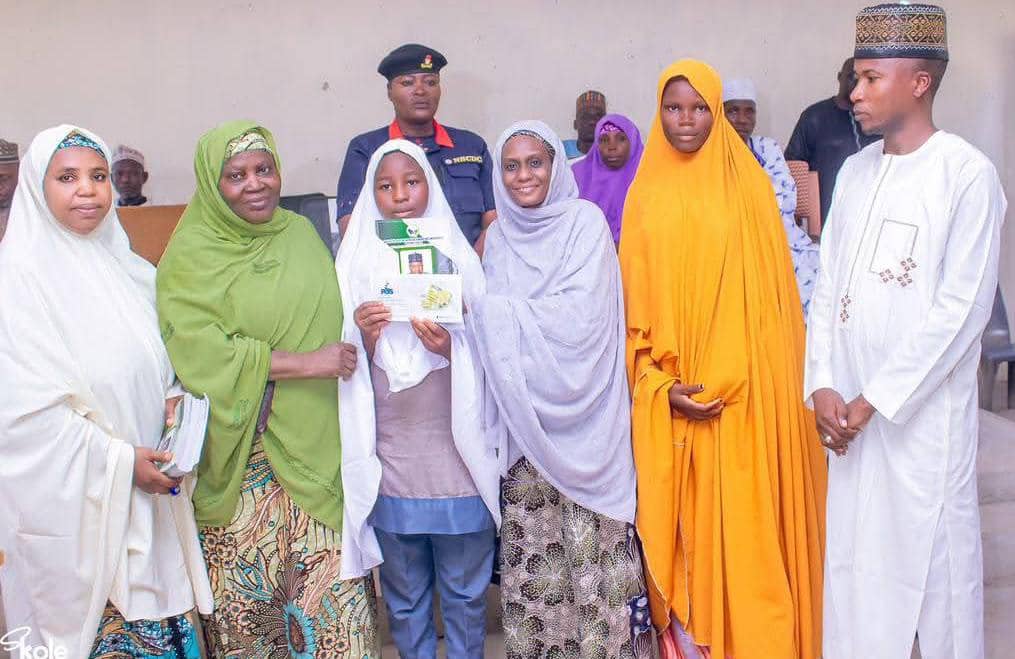
Gombe State Government has flagged-off the distribution of ATM cards to Adolescent Girls in public schools under the Conditional Cash Transfer,CCT of the Adolescent Girls Initiative for Learning and Empowerment, AGILE Project.
Speaking at the flagging off of the disbursement at Government Junior Secondary School Malamsidi central in Kwami Local Government area, the Honourable Commissioner of Education, Associate Prof Aishatu Umar Maigari said the disbursement of the CCT is part of the Governor Muhammadu Inuwa Yahaya’s zeal and passion for the girl child education in the state.
She said the concept is also geared towards supporting parents to cater for their children to remain in schools up to completion of their secondary education.
Associate Prof Aishatu Umar Maigari then assured the students that the government will continue to bring more educational policies that will further support students to pursue education with ease.
Earlier, the project coordinator of the AGILE, Dr. Amina Abdul noted that with the disbursement of the second cohort of the conditional cash transfer, the project was able to record significant improvement in enrollment and retention of students in schools across the state.
The project coordinator therefore urged parents to utilize the funds judiciously through supporting the education of their children.

WHC Solar Trains 300 Youths in Kano to Prevent Installation Errors, Fire Outbreaks

Emir Sanusi Seeks Compensation, Reallocation of Demolished Eid Ground Stalls

Gombe flags off the disbursement of the second batch of the AGILE Conditional Cash Transfer

Why Gov Abba Deserves Another Tenure

China, Nigeria Mark Friendship with Joint Cultural Mural

Zamfara Varsity ASUU Threatens Warning Strike Over FG-ASUU Agreement, Promotion Arrears

PCACC Arrests Man Over Alleged ₦4.5m Sale, Illegal Leasing of Kano Government Horse Stable

Goje’s Electoral War:The Confrontation With Tinubu,Governor Inuwa,Usman Kumo And APC candidates Ahead Of 2027

Prof Yusuf Adamu Delivers BUK’s 63rd Professorial Inaugural Lecture, Reflects on Medical Geography and Academic Legacy

Kano Monitors ₦48.9bn Projects Across Six LGAs
WHC Solar Trains 300 Youths in Kano to Prevent Installation Errors, Fire Outbreaks
Emir Sanusi Seeks Compensation, Reallocation of Demolished Eid Ground Stalls
Gombe flags off the disbursement of the second batch of the AGILE Conditional Cash Transfer
Why Gov Abba Deserves Another Tenure
China, Nigeria Mark Friendship with Joint Cultural Mural
Zamfara Varsity ASUU Threatens Warning Strike Over FG-ASUU Agreement, Promotion Arrears
PCACC Arrests Man Over Alleged ₦4.5m Sale, Illegal Leasing of Kano Government Horse Stable
Goje’s Electoral War:The Confrontation With Tinubu,Governor Inuwa,Usman Kumo And APC candidates Ahead Of 2027
Prof Yusuf Adamu Delivers BUK’s 63rd Professorial Inaugural Lecture, Reflects on Medical Geography and Academic Legacy
Kano Monitors ₦48.9bn Projects Across Six LGAs
-

 Opinion5 years ago
On The Kano Flyovers And Public Perception
-

 Features5 years ago
How I Became A Multimillionaire In Nigeria – Hadiza Gabon
-

 Opinion6 years ago
Kano As future Headquarters Of Poverty In Nigeria
-

 History6 years ago
Sheikh Adam Abdullahi Al-Ilory (1917-1992):Nigeria’s Islamic Scholar Who Wrote Over 100 Books And Journals
-

 Opinion5 years ago
My First Encounter with Nasiru Gawuna, the Humble Deputy Governor
-

 History5 years ago
The History Of Borno State Governor Professor Babagana Umara Zulum
-

 History6 years ago
The Origin Of “Mammy Market” In Army Barracks (Mammy Ochefu)
-

 News5 years ago
Federal University Of Technology Babura To Commence Academic Activities September