
News
Dangote Sugar commits billions to CSR schemes in Adamawa, Nasarawa
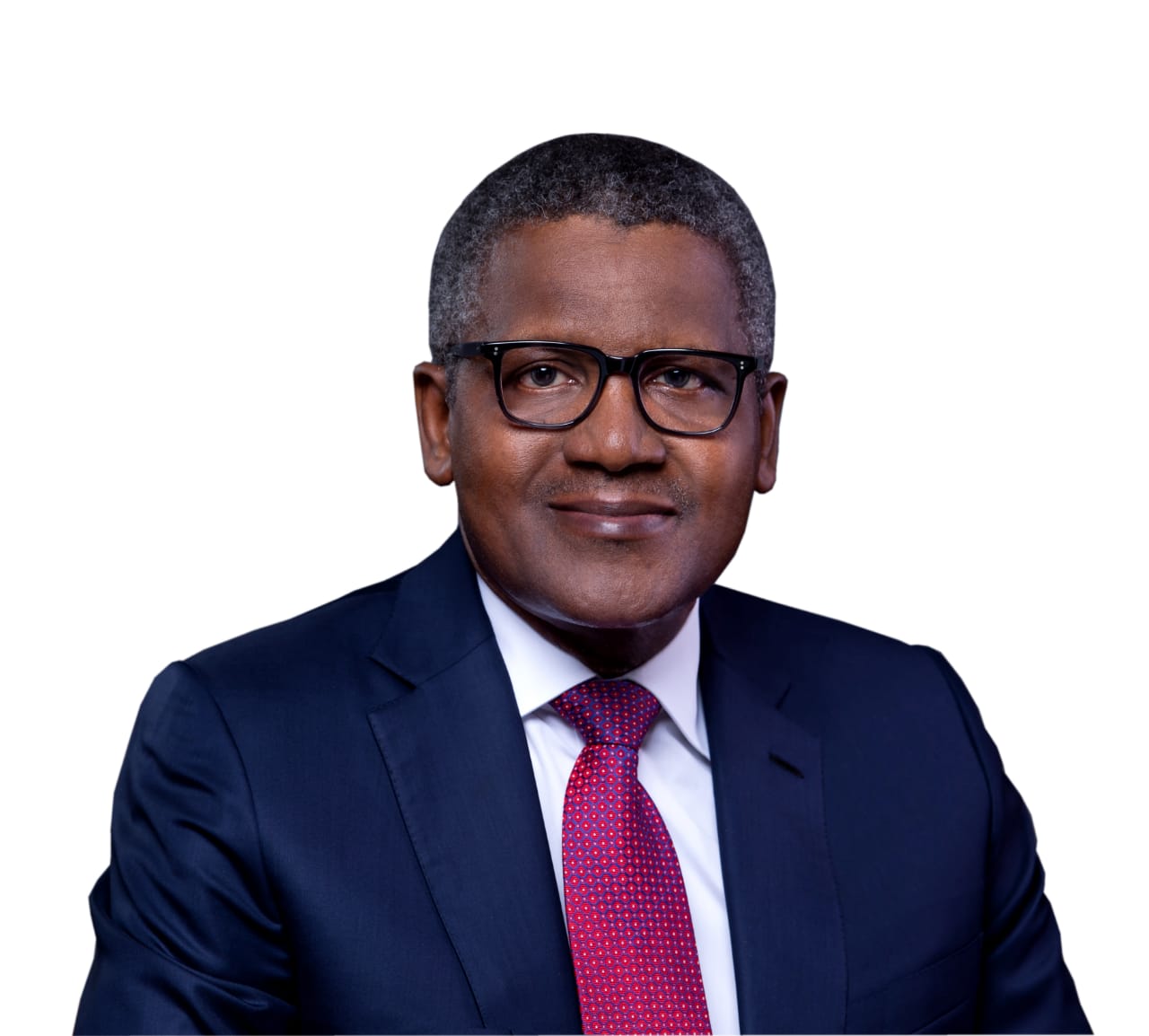
The Dangote Sugar Refinery Plc (DSR) has scaled up its social intervention programmes around host communities in Adamawa and Nasarawa States where its Backward Integration projects are located.
The Group is investing hugely in raw sugar production as part of the Federal Government Sugar Master Plan.
This is coming on the back of $500m that has so far been injected into the project in Nasarawa.
National Sugar Development Council (NSDC) has developed a road map for the realization of self-sufficiency in the sugar sector within a short time. Thus, the Nigeria Sugar Master Plan (NSMP) gave birth to Sugar’s Backward Integration Policy (BIP).
Billions of naira have been expended in social intervention schemes around the communities hosting DSR Numan in Adamawa, and Tunga Sugar Project in Nasarawa.
The company said with 78,000 hectares of farmland in Nasarawa, and 32,000 hectares in Adamawa, it is creating thousands of employment opportunities for Nigerians.
Currently, over 600 workers are being engaged, while 90MW is to be generated in the Dangote Sugar Project in Tunga, Nasarawa State.
The Dangote Group is the second largest employer of labour after the federal government.
While speaking at a recent Annual General Meeting (AGM) of the company, the Chairman of Dangote Sugar Refinery, Aliko Dangote, noted that Nigeria could rake in foreign exchange of up to $700 million yearly from the BIP scheme.
He warned that the BIP scheme must be protected to insulate the Nigerian economy and create jobs.
“If the national sugar master plan is followed strictly and the players follow the rules, the country will be better for it as Nigeria will save between $600 million and $700 million annually as forex,” he said.
A statement from the Corporate Communication Department of the company said when the factory is fully operational; it would have the capacity to crush 12,000 tons of cane per day,
Some of the Corporate Social Responsibility projects executed include the provision of blocks of classrooms, scholarship, water scheme, rehabilitation and opening up of road network, and construction of health center, among others.
Minister for Industry, Trade, and Investment Otunba Niyi Adebayo who was on a working tour of the Dangote’s expansive Savannah Sugar Company (SSCL) Ltd in Numan, Adamawa State, and the Tunga sugar project site in Nasarawa State, had described the projects as “huge, impressive and amazing.”
The Minister said: “It’s a very impressive sight. It’s amazing that such a project exists in this place. What we’ve seen so far from all the plantations we’ve been to is very impressive. We are impressed with the level of work they are doing.”
In the same vein, in the DSR Numan, the company is not resting on its oars.
In 2020, the company constructed multimillion naira blocks of classrooms, administration blocks, and an examination hall.
DSR Numan has also intervened in the provision of electricity through the donation of 300KVA to the Gyawana Community, as well as the donation of a 27KVA Generator to the Lamurde Community.
The company has also instituted an out-grower scheme in DSR Numan, of which 294 people have so far benefited.
Its intervention in the area of road infrastructure has been very huge, some of which include: the rehabilitation of the Gyawana-Lamurde road, Gyawana-Zekun road
Gyawana Township road, the rehabilitation of Dubwangun road, and the rehabilitation of Opalo-Zekun roads, among others.
The company has also doled out financial support to youth, religion, and development-based groups in Adamawa State.












News
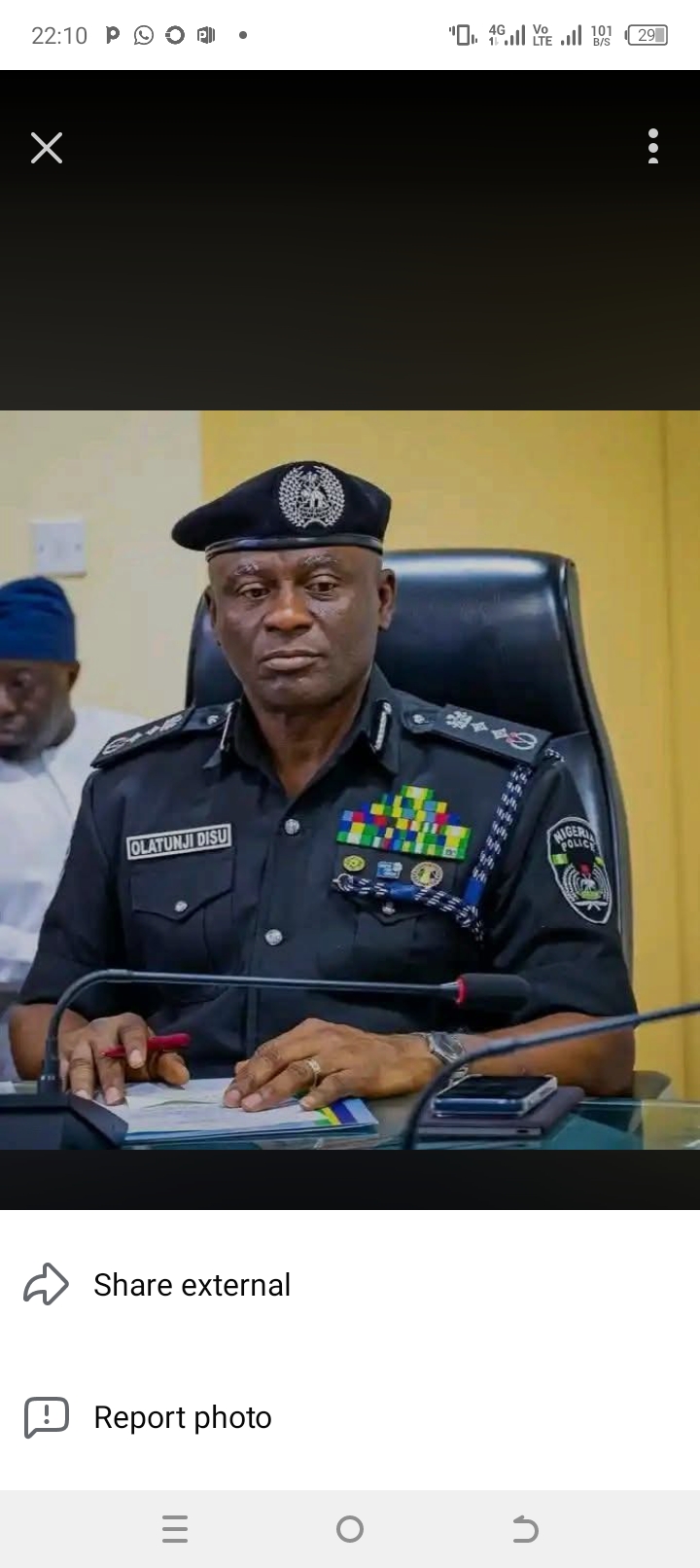
State Police: 24 State Assemblies Approve Constitutional Amendment–Presidency
By Yusuf Danjuma Yunusa
The Presidential Working Group on the National Policing Bill says 24 State Houses of Assembly have approved the Constitution (Sixth Alteration) Bill, 2026, providing for a dual policing system.
The approval meets the constitutional threshold of two-thirds of the 36 states required for the amendment to proceed.
The Working Group commended the State Houses of Assembly for their action and acknowledged the National Assembly for passing the amendment in both chambers.
This is contained in a statement issued by Femi Gbajabiamila, Chief of Staff to the president and chairman of the Working Group, on Friday in Abuja.
“In line with Section 9 of the Constitution, the amendment can now be returned to the National Assembly for transmission to Mr President for assent.”
Mr Gbajabiamila said the approval provided constitutional backing for the policing framework outlined in the Working Group’s draft National Policing Bill, 2026.
He added that the draft bills were undergoing legislative drafting, review and validation at the Federal Ministry of Justice.
The bills are expected to be returned on or before October 30, after which the Working Group will give them final consideration before presenting them to President Bola Tinubu.
The Working Group urged stakeholders to support a smooth transition to a dual policing system aimed at improving public safety.
News
ECOWAS Court Faults Process Backed by Council of Ministers in Darma Removal Case
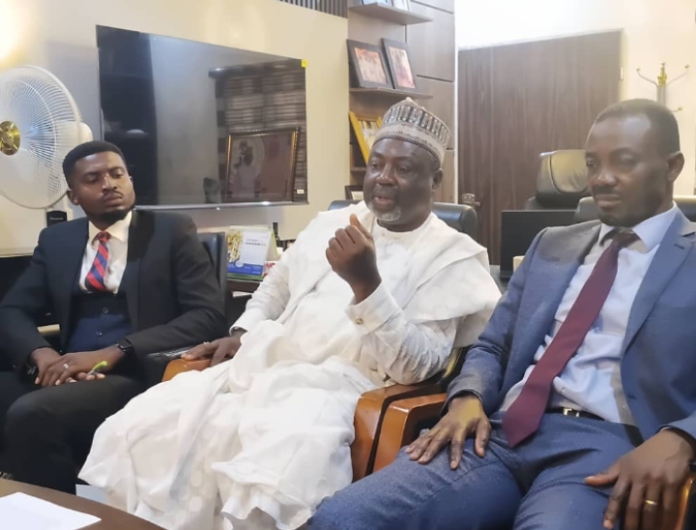
The ECOWAS Community Court of Justice has ruled that the removal and replacement of former ECOWAS Commissioner for Internal Services, Prof. Nazifi Abdullahi Darma, were unlawful, overturning a process that culminated in his replacement being formalised by the Council of Ministers.
Darma disclosed the outcome while briefing journalists in Abuja on the Court’s recent judgment.
He said the dispute arose after a memorandum dated 30 October 2025 by the then President of the ECOWAS Commission, Dr. Omar Alieu Touray withdrew responsibilities previously exercised by Darma and initiated steps that eventually led to his replacement.
While Darma challenged the actions before the ECOWAS Court on 3 November 2025, the Federal Republic of Nigeria subsequently recalled him and nominated a successor.
The Council of Ministers later formalised the replacement.
However, the Court found that the legal requirements for ending his mandate had not been satisfied.
According to Darma, the Court held that the memorandum triggering the process was based on adverse allegations that affected his responsibilities and was issued without giving him an effective opportunity to respond.
“The Court found that these actions were taken without prior notice or an effective opportunity for me to respond,” he said.
The Court further ruled that managerial powers vested in the President of the Commission could not be used to extinguish or transfer responsibilities assigned by Community law to another statutory office.
Darma said the Court also rejected the argument that Nigeria’s recall automatically ended his tenure as Commissioner.
“Once appointed, a Commissioner derives his mandate from Community law and not from the nominating Member State,” he quoted the Court as holding.
The Court consequently declared that his removal and replacement were unlawful, notwithstanding the subsequent actions taken to formalise the change in office.
The judgment ordered the payment of outstanding salaries, allowances and accrued entitlements up to the expiration of his tenure and awarded him US$50,000 in general damages.
Because his tenure expired on 31 August 2026, the Court did not order reinstatement.
Describing the ruling as significant for regional governance, Darma said it reaffirmed that ECOWAS statutory office holders can only be removed through procedures recognised by Community law.
News
Dangote Cement Gboko Commits Millions in Scholarship Scheme
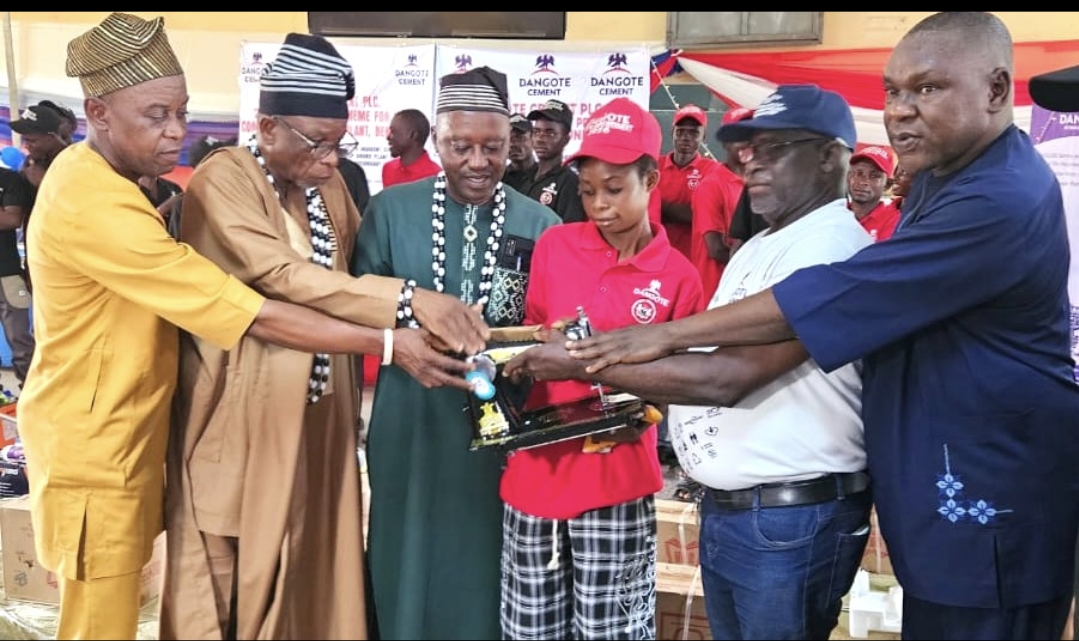
Dangote Cement Plc, Gboko Plant has awarded multi-million-naira scholarships to tertiary and secondary school students from its six host communities in Benue State.
The company also presented starter packs, working tools and certificates to graduates of its Youth Empowerment Programme to enable them to establish their own businesses, apply the skills acquired during the training and become financially reliant.
The Minister of Solid Minerals Development, Dr. Henry Dele Alake, lauded Dangote Cement Plc for its community development interventions, calling on other private sector players to adopt similar initiatives to promote socio-economic development in their host communities.
Dr. Alake, who was represented by the Federal Mines Officer of the Federal Ministry of Solid Minerals Development in Benue State, Engr. Achi Gregory, urged the company to sustain its commitment to implementing community development programmes agreed upon with its host communities.
Speaking at the official presentation ceremony, Group Head, Social Performance, Dangote Cement Plc, Mr. Wakeel Olayiwola, said the implementation of the Community Development Agreement underscores Dangote Cement’s commitment to equipping young people with practical skills and resources to promote entrepreneurship, create employment opportunities and improve livelihoods in its host communities.
Mr. Olayiwola, who was represented by the Head of Social Performance of the Dangote Cement, Gboko Plant, Dr. Johnson Kor, said the scholarship and youth empowerment programmes came against the backdrop of several other programmes recently executed by the company, which include farmers and women empowerment programmes.
The Acting Plant Director, Dangote Cement, Gboko, Engr. Arbind Singh, said: “This annual scholarship scheme for indigent students of the host communities is an indication of our company’s commitment to its Corporate Social Responsibilities (CSR).”
Engr Singh, who was represented by the company’s General Manager, Production, Engr Tabershima Soom, said: “The Gboko Plant has already launched 150 Women Empowerment Programme and 50 Farmerss Empowerment Programme where women were provided with cash to support their businesses, and farmers were supported with farm inputs.”
The beneficiary communities for these programs are: Tse-Kucha, Quarry, Amua, Mbazembe, Mbatur, and Pass Brothers.
Speaking on behalf of the Benue State Attorney-General, the Chairman of the Mineral Resources and Environmental Management Committee (MIREMCO), Barr. Dooshima Orosaga, commended Dangote Cement Plc for its compliance with the Community Development Agreement (CDA), urging the beneficiaries and host communities to maximise the benefits of the company’s interventions.
Chairman of the Gboko Local Government, Hon Yina Elias said the government will continue to provide the support needed for the company to succeed, adding that the Dangote Cement Plc is an exemplary company in Corporate Social Responsibilities programmes.
In his remarks, the District Head of Ukpekpe, Chief Tsegba Igbarumun, commended Dangote Cement Plc’s Gboko Plant for its contributions to the community, assuring the company of the community’s continued support.
He said the community valued its mutually beneficial relationship with the company and would continue to serve as its ambassadors.
A beneficiary of the Youth Empowerment Programme, Mr Ignatius Aondohemba, expressed appreciation to Dangote Cement Plc for the support, pledging to put the skills and resources provided to good use and build a business that would enable him to become an employer of labour.

State Police: 24 State Assemblies Approve Constitutional Amendment–Presidency

ECOWAS Court Faults Process Backed by Council of Ministers in Darma Removal Case

Dangote Cement Gboko Commits Millions in Scholarship Scheme

Mass Exodus Looms in Kano APC as More Chieftains Consider Exit — Mansur Ahmed

Kano Donates Equipment to NDLEA

PCACC Arrests Man Over Alleged ₦4.5m Sale, Illegal Leasing of Kano Government Horse Stable

Kano Monitors ₦48.9bn Projects Across Six LGAs

Goje’s Electoral War:The Confrontation With Tinubu,Governor Inuwa,Usman Kumo And APC candidates Ahead Of 2027

Kano Spends ₦10.36bn on Hospitality, Sitting Allowances, Others in Six Months

Prof Yusuf Adamu Delivers BUK’s 63rd Professorial Inaugural Lecture, Reflects on Medical Geography and Academic Legacy
State Police: 24 State Assemblies Approve Constitutional Amendment–Presidency
ECOWAS Court Faults Process Backed by Council of Ministers in Darma Removal Case
Dangote Cement Gboko Commits Millions in Scholarship Scheme
Mass Exodus Looms in Kano APC as More Chieftains Consider Exit — Mansur Ahmed
Kano Donates Equipment to NDLEA
PCACC Arrests Man Over Alleged ₦4.5m Sale, Illegal Leasing of Kano Government Horse Stable
Kano Monitors ₦48.9bn Projects Across Six LGAs
Goje’s Electoral War:The Confrontation With Tinubu,Governor Inuwa,Usman Kumo And APC candidates Ahead Of 2027
Kano Spends ₦10.36bn on Hospitality, Sitting Allowances, Others in Six Months
Prof Yusuf Adamu Delivers BUK’s 63rd Professorial Inaugural Lecture, Reflects on Medical Geography and Academic Legacy
-

 Opinion5 years ago
On The Kano Flyovers And Public Perception
-

 Features5 years ago
How I Became A Multimillionaire In Nigeria – Hadiza Gabon
-

 Opinion6 years ago
Kano As future Headquarters Of Poverty In Nigeria
-

 History6 years ago
Sheikh Adam Abdullahi Al-Ilory (1917-1992):Nigeria’s Islamic Scholar Who Wrote Over 100 Books And Journals
-

 Opinion5 years ago
My First Encounter with Nasiru Gawuna, the Humble Deputy Governor
-

 History5 years ago
The History Of Borno State Governor Professor Babagana Umara Zulum
-

 History6 years ago
The Origin Of “Mammy Market” In Army Barracks (Mammy Ochefu)
-

 News5 years ago
Federal University Of Technology Babura To Commence Academic Activities September