
News
Friday Sermon] Prophet Muhammad (Peace Be Upon Him) Have Been Sent As A Mercy To The World!
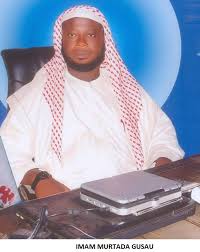
Friday Sermon] Prophet Muhammad (Peace Be Upon Him) Have Been Sent As A Mercy To The World!
By Imam Murtadha Gusau
In the name of Allah, the Most Gracious, the Most Merciful
All praise is due to Allah, the Lord of all creation. May the salutations of Allah, His peace and blessings be upon our beloved Prophet, his family, his companions and his true and sincere followers until the Last Day – then to proceed:
Dear servants of Allah! I advise you and myself to have Taqwa (consciousness of Allah), for there is no salvation on the Day of Resurrection except through it. Allah the Most High says:
“And Allah will deliver those who are conscious of Him to their places of success (Paradise). Evil shall touch them not, nor shall they grieve.” [Qur’an, 39:61]
He Almighty also says:
“He has decreed upon Himself mercy. He will surely assemble you for the Day of Resurrection, about which there is no doubt.” [Qur’an, 6:12]
Dear brothers and sisters! Allah’s Mercy to His servants is great and His favour upon them is immense. And His Mercy is complete and does not have any deficiencies. And it is not driven by inability or weakness. It is the Mercy of the Most Merciful the Most Beneficent that encompasses everything with mercy and knowledge.
PMB And The Side Effects Of Selecting A Successor
And the greatest mercy on this Ummah (nation) from the Lord is that he designated for them the Prophet of mercy. Through His Mercy, He honoured this final Ummah (nation) with the best of His creation and sent to them the seal of the Messengers. The Prophet (Peace be upon him) was the most merciful of the Prophets to his Ummah (nation). He (Peace be upon him) was the most compassionate, vigilant, pardoning and forgiving of the Prophets to his Ummah (nation).
And through the Prophet (Peace be upon him), Allah took people out of the darkness into the light. And He the Exalted sent down all kinds of mercies through him. Such that the people of the earth are compassionate through it until the Day of Resurrection. Allah Almighty said:
“And We have not sent you, [O Muhammad], except as a mercy to the worlds.” [Qur’an, 21:107]
His message revealed from His Lord the Exalted showered all kinds of mercies upon the creation. The people and the jinn. The believer and the disbeliever. The righteous and the wicked. The young and the old. The strong and the weak. The near and the far. Men and women. The birds and animals. Animals and inanimate objects.
And he (Peace be upon him) came with a Shari’ah (legislation) all of which is good and mercy for the people. And there is no one on earth from the time that he was sent to our present day until the Day of Resurrection except that will be touched by this mercy that Allah the Most High made reach all the worlds. Therefore, it was narrated in an authentic Hadith that the Prophet (Peace be upon him) said:
“Oh people, indeed I am a gifted mercy.” [as-Sahihah of Imam al-Albani]
And those with preference and the greatest share of this mercy are those who believe in him, honour him, support him, and follow the light (the Qur’an) which has been sent down with him. It is they who will be successful. Their success will be in this world and the next. And just as it is indicated in the Qur’an that the Messenger of Allah (Peace be upon him) is a mercy to the worlds it is also mentioned in the Qur’an that he (Peace be upon him) is a mercy to the believers in verse 61 of surah At-Tawbah. Allah Almighty says:
“(He) believes in Allah and believes the believers and [is] a mercy to those who believe among you.” [Qur’an, 9:61]
And from his mercy for those who believe in him and embraced his religion is that he supplicated for them much. Especially if one considers the state of other Prophets with their Ummahs (nations). His mercy for his Ummah (nation) overtook him and he supplicated for them. As related by Abdullah Bin Amr Bin Aas (may Allah be pleased with them):
The Prophet (Peace be upon him) recited the Words of Allah, the Exalted, and the Glorious, about Prophet Ibrahim who said:
“O my Lord! They have led astray many among mankind. But whosoever follows me, he verily, is of me.” (Qur’an, 14:36) and those of Prophet Isa (Jesus) who said: “If You punish them, indeed they are Your servants, and if You forgive them, verily, You, only You, are the All-Mighty, the All-Wise.” (Qur’an, 5:118). Then he (Peace be upon him) raised up his hands and said, “O Allah! My Ummah (nation), my Ummah (nation),” and he wept; Allah, the Exalted, said: “O Jibril (Gabriel)! Go to Muhammad (Peace be upon him) – and your Lord is most knowledgeable- and ask him: ‘What makes you weep?” So Jibril came to him and asked him (the reason of his weeping) and the Messenger of Allah (Peace be upon him) informed him what he had said (though Allah is most knowledgeable). Upon this Allah said: “Jibril, go to Muhammad (Peace be upon him) and say: ‘Verily, We will please you with regards to your Ummah (nation) and will never displease you.” [Muslim]
The mercy of the Prophet Muhammad (Peace be upon him) for his Ummah (nation) was to an extent that he preferred them over himself in the answered supplication that Allah gave him as He the Exalted gave other Prophets before him. He did not limit this supplication to himself and he included his Ummah (nation). As Anas (may Allah be pleased with him) related that the Prophet (Peace be upon him) said:
“Every Prophet had a supplication that was granted by Allah. I dedicated my granted supplication to having intercession for my Ummah (nation) on the Day of resurrection.” [Bukhari and Muslim]
Abu Hurairah (may Allah be pleased with him) reported that the Messenger of Allah (Peace be upon him) said:
“Every Prophet had a supplication that was granted, and every Prophet advanced their supplication (in this world). But I reserved my supplication as intercession for my Ummah (nation) on the Day of Resurrection, and it will reach, if Allah wills, those of them who die, not associating anything with Allah.” [Muslim]
May the peace and blessings of Allah be upon him, how great his mercy was for us and how cautious he was over us. Can the believers in him be blamed for loving, honouring and supporting him when he preferred them over himself and designated them for his supplication in a situation of all situations!? By Allah, no one can blame them for that aside for a disbeliever or a hypocrite who is hiding his disbelief or an ignorant person that does not know the virtue of the Messenger (Peace be upon him). Allah Almighty said:
“There has certainly come to you a Messenger from among yourselves. Grievous to him is what you suffer; [he is] concerned over you [i.e., your guidance] and to the believers is kind and merciful.” [Qur’an, 9:128]
From the mercy of the Prophet (Peace be upon him) to his Ummah is that he selected for them a complete and easy to follow Shari’ah (legislation). And the most precise and attainable decrees. And Aisha (may Allah be pleased with her) described him and she is the closest of people to him:
“The Messenger of Allah (Peace be upon him) was never given a choice between two matters but that he chose the easier of the two as long as it did not involve sin. If it was sinful, he was the furthest person from it.” [Bukhari and Muslim]
He (Peace be upon him) used to leave a deed that he wanted to do and was able to handle as a mercy for his Ummah (nation) fearing that it would be obligated and the majority of them would not be able to handle it. And whoever views his Sunnah can see that. And how many times did he (Peace be upon him) say: If it was not a hardship for my Ummah (nation) I would have commanded them with such and such or if it were not a hardship for the people I would have commanded them with this. Aisha (may Allah be pleased with her) said:
“The Messenger of Allah (Peace be upon him) would give up a deed that he liked to perform, fearing that the people would follow suit and it would be obligated upon them.” [Bukhari and Muslim]
Dear brothers and sisters! Prophet Mohammad (Peace be upon him) was afflicted for the sake of Allah Almighty, like no one else has been afflicted. He (Peace be upon him) said:
“Indeed I have feared for the sake of Allah, such that no one has feared, and I have been harmed for the sake of Allah, such that no one has been harmed.” [Tirmidhi]
Be conscious of Allah Almighty and obey Him. And know that affliction in religion and worldly matters is the path of the Messengers of Allah (Peace be upon them). And that steadfastness through affliction is the way of the successful servants of Allah. Allah Almighty said:
“Did you think that you would enter Paradise even though Allah has not yet seen who among you strove hard in His way and remained steadfast?” [Qur’an, 3:142]
There were periods when the Prophet (Peace be upon him) was deeply grieved due to his people denying him, and his companions (may Allah be pleased with them) being tormented and killed. And for his loss of supporters among mankind. And due to the hardship and harshness of life. And many instances of his grief were recorded in his fragrant biography after the start of his mission.
And the first grief that befell him (Peace be upon him) after start of his mission and the most intense and the greatest was due to the pause in receiving revelation after he received it for the first time. Waraqah Bin Nawfal (may Allah be pleased with him) said:
“No man has come with what you brought without being harmed. And if your day comes while I am alive, I would support you strongly. But after a few days Waraqah died and the Divine Inspiration was also paused for a while and the Prophet (Peace be upon him) became sad.” [Bukhari]
And every believer who has a day in which he does not recite anything from the Qur’an must grieve. Because the Prophet (Peace be upon him) grieved at the pause in the revelation in spite of it being out of his control. So what about the one who is able to recite the revelation at every moment to nourish his heart, guide his soul and rectify his condition, but falls short in that regard and does not grieve over his shortcomings?!
And when the Prophet (Peace be upon him) invited his people to Iman (faith) they denied him. So he grieved deeply over them due to his knowledge of the fate of those who denied. And because he wanted for them Iman (faith) and a conclusion of success and great triumph. Allah Almighty addressed him to lighten his grief:
“We know that you, [O Mohammad], are saddened by what they say. And indeed, they do not call you untruthful, but it is the verses of Allah that the wrongdoers reject.” [Al-An’am 33]
Rather, his grief over his people’s denial of him nearly destroyed him, until Allah Almighty prohibited him from devastating himself















News
Study Links Paracetamol Use in Pregnancy to Signs of Reduced Fertility in Baby Girls

By Yusuf Danjuma Yunusa
Paracetamol use during pregnancy can affect future fertility of baby girls, a new study has said.
Published on Oxford Academic, the COPANA study was led by Dr Margit Bistrup Fischer, a postdoctoral researcher at Rigshospitalet (Copenhagen University Hospital) in Denmark.
The study “found that girls who had been exposed to paracetamol during fetal life had smaller ovaries, fewer ovarian follicles (the structures that contain immature eggs), differences in reproductive hormone levels, and reduced uterine size during infancy.”
It added, “similar findings were observed in an independent group of participants followed to adolescence.”
According to the report, 302 healthy girls from a Danish pregnancy cohort were examined during infancy.
It added, “Paracetamol exposure during pregnancy was assessed using both pregnant women’s reports of paracetamol use collected bi-weekly and measurements of paracetamol in their urine samples.”
However, the study calls for more research as it cannot prove that “paracetamol directly caused these differences, the findings are consistent with results from animal studies.”
“Further research is needed to determine whether these early-life differences have consequences for reproductive health later in life and to inform recommendations on paracetamol use during pregnancy.”
The COPANA study is said to be the first human study specifically designed to probe whether prenatal paracetamol exposure is associated with markers of ovarian development in daughters.
News
Kano Distributes Football Kits to 60 Grassroots Clubs in 12 LGAs

The Kano State Government is set to distribute football kits to 60 grassroots football clubs across 12 Local Government Areas of the state as part of efforts to encourage youth participation in sports and develop football talent at the grassroots.
Special Adviser to Governor Abba Kabir Yusuf on Sports, Sani Musa Danja, disclosed this while unveiling the pre-distribution ceremony to sports correspondents in Kano.
Danja said the initiative was designed specifically to support grassroots football clubs and encourage young people to participate actively in sports, stressing that the distribution was only the beginning of the government’s intervention in grassroots sports development.
According to him, Governor Abba Kabir Yusuf is committed to empowering young people through sports and other programmes aimed at creating opportunities for them to develop their talents.
“This is just the beginning. We are going to give it to grassroots only. Governor Yusuf is committed to empowerment,” Danja said.
He explained that the football kits would be distributed to five clubs in each of the 12 selected Local Government Areas, bringing the total number of beneficiary clubs to 60.
The Special Adviser listed the benefiting Local Government Areas as Kano Municipal, Fagge, Dala, Gwale, Tarauni, Nasarawa, Ungogo, Kumbotso, Gezawa, Wudil, Bichi and Dawakin Kudu.
Danja said the initiative was also intended to demonstrate the government’s concern for the development and welfare of young people, particularly those involved in grassroots football.
He noted that many community-based football clubs had previously depended on individuals and influential personalities for basic equipment, including footballs and playing kits, but said the government had now decided to provide direct support to such clubs.
“Some local clubs used to write to influential individuals just to have a football, but now the government of Engineer Abba Kabir Yusuf has done it,” Danja said.
He added that the government was not limiting its intervention to the provision of football kits, as it also planned to improve the capacity of coaches through specialised training programmes.
Danja disclosed that coaches from Europe would be invited to Kano to train local coaches as part of efforts to improve the standard of grassroots football and ensure that young players receive proper technical guidance.
“We decided to make coaches trained. Coaches will come from Europe to train our coaches in Kano,” he said.
According to him, developing qualified coaches is essential to the long-term growth of football because talented players need competent professionals who can identify, nurture and develop their abilities from an early age.
Danja described football as a valuable global asset, saying the enormous financial value attached to the sport had made investment in grassroots development increasingly important.
“Football is now a treasure, that is why we are developing it,” he said, adding that the huge transfer fees being paid for top players demonstrated the economic potential of football.
He said the Kano State Government was determined to restore the prominence of football in Northern Nigeria, with particular attention to Kano, which he described as a state with a strong football culture and a large pool of young talents.
“We are back in the North on football and Kano in particular, so we have to speed up,” Danja said.
He explained that the initiative would also serve as a form of encouragement and recognition for young people who were actively involved in football at the community level.
Danja said the government hoped that providing equipment and other forms of support would raise youths’ consciousness about sports and make them appreciate the government’s efforts towards their development.
He stressed that the intervention was aimed at promoting and encouraging young people rather than serving any political purpose, noting that football has a powerful influence on communities and young people across the world.
“Football is very powerful in the world,” Danja said, adding that the government intended to use sports as a platform for youth development and empowerment.
He further disclosed that the government would introduce encouragement awards and other forms of recognition for grassroots clubs and individuals contributing to sports development in the state.
Danja said the distribution programme would take place at the Coronation Hall in Kano, where the beneficiary clubs would receive the football equipment.
He assured sports journalists and other members of the media that the government would continue to carry them along in its sports development programmes, saying the media had an important role to play in promoting grassroots sports and highlighting the achievements of young athletes.
“We will not relent, and we will carry you along, the media,” Danja said.
He reiterated that the state government would continue to explore ways of strengthening grassroots football, developing coaches and creating opportunities for young players to progress from community football to higher levels of the sport.
Danja said the ultimate objective was to promote and encourage youth participation in sports while creating a sustainable pathway through which talented footballers from Kano could be identified, developed and potentially compete at national and international levels.
News
Hon. Lanre Oladebo Felicitates Hon. Abdulmumin Jibrin Kofa on His 50th Birthday

The Member of the House of Representatives representing Ayedaade/Irewole/Isokan Federal Constituency, Hon. Lanre Omoleye Oladebo, has congratulated the Chairman of the House Committee on Housing and Habitat, Hon. Abdulmumin Jibrin Kofa, on the occasion of his 50th birthday.
In a congratulatory message, Hon. Oladebo described Hon. Abdulmumin Jibrin Kofa as a distinguished parliamentarian, accomplished public servant and valued colleague whose dedication to legislative duties and commitment to national development remain worthy of commendation.
He noted that attaining the age of 50 is a remarkable milestone, providing an opportunity to reflect on a life defined by service, achievements, leadership and meaningful contributions to society.
Hon. Oladebo also expressed his personal appreciation for the celebrant’s friendship, collegiality and commitment to the business of legislation, noting that his wealth of experience, intellectual capacity and dedication continue to add significant value to the National Assembly.
The statement reads:
It is with great pleasure that I join your family, friends, colleagues and well-wishers in celebrating you as you attain this remarkable milestone of 50 years.
Your journey has been marked by dedication, resilience, intellectual capacity and an unwavering commitment to public service. Beyond being a distinguished parliamentarian, you have been a dependable colleague and a leader whose friendship I deeply value.
As you celebrate your Golden Jubilee, I pray that Almighty God grants you renewed strength, sound health, greater wisdom and abundant grace to continue your service to humanity and our dear nation.
May this new chapter of your life bring you greater accomplishments, fulfilment and lasting impact. May the years ahead be even more rewarding than those behind you.
“Happy 50th birthday, my dear Chairman and distinguished colleague. I wish you many more years of good health, happiness, peace and impactful service.”
Signed:
The Media Team
Office of Hon. Lanre Omoleye Oladebo

Study Links Paracetamol Use in Pregnancy to Signs of Reduced Fertility in Baby Girls

Kano Distributes Football Kits to 60 Grassroots Clubs in 12 LGAs

Hon. Lanre Oladebo Felicitates Hon. Abdulmumin Jibrin Kofa on His 50th Birthday

Per Ishaq Samaila: “Waziri” for Strategy. “Mai Jama’a” for Service. One Man. One Mission. Ibrahim Kabir Masari

Akpabio Petitions DSS, Demands Probe Into ‘Anti-north Statement’ Attributed to Him on Social Media

From World’s 9th Most Populous City to Perfect: As Gov Yusuf Revisits Kano Master Plan

95% of Governor Abba Kabir Yusuf’s Promises Have Been Fulfilled — CPS Interview By Musa Diso, In Kano

Kano Islamic Scholar Declares Kano Widow Marriage Programme ‘Haram’, Urges Government to Stop It

Bello Sharada: A Great Writer, A Bookish Soul, Gone Too Soon

Between Sabotage and Scepticism: Why Nigeria’s Oil Dream Keeps Stalling
Study Links Paracetamol Use in Pregnancy to Signs of Reduced Fertility in Baby Girls
Kano Distributes Football Kits to 60 Grassroots Clubs in 12 LGAs
Hon. Lanre Oladebo Felicitates Hon. Abdulmumin Jibrin Kofa on His 50th Birthday
Per Ishaq Samaila: “Waziri” for Strategy. “Mai Jama’a” for Service. One Man. One Mission. Ibrahim Kabir Masari
Akpabio Petitions DSS, Demands Probe Into ‘Anti-north Statement’ Attributed to Him on Social Media
From World’s 9th Most Populous City to Perfect: As Gov Yusuf Revisits Kano Master Plan
95% of Governor Abba Kabir Yusuf’s Promises Have Been Fulfilled — CPS Interview By Musa Diso, In Kano
Kano Islamic Scholar Declares Kano Widow Marriage Programme ‘Haram’, Urges Government to Stop It
Bello Sharada: A Great Writer, A Bookish Soul, Gone Too Soon
Between Sabotage and Scepticism: Why Nigeria’s Oil Dream Keeps Stalling
-

 Opinion5 years ago
On The Kano Flyovers And Public Perception
-

 Features5 years ago
How I Became A Multimillionaire In Nigeria – Hadiza Gabon
-

 Opinion6 years ago
Kano As future Headquarters Of Poverty In Nigeria
-

 History5 years ago
Sheikh Adam Abdullahi Al-Ilory (1917-1992):Nigeria’s Islamic Scholar Who Wrote Over 100 Books And Journals
-

 Opinion5 years ago
My First Encounter with Nasiru Gawuna, the Humble Deputy Governor
-

 History5 years ago
The History Of Borno State Governor Professor Babagana Umara Zulum
-

 History5 years ago
The Origin Of “Mammy Market” In Army Barracks (Mammy Ochefu)
-

 News4 years ago
Federal University Of Technology Babura To Commence Academic Activities September