
News
(Friday sermon] International Women’s Day?

By Imam Murtadha Gusau
In the name of Allah, the Most Merciful, the Bestower of Mercy
All praise is for Allah, we praise Him, we seek His help, we ask for His forgiveness, and we seek refuge with Allah from the evils of our own souls and the wickedness of our actions, whoever Allah guides, there is none that can lead him astray, and whoever Allah allows to go astray, there is none that can lead him to the right path.
I testify and bare witness that there is no deity worthy of worship in truth but Allah, alone, without any partners. And I testify and bare witness that Muhammad (Peace be upon him) is His Servant and Messenger. As for what’s after:
Dear brothers and sisters! The international day of women is a celebration which was invented to commemorate the movement of women’s rights. It was first celebrated on the 8th March 1910. Before that the European women where humiliated and disrespected when Islam came to uplift them and give them a high status more than 1400 years ago. Unfortunately, some of our dear sisters who perhaps do not know the importance Islam gave them are seduced by this celebration and take part in this. So what does Islam say about this festival?
Respected servants of Allah! To answer this question, I will use some speech and verdict of our late Shaykh Muhammad Ibn Salih Ibn Uthaimin (may Allah have mercy on him) about celebrating Mother’s Day. He says:
“All celebrations which differ from the Eids prescribed in Islam are innovated festivals which were not known at the time of the righteous predecessors (the Salaf). They may also have come from the non-Muslims, in which case as well as being an innovation (bid’ah) they are also an imitation of the nonbelievers. The festivals which are prescribed in Islam are well known to the Muslims: they are Eid al-Fitr and Eid al-Adha, and the weekly “Eid” of Jumu’ah. There is no other festival in Islam apart from these three. All the festivals that have been invented apart from these are to be rejected because they are innovations and are false according to the laws of Allah, because the Prophet (Peace be upon him) said:
“Whoever introduces anything into this matter of ours that is not part of it will have it rejected.”
Meaning: It will be thrown back at him and will not be accepted by Allah Almighty.
According to another version:
“Whoever does any deed that is not part of this matter of ours will have it rejected.”
Once this is clear, then it is not permissible to show any of the signs of festivity on the celebration mentioned, namely International Women’s Day and Mother’s Day. It is not permissible to show joy and happiness, or to offer gifts, and so on.
The Muslim should feel proud of his religion and adhere to the limits set by Allah and His Messenger (Peace be upon him) in this religion, which Allah has chosen for His servants, and he should not add anything or take anything away. What the Muslim should also do is not to follow every new idea that comes along, rather his character should be in accordance with the Shari’ah of Allah so that he will be a leader and example, not a follower, because the Shari’ah of Allah – praise be to Allah – is complete in all ways as Allah Almighty says:
“This day, I have perfected your religion for you, completed My Favour upon you, and have chosen for you Islam as your religion.”
A women’s or mother’s right wallahi is greater than having just one day in the year to be honoured, rather the mother’s right over her children is that they should take care of her and obey her, so long as it does not involve disobedience towards Allah, at all times and in all places.” [Majmu’ Fatawa of Shaykh Ibn Uthaimin, vol. 2, page 301]
The Prophet (Peace be upon him) said:
“The worst of matters are those which are newly-invented (in religion), and every innovation is a going-astray.” [Narrated by Muslim and al-Nasa’i]
Al-Nasa’i’s report adds the words:
“And every going astray will be in the Fire.”
Moreover, this innovation has come to us from societies in which bad and evil manners are shown to women. So they think that honouring their women folk for one day will erase their evil treatment towards her during the rest of the year. But we Muslims have been commanded to honour our mothers, sisters, wives and daughters. Honouring one’s mother or wife does not come to an end even when she dies, for she is honoured in life and in death. That is done by offering the funeral prayer for her, praying for forgiveness for her and honouring her family and friends. Let us adhere to this great religion and follow its etiquettes and rulings, for in it is sufficient guidance and mercy. Abdullah Ibn Umar said:
“The Prophet (Peace be upon him) said: “Whoever imitates a people is one of them.” [Reported by Abu Dawud]
Shaykhul Islam Ibn Taimiyyah (may Allah have mercy on him) said:
“This at the very least indicates that it is haram (prohibited) to imitate them, although the apparent meaning is that the one who imitates them is a kafir (nonbeliever).” [Iqtida Siratal-Mustaqim]
We are therefore forbidden to imitate the non Muslims and we must differ from them in every and any way possible. We do not take anything from their ways especially in Aqidah (belief), Ibadah (acts of worship) and Eid (celebrations).
This is about the actual Islamic ruling about this. Even the reality of the matter tell us there are no benefits in taking part in this, especially in the African context where we see women falling into sins towards their husbands. Just for one day, some of our sisters and mothers would force their husbands to clean the house, go to the market and cook, claiming they have been doing that throughout the year. We ask them, are you also willing to do your husband’s job for one day? They will make problems and disrespect their husbands because they want the uniform of the festival, some of them go to extreme until we heard of women applying glue to their private parts so that their husband won’t have intimate relations with them. And Allah’s help is sought.
It may also be that the man himself doesn’t know and recognise the rights that his women folk has on him and maybe this is the reason his female relative make it a big deal to celebrate this. Allah the Most High said:
“And they (women) have rights (over their husbands as regards living expenses) similar (to those of their husbands) over them (as regards obedience and respect) to what is reasonable, but men have a degree (of responsibility) over them. And Allah is All-Mighty, All-Wise.”
The Messenger of Allah (Peace be upon him) said:
“The best of you are those who are the best to their wives, and I am the best of you to my wives.” [Reported by at-Tirmidhi and Ibn Majah]
In another Hadith He said:
“You never spend anything but you will be rewarded for it, even the morsel of food that you lift to your wife’s mouth.” [Reported by al-Bukhari and Muslim]
Aisha, the wife of the Prophet Muhammad, was asked:
“What did the Prophet use to do in his house?” She replied, “He used to keep himself busy serving his family and when it was the time for prayer he would go for it.” [Reported by Al Bukhari]
Respected brothers and sisters! Islamic Shari’ah honours women and raises them to a lofty status, with the aim of protecting them and preserving their dignity. Thus, a woman’s guardian or husband is obligated to provide for her, support her, answer to her needs and live honourably with her. Allah Almighty states:
“…and live with them honourably.”
It has been also confirmed that the Prophet (Peace be upon him) stated that:
“The best of you is the best to his family and I am the best to my family.”
Moreover, Islam grants a woman all the appropriate rights and legal responsibilities. Allah the Most High states:
“And they (women) have rights (over their husbands as regards living expenses) similar (to those of their husbands) over them (as regards obedience and respect) according to what is reasonable, but men have a degree (of responsibility) over them. And Allah is All-Mighty, All-Wise.”
In addition, a woman is obligated to carry out the same acts of Ibadah (worship) and commands that men are, such as Taharah (ceremonial purification), Salah (Prayer), Zakah (obligatory charity), Sawm (Fasting), Hajj and many other forms of worship.
However, Shari’ah grants a woman half the share of man’s inheritance since she is not obligated to provide for herself, her household or her children, contrary to the man. Add to this that a man’s wealth is liable to reduction by means of entertaining guests, paying blood money, paying compensation and the like. In some cases, the testimonies of two women equal the testimony of one man, since women are more prone to forget than men due to their special nature.
They have the menses, they become pregnant, they give birth and raise children. All of these things can affect a woman’s ability to remember accurately. That is why, evidence from Shari’ah makes it necessary for two woman to bear witness together to be sure. On the other hand, there are some issues that are solely related to women when it is enough for one woman to testify, such as cases of suckling, marital problems and the like.
Furthermore, women and men are rewarded equally for their belief (Iman) and righteous deeds, in enjoying the life of this world, and in being recompensed greatly in the Hereafter. Allah Almighty states:
“Whoever works righteousness – whether male or female – while he (or she) is a true believer (of Islamic Monotheism) verily, to him We will give a good life (in this world with respect, contentment and lawful provision), and We shall pay them certainly a reward in proportion to the best of what they used to do (i.e. Paradise in the Hereafter).”
This proves that women have rights and duties just as men have rights and duties. Some matters suit men better and that is why Allah charges men with them, while other matters suit women better and that is why Allah charges women with them.
May Allah grant us success. May peace and blessings be upon our Prophet Muhammad, his family, and Companions.
In conclusion, although many other things can be mentioned, I advice our sisters to learn about the rights their Lord, Allah Almighty and their Prophet have given them and to let then non Muslims women waste their time and energy for something they would have if they came to Islam.
My dear sister, may Allah bless you and grant you success, wallahi Allah has elevated you and you do not need one day out of the year to feel important, you are a gem and your value is unestimated.
As for you my brother, then educate yourself about the rights your women folk have on you and help them to fight and remove these chains the non Muslims are trying to put on them, do this through giving them their due rights, by showing them you love and care for them, by showing them they are important and valued every day of the year.
May Allah Almighty rectify the Muslims and make them proud and pleased with what Allah and his Messenger legislated for them is all aspects of live.
Allah surely knows best and he is the Lords of the universe and May his peace and blessing be on his Messenger, his family, his companions and those who follow them.
I ask Allah, the Most High to grant us success and enable us to be correct in what we say and write, ameen.
Murtadha Muhammad Gusau is the Chief Imam of Nagazi-Uvete Jumu’ah and the late Alhaji Abdur-Rahman Okene’s Mosques, Okene, Kogi State, Nigeria. He can be reached via: gusauimam@gmail.com or +2348038289761.
This Jumu’ah Khutbah (Friday sermon) was prepared for delivery today, Friday, Sha’aban 8, 1443 A.H. (March 11, 2022).

















News
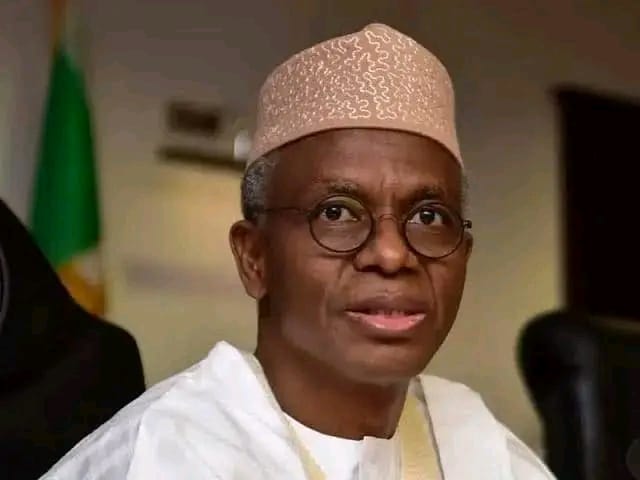
BREAKING: El-Rufai Released Following Mother’s Death, Son Alleges Unlawful Detention
By Yusuf Danjuma Yunusa
Nasir El-Rufai, the former governor of Kaduna State, has returned home after what his family describes as a period of detention, just in time for the funeral of his late mother.
His son, Bashir El-Rufai, confirmed the development in a post on X (formerly Twitter), stating that his father had been released. Bashir characterized the detention as “unlawful and illegal,” and directed sharp criticism at the agency involved, referring to it as “one of the most corrupt agencies in the Federal Republic of Nigeria that is a lame excuse of a pathetic institution.”
The former governor had reportedly presented himself to the Economic and Financial Crimes Commission (EFCC) on February 16 for questioning. According to Bashir’s account, El-Rufai was held by the commission until his release prior to the funeral.
News
Breaking:Kano Deputy Governor Resigns
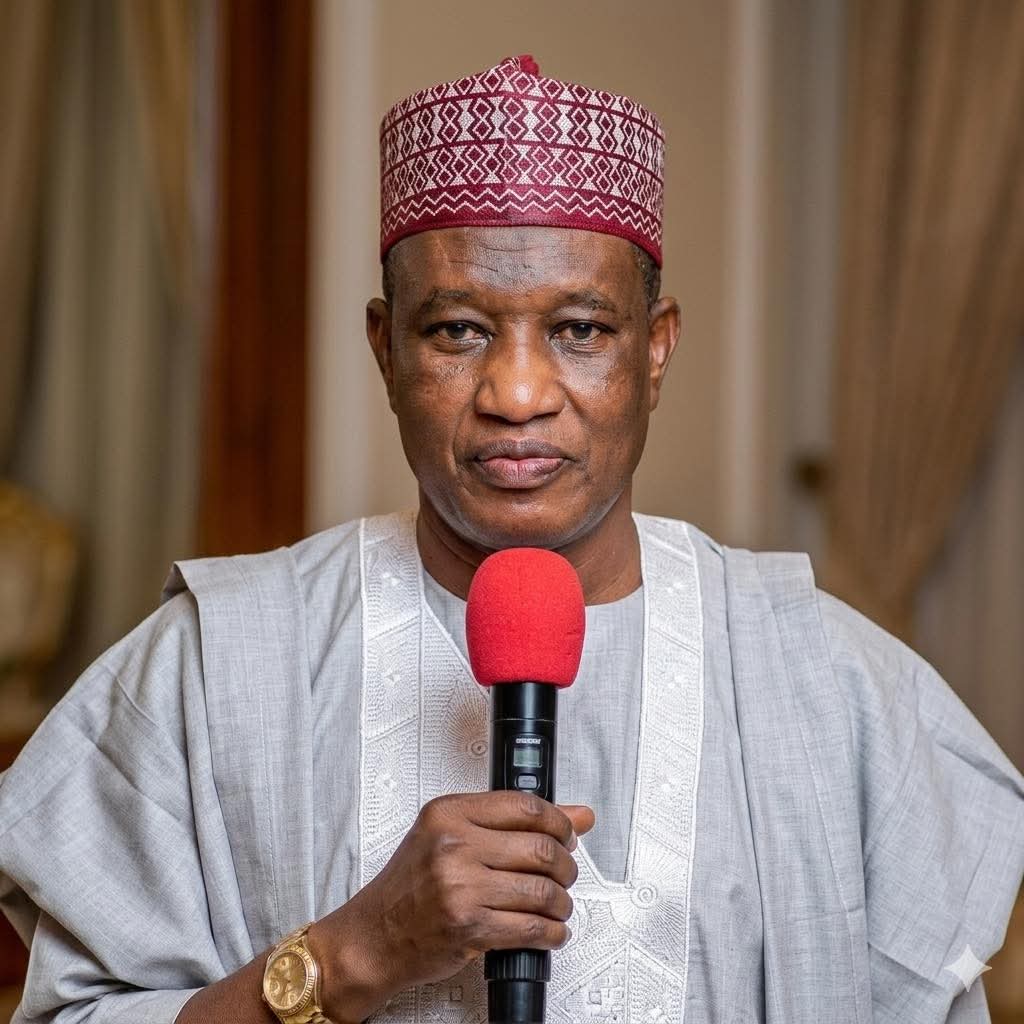
The Kwankwasiyya Movement has announced the resignation of the Deputy Governor of Kano State Comrade Aminu Abdulsalam Gwarzo, stating that the decision was formally communicated to the public in a press release issued on Friday and signed by its spokesperson, Dr. Habibu Sale Mohammed.
According to the statement, the resignation was taken “in the overall interest of the people and the stability of governance” in the state, with the movement noting that recent developments had significantly limited the Deputy Governor’s ability to fully discharge the responsibilities of the office.
The movement also addressed the ongoing issues involving the Kano State House of Assembly, emphasizing that the Deputy Governor’s decision to step down should not be interpreted as an admission of any allegations raised against him, and insisting that he continues to maintain his innocence.
Describing the move as one of “statesmanship,” the statement said the resignation was intended to reduce political tension and prevent further disruptions to governance and development efforts in Kano State, while demonstrating a commitment to peace and political maturity.
The Kwankwasiyya Movement further disclosed that the former Deputy Governor plans to redirect his focus toward strengthening the movement’s internal structures and strategies, particularly as political actors begin positioning ahead of Nigeria’s 2027 general elections.
The statement added that this renewed engagement would involve rebuilding party frameworks and pursuing strategic realignments aimed at promoting what it described as people-oriented leadership, social justice, and sustainable development.
The movement called on its supporters and residents of Kano State to remain calm, law-abiding, and committed to democratic principles, assuring the public that additional details regarding the resignation would be communicated in due course, according to the spokesperson.
Comrade Aminu Abdulsalam Gwarzo the Deputy Governor has been enmeshed in a political battle with his boss Governor Abba Kabir Yusuf since the Governor defected to the All Progressives Congress without the blessing of the NNPP National leader Senator Rabiu Musa Kwankwaso.
Recently the Kano state House of Assembly has issued Impeachment notice on Comrade Aminu Abdulsalam Gwarzo over allegation of corruption.
News
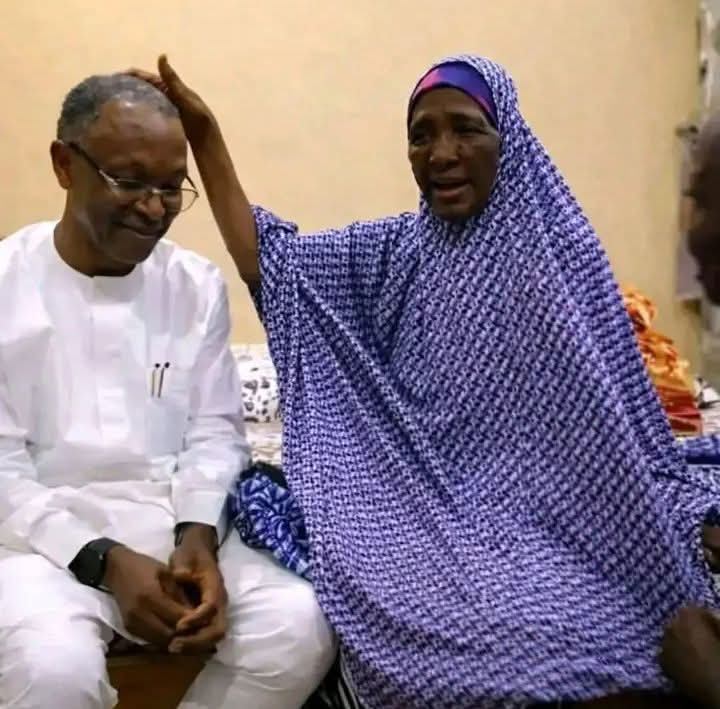
Hajiya Umma El-Rufai, Mother of Former Kaduna Governor, Passes Away
By Yusuf Danjuma Yunusa
Hajiya Umma El-Rufai, the mother of former Kaduna State governor, Mallam Nasir El-Rufai, has died.
According to family sources, she passed away on Friday afternoon. While details surrounding her death remain unclear at this time, the family has since confirmed the sad event.
The announcement was made public by her grandson, Bello El-Rufai, in a statement shared on Facebook. The statement read:
“Inna lillahi wa inna ilayhi raji’un. From Allah SWT we came and to Him we shall all return.
I would like to inform the public of the demise of my grandmother, Hajiya Umma El-Rufai, who passed away a few hours ago.
She is the biological mother of our father, Mallam Nasir El-Rufai. We are grateful for the life she lived and pray that Allah SWT bless her gentle soul.
May He bless the souls of the parents we have lost. On behalf of our family, we seek your prayers. Thank you.”
The family is expected to release further details regarding funeral arrangements in due course.

APC National Convention : How DSP Barau Displays Political Sagacity, Deep Knowledge of Democracy Before President Tinubu, Others

BREAKING: El-Rufai Released Following Mother’s Death, Son Alleges Unlawful Detention

Breaking:Kano Deputy Governor Resigns

Hajiya Umma El-Rufai, Mother of Former Kaduna Governor, Passes Away

ASUU Threatens Nationwide Shutdown

The Governor Who Chose His People Over His Politics: Abba Yusuf and the Moral Courage Behind Kano First

FREEDOM OF SPEECH, NOT FREEDOM FROM CONSEQUENCE: A CITIZEN’S CALL FOR RESPONSIBLE PUBLIC COMMENTARY

Press Freedom: IPI Nigeria Calls on New Acting IGP to End Police Harassment of Journalists
Tinubu to Swear in Olatunji Disu as Inspector-General of Police on Wednesday
Restoring the Glory That Was Always There: Governor Abba Kabir Yusuf and the Historical Vision Behind Kano First
APC National Convention : How DSP Barau Displays Political Sagacity, Deep Knowledge of Democracy Before President Tinubu, Others
BREAKING: El-Rufai Released Following Mother’s Death, Son Alleges Unlawful Detention
Breaking:Kano Deputy Governor Resigns
Hajiya Umma El-Rufai, Mother of Former Kaduna Governor, Passes Away
ASUU Threatens Nationwide Shutdown
The Governor Who Chose His People Over His Politics: Abba Yusuf and the Moral Courage Behind Kano First
FREEDOM OF SPEECH, NOT FREEDOM FROM CONSEQUENCE: A CITIZEN’S CALL FOR RESPONSIBLE PUBLIC COMMENTARY
Press Freedom: IPI Nigeria Calls on New Acting IGP to End Police Harassment of Journalists
Tinubu to Swear in Olatunji Disu as Inspector-General of Police on Wednesday
Restoring the Glory That Was Always There: Governor Abba Kabir Yusuf and the Historical Vision Behind Kano First
-

 Opinion4 years ago
On The Kano Flyovers And Public Perception
-

 Features5 years ago
How I Became A Multimillionaire In Nigeria – Hadiza Gabon
-

 Opinion5 years ago
Kano As future Headquarters Of Poverty In Nigeria
-

 History5 years ago
Sheikh Adam Abdullahi Al-Ilory (1917-1992):Nigeria’s Islamic Scholar Who Wrote Over 100 Books And Journals
-

 Opinion4 years ago
My First Encounter with Nasiru Gawuna, the Humble Deputy Governor
-

 History5 years ago
The Origin Of “Mammy Market” In Army Barracks (Mammy Ochefu)
-

 History4 years ago
The History Of Borno State Governor Professor Babagana Umara Zulum
-

 News4 years ago
Federal University Of Technology Babura To Commence Academic Activities September