
News
Kogi Denies Cash For COVID-19 Vaccine
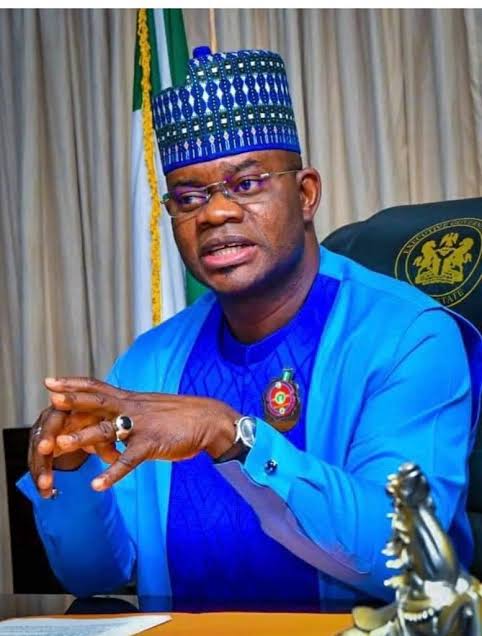
The Kogi State Primary Health Care Development Agency (KSPHCDA) has denied the reports of alleged demand for money from clients by COVID-19 administrators for vaccine.
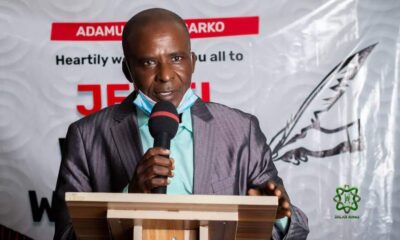
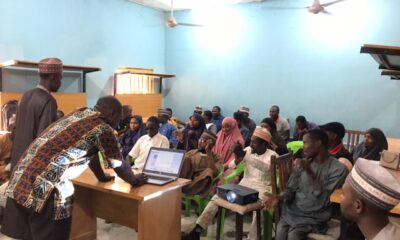
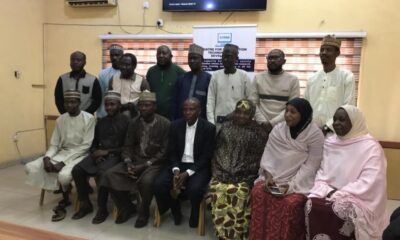
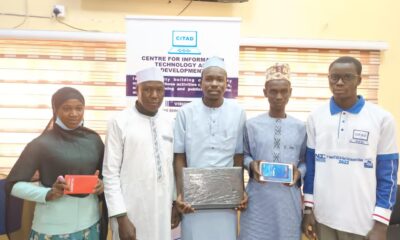
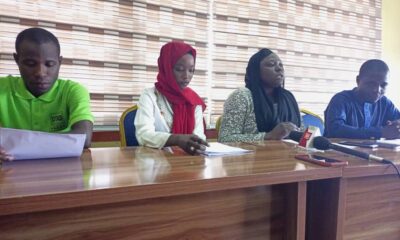
An NGO, the Centre for Information Technology and Development (CITAD) at a news conference in Bauchi State, alleged that vaccine administrators in Kogi were allegedly demanded money from clients before vaccinating them.
A statement by the Executive Director of the agency, Dr Abubakar Yakubu, in Lokoja, said the report was misleading and far from the reality of COVID-19 vaccination in the state.
2023 Presidency :Grow Nigeria Youth Movement Canvasses For Bukola Saraki In Kano
He stressed that the report was most likely not true as the NGO failed to back up its findings with actual facts, and without using, appropriate channels.
The KSPHCDA boss added that the said discovery should have been addressed to the appropriate agency in the state, rather than addressing newsmen in Bauchi.
Yakubu added that the agency had been engaging in high level social sensitisation and mobilisation advocacy across communities in the state, in order to improve on the vaccination exercise.
”How can something we are practically persuading people to take now be the same thing we are demanding for money before administering?,” Yakubu queried.
He emphasised that the agency was closely monitoring activities of the administrators and how they persuaded people across the state to take the COVID-19 vaccine.
He maintained that the claim by the NGO was practically impossible to happen in Kogi, where the Agency and the State Ministry of Health were still doing a high level advocacy and community sensitisation alongside relevant NGOs for COVID-19 vaccine uptake.
”The state government completely reject the report and thereby demand for an immediate and unreserved apology from the publisher of the fake news as well as its generator, CITAD.
“Failure to tender the apology, the government will be forced to take punitive measures against the NGO and its collaborators,” he said.
Meanwhile, Yakubu explained that the agency had set up a team of investigators, who were painstakingly analysing the report, in order to expose the perpetrators as well as the motive behind their action.
Speaking with the News Agency of Nigeria (NAN), Mr Folayan Idowu, the State Coordinator National Primary Health Care Development Agency (NPHCDA) described the publication, as unfounded.
Idowu, who is also a member of the State Joint Task Force on COVID-19 Vaccination, said the task force had been embarking on weekly patrol to monitor the administration of COVID-19 vaccines across the state.
He added that there was no record of such incident. (NAN)











News
It’s a Lie: Nigeria Is Not Africa’s Wealthiest but One of Its Poorest — Donald Duke
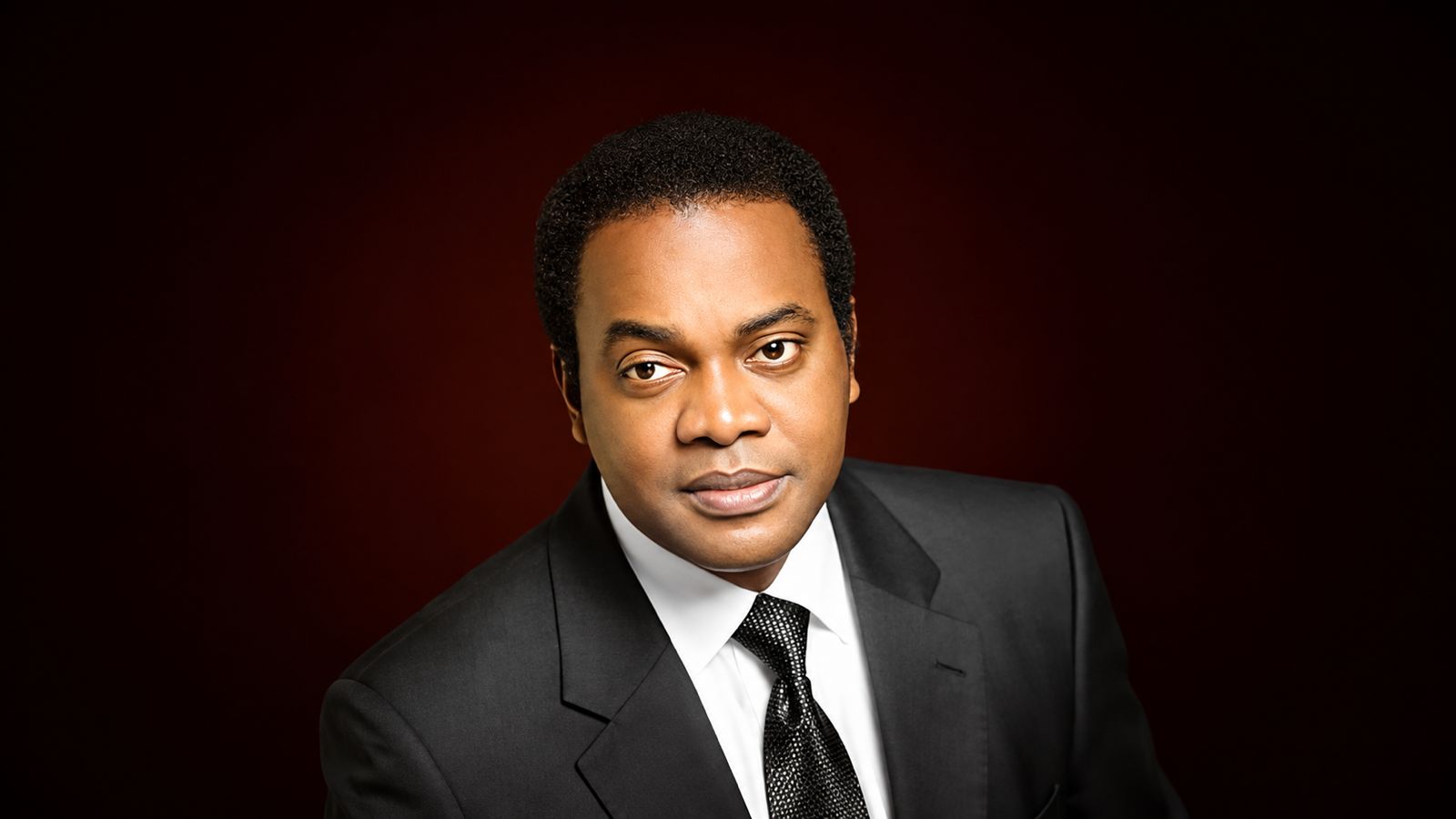
The presidential candidate of the People’s Redemption Party (PRP), Donald Duke, has described as “a lie” the notion that Nigeria is the wealthiest country in Africa.
The former Governor of Cross River State said Nigeria is, rather, one of the poorest countries on the continent and should not be regarded as Africa’s largest economy based solely on its overall GDP.
In an interview with selected journalists in Lagos, Duke said Nigeria is a poor country when its per capita income is taken into consideration.
According to him, even countries that Nigeria considers smaller have higher per capita incomes, adding that the country is “living a lie.”
“It is embarrassing that a country that was considered one of the wealthiest in Africa still thinks today that it is the largest economy in Africa. That is not true.
“We are living a lie. It is a nice sound bite, though, to say that Nigeria is the largest economy in Africa. No. Nigeria is just one of the poorest when you take per capita income into consideration, and that is what you should measure, not just growth.
“If all we were producing in Nigeria was kulikuli, as we have been advised to do, we would still be a large economy in terms of GDP. But individually, what is our capital base? It is very poor.
“Most of these countries that we laugh at have a higher income per capita than we do.
“So, it all comes down to productivity. The idle mind is the playground of the devil. That was true yesterday, it is true today, and it will be true tomorrow,” Duke said.
On security, Duke said he does not like the phrase “Islamic terrorists” because he does not believe the terrorists are driven by Islam.
He noted that the security challenges facing Nigeria, particularly in the northern part of the country, were aggravated by the collapse of Libya, which led to an influx of arms through Nigeria’s land borders.
He, therefore, suggested that Nigeria needs short-, medium- and long-term approaches to address the rising insecurity holding the country back.
“Right now, you have got to deal with the security problems as they exist today — kidnapping, banditry, terrorism and all that.
“But even beyond that, those things are consequences of other things. They are consequences of a very poor economy and, of course, the failure to properly manage our borders.
“With the collapse of Libya, a lot of arms have been moving south. We call them Islamic terrorists. I don’t like that phrase because I don’t think they are driven by Islam.
“The Islam I know is different. They just use that connotation to describe them. Rather, I think these are destructive elements. You can see that when they go into communities, they collect taxes and do other things. It is all geared towards collecting or building a resource base for themselves.”
For the medium- and long-term approaches, Duke suggested that the Nigerian government should focus on making citizens more productive.
He noted that as long as people are not productive, they will find their own means of survival.
He advised the government to focus on local production to improve productivity and to deploy modern technology in securing the country’s borders.
On reviving the economy of Northern Nigeria, the PRP presidential hopeful said that, if elected President, he would ensure that mining activities in the region are properly structured.
According to him, the structure should promote inclusive participation in the mining industry, ensuring that local and state governments become stakeholders in the sector.
“The rush to produce oil is not synonymous with wealth. You must have commercial quantities and all that. I sometimes think it is overplayed. The oil in the Chad Basin is not available in such commercial quantities. I think the real wealth of the North, beyond agriculture, is in the mineral deposits there.
“There must be a structured way of mining. Today, it is artisanal, and the broader community, the border communities, society and the nation itself do not adequately benefit from those resources.
“Take, for instance, the gold in Zamfara. It probably has — I don’t know — perhaps as much gold as all of Ghana does. Ghana was once called the Gold Coast, so that tells you how much gold there could be in Zamfara. But mining has also attracted banditry because Nigeria is largely an unpoliced state.
“So, I would make each state an economic entity. I think it would encourage states and their governments to focus on the minerals they have.
“If I were in charge, alongside the states, we would carry out an evaluation. I know some of this has already been done. We would evaluate what is available in each state and go further to determine the proven reserves.
“So, for instance, if you are looking for columbite or any other mineral and you know columbite exists in a particular place, let us go further and determine the proven reserves of columbite, lithium or whatever mineral we want to develop.
“Once you have developed it to that level, you make it more attractive for investors to come in. This should be a joint venture between the state and federal governments because the revenues from those resources will be shared by both levels of government.
“But nobody is going to invest if there is no security. We saw what happened in the South, in the Niger Delta region, when security broke down, which was also a function of increasing poverty in those areas.
“The investors there — the oil companies and international companies — moved out, and they now prefer producing oil from the deep sea, which is considered safer,” he said.
News
Shamaki Congratulates Yari on Appointment as Tinubu’s Campaign DG
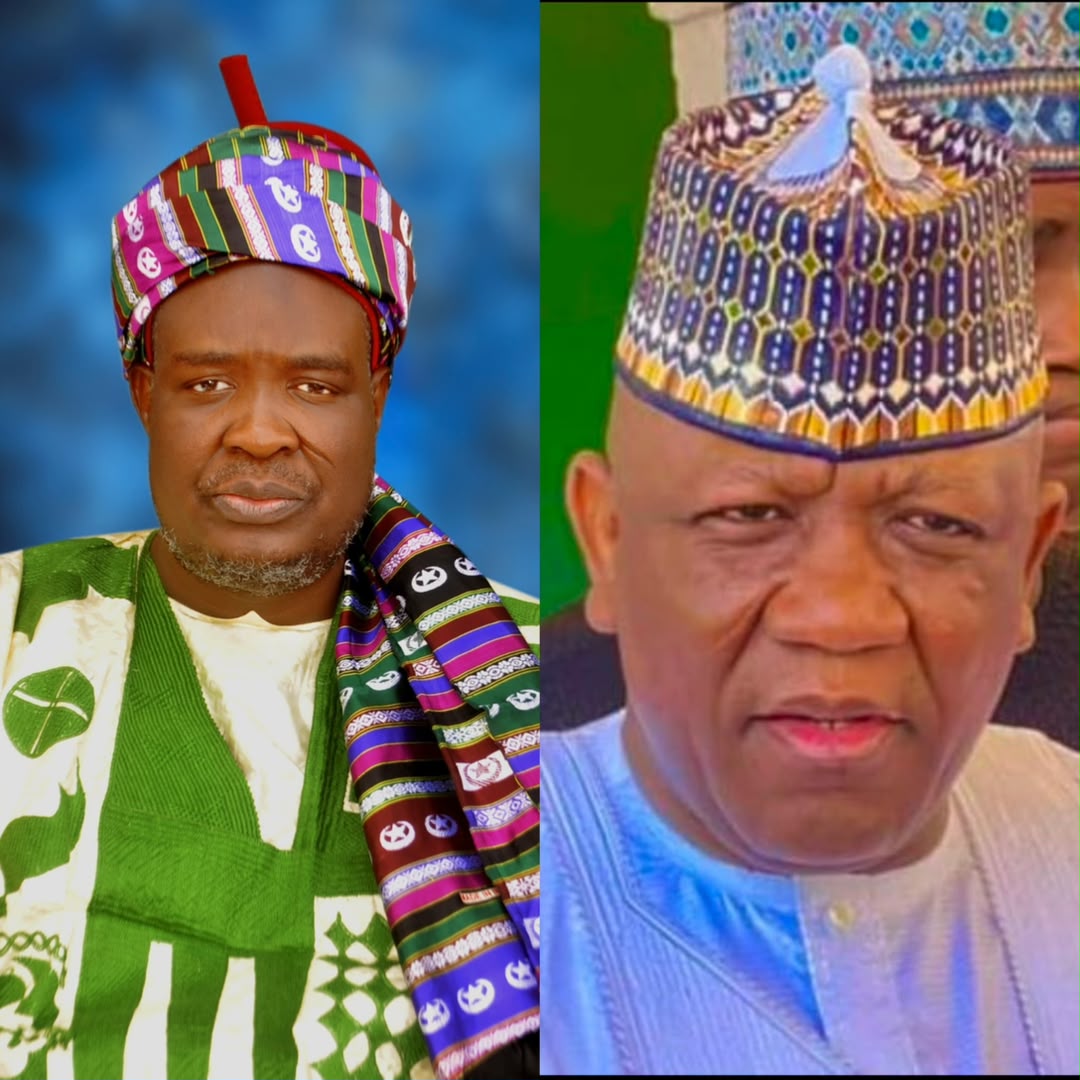
A chieftain of the All Progressives Congress (APC), Shamakin Marafan Sokoto has congratulated Senator Abdul’aziz Yari Abubakar on his appointment as Director-General of the APC Presidential Campaign Council for the 2027 election.
Shamaki described Yari’s appointment as well deserved, saying his wealth of political experience, leadership qualities and proven track record contributed significantly to his emergence for the important position.
He said Yari’s experience would play a key role in mobilising support and coordinating the APC’s campaign efforts towards ensuring the success of President Bola Ahmed Tinubu and the party in the 2027 presidential election.
According to him, the appointment reflects the confidence the APC leadership has in Yari’s capacity to deliver, particularly given his years of experience in politics and governance.
Shamaki expressed optimism that Yari would bring his vast political network and organisational skills
News
Call Me Chairman, Not Tony!’: Elumelu’s Blunt Correction of Trainee Splits Internet as Old Video Sparks Double Standard Fury

By Yusuf Danjuma Yunusa
A seemingly brief exchange between United Bank for Africa (UBA) Group Chairman, Tony Elumelu, and a female graduate trainee has erupted into a nationwide conversation about cultural values, corporate etiquette, and the politics of address, after a video of the interaction went viral on social media.
The incident occurred on Thursday, August 20, 2026, during an interactive session at the graduation ceremony for UBA’s Graduate Management Accelerated Programme (GMAP) in Lagos. In the now-viral clip, the trainee began her question by greeting the billionaire businessman with a casual, “Good morning, Tony.”
Mr. Elumelu, who was serving as a mentor at the event, promptly and firmly corrected her. According to multiple reports, he told her: “No, you won’t call me Tony. You call me Mr. Elumelu, or TOE, or Chairman.” He further justified his stance, explaining that he does not subscribe to what he termed the casual, Western-style familiarity in professional settings. “I don’t subscribe to that kind of Oyinbo life, okay!” he added.
The exchange has since polarized the Nigerian public, sparking a fierce debate on social media.
One faction of netizens has rallied behind Mr. Elumelu, arguing that the trainee’s address was a clear sign of disrespect, given his status as the chairman of a major financial institution and his seniority in age. Commentators argued that in a formal setting, the use of a title is a basic sign of respect. One social media user remarked, “Common sense should make you understand that at that moment, you are not talking to your friend, but what he is, a chairman or boss, or at least an adult that is obviously older than you.”
Conversely, a second group has come to the trainee’s defense. They argue that modern corporate culture, even within Nigerian banks, often encourages a first-name basis to foster a more egalitarian and open work environment. A former UBA staff member, Innocent Istifanus Moses, confirmed that GMAP graduates are typically taught to address colleagues, including senior executives, by their first names. In his view, the trainee’s mistake was not irredeemable, and he advised her to issue a brief, sincere apology. “Mistake–briefly acknowledge–correct it– move on confidently,” wrote one observer.
Accusations of Double Standard Emerge
The debate took a sharper turn when an old video resurfaced online, showing Mr. Elumelu in a 2022 interview with Chisom Obi-Okoye, an MBA student at Stanford Graduate School of Business in the United States. In that footage, the student interviewer addressed him as “Hi Tony” multiple times without any objection or correction from the businessman.
This discovery has led to widespread accusations of a double standard. Critics argue that Mr. Elumelu is willing to accept the casual, “Oyinbo” culture he decried when it suits him in an international setting but enforces a rigid traditional hierarchy at home. One Facebook user, Awuzie Frankline, questioned the inconsistency, stating, “Respect should be consistent not dependent on someone’s status, location or social class.”
Defense: ‘When in Rome, Behave Like The Romans’
In defense of the UBA Chairman, supporters have argued that there is no contradiction, as the two situations occurred in vastly different cultural contexts. They contend that Mr. Elumelu was simply adapting to the norms of his environment—behaving like the Romans while in Rome, as it were. In a formal corporate setting in Nigeria, they argue, it is appropriate to demand the traditional respect that is due to one’s elders and superiors. As one commentator put it, the issue is about “the need to adjust to culture and nuance as they come.”
Beyond the immediate controversy, the incident has opened a wider conversation about generational differences, the clash between traditional African values and Western corporate norms, and the importance of navigating social cues in professional environments.
Jide Akintunde, a social commentator, expressed surprise at Mr. Elumelu’s objection, noting that his first name has been central to his public and industry branding for years. He suggested that the public correction, while perhaps justified, could have been handled privately to avoid humiliating the young trainee.
As of Friday, the young woman at the center of the storm has not made a public statement. The video, however, continues to trend, serving as a potent reminder of the intricate and often unspoken rules that govern professional and social interactions in Nigeria.

It’s a Lie: Nigeria Is Not Africa’s Wealthiest but One of Its Poorest — Donald Duke

Shamaki Congratulates Yari on Appointment as Tinubu’s Campaign DG

Call Me Chairman, Not Tony!’: Elumelu’s Blunt Correction of Trainee Splits Internet as Old Video Sparks Double Standard Fury

President Tinubu Suspends Three Perm Secs as ICPC Uncovers Another Fake Agency in SGF Office

3 Brigade wins army Inter-brigade combat proficiency competition in Kano

How Kano Digitized Land Turns N50m to N750m Monthly
Kano Governor Yusuf Shortlisted for Africa’s SANKOFA Award of Excellence in Infrastructural Development

From the struggle for Gombe State to life in the Senate: Senator Umar Usman Dukku reflects on politics, democracy, and his relationship with the late General Sani Abacha.

Borders, Visas and the Beautiful Game: How U.S. Immigration Policies Shaped Global Perceptions During the 2026 FIFA World Cup

President Tinubu Declines Meeting with S’African Envoy, Directs Delegation to Foreign Affairs Minister
It’s a Lie: Nigeria Is Not Africa’s Wealthiest but One of Its Poorest — Donald Duke
Shamaki Congratulates Yari on Appointment as Tinubu’s Campaign DG
Call Me Chairman, Not Tony!’: Elumelu’s Blunt Correction of Trainee Splits Internet as Old Video Sparks Double Standard Fury
President Tinubu Suspends Three Perm Secs as ICPC Uncovers Another Fake Agency in SGF Office
3 Brigade wins army Inter-brigade combat proficiency competition in Kano
How Kano Digitized Land Turns N50m to N750m Monthly
Kano Governor Yusuf Shortlisted for Africa’s SANKOFA Award of Excellence in Infrastructural Development
From the struggle for Gombe State to life in the Senate: Senator Umar Usman Dukku reflects on politics, democracy, and his relationship with the late General Sani Abacha.
Borders, Visas and the Beautiful Game: How U.S. Immigration Policies Shaped Global Perceptions During the 2026 FIFA World Cup
President Tinubu Declines Meeting with S’African Envoy, Directs Delegation to Foreign Affairs Minister
-

 Opinion5 years ago
On The Kano Flyovers And Public Perception
-

 Features5 years ago
How I Became A Multimillionaire In Nigeria – Hadiza Gabon
-

 Opinion6 years ago
Kano As future Headquarters Of Poverty In Nigeria
-

 History5 years ago
Sheikh Adam Abdullahi Al-Ilory (1917-1992):Nigeria’s Islamic Scholar Who Wrote Over 100 Books And Journals
-

 Opinion5 years ago
My First Encounter with Nasiru Gawuna, the Humble Deputy Governor
-

 History5 years ago
The History Of Borno State Governor Professor Babagana Umara Zulum
-

 History5 years ago
The Origin Of “Mammy Market” In Army Barracks (Mammy Ochefu)
-

 News4 years ago
Federal University Of Technology Babura To Commence Academic Activities September