
News
Governor Zulum Suspends Ramat Poly’s Management after a surprise visit
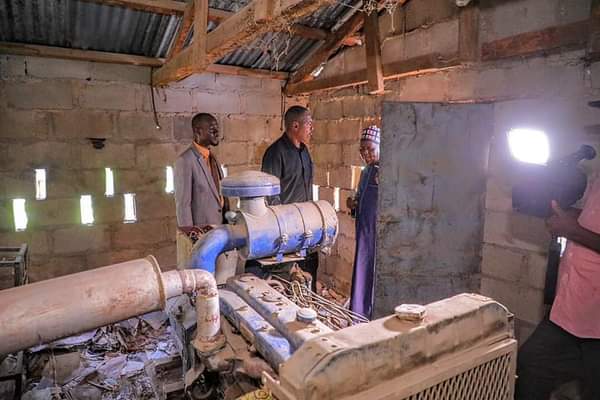
During a surprise visit, Borno State Governor, Professor Babagana Umara Zulum on Tuesday suspended the entire management of the state-owned Ramat Polytechnic in Maiduguri, for a period of six months.
Zulum was a student of the Polytechnic from 1986 to 1988 and bagged National Diploma in Agricultural Engineering before returning to the Polytechnic as a rector from 2011 to 2015.
The Governor was shocked to see workshops and laboratories were no longer functioning, as the “Polytechnic is dead”.
The Governor visited the Polytechnic around 9:00am and found most of the laboratories out of use, with some covered by cobwebs and rodents roaming around due to neglect. Zulum assessed all infrastructures and learning conditions, and thereafter, directed the State’s Commissioner of Higher Education, Science, Technology, and Innovation, Dr. Babagana Mallumbe to take over the affairs of the School immediately.
Bandits’ 26 Others Killed As Military Sustains Air Raid in Zamfara
“As far as I am concerned, this Polytechnic is dead. Nothing is working. The workshops are not in existence, the mechanical workshop is not working, the agricultural workshop is not working, likewise, the entrepreneurship center is not working.
The School is facing myriads of problems, ranging from lack of funding and commitment. As a former student of this polytechnic, a former rector, I have moral stakes in this polytechnic. Insha’Allah, I will not allow this polytechnic to rot during my era as Governor of Borno State. I will do everything possible within my reach to ensure the functionality of this institution insha Allah.”
“I have directed the Commissioner of Higher Education, Science, Technology and Innovation to take over the affairs for the next six months. The ministry is to ensure that all the Workshops and the laboratories are put back to use as soon as possible. The entrepreneurship center should immediately be put back to use as well. When I was at the Polytechnic as a rector, the entrepreneurship center was producing nothing less than 10,000 to 20,000 school desks and chairs every month. We produced hospital beddings” Zulum said.
The Governor held a closed-door meeting with top management of the Polytechnic. He directed the ministry of water resources to drill two deep aquifers boreholes and carry out a complete water channel network within the polytechnic, which is coming after prior interventions he approved for Polytechnic in 2019, to reduce problems of water supply.
Meanwhile, Governor Zulum, while addressing thousands of students at the premises of the polytechnic, gave assurance that payment of scholarships will commence soon.
“The verification exercise has just been completed, I want to assure you that as soon as the detailed report is forwarded to me, we will pay your scholarship immediately,” Zulum said.
The Governor was also at the federal secretariat, where enrollment exercises of Batch C N-Power volunteers are been conducted.
On arrival, Governor Zulum addressed thousands of applicants gathered for the biometric enrollment that will enable them to get monthly federal government stipends. He assured them of the state government’s support despite N-Power been a federal government program.
After that, Governor Zulum personally coordinated the overcrowded environment in order to avoid any possibility for stampede as an immediate intervention, to ensure smooth conduct of the exercise.
News
Mass Exodus Looms in Kano APC as More Chieftains Consider Exit — Mansur Ahmed
A former governorship aspirant of the Peoples Democratic Party (PDP), Engr. Mansur Ahmed, has predicted a possible mass exodus of prominent politicians and party stakeholders from the All Progressives Congress (APC) in Kano State amid persistent internal disagreements.
Ahmed made the prediction while addressing journalists following his resignation from the APC, according to a statement signed by Usman Bello on his behalf.
The former APC member described the recent resignation of party chieftain Alhaji Aminu Dabo as an indication of a deeper crisis within the party, suggesting that more prominent members could leave in the coming days.
Ahmed alleged that the Kano APC was experiencing persistent internal disputes that had continued to undermine unity among its members, with little indication that the disagreements would be resolved soon.
He further disclosed that several political leaders and stakeholders across Kano State were holding consultations over their future in the party and were considering formally resigning.
According to Ahmed, the consultations involved prominent political figures and their allies who were weighing their options before deciding on their next political destination.
Reflecting on his political career, Ahmed described himself as a former PDP governorship aspirant who also served as Deputy Coordinator of the 2015 presidential campaign in Kano.
He said he and his associates were currently consulting with political allies to determine the next direction of their political engagement following his departure from the APC.
The statement did not identify the other party leaders allegedly preparing to resign or disclose when they might announce their decisions.
It also did not indicate whether Ahmed and the politicians consulting with him had reached any agreement to join another political party.
Ahmed’s prediction comes amid continuing political realignments in Kano State as political actors assess their options ahead of the 2027 general elections.
News
Kano Donates Equipment to NDLEA

The Kano State Government has donated working tools to the National Drug Law Enforcement Agency (NDLEA), Kano Strategic Command, to strengthen the fight against drug abuse and illicit trafficking.
The items were presented on Thursday, October 22, 2026, by the Chairman of the Kano State Multi-Agency Task Force on Drug Abuse and Illicit Trafficking, Barrister Muhuyi Magaji Rimin Gado, on behalf of Governor Abba Kabir Yusuf.
Speaking at the presentation, Magaji said the donation reflected the government’s determination to tackle drug-related offences, which he identified as a major contributor to social vices in society.
He lamented that substance abuse had reached a frightening dimension, requiring concerted action by the government, security agencies and other stakeholders.
According to him, Governor Yusuf’s administration is committed to providing the necessary support to agencies responsible for combating drug abuse and illicit trafficking, using all available means to address the growing challenge.
Magaji stressed that effective coordination among relevant institutions was essential to curbing the menace and protecting the future of young people in the state.
Receiving the items, CN Dahiru Yahaya Lawan, Kano Strategic Commander of the NDLEA, expressed gratitude to the governor and the state government, describing the intervention as timely.
He said the equipment would enhance the command’s operational capacity and strengthen its efforts to combat drug abuse and illicit trafficking.
Lawan assured the government that the items would be judiciously utilised to achieve their intended purpose.
He emphasised that the fight against drugs was a collective responsibility, calling on residents, community leaders and other stakeholders to support law enforcement agencies in tackling the problem.
The donation underscores the state government’s drive to strengthen inter-agency collaboration and provide operational support for the fight against drug-related offences, with the ultimate goal of creating a safer, drug-free society.
News
NDC Kano Asks INEC to Investigate Conflicting Primary Election Reports
The Nigeria Democratic Congress (NDC), Kano State Chapter, has called on the Independent National Electoral Commission (INEC) to investigate the alleged issuance of multiple inconsistent monitoring reports on the party’s primary elections in the state.
The party made the call in a statement dated October 19, 2026, signed by Senior Advocate of Nigeria (SAN) Magaji Mato Ibrahim and four other lawyers, in response to a public statement issued on October 17 by Bola Aidi, SAN & Co., solicitors to five individuals claiming candidature under the NDC in Kano State.
According to the lawyers representing the NDC Kano State Chapter, the petition submitted to the INEC chairman on October 16 concerned the conduct of Mrs Hauwa Buhari, Head of the Department of Election and Party Monitoring at the commission’s Kano State office.
The lawyers said the petition sought an investigation into what they described as materially inconsistent versions of a monitoring report allegedly signed by the same INEC official concerning the party’s primary elections.
They maintained that the petition was issued with the authority of the NDC Kano State Chapter, dismissing suggestions that the party’s leadership was unaware of the complaint.
“The petition was issued on the instructions of the NDC Kano State Chapter. We have since received and confirmed those instructions,” the lawyers said.
They argued that the state chapter had the right to challenge the integrity of official records purportedly reflecting the outcome of its primary elections, particularly where such documents were being relied upon in court proceedings involving the party’s candidates.
The lawyers further alleged that the different versions of the monitoring report contained material inconsistencies, with some allegedly undated, while listing individuals who, according to the party, were neither screened nor cleared for the relevant constituencies.
They also claimed that the reports excluded candidates recognised by the party whose names appeared on Form EC9D, which they said was signed by the NDC National Chairman and National Secretary and submitted to INEC.
According to the statement, the INEC official had previously acknowledged gaps in the monitoring report, while a corrected version was allegedly forwarded to the commission’s headquarters in Abuja without formal communication or implementation.
The lawyers argued that the alleged discrepancies required an administrative investigation by INEC, irrespective of the ongoing court cases involving the disputed candidatures.
They said the commission had a responsibility to establish the authenticity of its official records and resolve any inconsistencies that could affect the integrity of the electoral process.
Lawyers Raise Concerns Over Court Proceedings
The NDC’s lawyers also questioned the circumstances surrounding the suits filed at the Federal High Court by the five individuals represented by Bola Aidi, SAN & Co., who claim to be candidates of the party in Kano State.
According to the statement, the cases were instituted and prosecuted without notice to the candidates recognised by the party until recently.
The lawyers said the affected candidates had taken steps to establish the status of the proceedings and pursue appropriate legal remedies to defend their nominations.
They expressed concern that individuals whose electoral interests were allegedly directly affected by the cases were not joined in the proceedings from the outset.
The statement argued that the failure to join such interested parties raised questions about compliance with the principles of fair hearing, particularly in pre-election disputes.
The lawyers maintained that all parties whose rights could be affected by a court’s decision should be given an opportunity to participate in the proceedings in accordance with the applicable rules of court.
NDC Questions Response by Bola Aidi, SAN & Co.
The party’s lawyers also questioned why Bola Aidi, SAN & Co. had issued a public statement defending the INEC official instead of directly addressing the allegations concerning the conflicting monitoring reports.
According to them, Mrs Hauwa Buhari is an official of a constitutional body with the institutional capacity and legal responsibility to defend its personnel and official records.
They described the decision by private solicitors representing individuals claiming candidature under the NDC to publicly defend an INEC official against a petition concerning the integrity of electoral records as unusual.
However, the lawyers cautioned against speculation, stating that any relationship between the solicitors, their clients and the conduct of the INEC official should be established through an investigation by the commission.
They insisted that the central issue remained the alleged inconsistencies in the monitoring reports and the need for INEC to determine which version accurately reflected the party’s primary elections.
Party Cites Pending Appeals
The statement also addressed the reliance by Bola Aidi, SAN & Co. on Suit No. FHC/ABJ/CS/1628/2026 and judgments delivered by the Federal High Court in Kano on October 14, 2026.
The NDC’s lawyers said the judgments were the subject of appeals and maintained that the existence of court decisions did not prevent INEC from investigating the authenticity of records generated by its officials.
They cited Section 287(3) of the Nigerian Constitution, arguing that the obligation to obey subsisting court orders did not preclude the commission from examining or correcting defective administrative records.
According to the statement, the proper forum for challenging the judgments was the Court of Appeal, adding that the respondents in the cases had already filed an appeal against the Federal High Court’s decision in Kano.
The lawyers further stated that the appeal had been served on INEC’s Kano office and its national headquarters in Abuja.
They also argued that the party’s screening and clearance records, alongside Form EC9D, showed that the five individuals represented by Bola Aidi, SAN & Co. had not fulfilled the party’s requirements for nomination in the relevant constituencies.
According to the lawyers, an INEC monitoring report could not, by itself, confer candidature on individuals who had not satisfied the party’s screening and clearance requirements.
They further maintained that such a report could not override the party’s official submission under Section 29 of the Electoral Act, 2026.
NDC Demands Immediate Investigation
The lawyers called on the INEC chairman to order an immediate investigation into the circumstances surrounding the alleged issuance of multiple inconsistent and undated monitoring reports signed by Mrs Hauwa Buhari.
They urged the commission to withdraw or disown any versions found to be defective and issue a single, authentic and properly dated report reflecting the candidates nominated by the party and submitted to the commission.
The lawyers also called on INEC to communicate the authentic report to the relevant parties and take appropriate administrative or disciplinary action if the investigation established any wrongdoing.
They argued that the commission’s independence would be strengthened by ensuring the accuracy and consistency of its official records rather than resisting complaints about alleged discrepancies.
In conclusion, the NDC Kano State Chapter reaffirmed its commitment to the rule of law and the integrity of the electoral process, according to the statement.
The lawyers said the party’s recognised candidates would pursue all available legal remedies, including the pending appeals, to protect their nominations.
They also urged all parties to allow INEC to discharge its administrative responsibility of addressing defective records while allowing the Court of Appeal to determine the pending appeals based on the evidence and applicable law.
The statement was signed by Magaji Mato Ibrahim, SAN, I.M. Abdullahi, Esq., Siraj Hamza, Esq., Fengak Obadiah Gokir, Esq., and Uchechukwu Michael Ogbei, Esq., on October 19, 2026.

Mass Exodus Looms in Kano APC as More Chieftains Consider Exit — Mansur Ahmed

Kano Donates Equipment to NDLEA

NDC Kano Asks INEC to Investigate Conflicting Primary Election Reports

Gov. Yusuf Appoints Inuwa Waya Director of International Corporations Engagement

NEC Activates 90-Day Economic Action Plan to Ease Cost of Living

Zamfara Varsity ASUU Threatens Warning Strike Over FG-ASUU Agreement, Promotion Arrears

PCACC Arrests Man Over Alleged ₦4.5m Sale, Illegal Leasing of Kano Government Horse Stable

Kano Monitors ₦48.9bn Projects Across Six LGAs

Goje’s Electoral War:The Confrontation With Tinubu,Governor Inuwa,Usman Kumo And APC candidates Ahead Of 2027

Kano Spends ₦10.36bn on Hospitality, Sitting Allowances, Others in Six Months
Mass Exodus Looms in Kano APC as More Chieftains Consider Exit — Mansur Ahmed
Kano Donates Equipment to NDLEA
NDC Kano Asks INEC to Investigate Conflicting Primary Election Reports
Gov. Yusuf Appoints Inuwa Waya Director of International Corporations Engagement
NEC Activates 90-Day Economic Action Plan to Ease Cost of Living
Zamfara Varsity ASUU Threatens Warning Strike Over FG-ASUU Agreement, Promotion Arrears
PCACC Arrests Man Over Alleged ₦4.5m Sale, Illegal Leasing of Kano Government Horse Stable
Kano Monitors ₦48.9bn Projects Across Six LGAs
Goje’s Electoral War:The Confrontation With Tinubu,Governor Inuwa,Usman Kumo And APC candidates Ahead Of 2027
Kano Spends ₦10.36bn on Hospitality, Sitting Allowances, Others in Six Months
-

 Opinion5 years ago
On The Kano Flyovers And Public Perception
-

 Features5 years ago
How I Became A Multimillionaire In Nigeria – Hadiza Gabon
-

 Opinion6 years ago
Kano As future Headquarters Of Poverty In Nigeria
-

 History6 years ago
Sheikh Adam Abdullahi Al-Ilory (1917-1992):Nigeria’s Islamic Scholar Who Wrote Over 100 Books And Journals
-

 Opinion5 years ago
My First Encounter with Nasiru Gawuna, the Humble Deputy Governor
-

 History5 years ago
The History Of Borno State Governor Professor Babagana Umara Zulum
-

 History6 years ago
The Origin Of “Mammy Market” In Army Barracks (Mammy Ochefu)
-

 News5 years ago
Federal University Of Technology Babura To Commence Academic Activities September