
News
Court stops Mukaila Akinwande from parading himself as Oluwo Ijeja

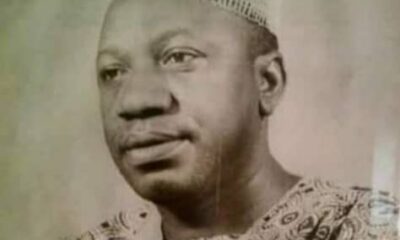
An Abeokuta High Court sitting at Isabo today rules that one Mukaila Akinwande should henceforth stop parading himself as the Oluwo of Ijejaland.
While ruling in a motion filed by Chief Aremu Bangboye, the authentic Oluwo of Ijejaland, who is the complainant seeking an injunction, restraining Mukaila Akinwade from parading himself as the Oluwo of Ijeja, Justice Ogunfowora said he was convinced based on the evidences before him that it would be appropriate to stop the defendant, Mukaila Akinwade from parading himself as the Oluwo of Ijeja pending the ruling of the motion filed by Oluwo Aremu Bangbose’s lawyer.
Chief Bamgbose’s lawyer, Barrister Bayo Ogungbemi, prayed the court to stop Mukaila Akinwande from parading himself as the Oluwo of Ijeja based on the fact that his client was duly appointed and installed as the Oluwo of Ijeja.
Barrister Ogungbemi supported his argument with evidences including photographs and video clips of installation of his client, as well as living witnesses who are present at the court.
When asked for his view on the motion for injunction, the lawyer to the defendant, Barrister Apanisile said he had no objection, but would need some time to study the motion.
He therefore requested for two weeks adjournment for his to study and prepare for his defense.
Justice Ogunfowora granted him the request, warning that Barrister Apanisile has been requesting for adjournment for more than two times and reminded him that the case was originally filed in February 2021 with a warning that he would not want a delay in the case henceforth.
The judge therefore ruled that the defendant, Chief Mukaila Akinwande should stop parading himself as the Oluwo of Ijeja, and allow peace to reign in Ijejaland.
In a chat with newsmen after the court ruling, the Oluwo of Ijeja, Chief Aremu Bamgboye expressed his delight for winning the first round of the case, adding that it is a victory not only for him, but the people of Ijejaland.
He said he was convinced that the final judgment will favour his side.

News
Sardaunan Gombe Felicitates Muslims on Eid-ul-Maulud, Urges Prayers for Peace, Unity and Progress.
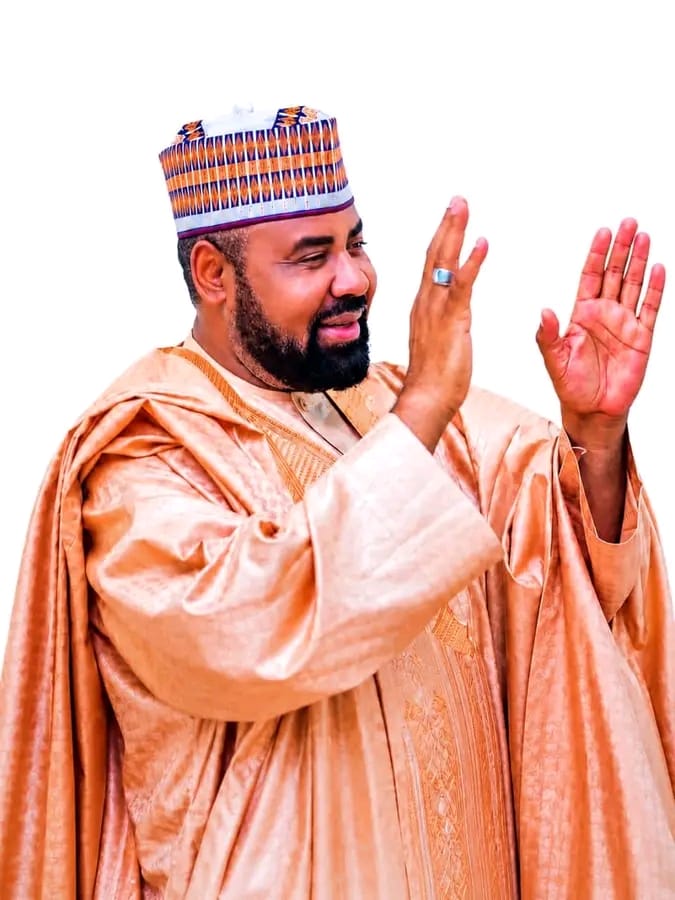
Dr. Jamil Isyaku Gwamna, the Sardaunan Gombe and All Progressives Congress (APC) gubernatorial candidate in Gombe State, has joined Muslims across Gombe State, Nigeria and beyond in celebrating Eid-ul-Maulud, commemorating the birth of the Holy Prophet Muhammad (SAW).
In a goodwill message, Gwamna extended warm greetings to Muslim faithful and urged them to use the occasion to reflect on and emulate the exemplary life, teachings and virtues of the Holy Prophet Muhammad (SAW).
He said the Prophet’s enduring messages of peace, compassion, patience, tolerance, justice and love for humanity should continue to guide the conduct of individuals and communities towards building a peaceful, united and progressive society.
“As we celebrate Eid-ul-Maulud, may the life, humility, compassion and peace exemplified by Prophet Muhammad (SAW) inspire us to become better people and contribute to building a kinder, more united and prosperous society.
“May this blessed occasion renew our faith, strengthen our bonds of brotherhood and unity, and fill our homes with peace, our hearts with love, and our lives with Allah’s abundant blessings.”
Gwamna further urged Muslims and all residents to sustain prayers for lasting peace and progress in Gombe State and Nigeria, particularly for an end to insecurity and other challenges confronting the nation.
He called on citizens to promote unity, mutual understanding and peaceful coexistence, stressing that collective commitment to peace and unity remains essential for the development and progress of the country.
The Sardaunan Gombe also appealed to residents to celebrate the occasion responsibly, observe necessary precautions and obey traffic rules while marking the day in their communities and neighbourhoods.
He wished Muslims a peaceful and blessed Eid-ul-Maulud celebration and prayed that Allah continues to guide the country’s leaders and citizens towards peace, unity, prosperity and progress.
News
Singapore to Give Families Nearly ₦94m for Every Child Born as Birth Rate Record Drops
By Yusuf Danjuma Yunusa
Singapore has announced a new financial support package that will provide each eligible Singaporean child with nearly S$70,000 (about ₦94 million) in government benefits from birth until age 17.
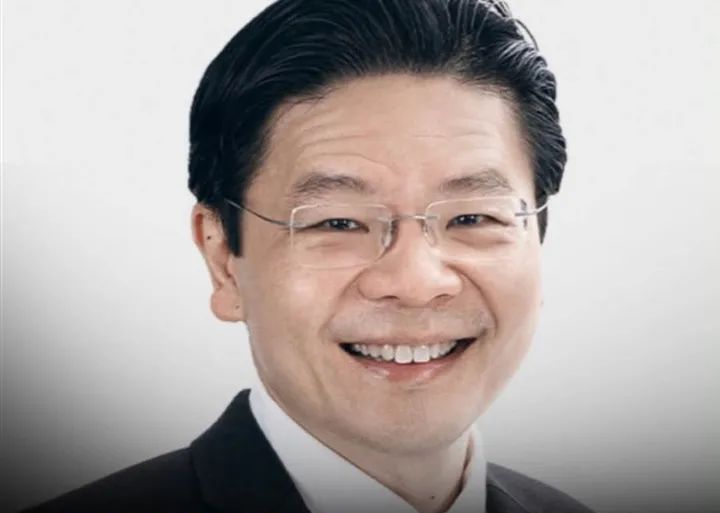
Prime Minister Lawrence Wong announced the S$62,000 SG Child Support Package during his National Day Rally speech on August 23, saying the government wants to make a fundamental change in how families are supported rather than simply making small adjustments to existing schemes.
The package includes a S$10,000 cash Baby Gift, S$32,000 in Child Credits, a S$5,000 Child Development Account (CDA) grant, up to S$5,000 in government CDA co-matching and a S$10,000 top-up to the child’s Post-Secondary Education Account.
When combined with existing benefits, including a S$5,000 MediSave Grant for Newborns and annual Edusave contributions, total government support will reach about S$70,000 per child. This is higher than the current S$27,500 to S$56,500 parents receive, depending on the child’s birth order.
Wong said the government would simplify the system because many parents find the existing schemes difficult to understand. He said every child would receive the same level of support, with assistance provided not only at birth but throughout the years as children grow.
The S$10,000 Baby Gift will be paid in two instalments during the first year after birth, while the S$32,000 Child Credits will provide S$2,000 annually from age one until the child turns 16. The government will also give a further S$10,000 top-up to the child’s education account when the child turns 17.
The new package is expected to benefit more than 610,000 children across 380,000 households. The measures are part of Singapore’s wider efforts to encourage more people to have children amid a declining birth rate.
Wong said the government was putting significant resources into the plans because supporting families and Singaporeans through every stage of life remains a national priority.
News
Imam Jingir Sells Out, Deploys Muslim-Muslim Chants Minutes After ₦600 Million APC Windfall
By Yusuf Danjuma Yunusa
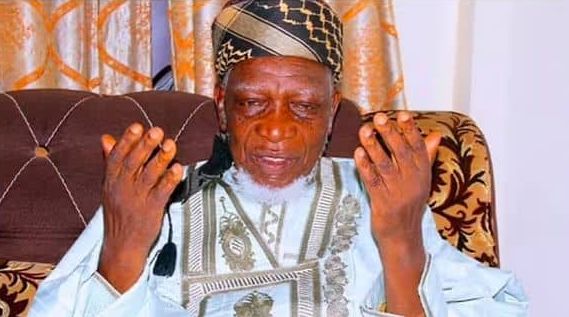
Plateau-based Islamic cleric, Yahaya Jingir, intensified his support for the All Progressives Congress (APC) Muslim-Muslim ticket after receiving donations of N600 million from Ibrahim Masari, special adviser to President Bola Tinubu, and Governor of Yobe State, Mai Mala Buni.
A viral video of Mr Masari, an ally and SA on political affairs to Mr Tinubu, announcing the donation of ₦600 million by him and Mr Buni to Mr Jingir-led religious university project emerged on the internet on Monday.
“I, too, have given ₦300 million, and my brother, the Governor of Yobe State, has also given ₦300 million, bringing the total to ₦600 million. Give us the account details so we can transfer the money right now,” Mr Masari said.
In response to Mr Masari’s donation at the event, the cleric doubled down on campaign for a Muslim-Muslim ticket.
“So, we are very grateful, and may Allah reward you. Let me stop here,” Mr Jingir said, asking the crowd, “is the name of the university the private purse of Alhaji Sani Yahaya Jingir?”
“I want education to be established so that both Muslims and Christians can be successful,” he added.
Chanting “Muslim-Muslim” in support of the same-faith ticket to close his remarks, Mr Jingir said, “May Allah bring peace to Nigeria and peace to the Muslim world. And for those who are saying we are cheating in the name of Islam, may Allah open their eyes and guide them to Islam.”
Though the cleric claimed the donations were not to him but for a university project, it has sparked reactions on social media.
“If you are following Yahaya Jingir to shout Muslim-Muslim ticket look at this video! N600 million,” Imran Wakili, an X user said. “And you still think removal of subsidy is for you and me!”
Another X user, @MBMoralpolice said, “The man is after his bank balances to say so seems fair but when one is announcing a 300M Naira donation to your purse somehow and you are eager to take the microphone away ahead of further donations announcement, I better ask?! How Much Are You Really Worth.”
@Aliyyyou said, “Religious leaders have really got it wrong in this country. No respect, dignity or honor. Just power, money and fake faith. No difference from the politicians.”
About two weeks ago, Mr Jingir had announced support for Mr Tinubu’s same faith ticket as Nigerians head for presidential election in 2027, sparking backlash.
“I am one of those who raise the flag of Islam. I am calling on people to come and let us do Muslim-Muslim again,” Mr Jingir said.
Charging Muslims to vote for Mr Tinubu’s re-election based on the same-faith ticket to prove that Muslims outnumber Christians in Nigeria, Mr Jingir said, “So, here I am calling on you; please, everyone should get their votes ready. Let us show the world that those unbelievers who claim they outnumber us in Nigeria are lying.”

Sardaunan Gombe Felicitates Muslims on Eid-ul-Maulud, Urges Prayers for Peace, Unity and Progress.

Masari: The Quite Architect With No Rivalry, Only Results for APC in 2027

95% of Governor Abba Kabir Yusuf’s Promises Have Been Fulfilled — CPS Interview By Musa Diso, In Kano

Singapore to Give Families Nearly ₦94m for Every Child Born as Birth Rate Record Drops

Imam Jingir Sells Out, Deploys Muslim-Muslim Chants Minutes After ₦600 Million APC Windfall

How Kano Digitized Land Turns N50m to N750m Monthly

Borders, Visas and the Beautiful Game: How U.S. Immigration Policies Shaped Global Perceptions During the 2026 FIFA World Cup

President Tinubu Declines Meeting with S’African Envoy, Directs Delegation to Foreign Affairs Minister

ADC Youths Call on Atiku to Intervene Over Allegations of Injustice in Primary Elections, Demand Resignation of David Mark

I Gave Tijjani Gandu N10 Million to Support Musicians, Media but Funds Were Allegedly Not Distributed – Governor Yusuf’s Spokesperson
Sardaunan Gombe Felicitates Muslims on Eid-ul-Maulud, Urges Prayers for Peace, Unity and Progress.
Masari: The Quite Architect With No Rivalry, Only Results for APC in 2027
95% of Governor Abba Kabir Yusuf’s Promises Have Been Fulfilled — CPS Interview By Musa Diso, In Kano
Singapore to Give Families Nearly ₦94m for Every Child Born as Birth Rate Record Drops
Imam Jingir Sells Out, Deploys Muslim-Muslim Chants Minutes After ₦600 Million APC Windfall
How Kano Digitized Land Turns N50m to N750m Monthly
Borders, Visas and the Beautiful Game: How U.S. Immigration Policies Shaped Global Perceptions During the 2026 FIFA World Cup
President Tinubu Declines Meeting with S’African Envoy, Directs Delegation to Foreign Affairs Minister
ADC Youths Call on Atiku to Intervene Over Allegations of Injustice in Primary Elections, Demand Resignation of David Mark
I Gave Tijjani Gandu N10 Million to Support Musicians, Media but Funds Were Allegedly Not Distributed – Governor Yusuf’s Spokesperson
-

 Opinion5 years ago
On The Kano Flyovers And Public Perception
-

 Features5 years ago
How I Became A Multimillionaire In Nigeria – Hadiza Gabon
-

 Opinion6 years ago
Kano As future Headquarters Of Poverty In Nigeria
-

 History5 years ago
Sheikh Adam Abdullahi Al-Ilory (1917-1992):Nigeria’s Islamic Scholar Who Wrote Over 100 Books And Journals
-

 Opinion5 years ago
My First Encounter with Nasiru Gawuna, the Humble Deputy Governor
-

 History5 years ago
The History Of Borno State Governor Professor Babagana Umara Zulum
-

 History5 years ago
The Origin Of “Mammy Market” In Army Barracks (Mammy Ochefu)
-

 News4 years ago
Federal University Of Technology Babura To Commence Academic Activities September