
News
Exclusive :Seven Women Rejected My Marriage Proposal – Polio Survivor
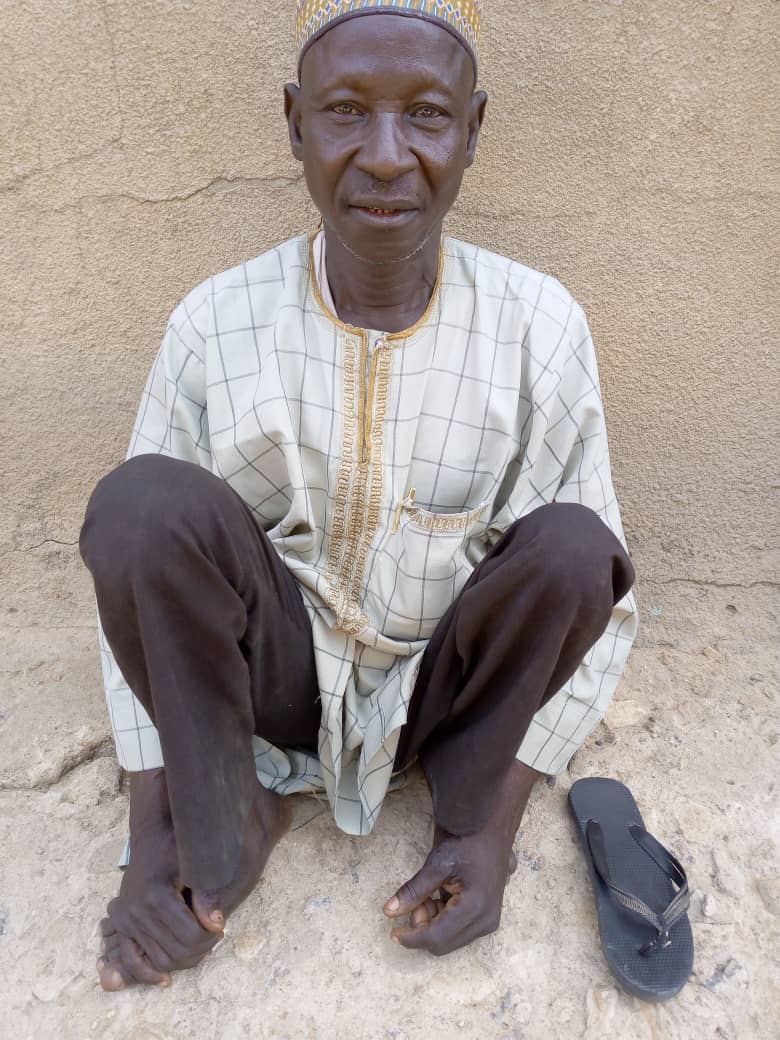
Even though he grew up knowing himself as a polio survivor – the predicament he has been managing for 48 years – Mr Bashir Idris isn’t deterred from reflecting on his unpleasant experience at every slight opportunity.
Born hale and hearty five decades ago, Idris’ dream of becoming a Soldier was cut short when he contacted the polio disease at the tender age of two.
“I was told I contacted polio when I was just two years old, now I’m 50 years old, meaning I have been battling with this condition for 48 years, how I wish there was an awareness campaign about polio immunization like this then, I love to be a Soldier or medical Doctor, now I am a Carpenter, but in everything we give thanks to almighty Allah”, Idris explained.
Sitting on bare floor and smiling beckoningly to get the attention of crowd who came to catch a glimpse of the just concluded rally of polio immunization plus days at Agadasawa, Yola and Madatai settlements in Kano Municipal Area Council, members of Journalist Against Polio (JAP) observed the 50 years old Idris’ conspicuous enthusiasm to share his experience so as to serve as deterrent to other parents.
When approached for comment, Idris energetically narrated how his several attempts to marry a Woman of his choice without polio disease hit a brick wall as seven women rejected his marriage proposal due to the polio stigmatization and their belief that the disease is hereditary, hence they were skeptical about giving the green light to his proposal.
“I attempted to marry a woman without polio disease on several occasions, about seven ladies ran away because of stigmatization. Then, they believed if they marry a polio survivor, there is the possibility of them giving birth to a child with polio disease (smiling), now we thank God that such myth is fading away, but that doesn’t change the fact that polio did not allow me to marry a woman of my choice” he spoke further.
Idris is however urging Parents and Guardians in Kano to release their wards of less than five years for Polio Immunization so as to spare them of such avoidable lifetime bitter experience.
We Don’t Want Our Members to Increase Anymore – Chairman Polio Survivors
Meanwhile, the dream of most organizations is to increase their membership base, but on the flip side, the reverse is the case for the Polio Survivors Association as its mandate is to get rid of new members to avoid the spread of the highly tasking and challenging virus.
“We decided to join this rally to tell the general public about the challenges we are facing and the need for them to embrace polio vaccine for their wards so that they will not end up like us, enough is enough, we don’t want our members to increase anymore” Yahaya A Yahaya, Chairman of Polio Survivors Association in Kano Municipal posited.
Yahaya lamented how his members are being segregated and marginalized even when they are qualified for a certain position in the society due to their difficulty.
“I was a three years old when I got polio disease, how I wish they gave me polio vaccine then because being a cripple person is not easy in Nigeria, we are being marginalized anywhere we go, no equal opportunity, you know contacting polio disease is a lifetime experience that you wouldn’t wish your enemy” he stated.
Speaking with JAP Correspondents at the rally conducted simultaneously in four zones including Bichi, Gwale, Tofa and Nasarawa, the Nasarawa Zonal Health Educator, Haladu Muhammed said the essence of the campaign was to draw the residents’ attention to the importance of the polio immunization considering the fact that some settlements in the affected zones experienced a pocket of noncompliance during the last Immunization Plus Days (IPDs) which was conducted in this year January.
Nigeria Must Not Relax Despite Polio Free Status – Official
On his part, a Local Immunization Officer of Nasarawa Local Government Area, Sani Abdul Sani Mai Nagge described the turn out of the exercise as very impressive. He assured that the targeted population of 165,085 in the LGA will be immunized during the four days campaign.
“Of course, the immunization of the target population is achievable because before the implementation of this house to house, we had conducted 2 days DOPV, going from one street to another, for example, motor parks, markets, busy streets, we used to visit them before this four days campaign and during the period, we immunized over 50, 000 children and we have over 237 teams going from one house to another and there are 108 special teams visiting markets, schools and other strategic places, so we can easily cover the targeted population”
Nigeria was certified polio free in July 2020, asked why the need for the continued polio immunization exercise after attaining the feat, Sani Mai Nagge however said “after the declaration of polio free in Nigeria, even you yourself, can you tell me how many children were born from that time to now and how many were supposed to be vaccinated? We must not relax just like that and allow the virus to resurface again in the country”
Kano State Government is targeting over three million under five years old children for special immunization this month, with over 3.9 million doses of polio vaccines, the move aimed at ensuring that every child in the State is safe against the virus.




News
Kano Ex-Deputy Governor Gawuna Joins ADC After Resignation from APC
By Yusuf Danjuma Yunusa
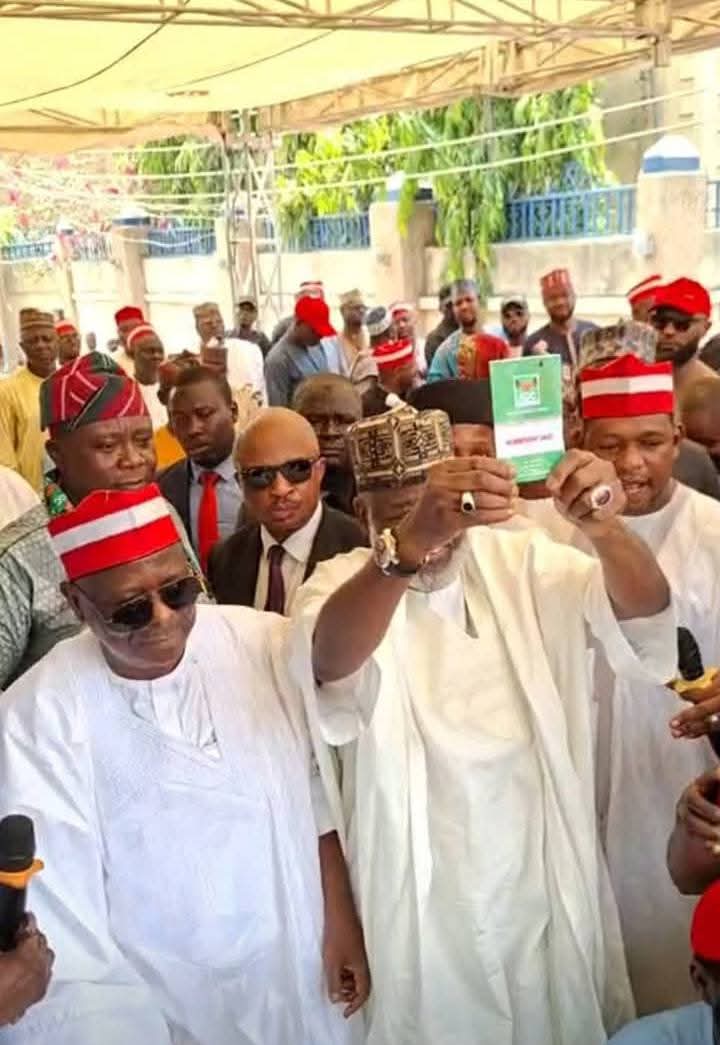
Nasiru Gawuna, the 2023 governorship candidate of the All Progressives Congress (APC) in Kano State, has formally joined the African Democratic Congress (ADC).
Gawuna, a former deputy governor of the state, received his membership card on Tuesday at his ward in Gawuna, Nasarawa Local Government Area. The event drew a large gathering of supporters and notable political figures, including former Governor Senator Rabiu Musa Kwankwaso, immediate-past Deputy Governor Aminu Gwarzo, and the state ADC chairman, Musa Ungogo.
Speaking after the registration, Gawuna thanked his supporters and party leaders, pledging his commitment to strengthening the ADC in Kano State.
His defection follows a formal resignation from the APC, which he described as a personal and voluntary decision. In a letter dated March 29, 2026, addressed to his ward chairman, Gawuna expressed appreciation to the APC for the opportunity to serve.
The move also comes after his resignation as Chairman of the Board of Directors of the Federal Mortgage Bank of Nigeria, effective March 31, 2026. His departure from the role complied with a directive by President Bola Ahmed Tinubu requiring political appointees to resign in line with the provisions of the Electoral Act.
Gawuna thanked the president for the trust reposed in him, noting it was an honor to serve in various capacities, including as Pro-Chancellor and Chairman of the Governing Council of Bayero University, Kano.
Political observers view Gawuna’s entry into the ADC as a significant boost for the party, given his political influence and strong showing in the 2023 governorship election, where he secured 890,705 votes.
The development is the latest in a series of political realignments in Kano State ahead of the 2027 general elections, signaling continued shifts in the state’s political landscape.
News
JUST IN: Senate Approves Tinubu’s $6 Billion Loan Request
By Yusuf Danjuma Yunusa
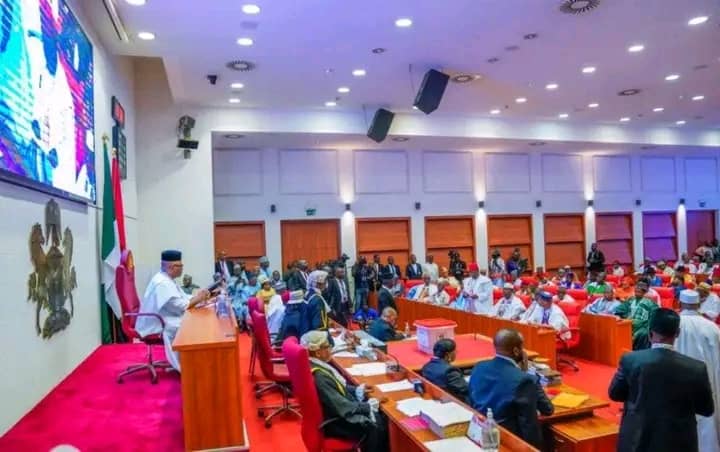
The Senate on Tuesday approved President Bola Tinubu’s request to secure $6 billion in external loans, granting legislative backing for the facilities hours after the Executive formally sought approval to finance critical infrastructure and address fiscal gaps.
The approval followed the consideration of a report submitted by the Chairman of the Senate Committee on Local and Foreign Debts, Senator Aliyu Wamakko (APC, Sokoto North).
In a letter read during plenary, President Tinubu sought approval for two separate facilities: a $5 billion loan from Abu Dhabi Bank to support budget deficit financing and meet existing debt obligations, and a $1 billion loan from UK Export Finance through Citibank London to fund the rehabilitation of the Lagos Port Complex and Tin Can Island Port.
According to the President, the port rehabilitation projects aim to address longstanding operational challenges, improve efficiency, enhance safety standards, support non-oil trade diversification, and position Nigeria as a regional trade hub.
Senate President Godswill Akpabio referred the requests to the committee for expedited consideration, a directive that culminated in Tuesday’s approval.
The latest borrowing comes amid the Federal Government’s sustained reliance on domestic and external loans to finance budget deficits. Four months ago, the National Assembly approved a separate request to raise N1.15 trillion from the domestic debt market to fund the 2025 budget deficit.
In its report, the Senate Committee on Local and Foreign Debts noted that the 2025 Appropriation Act provides for total expenditure of N59.99 trillion—an increase of N5.25 trillion from the Executive’s initial proposal—highlighting the widening fiscal gap driving the government’s borrowing strategy.
News
El-Rufai’s Bail Hearing Adjourned to Wednesday as Security Tightens Around Kaduna Court
By Yusuf Danjuma Yunusa
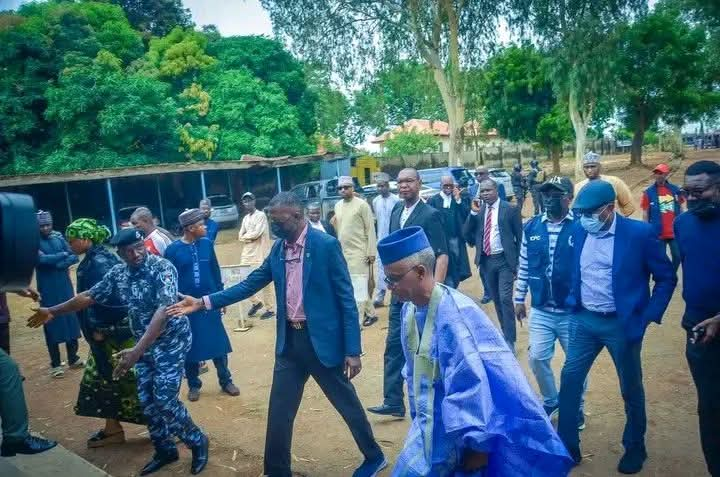
The Federal High Court in Kaduna has adjourned the bail hearing for former Governor Nasir El-Rufai until Wednesday, March 31. Justice Rilwanu scheduled the new date after hearing arguments from both the defense and prosecution.
El-Rufai was arraigned by the Independent Corrupt Practices and Other Related Offences Commission (ICPC) on a 10-count charge involving the alleged conversion of public property and money laundering. The former governor pleaded not guilty to all charges.
In a separate case, El-Rufai also appeared before a Kaduna State High Court on charges of abuse of office, fraud, and intent to commit fraud. The ICPC filed charge number KDH/KAD/ICPC/01/26 against him and one other defendant, Amadu Sule, from the Kaduna State Development Agency (LEDA).
According to the News Agency of Nigeria, El-Rufai arrived at the Federal High Court premises at approximately 9:40 a.m. in the company of ICPC officers.
Security was heightened across the Kaduna metropolis ahead of the proceedings. Armed personnel from the police, the Department of State Services (DSS), and the Kaduna State Vigilance Service were deployed to strategic locations. Access to the court was restricted to accredited journalists and court officials, though media representatives were barred from entering the courtroom to cover the proceedings.
Counsel for El-Rufai, Abdul Adamu, declined to comment after the session, stating only that the case “has been adjourned till tomorrow.”

Kano Ex-Deputy Governor Gawuna Joins ADC After Resignation from APC

JUST IN: Senate Approves Tinubu’s $6 Billion Loan Request

El-Rufai’s Bail Hearing Adjourned to Wednesday as Security Tightens Around Kaduna Court

El-Rufai Taken Back To Custody

Eight Kano Rep Members Abandon NNPP for APC

The Governor Who Chose His People Over His Politics: Abba Yusuf and the Moral Courage Behind Kano First

FREEDOM OF SPEECH, NOT FREEDOM FROM CONSEQUENCE: A CITIZEN’S CALL FOR RESPONSIBLE PUBLIC COMMENTARY
Restoring the Glory That Was Always There: Governor Abba Kabir Yusuf and the Historical Vision Behind Kano First

Tinubu to Swear in Olatunji Disu as Inspector-General of Police on Wednesday

NDLEA Clarifies: Drug Case Against Abba Kyari Still Active After Court Discharge
Kano Ex-Deputy Governor Gawuna Joins ADC After Resignation from APC
JUST IN: Senate Approves Tinubu’s $6 Billion Loan Request
El-Rufai’s Bail Hearing Adjourned to Wednesday as Security Tightens Around Kaduna Court
El-Rufai Taken Back To Custody
Eight Kano Rep Members Abandon NNPP for APC
The Governor Who Chose His People Over His Politics: Abba Yusuf and the Moral Courage Behind Kano First
FREEDOM OF SPEECH, NOT FREEDOM FROM CONSEQUENCE: A CITIZEN’S CALL FOR RESPONSIBLE PUBLIC COMMENTARY
Restoring the Glory That Was Always There: Governor Abba Kabir Yusuf and the Historical Vision Behind Kano First
Tinubu to Swear in Olatunji Disu as Inspector-General of Police on Wednesday
NDLEA Clarifies: Drug Case Against Abba Kyari Still Active After Court Discharge
-

 Opinion4 years ago
On The Kano Flyovers And Public Perception
-

 Features5 years ago
How I Became A Multimillionaire In Nigeria – Hadiza Gabon
-

 Opinion5 years ago
Kano As future Headquarters Of Poverty In Nigeria
-

 History5 years ago
Sheikh Adam Abdullahi Al-Ilory (1917-1992):Nigeria’s Islamic Scholar Who Wrote Over 100 Books And Journals
-

 Opinion4 years ago
My First Encounter with Nasiru Gawuna, the Humble Deputy Governor
-

 History5 years ago
The Origin Of “Mammy Market” In Army Barracks (Mammy Ochefu)
-

 History4 years ago
The History Of Borno State Governor Professor Babagana Umara Zulum
-

 News4 years ago
Federal University Of Technology Babura To Commence Academic Activities September