
Politics
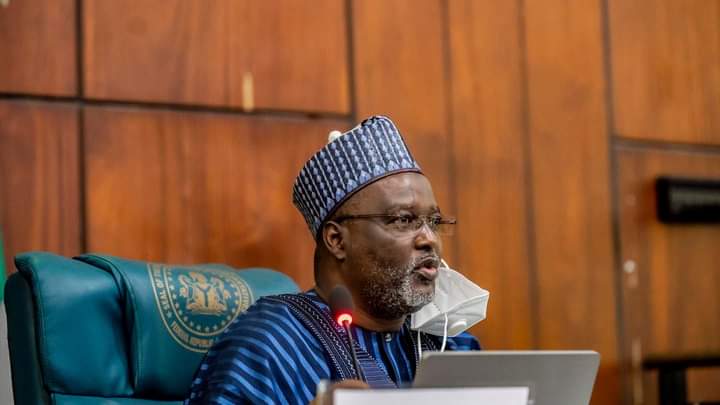
Hon Ahmed Wase and the Imprint of legislative Stabilizer
By Ahmad Muhammad Danyaro
The National Assembly is a constitutional locomotive for any purposeful democratic government; it provides checks to the government of the day and a legal basis for the system in general. This is basically accounting for the high respect usually accorded and, of course, the attendant high expectation placed on it. The legislative arm of government like any other is saddled with the responsibility enshrined in the constitution and among such major functions includes representation, oversight and law making in addition to many other numerous functions.
In 2019 when the lower house searches for the best man to steer the affairs of the House of Representative alongside the anointed Speaker Hon Femi Gbajabiamila who was then the House Leader , one name is usually ringing bell for this serious legislative task. He is Hon Ahmed Idris Wase the then deputy house leader in the 8th assembly. He is delightful humanist, seasoned administrator, eloquent orator , pragmatic strategist, phenomenal legislator and parliamentary manager whose entire life is propelled by progressive ideas. The legislative czar with hundreds of bills and motions in the green chamber senate from 2007-date .
Hon. Ahmed Idris was born on the 1st June, 1964 in Bashar District of Wase Local Government Area, Plateau State to the family of Mallam Idris. He enrolled into LSB Primary School Bashar where he obtained His First School Leaving Certificate (FSLC) in 1978. He then proceeded to Government Secondary school Mbar and he was later transferred to Government Secondary school Dengi the present day Kanam Local Government Area. In his quest for knowledge and pursuit for education, Hon. Ahmed Idris gained admission into Plateau state Polytechnic to study Civil Engineering in 1983, where he obtained a National Diploma in Civil Engineering in 1986. He later applied for a Higher National Diploma programme with the Kaduna State Polytechnic and bagged the Certificate in Civil Engineering in 1995.
In his zeal to understand the dynamics of good governance and positive social change, he applied for an executive programme at the Harvard Kennedy School of Government, United states where he bagged an Executive Certificate course in Strategic Governance in 2016.
Hon. Idris was elected into the lower Chamber of the National Assembly in 2007 and is currently serving his third (4th) term as a member of House of Representatives, Wase Federal Constituency.
In 2015, Hon. Ahmed Idris was appointed a Governing Board member of the National Institute of Legislative and Democratic Studies (NILDS) where he contributed to the development of robust Legislative and democratic engagements. In June, 2018, Hon. Idris was appointed as Regional Representative for West Africa to serve on the Executive Committee of the Commonwealth Parliamentary Association (CPA) International.
In 2018, he was appointed through popular support as the Deputy House Leader to replace the Late Buba Jubril who passed away in June of the same year. He was elected Deputy speaker in 9th National assembly, House of Representative, with 358 votes unopposed.In the same 2019 he was elected as 1st deputy speaker of ECOWAS parliament .
His legislative priorities are education, health, good roads and water. Also accredited to him are the following; sponsorship of students scholarships, infrastructural development which includes: solar street lights, hand pump and motorized boreholes, renovation of primary healthcare centres, building of skills acquisition centres, lobbying for the construction of roads and renovation of secondary and primary schools]
He is an advocate for Youth Empowerment and poverty alleviation. He has achieved these through: issuing of grants to the Youths and providing welfare packages to the less privileged.
Hon Wase has opened yet another vista of debate among electorates on the value of quality representation with vigour ,expertise and experience of having a wider constituency responsibility and coverage among his colleagues .He has vindicated his mettle and constituents that the confidence reposes in him was not in vain with his eloquent consistent and fearless voice always seeking the improvement of lives of his constituents and Nigeria in general through legislative interventions in his desire to improve the good laws that will help enrich the living standard of Nigerians and enhance the general security situation in the country.
Hon Ahmed Idris Wase commands a lot of respect from his colleagues, largely due to the way he articulates his ideas and thoughts each time he speaks on the floor of the house as his colleagues listen with rapt attention whenever he contributes to any debate or table a motion which comes in regularly. His calmness and maturity have earned him the nickname “the stabilizer”, amongst friends and colleagues, many of whom consult him for advice which has come in handy in more than a few times.
The 4th term member has also been constant, stabilising factor in the 6th, 7th and 8th House he serves as deputy house leader and 9th house he is currently serving as deputy speaker , following his numerous behind the scenes interventions and mediations on critical national issues. He has a big dossier of constituency outreach that reflects his close touch with his constituents. He has utilized the opportunity given to him through projects he attracted to his constituency and his name is registered in the heart of his people.
The Deputy Speaker is truly a representative of the people going by the amount of work he was able to do for the overall benefit of his constituents long ago he became the second in command in the green chambers. In fact, it worth elucidating that the deputy speaker was able to touch the lives of the people of in his years of legislative stewardship.
So far, he has proved to be one of the few federal lawmakers that people are happy with the impact of their representation. No matter what anyone would say, the number of dividends of democracy that this parliamentarian was able to bring to the door step of the people he is representing is unmatched.
Danyaro wrote in from Adetokunbo Ademola Crescent Wuse 2 Abuja and can reached at ahmaddanyaro2017@gmail.com
Politics
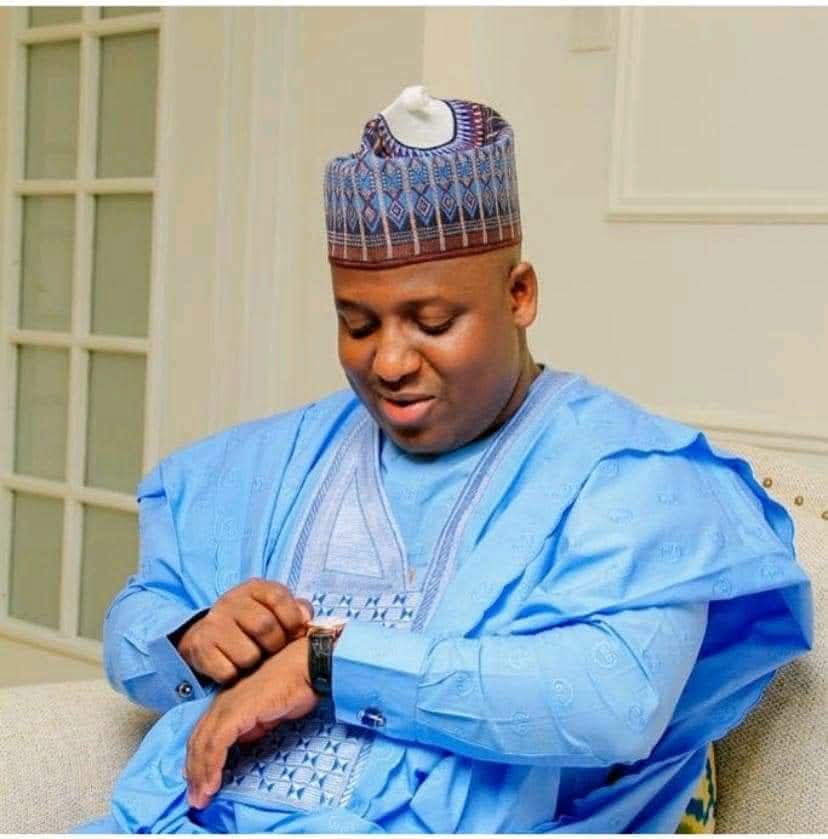
Why Nura Manu Soro should be APC candidate in Bauchi State come 2027
Sani Adnan
As Planning Is Essential for a Political Campaign, Nura, if given the opportunity, will ensures that the party’s campaign activities are structured, resources are used efficiently, and every effort supports the central objective of winning voter trust and turnout.
Steps He May Take in Building a Political Campaign Plan
Professionals and other relevant stakeholders will be widely consulted where strategic views will be carefully collated and embedded in his vision, mission, and values, analyzing voter demographics needs and setting measurable campaign goals, among others.
*An Inclusive Campaign Foundation*
Nura Manu’s campaign foundation cover party core values, valuable insights, and specific objectives such as turnout targets, fundraising benchmarks, and win margins against major opposition elements.
*Who May Serve As Key Members of His Campaign Team*
In order to guarantee and seamless victory, Nura Manu Soro has assembled array of professional politicians, technocrats with essential roles include the campaign manager, communications lead, digital strategist, field organizer, and finance director, supported by a structured volunteer network of versatile young men and women from all walks of life.
Nura Manu Soro Represent a Strong Campaign Message That’s Important At The Moment
Nura Manu Soro is sine qua non with a strong message which will naturally connects the APC candidate to voter concerns, builds credibility, and provides consistency across campaign speeches, political advertisements, and digital platforms.
Nura Manu Soro Represent The Role a Slogan (Tafiyar Matasa Sabon Jini) Play in Campaign
A slogan captures the campaign’s vision in a short, memorable phrase, supported by talking points that reinforce the message across all outreach. Persons like him with towering intellect, global exposure and academic distinction, who understand how power truly operates, will play politics which might reveals realities that libraries, laboratories and lecture halls couldn’t fully expose. ‘NMS’ as I fondly called him, is a master strategist who excelled in engineering negotiations, manoeuvres, interests, alliances and contradictions that quietly shape greater outcomes at different fora.
In conclusion, NMS will utilise social media to expands reach, engages different voter segments, and provides real-time interaction. Platforms like Facebook, Instagram, TikTok, and X, among many others to target different demographics effectively.
Sani Adnan, wrote from Alkaleri in Bauchi State, Nigeria.
Politics
Beyond the Verdict: How NNPP Loss Vindicates Governor Yusuf’s Political Foresight
By: Sanusi Bature Dawakin Tofa
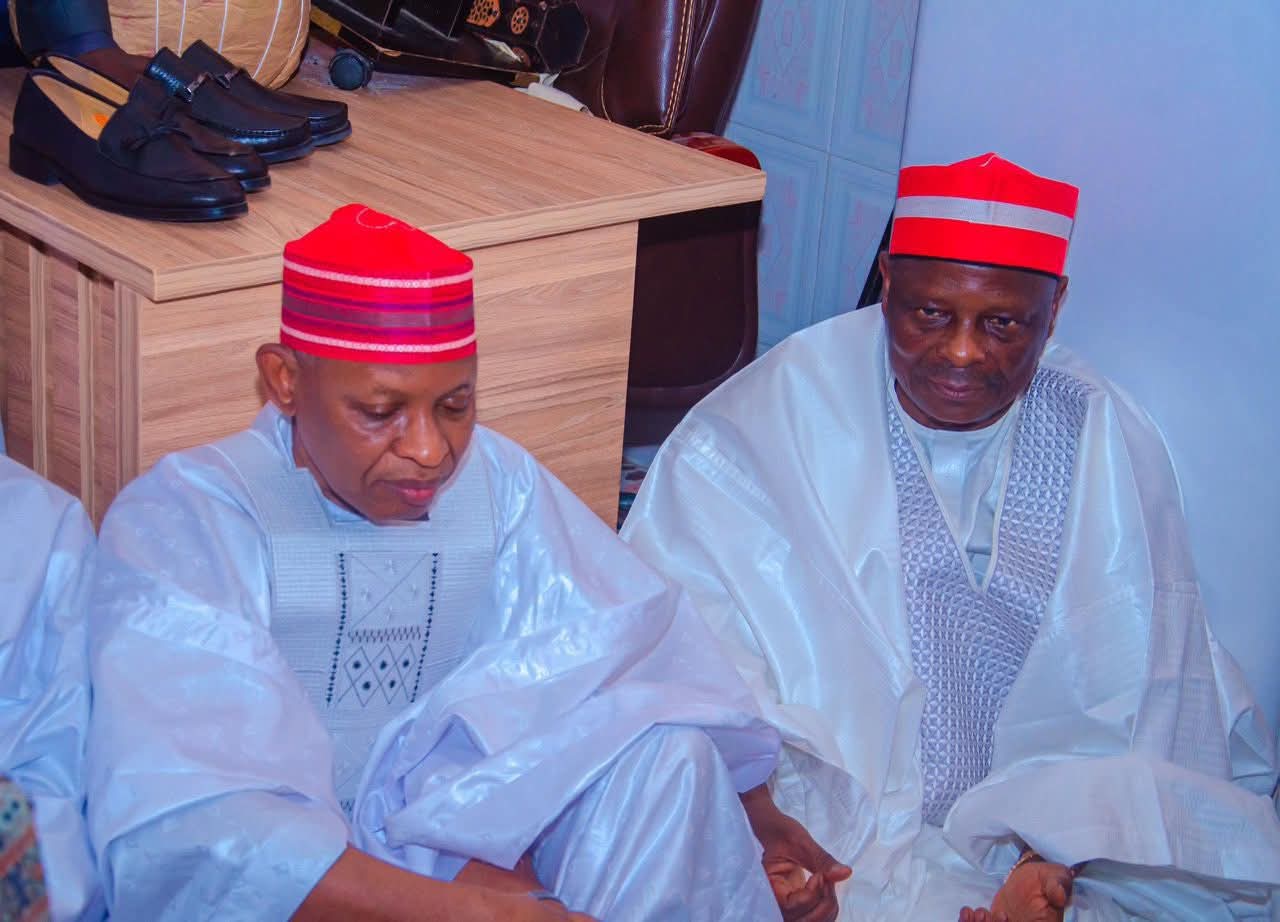
A defining political moment unfolded in Lagos as loyalists of NNPP founder, Boniface Aniebonam, converged at his Apapa office in celebration of a decisive court victory that has reshaped the party’s leadership structure. The ruling of the Federal Capital Territory High Court in Abuja, which directed INEC to recognise the Agbo Major led National Working Committee, effectively nullified the claims of the faction aligned with Rabiu Musa Kwankwaso and the Kwankwasiyya Movement, setting the stage for what many now regard as a turning point in the NNPP’s internal power dynamics.
The celebration was not merely symbolic but deeply political. Songs, dancing and thanksgiving echoed through the venue, signaling what many within the camp see as the final collapse of the rival structure. In their view, the ruling has drawn a clear line under the prolonged leadership tussle, affirming ownership and restoring the party to its original custodians.
While the Kwankwasiyya faction has dismissed the judgment and signaled its intention to appeal, the optics of the Lagos celebration suggest a deeper reality. It portrays a movement that is steadily losing institutional footing. What was once projected as a dominant bloc within the NNPP now appears increasingly isolated and weakened by legal setbacks and internal contradictions.
Within this unfolding scenario, the earlier decision of Abba Kabir Yusuf to exit the NNPP now stands out as not just strategic but profoundly prophetic. At a time when many still believed the crisis could be contained, the governor had already read the signs of a looming structural breakdown. His defection to the All Progressives Congress was a calculated move to shield Kano from the instability that has now fully consumed the party.
Since the entrance of Rabiu Musa Kwankwaso into the NNPP in late 2022, the party has been embroiled in persistent internal wranglings. What should have been a smooth political expansion quickly degenerated into disputes, counter claims and a cycle of litigations across multiple courts. These legal battles not only fractured the party’s leadership but created an environment too volatile for any serious governance to thrive.
For a sitting government, such instability is more than a political inconvenience. It is a direct threat to focus, peace of mind and administrative efficiency. Governor Yusuf clearly understood that a state like Kano could not afford to be governed from within a party constantly entangled in courtrooms. Governance requires clarity, stability and direction, conditions that had become increasingly absent within the NNPP.
The events of today have validated that judgment. The celebrations by Aniebonam’s loyalists underscore the extent to which the party structure has shifted away from the Kwankwaso bloc. In stark terms, the former political stronghold has been reduced to a shadow of its past influence within the party.
Indeed, a harsh but unavoidable metaphor now defines the situation. Rabiu Musa Kwankwaso appears politically like a wandering herdsman without shepherds, disconnected from a recognised structure and navigating an uncertain terrain without institutional backing. The court’s affirmation of a rival leadership has effectively placed him in a position where his relevance within the NNPP is severely diminished.
In practical terms, this leaves him perilously close to being politically homeless, a figure without a firmly recognised platform and with a future clouded by legal and structural dislocations. His refusal to align with Governor Yusuf in the strategic move to the APC now appears in hindsight as a significant political miscalculation, one that may carry lasting consequences for his political journey.
The contrast could not be clearer. While Kano under Abba Kabir Yusuf has secured stability within a broader national framework, the NNPP remains trapped in cycles of litigation and internal strife. The governor’s decision ensured that his administration would not be distracted by endless legal battles, thereby preserving the focus required to deliver democratic dividends to the teeming people of Kano.
In the final analysis, politics rewards those who can read the future before it arrives and act before circumstances impose their will. Power is never sustained by sentiment but by structure, clarity and timing. What is unfolding within the NNPP is a reminder that when a political house becomes divided against itself, its strongest voices can quickly fade into irrelevance. In contrast, leadership that prioritises stability over attachment secures not just survival but continuity. In this moment, the lesson is clear that history does not remember hesitation, it remembers decision.
Sanusi Bature Dawakin Tofa, is the Spokesperson to Gov. Abba Yusuf of Kano State
Politics
DSP Barau and APC Unity in Kano
By Abba Anwar
Democracy, in my candid opinion, is not only a game of numbers, as numbers could be falsified, twisted, deliberately avoided and deceiving, it is also a process of fair arrangement, fence-mending, thinking-ahead, conceding overturned events and strategy jogging, all within a sane and stable environment.
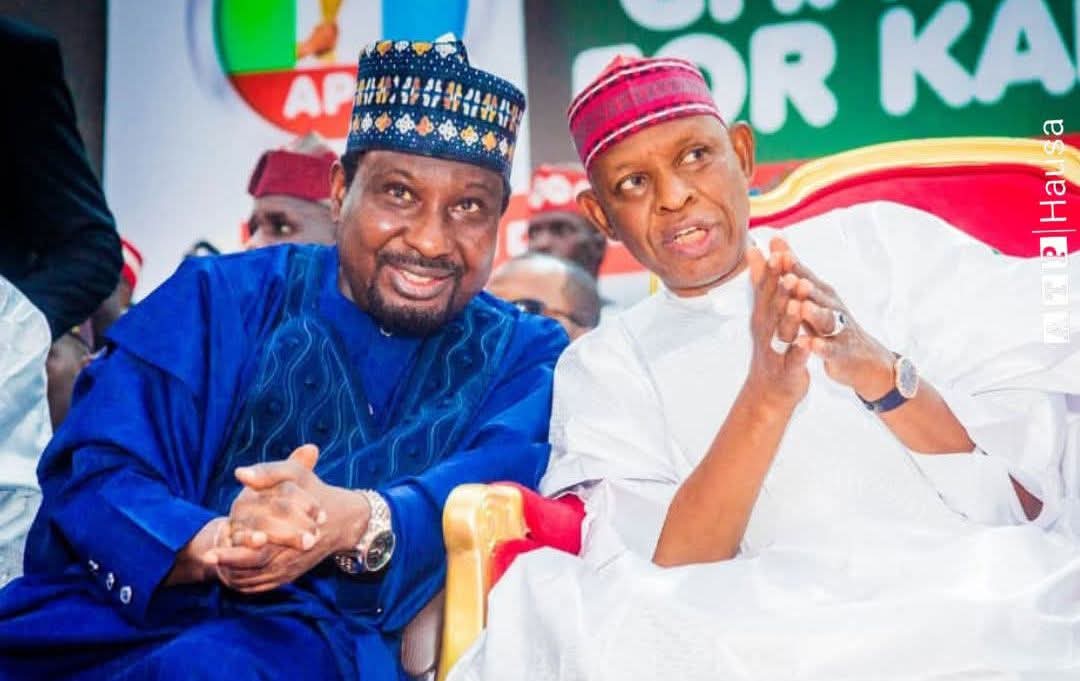
To push my take, closer to readers’ comprehension, let me, first and foremost, acknowledge the genuine involvement of His Excellency, the Deputy Senate President, Barau I Jibrin, CFR, immediately when the Kano State Governor, Abba Kabir Yusuf, joined All Progressives Congress (APC).
His contributions and commitment to the new union, new normal, as some may put it, explain his intent for building stronger, more peaceful, ambitious and strategic political platform devoid of crisis and cluelessness ahead of 2027 election period. The deeper commitment is manifested in almost all his recent visibility in the affairs of the party.
It was he, to the chagrin of all, who announced, publicly, that he jettisoned his long held ambition, of becoming number one citizen in the state. That happened during the welcome celebration of the Governor, to APC fold. There and then, he endorsed and called for genuine support, of Governor Yusuf ahead of 2027. Senator’s endorsement, was, in my understanding, out of volition and deep sense of responsibility.
After his unexpected withdrawal from the race, the former Governor of Kano State, Abdullahi Umar Ganduje, CON, made similar pronouncement on behalf of all those contesting for gubernatorial seat in the state. Assuring Governor Yusuf that, all those contesting for the exalted seat, had also withdrawn.
I think after commending Ganduje for that, we should profoundly appreciate and thumb-up for the aspirants. His Excellency Nasiru Yusuf Gawuna and His Excellency Murtala Sule Garo. The duo also exhibited decorum and absolute loyalty in the scheme of things. No doubt about this. So also would-be-aspirants, remained low-key and enduring. As low-key as they were, no one could accurately spot individuals here.
My personal conviction, tells me that, APC heavyweights, did that, just to properly and unarguably, present the party, APC, to the Governor, as a comfort zone. Where his ambition for second tenure could well be secured seamlessly.
As a matter of fact, APC tries hard to make the Governor feel comfortable for the development of the state. Which is at stake. Hence the debut of the slogan “Kano First.”
Looking at the wards and local governments congresses, that took place recently, one can, but, believe with me, when I appreciate that Governor Yusuf is reciprocating well. Just look at how the government handles process, procedures and outcomes. Even the sharing formula of party’s executives, between the Governor and old APC members. Yes, the Governor is moving at his own pace, but to me, the situation is neither disturbing nor alarming. Each leader has his own way of discharging responsibilities.
All cards are now on the table. As the ball is in the court of the Governor. His understanding of the political arithmetic, as he merges with APC, is paramount and part of the necessary prerequisite for victory, in the face of all. Supporters, non-supporters and so-called neutral entities.
While DSP, alongside other critical stakeholders cooperate with the Governor for injecting life to good governance, it is not out of place, to also mention that, the DSP is becoming the engine room for unity in the party.
All his actions that followed the golden pronouncement, signify honest and genuine support for the status-quo. Few days before the formal pronouncement, it was he, who empowered and reinforced local governments officials in 13 local governments under his constituency, Kano North, with means of transport. Mobility worth commendation.
He gave a similar gesture to party leaders at all levels, long before now. Particularly in his constituency. But that was not limited to Kano North alone. His magnanimous intervention to party leaders, even at that time, across the state, was everything to write home about.
It is indeed dignifying to note that, Distinguished Senator knows clearly that, as it is democratic to support any idea, process and democratic styles, but within the confines of dignity, respect, law and order, it is also democratic to oppose any action or inaction, but within the confines of the identified situations.
The many politicians I spoke with, from Governor Yusuf’s side, on how the Deputy Senate President plays his cards, they passed an impressive judgment on him. They all acknowledged and appreciated his genuine commitment to the cause and his open-minded approach to the progress of the party and the government in the state.
I understand one good thing about him, I mean, out of many good things, he believes, Governor’s survival and victory, is APC’s. Adieu DSP, Adieu!
Anwar writes from Kano
Tuesday, 24th February, 2026

ADC crisis rooted in legal process, not external influence — lawyers explain

APC Dismisses ADC’s Claims, Calls Leadership Crisis ‘Self-Inflicted’

INEC Dismisses Calls for Chairman’s Removal, Clarifies Voter Revalidation Decision

INEC, David Mark, And Coming Abachaian Coronation
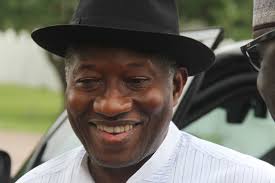
Jonathan Urges National Assembly to Overhaul Electoral Litigation Process, Create Specialised Court

Governor Abba Kabir Yusuf Holds Exclusive Prerogative to Choose Deputy – Malam Inuwa Waya

The Governor Who Chose His People Over His Politics: Abba Yusuf and the Moral Courage Behind Kano First
Restoring the Glory That Was Always There: Governor Abba Kabir Yusuf and the Historical Vision Behind Kano First

NDLEA Clarifies: Drug Case Against Abba Kyari Still Active After Court Discharge

Nigeria’s Education Minister Tunji Alausa Weighs Resignation to Run for Lagos Governor
ADC crisis rooted in legal process, not external influence — lawyers explain
APC Dismisses ADC’s Claims, Calls Leadership Crisis ‘Self-Inflicted’
INEC Dismisses Calls for Chairman’s Removal, Clarifies Voter Revalidation Decision
INEC, David Mark, And Coming Abachaian Coronation
Jonathan Urges National Assembly to Overhaul Electoral Litigation Process, Create Specialised Court
Governor Abba Kabir Yusuf Holds Exclusive Prerogative to Choose Deputy – Malam Inuwa Waya
The Governor Who Chose His People Over His Politics: Abba Yusuf and the Moral Courage Behind Kano First
Restoring the Glory That Was Always There: Governor Abba Kabir Yusuf and the Historical Vision Behind Kano First
NDLEA Clarifies: Drug Case Against Abba Kyari Still Active After Court Discharge
Nigeria’s Education Minister Tunji Alausa Weighs Resignation to Run for Lagos Governor
-

 Opinion4 years ago
On The Kano Flyovers And Public Perception
-

 Features5 years ago
How I Became A Multimillionaire In Nigeria – Hadiza Gabon
-

 Opinion5 years ago
Kano As future Headquarters Of Poverty In Nigeria
-

 History5 years ago
Sheikh Adam Abdullahi Al-Ilory (1917-1992):Nigeria’s Islamic Scholar Who Wrote Over 100 Books And Journals
-

 Opinion4 years ago
My First Encounter with Nasiru Gawuna, the Humble Deputy Governor
-

 History5 years ago
The Origin Of “Mammy Market” In Army Barracks (Mammy Ochefu)
-

 History4 years ago
The History Of Borno State Governor Professor Babagana Umara Zulum
-

 News4 years ago
Federal University Of Technology Babura To Commence Academic Activities September