
Features
The tree had fallen: In memory of my uncle Malam Idris Yusuf (1954 -2021)

By
Muhammad Jameel Yusha’u
@JameelYushau
Lying on his hospital bed in the last moments of his life on Thursday evening, 21st January 2021 at Isyaku Rabiu Hospital in Kano, he asked, referring to my father, “where is Malam Yusha’u? please, ask him to come quickly.” By then my father was already on his way to the hospital.
He then started reciting the Shahada, the Muslim testimony of faith, Ashhadu an Laa ilaha Illah, wa ash-hadu anna Muhammadan Rasulullah (I bear witness that there is no God but Allah, and Muhammad [peace be upon him] is His messenger). He kept reciting the Kalimah for the next 30 minutes until his soul returned to its rightful owner.
As my father stepped into the hospital along with my mother and brother Abdurrahman, Baba Idi, as we call him, was no more. “But Allah never delays a soul when its appointed time comes. And Allah is All-Aware of what you do” (Quran 63:11).
With the recitation the Kalimah, the life and times of my uncle, mentor, friend, teacher and a major pillar of our extended family had closed at the age of 67. He died surrounded by his wife Malama Sadiya, his eldest daughter Amina, and two of his children, Abubakar and his last child Imam (named after our grandfather Liman Yusuf). Malam Idris bn Yusuf bn Abdurra’uf bn Yusuf, bn Musa was my uncle and the immediate brother to my father. The two of them are like twins, if you know one of them, then you know the other. They are inseparable companions.
I am not writing this tribute simply because I lost an uncle. Indeed, that was enough reason to write one. But I am writing this tribute to celebrate an unsung hero, a man who dedicated his entire life to teaching and community service. I am writing this tribute to highlight that there are celebrities who contribute to our success, who inspire communities, invest their times in uplifting others, provide comfort in times of distress and make their shoulders available for others to climb the ladder of progress when we needed it the most.
Educationist ,Malam Idris Yusuf Passes On at 67
These heroes and celebrities are in every family, in every community and in every neighborhood. Yet, by human nature, we overlook these unique human beings and focus our attention on the celebrities and heroes manufactured by the media, whether they deserve it or not. I am also writing this tribute because of the dignified way in which he lived his life.
In the early 1990s, around 1993 precisely, when I started developing strong interest to study abroad, I came in contact with Dr. Tasiu Namadi who was then pursuing his doctorate degree at the Islamic University, Islamabad. My interest at the time was, after finishing secondary school to study Islamic law at either Islamic University of Madina or the International African University of Khartoum.
I was trying to find as much information as I could, so I engaged Dr. Tasiu on how to embark on this journey. Dr. Tasiu gave me couples of advice. He said, first of all, do not ever rely on any single individual to help you in achieving your dream. Just work hard and find your way, by submitting applications, searching for scholarships and God-willing you will achieve your dream of studying abroad. Then he gave me the second advice which I found true with my uncle, Malam Idris.
“Jameel, when you leave Nigeria, and move to another country, that is when you will know the people who love you genuinely,” Dr. Namadi told me. I left Nigeria in 2004. Certainly many people kept in touch, enquiring about my studies, family and general progress in life. Apart from my father, there are three people who always call to find out about my family, my wellbeing and my progress in life. They will ask about my studies and work. These three people were the late Shaykh Aminuddeen Abubakar, Alhaji Muhammadu Nata’ala Adamu (father of Professor Yusuf Adamu) and of course my uncle Malam Idris. The first two have already passed away, and on 21st January 2021, the third one joined them in the great beyond (May Allah forgive them and grant them eternal rest).
It was always a pleasure talking to them, because once they are assured that everything is fine with me and my family, then we talk about life in general. They ask me about the environment, make enquires about what they heard in the news on what is happening in the UK and now Saudi Arabia. I had my last conversation with Malam Idris on 20th January 2021, a day before he passed away. My brother, Dr. Muntaqa told me that Baba Idi is unwell. So I called him. His voice was weak. I could feel there is an extra effort in the way he was speaking. You could feel that he was being brave. As usual he enquired about my wife and each of my children with whom he has an incredibly cordial relationship.
Mentioning his name was enough to bring smile and joy to my family. When he visited us here in Saudi Arabia about four years ago, he spent time with them, he played with the children, went to a shopping mall with them and made sure they enjoyed every minute of his visit. It took me about one hour to break the news of his death to my family, and you could see the fever of shock in them in learning that Baba Idi was no more.
I have so many memories of him, but some that stand out include when he was pursuing his Bachelor’s degree in education at the Federal College of Education Kano in the 1990s. Baba Idi was an extremely busy person. He was a student, a teacher with the State Primary Education Board in the morning, and in the evening, he teaches at Da’awah Islamic School. By Allah’s providence, my father has almost every book needed in the area of education, both Western and Islamic in his personal library. He turned me into his librarian. Whenever he comes home, he would ask me to find the relevant books for his studies.
It was through this effort that I came to know some of the books written by Professor Aliyu Babatunde Fafunwa, Professor Shehu Galadanci and several works in philosophy, psychology and sociology of education. Thank you, Baba.
Another memorable moment was when I got admission to study Mass Communications at Bayero University, Kano. My interest at the time was to study law. I did everything possible to get admission at the faculty of law. Despite having the requirements, my effort proved abortive. I was hesitant to register in the mass communication department and start my lectures at the time. When Baba Idi came to our house one day, he was told that I haven’t yet registered and the deadline for registration was approaching. He asked me why? I told him I was still attempting to secure admission at the faculty of law. In his humorous nature, albeit with a serious mien on that occasion, he looked at me and said in Hausa “wanne amfani lauyoyin suka tsinana ne da ka dage sai ka karanta law. .” Literally translated as: “Why did you insist on studying law. Look at the lawyers moving around .” (Apologies to my learned colleagues).
Following that exchange, my father asked me to immediately go and register in Mass Communication department. “If the effort at the faculty of law yields results, you can move to the faculty of law,” my father said. And I complied. The rest is now history.
According to our mother, she couldn’t remember a week in the last 30 years that he didn’t visit our house.
Baba Idi is an advocate for social justice and has an allergy for corrupt practices. He is engaged with many NGOs and community initiatives. His main priority is transparency in managing the resources of these NGOs.
Baba Idi studied from an early age in the traditional Quranic and Ilmi system with our grandfather. He then went to Ilorin in the 1960s to further his Islamic education and returned around the period of the Nigerian civil war. He then went on to pursue modern education which enabled him to acquire a National Certificate in Education from Kano State College of Education, and a Bachelor’s Degree in Education from Ahmad Bello University Zaria (F.C.E Kano Campus). He rose from a class teacher to a supervisor/Inspector of Education in different local governments within Kano State.
It is approaching three months since he left us. Yet, his loss is still fresh. A gigantic tree had fallen in our family. But its roots are alive and flourishing. We love him, we cherish and adore him. But his Creator loves him the most. Our prayer is that he is resting peacefully in his new abode. May Allah grant him Jannatul Firdaus Amin.













Features
EVERY WOMAN IS HER EXCELLENCY: GIRL’S GATE INITIATIVE BRINGS THE CONVERSATION ON INCLUSIVE LEADERSHIP TO THE FOREFRONT
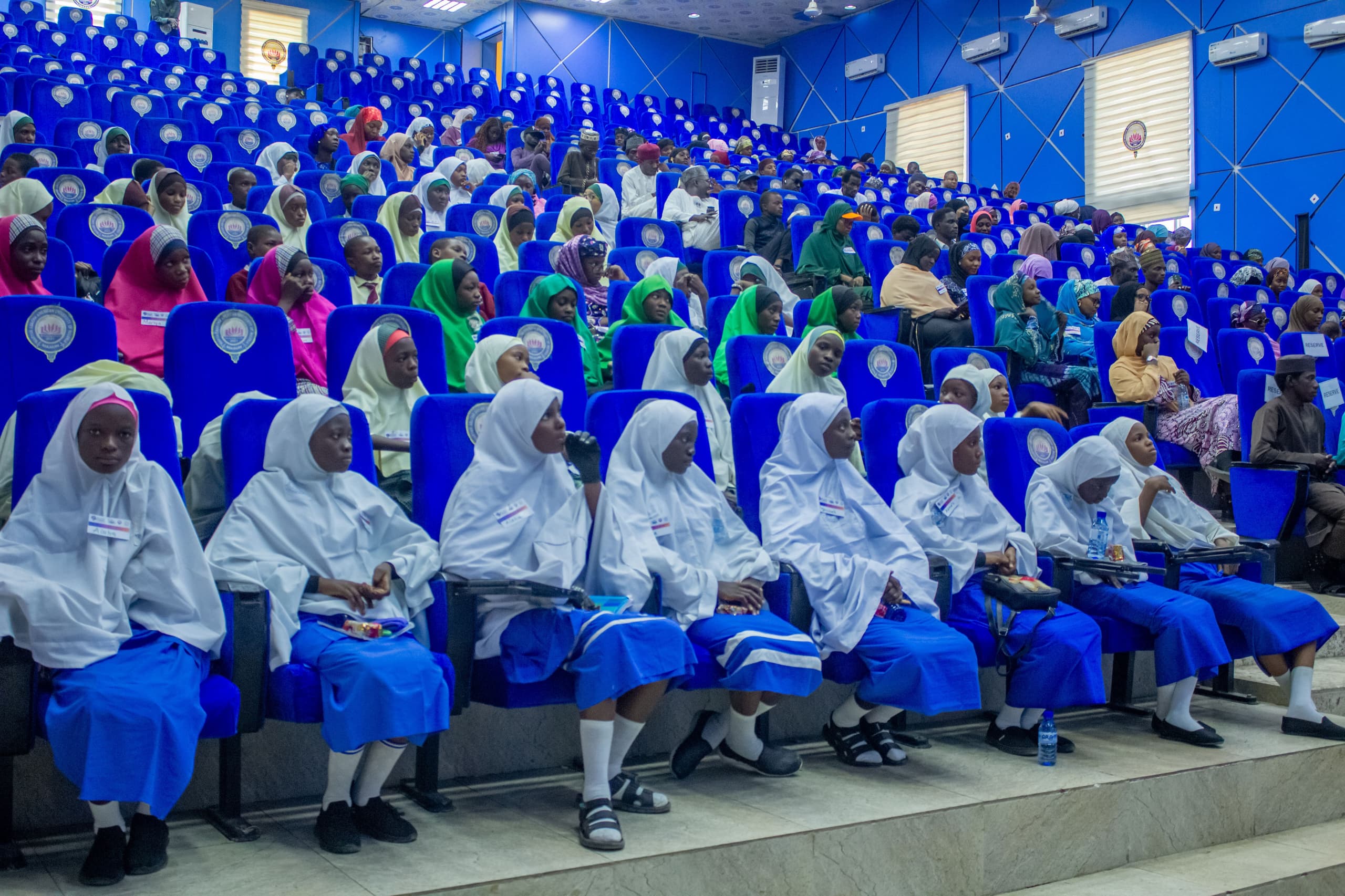
At SHE IS THE FUTURE CONFERENCE 4.0, Girls’ Gate Initiative brought together women leaders, professionals, advocates and young people to examine women’s representation, leadership opportunities and the importance of making decision-making more inclusive.
Who gets to lead? Whose voices are heard when important decisions are made? And what would it take to ensure that women and girls are not just represented, but are able to influence the decisions that shape their lives and communities?
These questions were at the heart of the fourth edition of the SHE IS THE FUTURE CONFERENCE, organised by Girls’ Gate Initiative for Empowerment and Development (GGI) on 21 November 2026 at Maryam Abacha American University of Nigeria (MAAUN), Kano Campus.
Held under the theme “Inclusive Leadership: Every Woman is HER Excellency,” the conference created a platform for conversations around women’s leadership, representation, civic participation and the importance of preparing young people, particularly girls, to take up leadership roles.
The theme was built around an important idea: leadership should not be determined by gender, background or social position. Women and girls should have opportunities to contribute their knowledge, experiences and perspectives to decisions affecting their families, institutions, communities and the wider society.
For Girls’ Gate Initiative, this conversation is closely connected to its broader commitment to girls’ empowerment, education, leadership development and meaningful participation.
The conference featured a keynote presentation by Dr Khadija Sunusi Gumbi, Keynote Speaker and Co-Convener, who addressed the theme of inclusive leadership and women’s participation in decision-making.
The presentation contributed to the wider conversation about the need to recognise women’s leadership potential, address barriers to participation and create environments where women can contribute meaningfully across different sectors.
The discussion was particularly relevant in considering how leadership opportunities are created, who has access to them and how institutions can become more inclusive.
A major part of the programme was the panel session titled “Women’s Leadership Journey from Lived Experiences.” Rather than approaching leadership only as a question of titles and positions, the session brought attention to the experiences, challenges and perspectives of women navigating different professional and social environments.
Moderated by Dr Hadiza Shettima, the panel featured Her Worship, Aisha Ismail; Jamila Musa, Gender and Community Inclusion Specialist and SRHR Advocate; Simbiat Bakare, representing RFLD virtually; and Bilkisu Ado Zango, a journalist, communications professional and disability rights advocate.
The diversity of the panellists’ backgrounds allowed the discussion to consider leadership from different perspectives, including professional experience, gender inclusion, disability rights and women’s participation in public life.
A key issue running through these conversations was the distinction between simply having women represented and ensuring that their contributions are taken seriously. Meaningful inclusion requires more than inviting women into leadership spaces; it requires recognising their voices, experiences and capacity to influence decisions.
The discussion also brought attention to the importance of including women with disabilities in leadership conversations and ensuring that inclusion extends beyond statements of commitment to practical opportunities for participation.
The conference did not limit the conversation to women already occupying leadership positions. It also turned attention to the girls and young women who will shape the next generation.
Students from Bayero University Kano (BUK), Khalifa Isyaku Rabiu University (KHAIRUN), Northwest University and Maryam Abacha American University of Nigeria (MAAUN), alongside students from more than 10 selected secondary schools, participated in the conference.
Their involvement reflected the importance of introducing leadership conversations to girls early and allowing them to interact with different experiences, perspectives and possibilities.
For many young participants, such platforms provide opportunities to ask questions, engage with people from different professional backgrounds and begin considering the roles they can play in their communities.
The conference also featured the Presidential Mock Debate, where students representing the FGC Party and MIA Party presented their manifestos and discussed issues affecting Nigeria. The exercise, followed by a mock election supervised by the Girls Independent Electoral Commission (GINEC), provided practical exposure to leadership, public speaking and democratic participation.
These activities reinforced the conference’s wider message that young people should not only be encouraged to aspire to leadership but should also have opportunities to practise participation and develop the skills needed to take responsibility.
Another major highlight was the launch of the HER EXCELLENCY Project, further reflecting GGI’s commitment to promoting girls’ empowerment and leadership.
The conference also featured a documentary highlighting the stories of Asiya and Sadiya. Through their experiences, dreams and aspirations, the documentary brought a human perspective to the broader conversations about girls’ opportunities, education and personal development.
For Huzaifa Jamil Kmata, Executive Director of Girls’ Gate Initiative and Convener of the conference, the vision is to create platforms where girls and young people can develop confidence, express themselves, engage with important issues and participate in shaping their future.
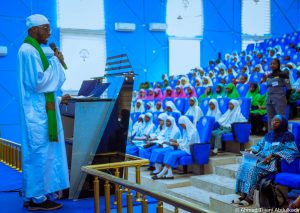
Huzaifa Jamil Kofar Mata
In his welcome address, he emphasised the importance of moving beyond conversations about empowerment to creating opportunities that allow young people to take an active role in their communities and society.
That vision is reflected in the conference’s approach: bringing together established voices and emerging leaders, connecting discussions to practical experiences and ensuring that girls are part of conversations about the future they will inherit.
Since its first edition in 2023, SHE IS THE FUTURE has provided a platform for young people to engage with issues around education, girls’ empowerment, technology, innovation and leadership.
The fourth edition expanded that conversation by placing particular emphasis on inclusive leadership, women’s representation and civic participation.
But the question raised by the conference extends beyond one day or one gathering. How can institutions, communities and society create environments where women and girls have genuine opportunities to lead? How can young people be prepared to participate in decisions rather than remain spectators? And how can the experiences of those often excluded become part of the decisions that affect everyone?
These are questions that require continued engagement, collaboration and practical action.
For Girls’ Gate Initiative, the message behind “Every Woman is HER Excellency” is not simply about giving women titles. It is about recognising their capacity, creating opportunities for their participation and ensuring that leadership spaces reflect the diversity of the people they serve.
The conference offered a platform for that conversation, bringing together women with lived experiences and young people with aspirations for the future.
Because inclusive leadership is not achieved when women are merely invited to the table. It is achieved when their voices help shape the decisions made there and when the next generation has the opportunity to take its place.
Features
Why I want To Rewrite Kannywood’s Playbook – Dan Hausa

By Saif Ibrahim, Kano
Who is Dan Hausa?
I am Kamilu Ibrahim born 31 years ago, but most people know me as Dan Hausa. I was born in Fagge, Kano State, and from the very beginning I knew I wanted to tell stories that reflect the realities of my people. I trained at the High Definition Film Academy in Abuja, SAE Institute, and also took part in the U.S. Embassy’s Filmmaking for Impact program. I join the fikm making industry and started directing in 2017 because I wanted full control over how my stories are told.
Can you tell us a bit about yourself and your journey into film directing?
My journey began with a love for storytelling—I started as a scriptwriter, then worked closely with experienced filmmakers before directing my first film. Over the years, I’ve learned that directing isn’t just about cameras and lights, but about understanding people, culture, and the power of narrative.
Growing up, I saw how films could educate and inspire people. In Arewa, cinema is more than entertainment—it’s a mirror of society. I wanted to use that mirror to reflect our values, challenges, and hopes. That desire to make meaningful films pushed me into directing.
What sets your work apart in today’s Kannywood?
For me, it’s about merging modern cinematic techniques with our Hausa cultural identity. I love bold visuals and tight storytelling, but I never want to lose that traditional heartbeat of my origin. My goal has always been to raise our production quality to international standards while staying true to our roots”, proof of that is clear in my current and biggest project, “Wata Shida.
How would you describe your directing style?
I like to call my style “realism with purpose.” I focus on authenticity—every scene, every performance, every frame must feel true to life. But I also ensure that there’s always a message, something the audience can take home and reflect on.
Can you highlight some of your notable works?
Sure, there is Wata Shida which is currently airing and has an overwhelming response from the public and the likes of Lulu Da Andalu a myth-inspired adventure series showing on AREWA24 and YouTube. YouTube pushed us to think bigger in terms of story and production. Mijin Hajiya earned me Best Director at the 2024 Kano Entertainment Awards, while Tataburza made waves at film festivals. Earlier films like Bakon Yanayi (2019) and my debut Kulba Na Barna (2017) helped me define my style. My latest project, Amaryar Lalle, starring Rahama Sadau, premieres August 2025 on Sadau Pictures TV. Each project is a step forward in showing what Kannywood can achieve.
What awards and recognitions have you earned?
I have also been recognized by the Arewa5050 Awards and Kaduna International Film Festival (KIFF) for Lulu Da Andalu, which even won Best Indigenous Hausa Film. There’s also an AMVCA nomination for best Africanindigenous language , which is exciting because it means Hausa stories are getting wider attention.”
Who are your key collaborators?
Filmmaking is teamwork; TY Shaba has been a creative partner on several projects, especially on Lulu Da Andalu. I have WORKED with Rahama Sadau on Amaryar Lalle has been fantastic; she brings so much energy to the screen.”
What themes do you explore in your films?
I like telling stories where modern life clashes with traditional values—family conflict, cultural identity, gender roles. These are real issues in our society, and I try to explore them honestly but cinematically. I believe film should make people feel and also think.”
What is your next project?
I am working on Wata Shida Season 2, a story about a woman who enters a six-month sham marriage to protect her inheritance. It’s socially meaningful but also very entertaining. I will also continue with season 2 of “Amaryar Lalle.”
Can you tell us a little about your latest project?
This project is very close to my heart. It follows a young girl fighting to get an education in a society full of obstacles. Through her eyes, we see how family, tradition, and resilience collide, and how hope can survive even in the harshest situations.”
What inspired you to make this story?
Growing up, I saw so many bright young girls whose dreams were cut short just because they were girls. I felt a responsibility to tell this story—not as fiction, but as a mirror of what is happening around us.
How do you balance tradition and modernity in your work?
A: It’s about respect. I respect our traditions, but I also embrace new technology and ideas. In my films, I make sure traditional values are represented truthfully, while using modern techniques to improve production quality.
What challenges do you face as a director in Kannywood?
Budgets are often limited, and resources can be scarce. But the biggest challenge is sometimes societal misunderstanding of what we do as filmmakers. People forget that film is also an art form and a tool for change, not just entertainment.
Can you tell us your favourite project
Every project has its own special memory, but I’m proudest when a film sparks conversation or impacts people’s lives. For example, one of my recent films about youth unemployment led to community discussions and even small initiatives to help young people. That’s when I feel film is doing its job.
What advice would you give to aspiring directors?
Learn the craft—don’t rush. Watch films, study scripts, spend time on set even if it’s just to observe. Most importantly, stay humble and focused. Filmmaking is about patience, teamwork, and vision.
What should audiences expect from your upcoming projects?
Expect more powerful stories rooted in our culture, with better technical quality. I’m working on projects that tackle real societal issues, and I believe they’ll resonate with audiences not just in Arewa, but globally.
Features
Antenatal Care: Why some women misses several sessions

By Aisha Muhammad Rabiu
In many parts of Northern Nigeria, antenatal care is a vital step in ensuring the health of both mother and the unborn child. Yet, an increasing number of women are neglecting this crucial stage of pregnancy, putting themselves and their babies at serious risk, hence the high infant, mother mortality rate.
Health experts have been warning that antenatal visits help detect pregnancy complications at its early stage, provide essential supplements for healthy mother/child development, and educate mothers on safe delivery practices. But for some women, they find antenatal care as a burden either due to poverty or lack of awareness based on cultural practices and beliefs. As such antenatal remains a neglected priority.
In Kadawa, Fatima Sani, a 28-year-old expectant mother, admits she has not attended a single session of antenatal since the start of her pregnancy. she said “It’s not that I don’t want to go, but the clinic is far from my house, and my husband says we should save the transport money for delivery day. I just pray Allah protects me and my baby.”
From Dan Bare, Shago Tara precisely, Khairat a mother of 4 shares her reasons for not attending antenatal session even though she is fully aware that the session is very important to pregnant women. She said “I feel healthy, so I don’t see the need to go for antenatal. My mother gave birth to all her children at home without any clinic visits, and they all survived.”
In Rijiyar Zaki, Hadiza Mukhtar recalls her previous pregnancy, where she skipped antenatal visits entirely. “The nurses were rude to me when I first went. I decided I would not return. This pregnancy, I haven’t gone at all,” she confesses.
For Usaina Muhammad of Kurna, the problem is financial. “I can’t afford the registration fee, and I also have other children to feed. I know antenatal is important, but survival comes first.”
Meanwhile, Maryam Lawan of Layi Kaji reveals that misinformation has influenced her decision. “Someone told me that the iron tablets they give at the clinic make the babies grow too big, making delivery harder. So, I decided to avoid it altogether.”
Medical professionals emphasize that skipping antenatal care increases the risk of complications such as anemia, high blood pressure, infections, and even maternal or infant death. Dr. Ibrahim Musa, a gynecologist in Kano, warns: “We see many emergencies that could have been avoided if the mother had attended antenatal. Most of these cases arrive late, making it harder for the doctors to save lives.”
Experts and community leaders agree that raising awareness is key in addressing the matter. Antenatal care should be made more affordable, accessible, and culturally acceptable for all women. Religious leaders, health workers, and family members all have a role to play in encouraging expectant mothers to attend regular check-ups.
Neglecting antenatal care is not just a personal choice; it’s a public health concern that affects families, communities, and the future of the nation. Ensuring that every mother has the knowledge, resources, and support to seek antenatal care is a step toward a healthier society.
Aisha Muhammad Rabiu writes from Bayero University Kano (BUK) and she can be reached at Email: aishatama2020@gmail.com
Phone no.08084273341

Kwankwaso Accuses Kano Governor Abba of Using EFCC to Intimidate Him, Block NDC Candidate

2027: After Clerics, Barau Mobilises 3,405 Traditional Rulers in Kano for Tinubu, Abba, Other APC Candidates

A Moment in Time-Binta Spikin

2027: Amupitan Raises Alarm over Threats to His Life, Warns RECs Against Operational Lapses

NASCON to Unveil New Dangote Seasoning Products at 2026 Kano Trade Fair

Kano’s War On Drugs: How Barr. Muhyi’s Taskforce Is Changing The Game

Begging in Northern Nigeria: What Future Are We Preparing for Our Society?

NDC Deputy Governorship Candidate Gives Kano Information Commissioner 48-Hour Ultimatum Over Alleged Defamation

Bauchi Govt Suspends Emir over Alleged Misconduct, Inaugurates Probe Panel

Tinubu’s Jigawa Rally Signals Growing Northern Support, TMS Says as President Defends Economic Reforms
Kwankwaso Accuses Kano Governor Abba of Using EFCC to Intimidate Him, Block NDC Candidate
2027: After Clerics, Barau Mobilises 3,405 Traditional Rulers in Kano for Tinubu, Abba, Other APC Candidates
A Moment in Time-Binta Spikin
2027: Amupitan Raises Alarm over Threats to His Life, Warns RECs Against Operational Lapses
NASCON to Unveil New Dangote Seasoning Products at 2026 Kano Trade Fair
Kano’s War On Drugs: How Barr. Muhyi’s Taskforce Is Changing The Game
Begging in Northern Nigeria: What Future Are We Preparing for Our Society?
NDC Deputy Governorship Candidate Gives Kano Information Commissioner 48-Hour Ultimatum Over Alleged Defamation
Bauchi Govt Suspends Emir over Alleged Misconduct, Inaugurates Probe Panel
Tinubu’s Jigawa Rally Signals Growing Northern Support, TMS Says as President Defends Economic Reforms
-

 Opinion5 years ago
On The Kano Flyovers And Public Perception
-

 Features5 years ago
How I Became A Multimillionaire In Nigeria – Hadiza Gabon
-

 Opinion6 years ago
Kano As future Headquarters Of Poverty In Nigeria
-
 History6 years ago
Sheikh Adam Abdullahi Al-Ilory (1917-1992):Nigeria’s Islamic Scholar Who Wrote Over 100 Books And Journals
-

 Opinion5 years ago
My First Encounter with Nasiru Gawuna, the Humble Deputy Governor
-
 History5 years ago
The History Of Borno State Governor Professor Babagana Umara Zulum
-
 History6 years ago
The Origin Of “Mammy Market” In Army Barracks (Mammy Ochefu)
-

 News5 years ago
Federal University Of Technology Babura To Commence Academic Activities September